
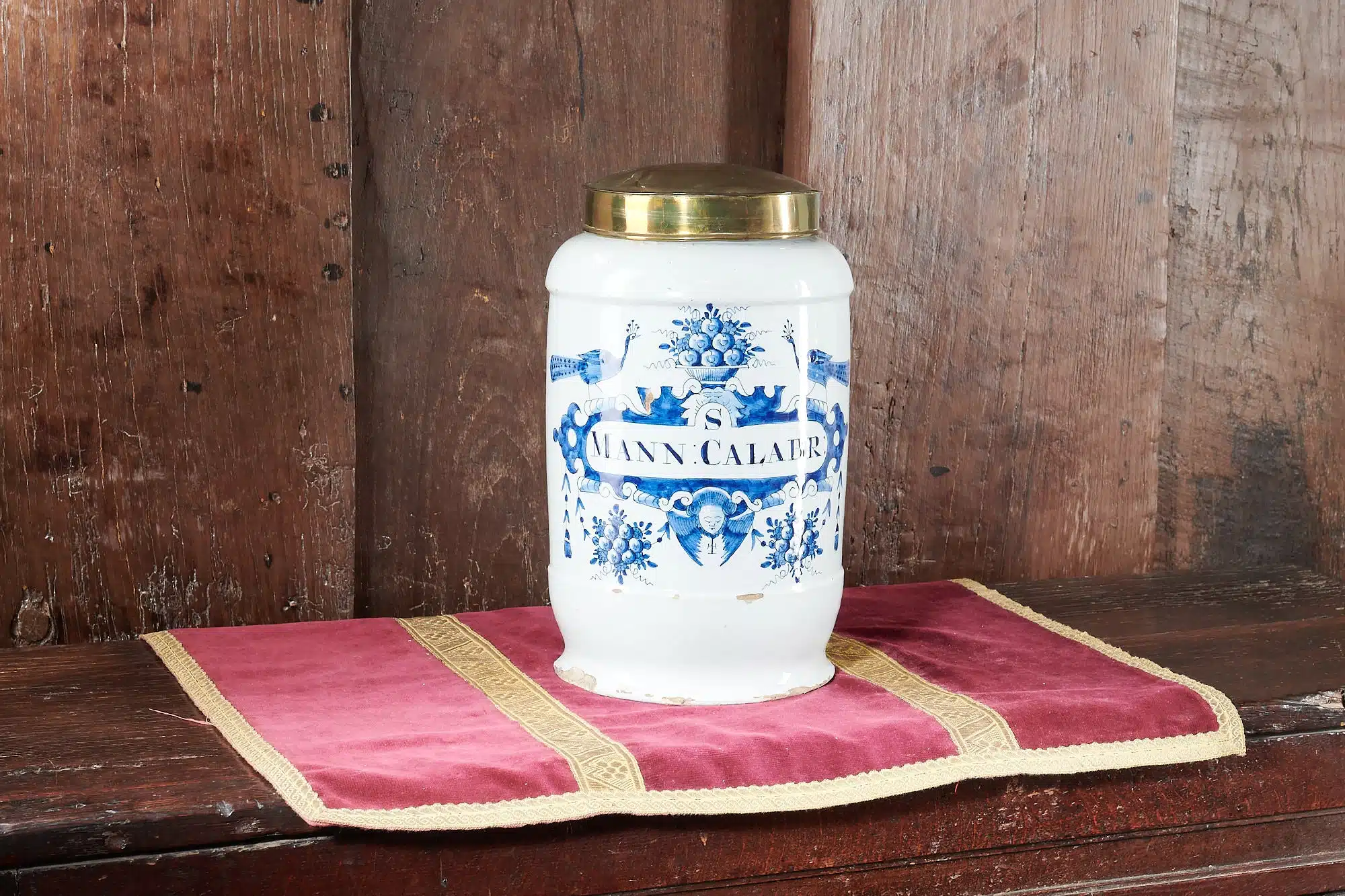
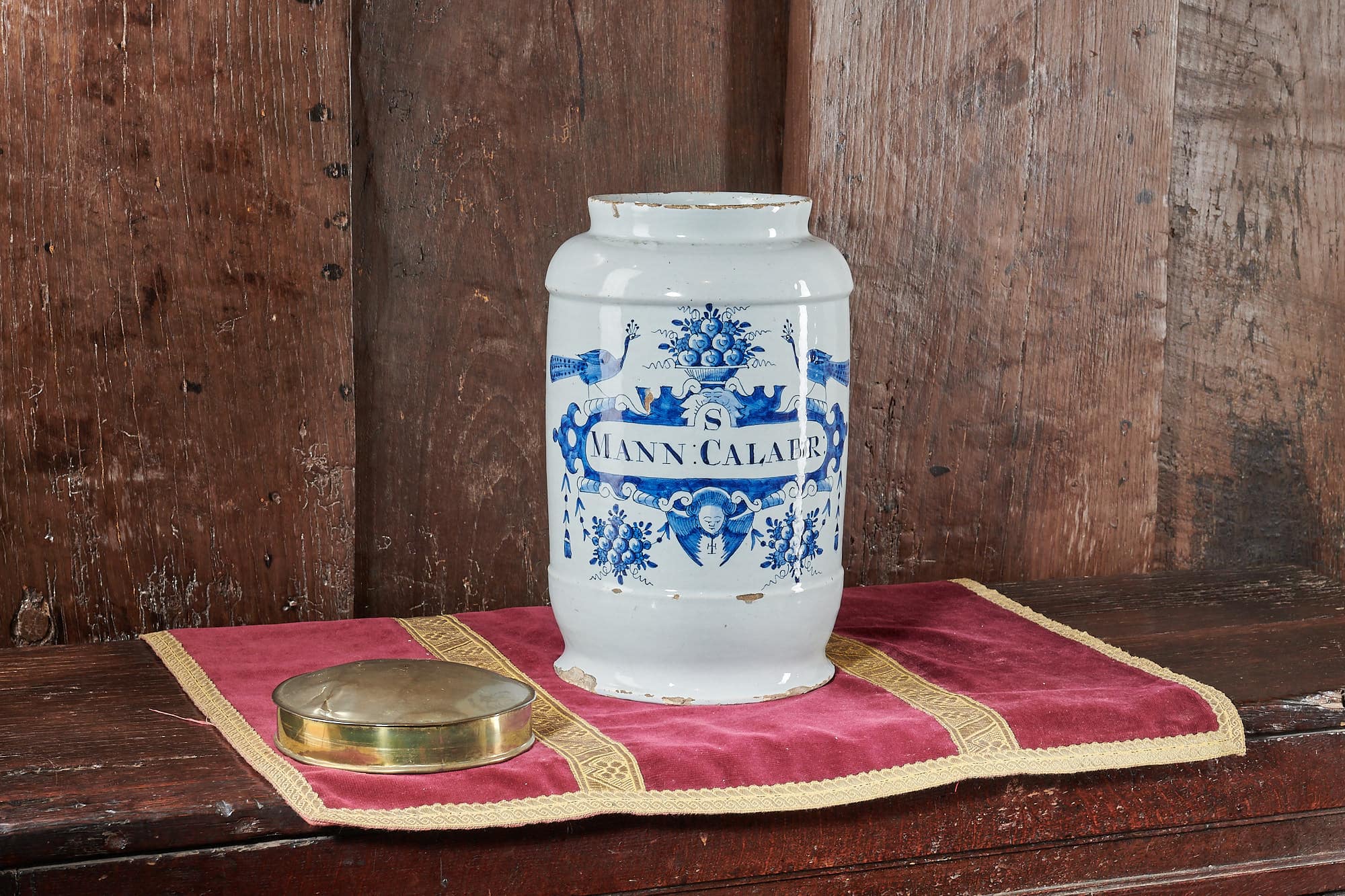
Dutch Delftware Apothecary Jar, inscribed S. MANN: CALABR
- Period
- Circa 1680 - 1700
- Origin
- Dutch
- Dimensions
- W 7" × H 12 1/4"
- Reference
- #Marh2118
This piece has been sold. It is shown here for reference in our archive.
Description
A large and finely painted 17th-century Dutch Delftware apothecary jar of cylindrical form with slightly everted foot, decorated in cobalt blue with floral sprays, cornucopias, and a grotesque mask beneath a foliate cartouche. The cartouche is boldly inscribed S. MANN: CALABR, identifying the original contents as Syrupus Mannae Calabrensis — a medicinal syrup prepared from the sweet sap of the flowering ash tree (Fraxinus ornus), imported from Calabria in southern Italy. This syrup was highly prized in early modern medicine as a gentle laxative and was widely prescribed in European apothecaries of the period.
The jar is surmounted by a later but historically appropriate brass cover, reflecting the practice of lidding storage jars to protect valuable contents. The bold blue painting contrasts with the white tin-glaze ground, typical of Delft drug jars produced for urban pharmacies and monastic hospitals during the late 17th century.
Apothecary jars of this type were commissioned in sets, lining the shelves of early pharmacies where they served not only as containers but as advertisements of order and learning. The survival of a named example of this size is rare, and it reflects both the cross-cultural trade in medicinal substances and the role of Delft potters in furnishing Europe’s medical profession.
Comparable jars can be found in the collections of the Rijksmuseum, Amsterdam, and the Wellcome Collection, London.