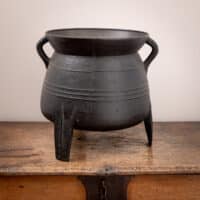
A Large Late Medieval Bronze Cauldron
- Period
- Circa 1450 - 1525
- Origin
- Welsh Borders or Shropshire
- Dimensions
- W 15 1/2" diameter" × H 16""
- Reference
- #Marh3803
£5,250
Description
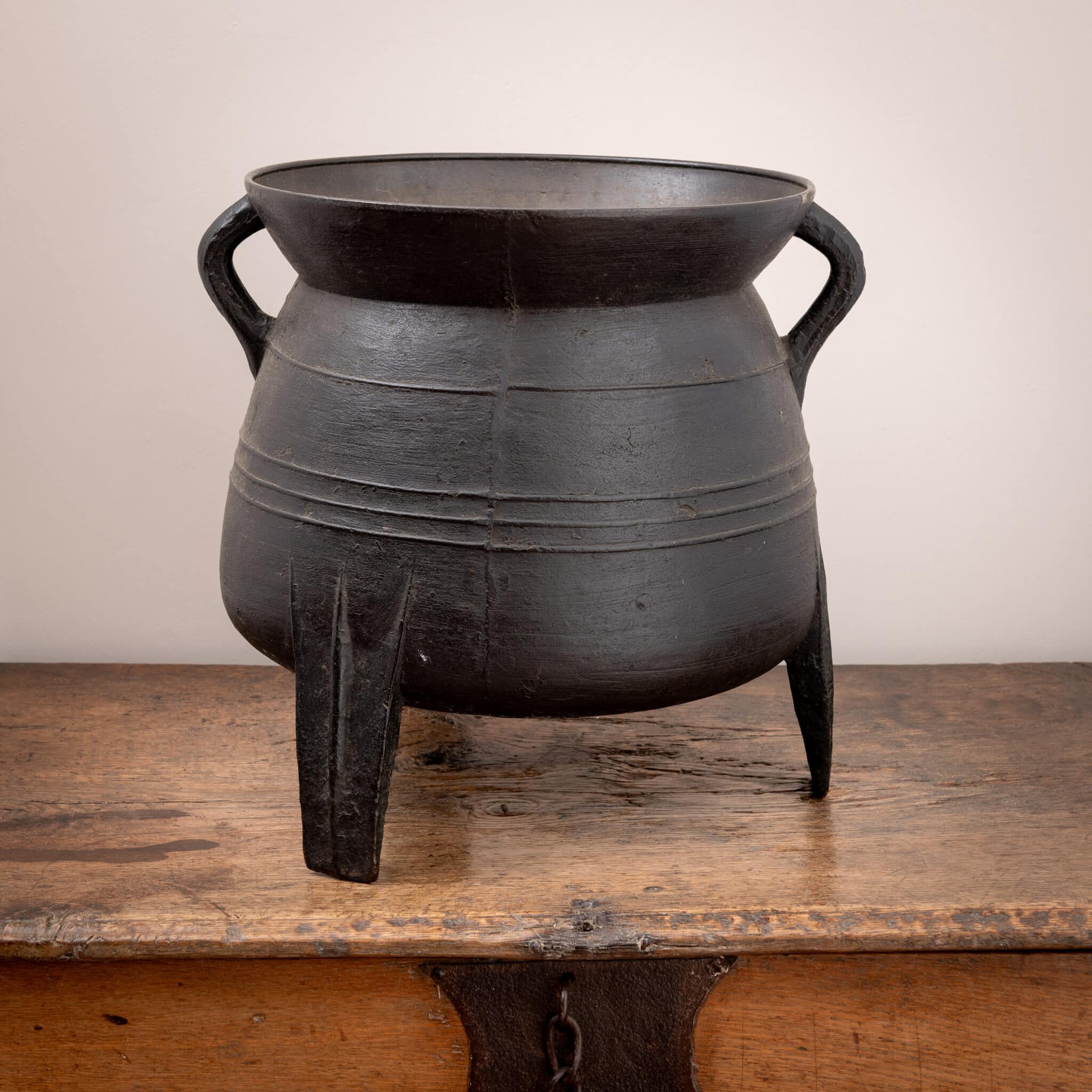
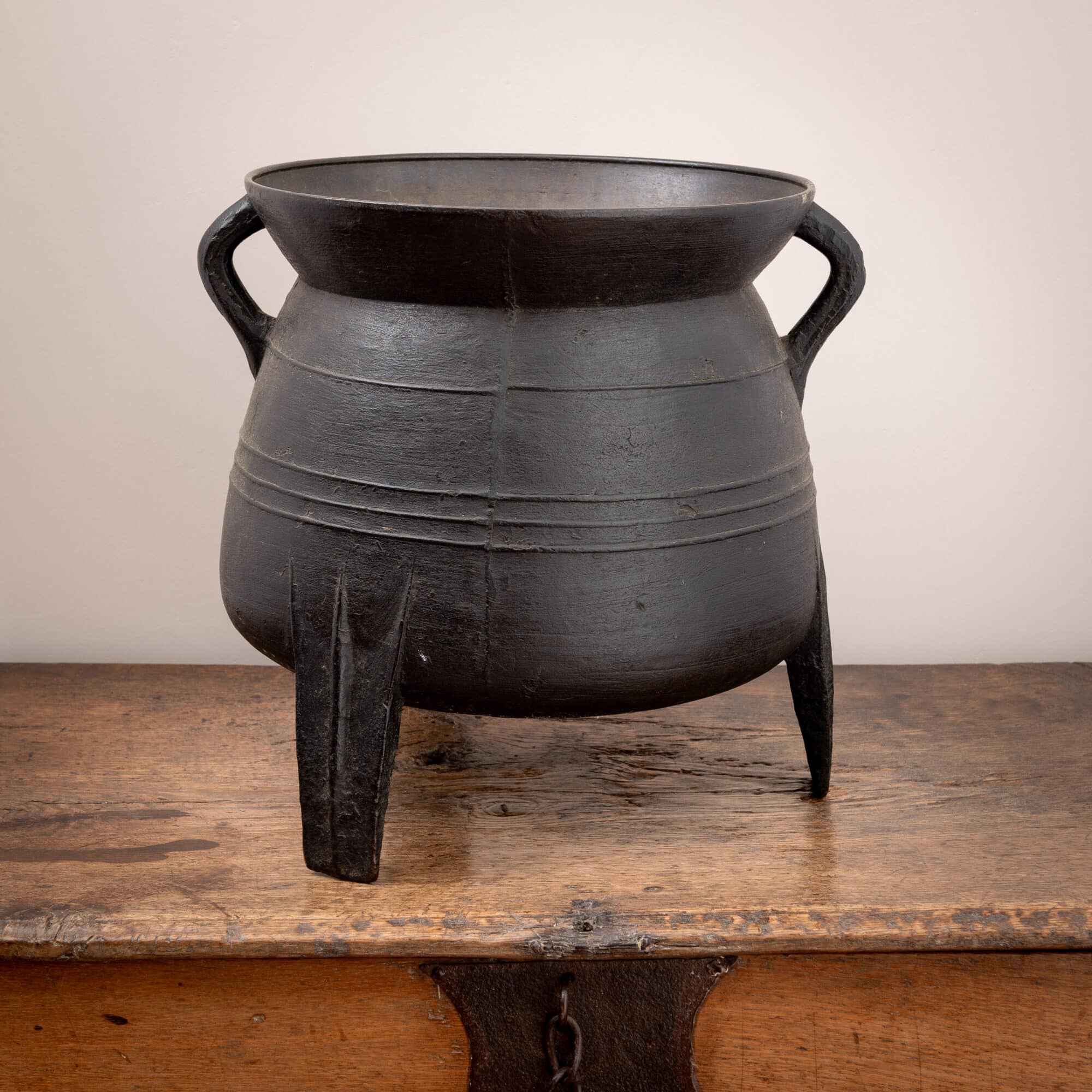
Of exceptionally large and finely proportioned form, the capacious rounded body is raised upon three long, integrally cast blade-shaped legs and rises to a tall, gently everted collar with a thickened rim. The vessel is furnished with two substantial rounded loop handles and ornamented with carefully ordered horizontal cord mouldings. Each leg has a pronounced central rib flanked by recessed channels, the moulding continuing upwards onto the body as a prominent vertical casting ridge.
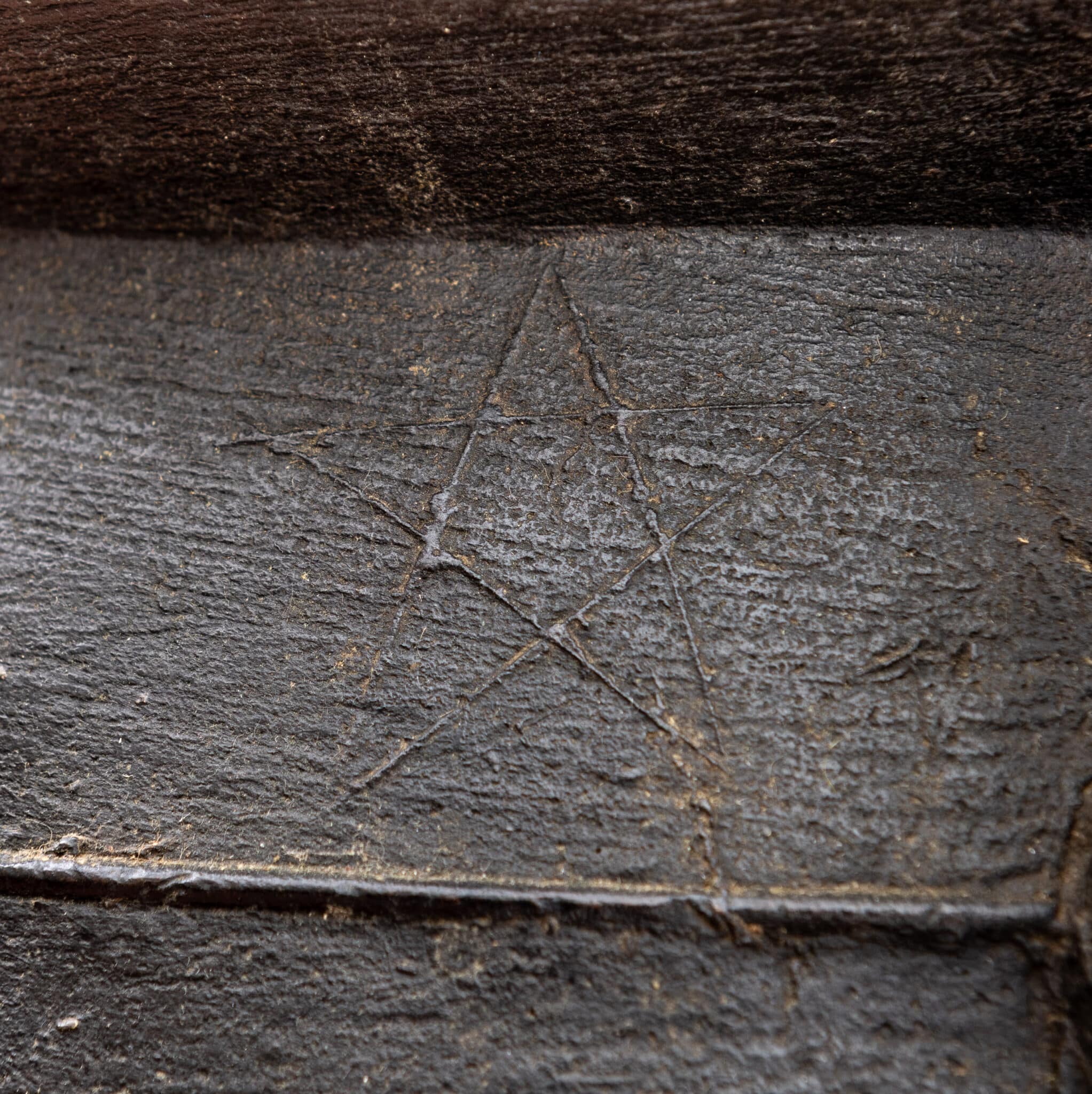
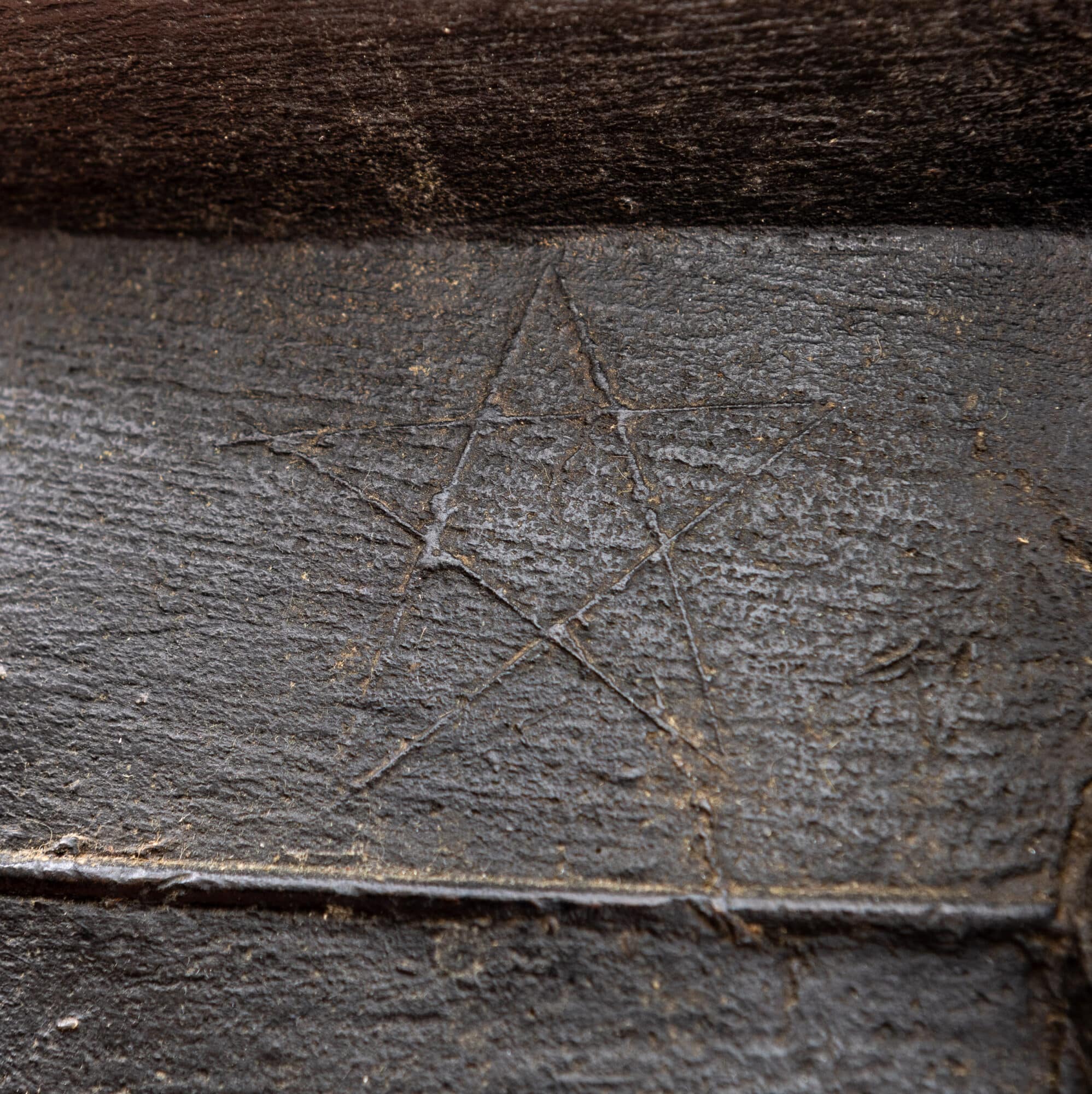
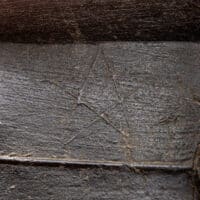
The body incorporates a five-pointed star formed during the casting of the vessel rather than subsequently incised into its surface. Its integral character and deliberate placement suggest that it may represent a workshop or foundry device. Although the identity of the founder remains unknown, the mark offers potentially important evidence for recognising other vessels produced by the same workshop.
The distinctive combination of rounded handles, broad channelled legs, vertical casting ridges and grouped cord mouldings associates this cauldron with a small and apparently localised group attributed to the Welsh Borders and Shropshire. It is particularly closely related to the cauldron formerly in the collection of Roderick Butler and published in Roderick Butler and Christopher Green, English Bronze Cooking Vessels and Their Founders 1350–1830, no. 136. The remarkable correspondence between the rounded handles and unusual leg profiles of the two vessels suggests production within the same regional foundry tradition and raises the possibility that they were made by the same unidentified workshop.
A further important comparison is the bronze cauldron formerly at Nannau, near Dolgellau, Merioneth, illustrated by Richard Bebb and dated to the late fifteenth to mid-sixteenth century. That vessel shares the present example’s tall flared collar, rounded body, horizontal mouldings and broad ribbed legs, although the legs of the Nannau cauldron have been slightly reduced. A related cauldron in the British Museum, no. 1891,1217.1, possesses comparable raised ribs, vertical casting divisions and moulded legs and was formerly exhibited in the Tudor Kitchen at Hampton Court Palace.
The present cauldron is larger, more finely cast and substantially better preserved than the presently identified Butler, Nannau and British Museum comparisons. Its long, unreduced legs, two complete rounded handles, balanced proportions and unusually crisp architectural mouldings preserve the original character of this regional type to an exceptional degree. It represents an outstanding survival from the late-medieval bronze-founding tradition of Wales and the Welsh Marches.