A Late Gothic Polychrome and Gilt Wood Sculpture of a Saintly King
- Period
- Circa 1480
- Origin
- Austria, Tyrol
- Dimensions
- W 14"" × H 43 3/4"" × D 11 3/4""
- Reference
- #Marh3886
Price on application
Description
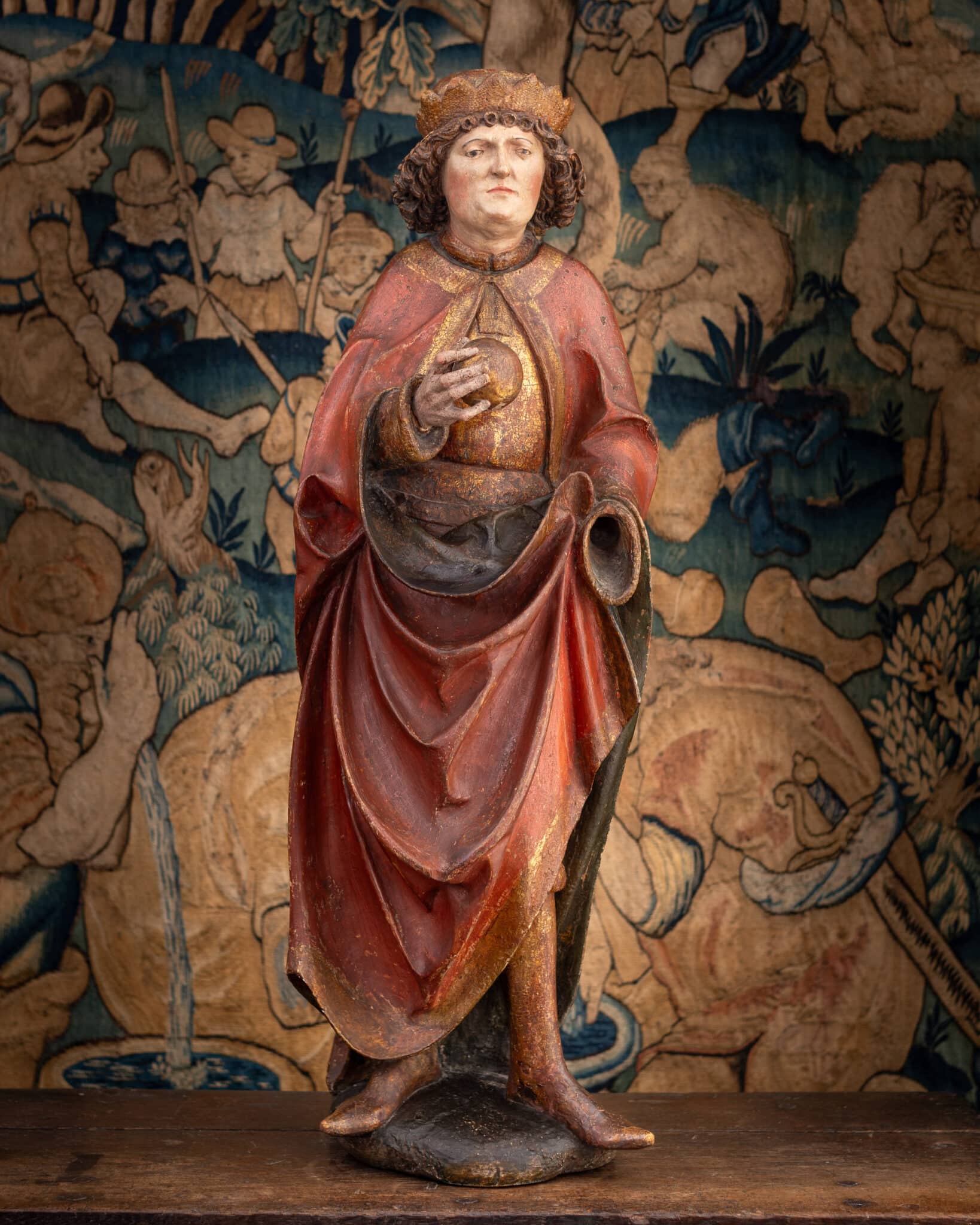
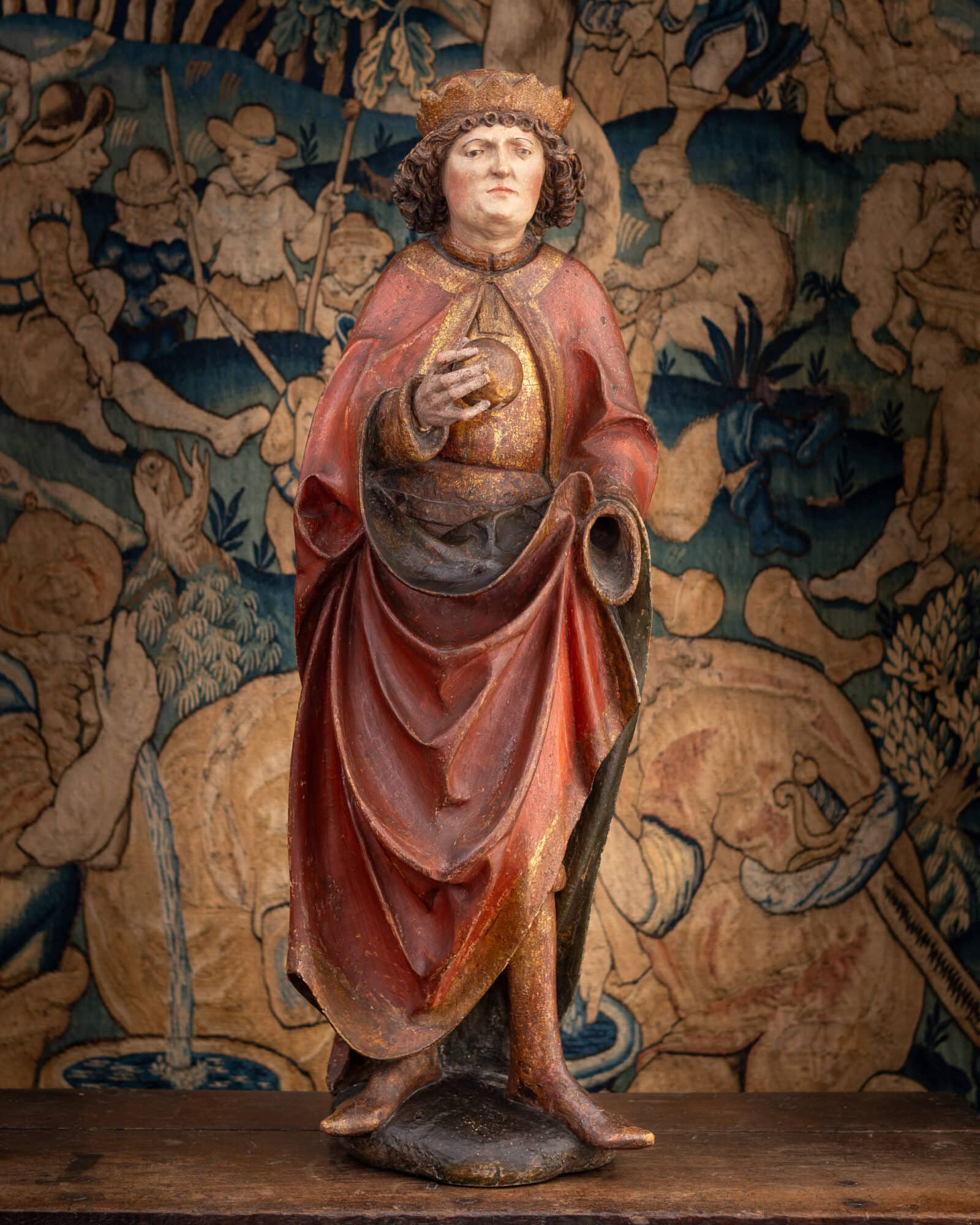
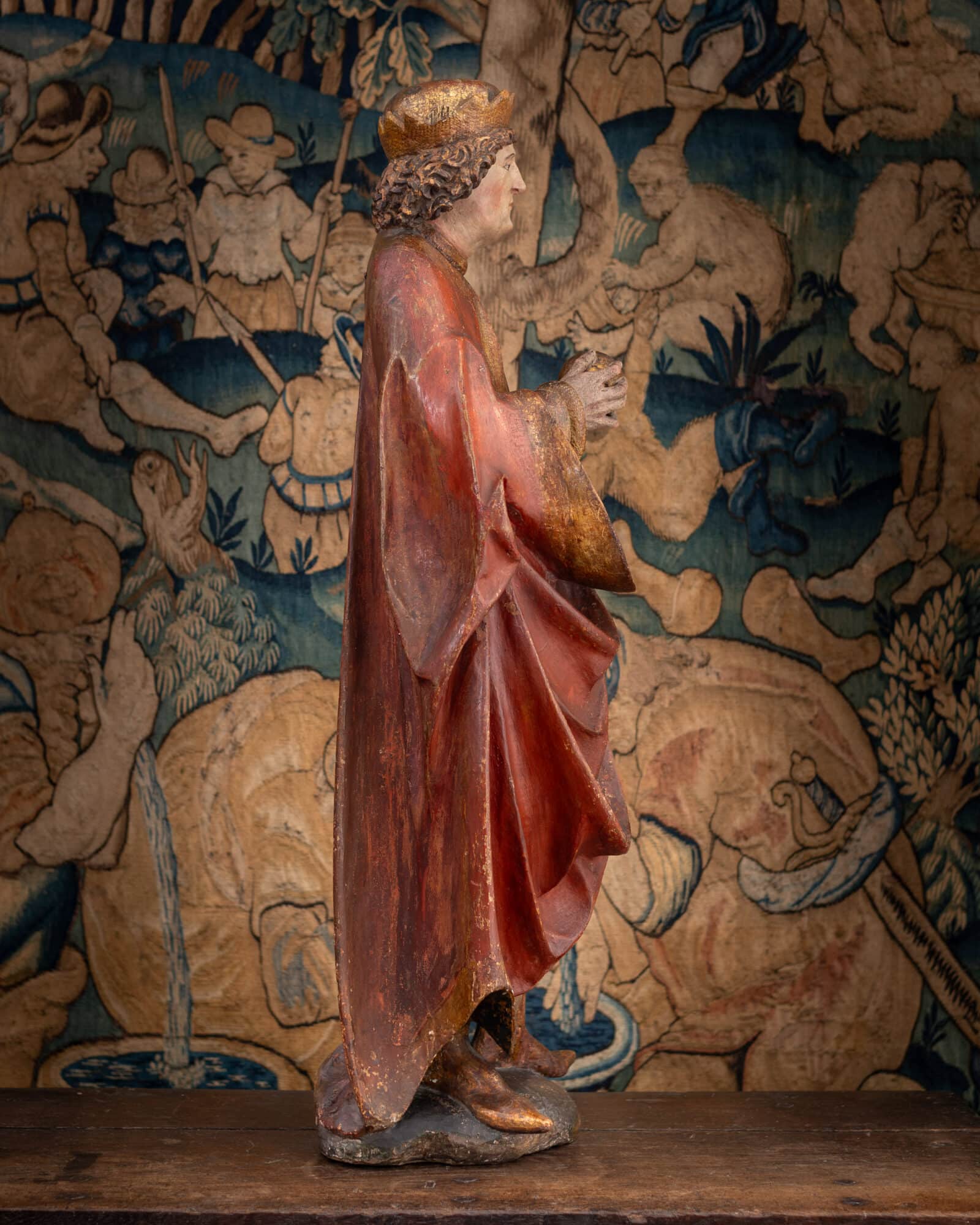
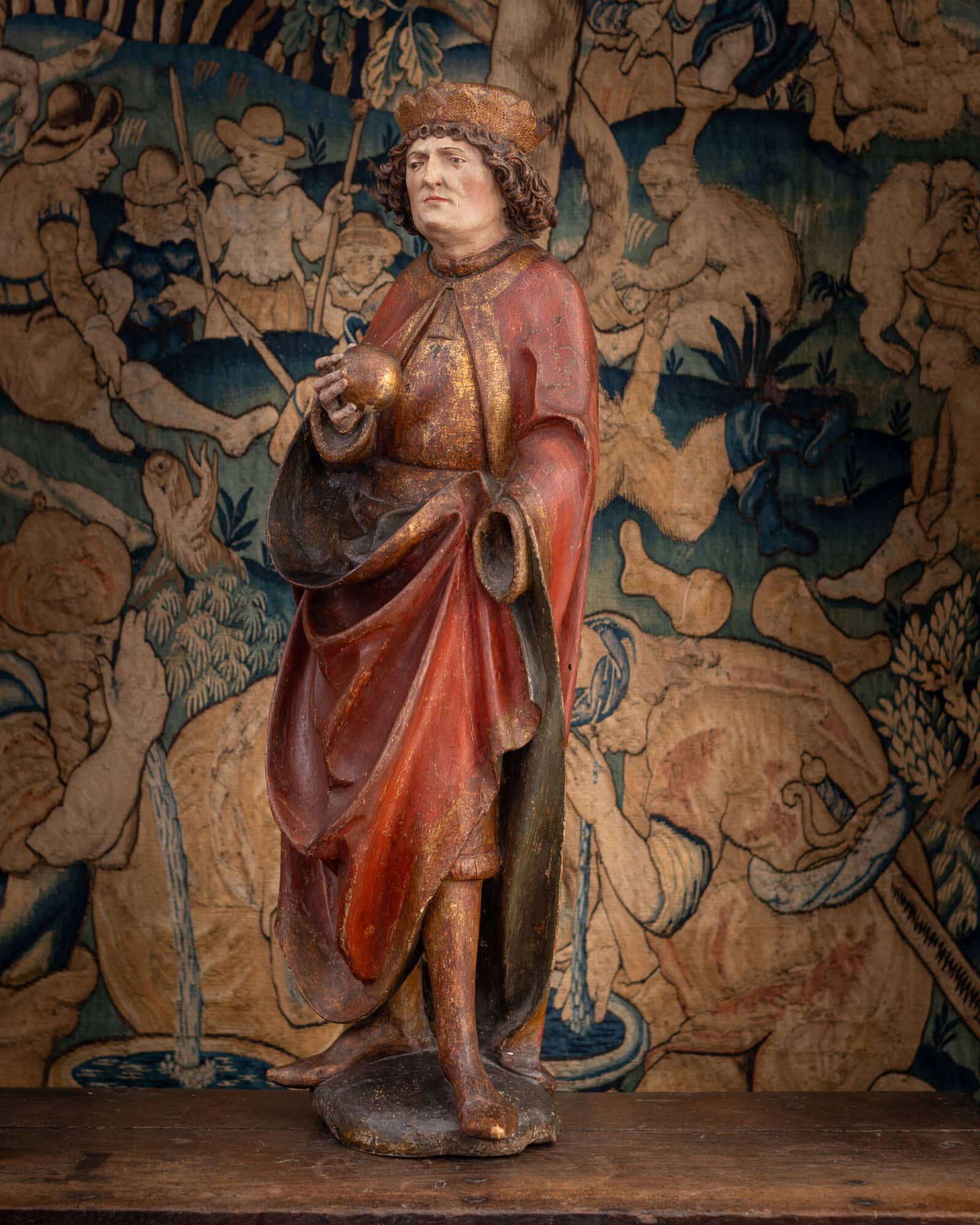
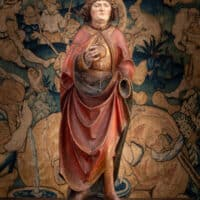
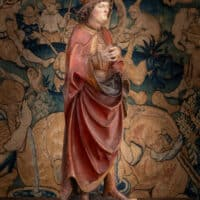
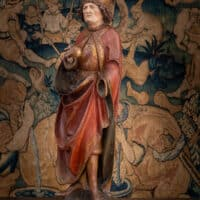
An accomplished late fifteenth-century carved wooden sculpture depicting a crowned saintly king, retaining extensive historic polychromy and gilding. Traditionally attributed to the Tyrol, the figure belongs to the flourishing tradition of late Gothic sculpture in the Austrian Alpine regions during the second half of the fifteenth century.
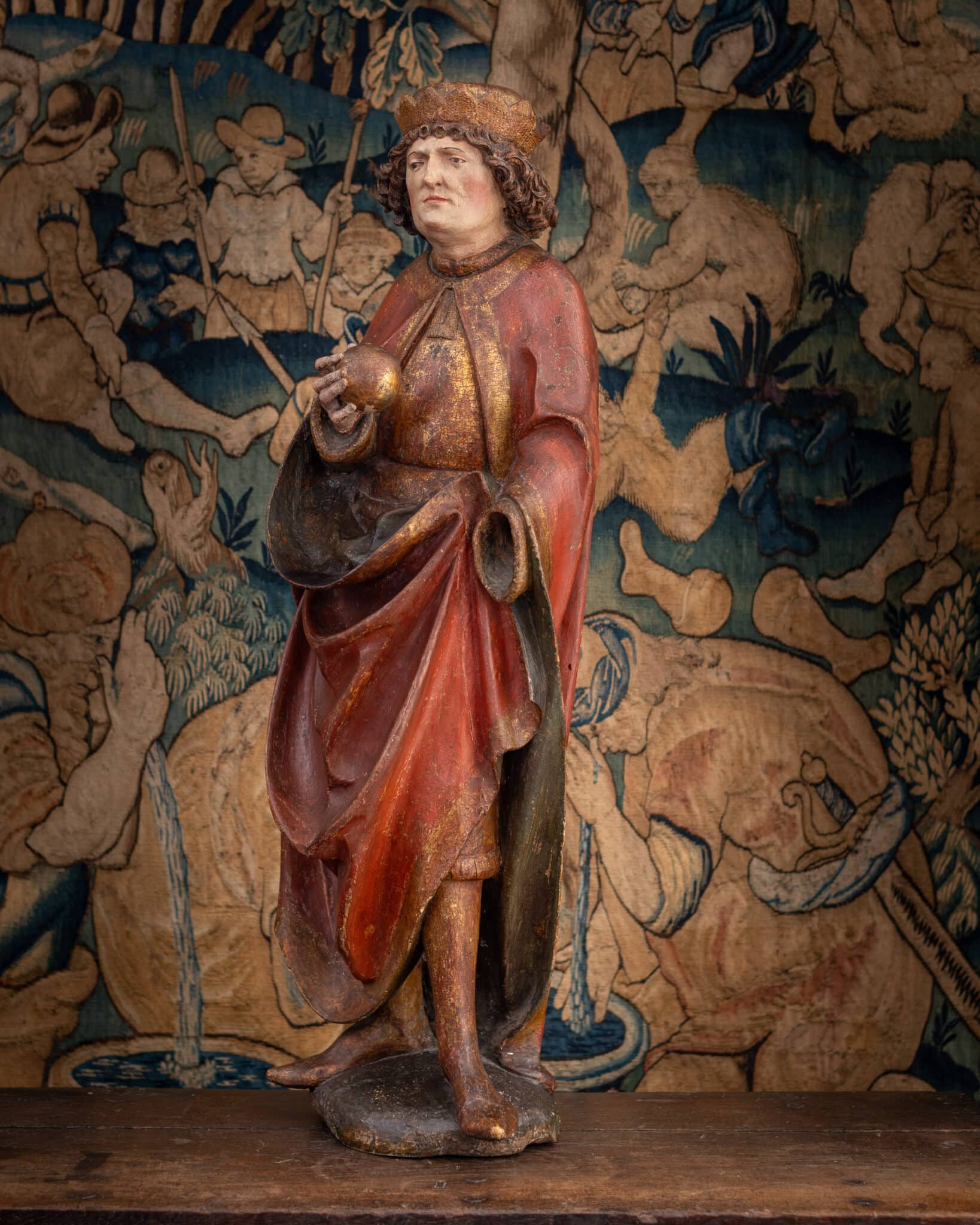
The king stands upon an integral, irregularly shaped base, wearing a gilded coronet above an abundance of carefully carved, tightly curled hair. His broad, expressive face is distinguished by small, deeply set eyes, softly modelled cheeks, a pronounced nose and a slightly downturned mouth. The individual treatment of the facial features lends the figure a notably contemplative expression.
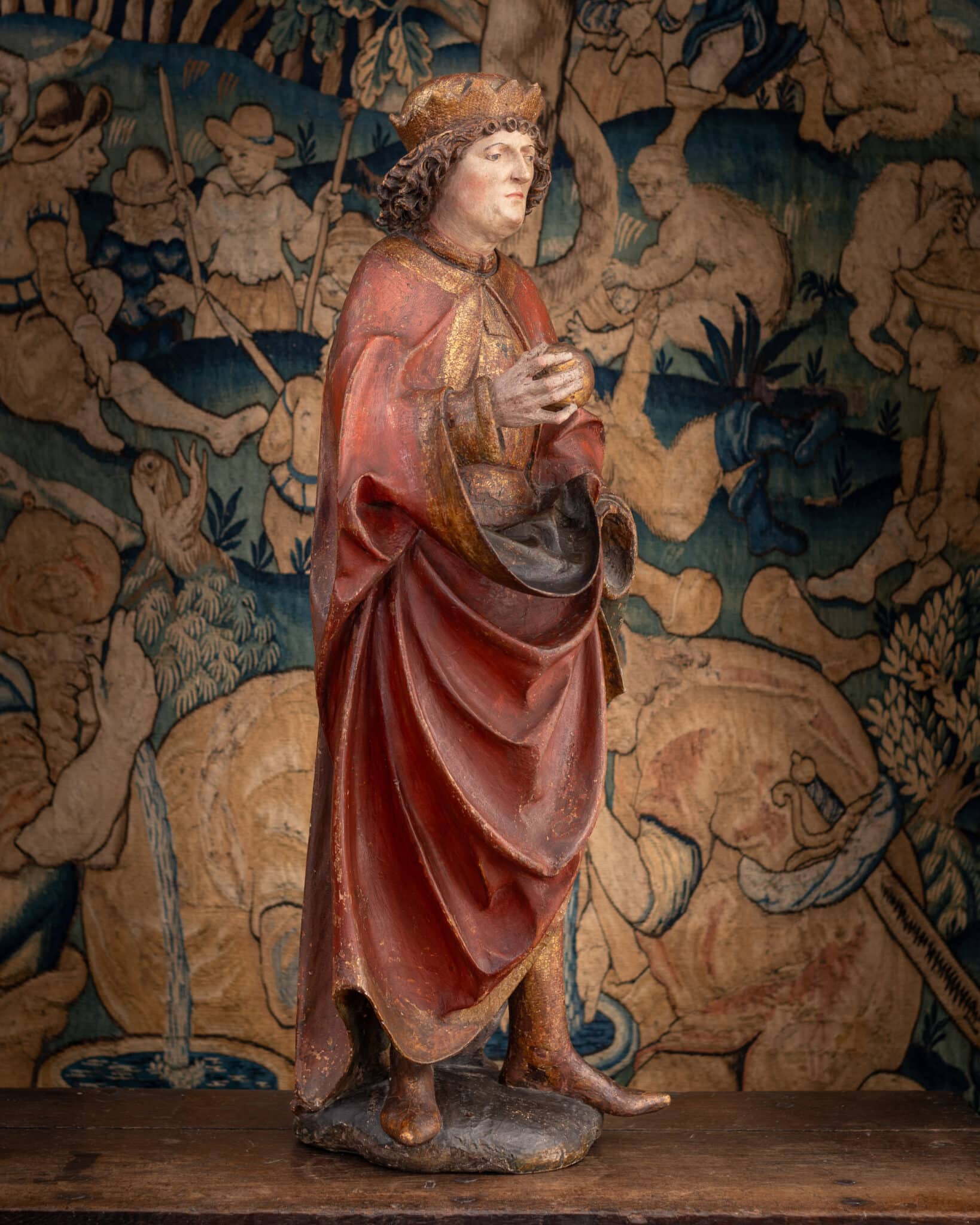
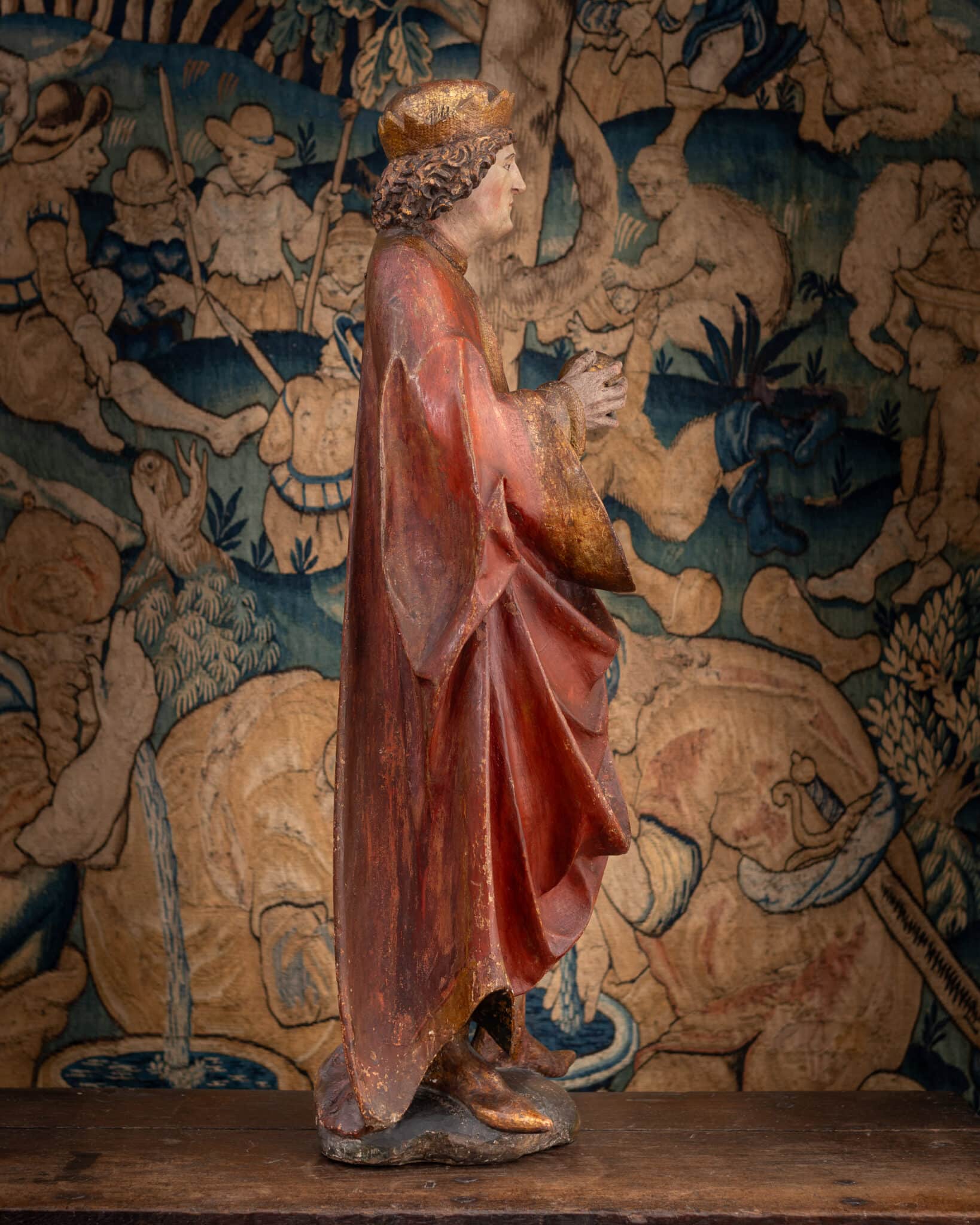
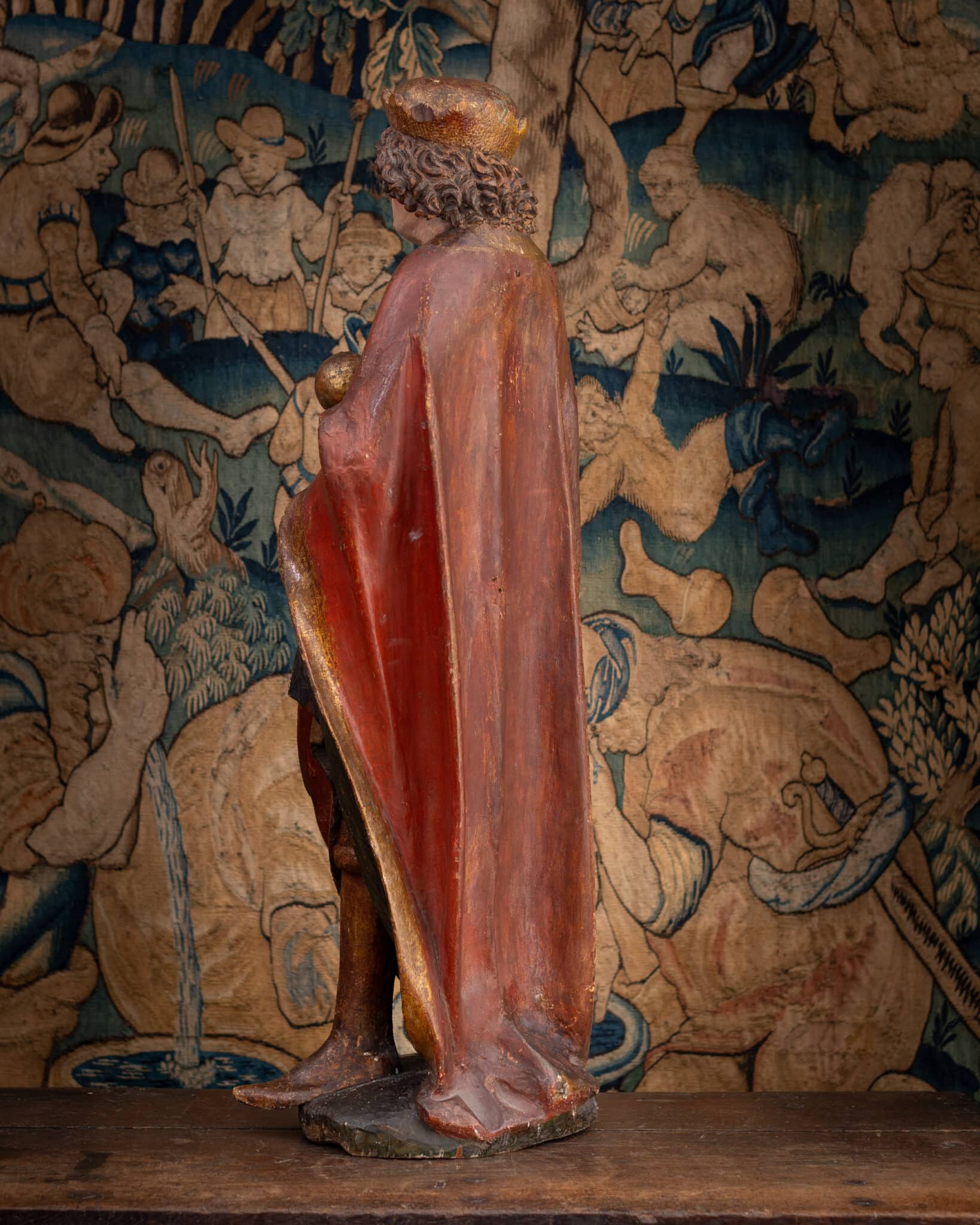
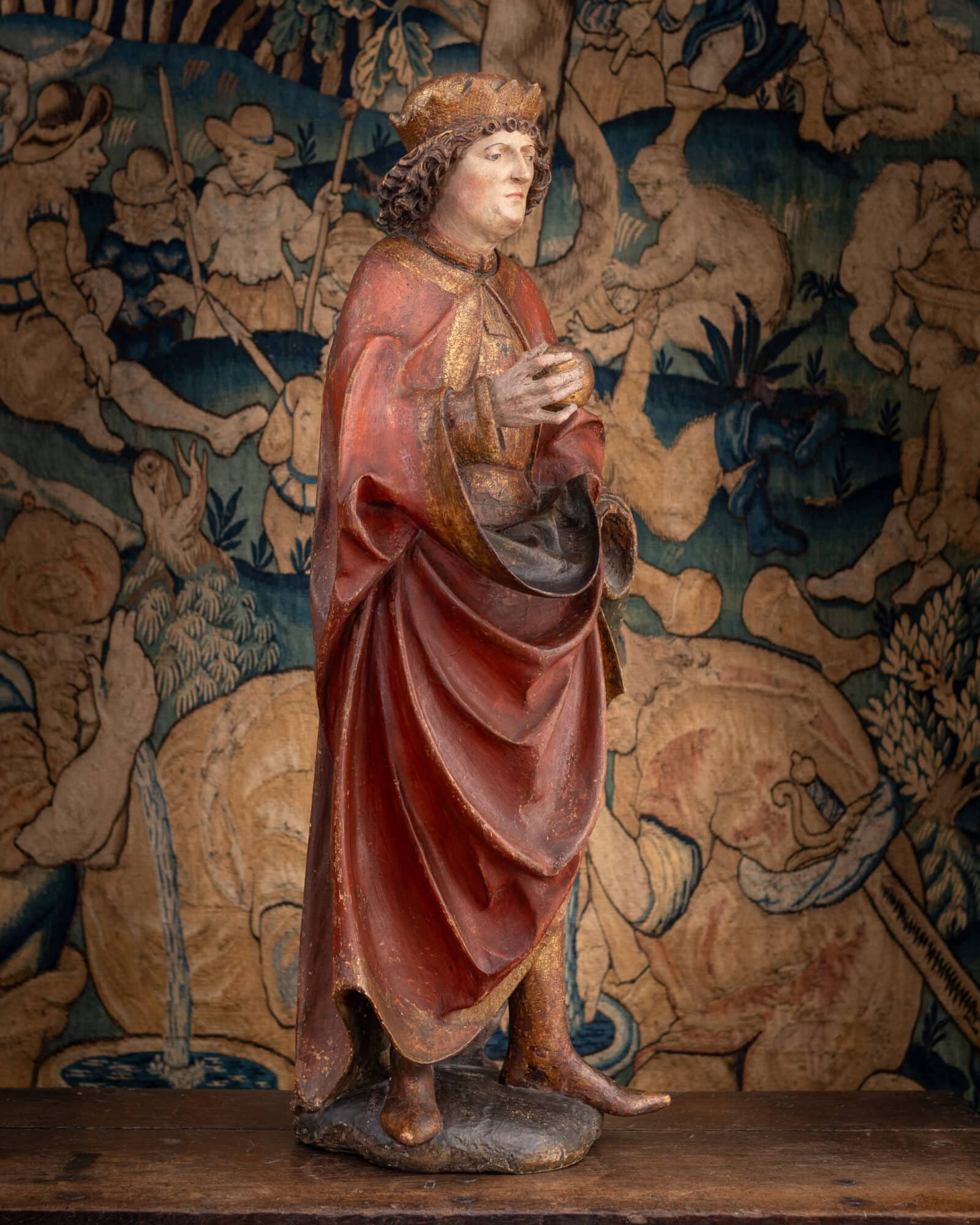
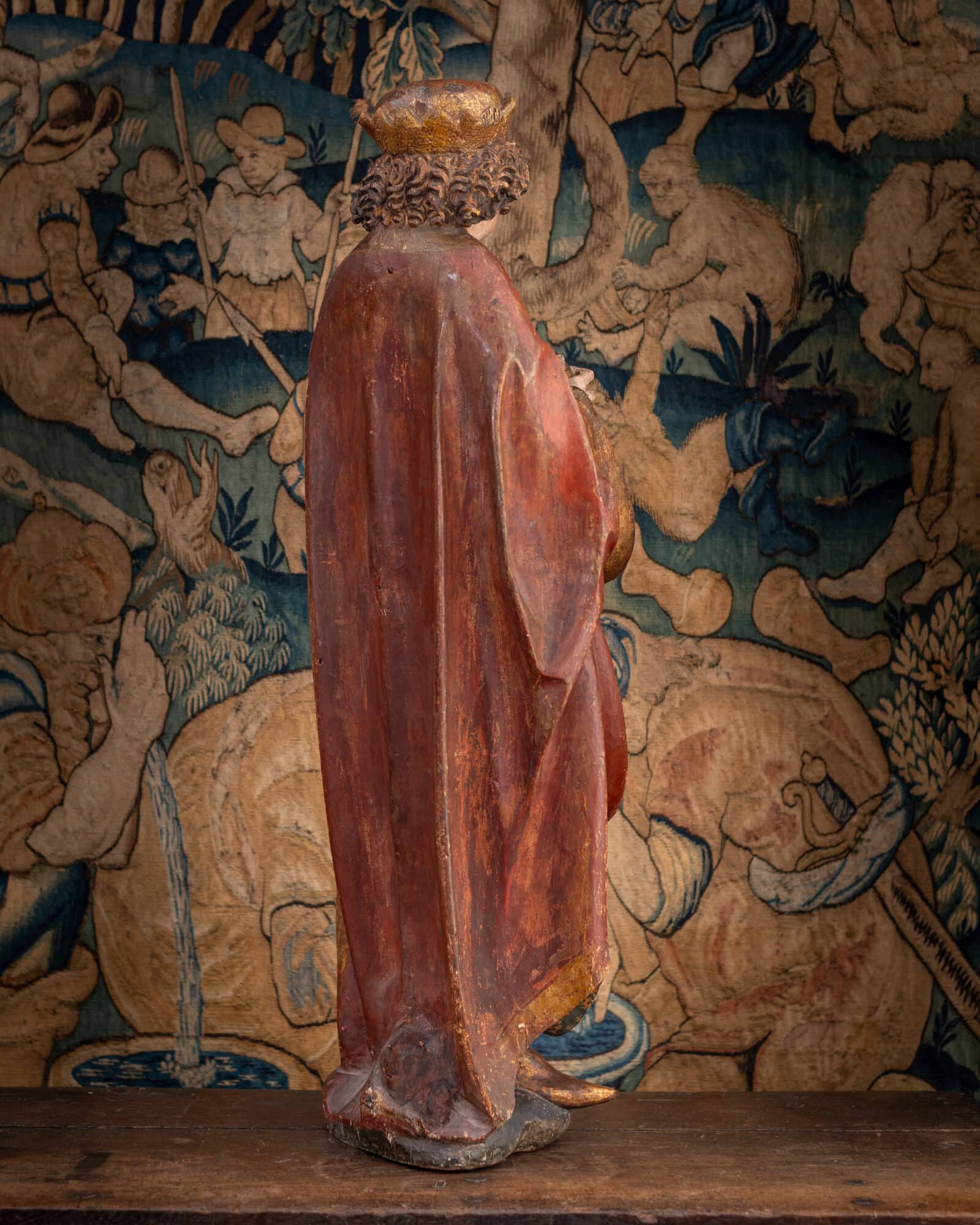
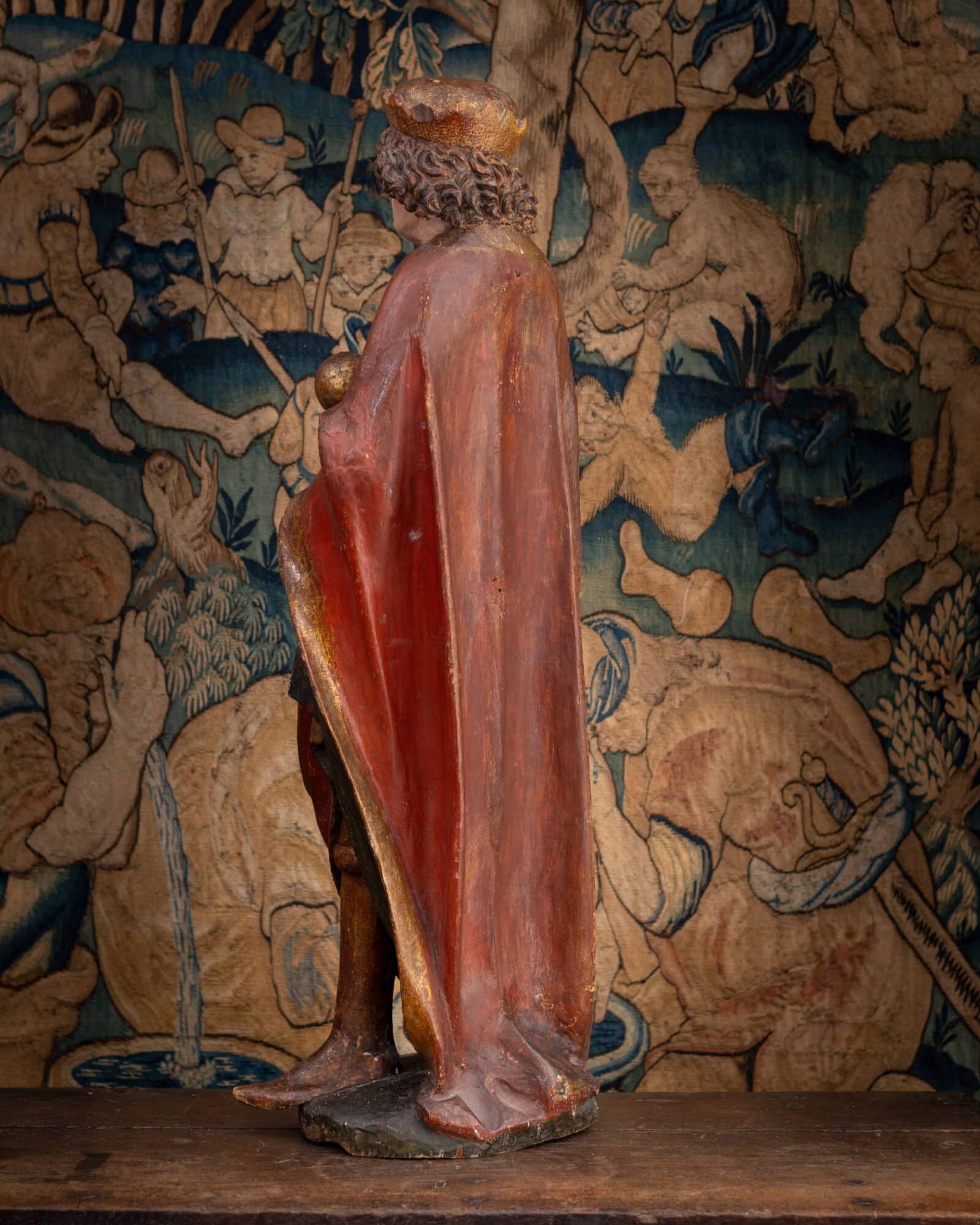
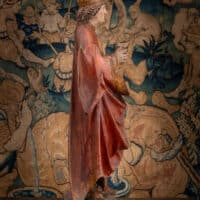
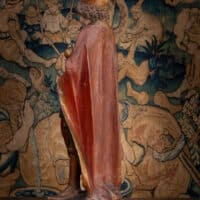
He wears a long, flowing mantle of deep red, enriched with gilded borders and gathered across the front in a succession of deeply carved folds. The sculptor has achieved a particularly effective contrast between the broad, relatively restrained planes of the outer garment and the elaborate arrangement of drapery across the lower body. A prominent, ear-shaped fold projects across the waist, while the material descends in angular and overlapping formations, revealing the king’s legs and pointed footwear beneath.
The garment opens at the chest to reveal a gilded tunic, its surface retaining areas of finely aged decoration. The surviving polychromy, combining rich red, gilded ornament, dark lining and delicately rendered flesh tones, contributes considerably to the sculpture’s visual character.
In his right hand the king holds a gilded orb, originally surmounted by a cross, identifying him as a royal figure. His other hand, now absent, would have held a further attribute, possibly a sceptre. The precise identity of the saint remains uncertain, although Saint Oswald of Northumbria and Saint Henry II, Holy Roman Emperor, are both plausible candidates. Both enjoyed veneration within the German-speaking territories during the later Middle Ages.
The sculpture may be considered within the artistic environment of Tyrol and the neighbouring Salzburg region, where the production of carved and polychromed altarpieces reached a high level of refinement during the latter decades of the fifteenth century.
Particularly relevant is the comparison identified in Sotheby’s catalogue with a figure of Saint Nicholas, dating to circa 1470, formerly at St Georgen am Pinzgau, illustrated in Anton Legner’s Spätgotik in Salzburg: Skulptur und Kunstgewerbe 1400–1530 (Salzburg, 1976, fig. 160a).
The similarities noted in the catalogue concern the compact proportions of the figure, the broad facial structure with small eyes and subtly projecting mouth, and, most significantly, the distinctive arrangement of the drapery, including the prominent ear-shaped fold extending across the lower body. These characteristics provide a useful basis for considering the present sculpture within the late Gothic carving traditions of the eastern Alpine regions.
A further comparison may be drawn with the sculptural work associated with Michael Pacher (circa 1435–1498), whose celebrated high altarpiece at St Wolfgang im Salzkammergut, completed in 1481, represents one of the major achievements of late fifteenth-century Alpine art. In particular, the treatment of the facial features and the carefully articulated modelling of the head invite comparison with the figure of Saint Wolfgang from that ensemble.
These parallels suggest an artistic context informed by the sculptural developments taking place in Tyrol and Salzburg during the period, without necessarily indicating the hand of a particular master or workshop.
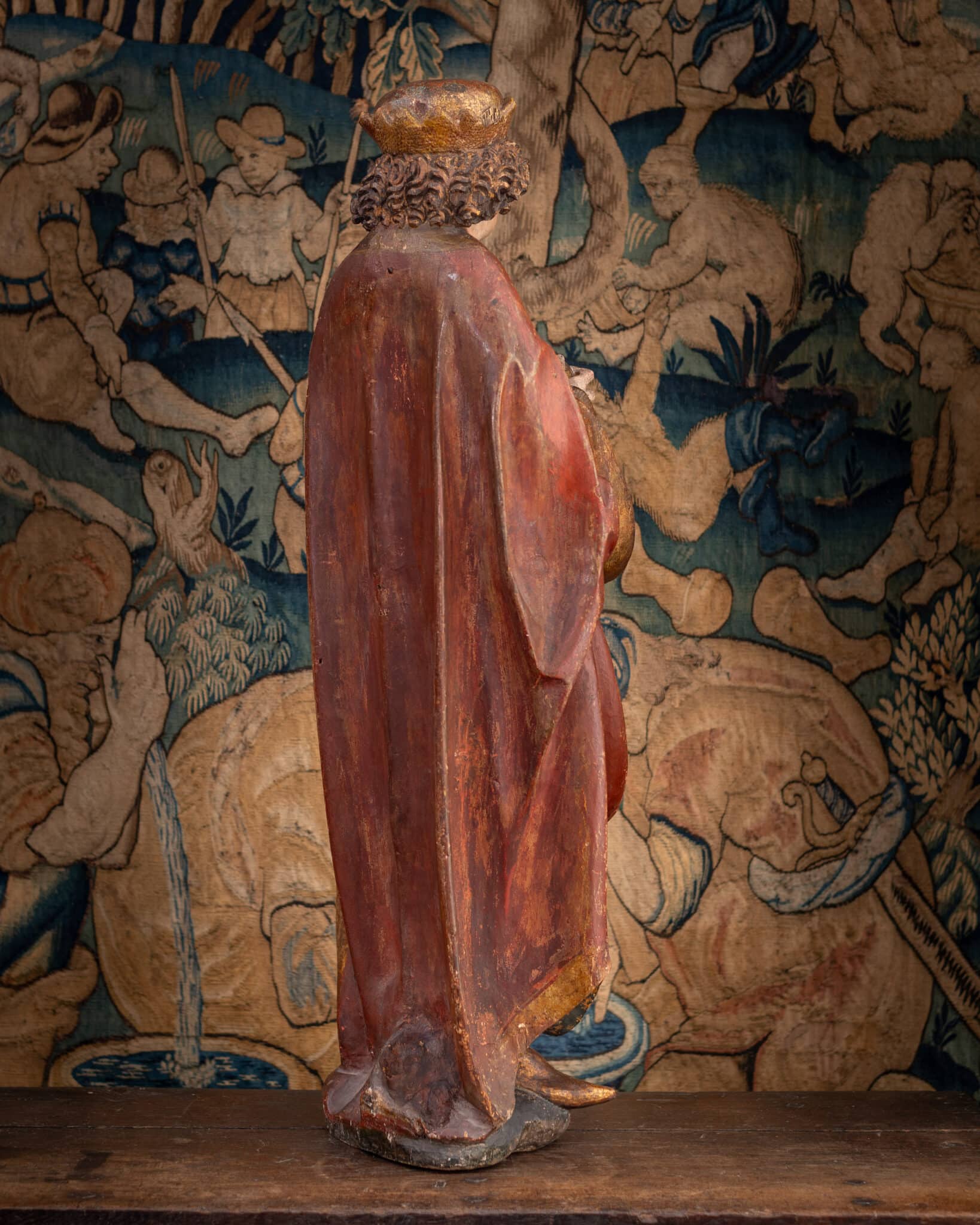
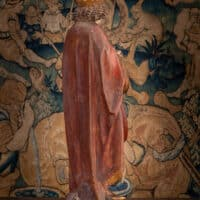
The sculpture was probably intended for an ecclesiastical setting, potentially forming part of a carved altarpiece or a related devotional ensemble. Its substantial dimensions, carefully considered frontal composition and comparatively restrained treatment of the reverse are consistent with such a function.
The survival of extensive polychromy and gilding allows the sculpture to be appreciated in a manner approaching its original visual conception, in which richly coloured garments and gilded ornament formed an integral part of the sculptor’s design.
Provenance
With Wilhelm Henrich, Frankfurt am Main, 1957.
Private collection, Germany, acquired from the above.
Thence by descent.
Sotheby’s, London, Old Master Sculpture & Works of Art, 5 December 2017, lot 43.
Sotheby’s, London, Old Master Sculpture & Works of Art, 3 December 2019, lot 25.
Comparative Literature
A. Legner, Spätgotik in Salzburg: Skulptur und Kunstgewerbe 1400–1530, exhibition catalogue, Salzburg, 1976, p. 129, fig. 160a.
T. Müller, Gotische Skulptur in Tirol, Bozen, 1976, particularly the discussion and illustrations relating to Michael Pacher and the sculpture of the later fifteenth century.