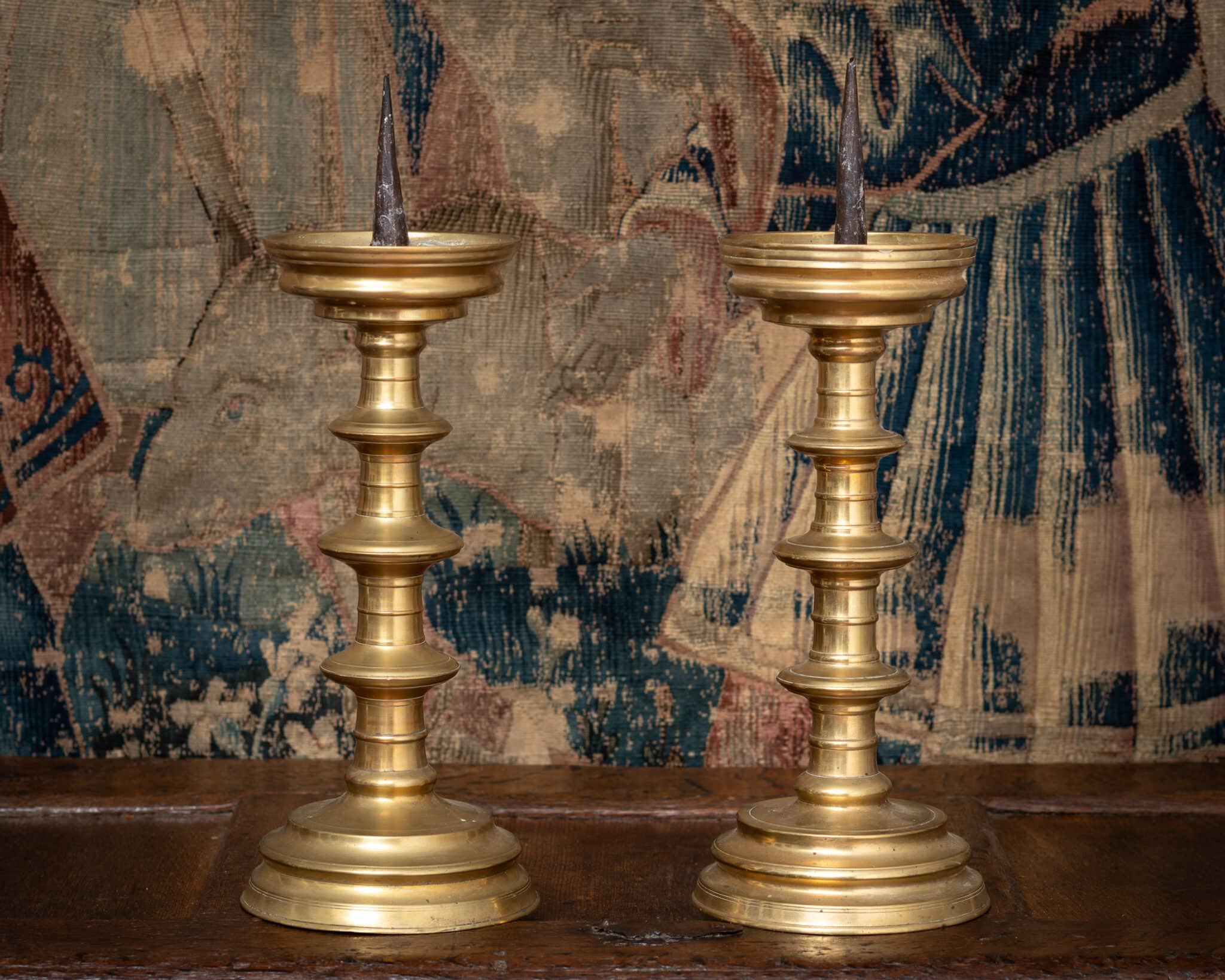
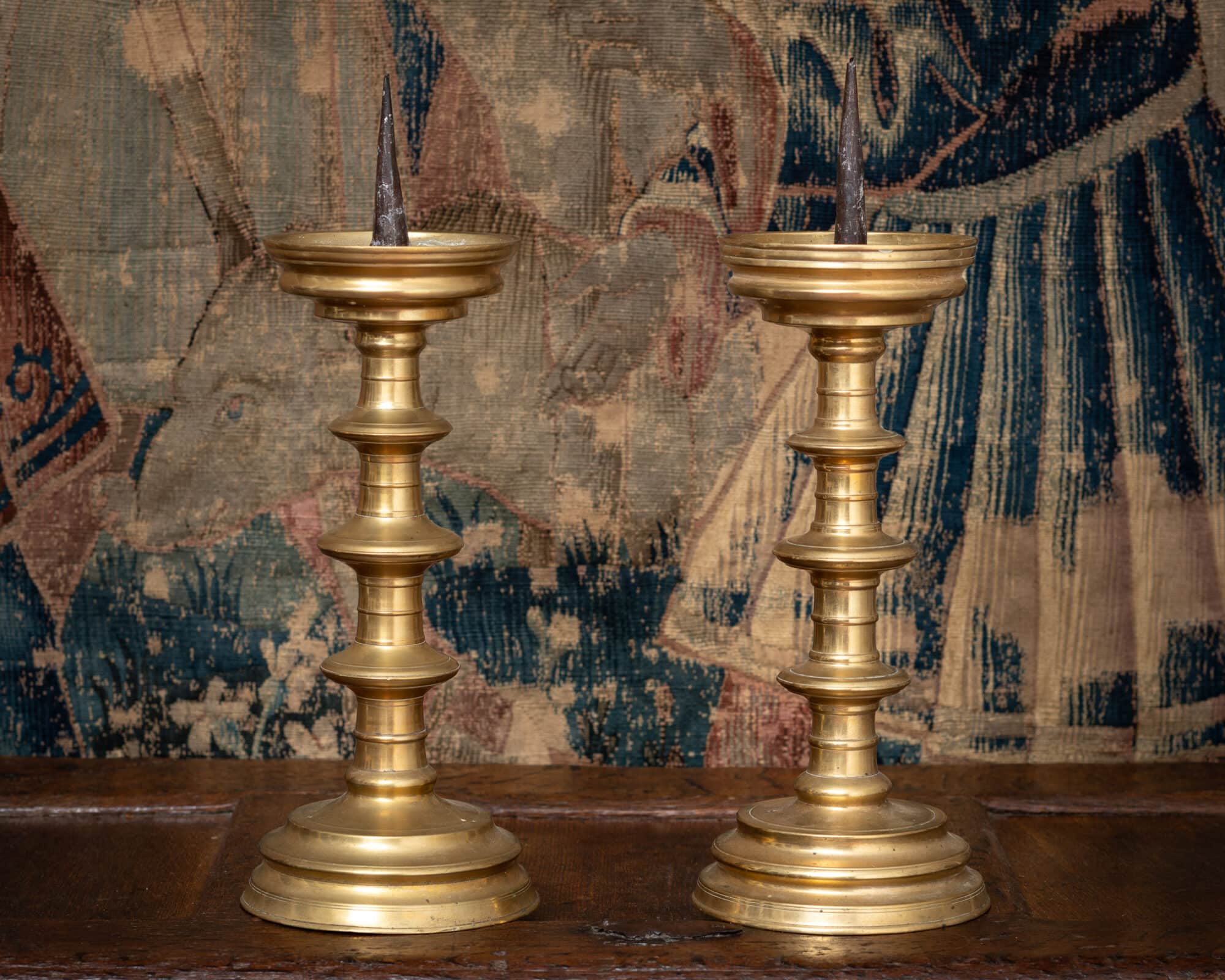
A Pair of Early 16th-Century Nuremberg Brass Pricket Candlesticks
- Period
- 1500–1550
- Origin
- Nuremberg, Southern Germany
- Dimensions
- W 6 1/2" diameter" × H 18" high"
- Reference
- #Marh3897
£8,250
Description
A substantial pair of early sixteenth-century cast brass pricket candlesticks, each comprising a broad, circular drip pan with a pronounced moulded rim, centred by a tapering wrought-iron pricket. The elegantly proportioned stems incorporate three prominent disc-shaped knops, separated by cylindrical sections enriched with finely incised concentric bands, terminating in broad, graduated circular bases.
The architectural composition and rhythmic arrangement of the mouldings are characteristic of the German brass-founding tradition during the transition from the Late Gothic to the Renaissance. The restrained ornamentation, together with the emphasis upon symmetry and proportion, reflects the developing Renaissance vocabulary within early sixteenth-century metalwork.
By the beginning of the sixteenth century, Nuremberg had become one of the foremost centres of brass production in northern Europe, with its workshops supplying ecclesiastical institutions, aristocratic households and the increasingly prosperous merchant classes. Pricket candlesticks of this substantial form were particularly suited to ecclesiastical interiors, where their elevated iron spikes accommodated large wax candles.
The slight variations in the profiles of the stems, drip pans and bases reflect the individual casting and hand-finishing processes associated with brass production during this period.
A particularly well-proportioned pair, distinguished by their substantial scale, finely articulated mouldings and warm golden colour.