
• Current Stock
  • Archive
  • Notable Works
  • About Us
  • News
  • Contact
Home / Current Stock / An Early Stuart Join…
Previous Next
An Early Stuart Joined Oak Stool

An Early Stuart Joined Oak Stool

Period
1620–1640
Origin
England
Dimensions
W 18 3/4"" × H 23 3/4"" × D 13""
Reference
#Marh3872

£2,250

Description

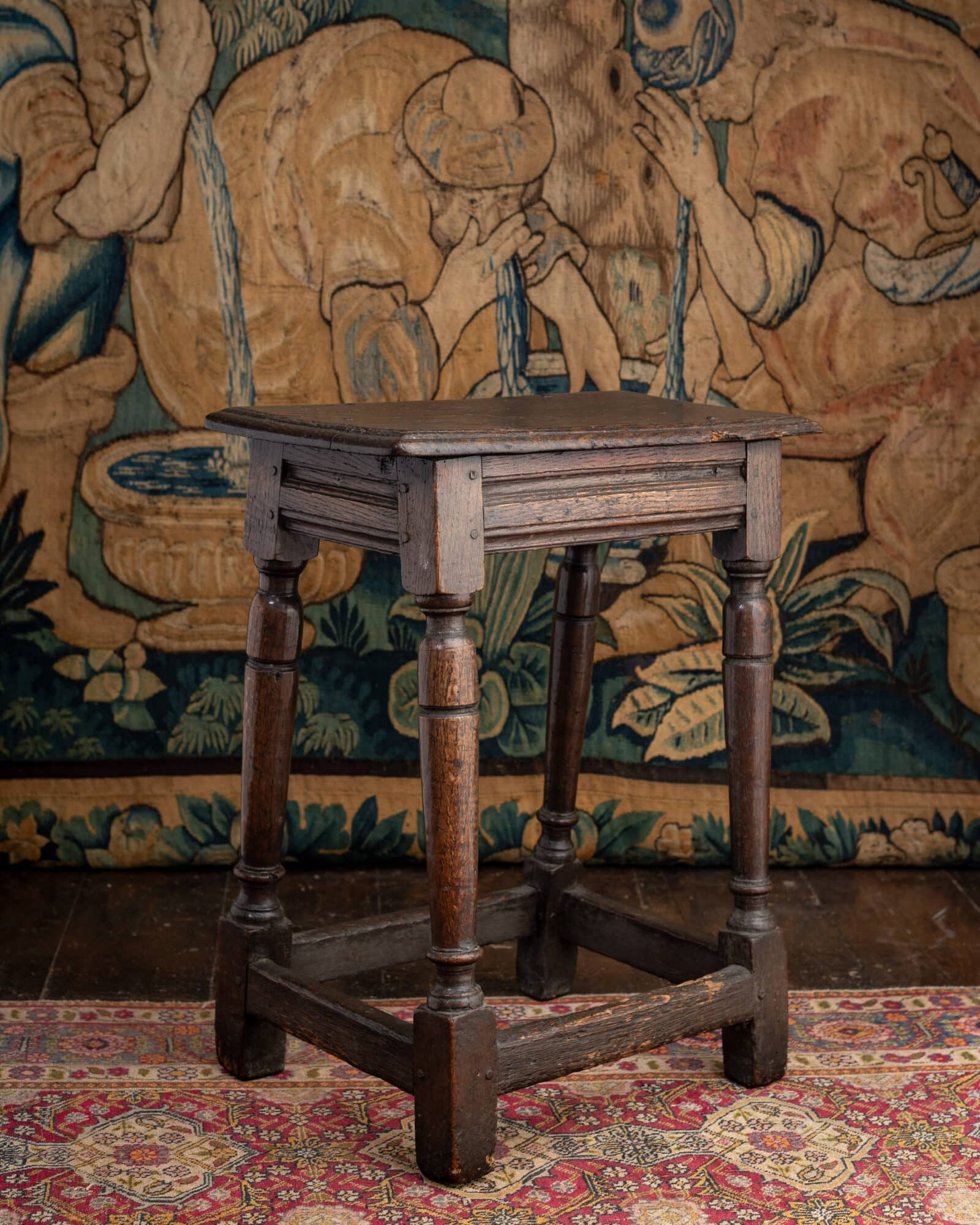
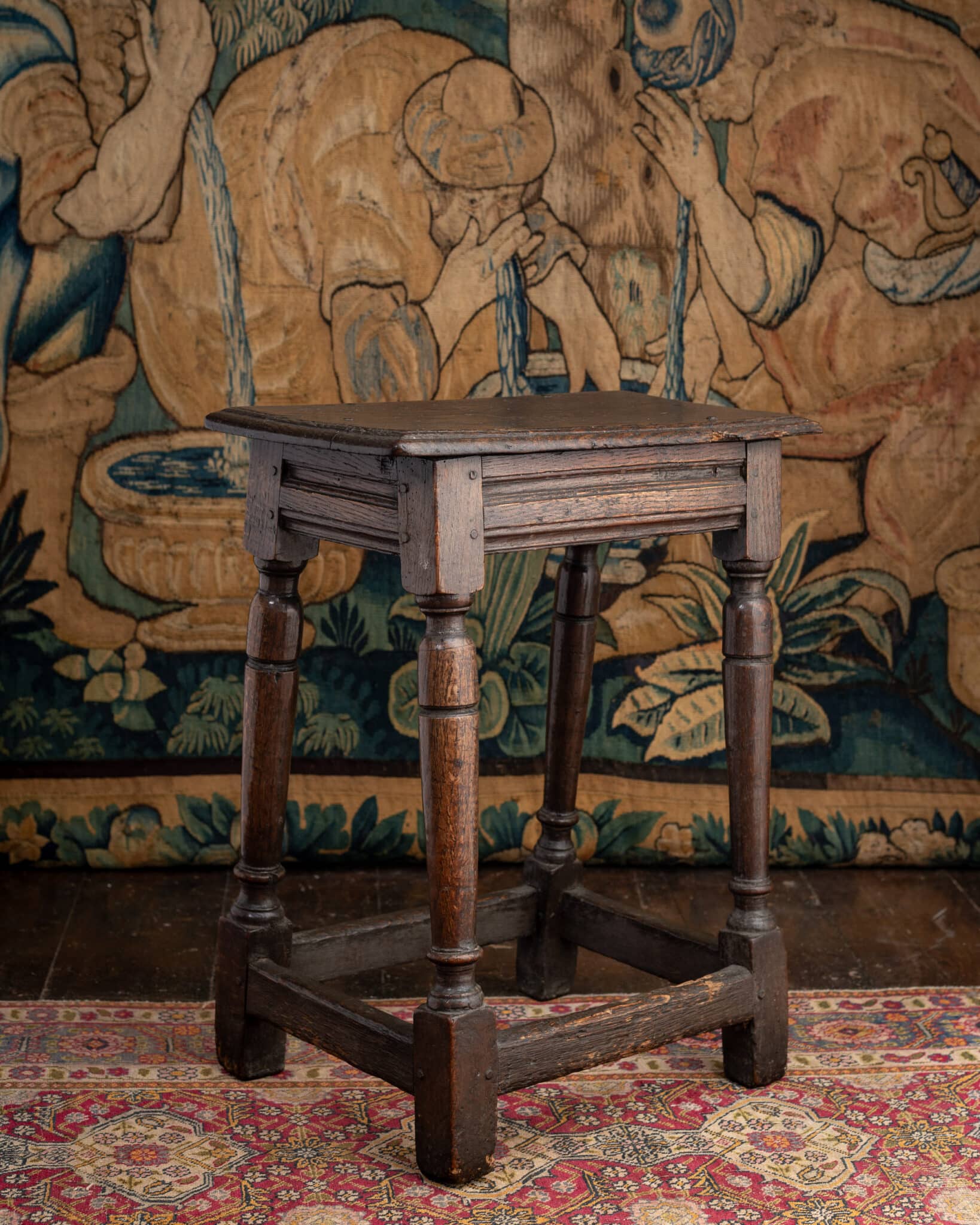
An English joined oak stool of restrained architectural form, the rectangular overhanging top with a moulded edge, above channel-moulded frieze rails supported on four elongated turned baluster legs, joined by plain rectangular stretchers positioned close to the feet.

The stool is distinguished by the slender proportions of its baluster turnings, each incorporating a subtly shaped upper section, elongated cylindrical shaft and a succession of narrow collars and moulded transitions. The substantial square blocks at the junctions of the rails and legs provide a structural contrast to the comparatively delicate turnings, while the low stretchers contribute to the balanced proportions of the overall design.

The horizontal channel mouldings of the upper rails introduce a restrained decorative element, reflecting the continued influence of architectural forms upon English joined furniture during the early decades of the seventeenth century.

The combination of a relatively plain frieze, elongated baluster turnings and low rectangular stretchers is consistent with English furniture produced during the later years of James I and the early reign of Charles I. The increasingly slender treatment of the turned supports suggests a date within the second quarter of the seventeenth century, although manufacture during the 1620s cannot be excluded.
 

The joined oak stool was an established form of English domestic furniture throughout the sixteenth and seventeenth centuries, serving as a practical and adaptable furnishing within households of differing social standing. Its development reflected the traditions of English joinery, in which framed construction, mortise-and-tenon joints and carefully worked oak provided furniture of considerable structural strength and durability.

During the Elizabethan and early Stuart periods, stools formed an important part of the furnishing of halls, parlours, chambers and other domestic interiors. Unlike chairs, which could carry particular associations of rank and authority, stools provided convenient seating that could be readily moved and arranged according to the requirements of the household. They were employed both individually and in groups, often in conjunction with long tables and other joined furniture.

Historical Note

Previous A Pair of Elizabeth… Next A Large Elizabeth I…
  • An Early Stuart Joined Oak Stool

Newsletter

New Stock, Direct to Your Inbox.

Be among the first to hear about new acquisitions and notable works.

Please enable JavaScript in your browser to complete this form.
Loading
  • Current Stock
  • Archive
  • Notable Works
  • About Us
  • News
  • Contact

Contact Us

+44 (0)777 903 8891

  • Pinterest
  • Instagram

By Appointment

Devon, England.

Marhamchurch Antiques

Specialist in early oak furniture and works of art.

© 2026 Marhamchurch Antiques | Website by Dancing Badger Ltd

  • Privacy Policy
  • Terms & Conditions

Search the collection

Search in

    Enquire About This Piece

    An Early Stuart Joined Oak Stool · Ref. Marh3872

    Please enable JavaScript in your browser to complete this form.
    Newsletter signup
    Loading
    1 / 1