An Elizabeth I Carved Oak Desk Box
- Period
- 1600
- Origin
- England
- Dimensions
- W 27 3/4"" × H 10"" × D 17 3/4""
- Reference
- #Marh3850
£2,250
Description
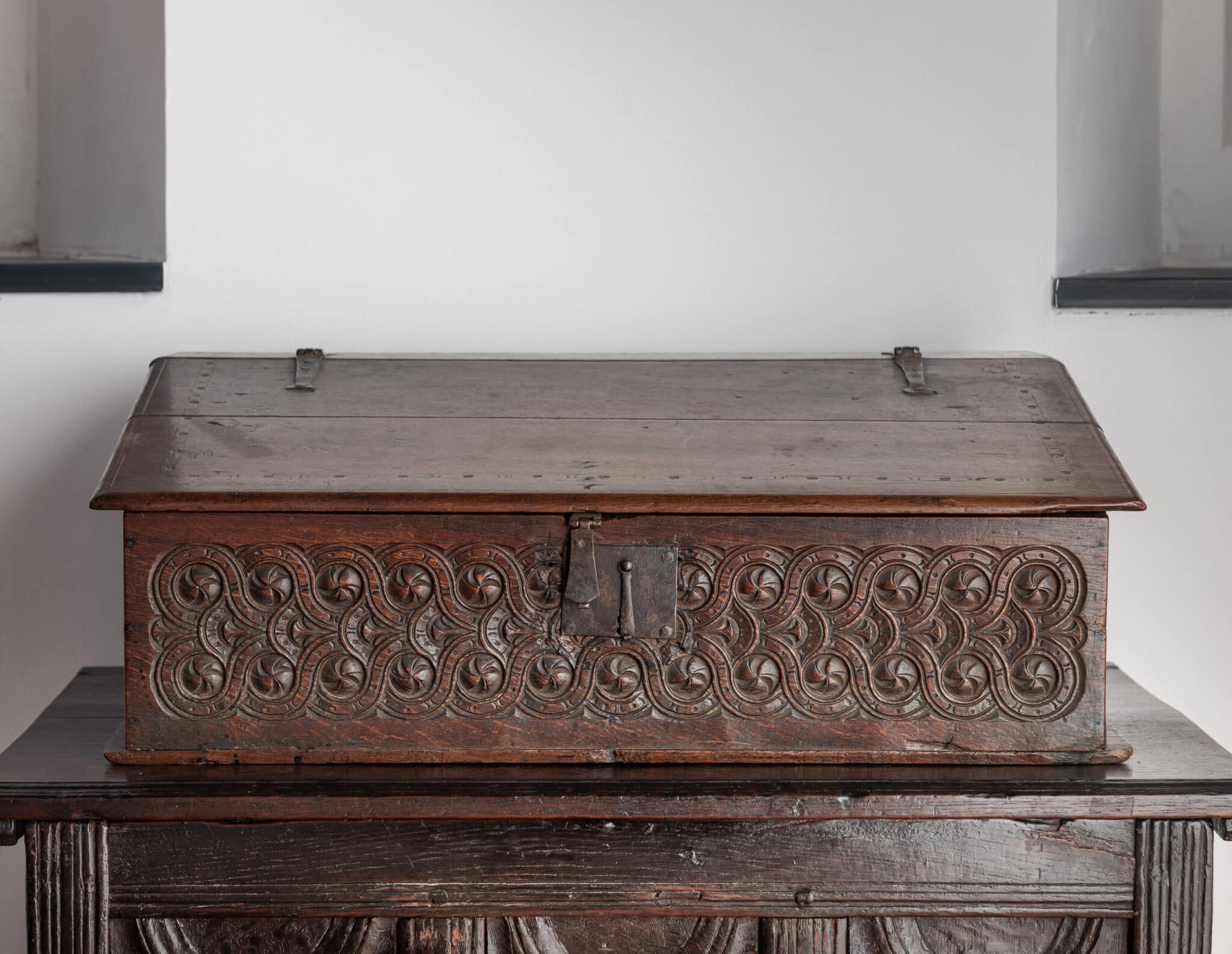
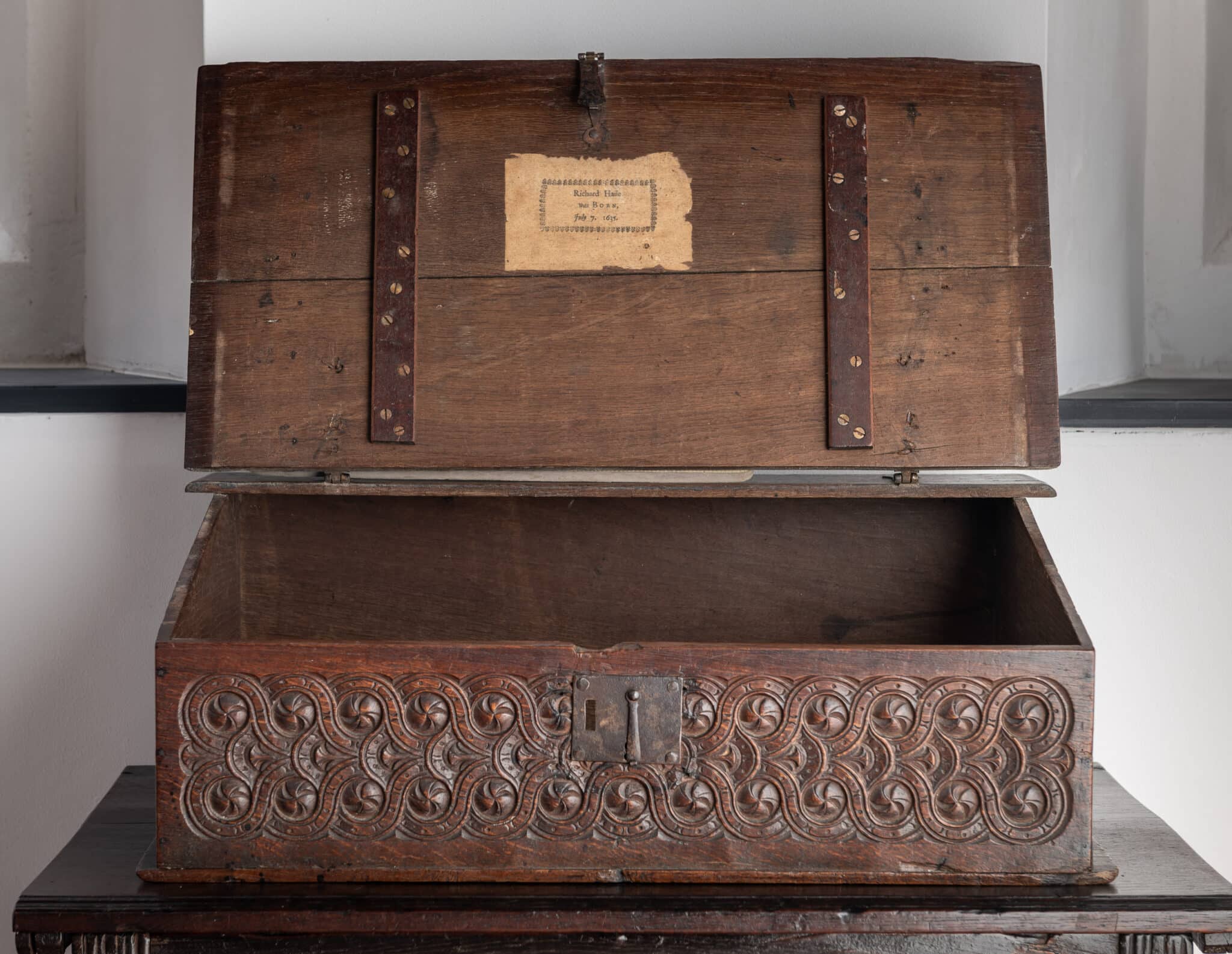
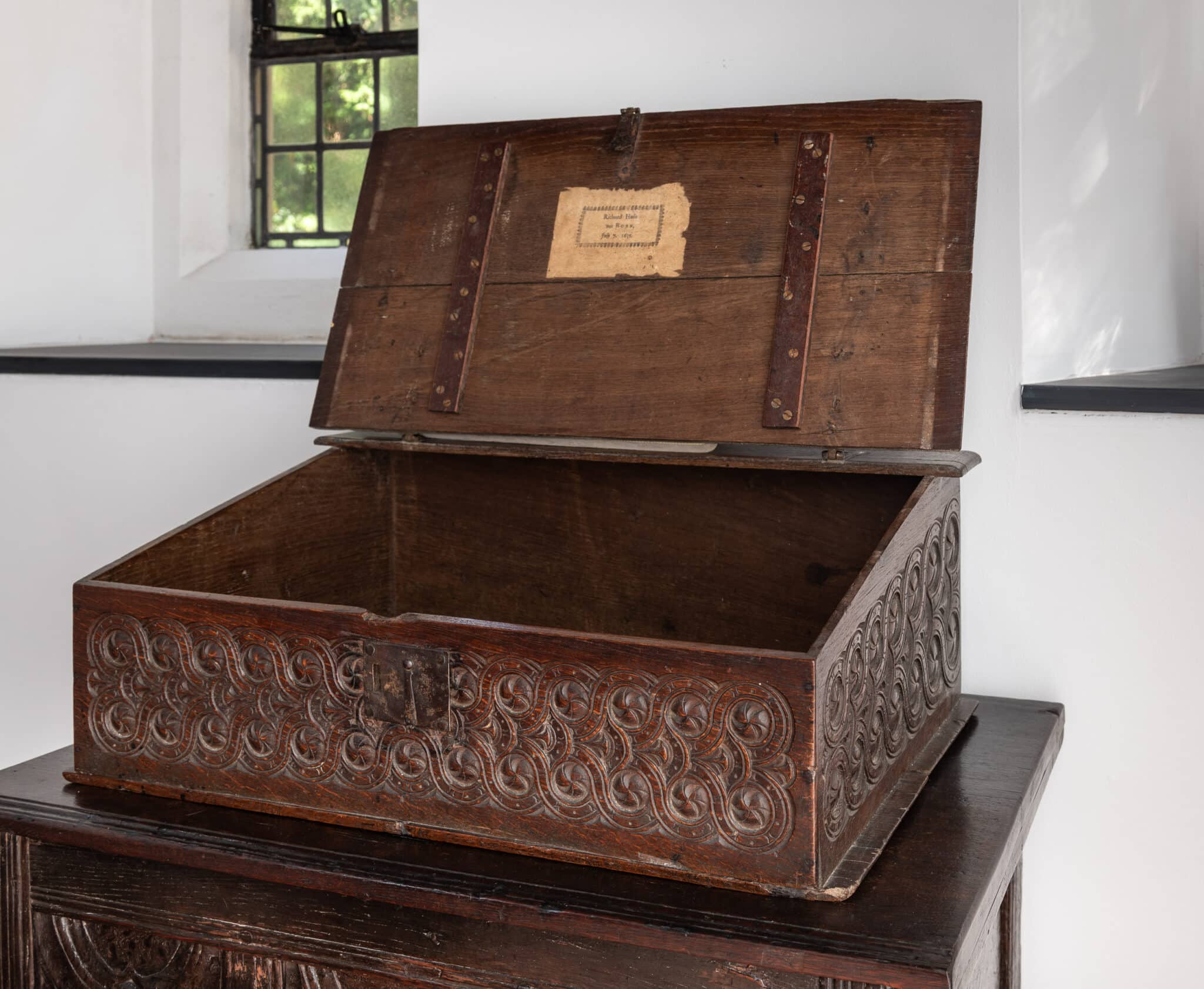
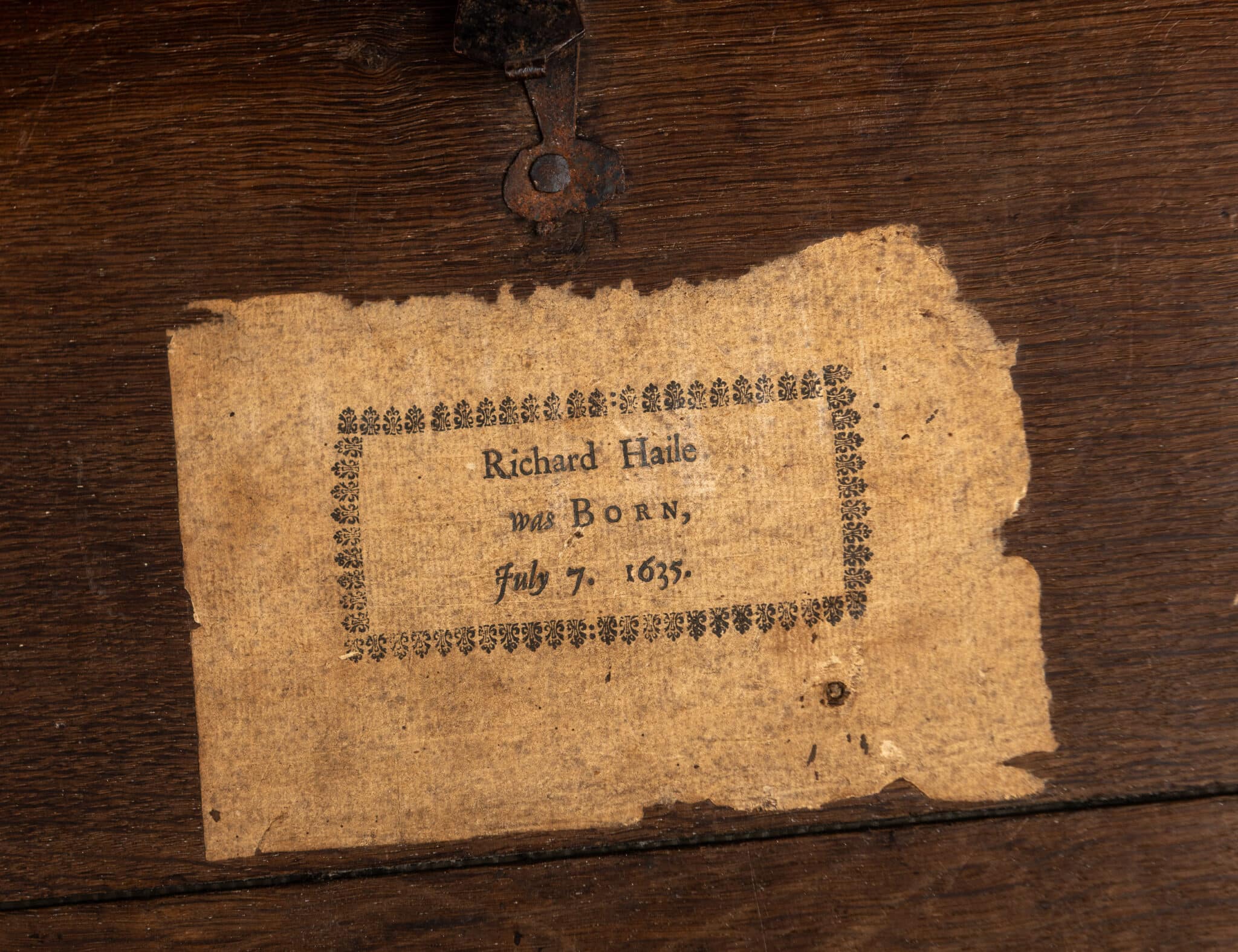
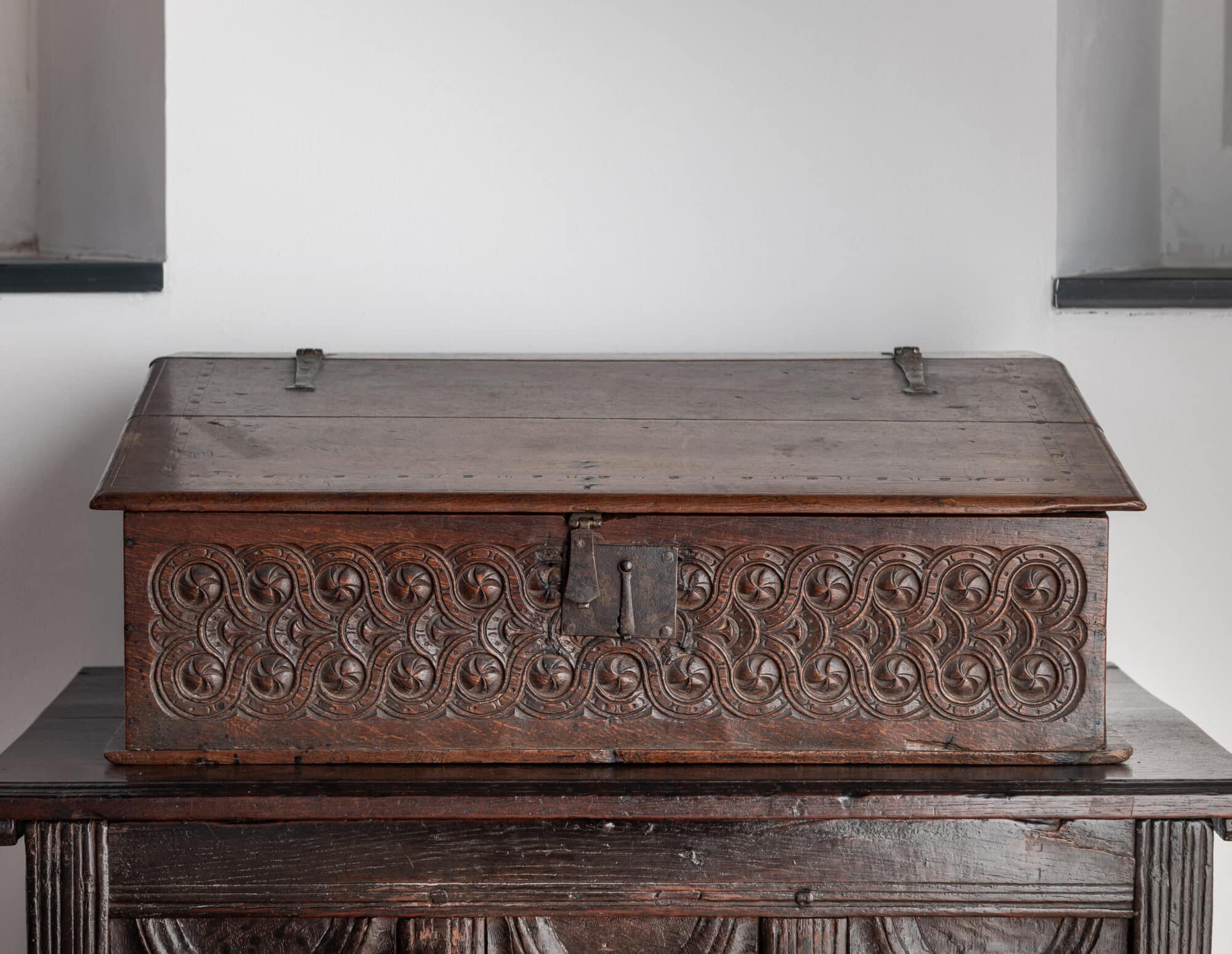
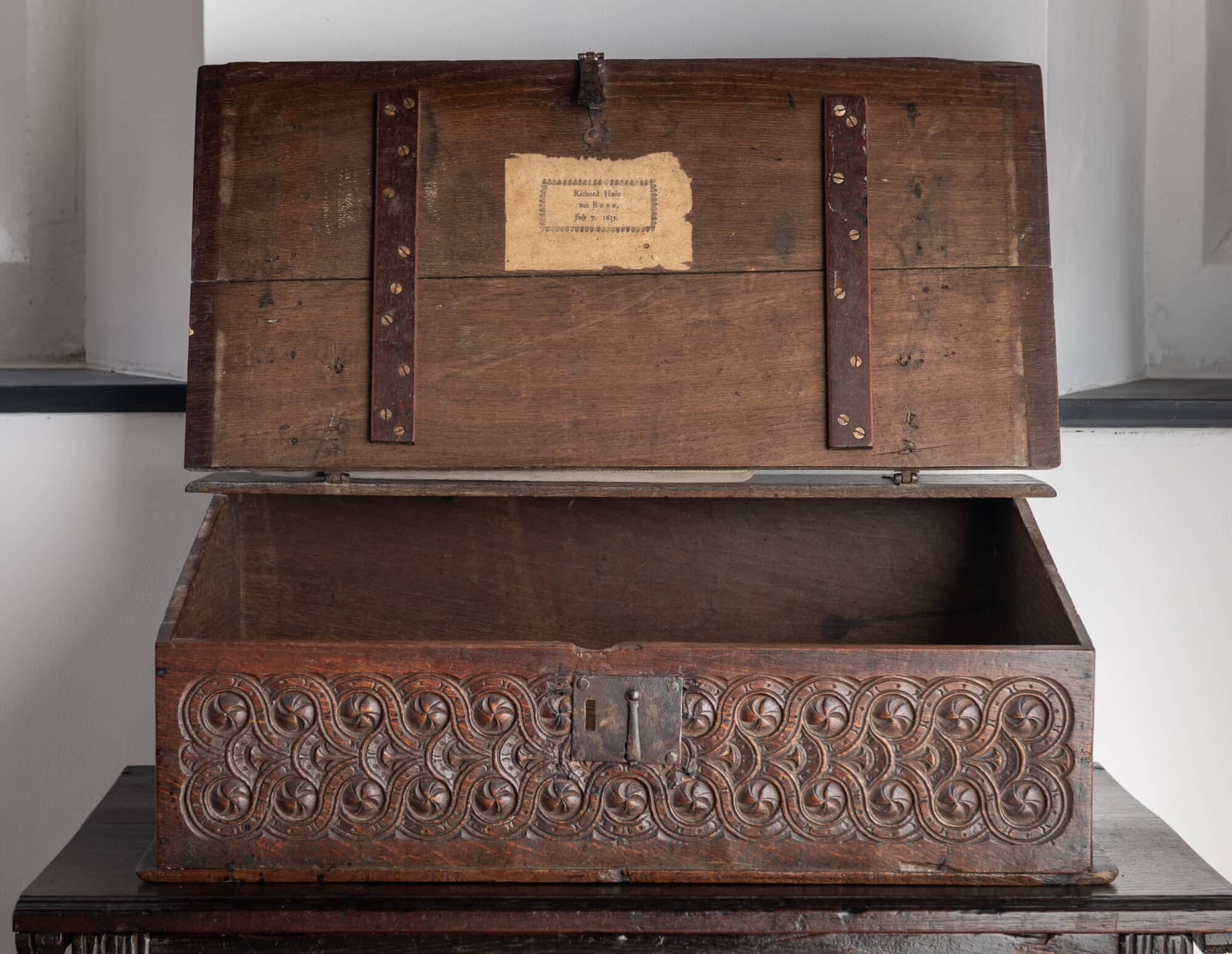
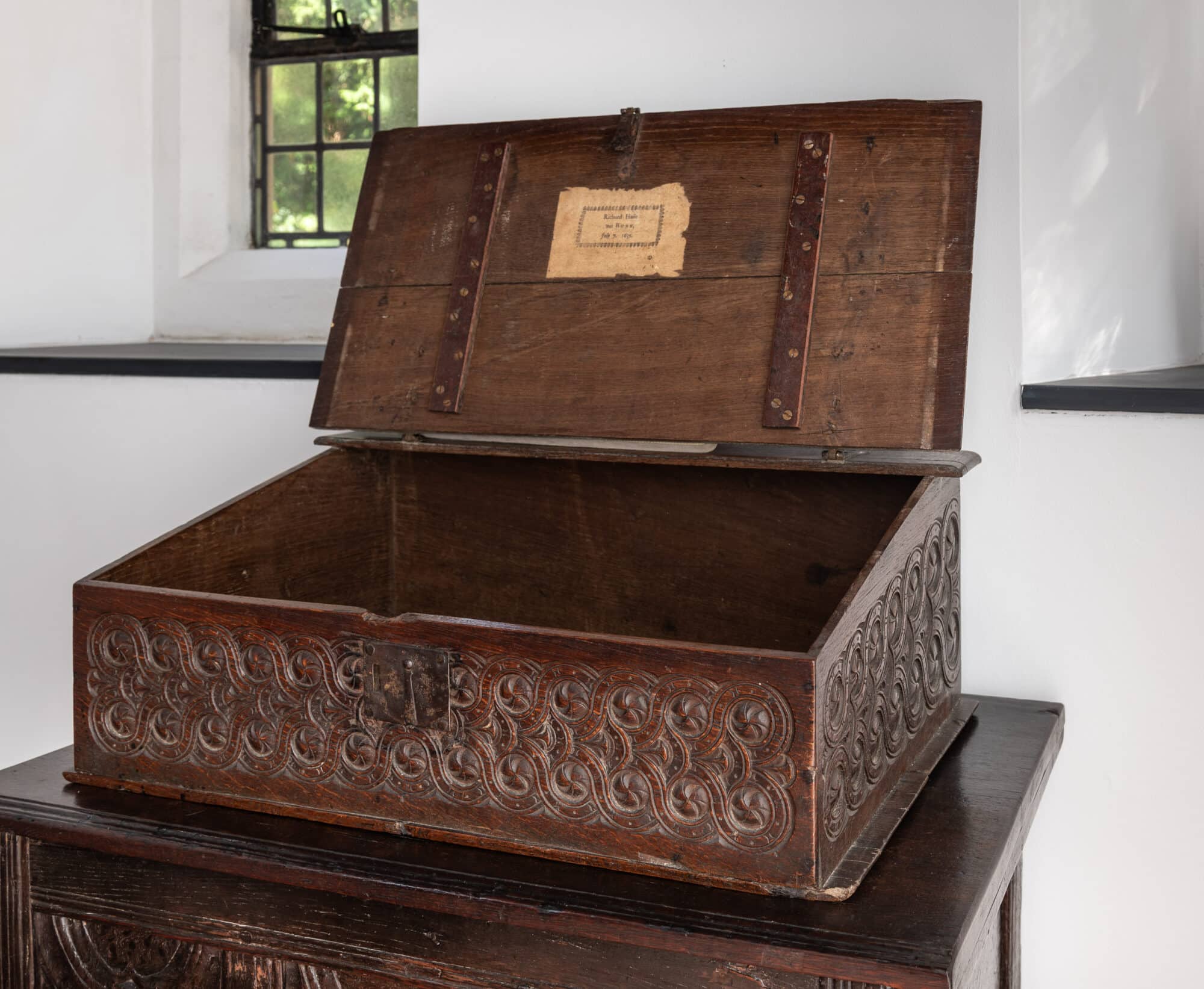
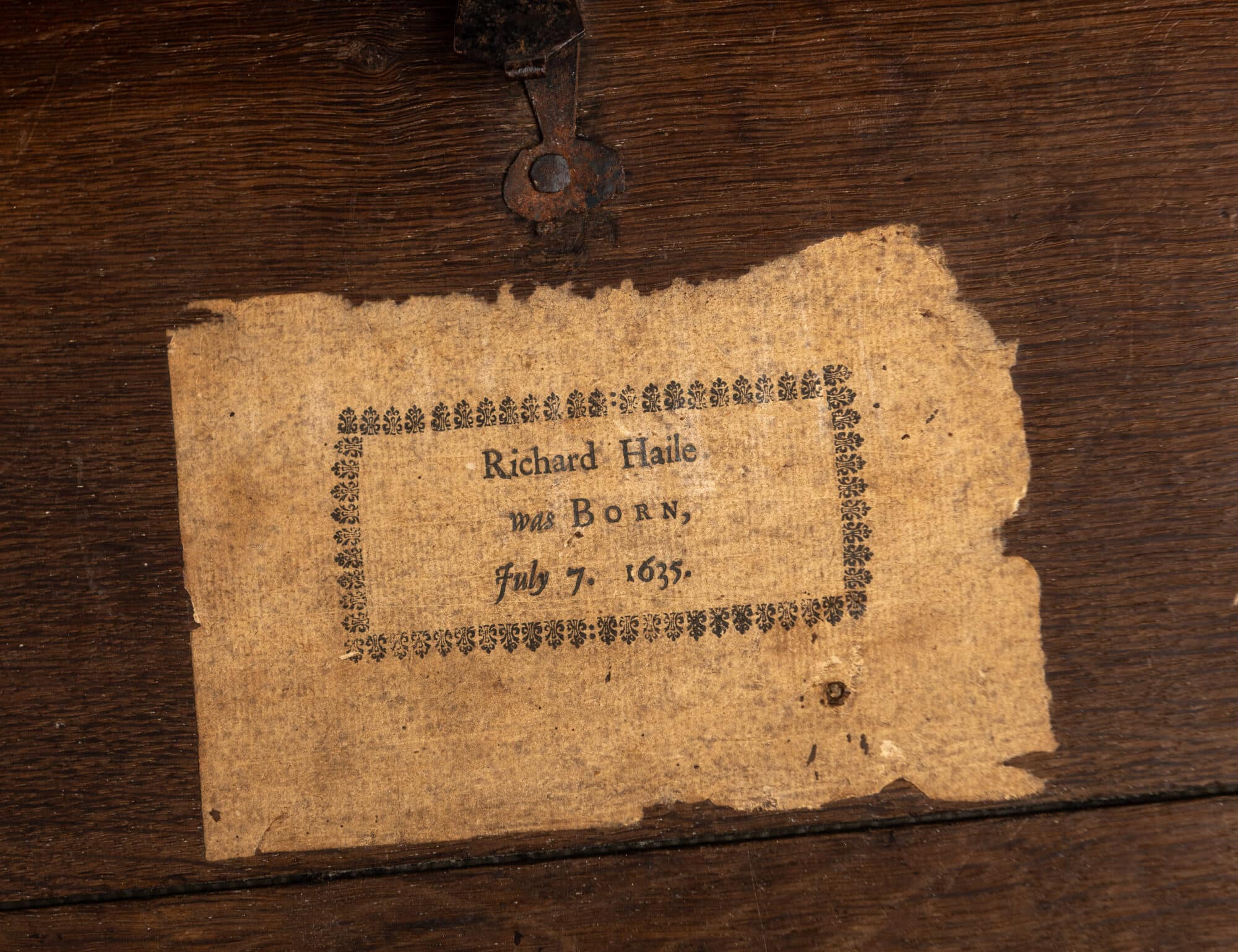
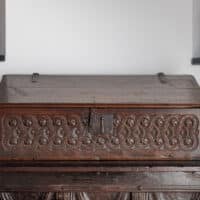
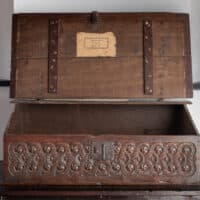
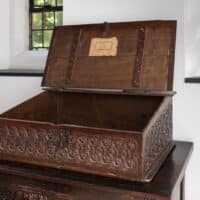
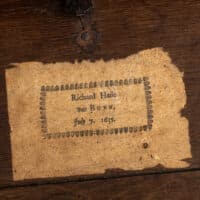
An Elizabeth I oak desk box of rectangular form, the front and sides carved with an elaborate continuous double guilloche design, retaining its hinged sloping lid, iron lockplate and an early ownership inscription to the reverse. The interior of the lid bears a printed paper label recording the birth of Richard Haile on 7 July 1635.
The box is distinguished by the precision and consistency of its carved decoration. The front and sides are worked with two horizontal registers of interlocking guilloche ornament, each enclosing a succession of deeply carved, revolving foliate motifs. The circular elements are connected by sinuous, intersecting bands, producing a continuous and closely integrated design. The careful spacing, depth of cutting and assured execution demonstrate the considerable skill of the carver.
The guilloche was a well-established ornamental device in English furniture of the late sixteenth and early seventeenth centuries, deriving ultimately from classical decorative traditions transmitted through Renaissance pattern books and architectural ornament. Its application to oak furniture became particularly characteristic of the Elizabethan period, appearing on chests, cupboards, boxes and architectural woodwork. The unusually sustained treatment of the ornament on the present box, extending across the front and both ends, provides a coherent decorative scheme.
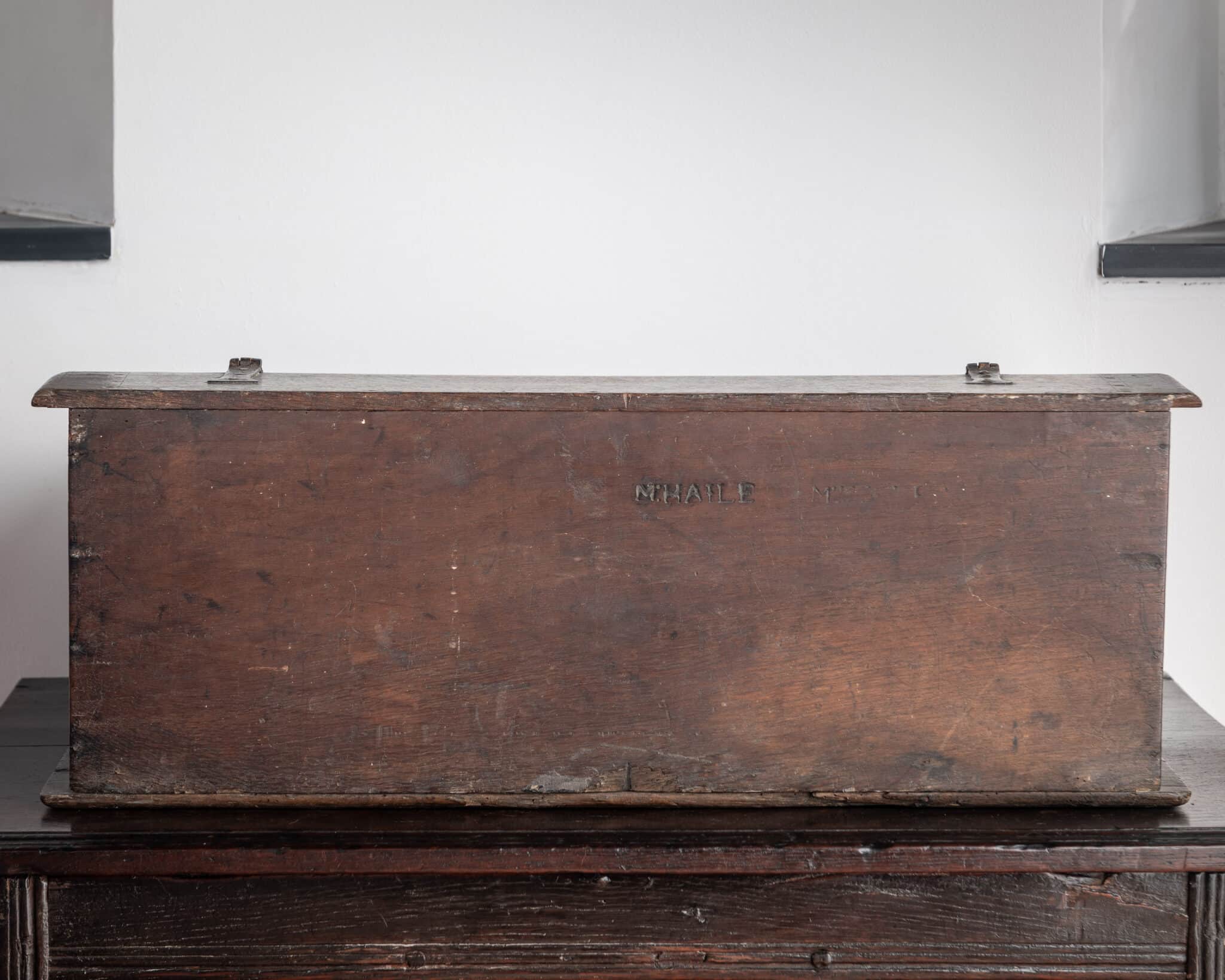
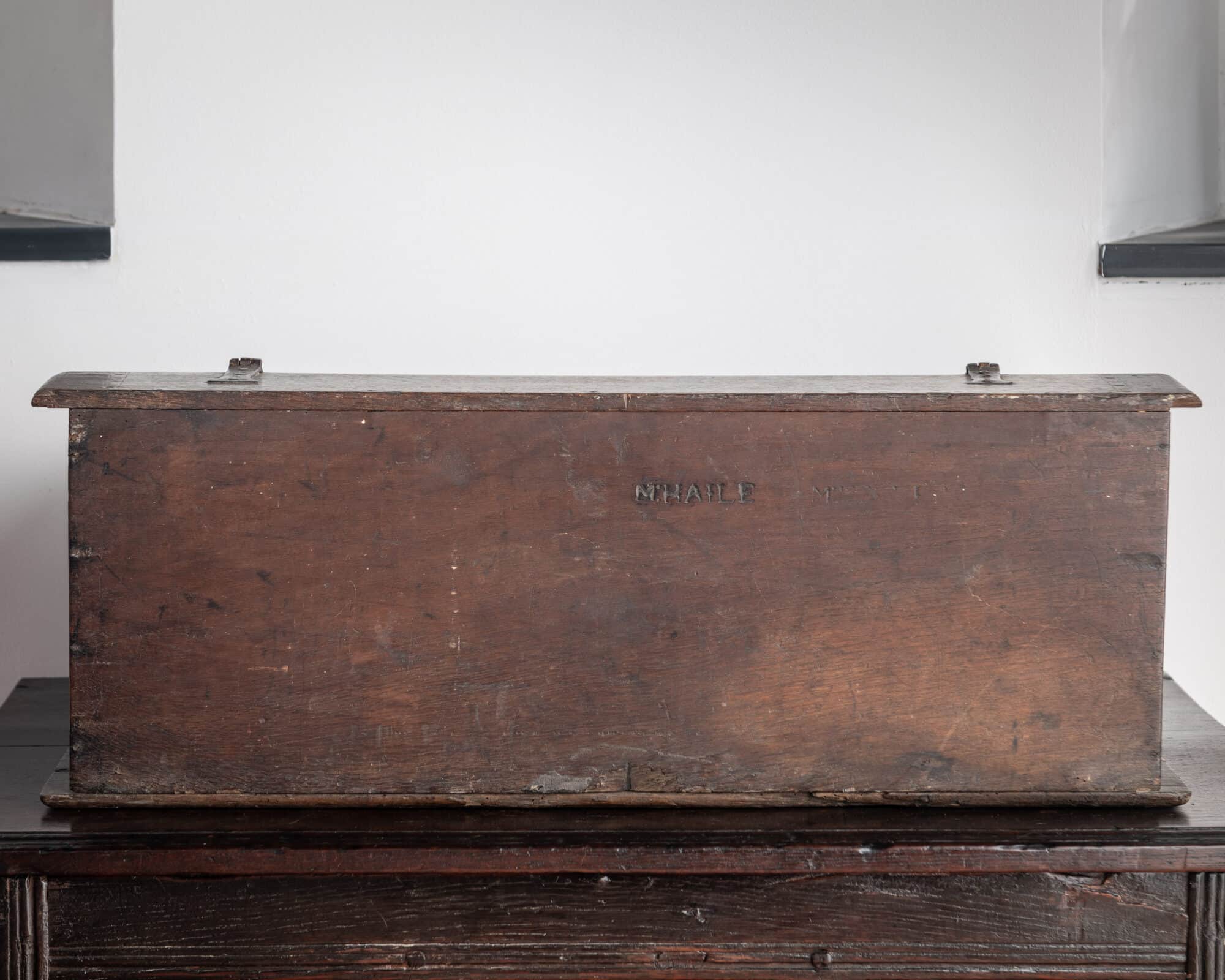
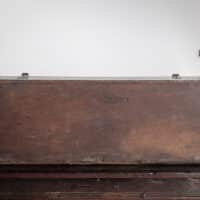
The rectangular body is constructed from oak boards, with a projecting moulded base and a hinged, sloping lid formed from two boards. The lid retains its iron fittings, while the front is fitted with an iron lockplate. The box retains a well-developed historic surface, with evidence of age and use consistent with its considerable antiquity.
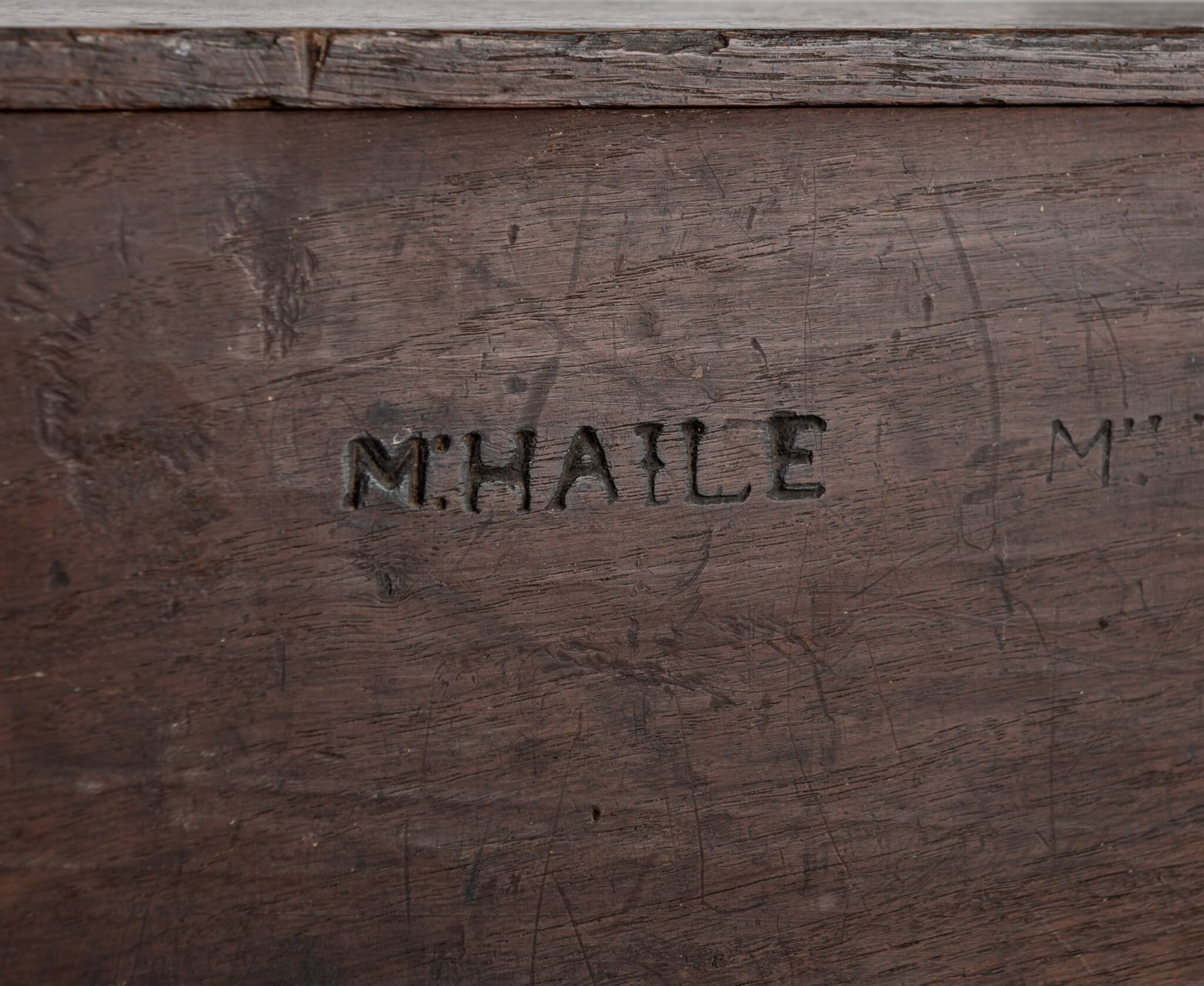
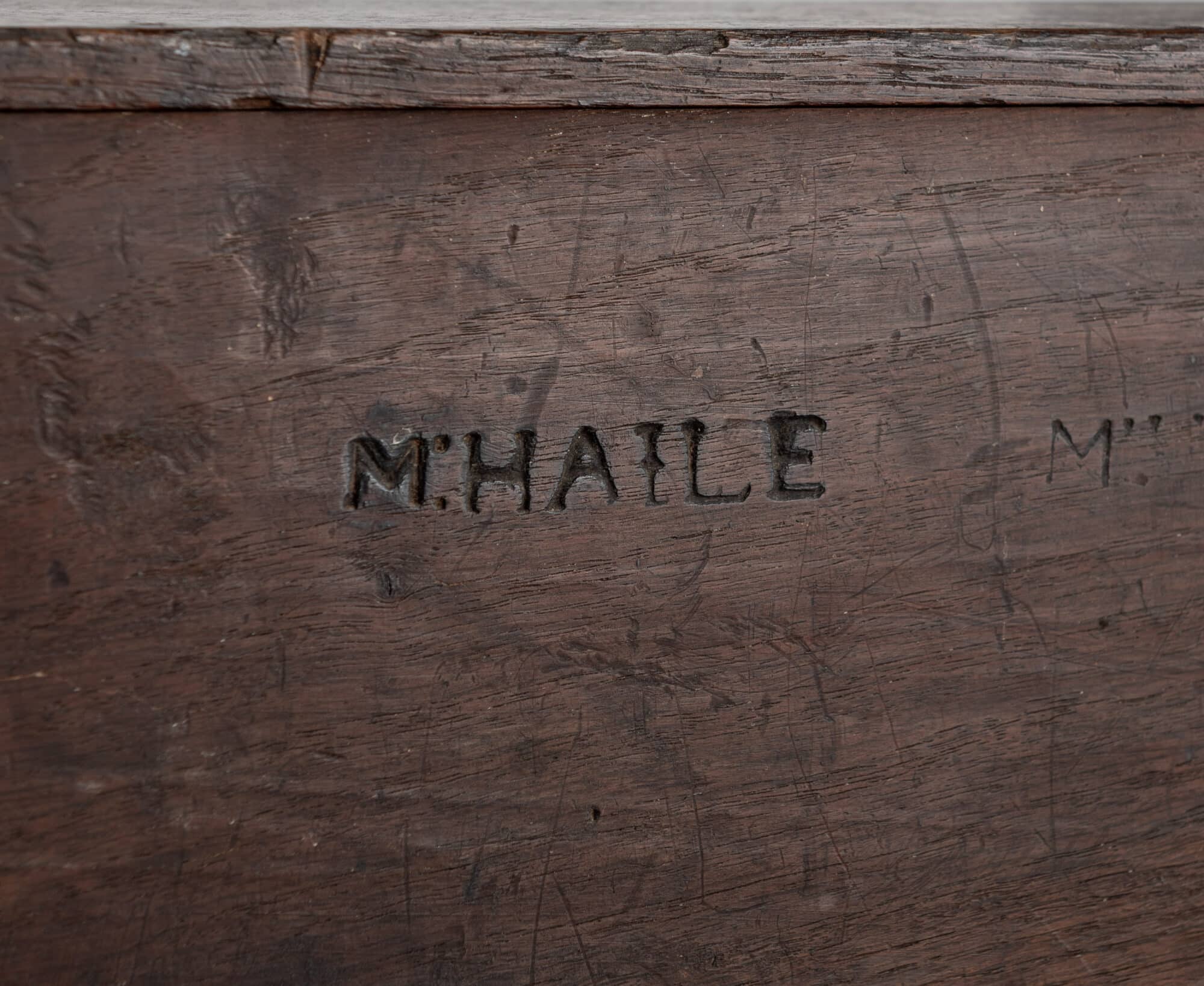
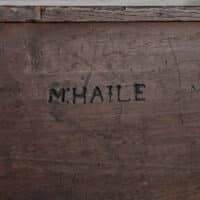
Of particular historical interest are two inscriptions associated with the Haile family. The reverse bears the name M. HAILE, cut into the oak in capital letters, together with further, less distinct incised lettering. Inside the lid is a printed paper label, enclosed within a decorative floral border, bearing the inscription:
Richard Haile
was BORN,
July 7. 1635.
The relationship between these two names has not been established. The inscription on the reverse may identify an owner of the box, while the paper label records the birth of a member of the same family. The possibility that the two inscriptions relate to successive generations is of interest, although further genealogical research would be required to establish their connection.
The birth date recorded on the label postdates the proposed manufacture of the box by approximately thirty-five to forty-five years, suggesting that it may have remained in domestic use for a considerable period following its construction. The precise date at which the paper label was attached remains undetermined.
The box belongs to the tradition of English oak desk and document boxes produced during the closing decades of the sixteenth century. Such boxes served for the storage of correspondence, documents, writing materials and personal possessions, their sloping lids providing a convenient writing surface.
The combination of its closely worked guilloche carving, surviving iron fittings, historic surface and Haile family inscriptions provides an informative example of English domestic furniture and its continued use across successive generations.