 Sold
Sold
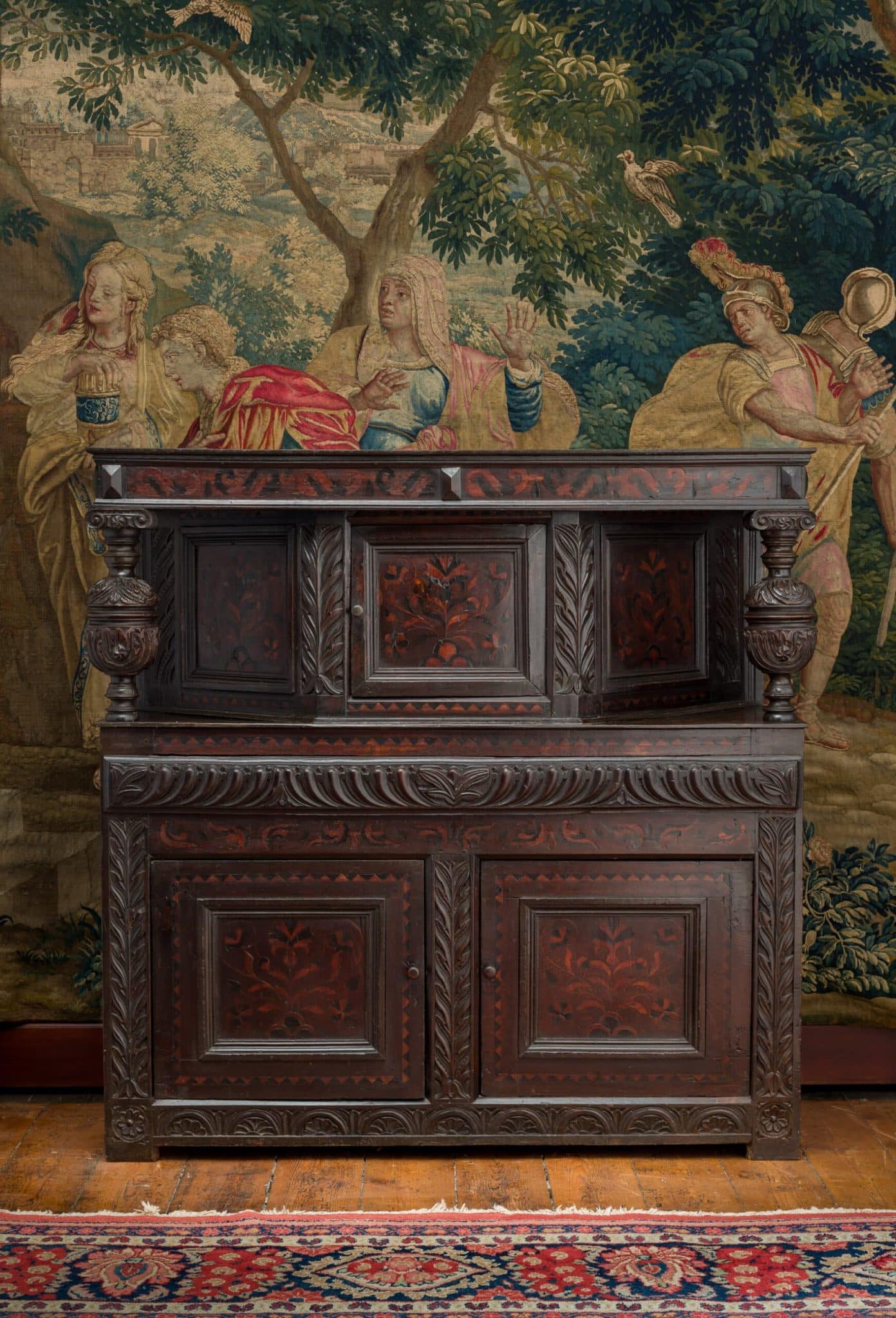
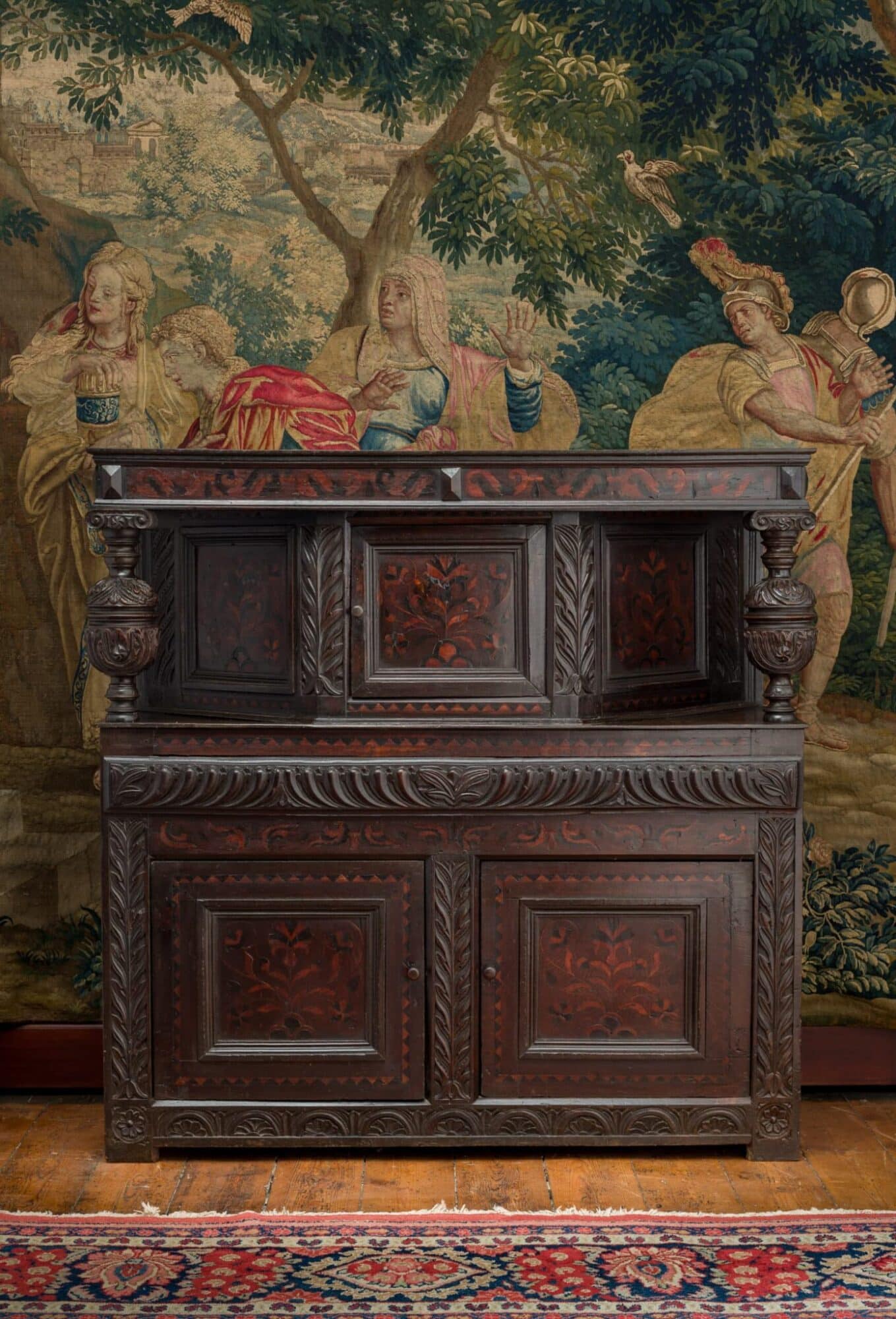
Charles I Inlaid Press Cupboard
- Period
- Circa 1630
- Origin
- Leeds area, Yorkshire
- Dimensions
- W 54 1/2" × H 54 3/4" × D 20"
- Reference
- #Marh2859
This piece has been sold. It is shown here for reference in our archive.
Description
A Charles I oak carved and inlaid press cupboard, retaining exceptional colour and surface. This piece is an outstanding example of early 17th-century Yorkshire joinery, blending robust carving with refined inlay work, and reflecting the region’s distinctive decorative vocabulary.
The lower section is constructed with a pair of panelled cupboard doors, each centred by striking floral inlays executed in contrasting woods, framed by carved borders of leafy arabesques and lunettes. The long drawer above is enriched with deep gadrooned carving, a motif characteristic of Yorkshire joinery in this period, providing both texture and light-play across the surface.
The upper section is of canted form, housing a single cupboard door with inlaid panels of floral design echoing those of the base, flanked by angled sides similarly decorated. This arrangement gives the façade both depth and architectural presence. Supporting the cornice are bold cup-and-cover baluster columns, enriched with leafy carving and terminating in Ionic capitals — a detail derived from classical ornament and a hallmark of high-quality joiner’s work in the Leeds and West Riding area.
The overall composition is both balanced and commanding: the weighty lower stage anchoring the form, while the canted and elevated upper section creates visual rhythm. The use of inlay — probably holly or sycamore set against the darker oak — would have been intended to imitate costly imported marquetry, making such cupboards prestigious statements of wealth and taste in prosperous Yorkshire households.
Comparable examples are illustrated in Victor Chinnery, Oak Furniture: The British Tradition, fig. 4:120 (p.471), where similar use of floral inlay and canted forms is noted as typical of the Leeds region in the second quarter of the 17th century. The present cupboard, however, stands out for the quality of its surface and depth of original colour, which is rarely preserved with such richness.