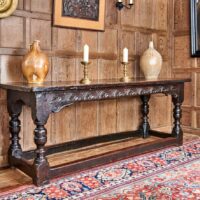
Charles I Carved Oak Serving Table
- Period
- Circa 1640
- Origin
- England
- Dimensions
- W 80 3/4" × H 31" × D 27 1/2"
- Reference
- #Marh3565
This piece has been sold. It is shown here for reference in our archive.
Description
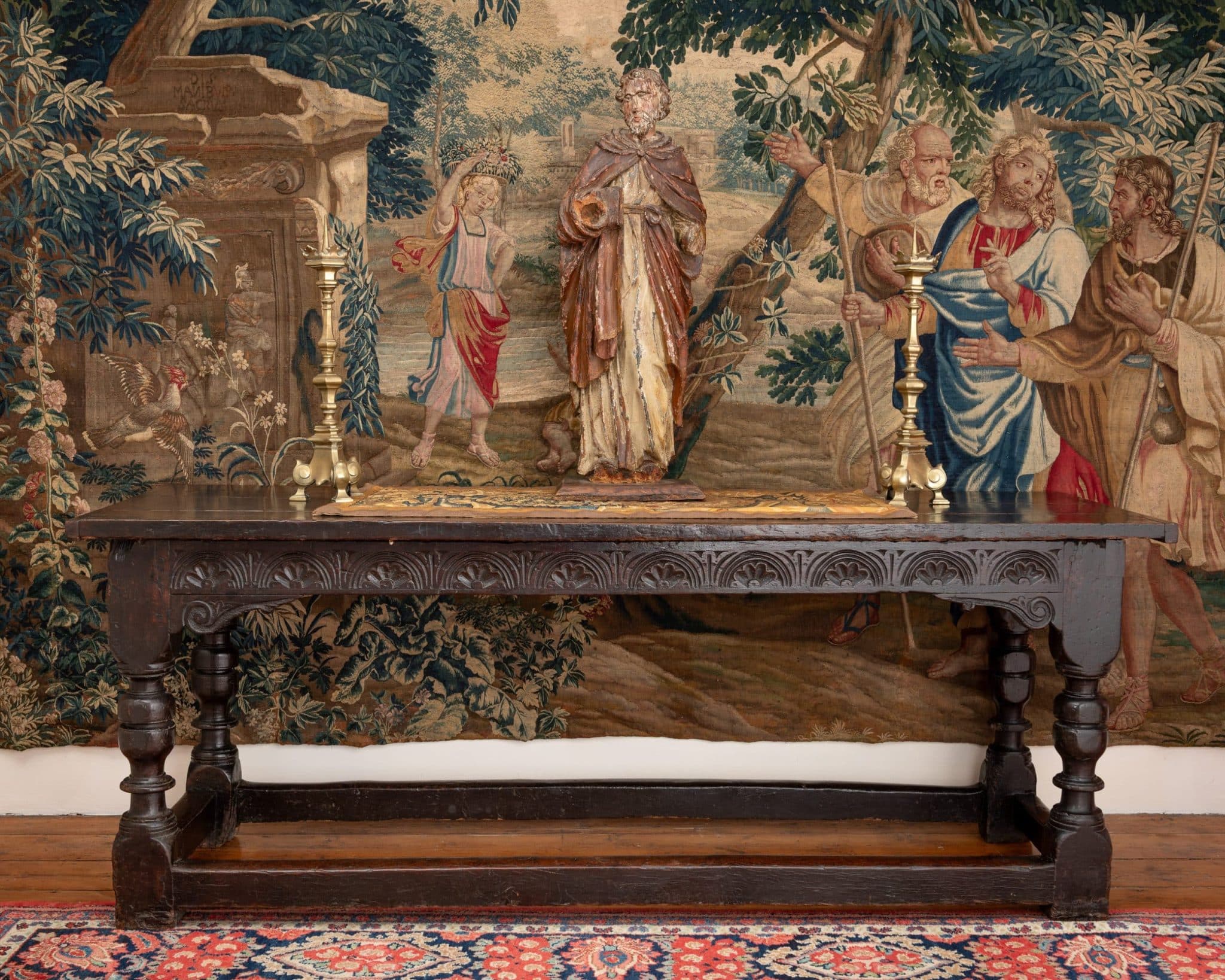
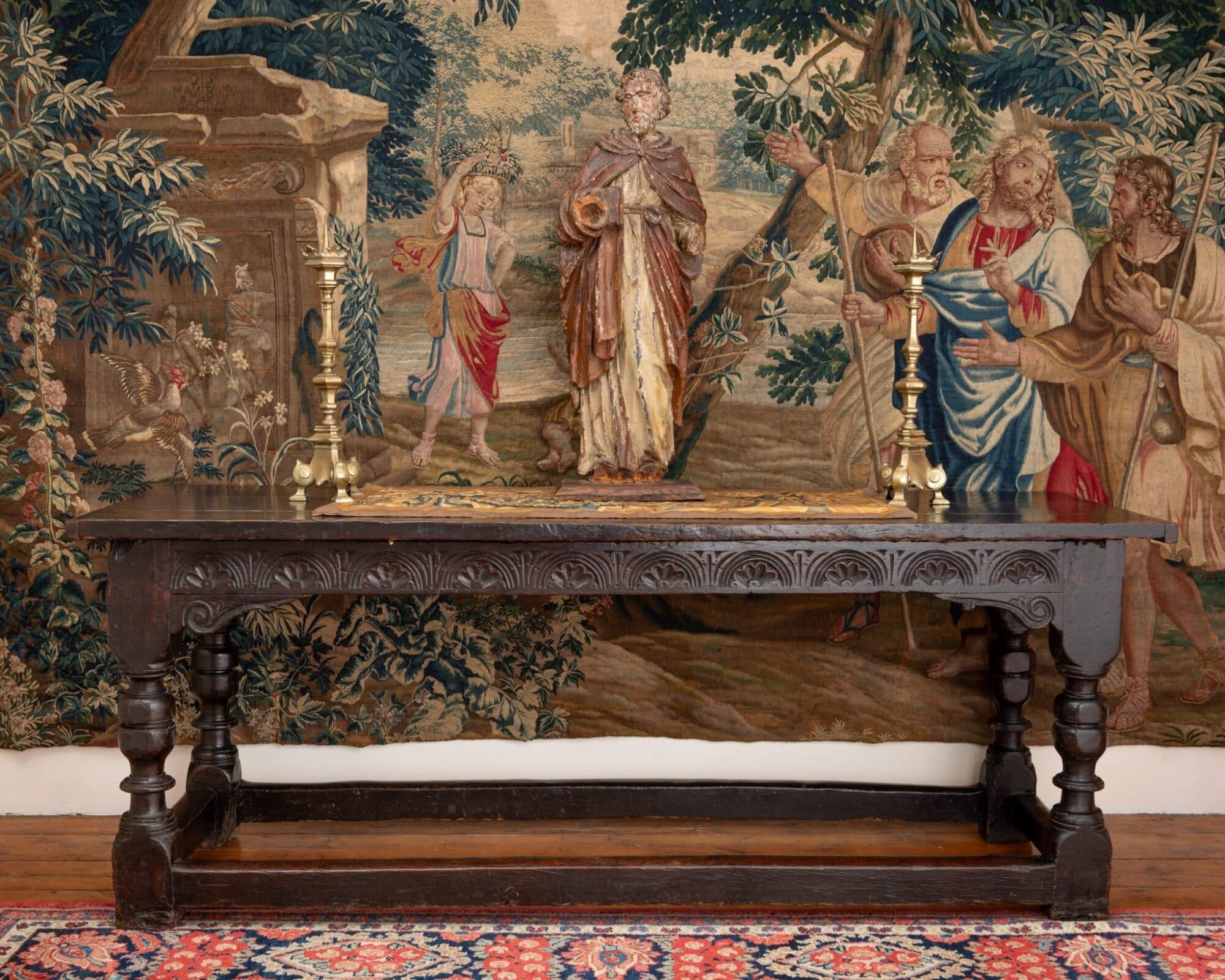
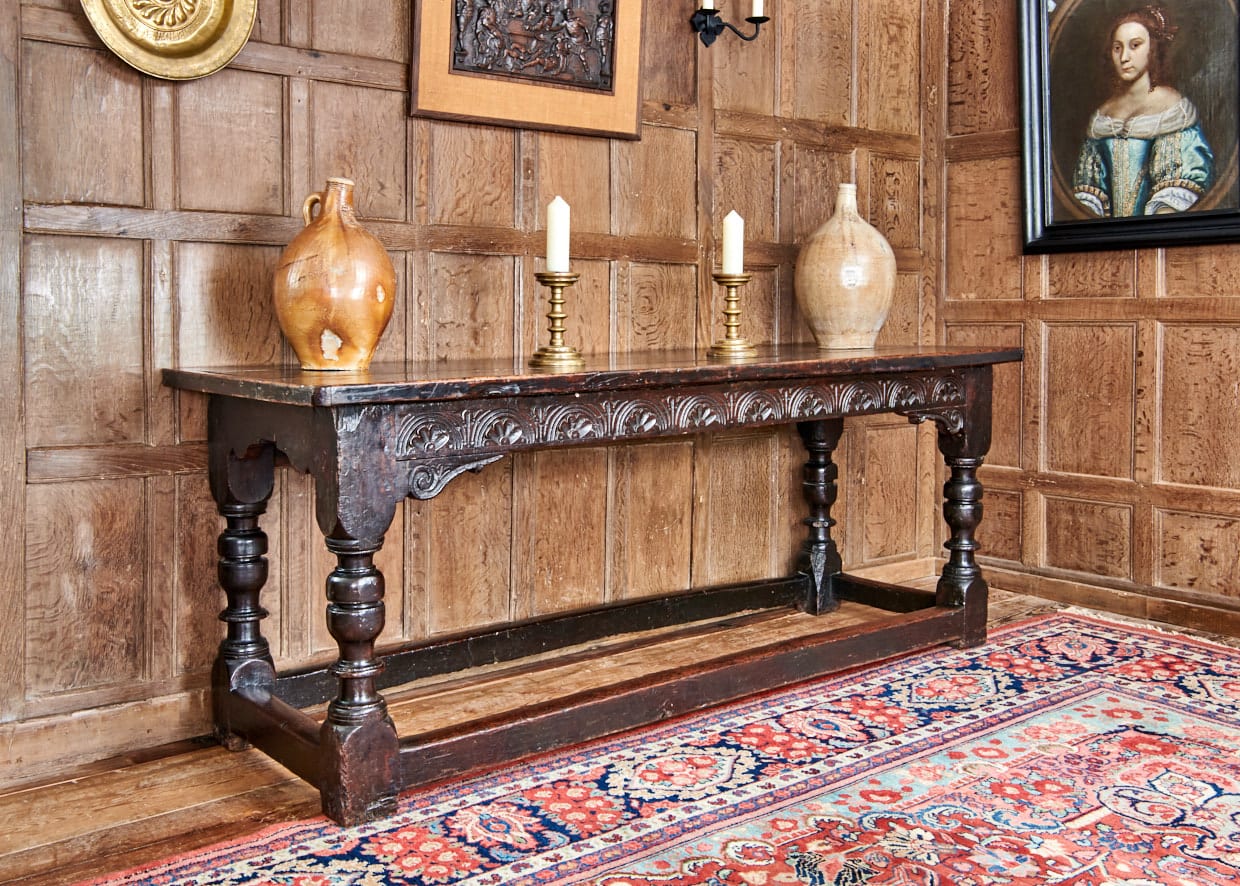
A Charles I carved oak serving table of excellent colour and surface, with baluster-turned legs joined by plain stretcher rails and a boldly carved frieze of lunettes to the front.
The form of this table, with its long rectangular top and heavy under-framing, reflects its function as a serving or refectory table within the domestic hall or great chamber. The robust baluster-turned legs, with their pronounced bulbs and compressed rings, are typical of English joinery of the 1630s–1640s, echoing the architectural vocabulary of the period. The plain stretcher rails emphasise strength and stability, a practical necessity for supporting the heavy oak top.
The frieze carving of repeated lunettes — semi-circular arches often associated with Jacobean strapwork and architectural ornament — provides a restrained but rhythmic decoration. Such ornament links the table to wider decorative traditions of the early Stuart period, where classical motifs were simplified into bold, repeating patterns suited to the solid medium of oak.
Serving tables of this type were often positioned against a wall or in front of a tapestry-hung background, and used both functionally for the setting out of food and ceremonially as part of the display of household wealth. While many examples were left entirely plain, the carved frieze here elevates the piece into the realm of gentry or noble furnishing.