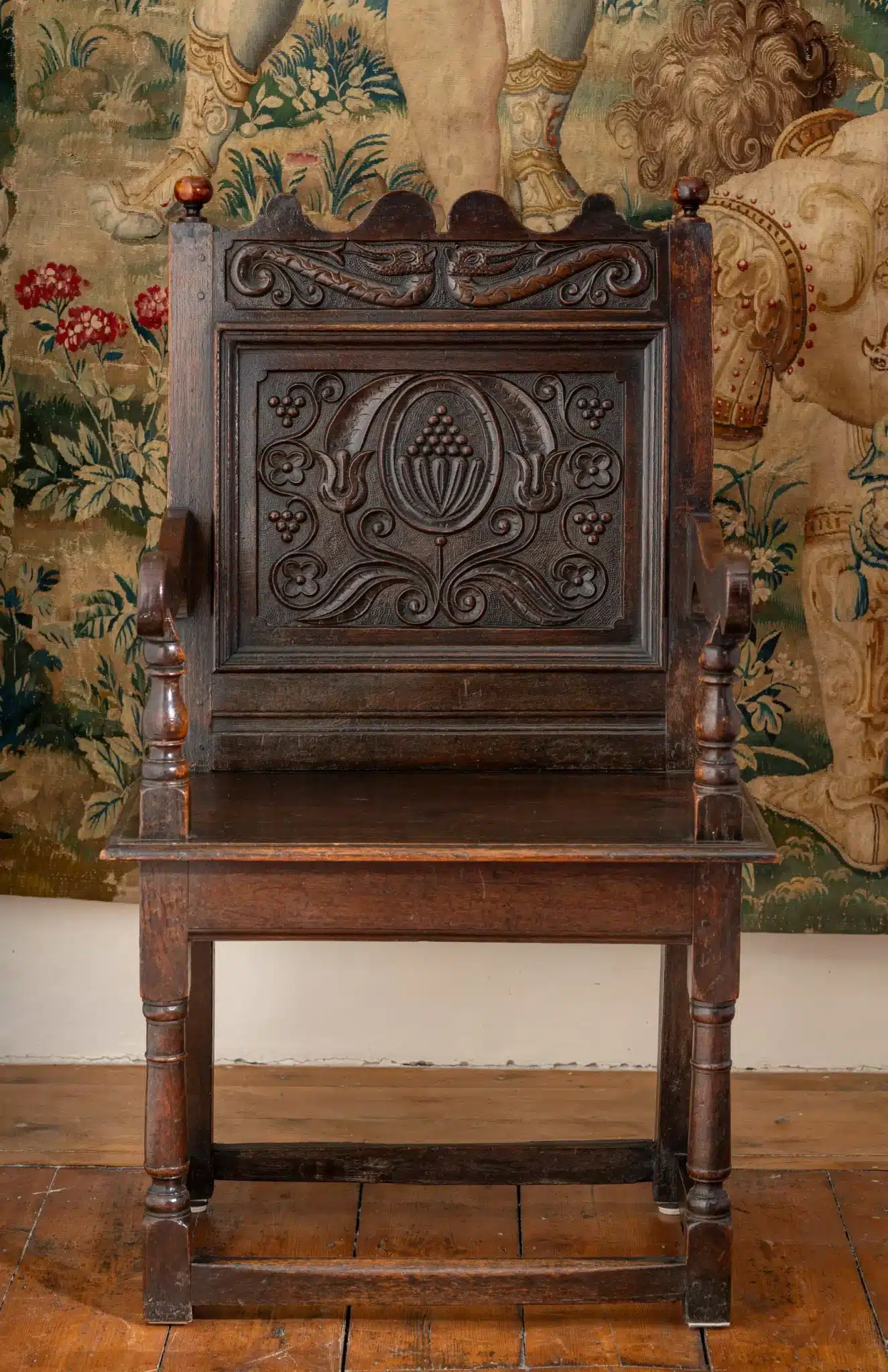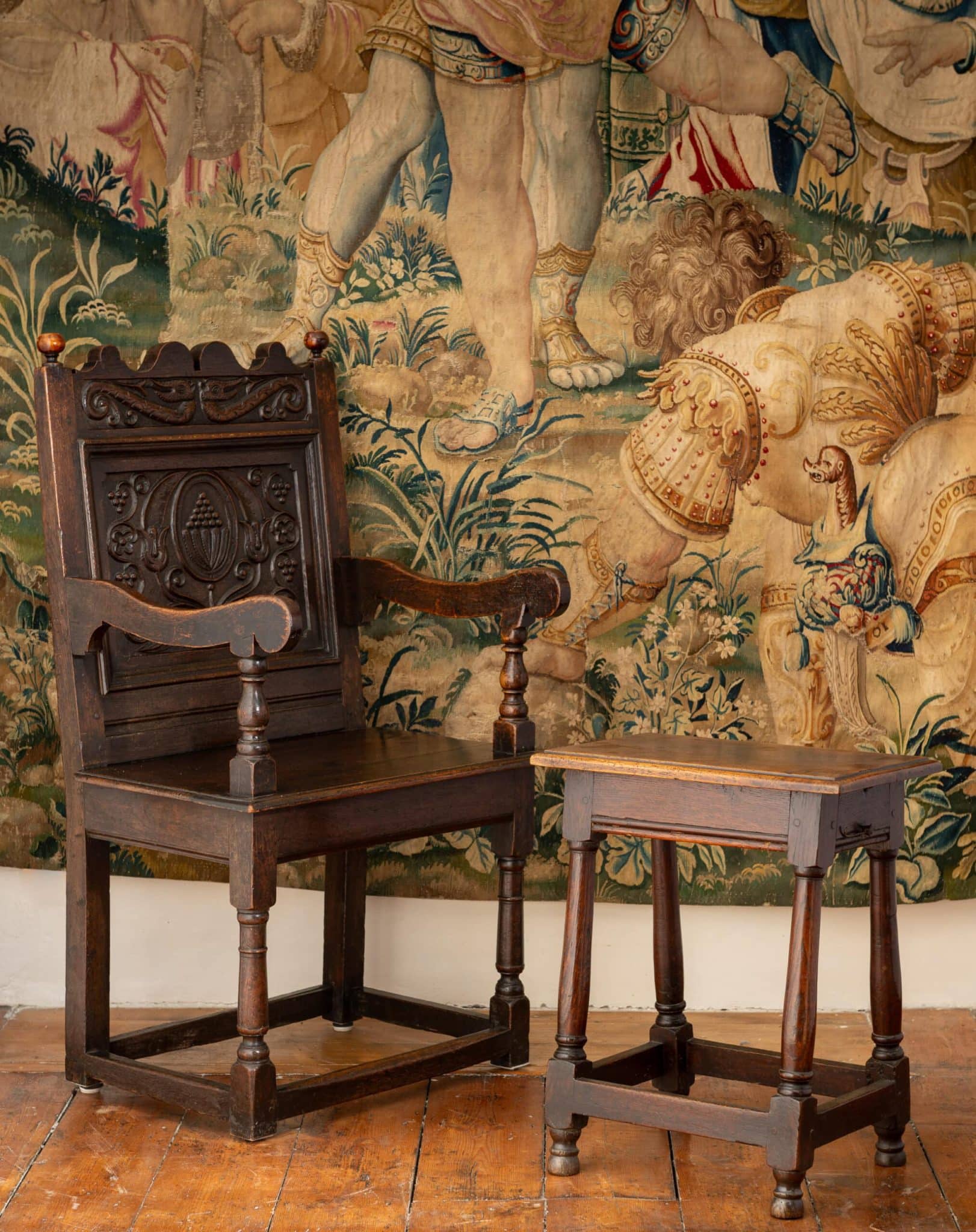
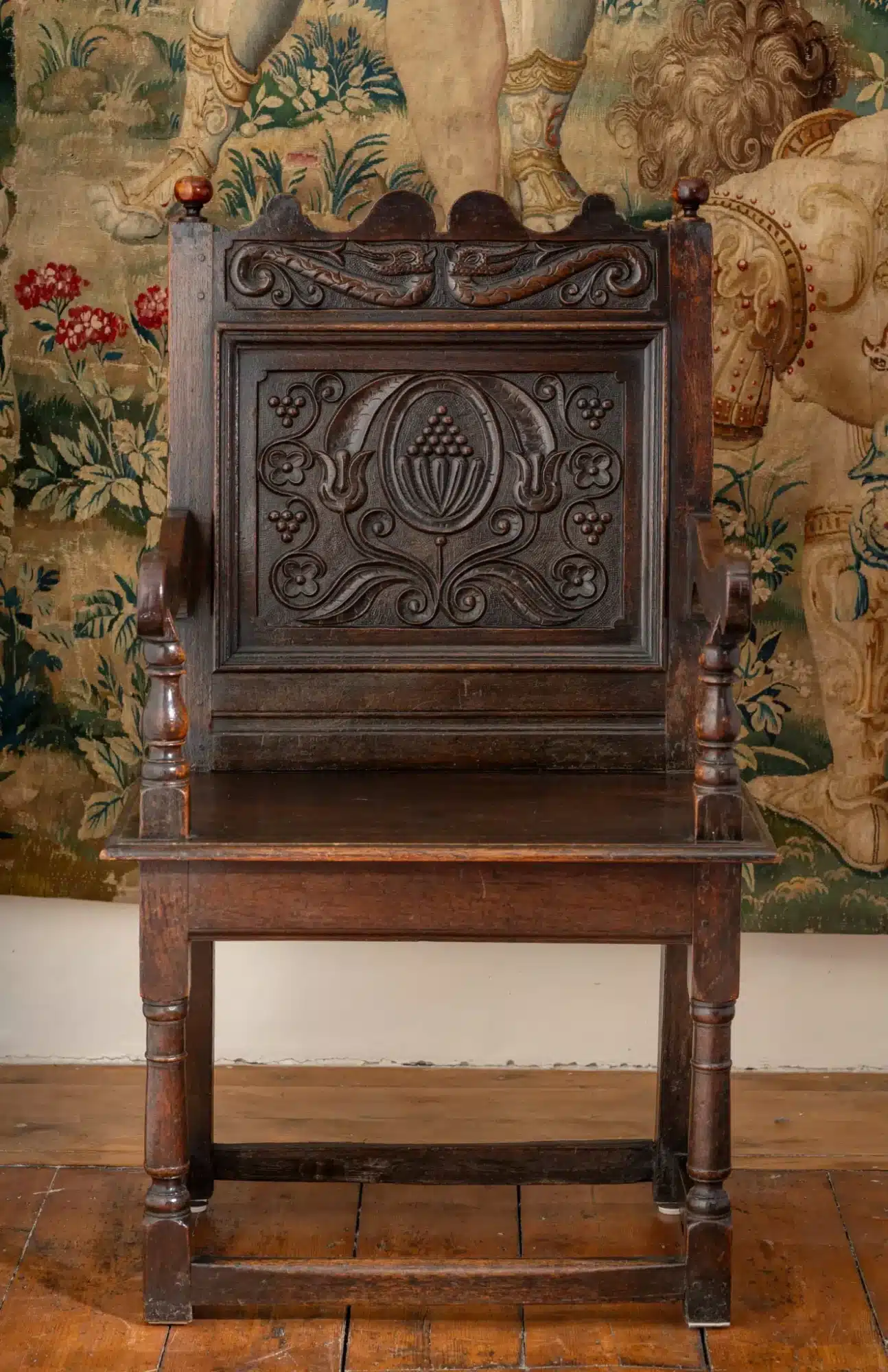
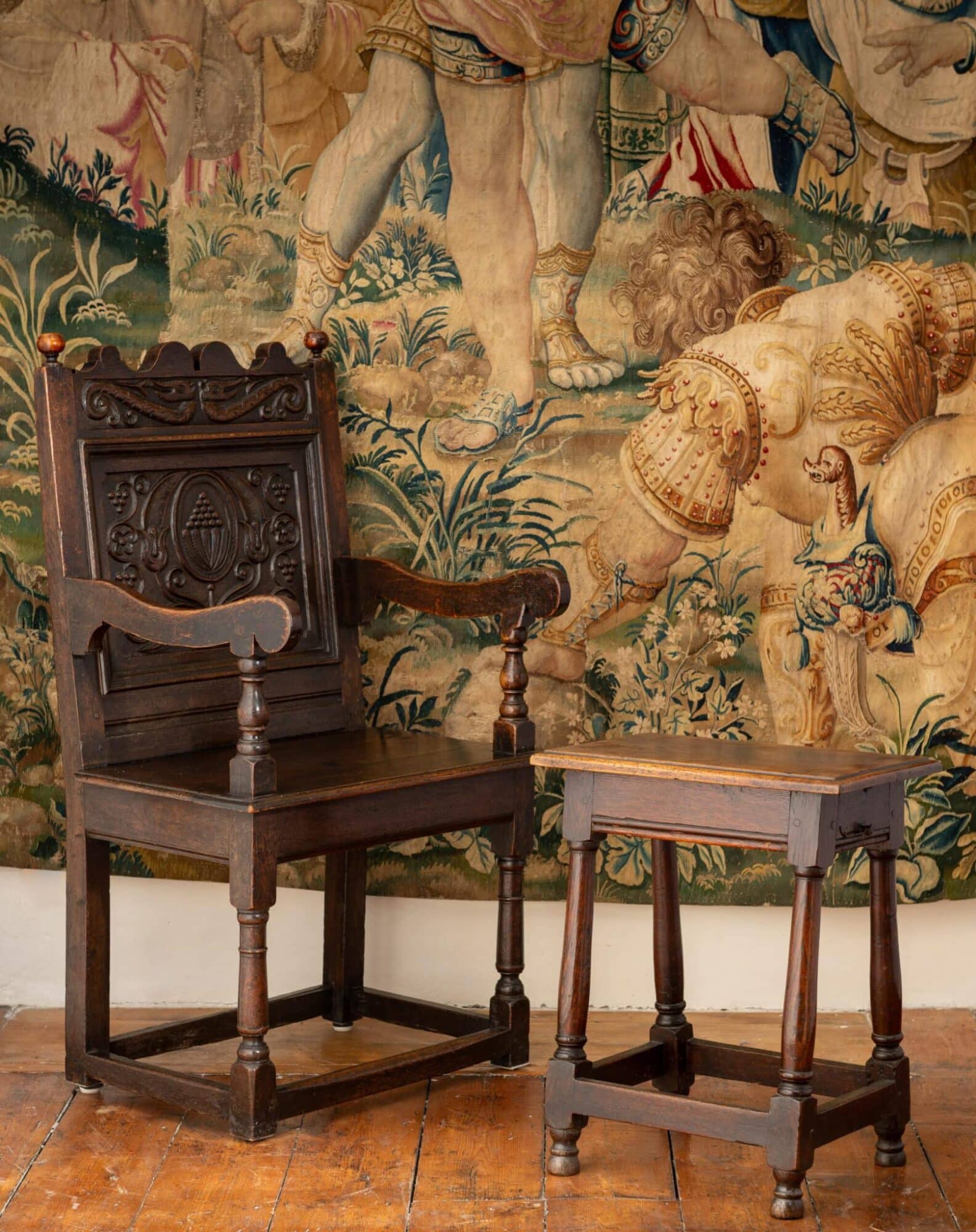
Charles II Lancashire Joined Oak Armchair
- Period
- Circa 1670
- Origin
- Lancashire
- Dimensions
- W 25 1/4" × H 44" × D 20"
- Reference
- #Marh2996
This piece has been sold. It is shown here for reference in our archive.
Description
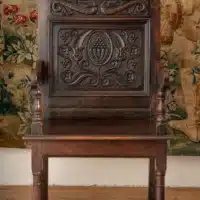
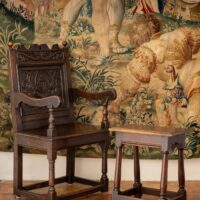
A Charles II joined oak armchair, the back rest carved with a central oval medallion enclosing a stylised tulip with radiating seed-pods, framed by scrolling foliate tendrils and quatrefoil flowerheads. The cresting rail boldly shaped with alternating arched profiles, the surface enriched with scrolling serpent or dragon motifs in low relief — a decorative device strongly associated with the north-west, and in particular the Ribble Valley and south Lancashire workshops. The uprights are topped with small later ball finials, while the arms rest on stout baluster turnings above a boarded seat and square seat rails. The whole raised on turned fore-legs joined by plain rectangular stretchers.
The symbolism of the back panel — the tulip and seed-pods — conveys fertility, renewal, and continuity of lineage, resonant themes in the later Stuart period. The serpents on the frieze, often interpreted as guardians or protectors, appear in related examples in the Victoria and Albert Museum (inv. no. W.52-1938) and in regional collections such as Towneley Hall, Burnley. Together, these features place this chair firmly within the distinctive Lancashire tradition described by Victor Chinnery: “The joinery is generally very neat and well-shaped, if sometimes a little thin, but the richness of the carved ornament betrays a regional confidence and identity” (Oak Furniture: The British Tradition, p. 439).