
Paul Fitzsimmons logo
  • Current Stock
  • Archive
  • Notable Works
  • About Us
  • News
  • Contact
Home / Archive / Charles II Joined Oa…
Previous Next
Charles II Joined Oak Armchair Sold

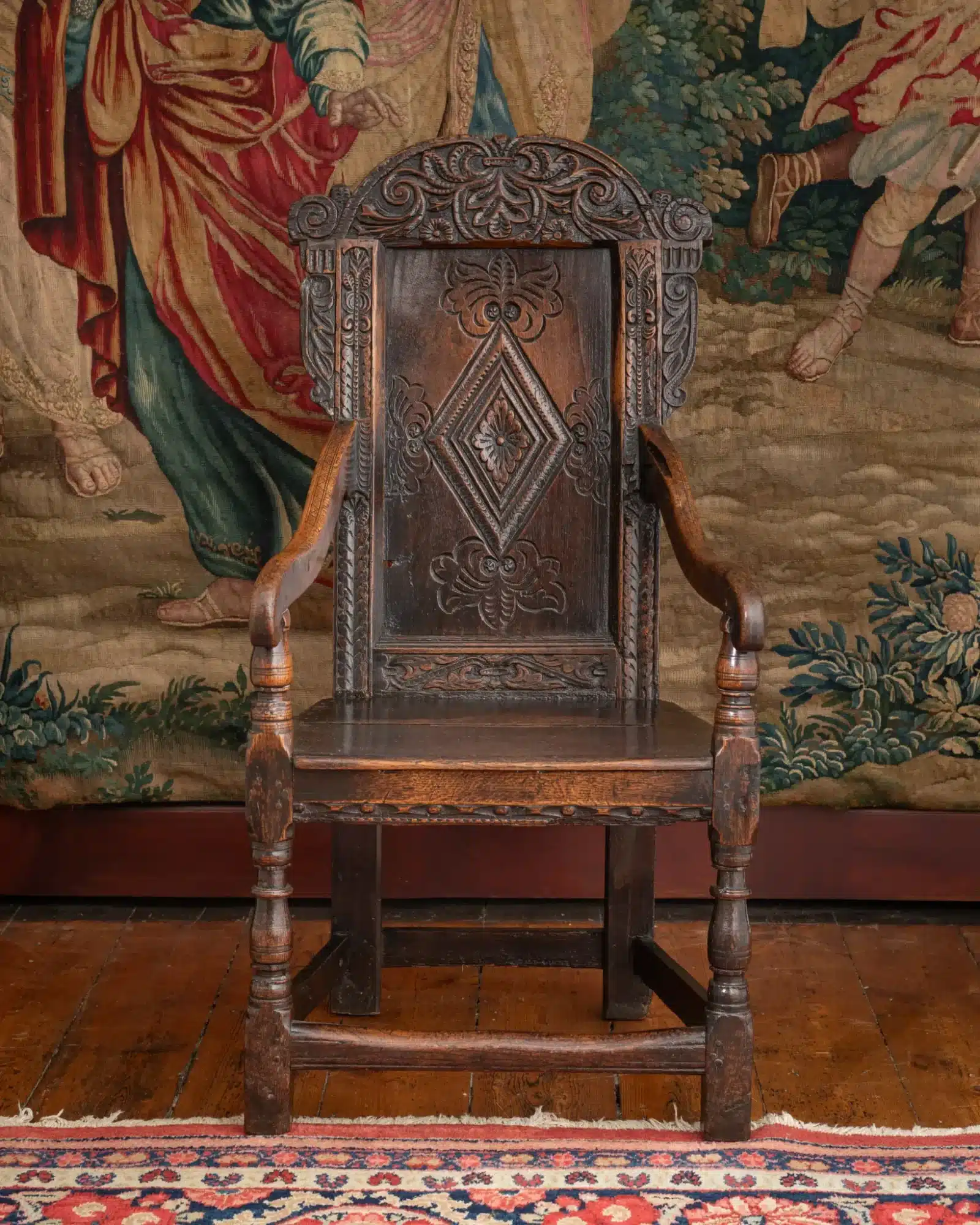
Charles II Joined Oak Armchair

Period
1660 - 1670
Origin
Leeds, Wakefield or Halifax areas
Dimensions
W 23 1/2" × H 44 3/4" × D 22"
Reference
#Marh3552

This piece has been sold. It is shown here for reference in our archive.

Description

A fine Charles II joined oak armchair of regional Yorkshire form, the cresting rail boldly carved with scrolling foliage above a back panel centred by a large lozenge enclosing a stylised flowerhead, framed with leafy spandrels. The stiles are ornamented with leafy carved detail, and the downswept arms rest on turned supports. The seat rail is decorated with a run of egg-and-dart carving, the lower back rail with double S-scrolls. The whole raised on simple baluster-turned legs joined by moulded stretchers.
This chair exemplifies the distinctive West Yorkshire idiom of the Restoration period, where bold geometric devices such as the lozenge were combined with vigorous naturalistic ornament. The lozenge was a traditional symbol of constancy and security, a popular motif in 17th-century furniture, particularly in the north of England.
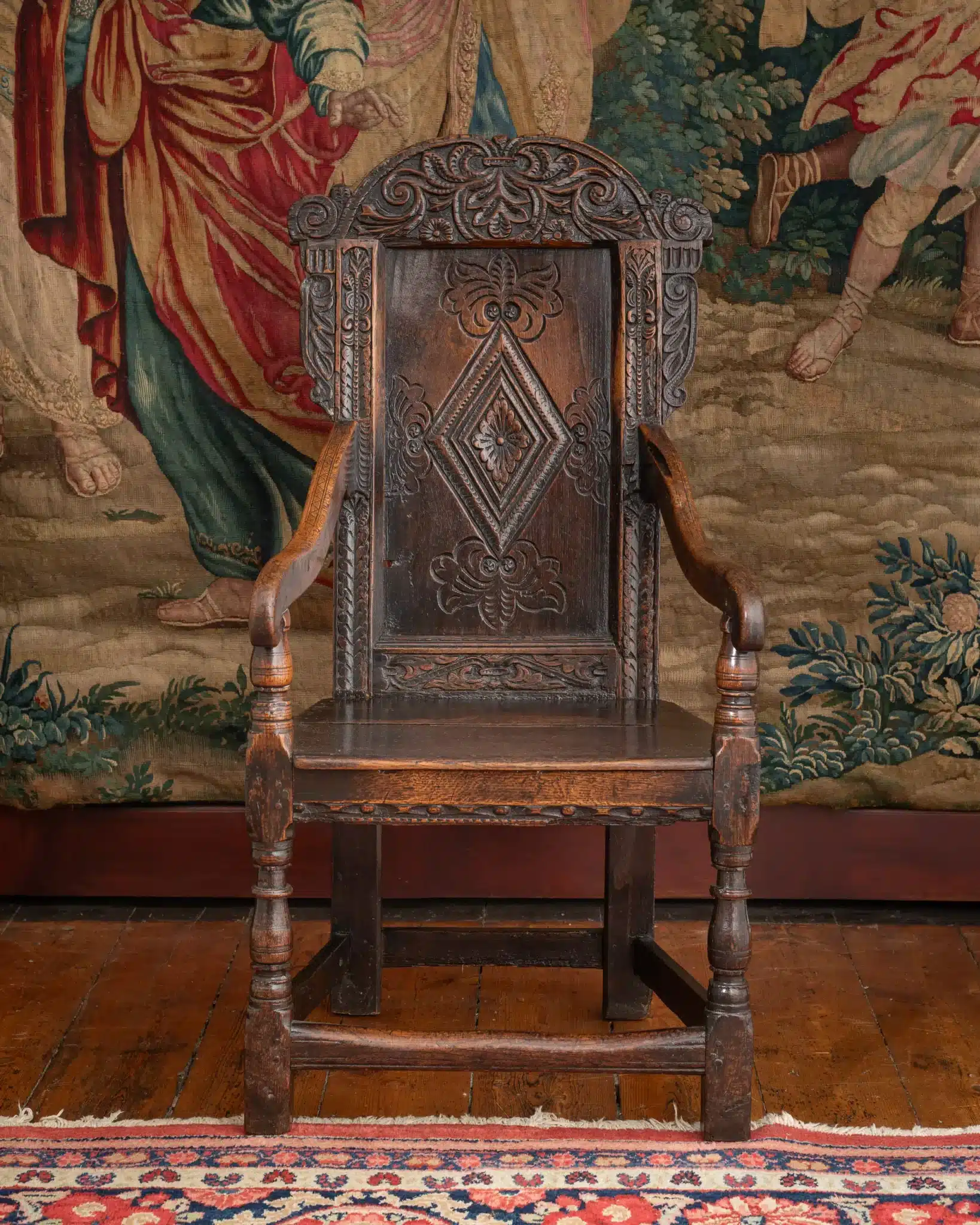
The central lozenge on the back panel was one of the most enduring motifs in 17th-century furniture. It carried connotations of stability, permanence, and constancy — qualities deeply valued in the turbulent political climate of the Restoration. Its geometric balance conveyed order and harmony, reflecting the re-establishment of monarchy under Charles II.
The floral sprigs and leafy spandrels surrounding the lozenge embody growth, fertility, and renewal — appropriate symbols in a period when England sought to recover from decades of civil conflict. They may also be read as allusions to the fruitful prosperity promised under divine kingship.
The scrollwork of the cresting rail, flowing in rhythmic curves, symbolises continuity and resilience. Scrolls in this context often conveyed the eternal unfolding of life, suggesting both dynastic endurance and divine order.
Together, these motifs transform a functional seat into a statement of loyalty and security, emblematic of the household’s alignment with Restoration authority and the renewed cultural energy of the late 17th century.

Curator's Note

Previous Late Gothic Iron-Bou… Next Rare Set of Three Ja…
  • Charles II Joined Oak Armchair

Newsletter

New Stock, Direct to Your Inbox.

Be among the first to hear about new acquisitions and notable works.

Please enable JavaScript in your browser to complete this form.
Loading
Paul Fitzsimmons logo
  • Current Stock
  • Archive
  • Notable Works
  • About Us
  • News
  • Contact

Contact Us

+44 (0)777 903 8891

  • Pinterest
  • Instagram

By Appointment

Devon, England.

Paul Fitzsimmons

Specialist in early oak furniture and works of art.

© 2026 Paul Fitzsimmons | Website by Dancing Badger Ltd

  • Privacy Policy
  • Terms & Conditions

Search the collection

Search in
    1 / 1