
Paul Fitzsimmons logo
  • Current Stock
  • Archive
  • Notable Works
  • About Us
  • News
  • Contact
Home / Archive / Charles II Lignum Vi…
Previous Next
Charles II Lignum Vitae Mortar Sold

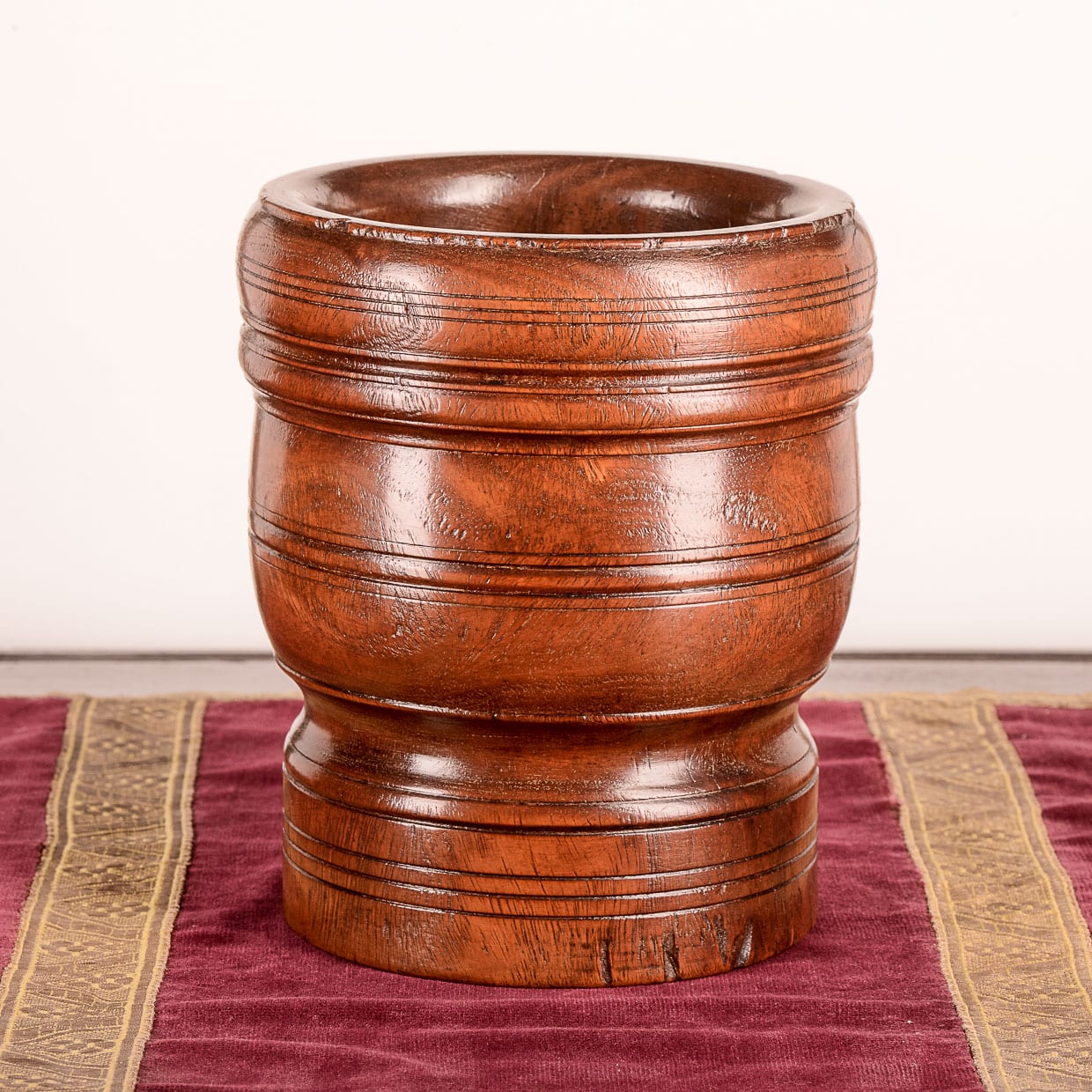
Charles II Lignum Vitae Mortar

Period
Circa 1660 - 1680
Origin
England
Dimensions
W 6" × H 7 1/4"
Reference
#Marh1451

This piece has been sold. It is shown here for reference in our archive.

Description

Turned from the dense and richly coloured wood lignum vitae (“wood of life”), this mortar is a fine survival from the later 17th century. Lignum vitae, imported from the West Indies from the early 16th century, was prized for its extraordinary hardness, weight, and natural oils, making it ideal for objects that required durability, such as mortars, pestles, and naval block pulleys.
The bold baluster form with ring-turned decoration reflects the Restoration taste for robust classical profiles, while its survival in such condition attests to the exceptional qualities of the timber. Mortars of this type would have been used in apothecaries and kitchens alike, for grinding herbs, spices, or medicinal ingredients, linking them both to domestic life and to the wider culture of early modern medicine.

Importing Lignum Vitae in the 17th Century
Lignum vitae (Guaiacum officinale and Guaiacum sanctum) is a tropical hardwood native to the Caribbean and northern South America. It was first introduced to Europe in the early 16th century by Spanish explorers and quickly became prized for its extreme density, self-lubricating resins, and medicinal properties. By the 17th century, it was being imported into England through expanding trade routes with the West Indies, particularly via London and Bristol.
In England, lignum vitae was known as “the wood of life” because of its medicinal associations: it was widely used in apothecaries for pestles, mortars, and containers for grinding herbs, spices, and drugs. The wood’s hardness made it ideal for enduring heavy pounding, while its natural oils resisted splitting and absorbed less of the substances being ground.
Because it was a costly imported material, mortars such as this were considered high-quality professional or wealthy household items, distinguishing them from the more common oak or stone examples.

Curator's Note

Previous Charles II carved oa… Next Henry VIII linenfold…
  • Charles II Lignum Vitae Mortar

Newsletter

New Stock, Direct to Your Inbox.

Be among the first to hear about new acquisitions and notable works.

Please enable JavaScript in your browser to complete this form.
Loading
Paul Fitzsimmons logo
  • Current Stock
  • Archive
  • Notable Works
  • About Us
  • News
  • Contact

Contact Us

+44 (0)777 903 8891

  • Pinterest
  • Instagram

By Appointment

Devon, England.

Paul Fitzsimmons

Specialist in early oak furniture and works of art.

© 2026 Paul Fitzsimmons | Website by Dancing Badger Ltd

  • Privacy Policy
  • Terms & Conditions

Search the collection

Search in
    1 / 1