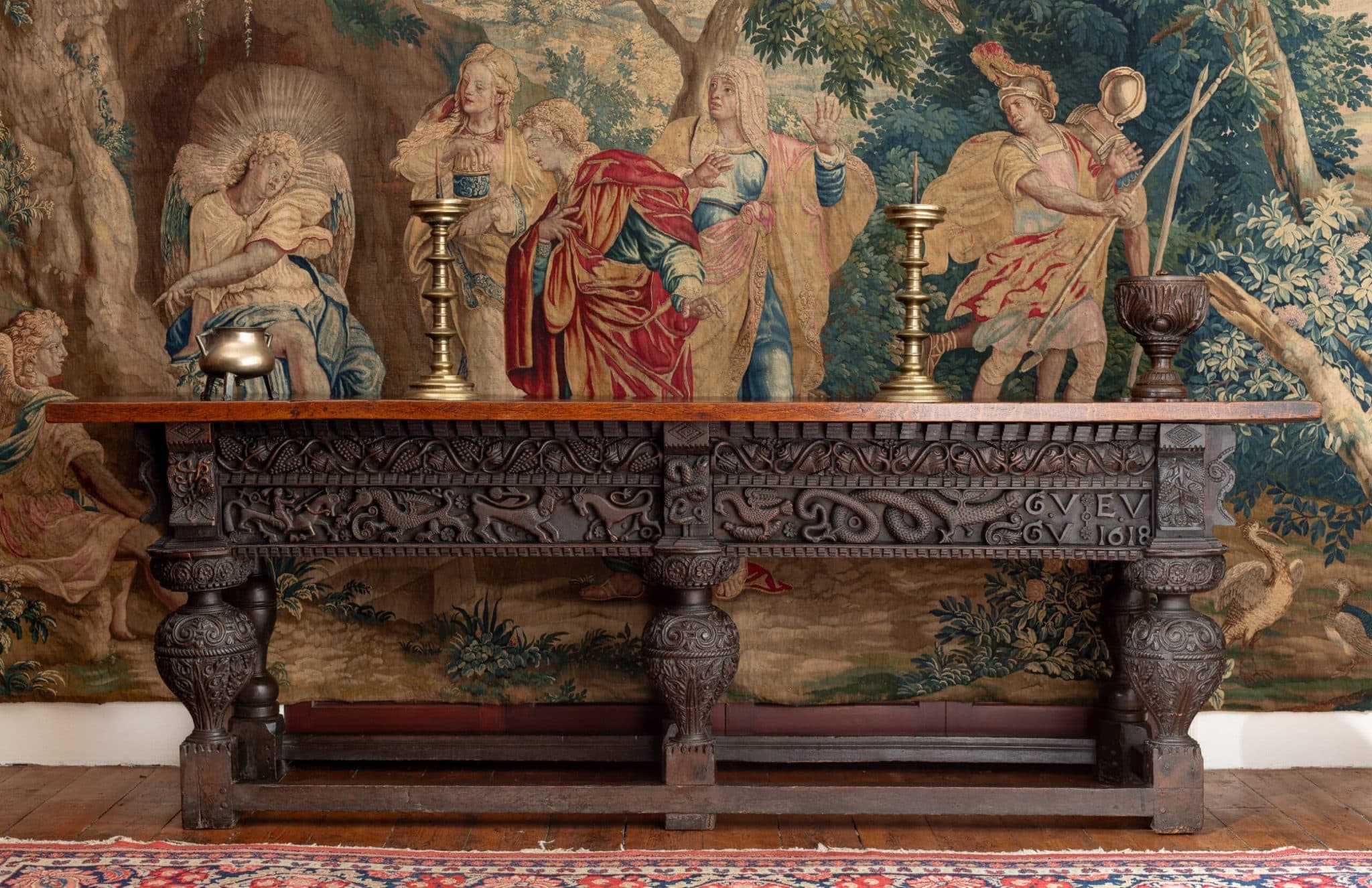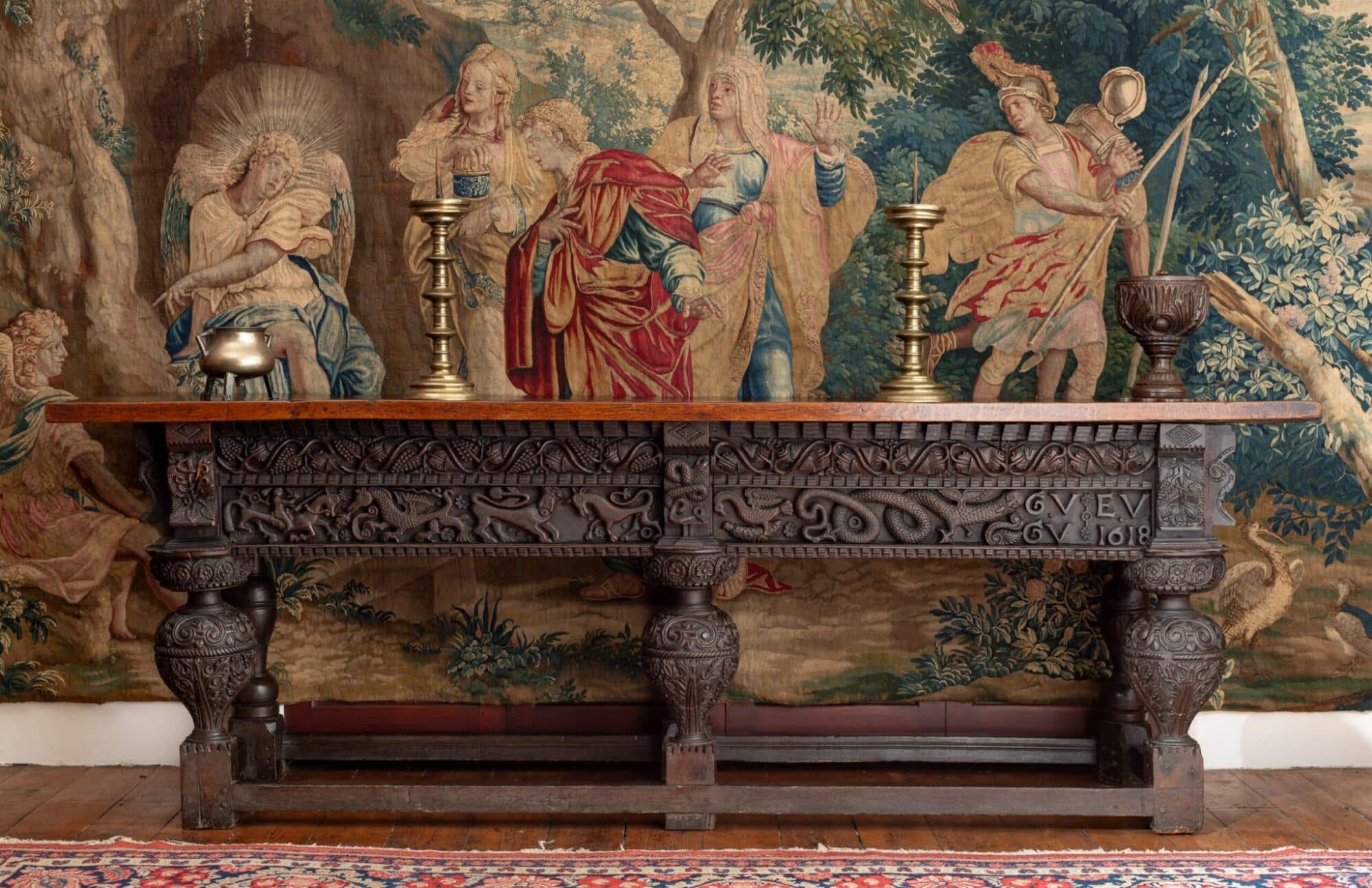
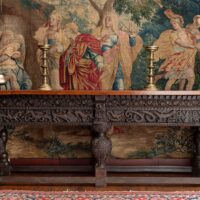
Earl of Derby Stanley Family serving table
- Period
- 1618
- Origin
- Knowsley Hall, Lancashire
- Dimensions
- W 109" × H 38 1/2" × D 29 1/4"
- Reference
- #Marh3014
This piece has been sold. It is shown here for reference in our archive.
Description
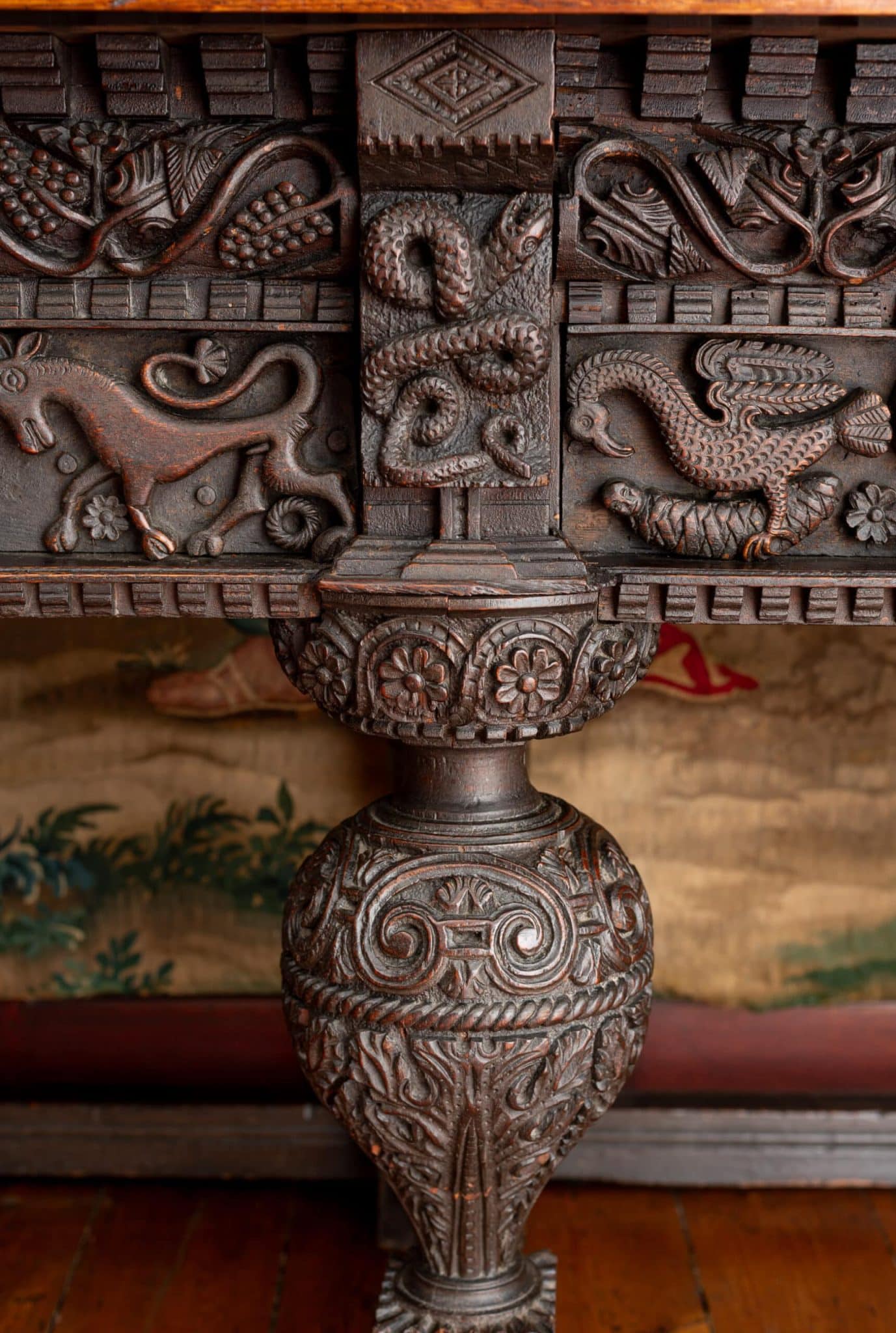
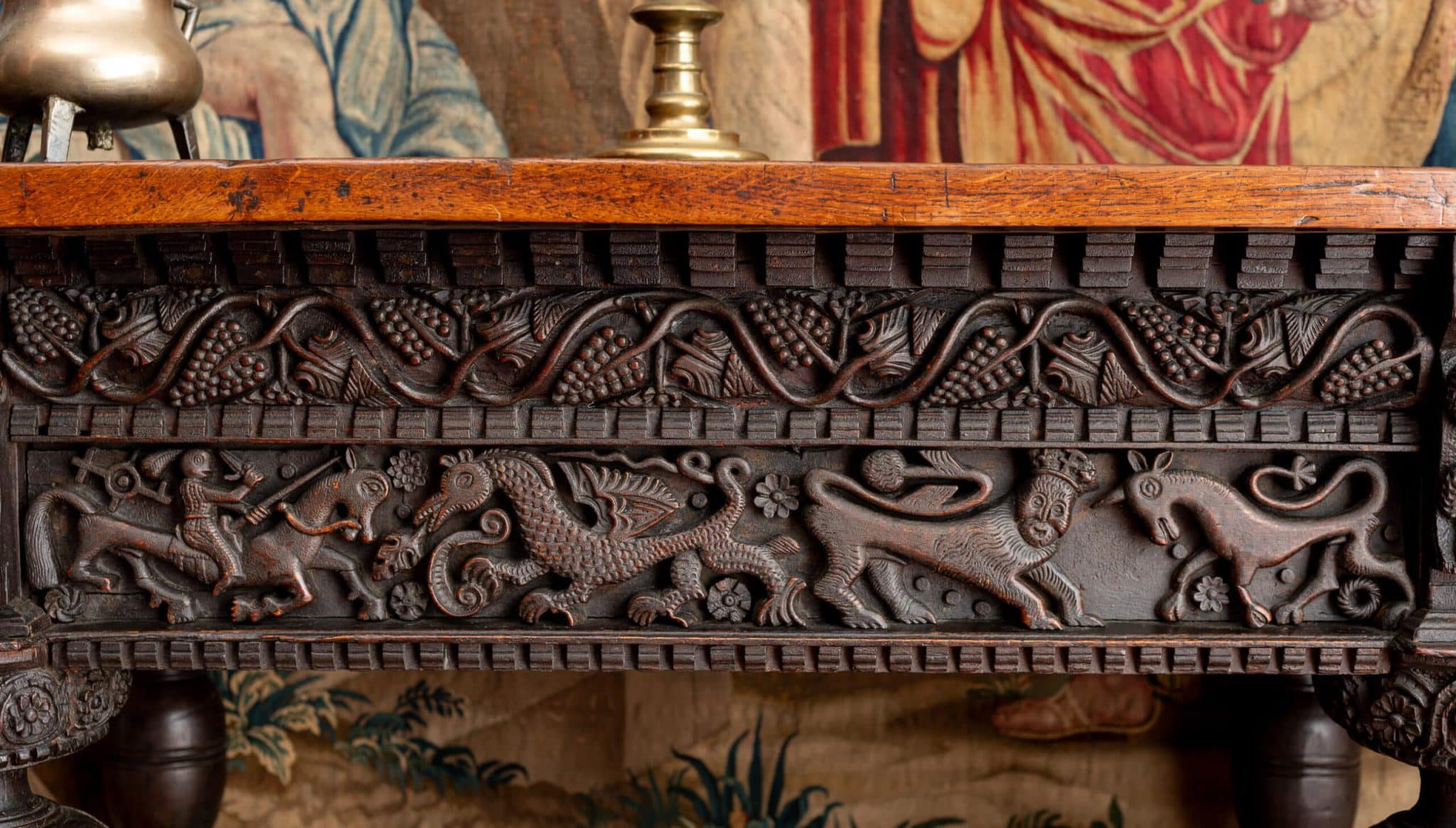
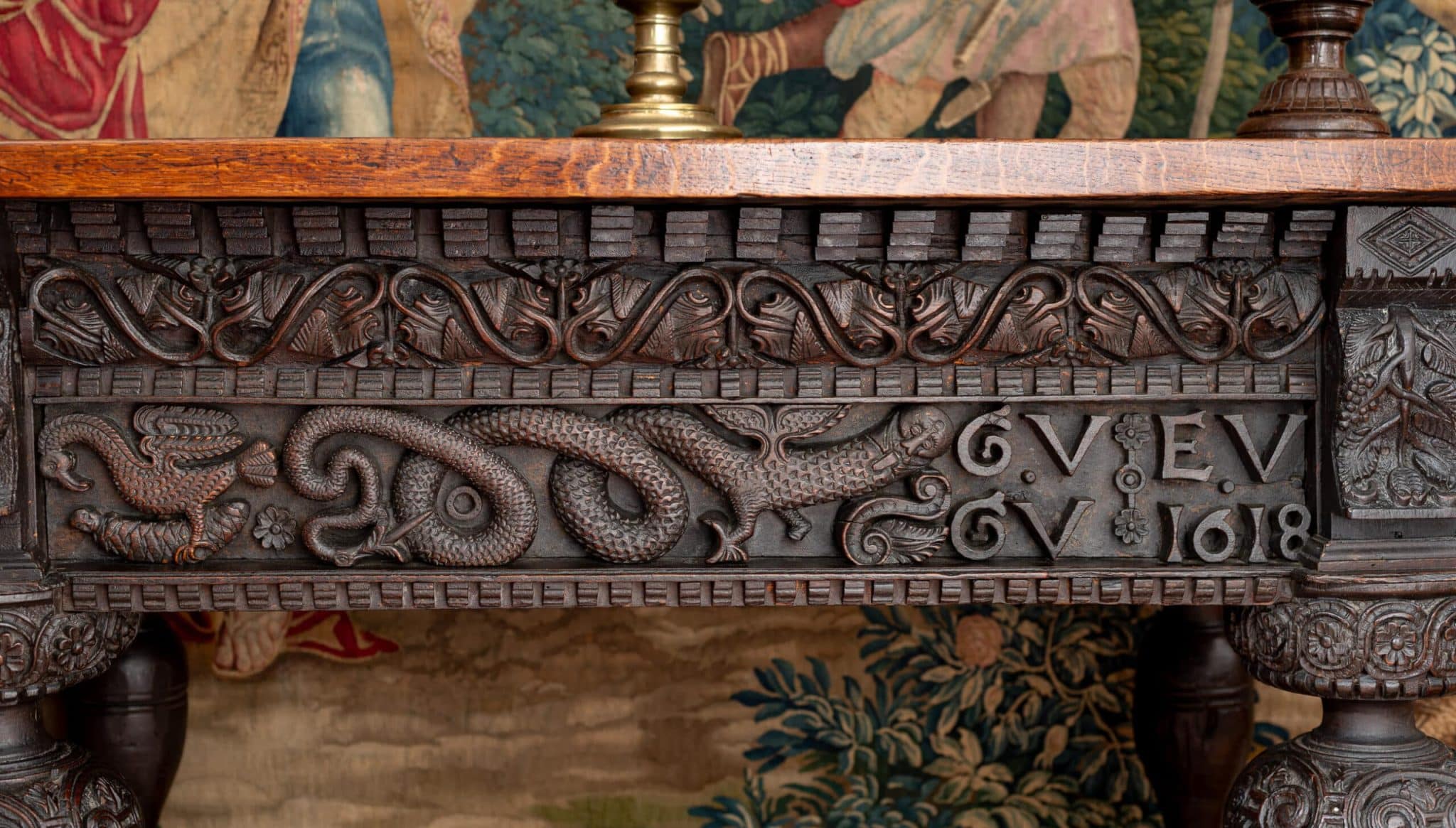
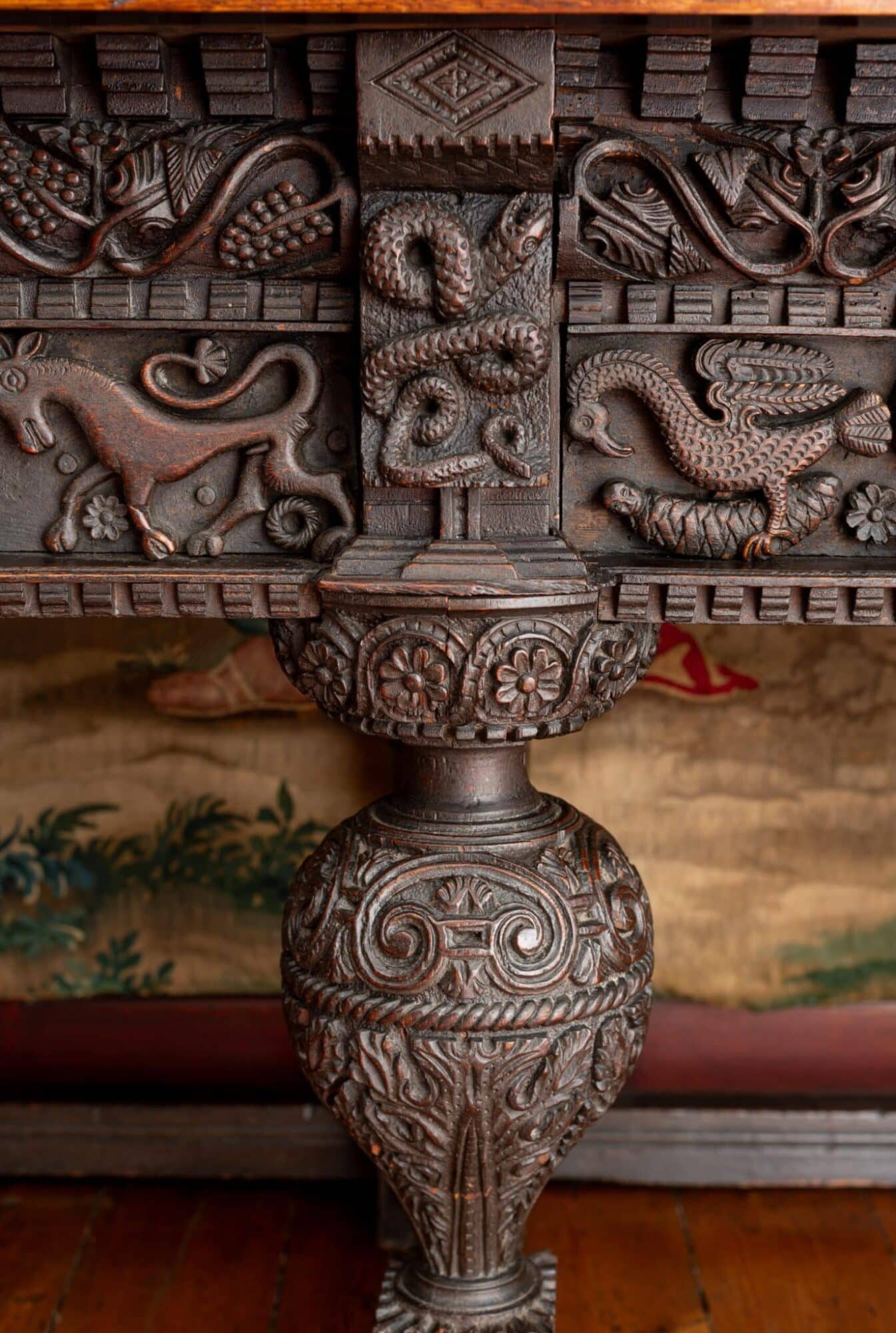
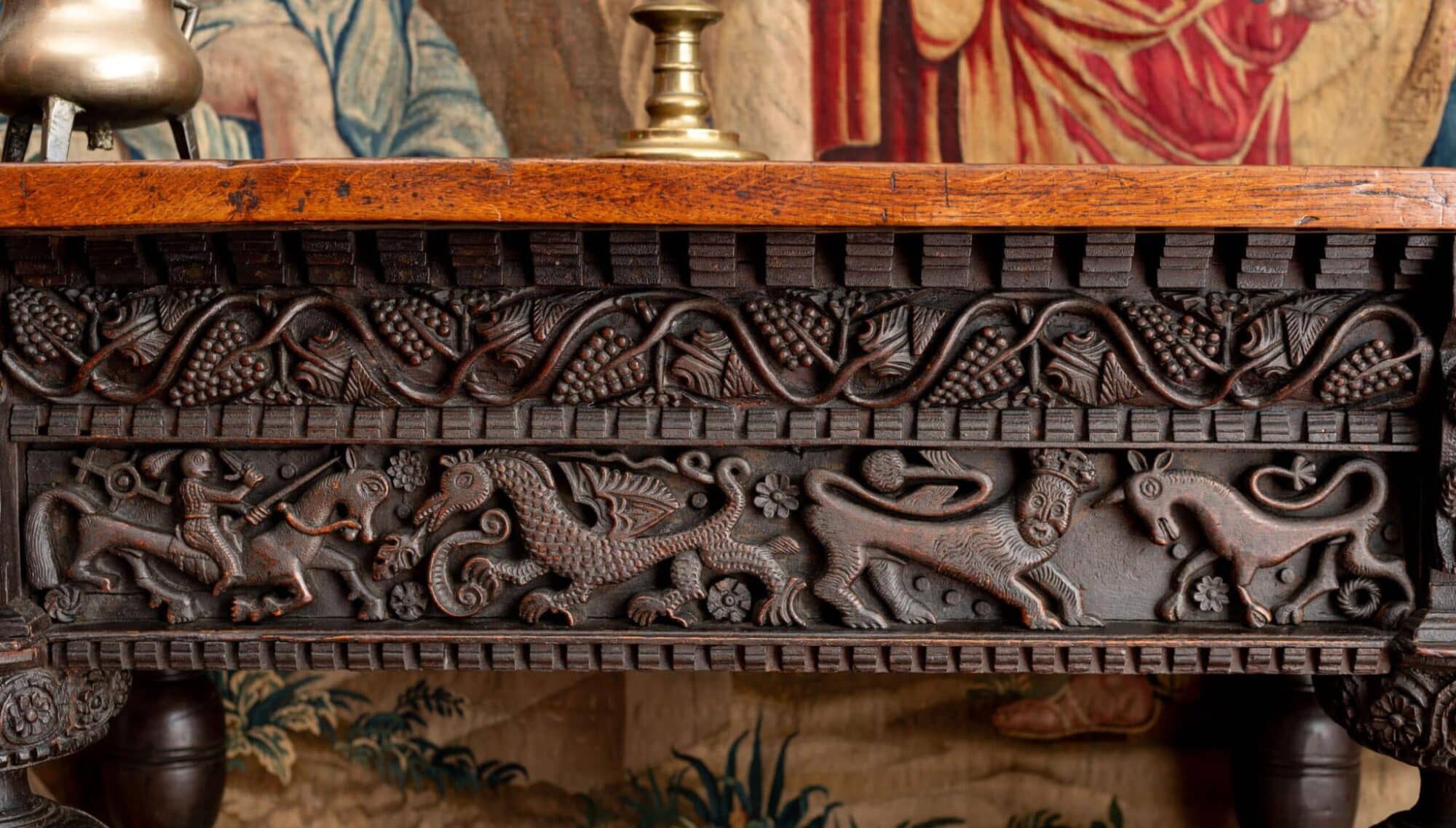
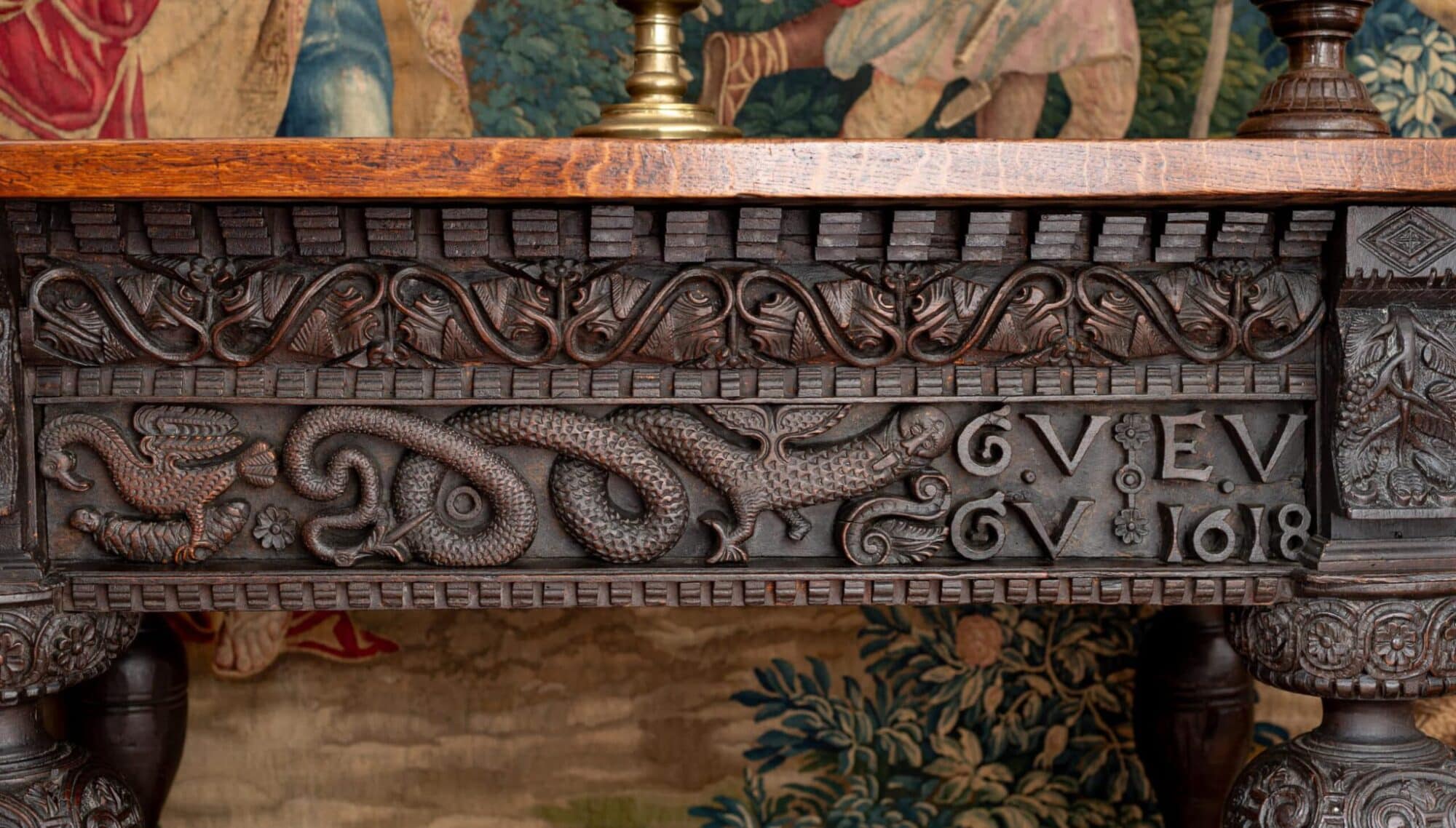
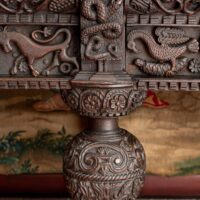
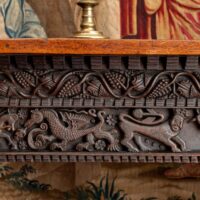
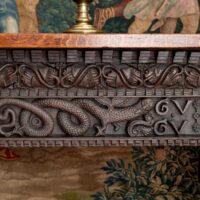
Highly important and undocumented large oak carved serving table almost certainly from Knowsley Hall, Lancashire. The six legs joined by thick lower stretcher rails with the rear legs turned and un-carved in a baluster form, with the front shown legs turned from huge formed blocks and carved with leafy and scrolled designs with a guilloche turned upper section supporting the heavily carved frieze rail of the very finest quality. The left section of the frieze depicts George slaying the dragon and a lion and unicorn, this is homage to King James 1st, above these images is a deep cut vine and leaf frieze with dental mouldings above on the underside of the top. The right hand section of the frieze depicts the Stanley badge, an eagle swaddling a child, and a dragon or serpent with a head on its tail (The Ouroboros serpent is meant to be a positive symbol that represents unity and the natural eternal cycle of destruction and re-creation) Initialled and dated GV, EV (Elizabeth de Vere) GV 1618, above this a trailing vine leaf and dental mouldings.
Museum accession number on under side of table and top.
Elizabeth de Vere (Stanley) Elizabeth Stanley, Countess of Derby, Lord of Mann, was an English noblewoman and courtier. She was the eldest daughter of the Elizabethan courtier and poet Edward de Vere, 17th Earl of Oxford. Her grandfather William Cecil, 1st Baron Burghley KG PC was an English statesman, the chief adviser of Queen Elizabeth I for most of her reign, twice Secretary of State and Lord High Treasurer from 1572.
Elizabeth’s husband, William Stanley, 6th Earl of Derby, KG (1561 – 29 September 1642) was an English nobleman and politician. Stanley inherited a prominent social position that was both dangerous and unstable, as his mother was heir to Queen Elizabeth I under the Third Succession Act.