
Paul Fitzsimmons logo
  • Current Stock
  • Archive
  • Notable Works
  • About Us
  • News
  • Contact
Home / Archive / Elizabeth I Oak Low…
Previous Next
  • Elizabeth I Oak Low Stool (Footstool/Child’s Stool)
  • Elizabeth I Oak Low Stool (Footstool/Child’s Stool)
Sold

Elizabeth I Oak Low Stool (Footstool/Child’s Stool)

Period
Circa 1600
Origin
England
Dimensions
W 15 1/4" × H 13" × D 11 1/2"
Reference
#Marh3085

This piece has been sold. It is shown here for reference in our archive.

Description

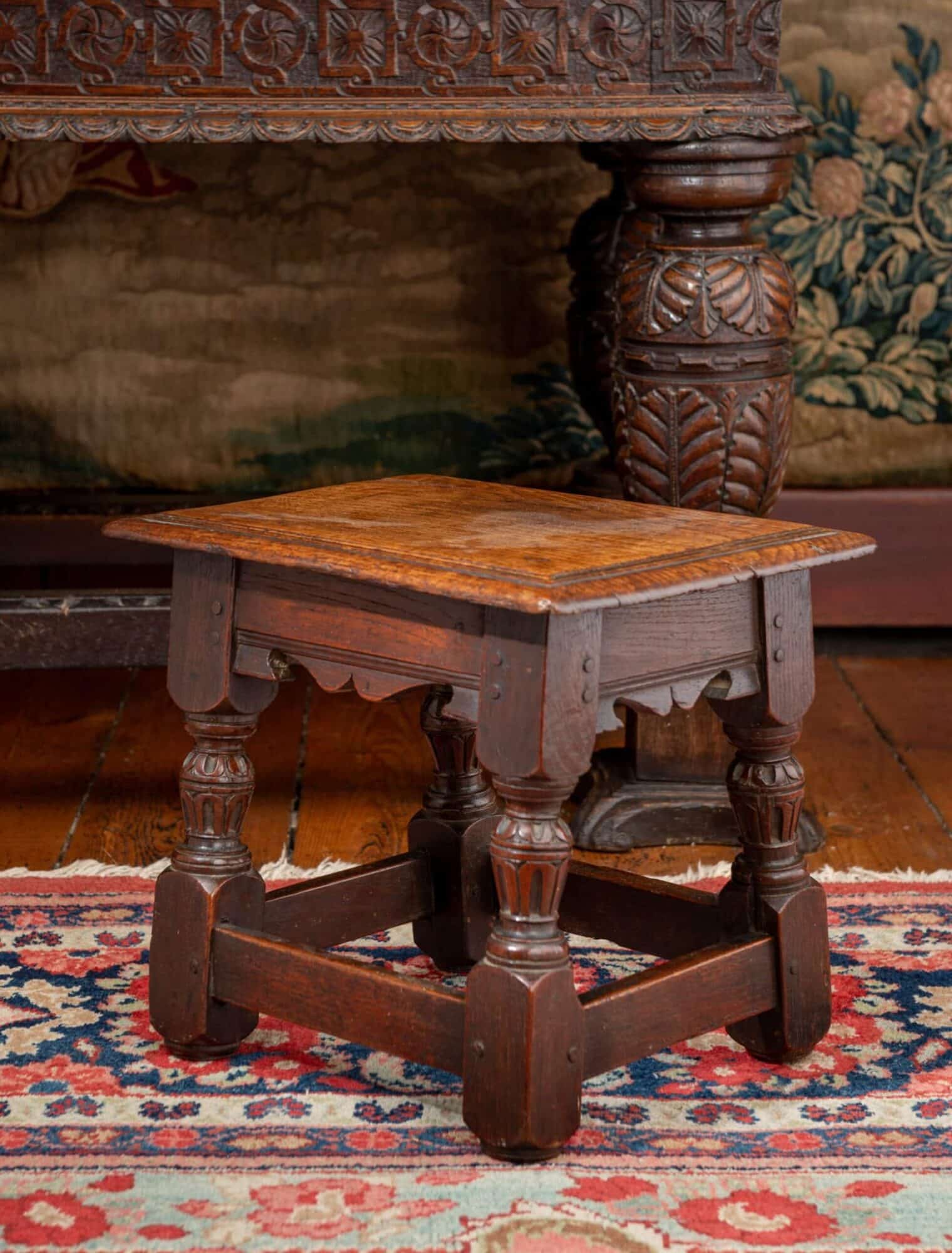
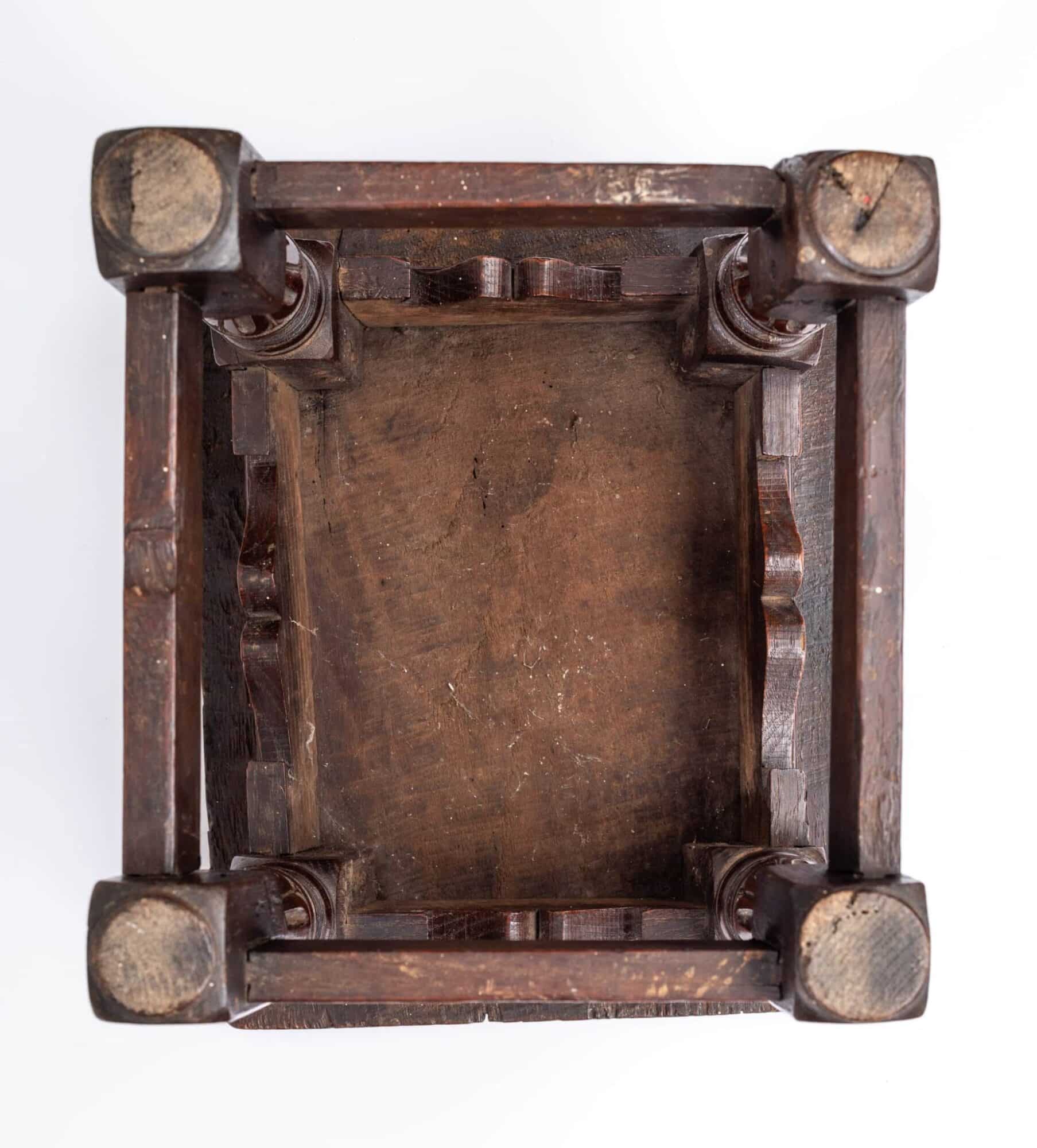
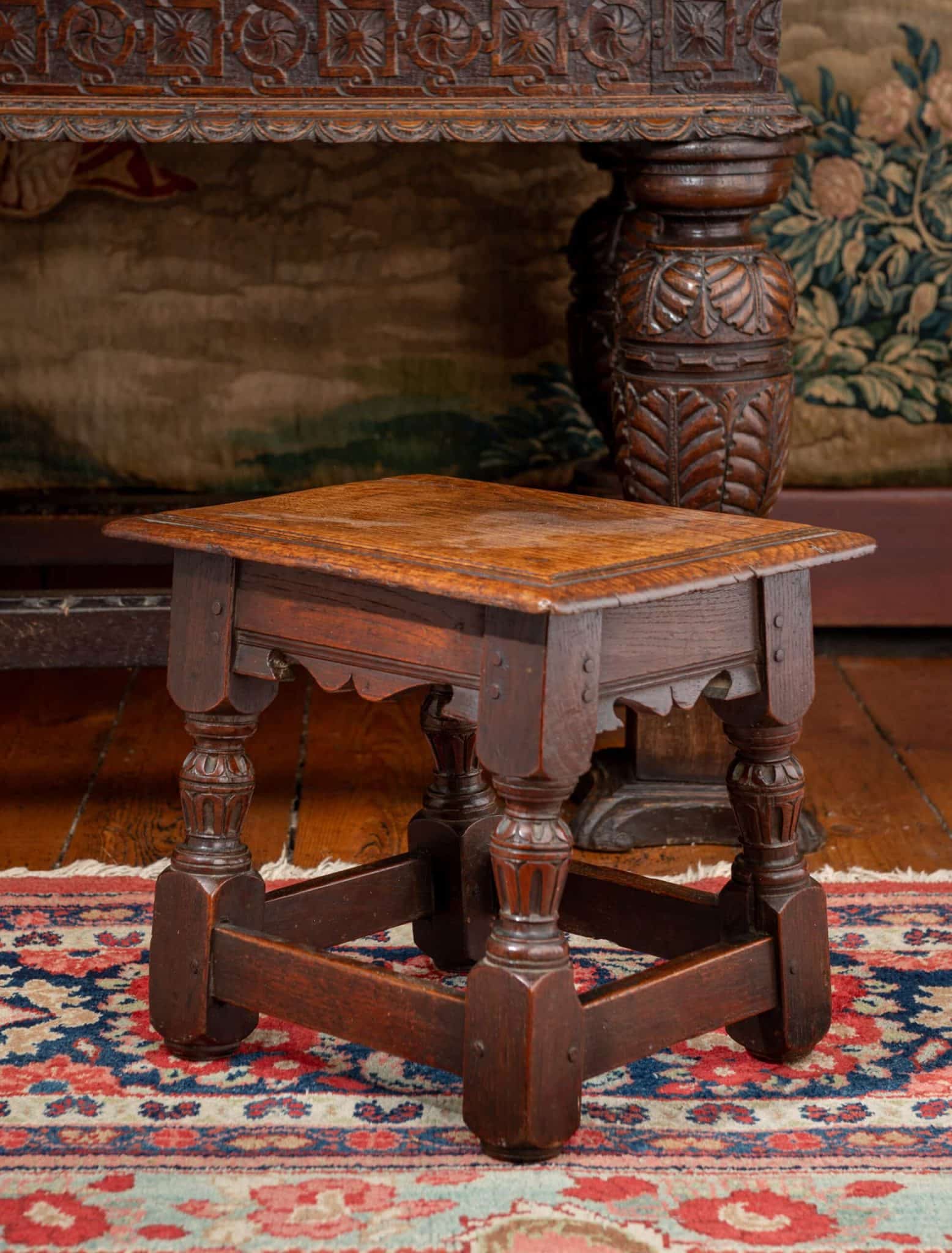
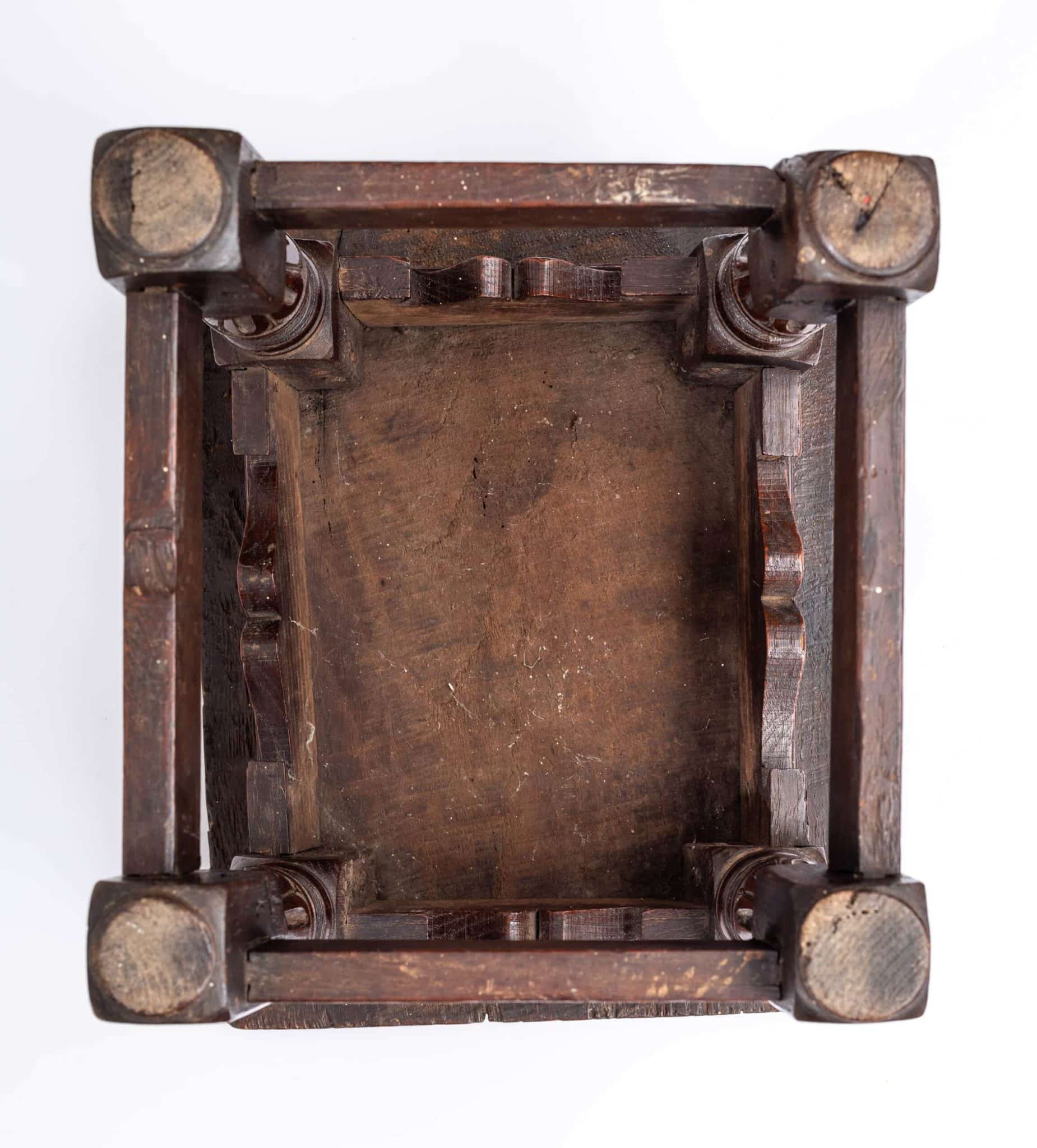
A very rare Elizabeth I oak low stool, almost certainly intended either as a footstool for a high-backed chair of state, or as a child’s stool within a noble household. The four squat baluster-turned legs with crisp fluted ornament rise from block feet and are united by plain stretchers, supporting a moulded seat of fine colour and dry patina. The rails are enhanced with shaped aprons, lending refinement and balance to the form.
At only 13 inches high, this stool sits below normal seat level, its diminutive proportions reinforcing its specialised function. Such stools were essential to the rhythm of Elizabethan interiors: either serving as footrests for persons of rank — an important marker of comfort and privilege — or as miniature seating for children, echoing the designs of adult furniture in reduced scale.
Surviving examples of Elizabethan stools in this low form are extremely scarce, with few documented in reference works or institutional collections. The survival of this example with such crisp turnings, untouched surfaces, and glowing colour makes it an exceptional piece of Elizabethan domestic furniture.
Social Role of the Elizabethan Low Stool
In Elizabethan society, seating was never just functional — it was a marker of rank, privilege, and social order. To sit on a great chair signified authority; to be offered a stool rather than a bench was itself a privilege; and to place one’s feet upon a dedicated footstool was a subtle but powerful symbol of comfort and status.
Low stools such as this, standing at just 13 inches, likely served in one of two key social roles: as footstools before high-backed chairs of estate, reinforcing the elevated position of the sitter, or as child’s stools, miniature versions of adult furniture that reflected a household’s wealth and attention to hierarchy even in children’s furnishings.
In either case, their presence within the household spoke volumes. A footstool was a physical expression of refinement, suggesting the sitter’s entitlement to comfort and the household’s sophistication. A child’s stool, on the other hand, marked the extension of social etiquette and furniture design into the upbringing of the next generation.
Surviving examples are scarce today, but in the 16th and 17th centuries such small stools would have been part of the fabric of daily life, tucked beneath great chairs in the hall or chamber, or clustered alongside other stools in the parlour. Their very form reveals how furniture both reflected and reinforced Elizabethan ideals of order, hierarchy, and domestic display.

Curator's Note

Previous Pair of 16th century… Next Elizabeth I oak draw…
  • Elizabeth I Oak Low Stool (Footstool/Child’s Stool)
  • Elizabeth I Oak Low Stool (Footstool/Child’s Stool)

Newsletter

New Stock, Direct to Your Inbox.

Be among the first to hear about new acquisitions and notable works.

Please enable JavaScript in your browser to complete this form.
Loading
Paul Fitzsimmons logo
  • Current Stock
  • Archive
  • Notable Works
  • About Us
  • News
  • Contact

Contact Us

+44 (0)777 903 8891

  • Pinterest
  • Instagram

By Appointment

Devon, England.

Paul Fitzsimmons

Specialist in early oak furniture and works of art.

© 2026 Paul Fitzsimmons | Website by Dancing Badger Ltd

  • Privacy Policy
  • Terms & Conditions

Search the collection

Search in
    1 / 1