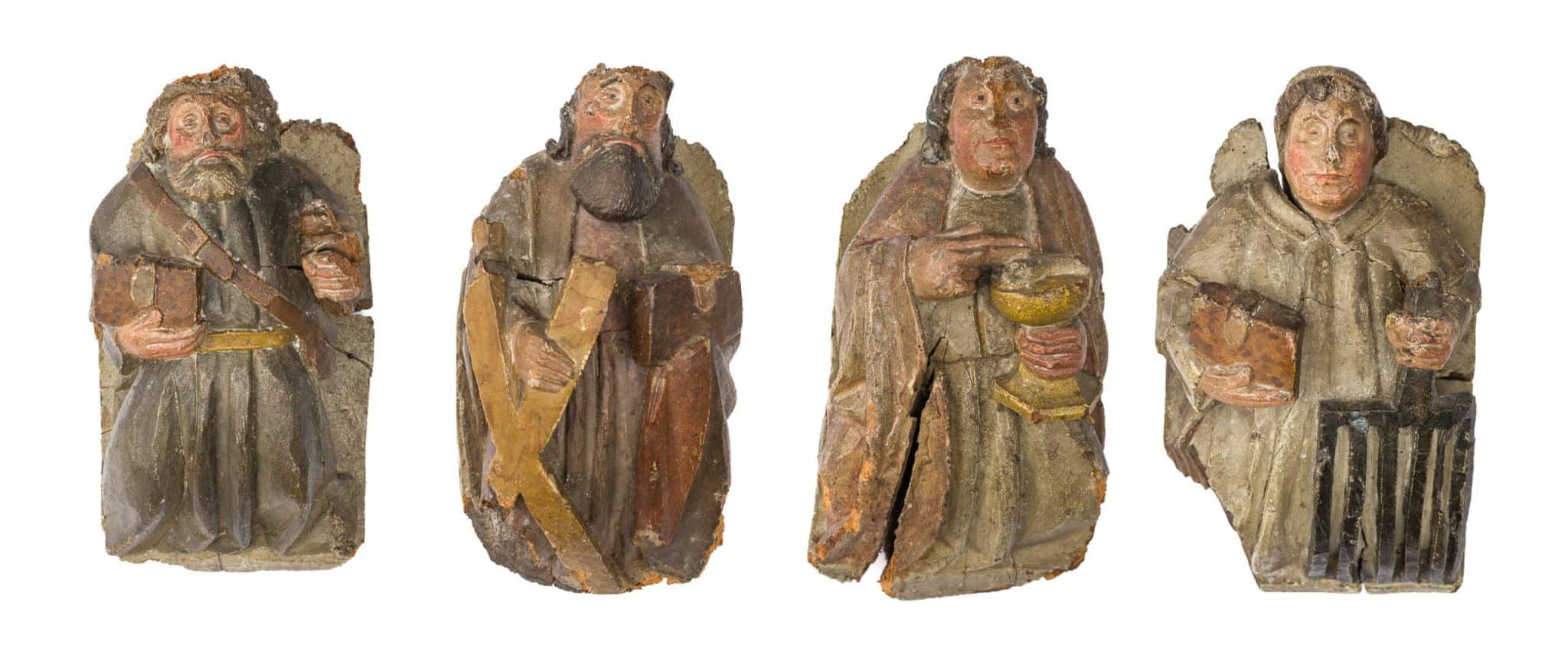
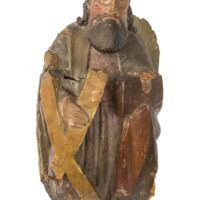
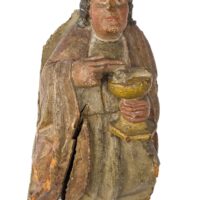
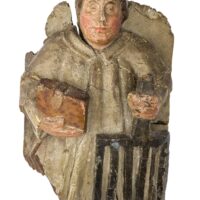
Set of Four English Medieval Oak Corbels Depicting Saints
- Period
- 1450 - 1500
- Origin
- England
- Dimensions
- W 7 1/2" × H 15 1/4" × D 8" approx"
- Reference
- #Marh2802
This piece has been sold. It is shown here for reference in our archive.
Description
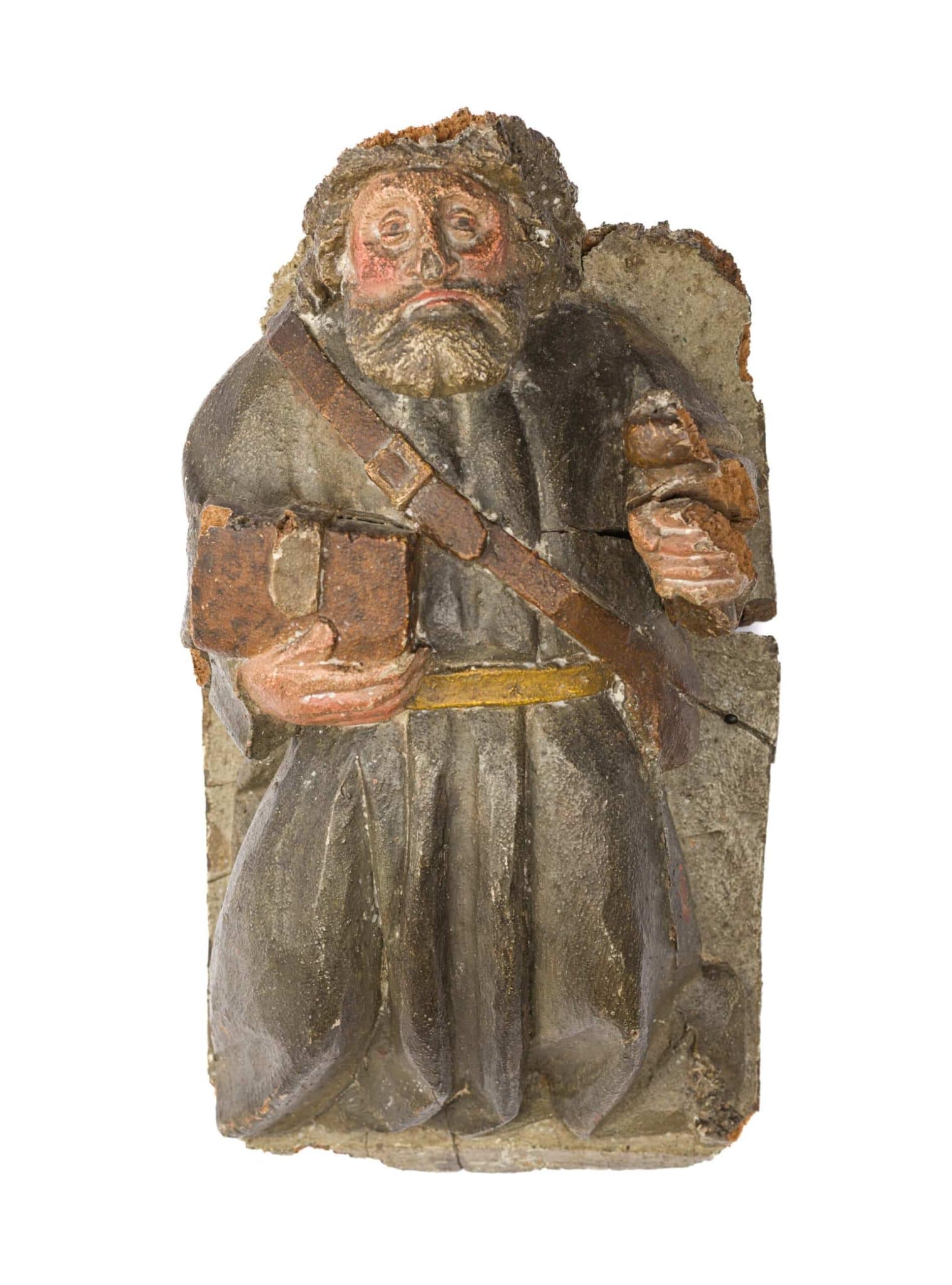
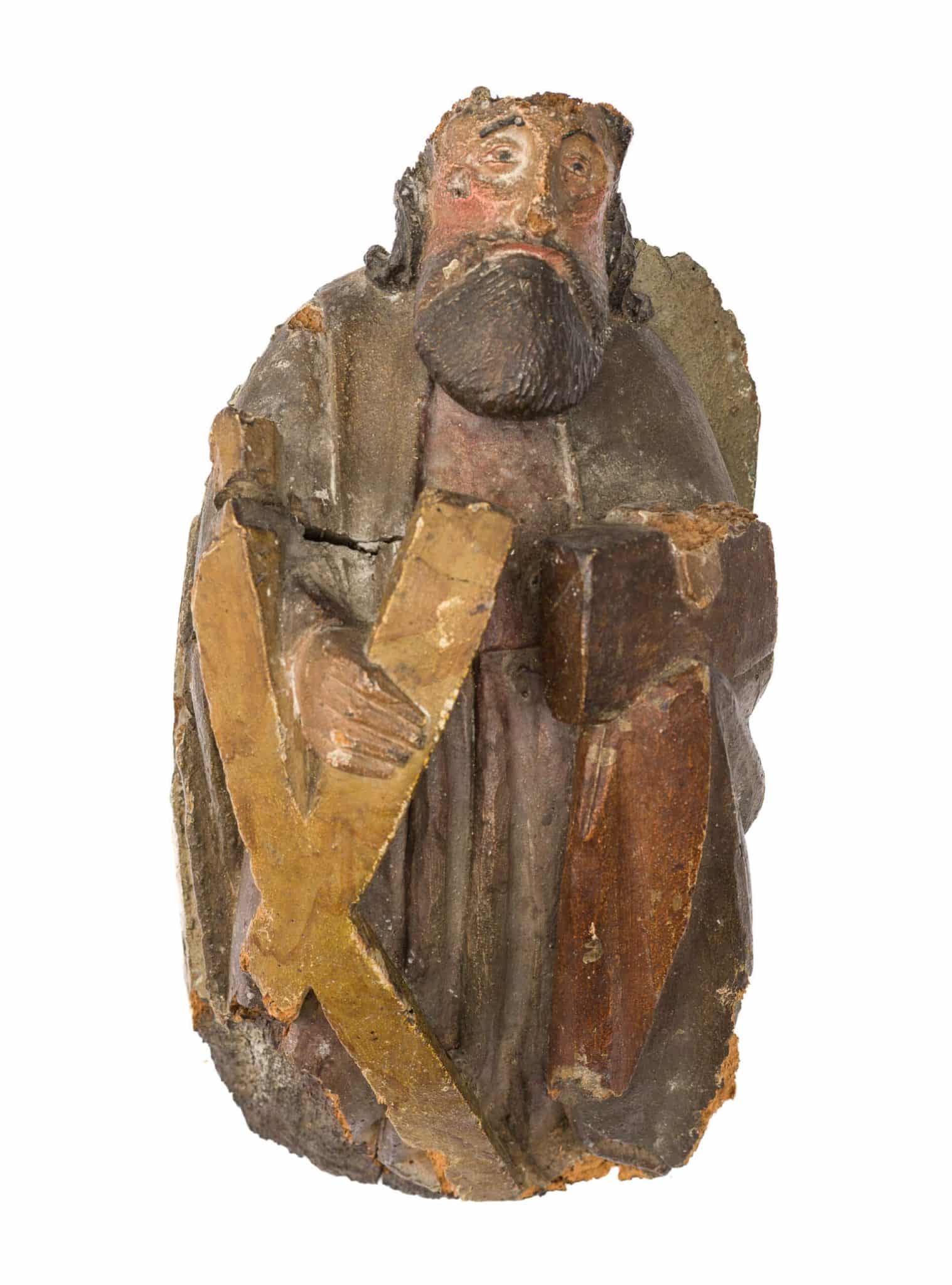
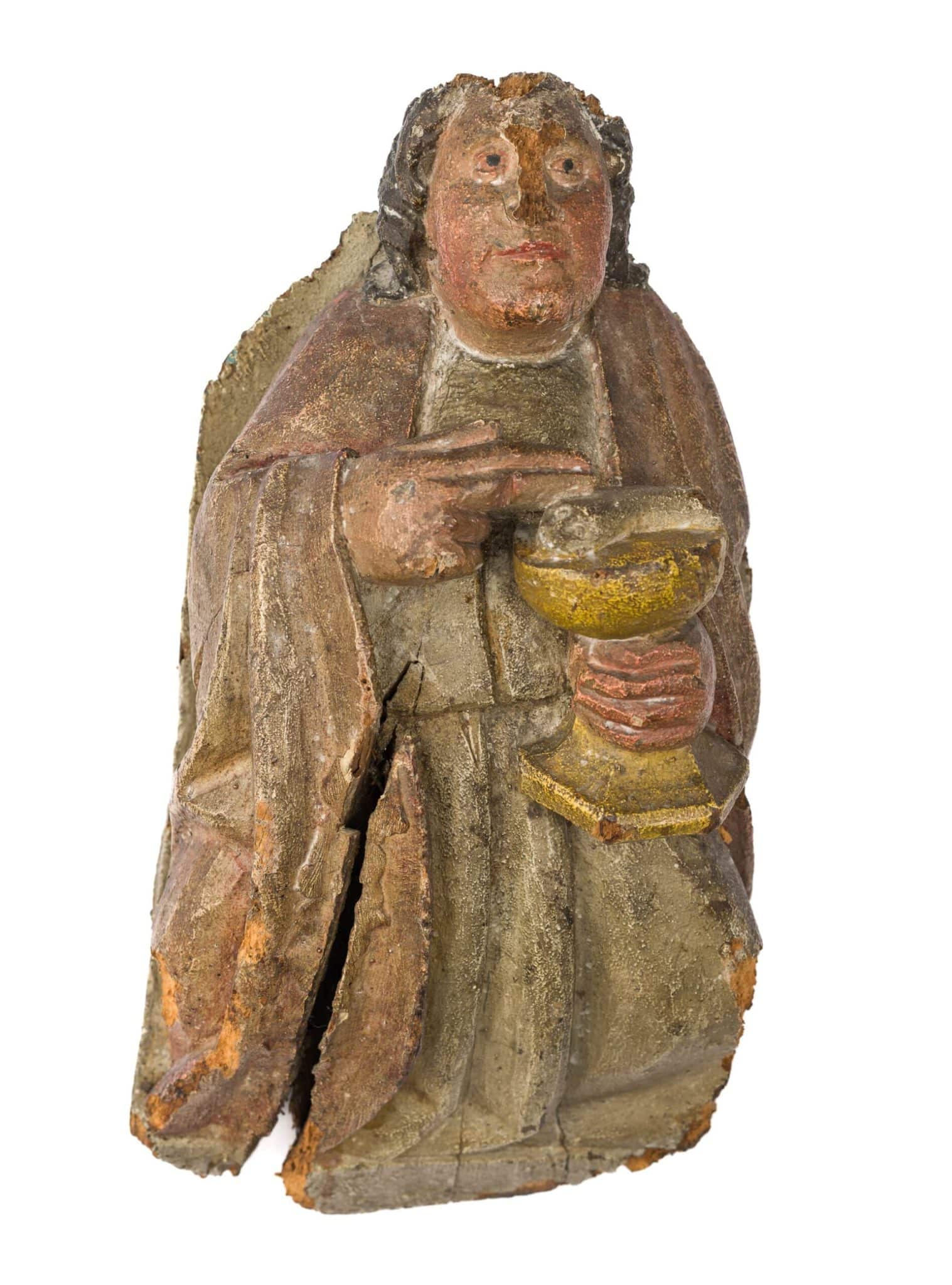
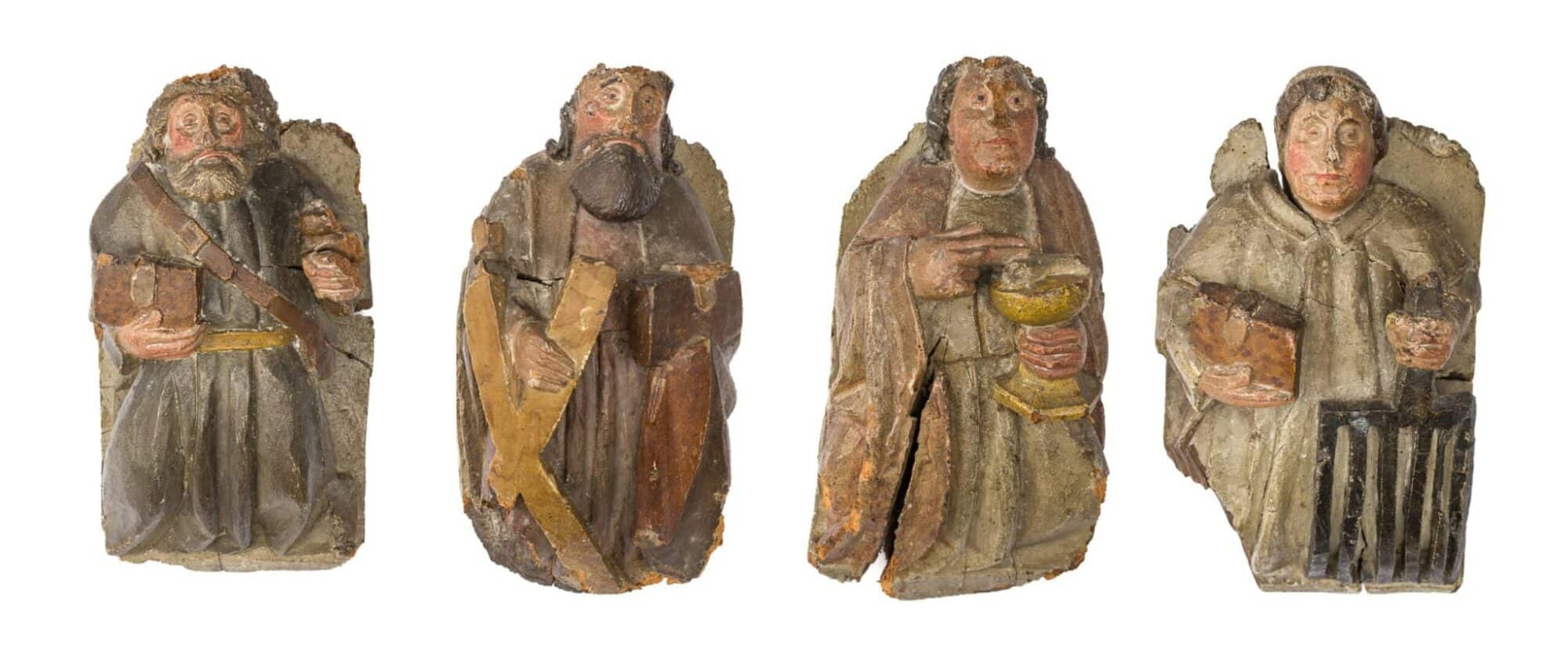
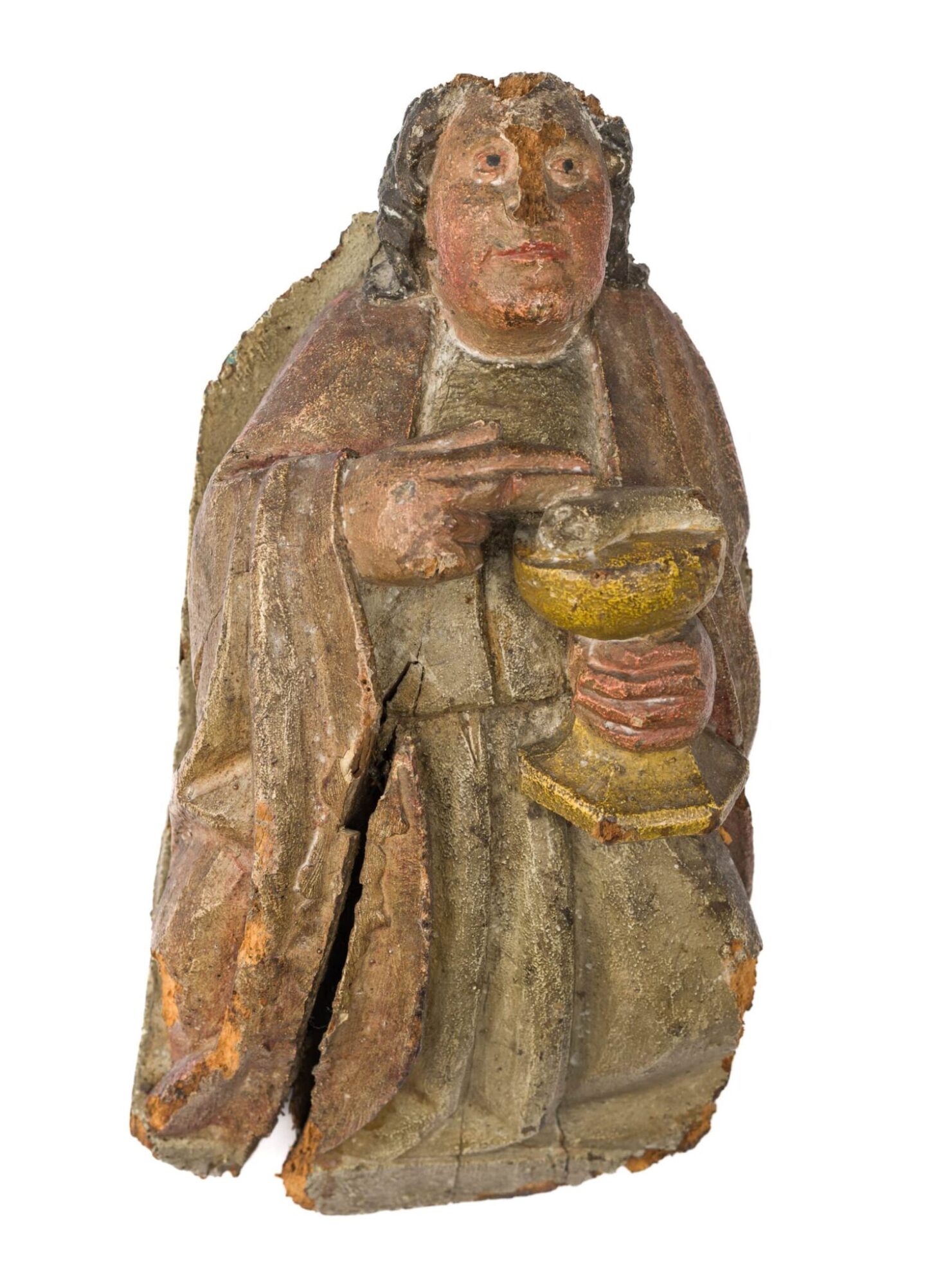
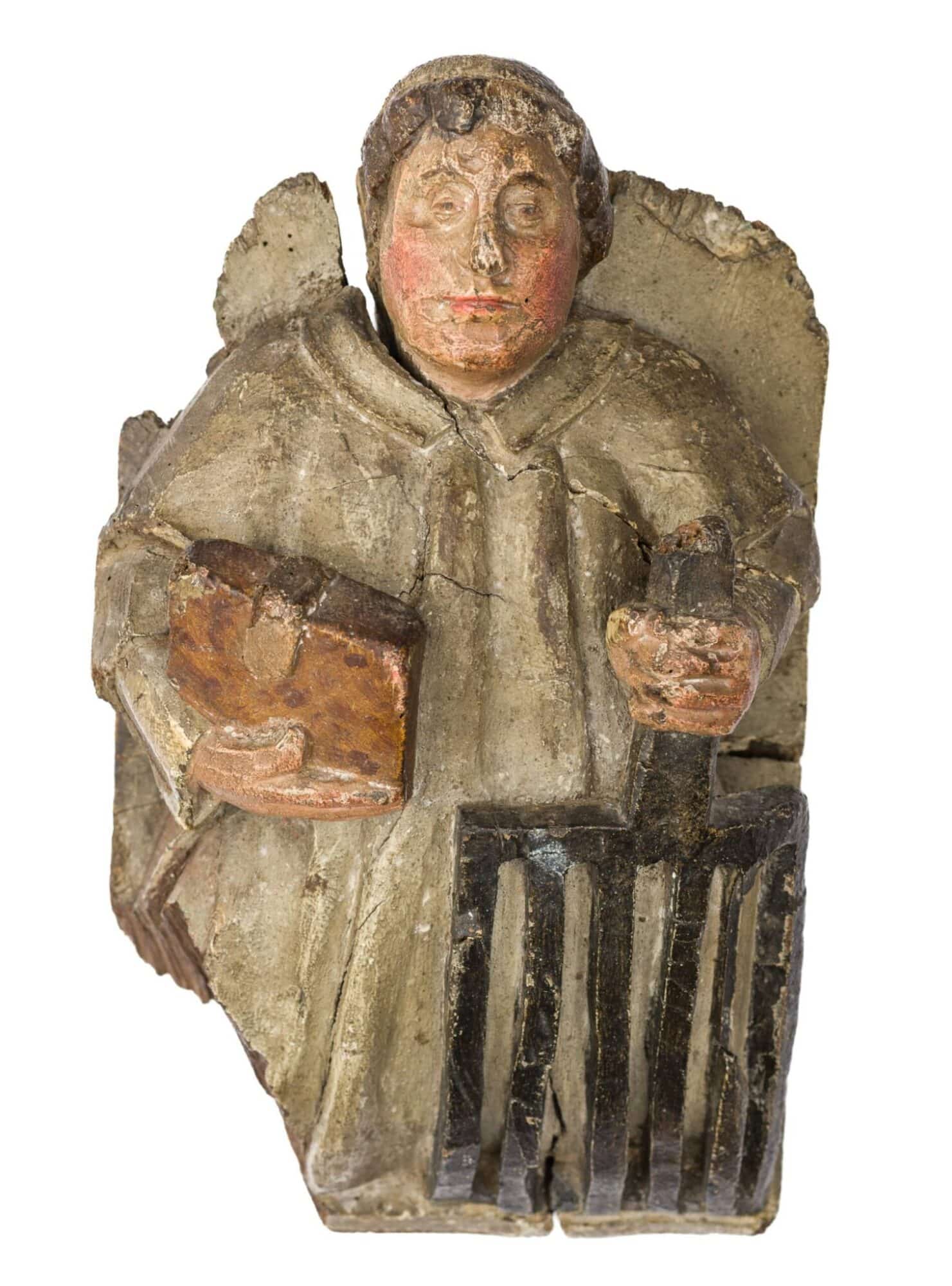
This rare and exceptional set of four English medieval oak corbels dates to the late 15th century and depicts a sequence of saints, each identified by their traditional attributes. Despite centuries of survival, the group retains much of its original painted and gilded surface, an extraordinary survival of pre-Reformation ecclesiastical art.
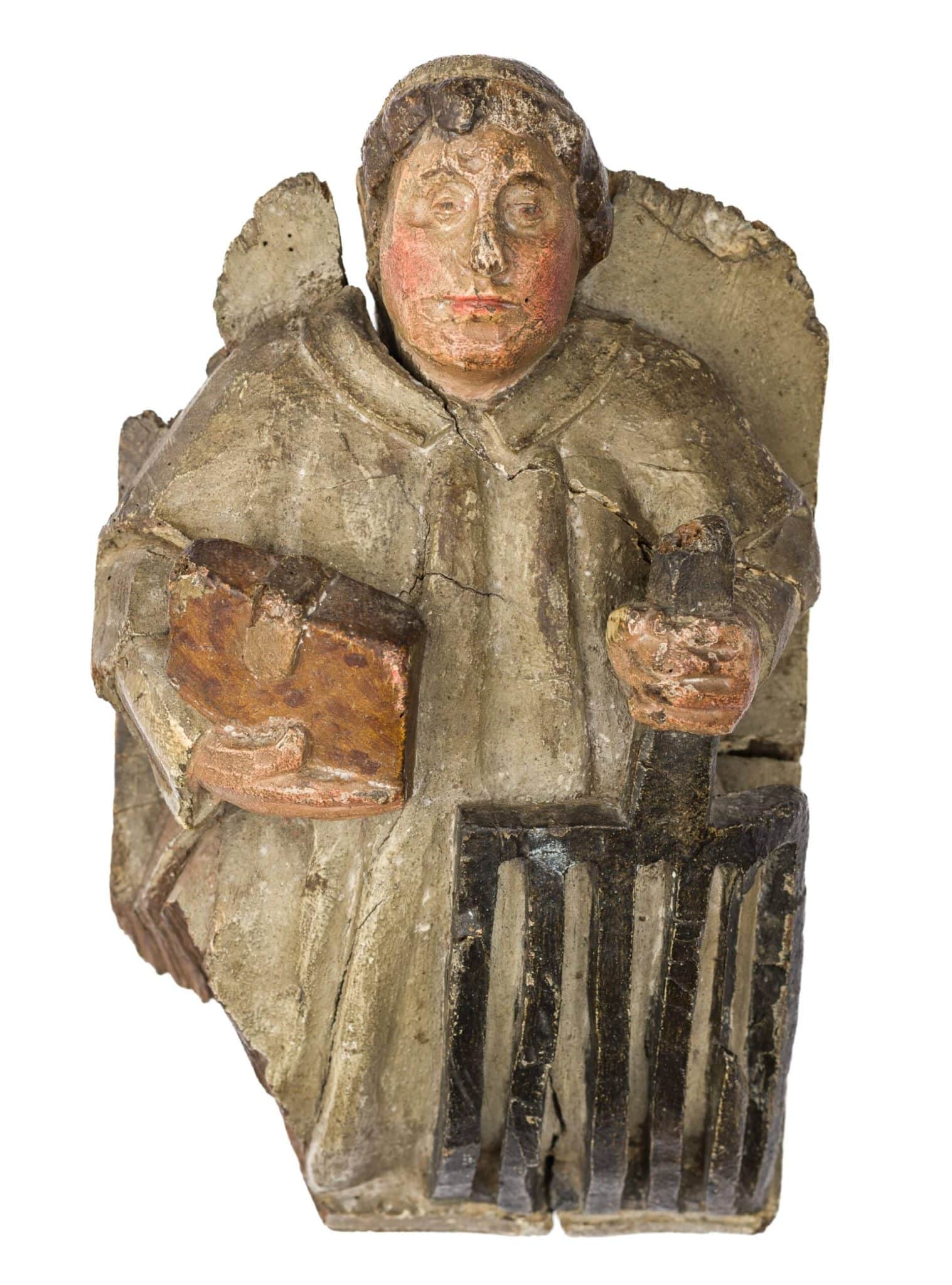
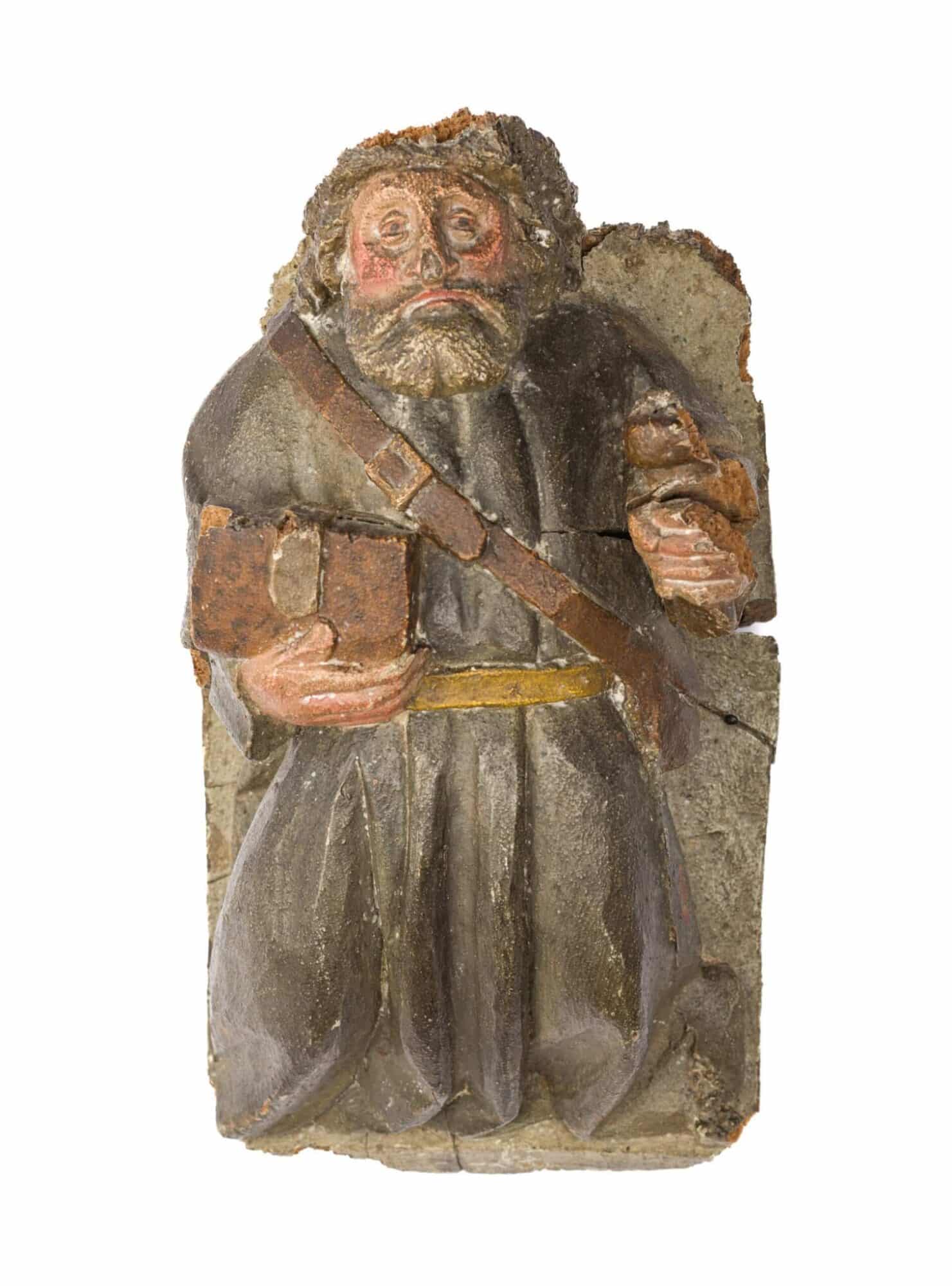
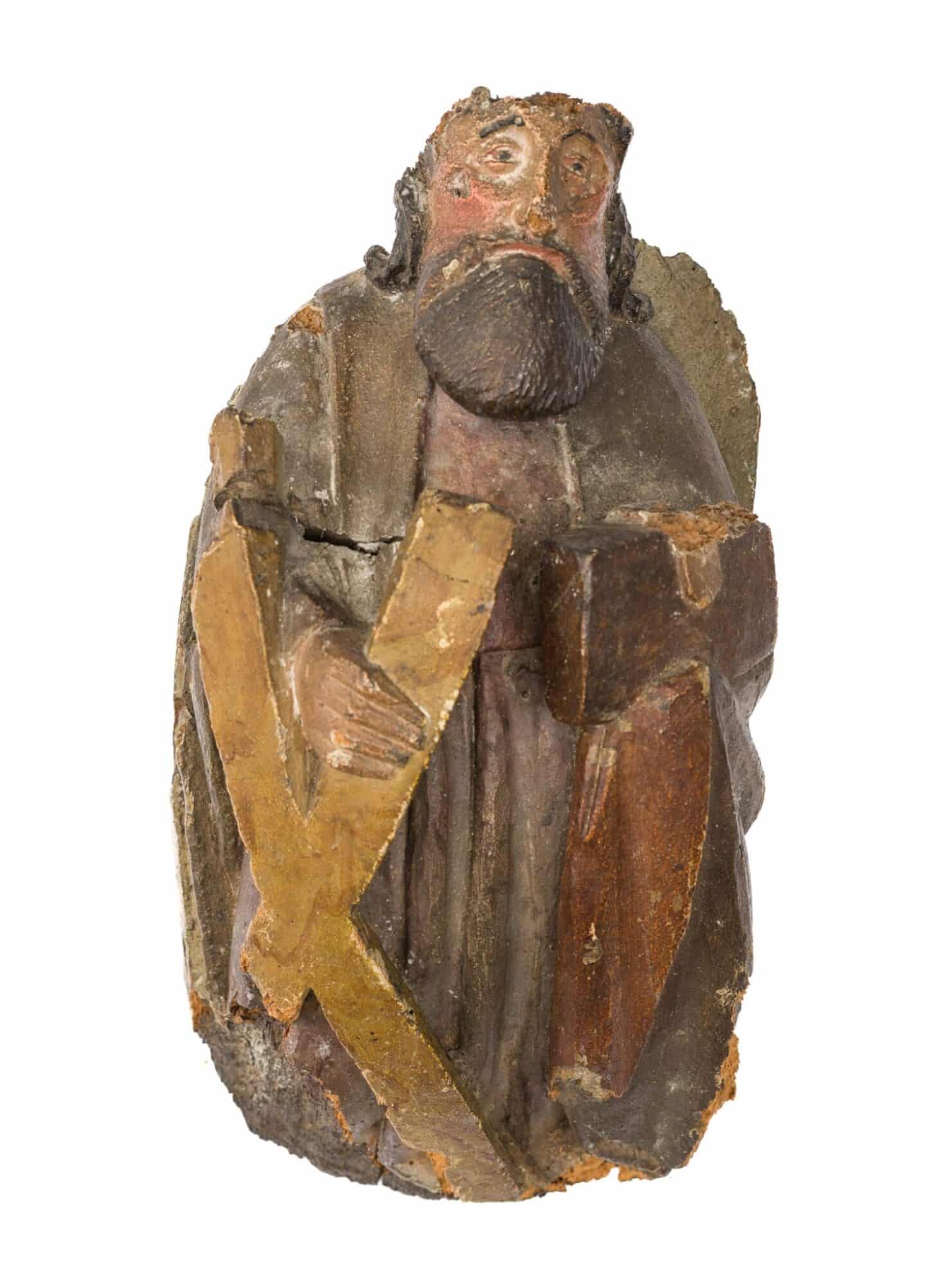
Each figure is rendered in half-length relief, designed to project architecturally as structural or decorative corbels within a sacred space, most likely in a church choir or chapel. The saints are as follows:
St James the Greater, shown with pilgrim’s staff and book, a key figure among the apostles and patron of pilgrims.
St Andrew, with the diagonal saltire cross upon which he was martyred.
St John the Evangelist, distinguished here with the chalice from which a serpent emerges, symbolising both his endurance of attempted poisoning and his role as witness to the mysteries of the Eucharist.
St Lawrence, easily recognised by his gridiron, the instrument of his martyrdom in Rome under Emperor Valerian.
The iconography reflects the central themes of pilgrimage, evangelism, martyrdom, and the Eucharist — the very pillars of late medieval Christian devotion. Their survival together as a complete set is of particular importance, as most English Gothic sculpture was lost or defaced during the Reformation and subsequent iconoclasm of the 16th and 17th centuries. Comparable sets are preserved primarily on the Continent (in Flanders, Germany, and Spain), but English examples with full polychromy are vanishingly rare.
Stylistically, the corbels embody the late Gothic naturalism of the 15th century, with expressive faces, strongly modelled drapery, and bold attributes carved to be clearly visible from below. The figures project a sense of presence and individuality while maintaining the hieratic solemnity appropriate to their liturgical role.