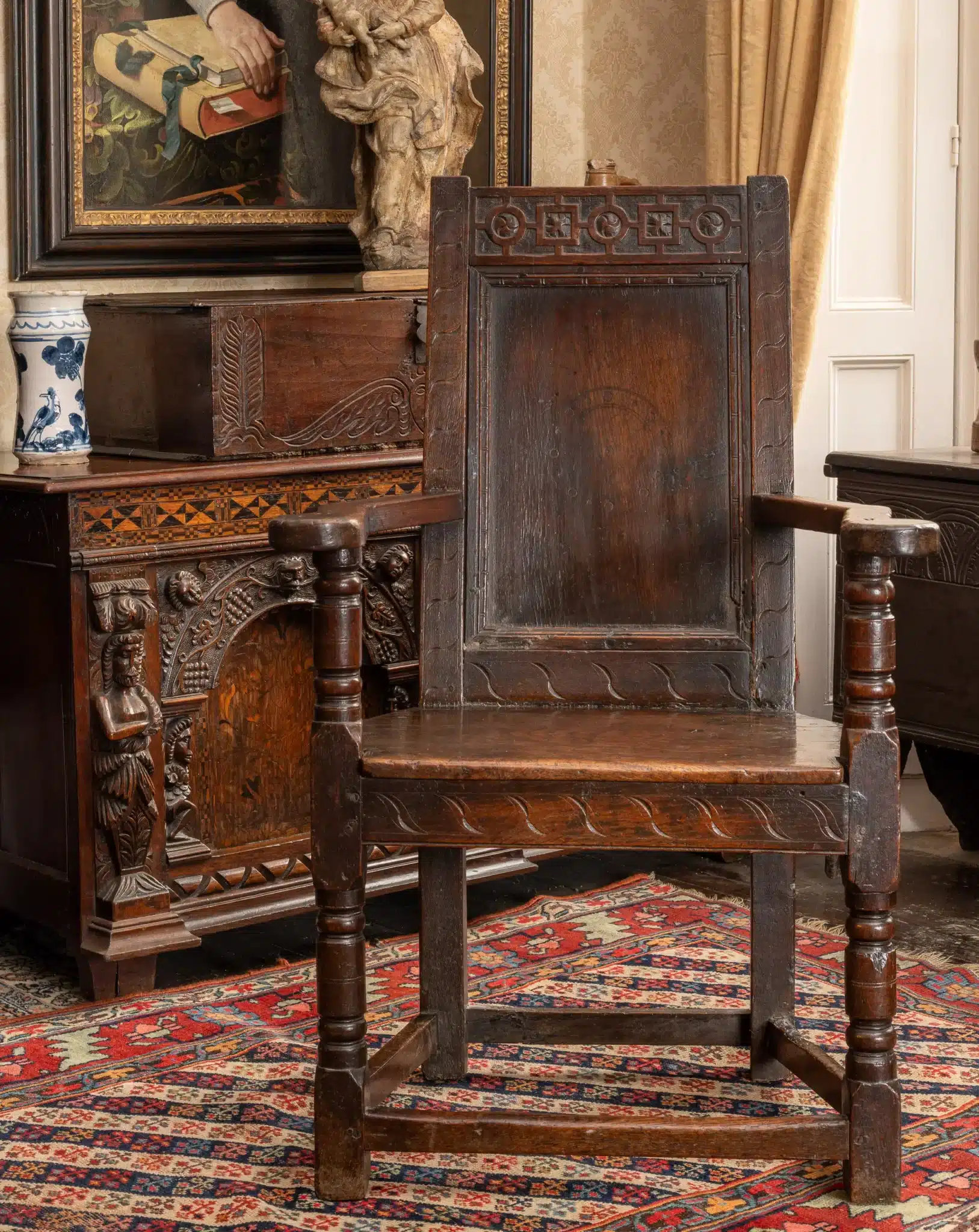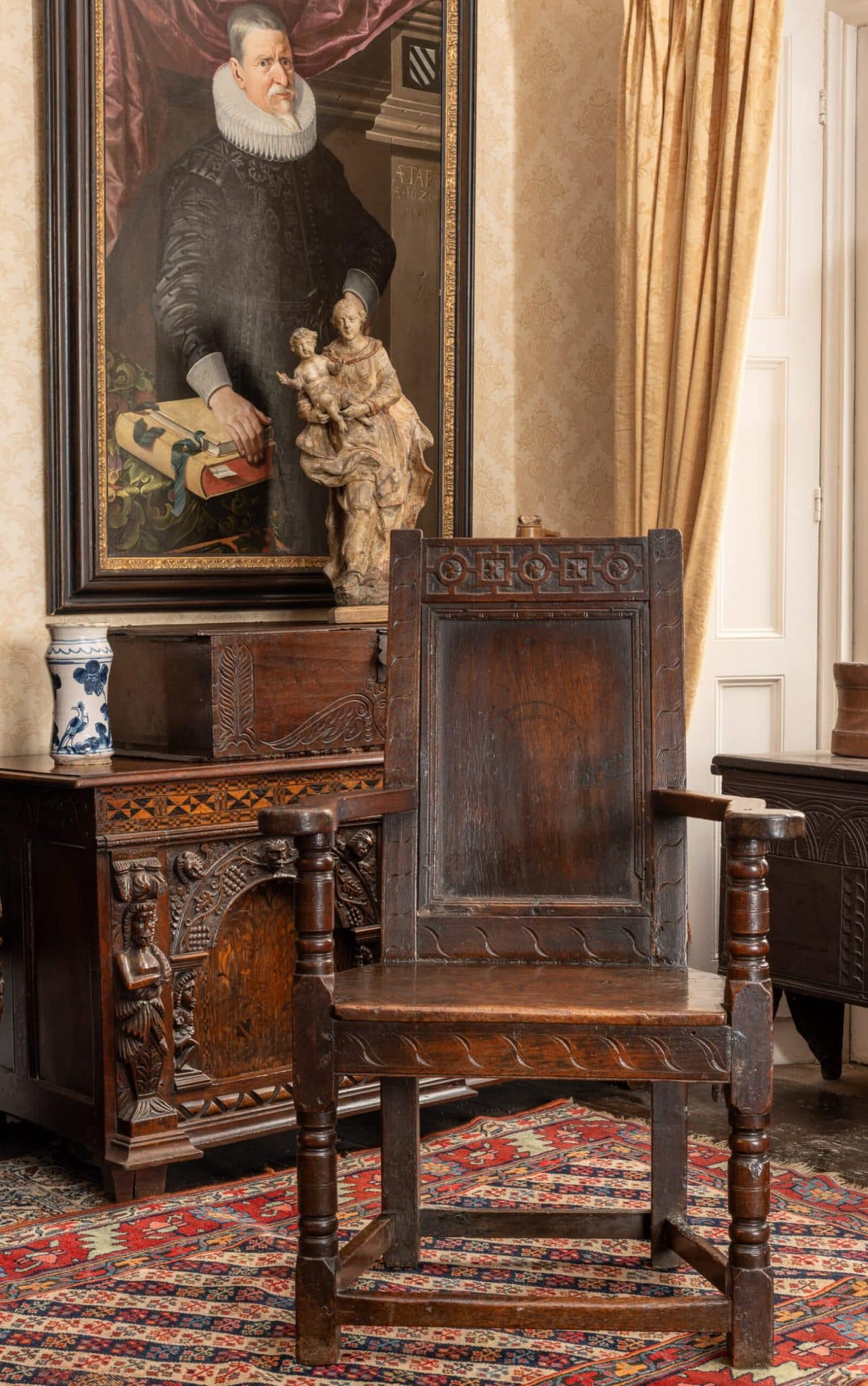
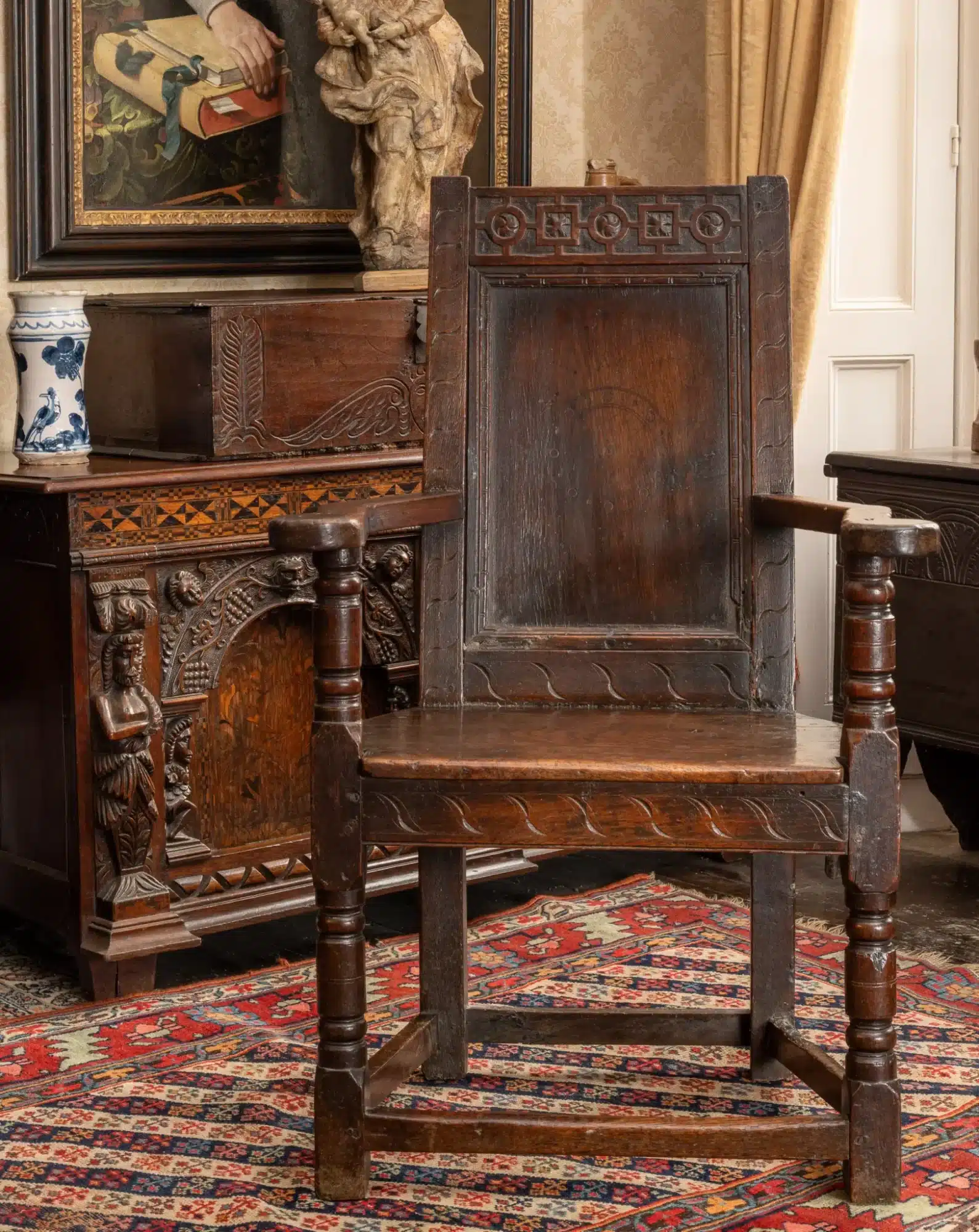
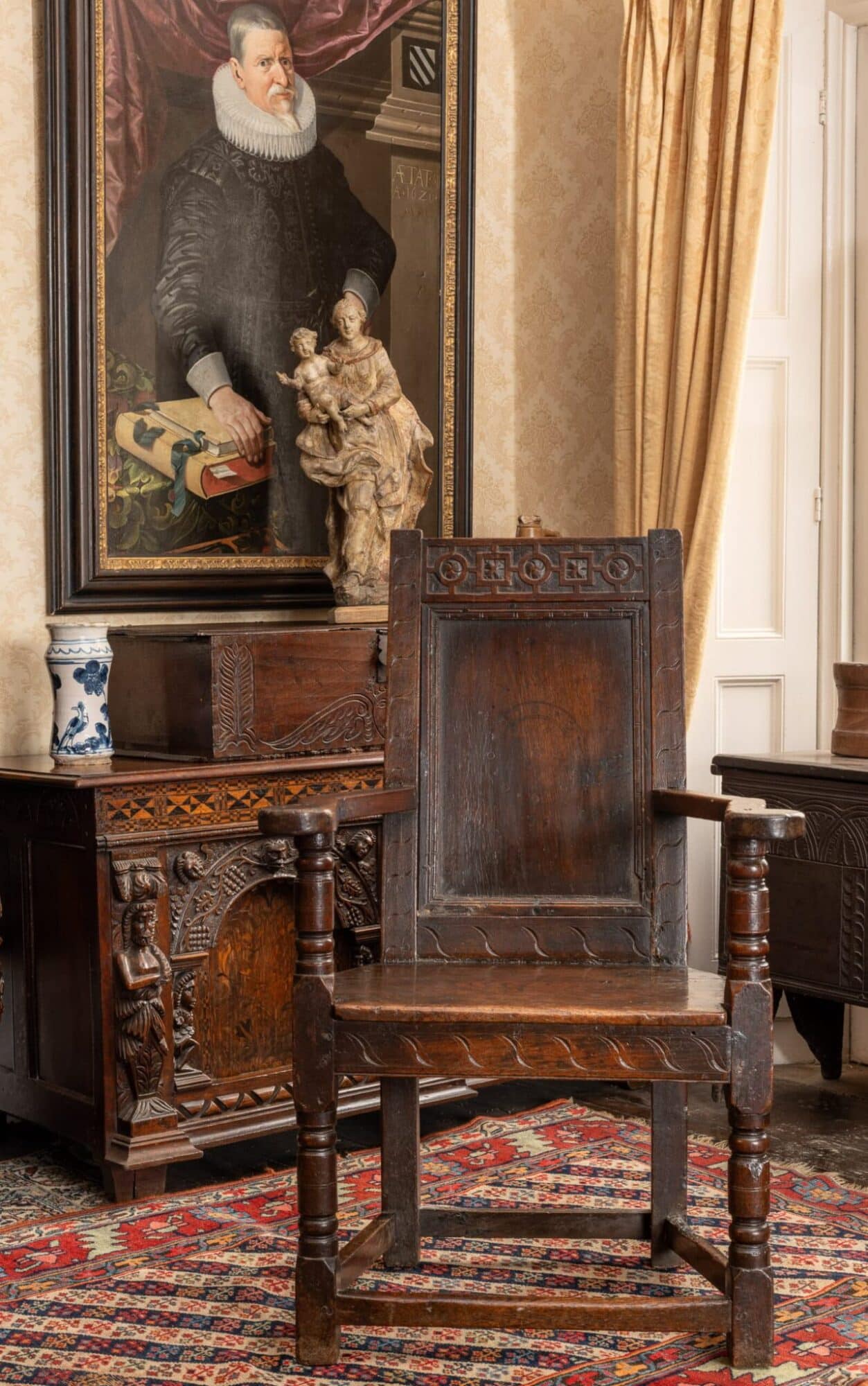
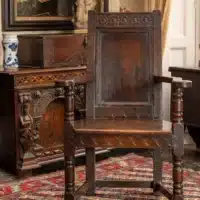
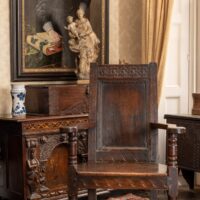
James I Joined Oak “Caqueteuse” Armchair
- Period
- 1610 - 1620
- Origin
- Exeter
- Dimensions
- W 27" × H 43" × D 21"
- Reference
- #Marh2906
This piece has been sold. It is shown here for reference in our archive.
Description
A rare English interpretation of the French Renaissance caquetoire form, this joined oak armchair was almost certainly made in Exeter, a major West Country centre of cabinet-making in the early 17th century. The form, with its tall narrow back and shaped arms, derives from fashionable French prototypes of the late 16th century, but here translated into the robust, rectilinear joinery of Jacobean taste.
The back panel is finely carved with a central punch-work roundel framed within moulded edges, the crest rail enriched with a bold chain-link guilloche pattern. The uprights are substantial, rising into squared finials above shaped arms, each supported by an additional turned column. The seat rails are carved with a simple but effective interlacing chain motif, echoed on the lower frieze. The legs are strongly turned, joined by plain stretchers.
The survival of this distinctive form in Exeter demonstrates the cosmopolitan influences at play in the region during the reign of James I. Devon and Exeter workshops are known for their willingness to adapt continental fashions, a practice reinforced by Exeter’s status as a thriving port city with close trade links to France and the Low Countries.