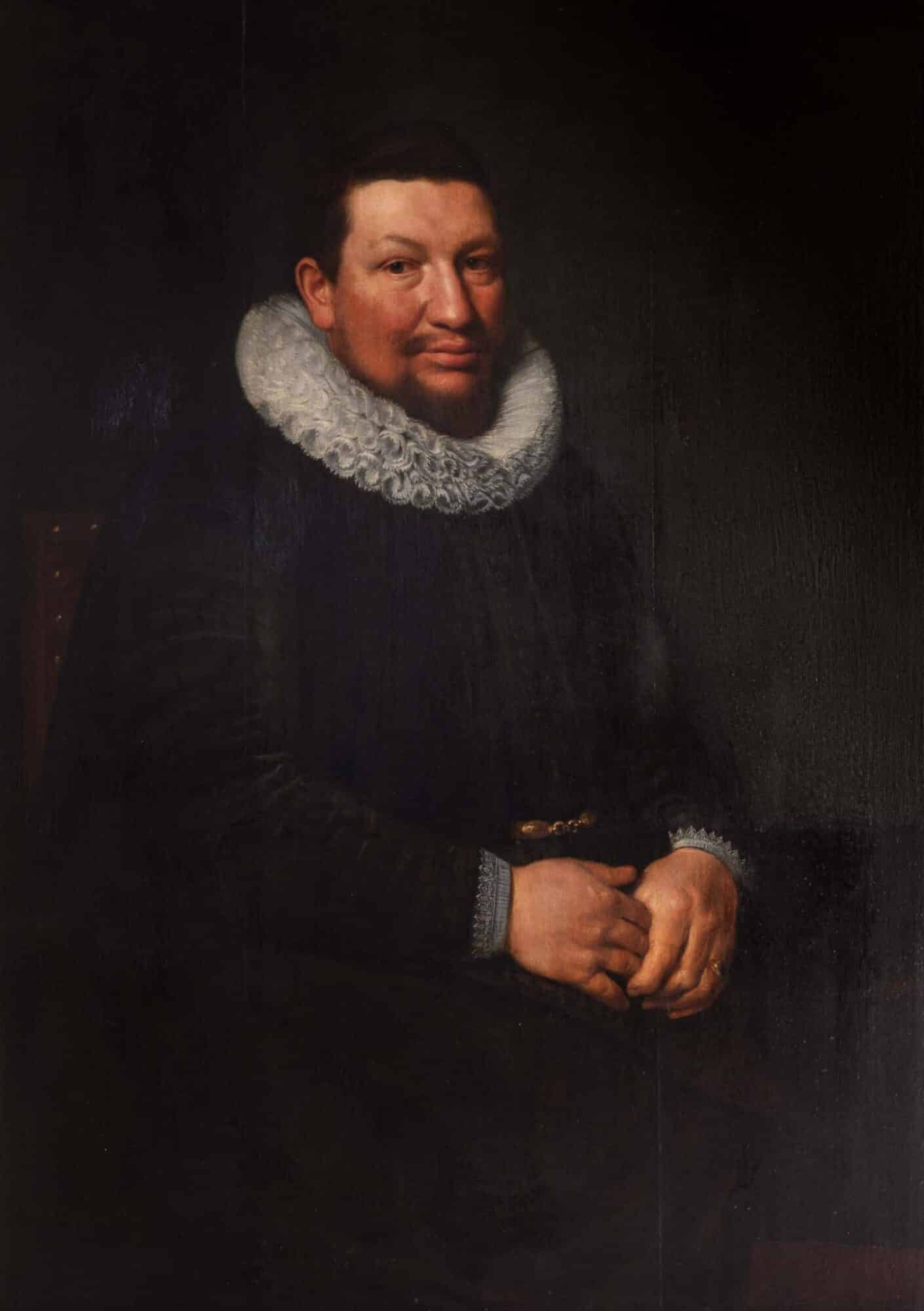
Circle of Nicolaes Eliasz. Pickenoy (1588–1650) Portrait of Gentleman
- Period
- Circa 1630
- Origin
- Dutch School, Amsterdam
- Dimensions
- W 31 1/2" (frame 39 1/4)" × H 44 1/2" (frame 51 3/4")"
- Reference
- #Marh3138
This piece has been sold. It is shown here for reference in our archive.
Description
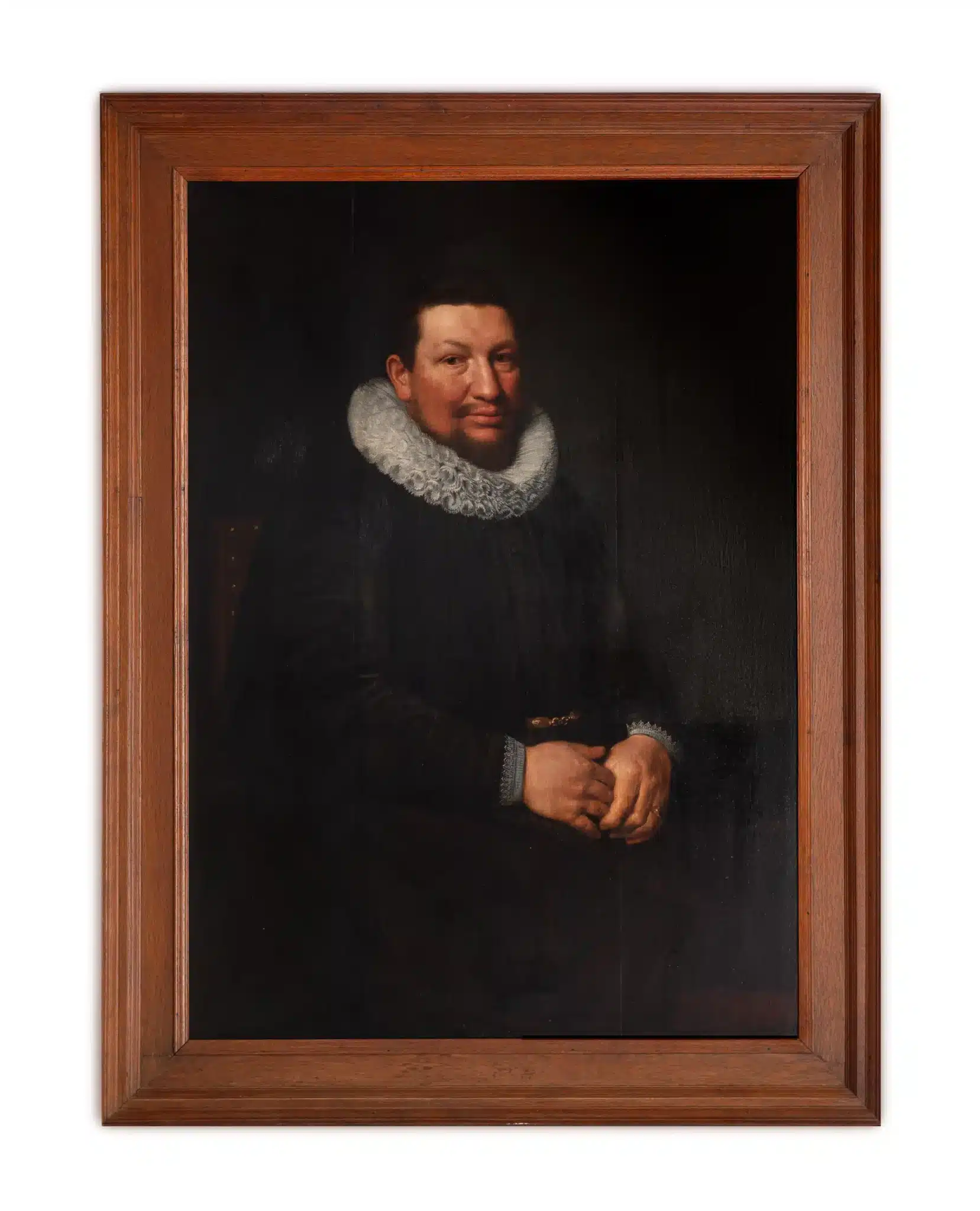
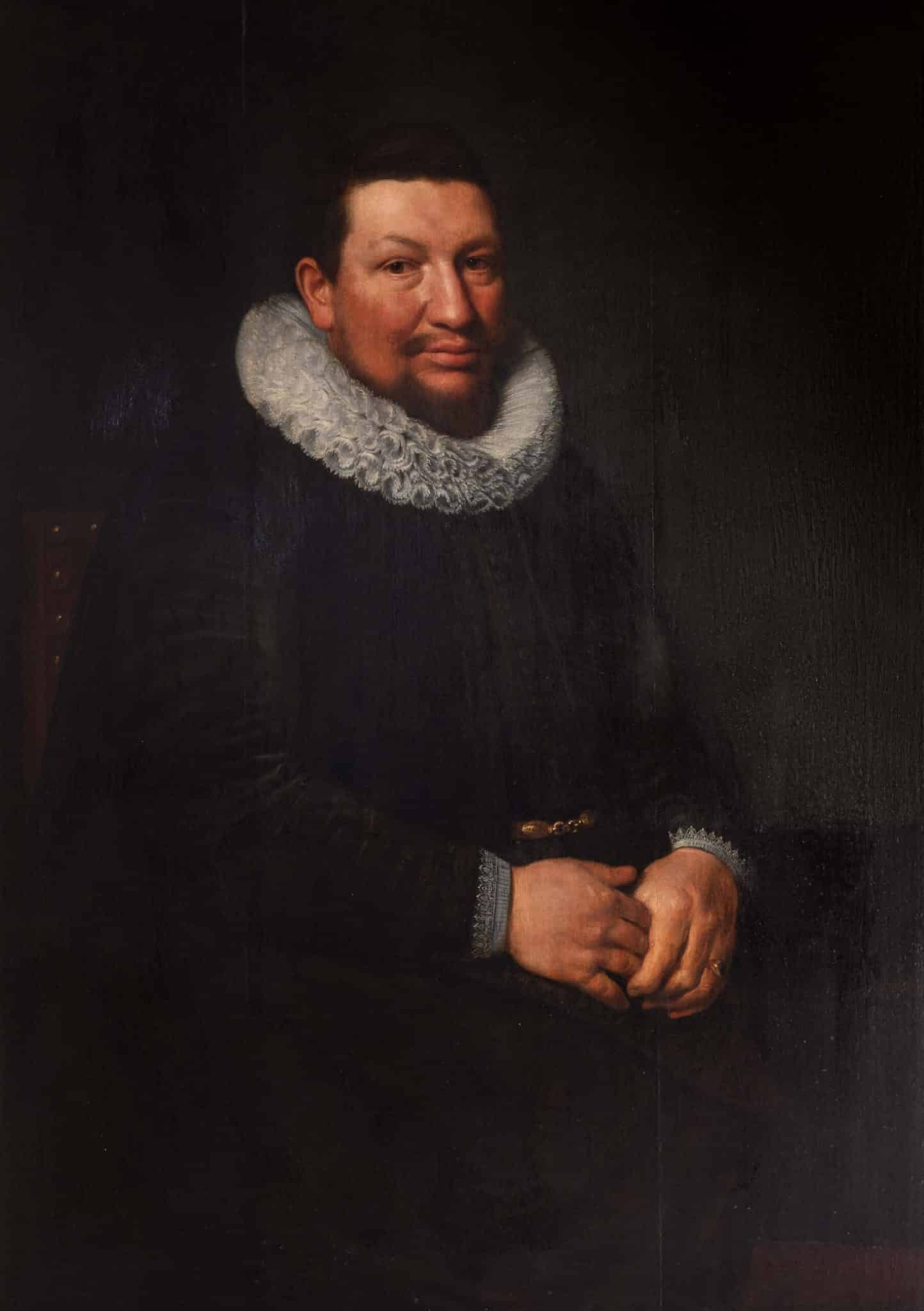
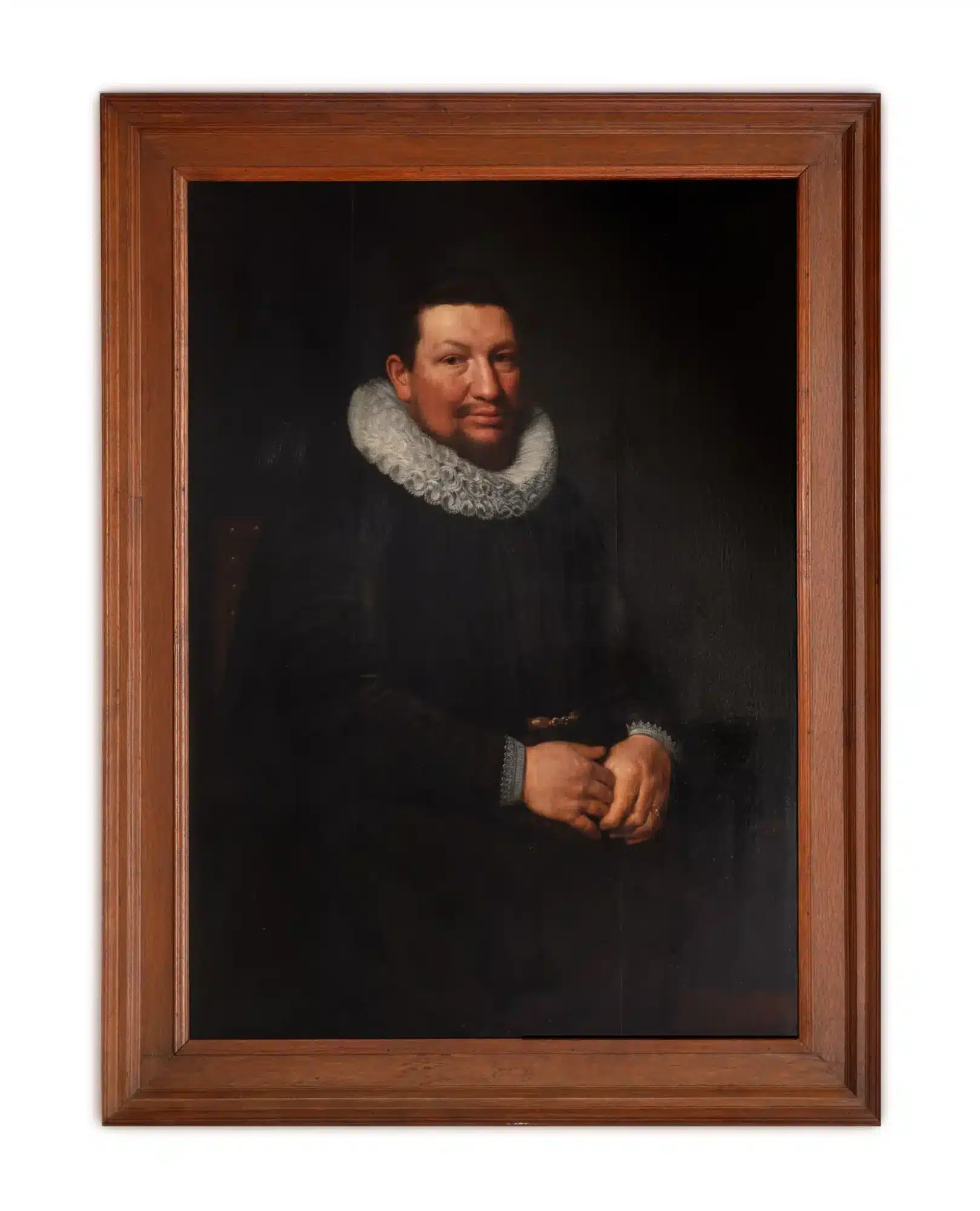
Circle of Nicolaes Eliasz. Pickenoy (1588–1650) oil on oak panel, striking portrait of a Dutch gentleman belongs to the flourishing Amsterdam portrait tradition of the early 17th century. The sitter is shown half-length, turned slightly toward the viewer, dressed in sober black with a broad lace-trimmed millstone ruff and narrow lace cuffs. His hands, prominently displayed before him, are rendered with unusual care and scale, a hallmark of Amsterdam portraiture where physical presence and character were conveyed through gesture as much as likeness.
The panel displays the hallmarks of Nicolaes Eliasz. Pickenoy’s circle. Pickenoy was one of the leading portraitists in Amsterdam during the 1620s and 1630s, active alongside Thomas de Keyser and Cornelis van der Voort. His portraits characteristically place sitters against a dark background with strong directional light illuminating the face, and he paid particular attention to the rendering of lace ruffs and the naturalism of hands. Comparisons can be drawn with Pickenoy’s Portrait of a Gentleman in Black with a Ruff (Sotheby’s), and with the pendant portraits dated 1636 (Christie’s), which share the same broad physiognomy, lace detail, and emphasis on hand placement.
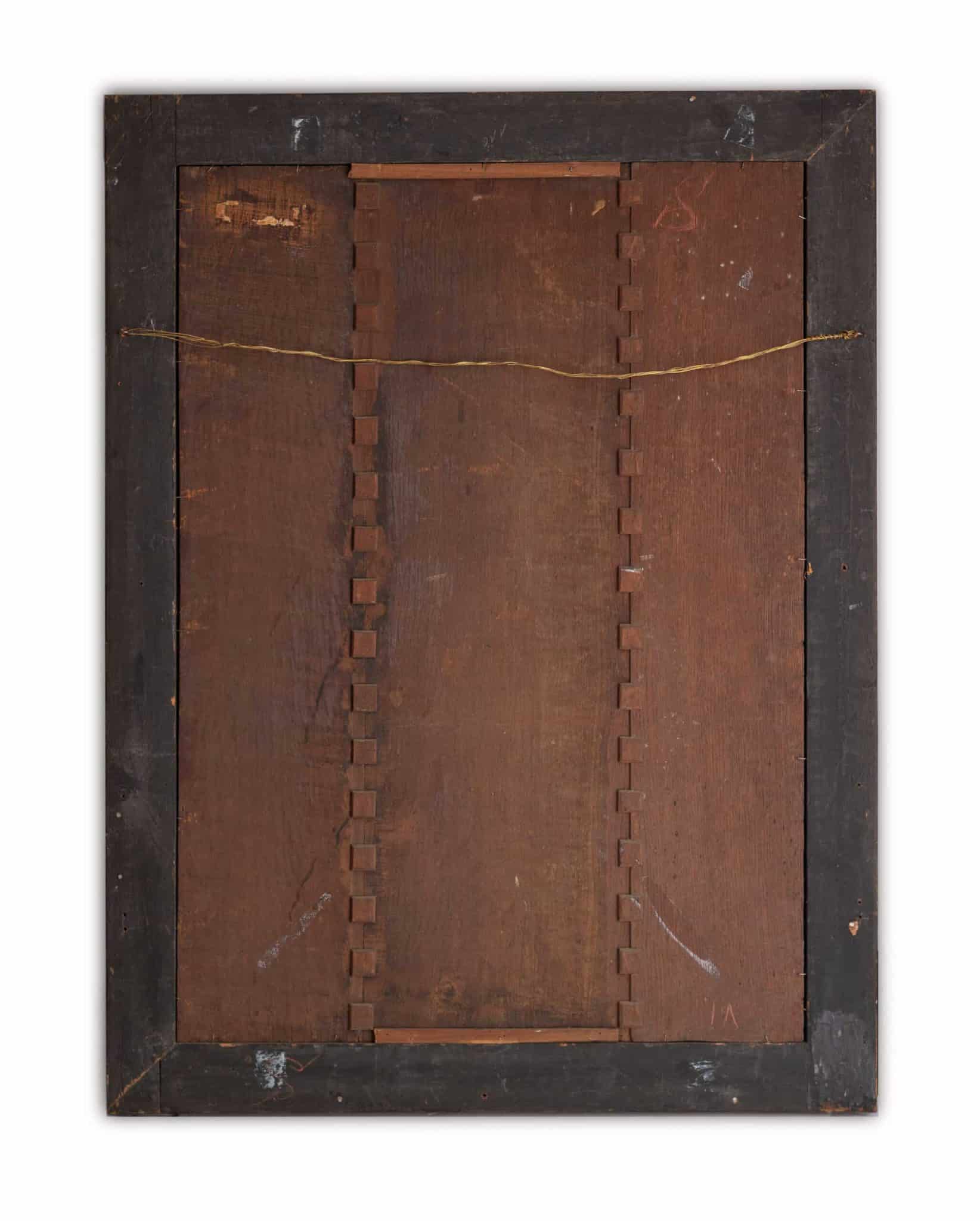
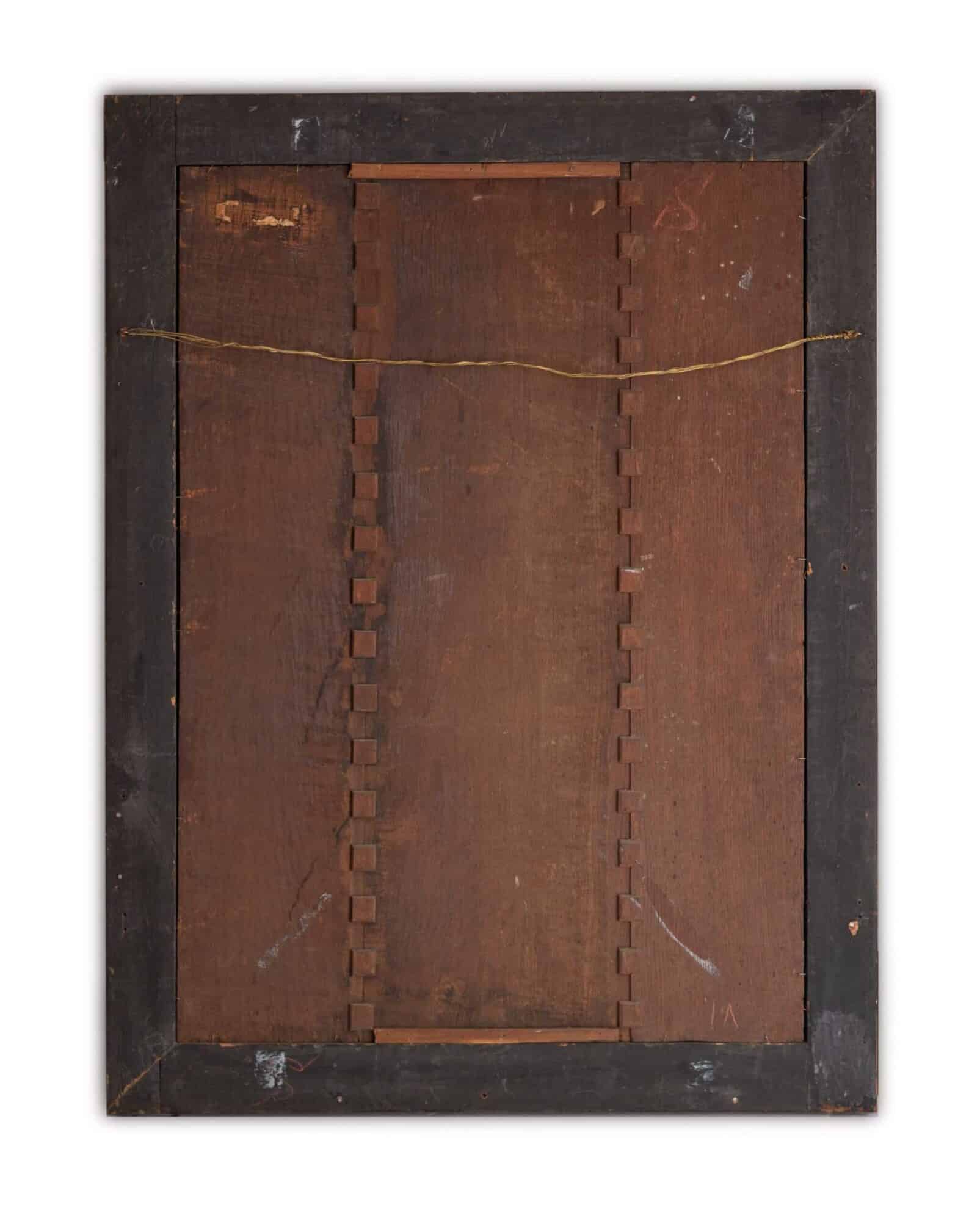
The sitter’s costume provides a secure date in the late 1620s to mid-1630s, when the large millstone ruff was still fashionable among the Dutch elite, just before it was supplanted by the falling band. The use of a substantial oak panel further aligns with Amsterdam practice of this period, whereas later artists of Rembrandt’s generation, including Ferdinand Bol, preferred canvas.