Four Early Tudor Oak and Wrought-Iron Traceried Screen Panels
- Period
- 1510 - 1530
- Origin
- England
- Dimensions
- W 109 " × H 23" × D 1 3/4"
- Reference
- #Marh3732
£12,000
Description
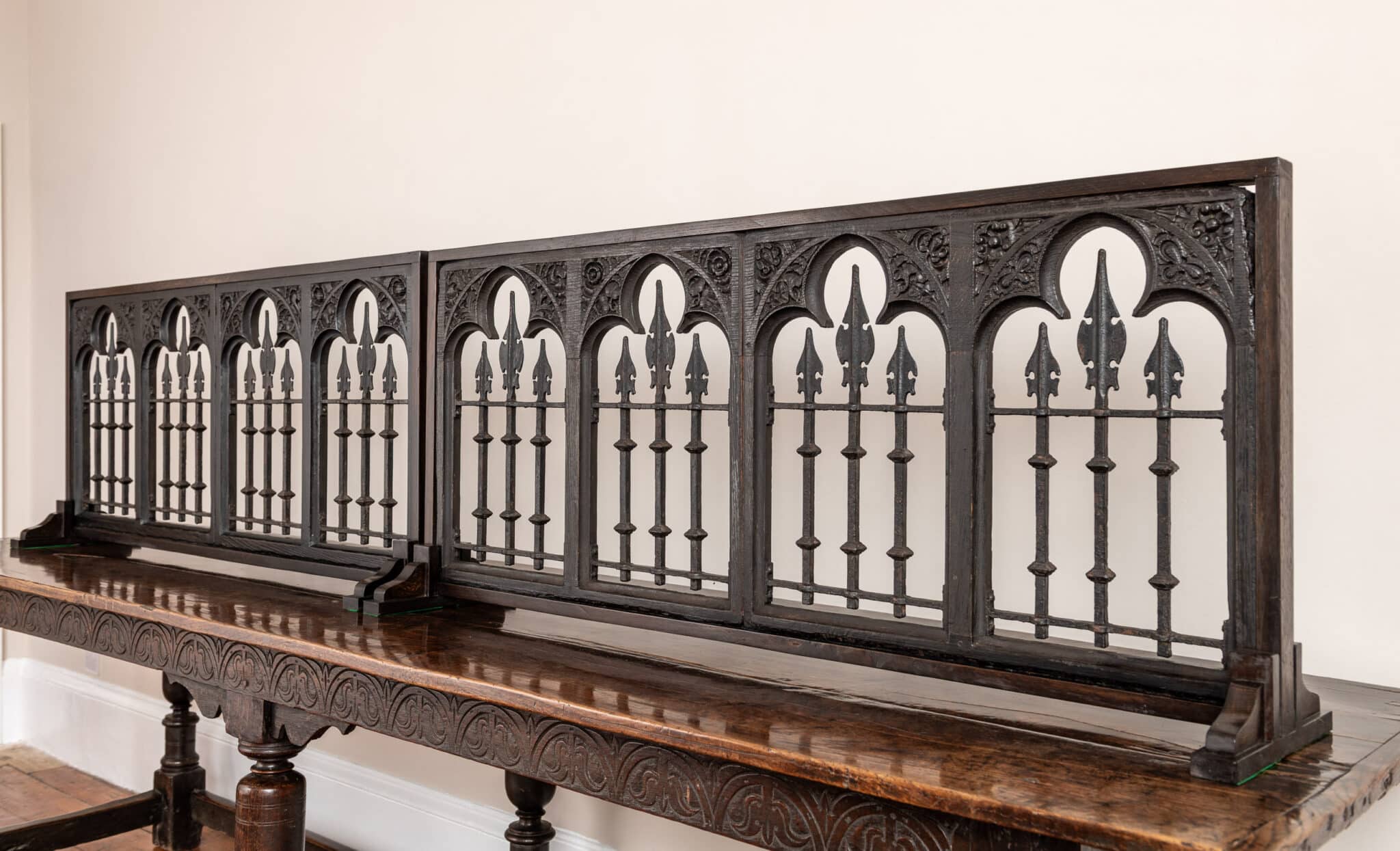
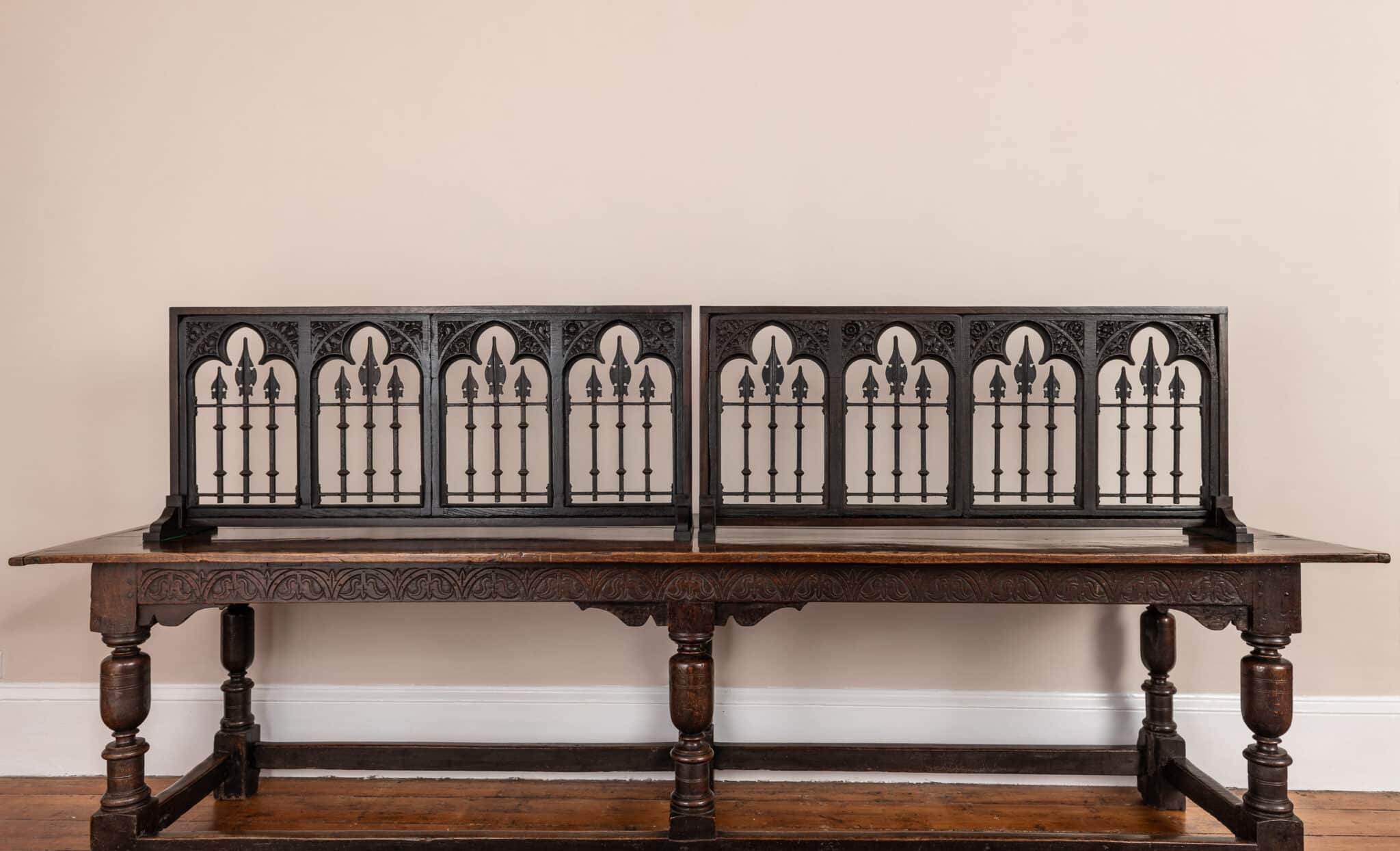
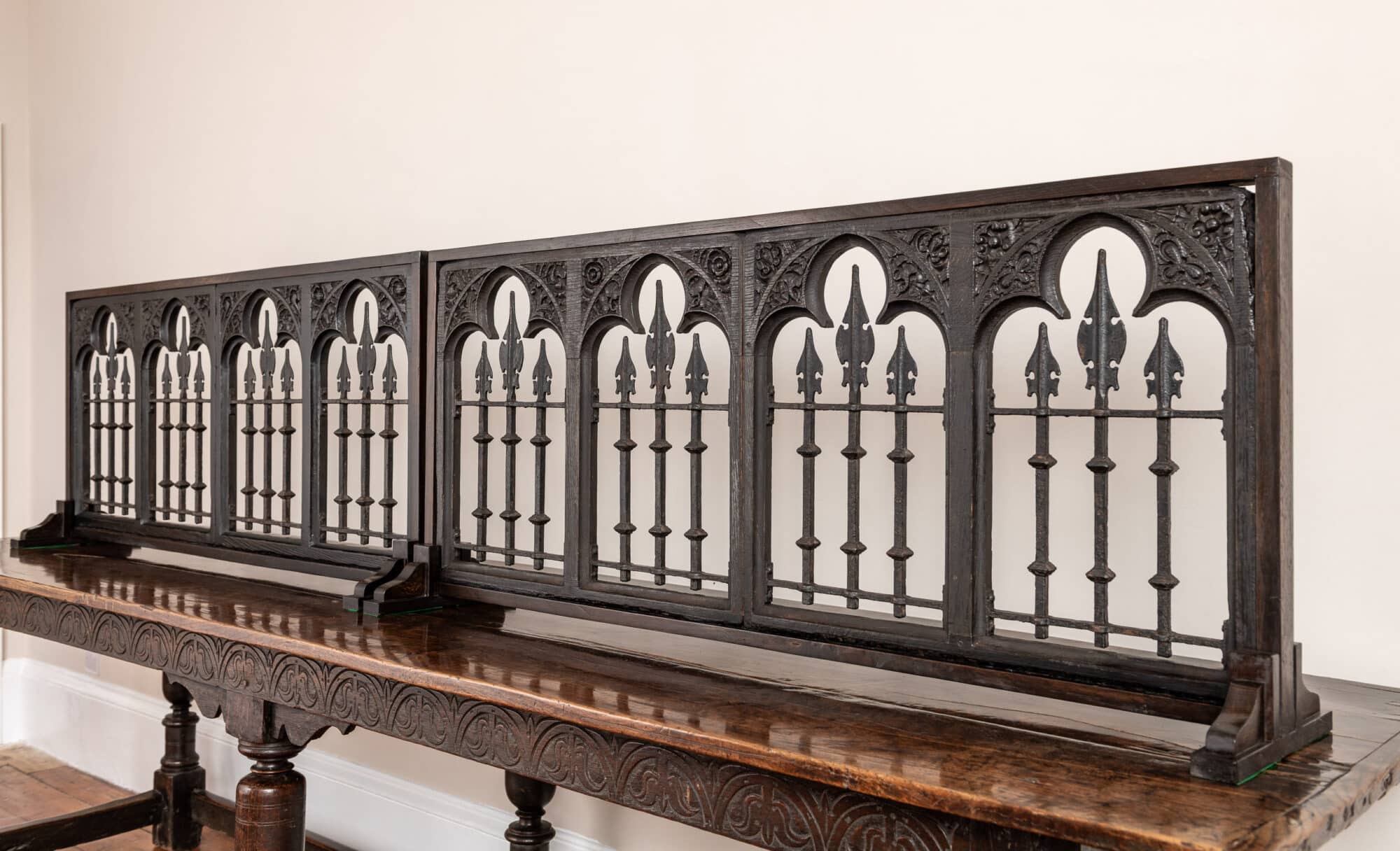
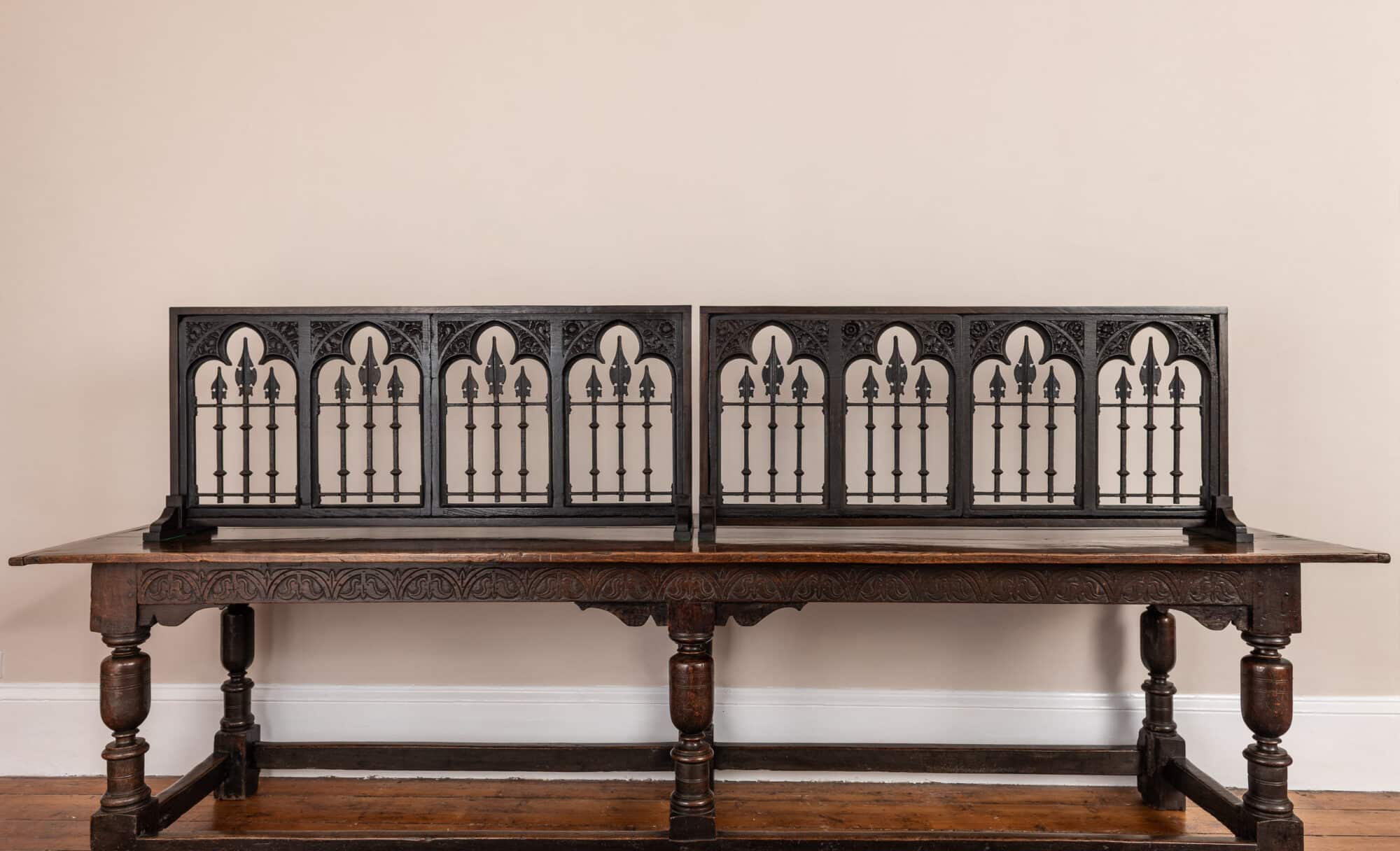
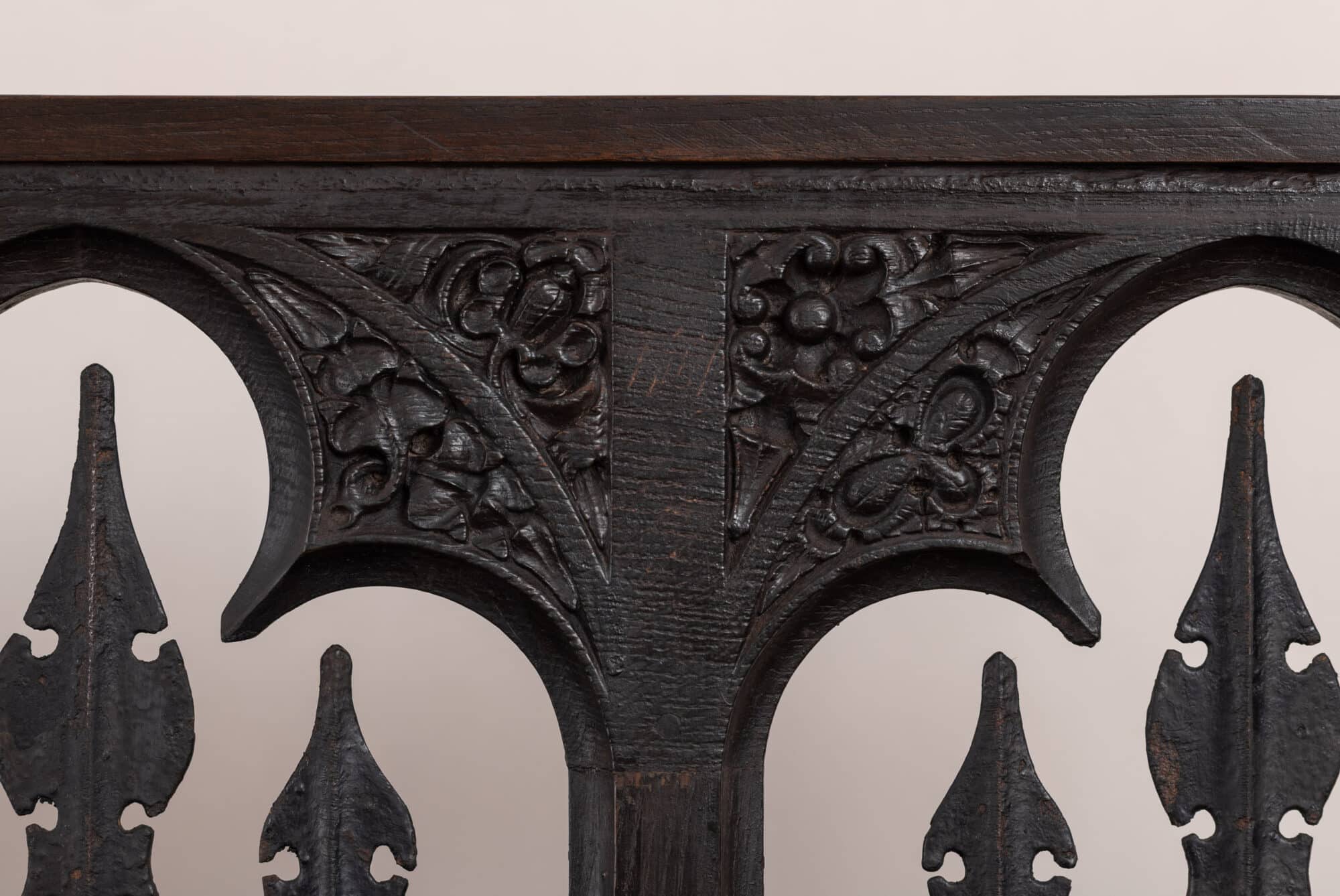
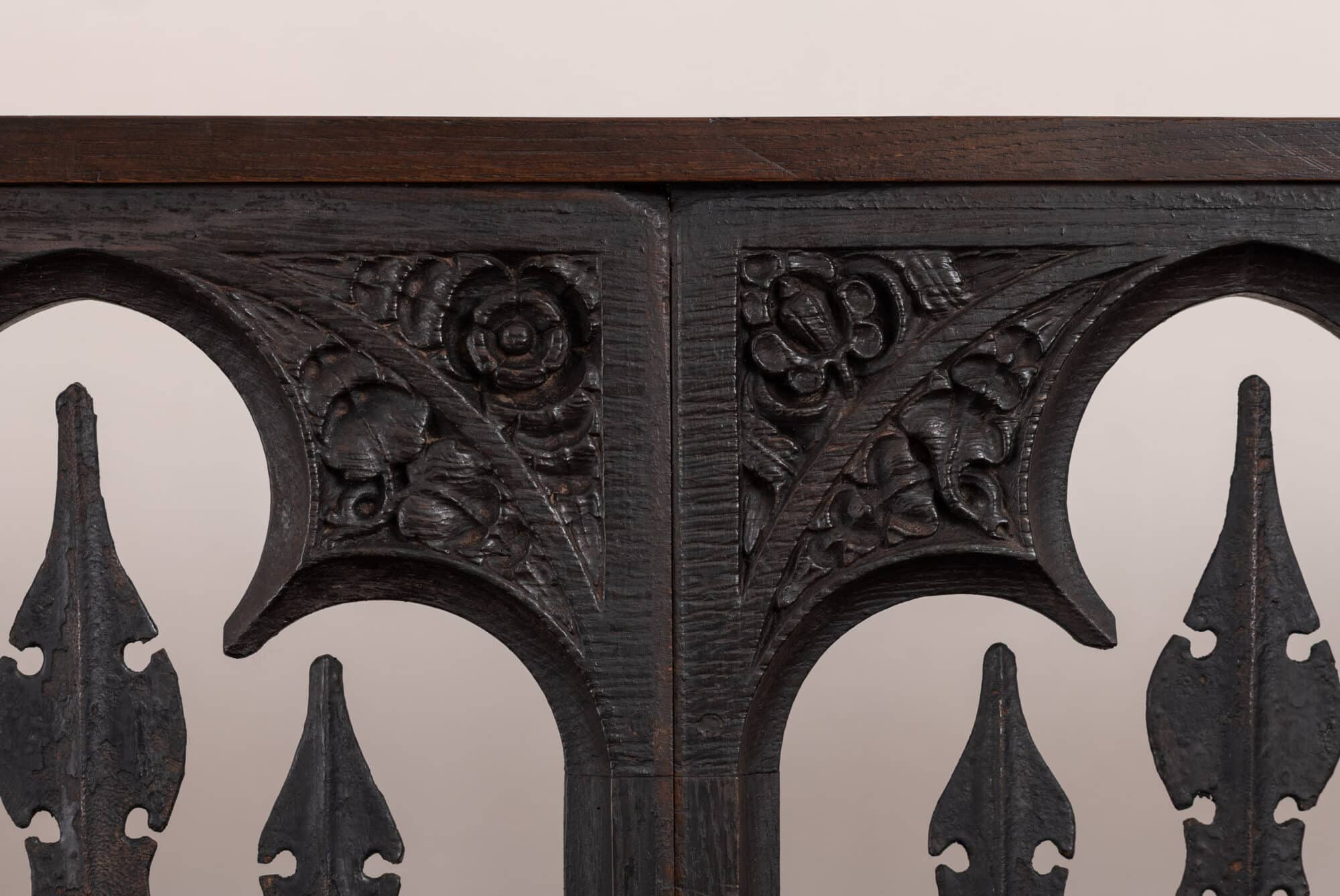
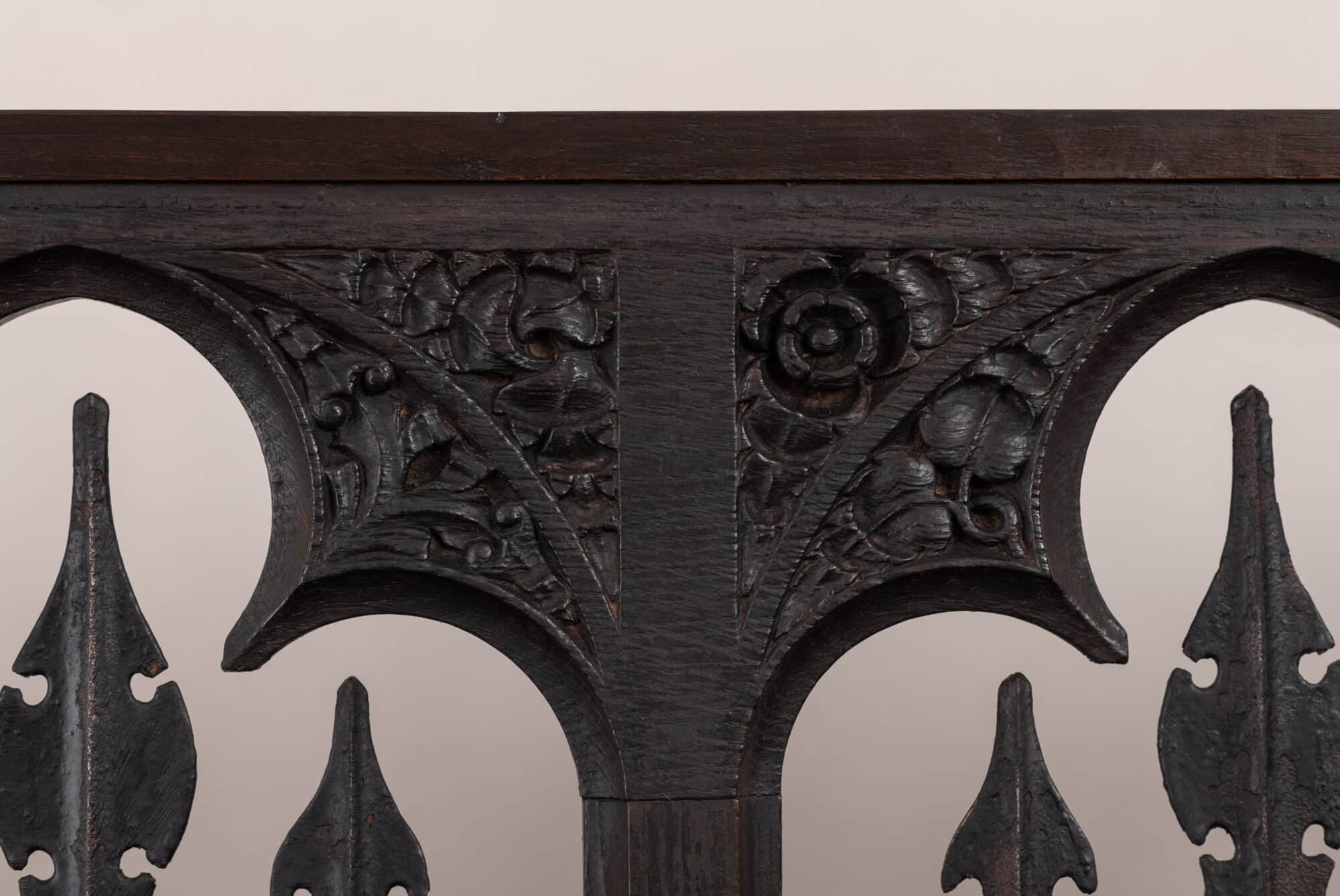
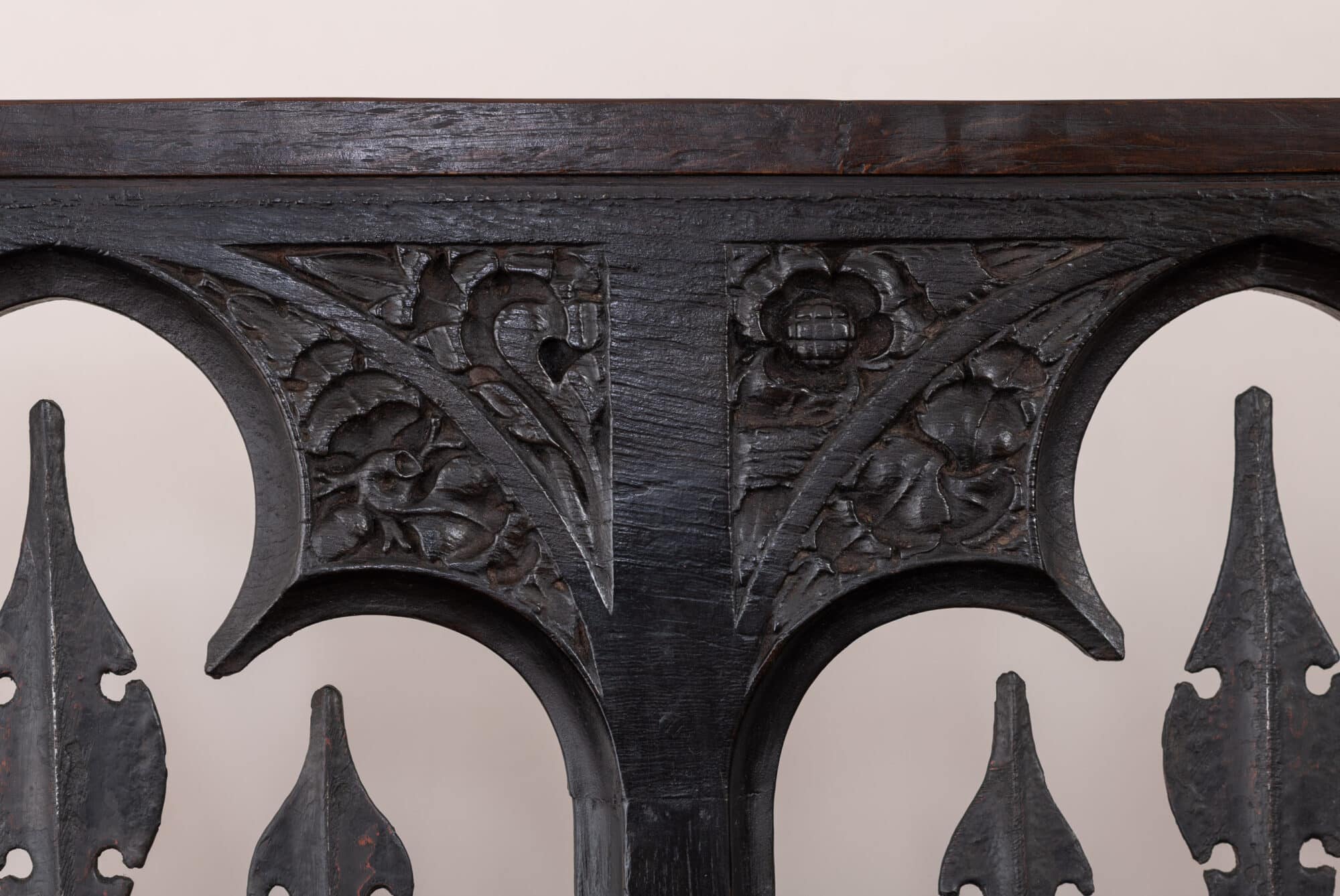
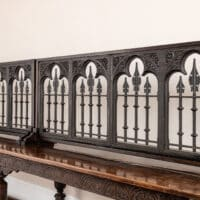
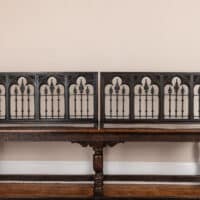
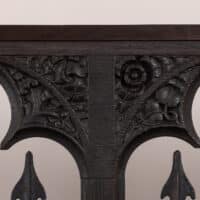
A rare survival of four early Tudor oak traceried screen panels incorporating original wrought-iron grille work. The panels are presently arranged as two paired sections for display, but were originally conceived as four individual units forming part of a larger architectural scheme.
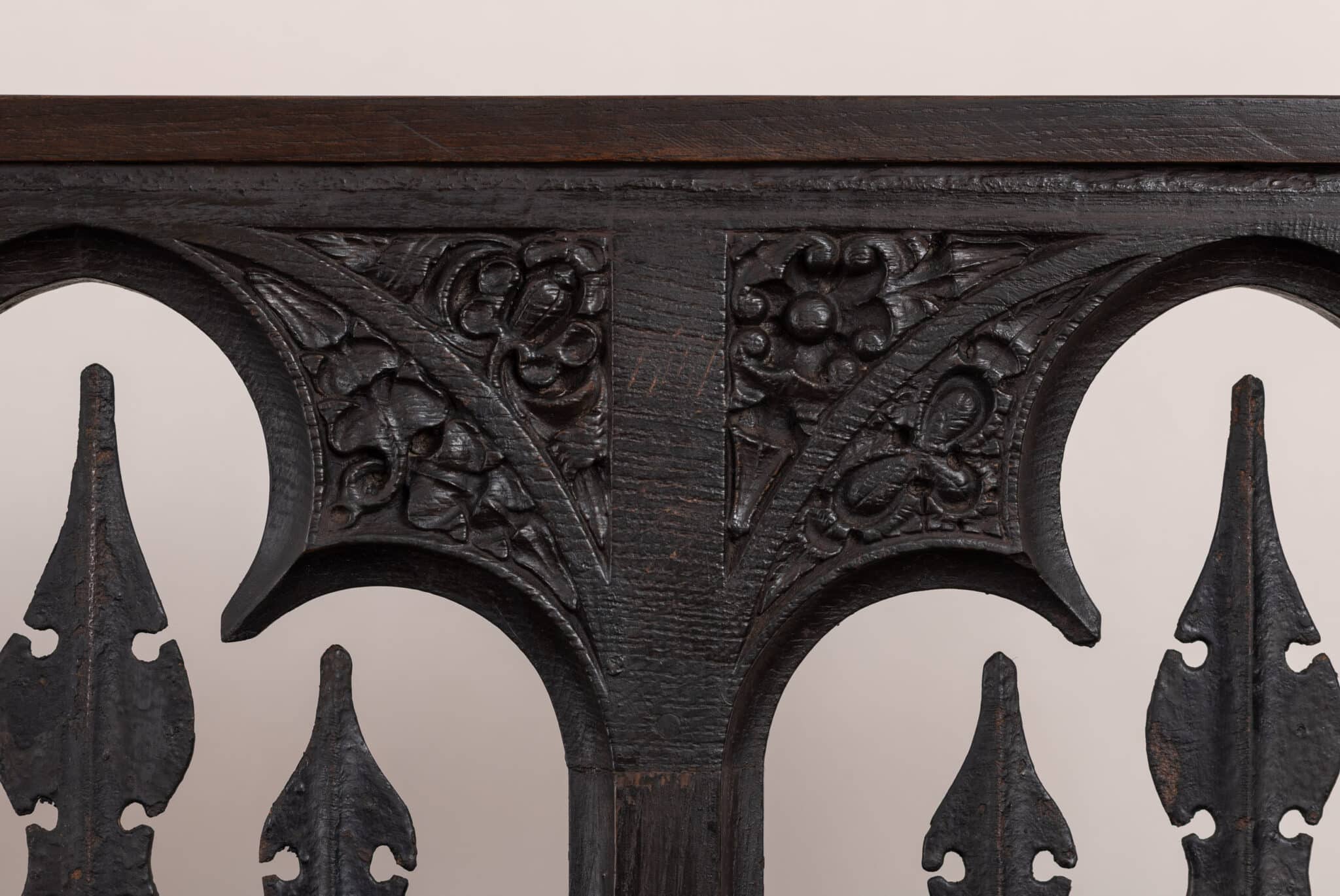
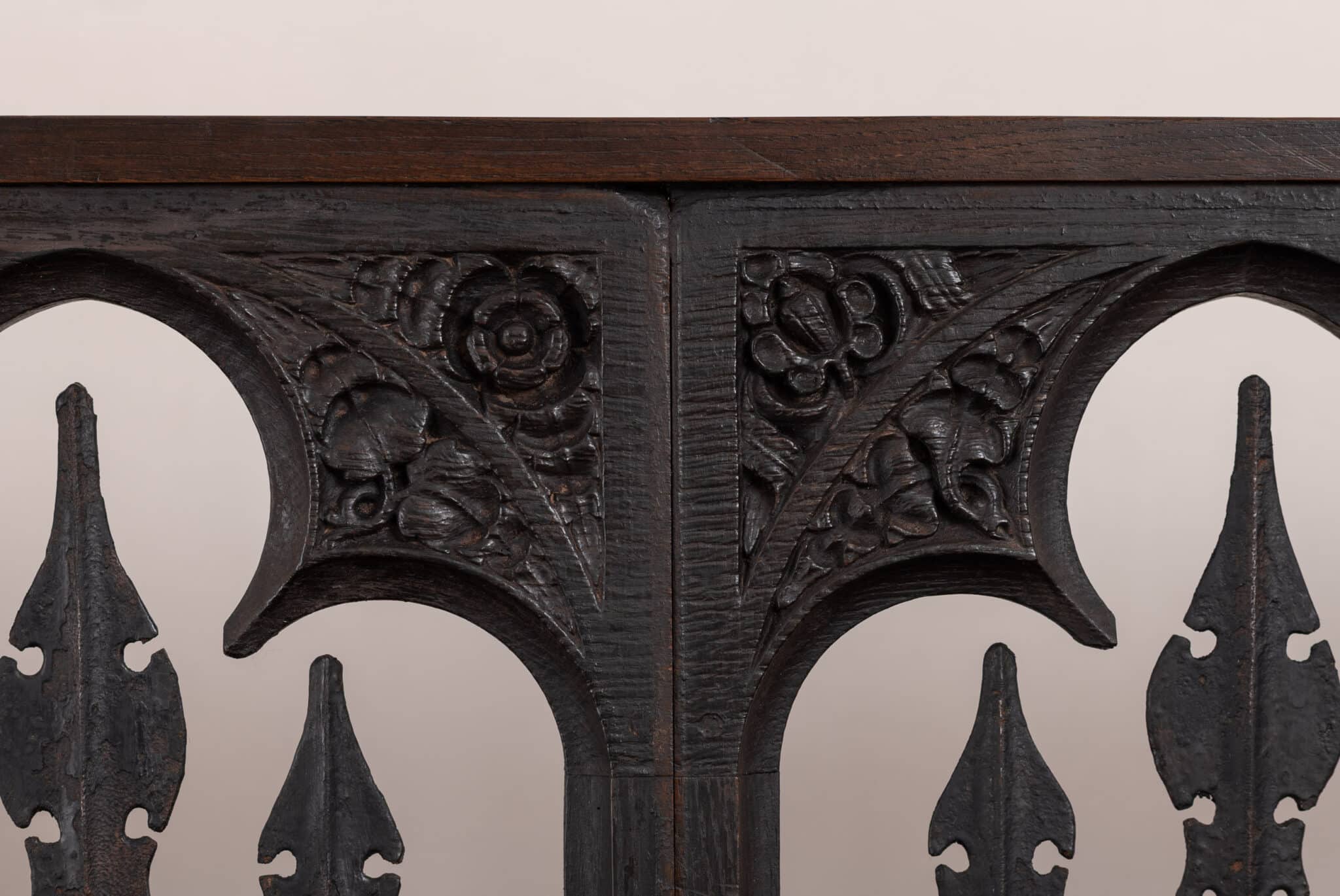
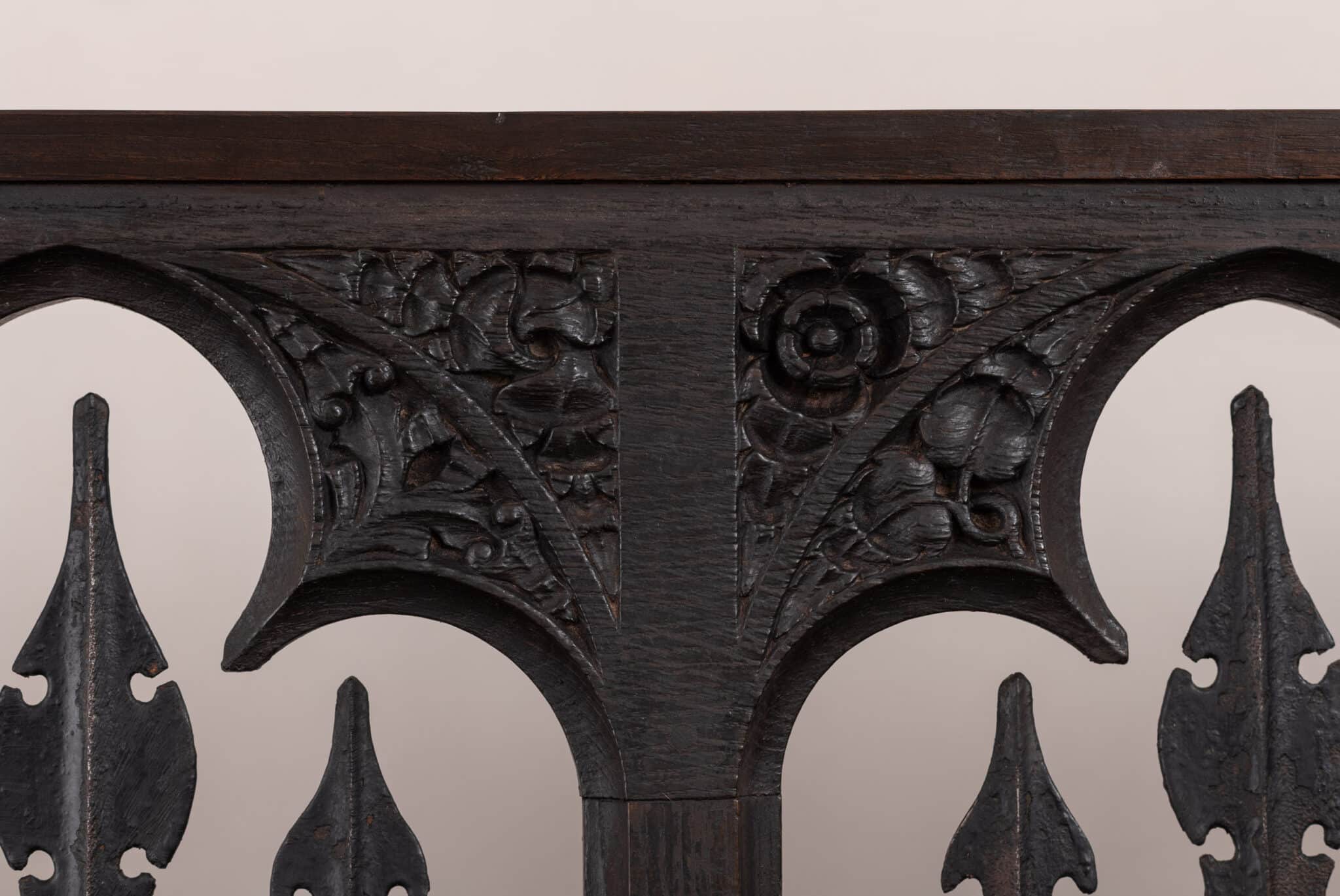
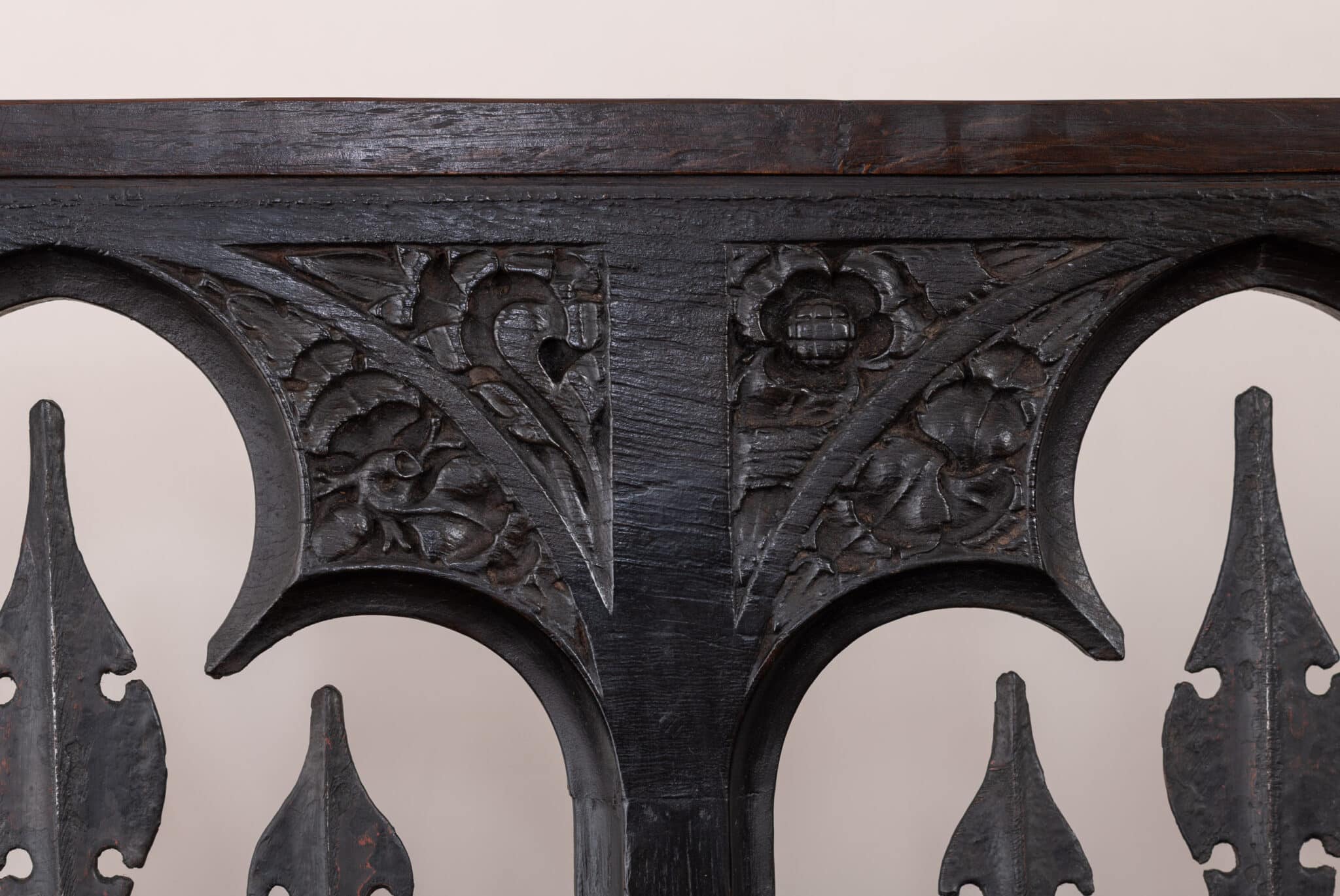
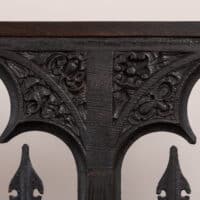
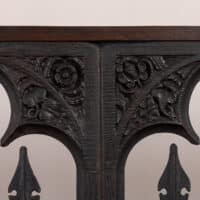
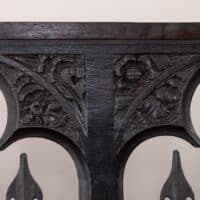
Each panel comprises a cusped Gothic opening enclosing hand-forged iron bars terminating in spearhead finials. The oak framework is carved on both faces with foliate ornament, demonstrating that the panels were intended to be viewed from either side. The carved spandrels are enriched with foliage, flowers and fruiting forms, including motifs that may represent pomegranates, an emblem particularly associated with the early Tudor period and the patronage of Catherine of Aragon.
Stylistically, the panels belong to the final phase of the English Perpendicular tradition, retaining the Gothic vocabulary that remained dominant in ecclesiastical woodwork during the opening decades of the sixteenth century. The combination of open tracery, carved ornament and integral wrought-iron grilles finds close parallels in church screens, chapel enclosures and other liturgical furnishings produced immediately before the Reformation.
The survival of carving on both faces suggests that the panels originally formed part of a freestanding structure rather than fixed wall panelling. Their original function may have been as elements of a parclose screen, chantry enclosure, chapel division or low barrier within a church interior. The present arrangement reflects a later method of display; however, the panels retain their original character and preserve a remarkable combination of medieval oak carving and contemporary forged ironwork.
These panels constitute an important survival from the transitional period between the late medieval and early Tudor worlds, dating to approximately 1510–1530, and illustrate the continued vitality of Gothic craftsmanship in England on the eve of the Reformation.