
Paul Fitzsimmons logo
  • Current Stock
  • Archive
  • Notable Works
  • About Us
  • News
  • Contact
Home / Archive / Henry VII – VIII Car…
Previous Next
Henry VII – VIII Carved Boarded Chest Sold

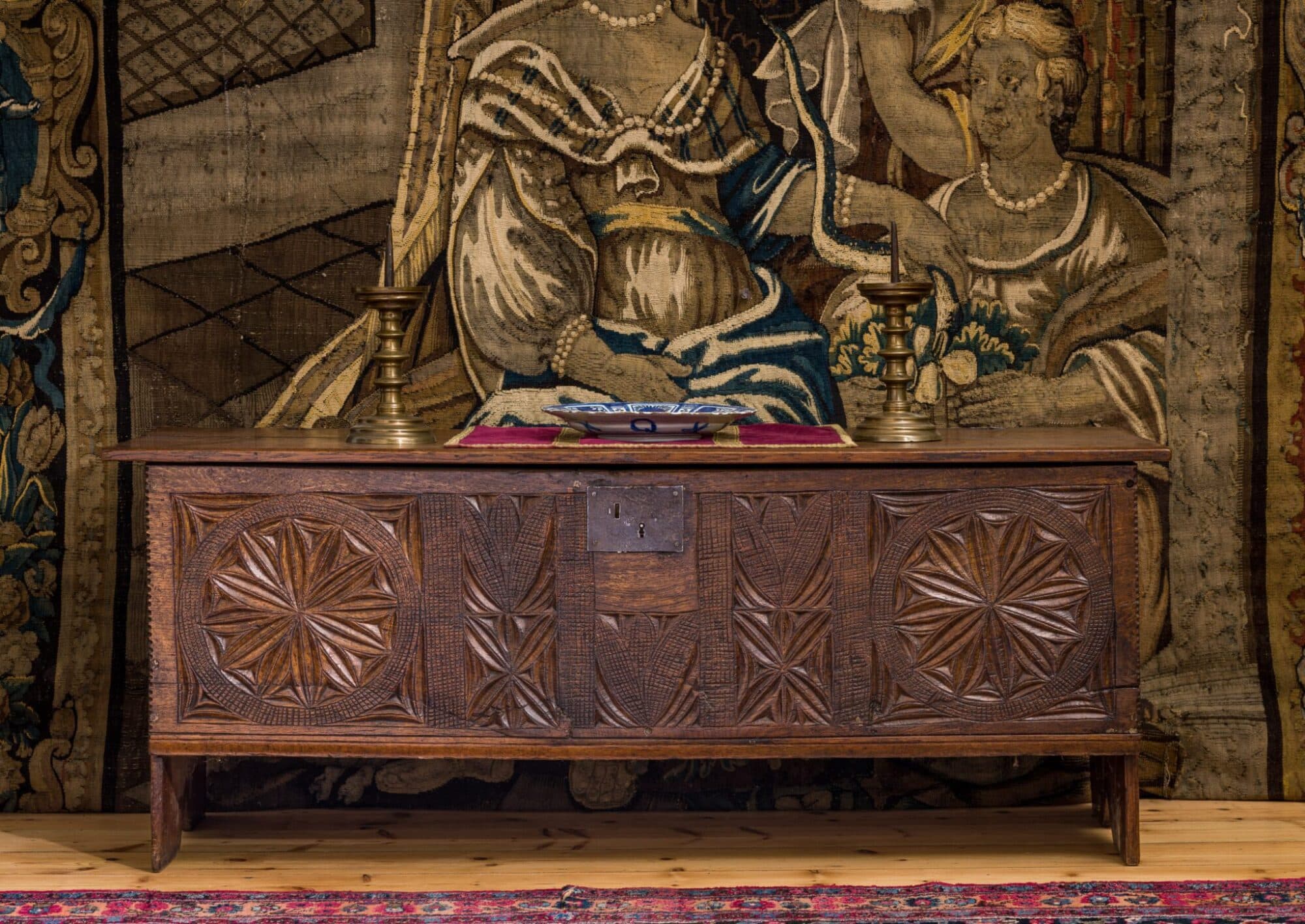
Henry VII – VIII Carved Boarded Chest

Period
1480 - 1520
Origin
England
Dimensions
W 56 3/4" × H 23" × D 20 1/2"
Reference
#Marh2546

This piece has been sold. It is shown here for reference in our archive.

Description

An early Tudor boarded oak chest of striking presence, its façade carved with deep compass-drawn roundels, lozenges and radiating star motifs, with traces of the original red and black polychromy still visible within the recesses. The front boards are cut unusually thin, a hallmark of late medieval boarded construction, yet retain their strength through the bold geometry of the carving.
The chest has later additions, including a 17th-century replaced top and associated lockplate and hinges, yet the frontal composition remains an exceptional survival of Tudor decorative vocabulary. Chests of this type, produced in provincial workshops, were prized in their day for the expressive carving which animated otherwise plain boarded furniture.
This example exemplifies the transitional taste between the reign of Henry VII and the early years of Henry VIII, where medieval star and roundel patterns continued to flourish alongside the first stirrings of Renaissance influence. Its whimsical individuality and colour traces make it a particularly valuable witness to Tudor domestic furnishing.
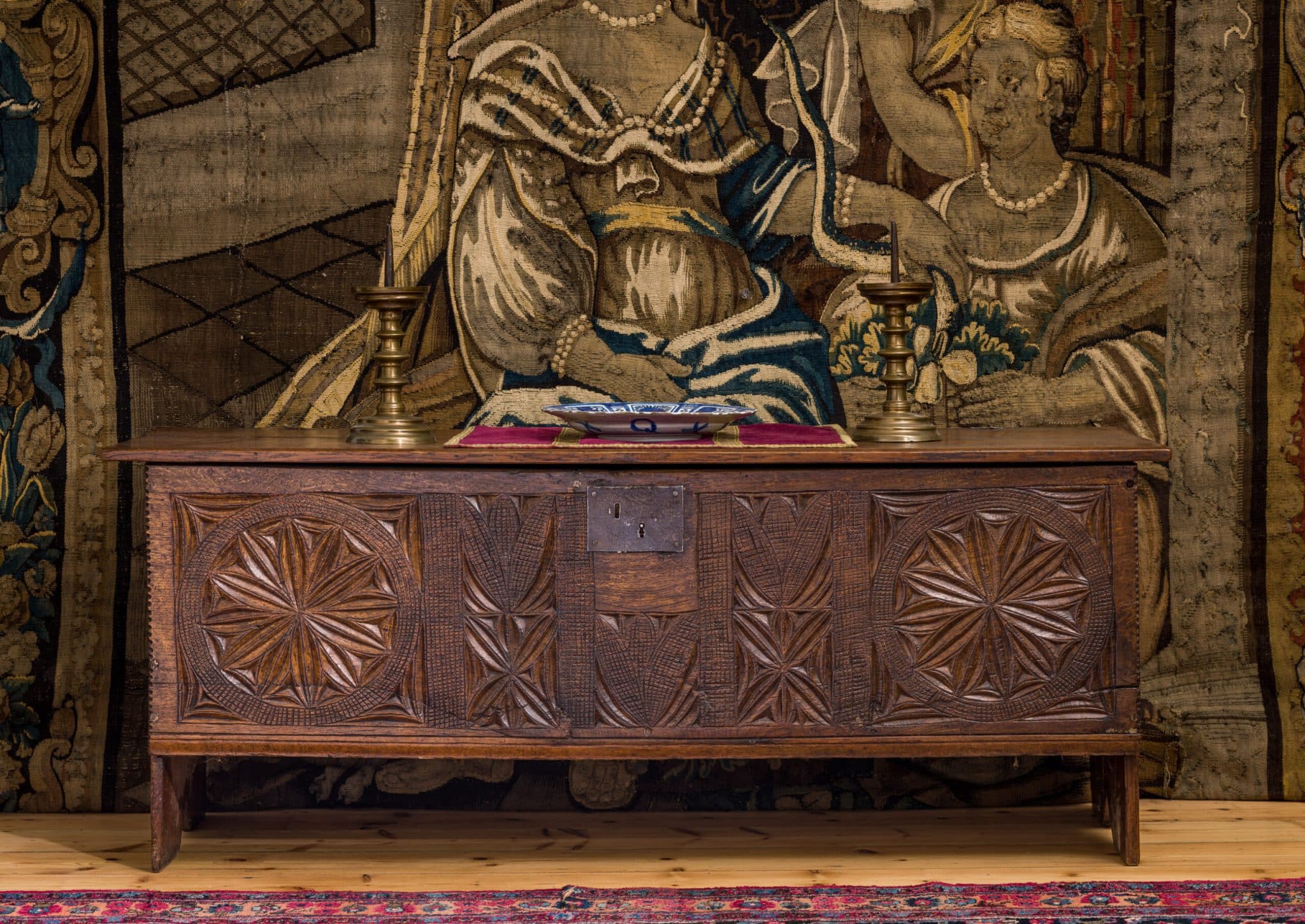
The bold compass-drawn roundels and radiating stars carved into the façade of this chest carried strong symbolic resonance in the late 15th and early 16th centuries. The starburst, with its radiating geometry, was associated with divine light and heavenly order — a protective motif ensuring both spiritual and material safekeeping of the chest’s contents. The repeated lozenges and intersecting patterns symbolised stability and continuity, reflecting late medieval preoccupations with lineage, inheritance, and the safeguarding of wealth.
Such decoration was not merely aesthetic: it served to align the household with cosmic and divine order, marking furniture like this as both practical and devotional. In an age of transition from medieval to Renaissance, these motifs persisted as a visual statement of faith, security, and permanence.

Curator's Note

Previous Charles I Chip-Carve… Next Charles II joined oa…
  • Henry VII – VIII Carved Boarded Chest

Newsletter

New Stock, Direct to Your Inbox.

Be among the first to hear about new acquisitions and notable works.

Please enable JavaScript in your browser to complete this form.
Loading
Paul Fitzsimmons logo
  • Current Stock
  • Archive
  • Notable Works
  • About Us
  • News
  • Contact

Contact Us

+44 (0)777 903 8891

  • Pinterest
  • Instagram

By Appointment

Devon, England.

Paul Fitzsimmons

Specialist in early oak furniture and works of art.

© 2026 Paul Fitzsimmons | Website by Dancing Badger Ltd

  • Privacy Policy
  • Terms & Conditions

Search the collection

Search in
    1 / 1