
Paul Fitzsimmons logo
  • Current Stock
  • Archive
  • Notable Works
  • About Us
  • News
  • Contact
Home / Current Stock / Henry VIII Oak Linen…
Previous Next
  • Henry VIII Oak Linenfold Chest
  • Henry VIII Oak Linenfold Chest

Henry VIII Oak Linenfold Chest

Period
1520 - 1540
Origin
England
Dimensions
W 65 3/4" × H 31 3/4" × D 22 1/2"
Reference
#Marh3090

Price on application

Description

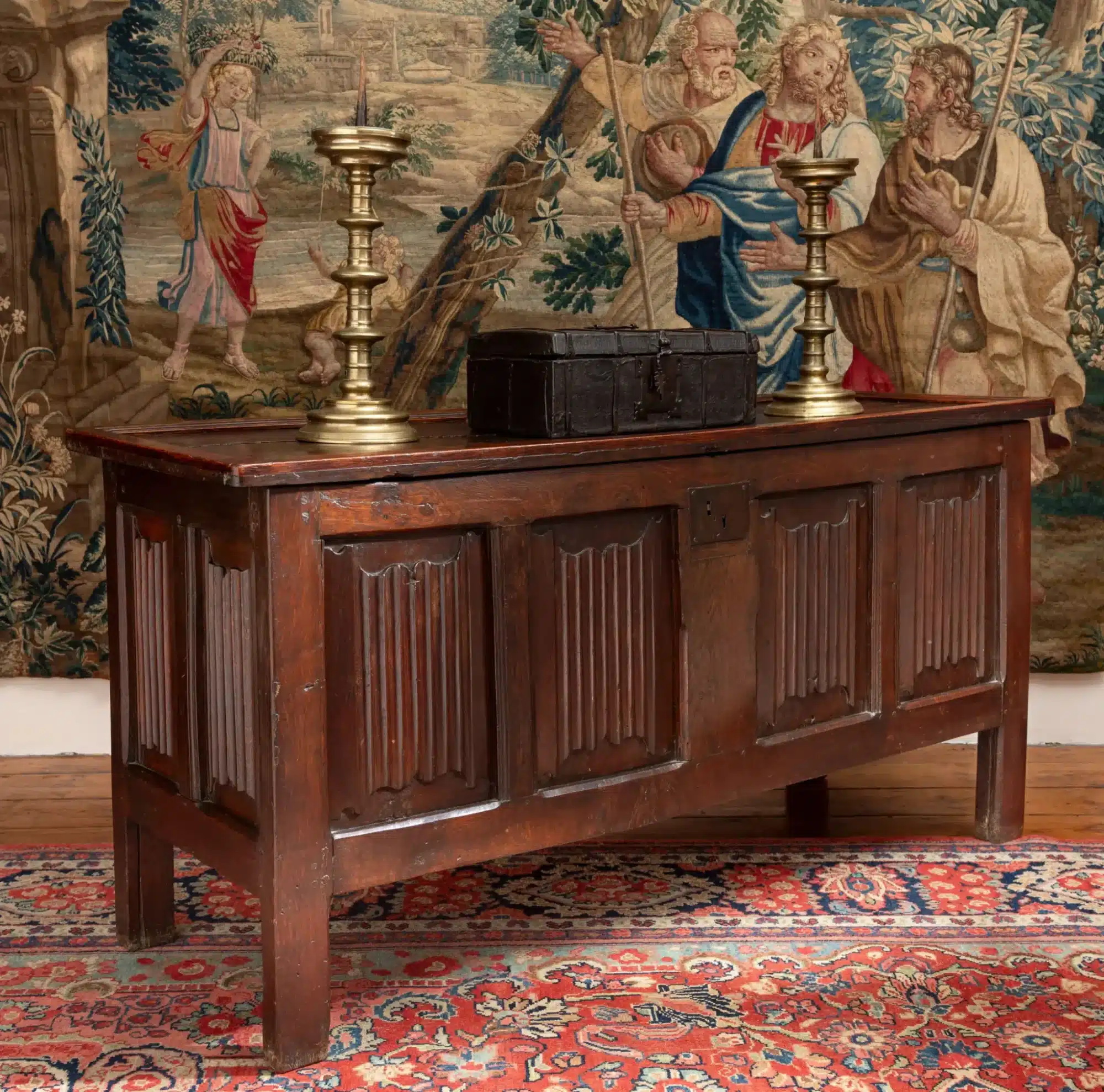
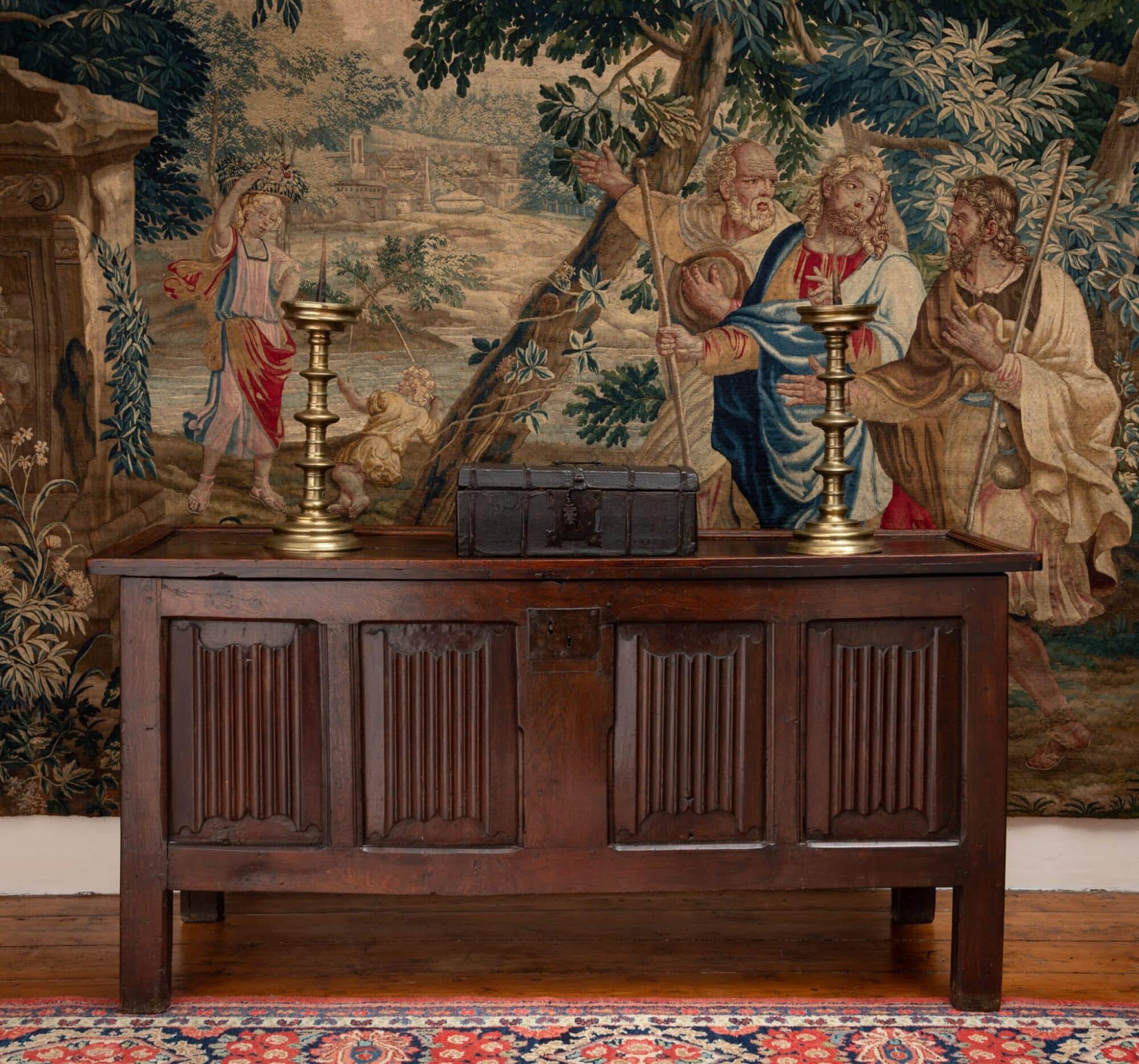
A substantial Tudor oak chest of joined construction, the façade carved with four large linenfold panels of exceptional depth and crispness, each framed by robust muntins. The ends carved with paired linenfold panels, the top originally moulded around its perimeter, later sympathetically re-edged to follow the early profile.
Of particular note are the original wrought-iron hinges: finely shaped, inset into the timber rather than surface-mounted, a refinement associated with high-status work. This recessed fixing both protected the ironwork and gave the chest a flush, carefully finished appearance — a costly and deliberate choice. The chest also shows evidence of its original lock plate, later patched and fitted with a smaller plate during its working life.
Traces of original red polychromy remain across the façade, a vivid reminder that such chests were once richly painted and intended to impress within the household. Linenfold, inspired by the folds of parchment or drapery, was a favoured motif of the Tudor gentry, conveying learning, authority, and refinement.
This is not a provincial coffer but a state chest, designed for use in the hall or chamber of a wealthy household under Henry VIII. Its scale, bold carving, inset refined ironwork, and remnants of polychromy together demonstrate the expense and prestige attached to such furnishings in the first half of the 16th century.
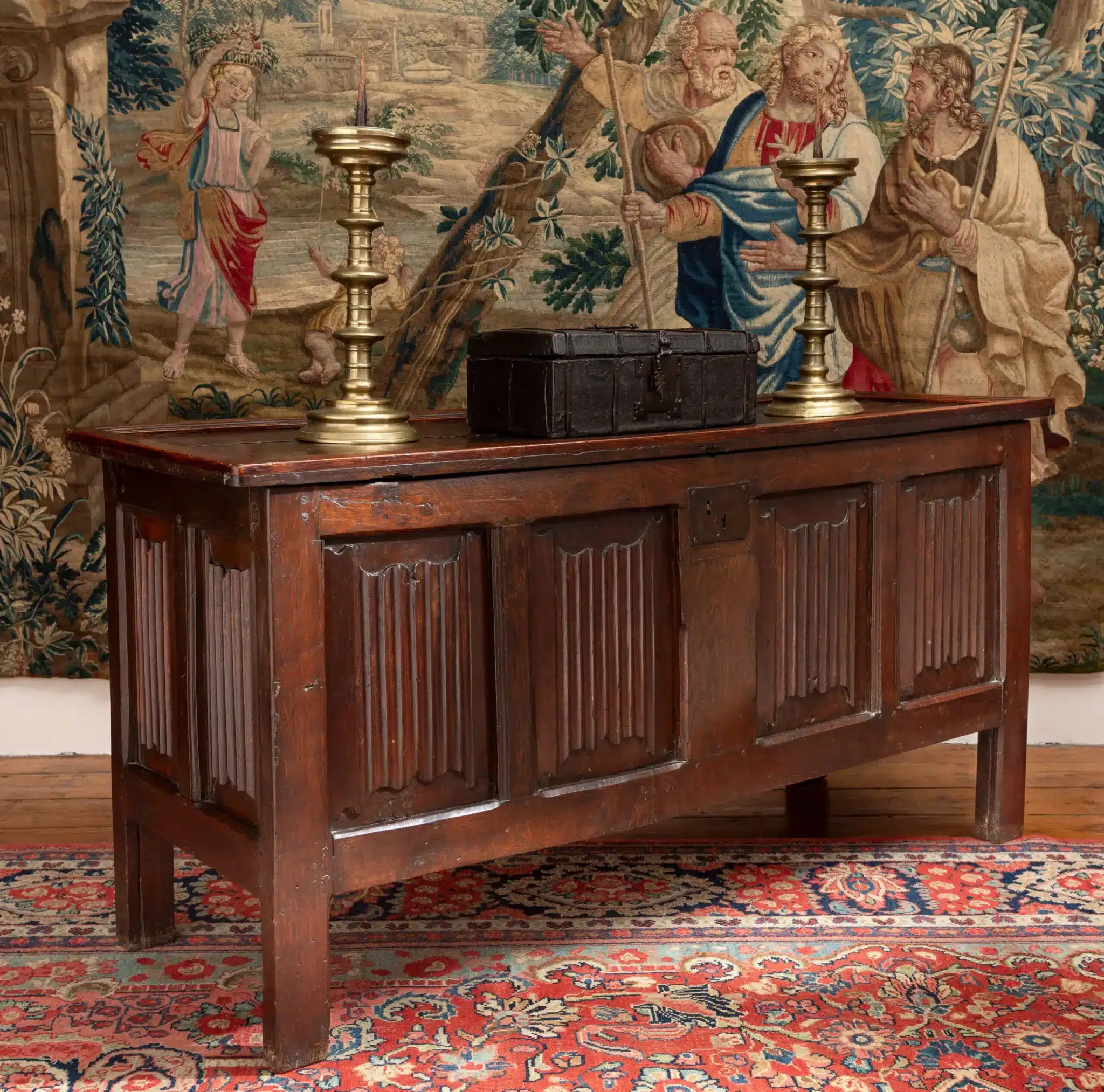
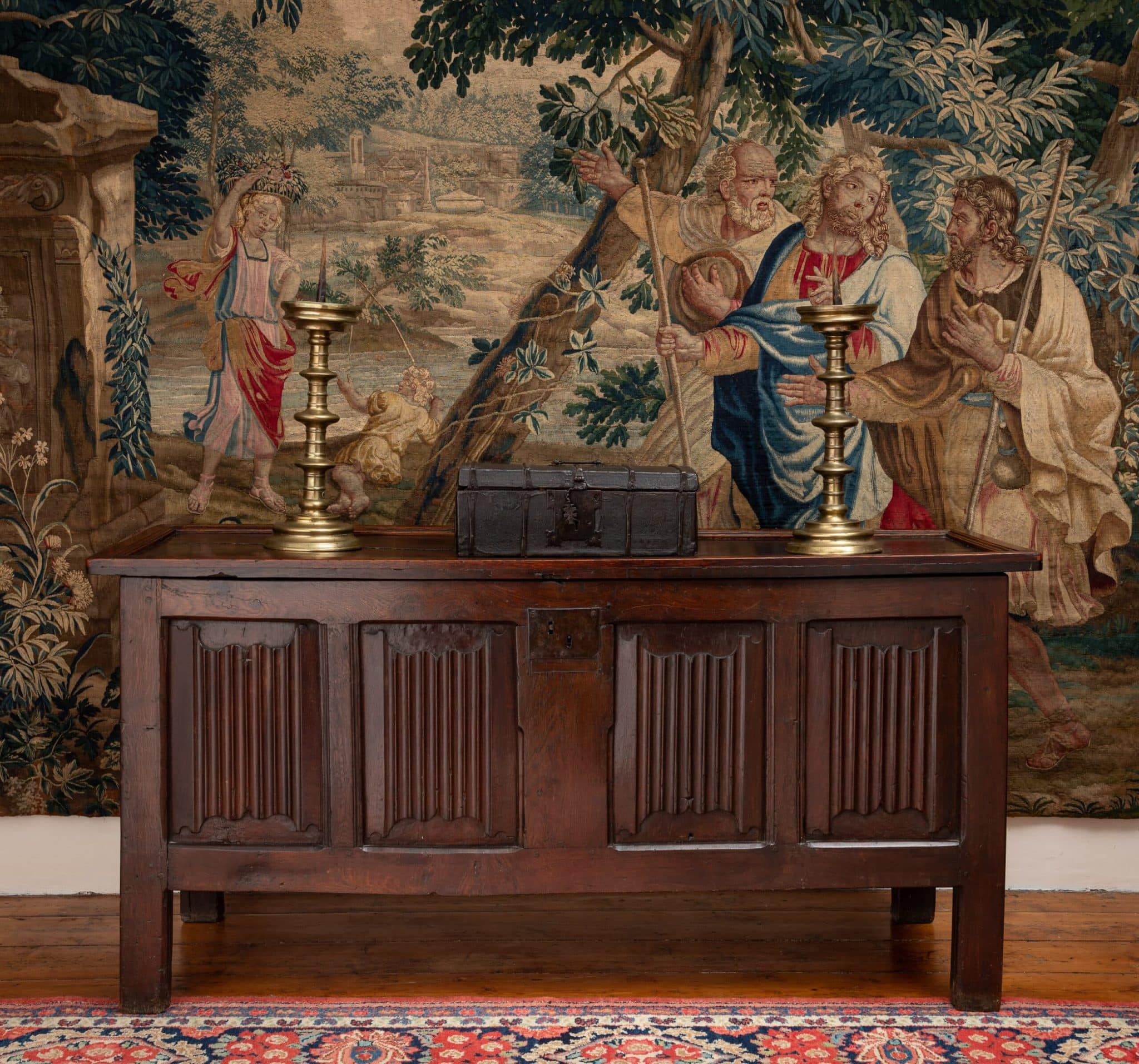
Chests of this calibre were not merely storage but part of the visual fabric of great Tudor households. In the 1520s–30s, England was undergoing dramatic social and cultural shifts: Henry VIII’s court dazzled with feasts, pageantry, and lavish displays of wealth, while the Dissolution of the Monasteries redistributed treasures and furnishings into secular hands.
A chest such as this would have stood in a hall or chamber during banquets, celebrations, and gatherings, its painted façade and bold carving catching candlelight. It might have stored costly textiles — table linens for great feasts, or garments reserved for ceremonial use — to be brought out on important occasions.
In this way, the chest was both functional and symbolic: it secured valuables, but it also projected status and authority in a world where display was central to social identity.

Curator's Note

Previous Pair of Large Nuremb… Next Gothic limestone scu…
  • Henry VIII Oak Linenfold Chest
  • Henry VIII Oak Linenfold Chest

Newsletter

New Stock, Direct to Your Inbox.

Be among the first to hear about new acquisitions and notable works.

Please enable JavaScript in your browser to complete this form.
Loading
Paul Fitzsimmons logo
  • Current Stock
  • Archive
  • Notable Works
  • About Us
  • News
  • Contact

Contact Us

+44 (0)777 903 8891

  • Pinterest
  • Instagram

By Appointment

Devon, England.

Paul Fitzsimmons

Specialist in early oak furniture and works of art.

© 2026 Paul Fitzsimmons | Website by Dancing Badger Ltd

  • Privacy Policy
  • Terms & Conditions

Search the collection

Search in

    Enquire About This Piece

    Henry VIII Oak Linenfold Chest · Ref. Marh3090

    Please enable JavaScript in your browser to complete this form.
    Newsletter signup
    Loading
    1 / 1