 Sold
Sold
Henry VIII North Devon Oak Linenfold Chest
- Period
- 1520 - 1540
- Origin
- Devon
- Dimensions
- W 49 1/4" × H 23 1/4" × D 18 1/2"
- Reference
- #Marh2977
This piece has been sold. It is shown here for reference in our archive.
Description
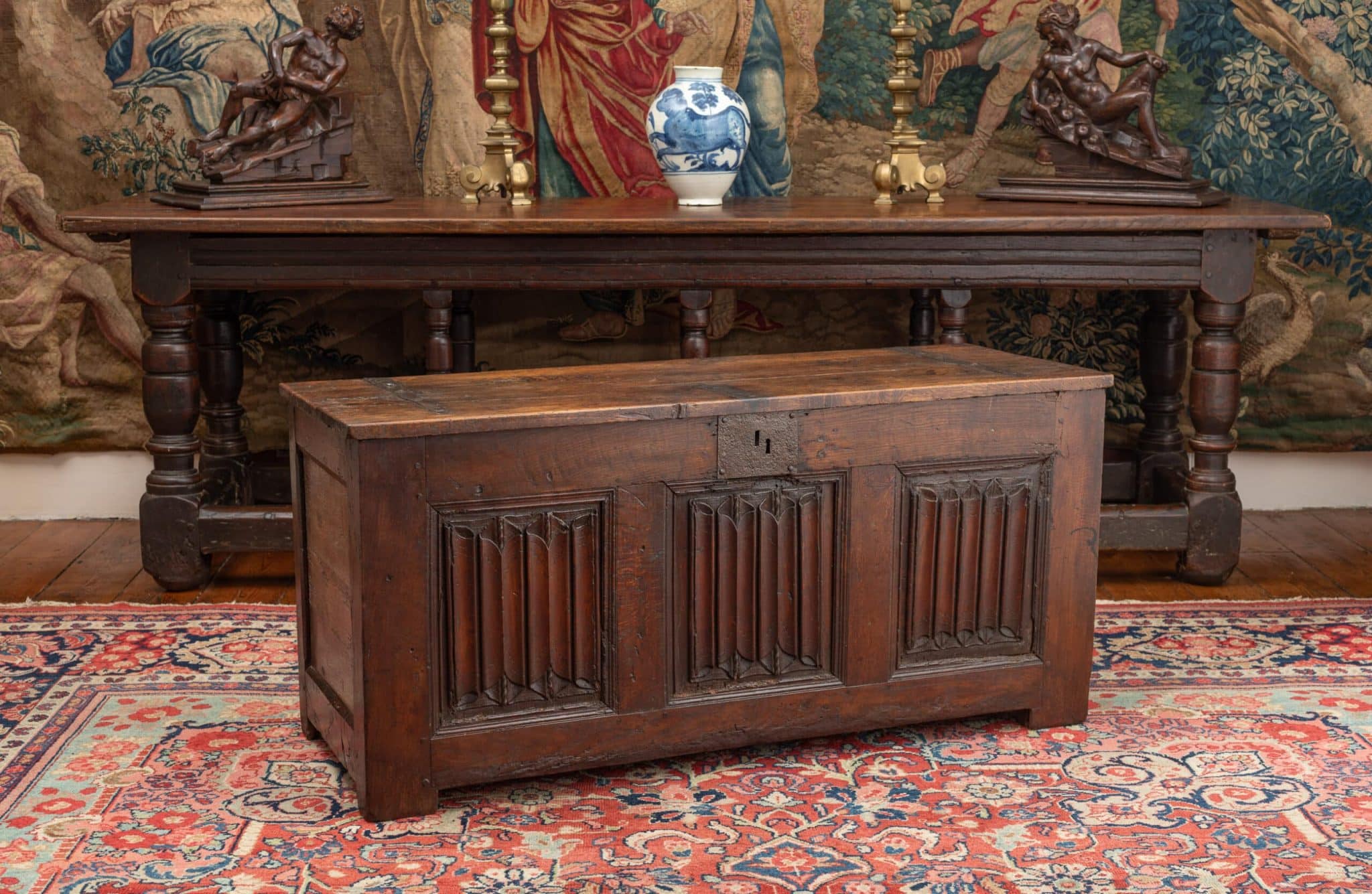
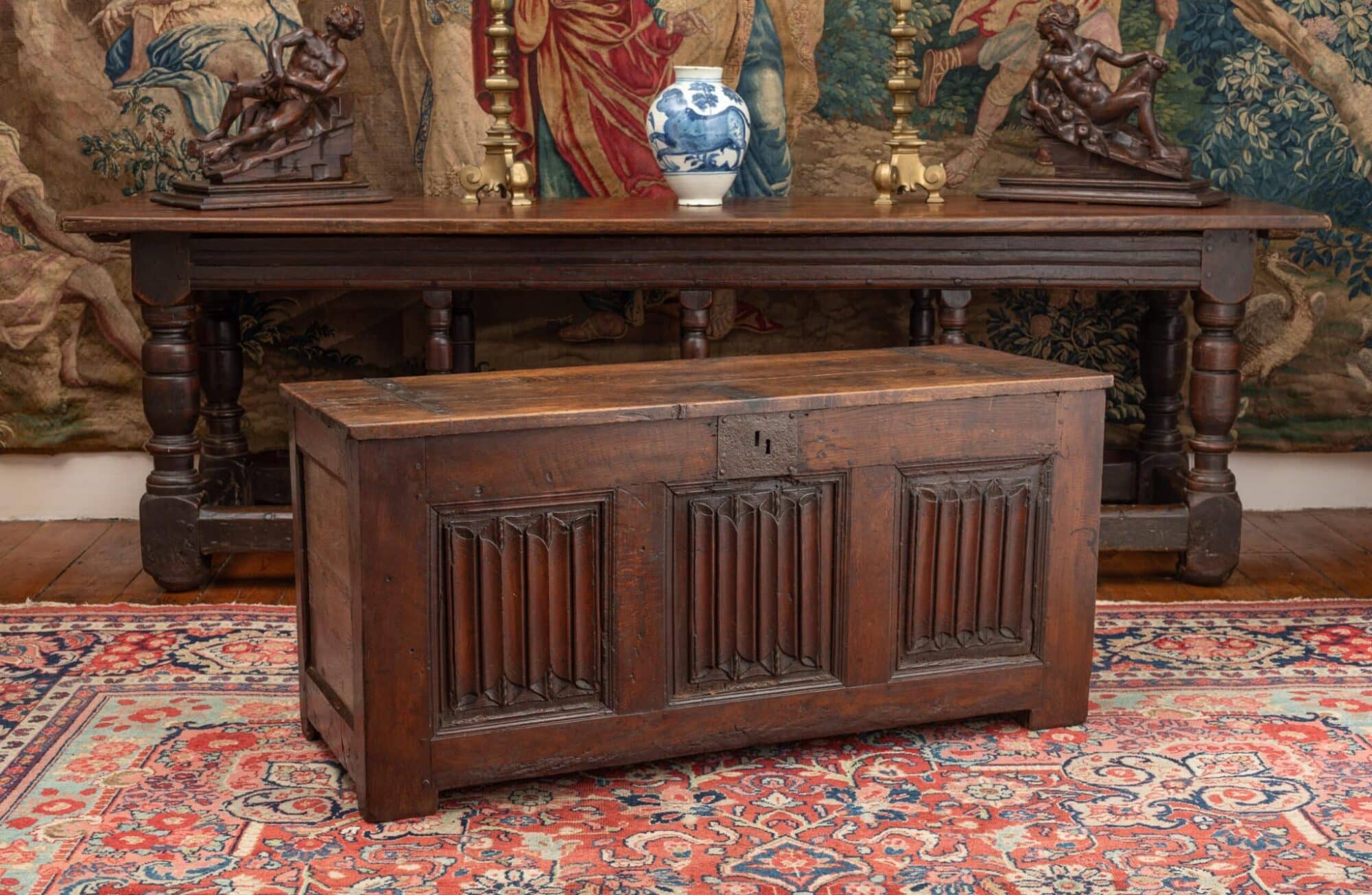
A robust and richly patinated oak chest from North Devon, constructed in heavy English oak of notable density and colour. The front is carved with three linenfold panels of crisp and varied execution, each subtly different in proportion and fold, framed by broad stiles and rails. This individuality, while reflecting the handwork of a provincial workshop, may also carry symbolic meaning in the Tudor devotional context: a quiet acknowledgement that only God could embody perfection, while human work must necessarily fall short.
The chest retains its original planked lid, fitted with inlaid strap hinges, an unusual refinement rarely encountered in surviving examples. The lock is a later replacement, and the bottom boards are old but replaced, though the overall structure remains highly original. The deep patina and wear to the surface confirm its long working life.
The linenfold carving relates closely to the North Devon wall settles of the early 16th century, which share the same deeply cut folds and bold proportions. This link underlines the shared vocabulary of local workshops, where carvers supplied both domestic and ecclesiastical furniture. The linenfold motif, echoing folded cloth, carried connotations of both fashion and piety, resonating with church vestments and altar frontals while projecting status within the household.
Chests such as this served as secure storage for textiles and valuables, while also acting as visual statements of permanence, authority, and devotion within the home. The combination of heavy native oak, refined ironwork, and regional carving places this example firmly within the proud tradition of early Tudor West Country craftsmanship.