

Henry VIII Joined Oak Linenfold Chest, Carved on All Sides
- Period
- Circa 1530 - 1540
- Origin
- England
- Dimensions
- W 37 3/4" × H 22 1/2" × D 14 1/2"
- Reference
- #Marh3178
£7,850
Description
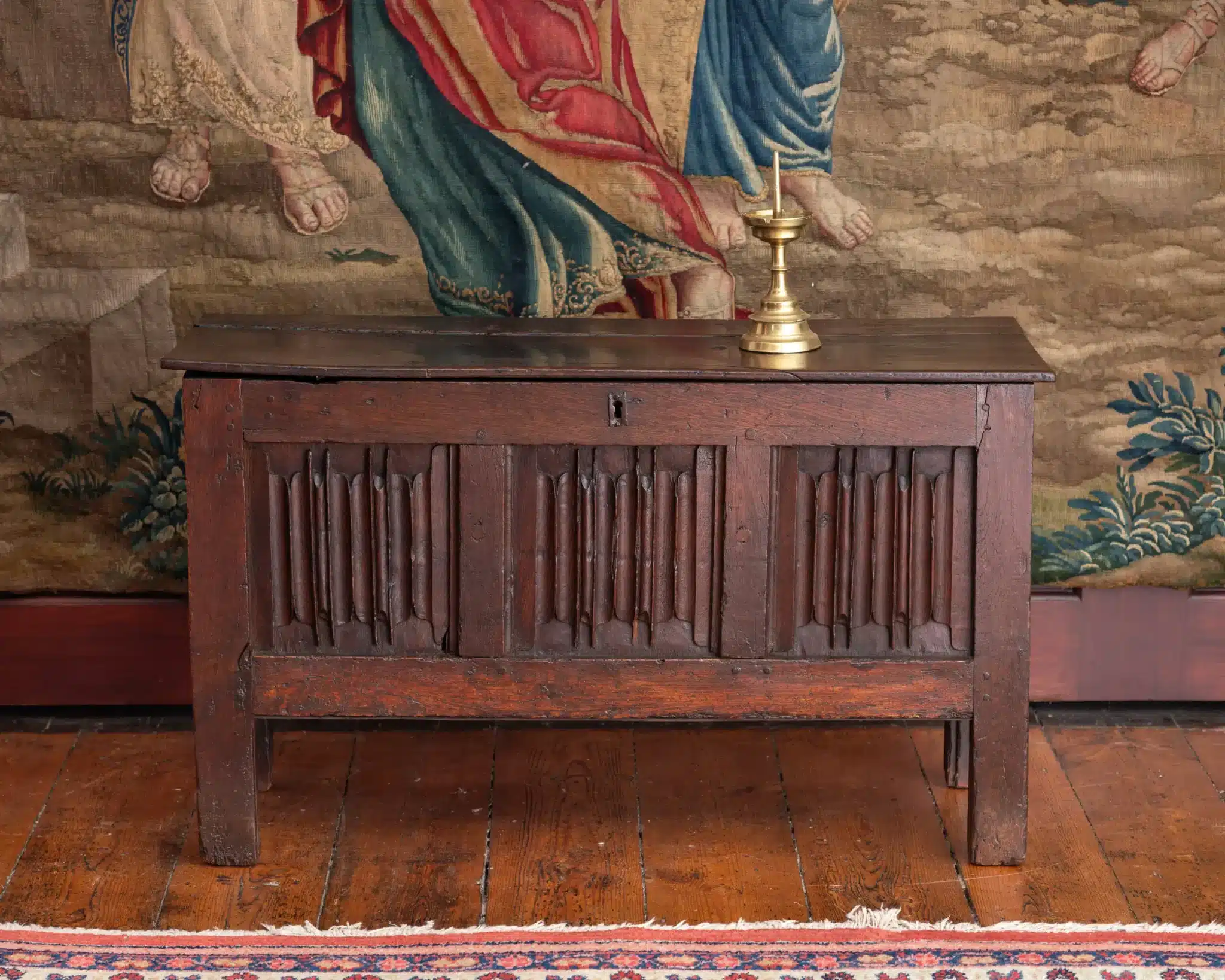
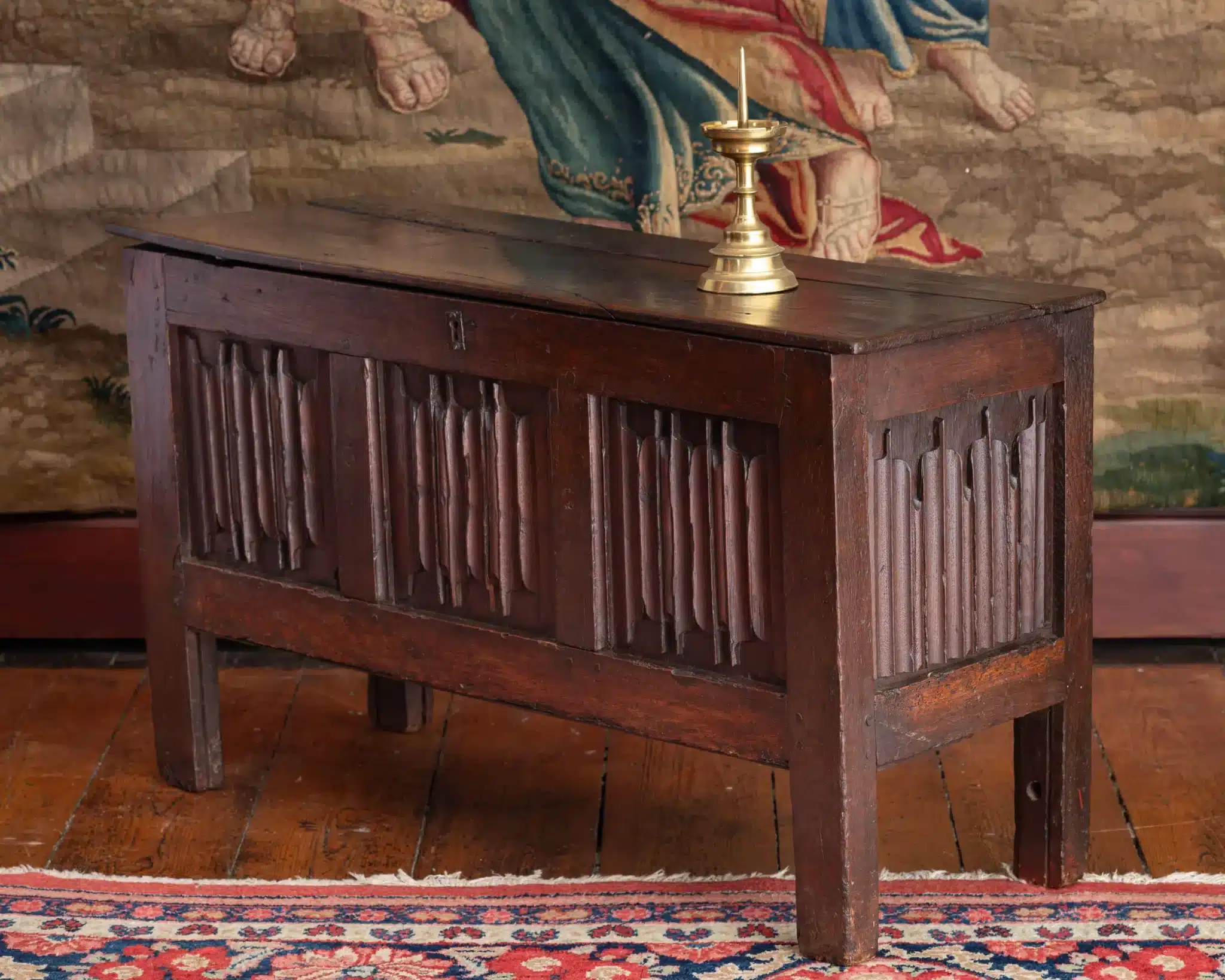
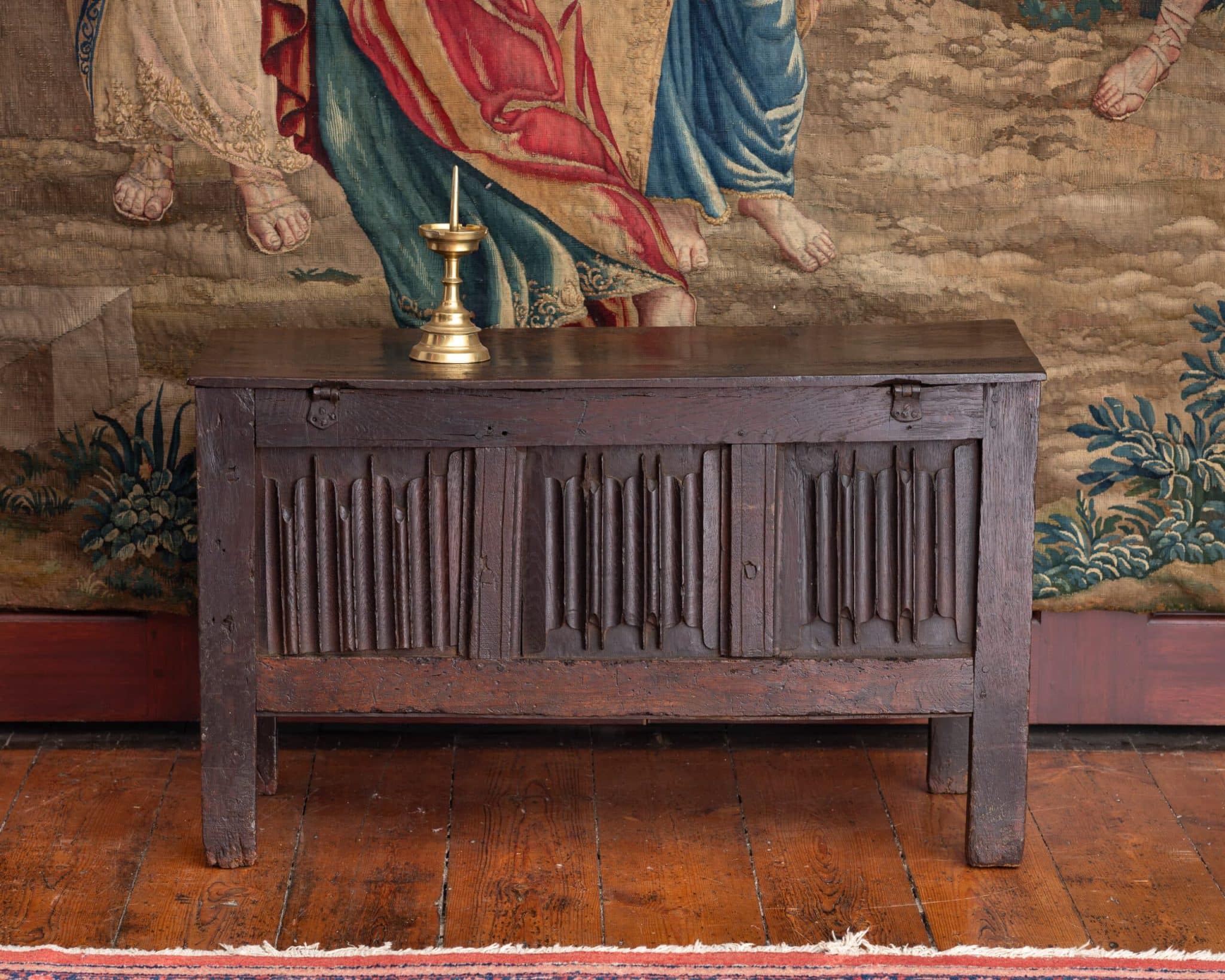
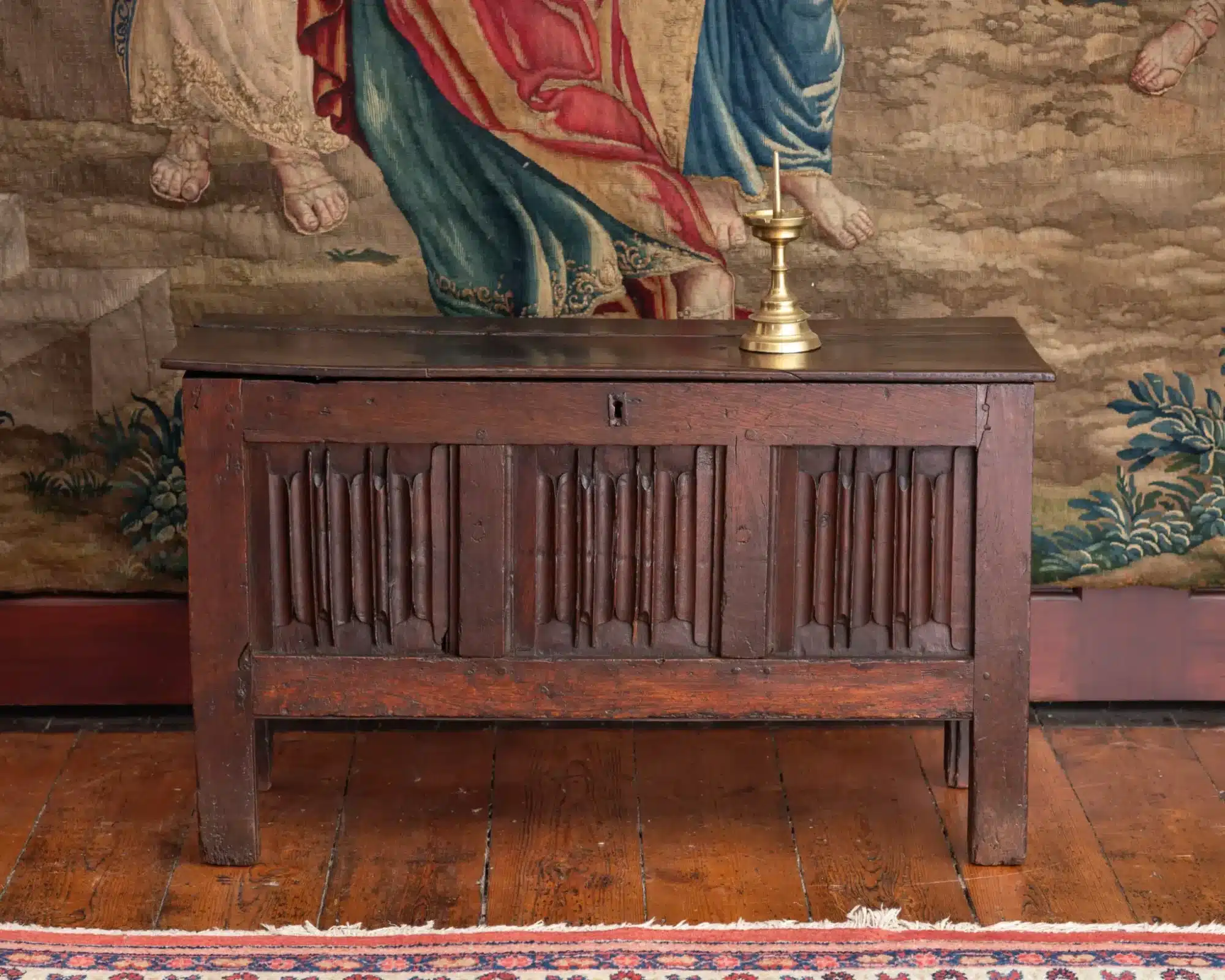
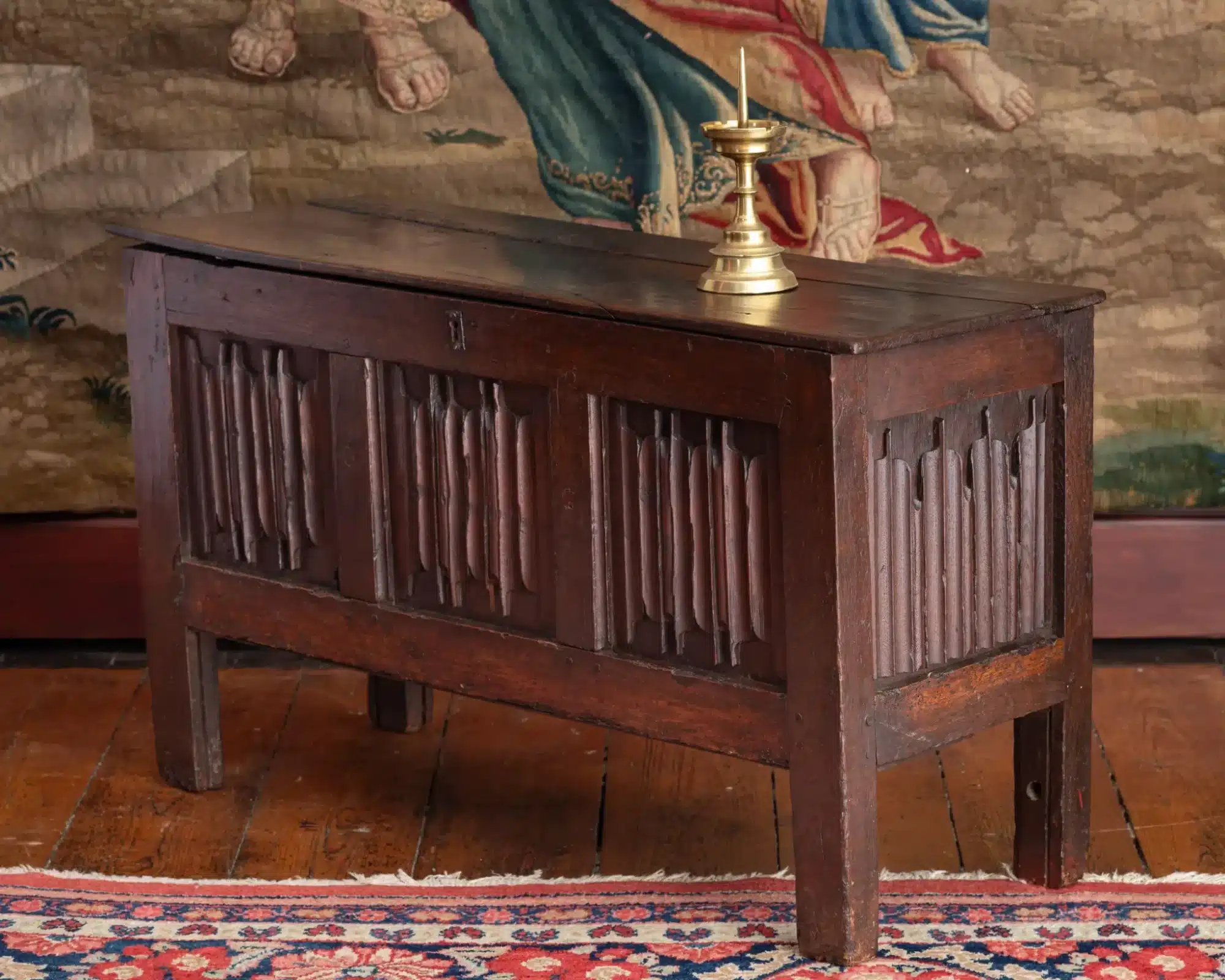
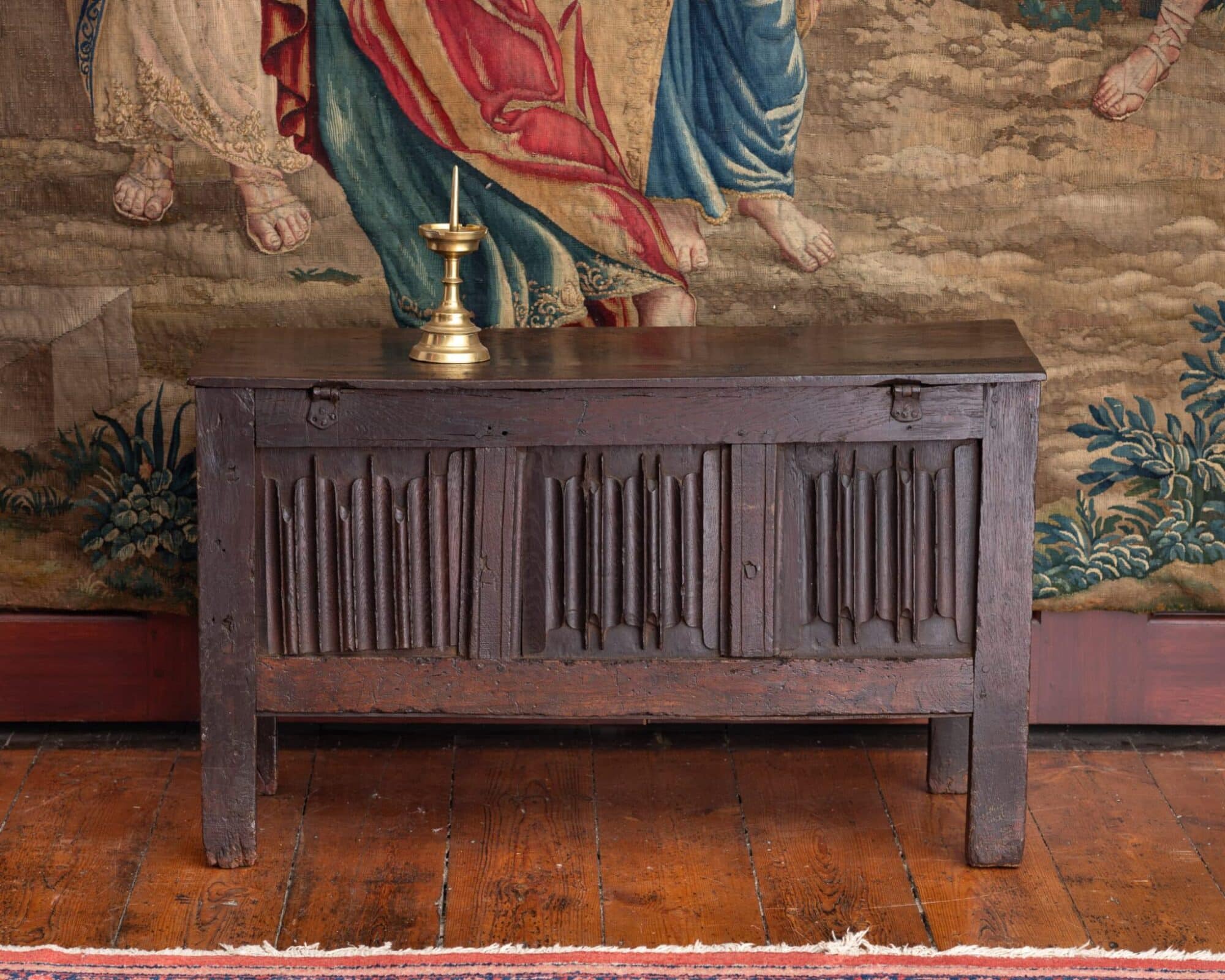
A joined oak chest of the early Tudor period, the front with three deeply carved linenfold panels, the sides each with a single panel, and the reverse with three further panels, the upper sections crisply detailed. The chest retains its original lock-plate and has a fine deep colour and surface.
The use of linenfold panels on all four sides is highly significant. Most chests of this type were carved only to the front, with plainer treatment reserved for the sides and reverse. Here, the consistent carving demonstrates that the chest was designed to be viewed in the round, not placed against a wall. Such treatment indicates a more elevated commission, either for a gentry household where it stood prominently in a hall or chamber, or within a parish or guild context, where its decorative qualities could be appreciated from all sides.
The linenfold motif was the most characteristic decorative vocabulary of late Gothic and early Tudor England, imitating folded cloth and resonating with themes of both wealth and devotion. Its deep architectural cutting on this example recalls the panelled interiors of Suffolk and East Anglia in the early 16th century, where imported Baltic oak facilitated crisp and regular carving.