
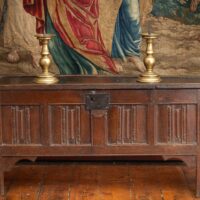
Henry VIII Period Oak Linenfold Chest
- Period
- Circa 1540
- Origin
- England
- Dimensions
- W 49 1/2" × H 25 1/4" × D 14 3/4"
- Reference
- #Marh3573
£6,850
Description
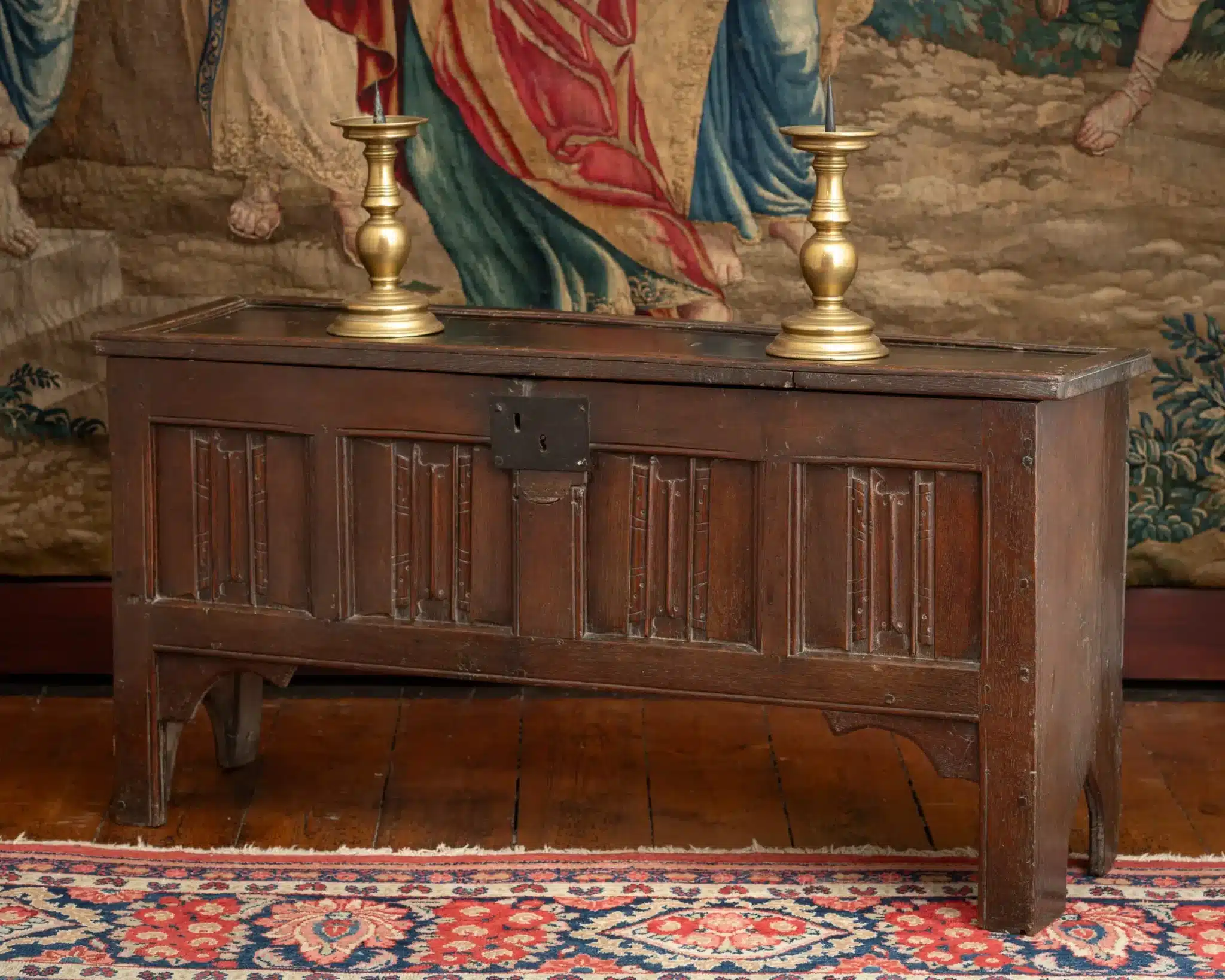
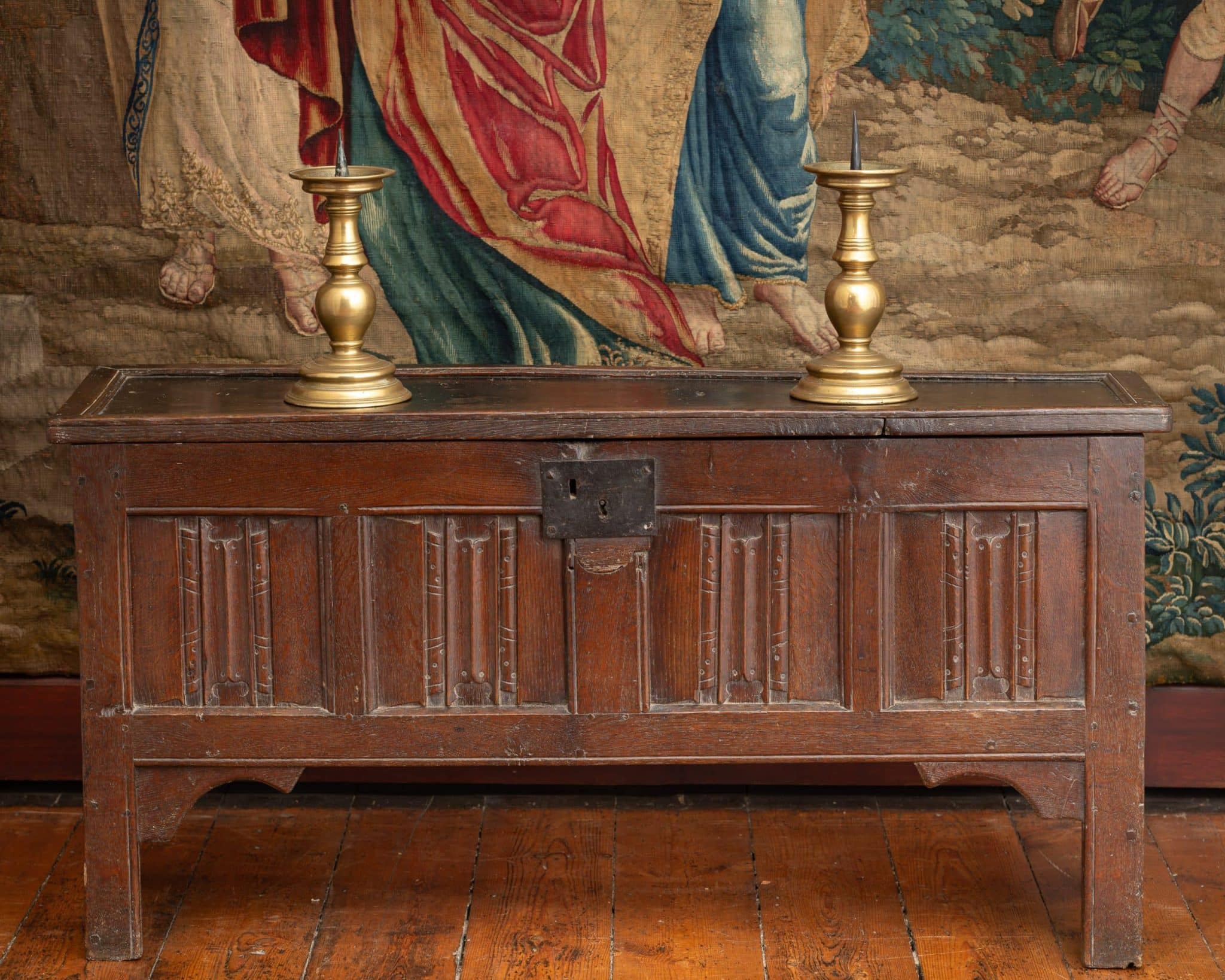
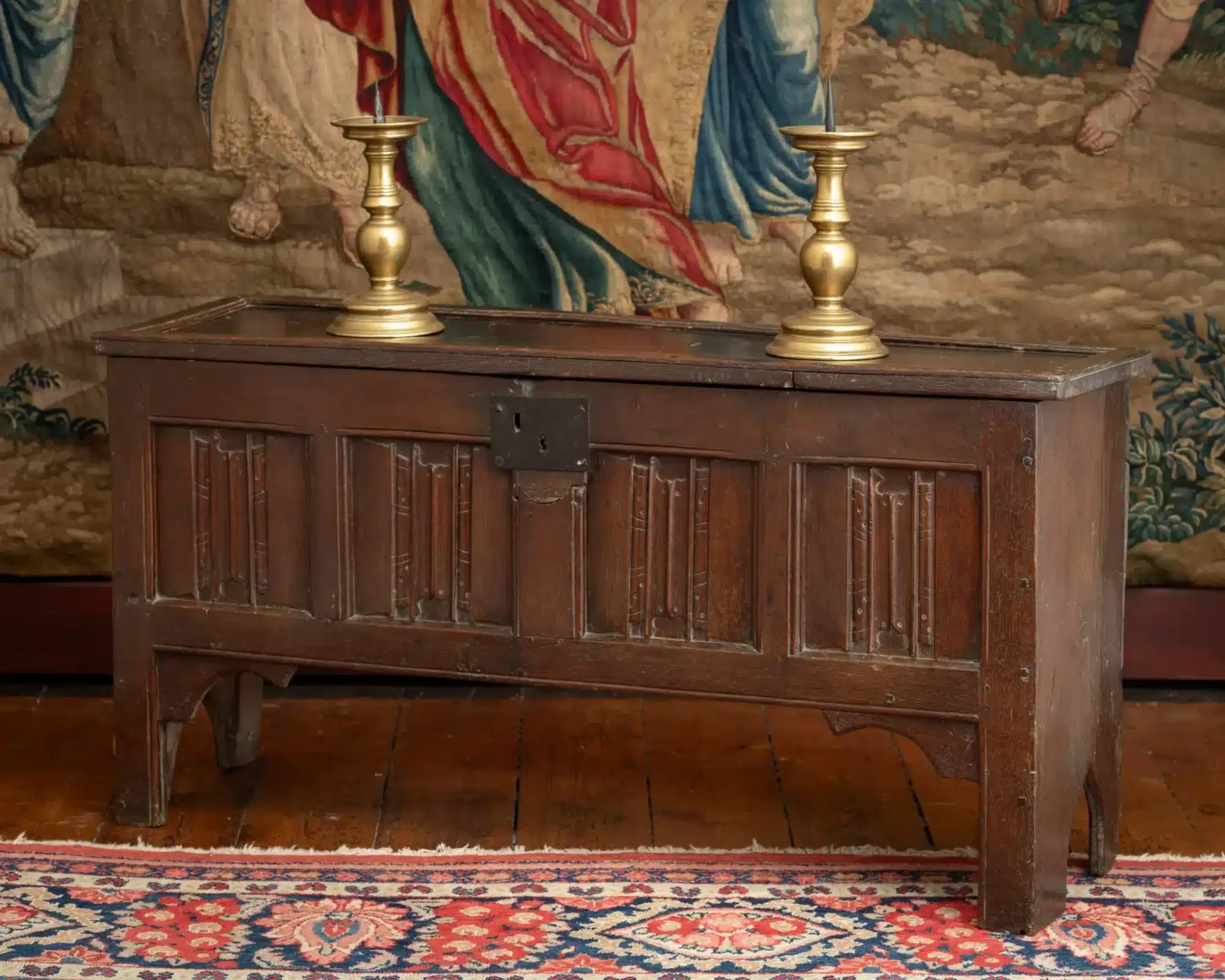
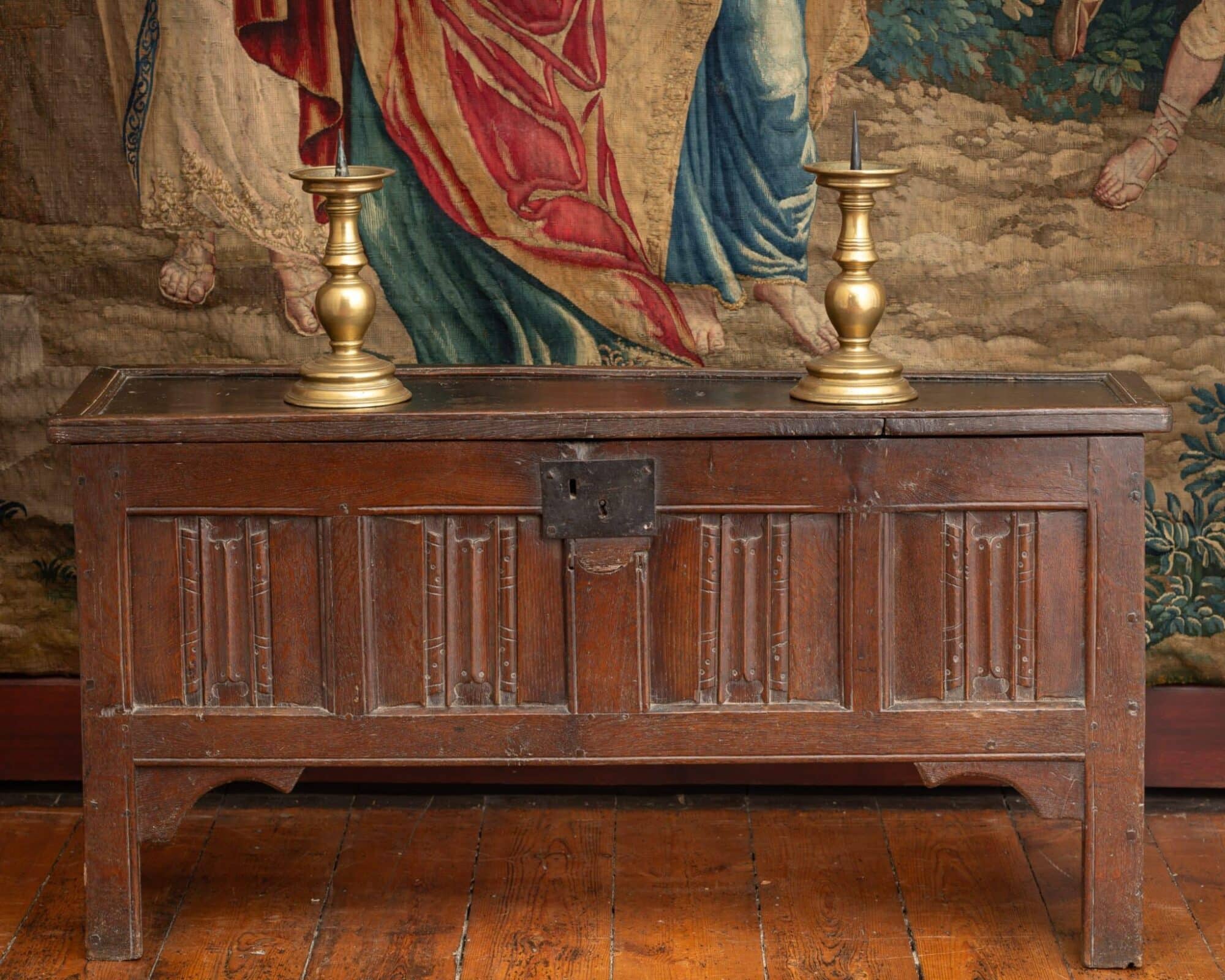
A fine mid-Tudor oak chest of hybrid boarded and framed construction. The front composed of four boldly carved linenfold panels, each framed within applied muntins and rails, the linenfold crisply defined with vertical folds and terminating in shaped spandrels. The sides and back are of robust boarded planks, while the top is fitted with an applied frame. The chest retains its original iron lockplate.
The linenfold motif — a stylised representation of folded parchment — was one of the most enduring Gothic decorative devices in English joinery from the late 15th to the mid-16th century. Its use here reflects the conservative taste of Henry VIII’s reign, where Gothic idioms persisted even as Renaissance influence began to arrive from the Continent.
Chests such as this served both practical and symbolic purposes. They provided secure storage for textiles, plate, and valuables in noble and prosperous households, while their carved decoration conveyed a sense of order, permanence, and status. The hybrid construction seen here — boarded sides with a framed front — represents a transitional stage in furniture-making, moving away from fully boarded forms of the early Tudor period towards the framed construction that became dominant later in the century.
Comparable examples are preserved in the collections of the Victoria & Albert Museum and the Burrell Collection, while a near-identical chest sold at Bonhams, The Olive Collection, 2009, lot 12, for £8,750.