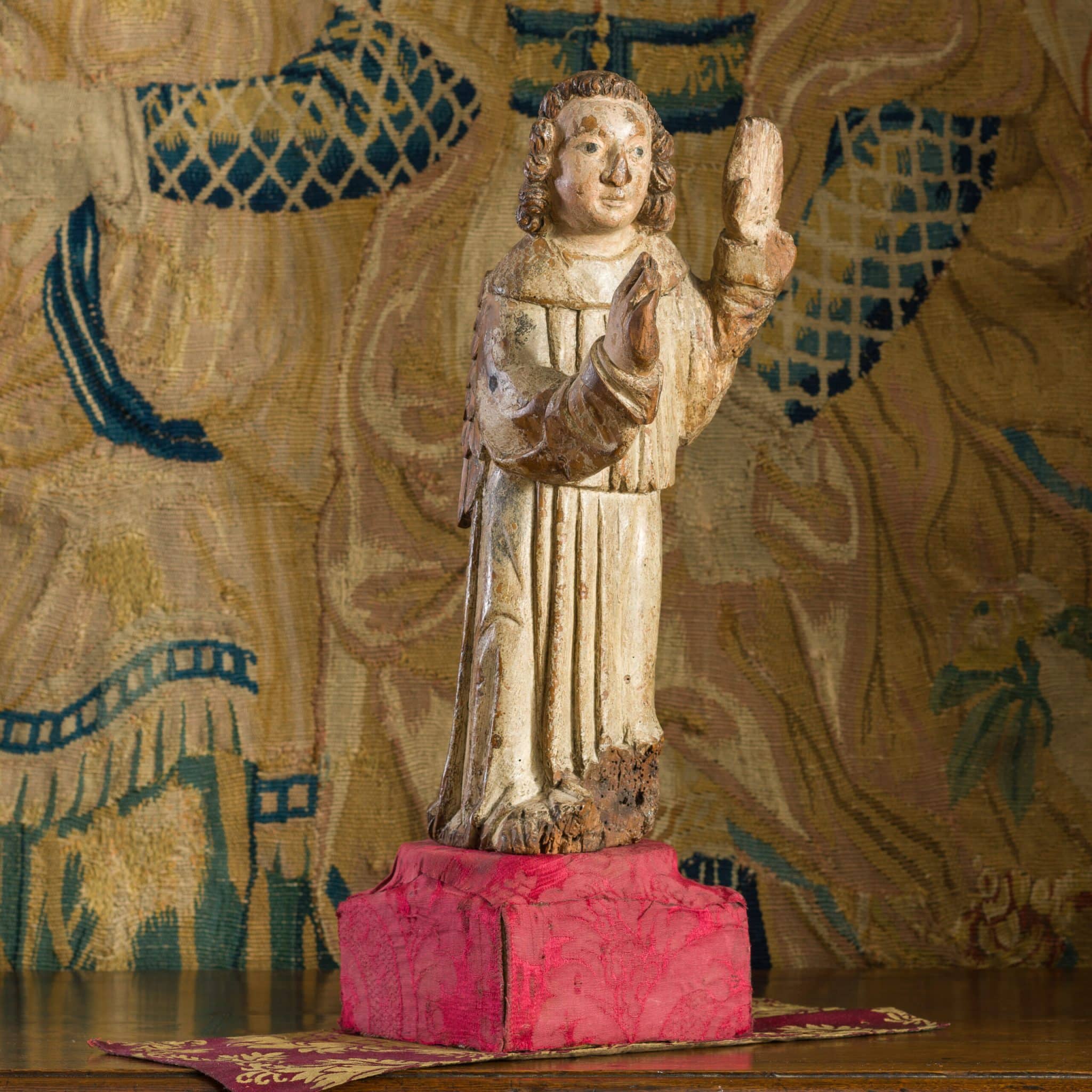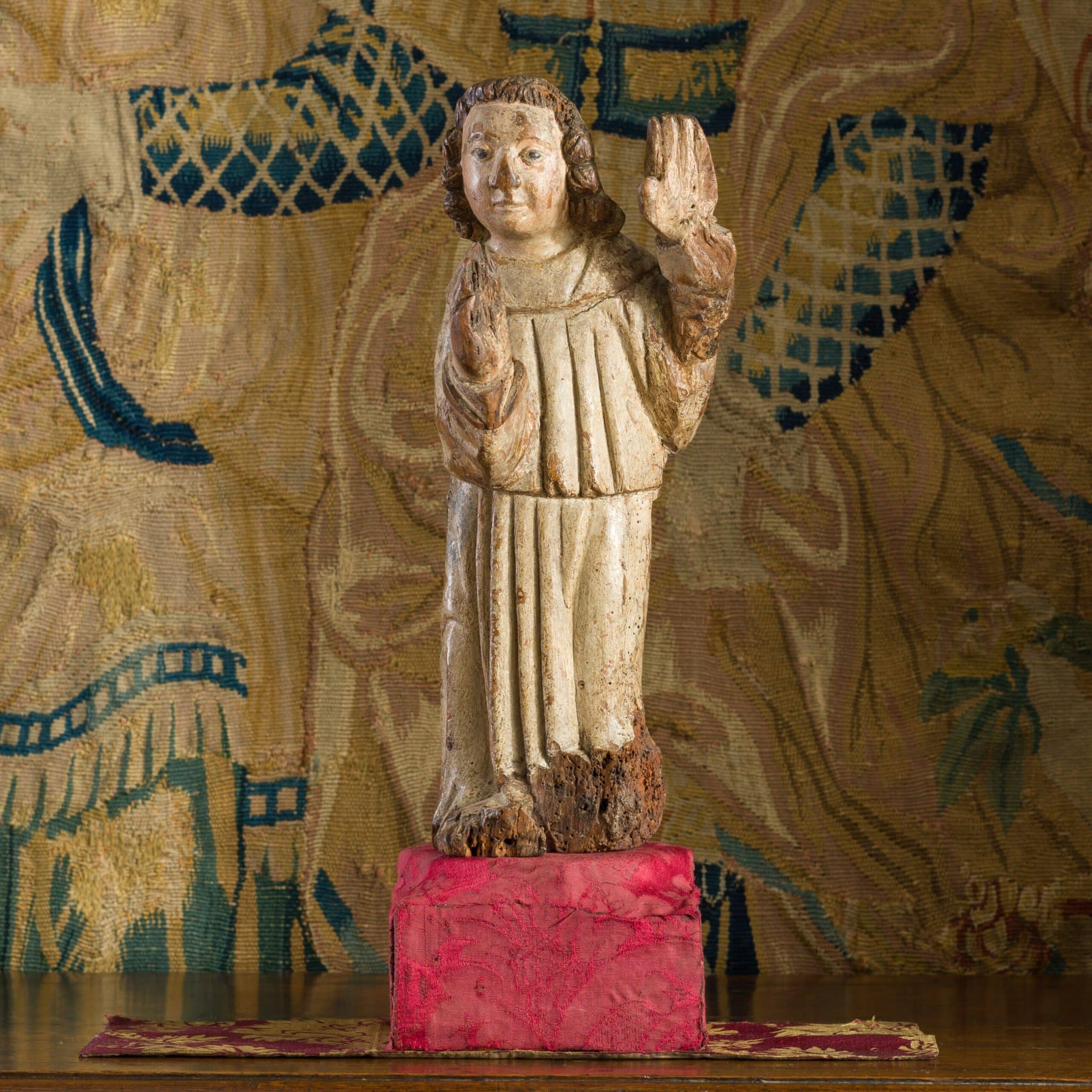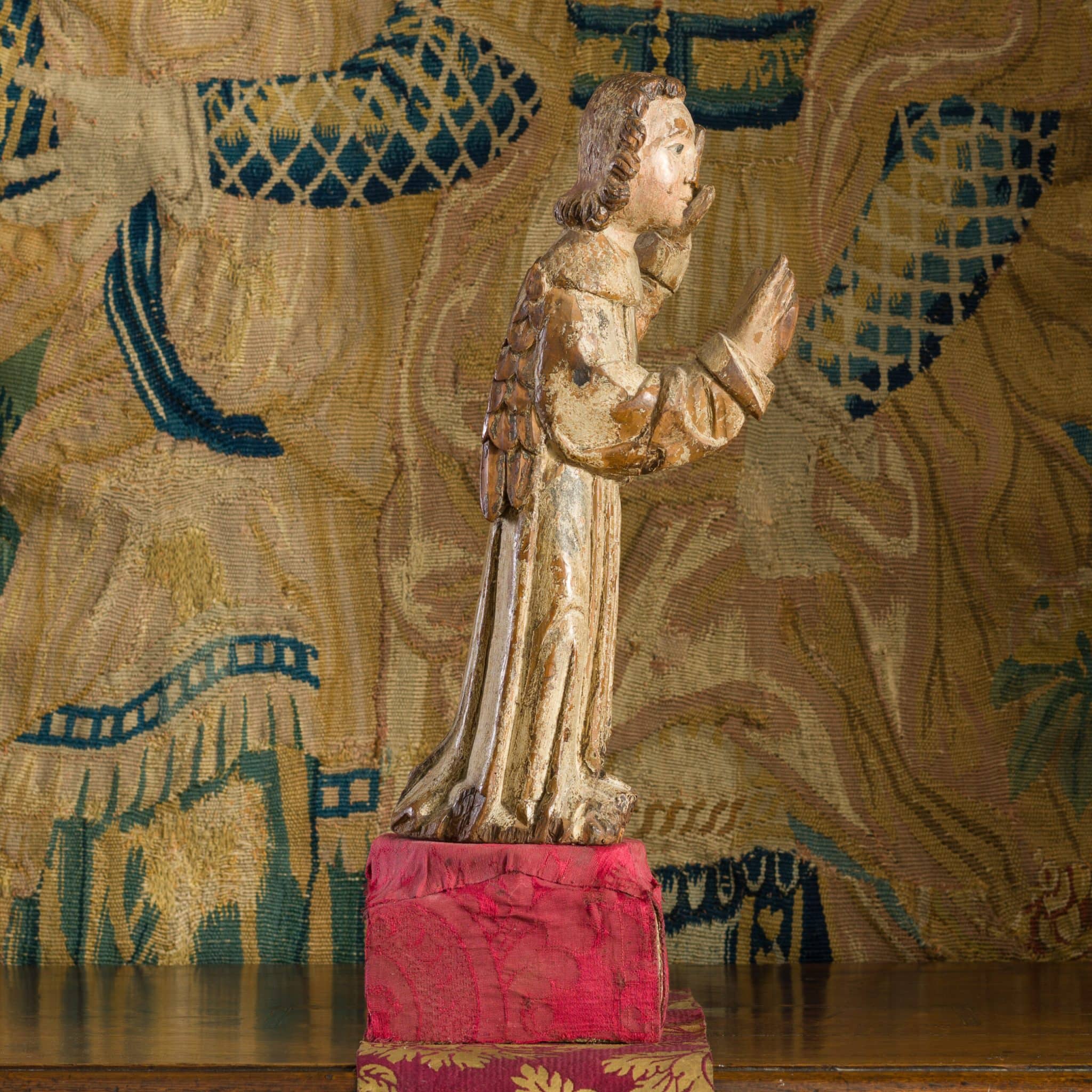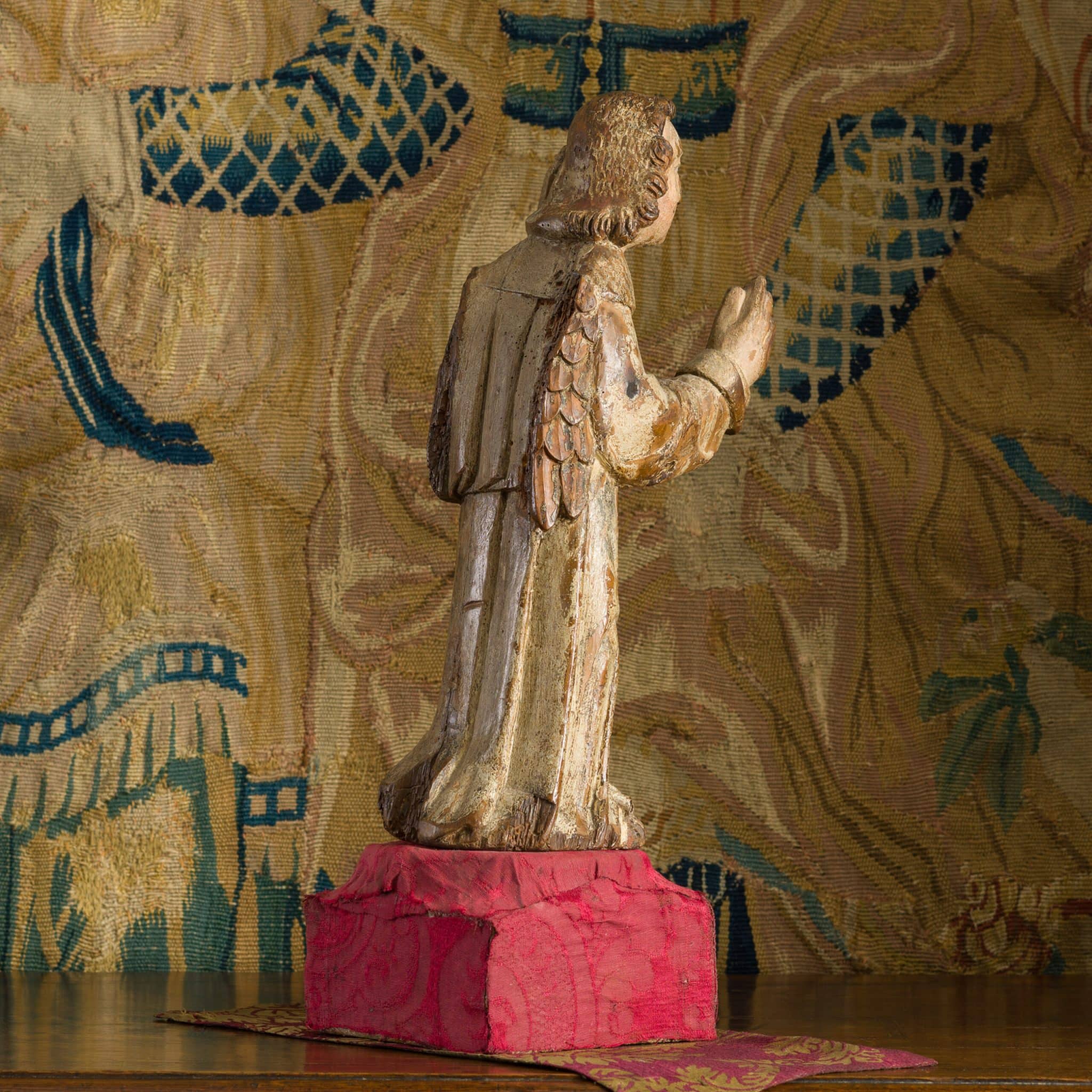
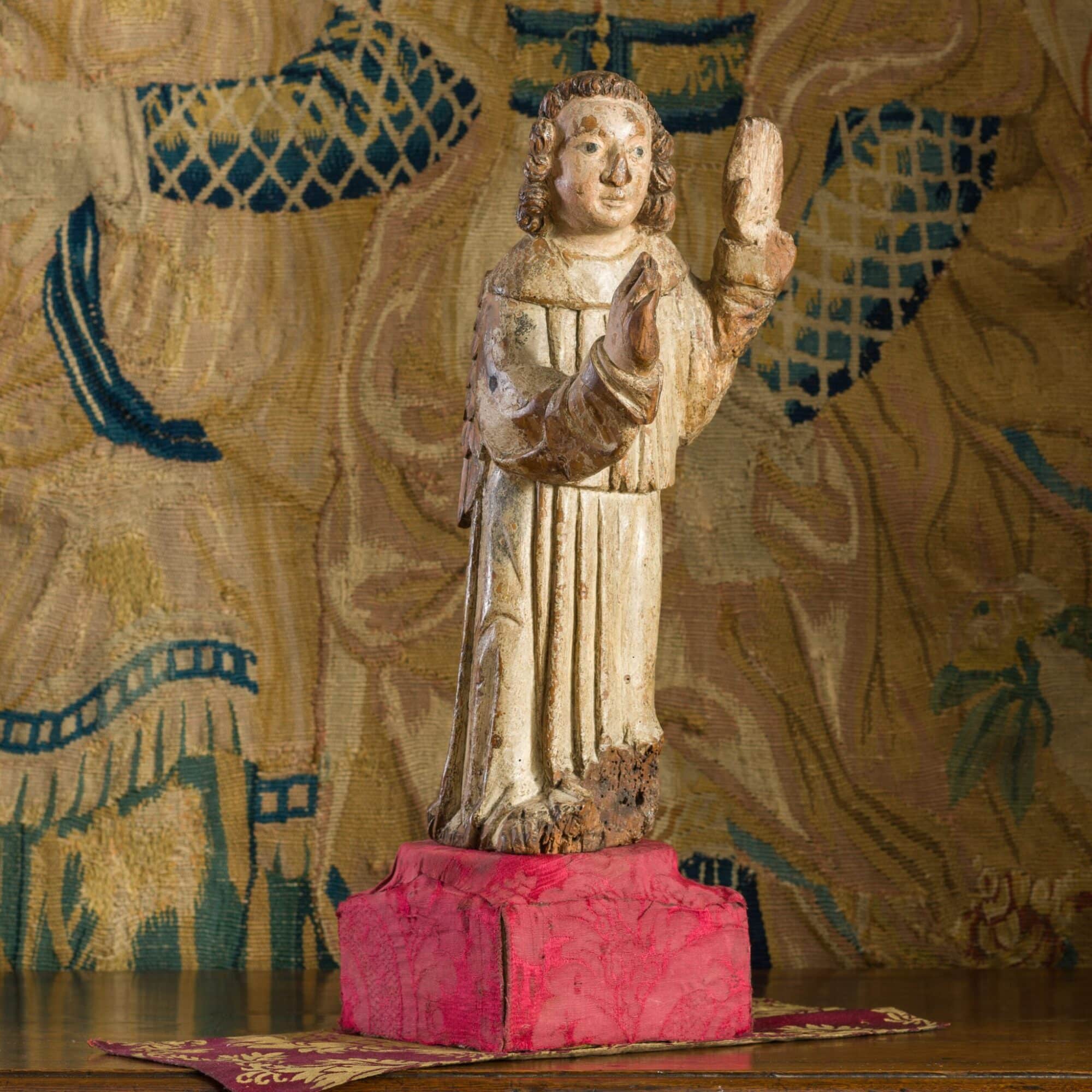
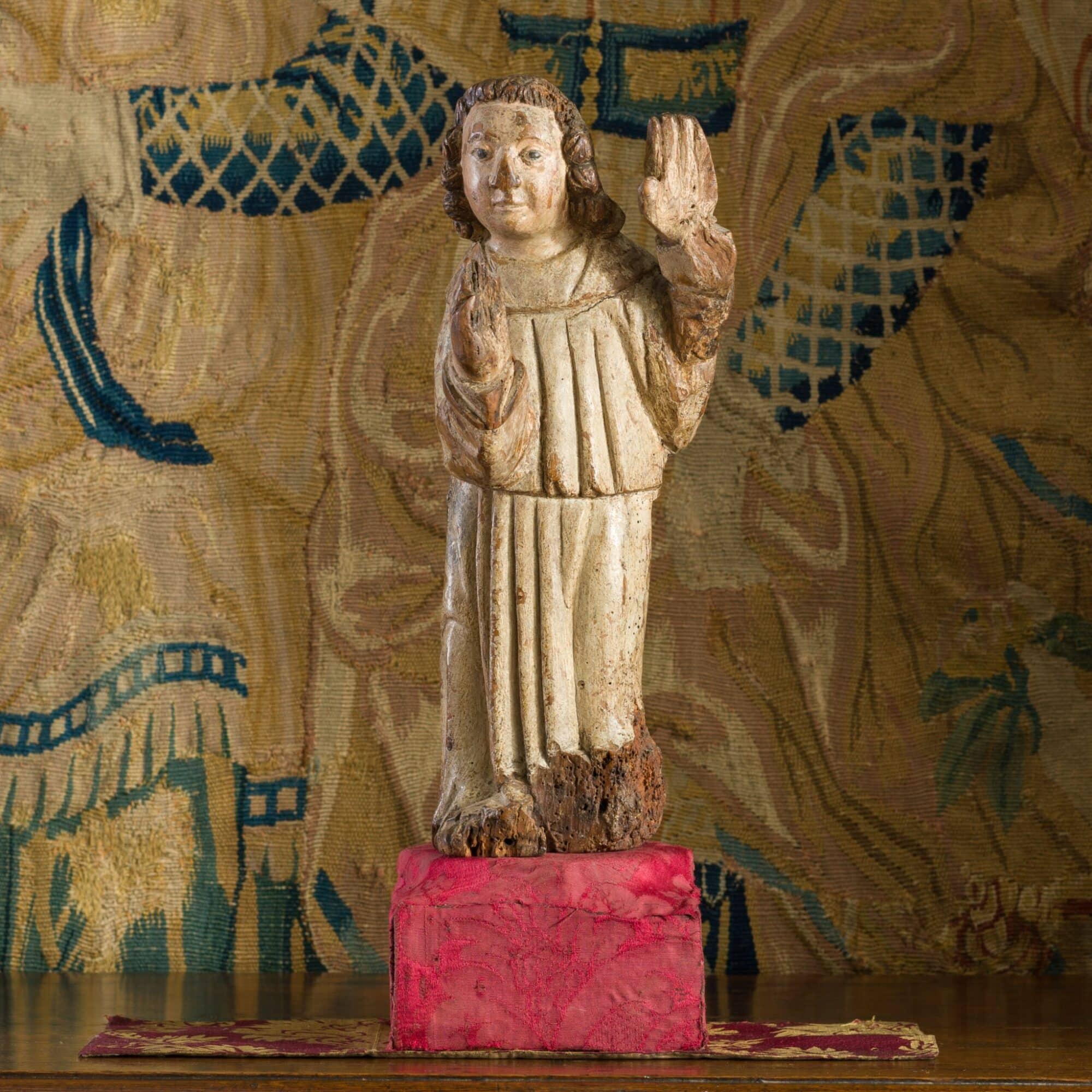
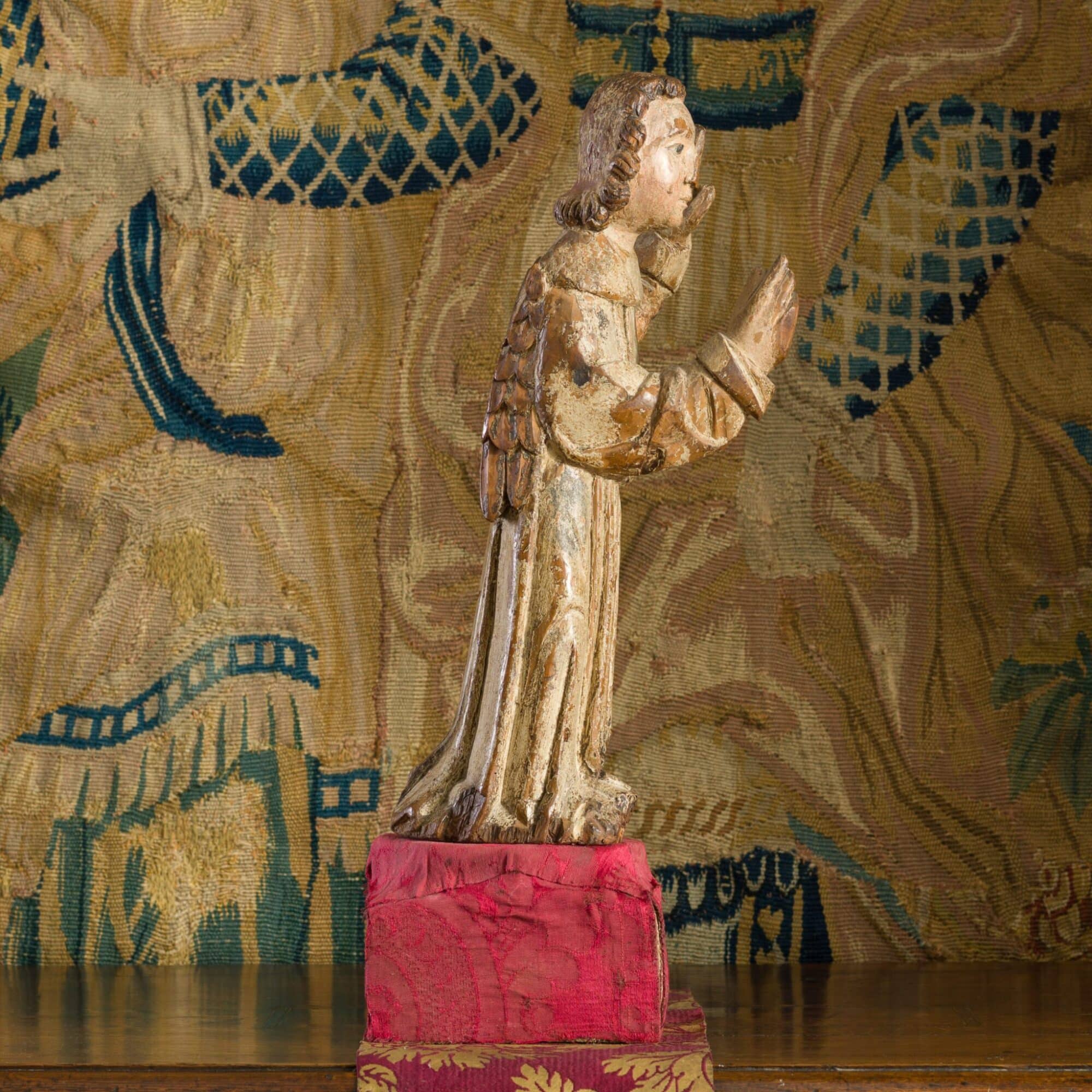
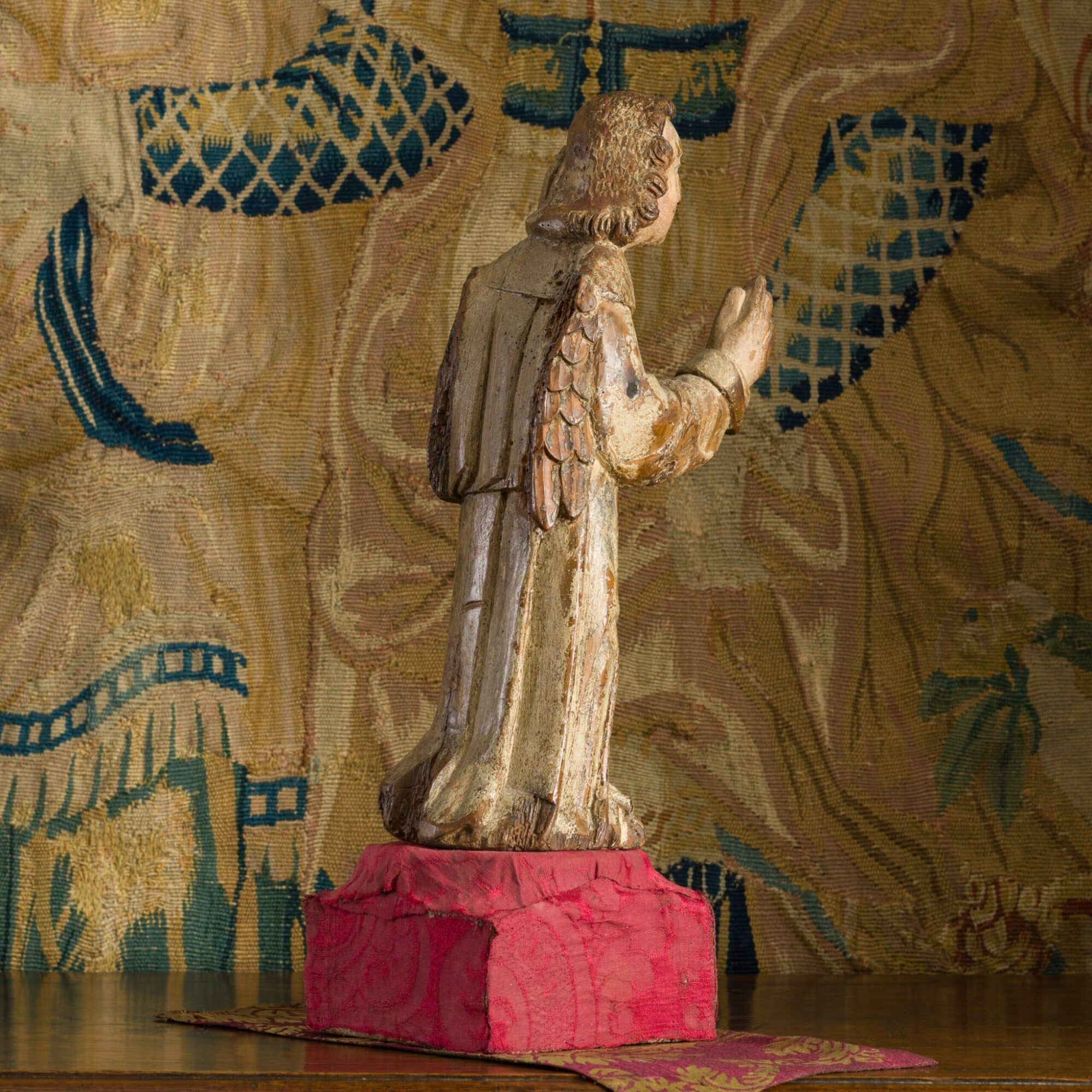
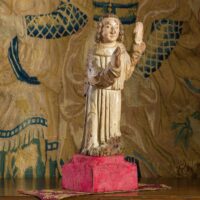
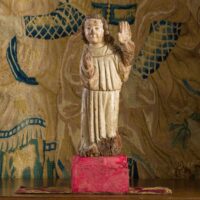
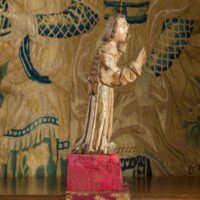
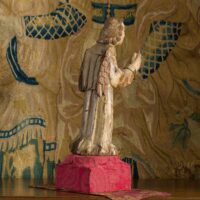
Late Gothic Oak Sculpture of a Winged Angel
- Period
- 1480 - 1520
- Origin
- Northern Europe (Netherlands or Germany)
- Dimensions
- W 6" × H 15 3/4" (with base 19 1/2")" × D 8"
- Reference
- #Marh2372
This piece has been sold. It is shown here for reference in our archive.
Description
This finely carved oak figure of a youthful angel, with traces of its original polychrome, represents the devotional art of late Gothic Northern Europe. The angel is depicted with curly hair framing a serene, rounded face, and with hands raised in a gesture of blessing or intercession. The drapery falls in simple, vertical folds, emphasising the upright stance and the figure’s spiritual gravitas.
Figures of this type were integral to the furnishing of late medieval churches, most often as part of a polyptych or altarpiece ensemble. Angels such as this would have flanked central devotional imagery—most commonly the Virgin and Child, the Crucifixion, or the Coronation of the Virgin—acting as celestial attendants and intercessors. Their role was to visualise the heavenly liturgy, bringing the faithful into direct imaginative contact with the divine.
The surviving polychromy, though fragmentary, reveals the angel’s original vibrancy. Rich pigments and gilding once animated the sculpture, reinforcing its symbolic role as a radiant messenger of God. The angel’s soft features, rhythmic hair curls, and schematic folds are characteristic of late Gothic carving in the Low Countries and southern Germany around 1500, a period when religious sculpture was produced in large quantities for both parish churches and private chapels.
Comparable examples survive in Flemish and German altarpieces of the late 15th and early 16th centuries, particularly in Antwerp and Cologne workshops, where angelic figures were frequently positioned along predellas, pinnacles, or canopy structures.
This figure stands as a rare survival of the late medieval devotional environment, retaining both the intimacy of its craftsmanship and the larger liturgical purpose for which it was created.