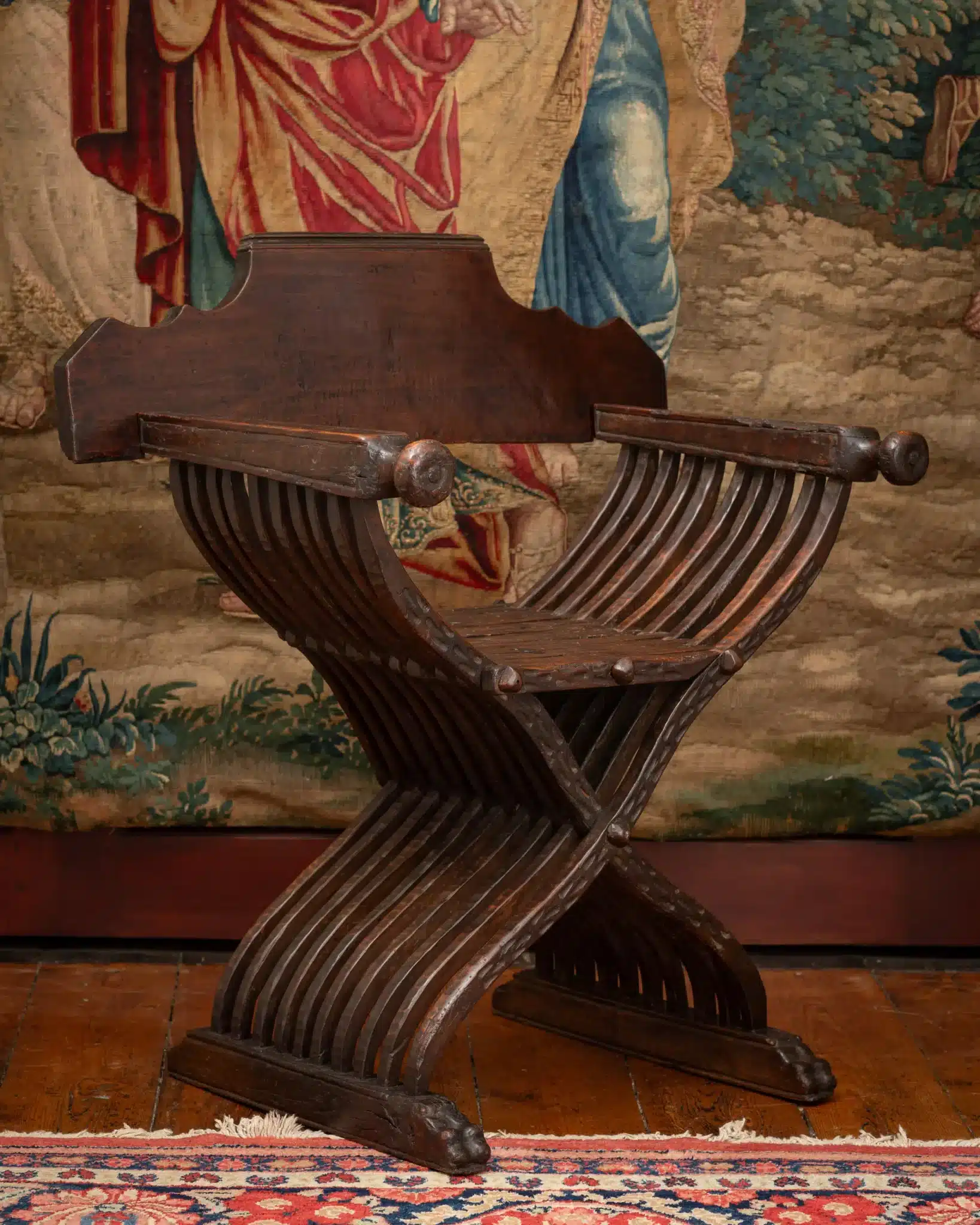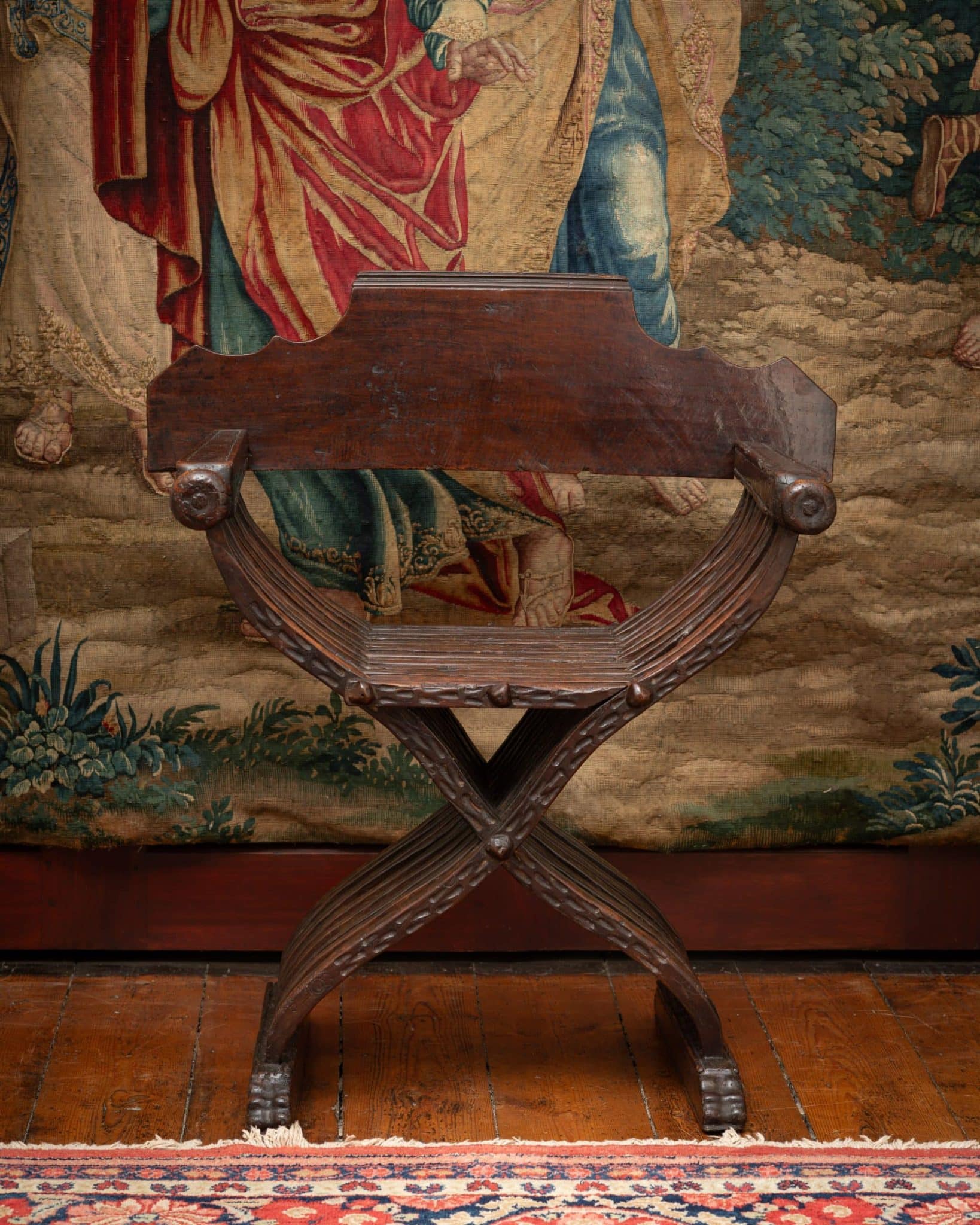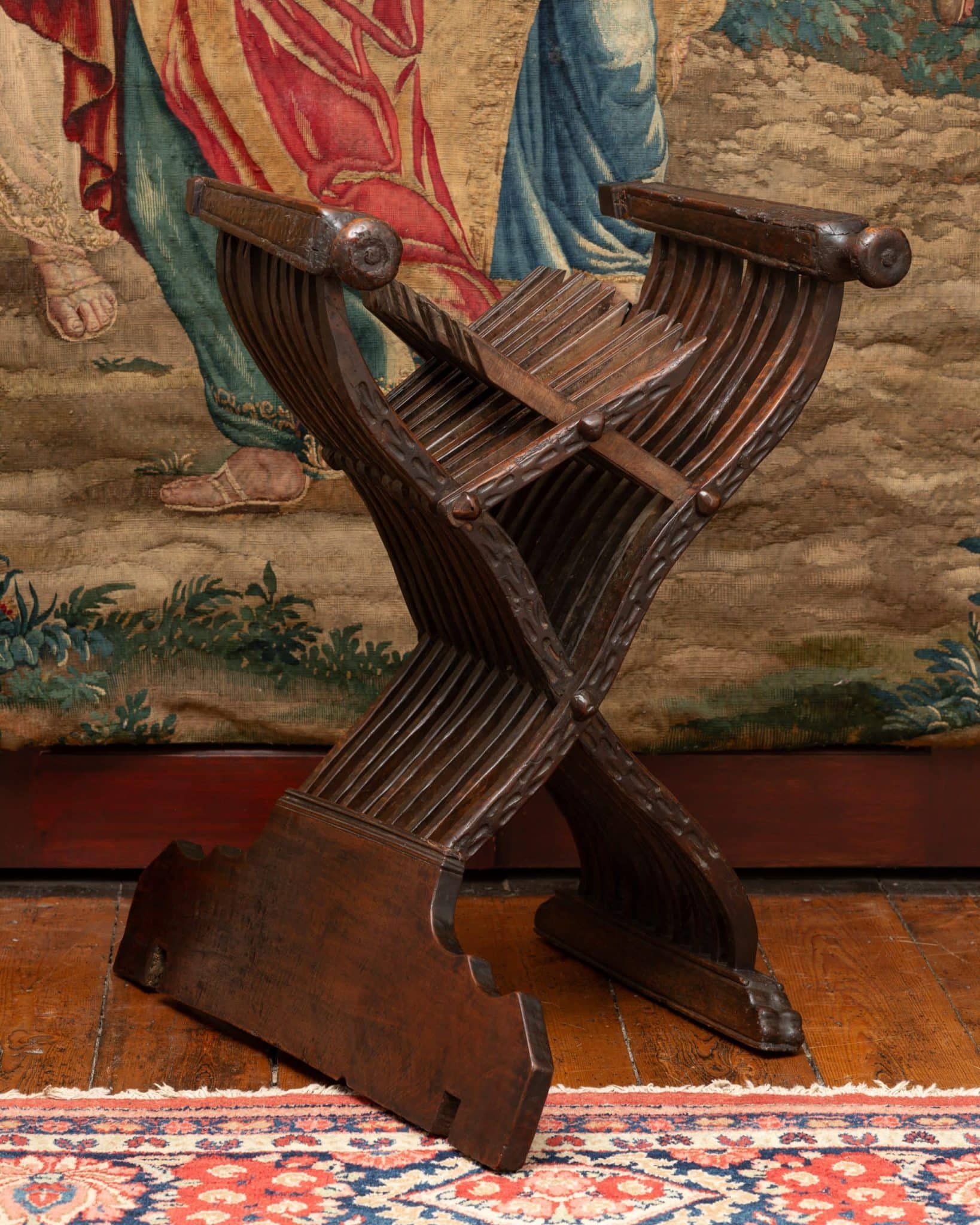
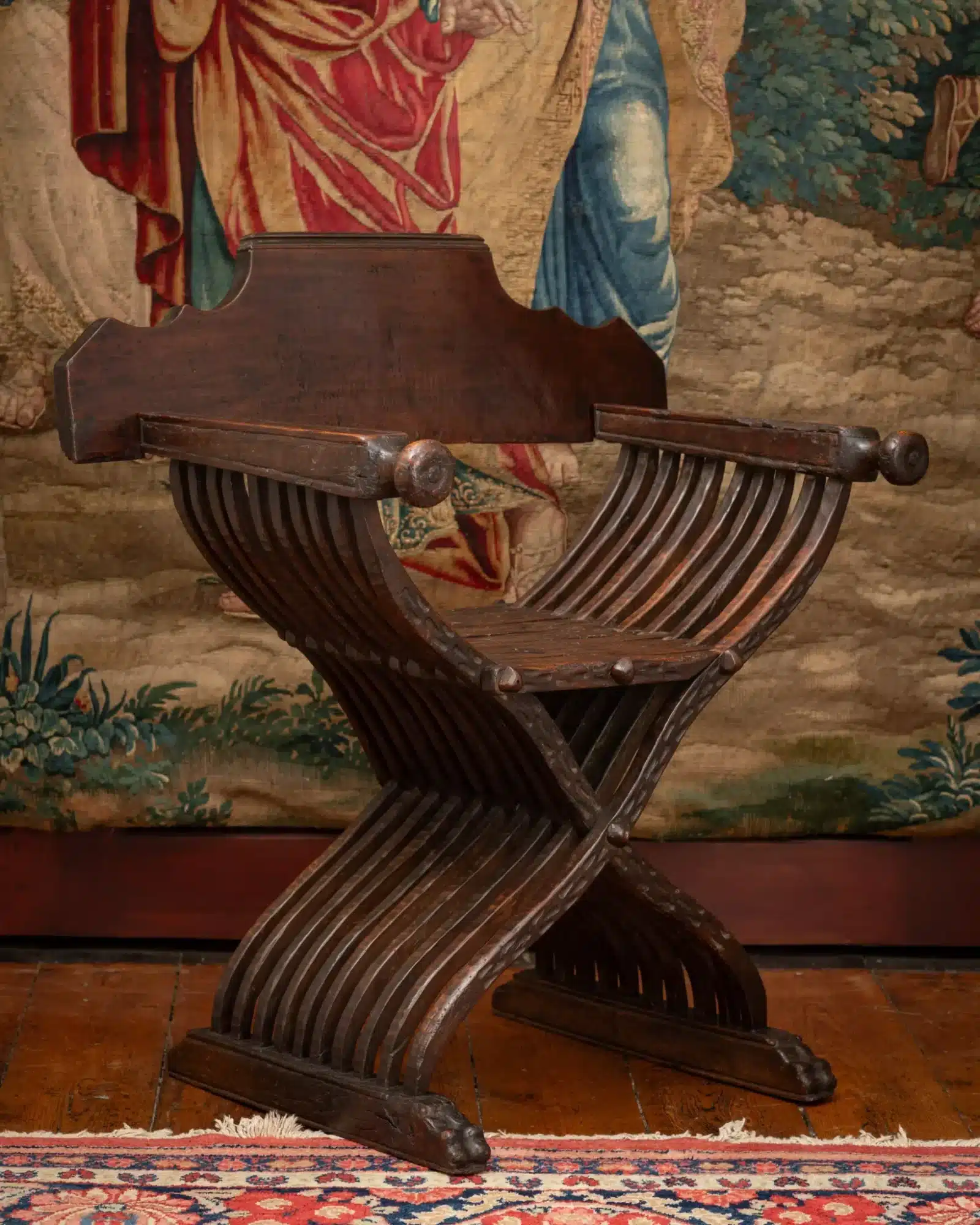
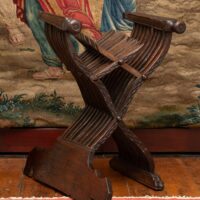
Italian Walnut Folding Chair (Savonarola)
- Period
- 1470 - 1500
- Origin
- Florence or central Italy
- Dimensions
- W 32 3/4" × H 36 1/4" × D 21"
- Reference
- #Marh3610
This piece has been sold. It is shown here for reference in our archive.
Description
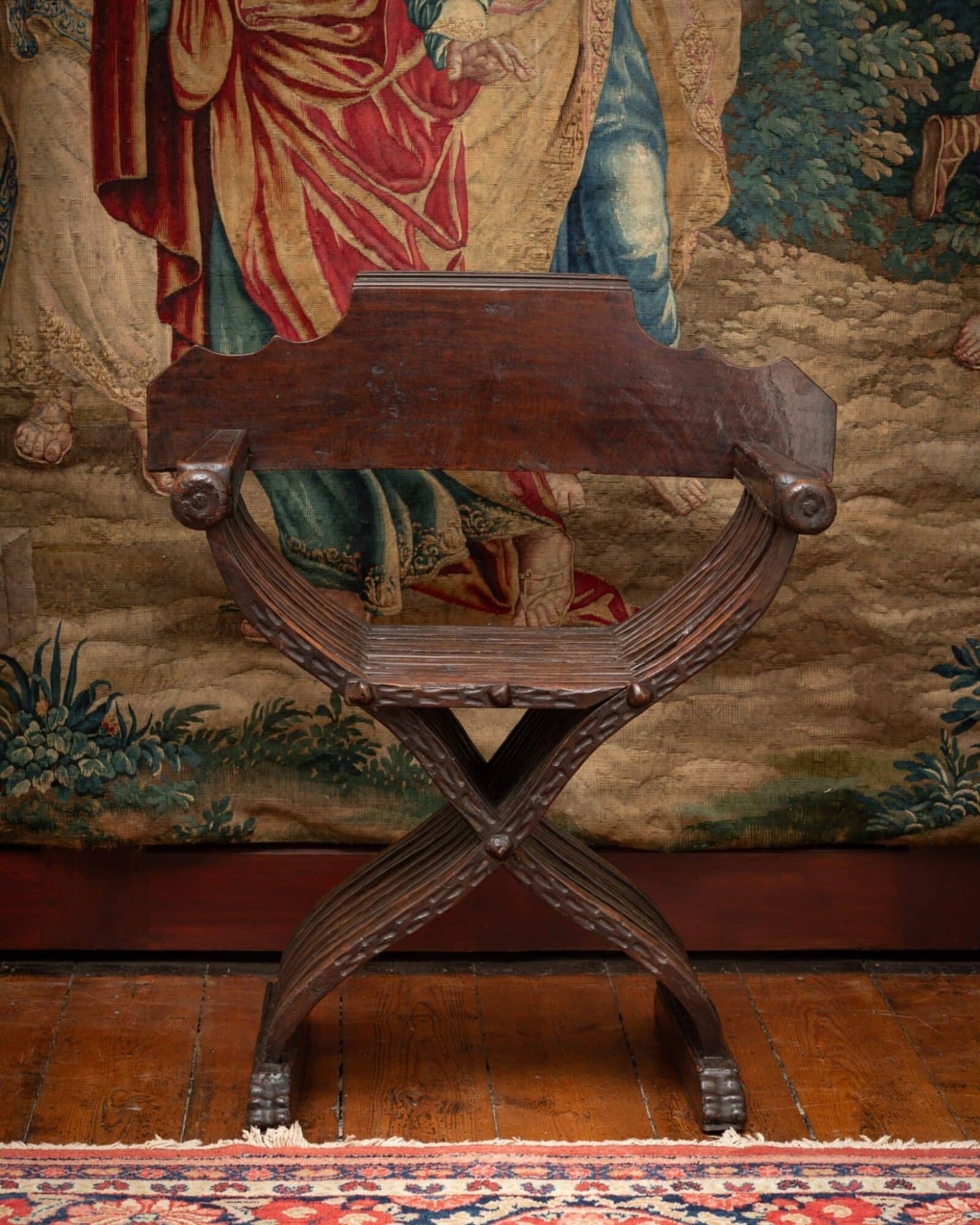
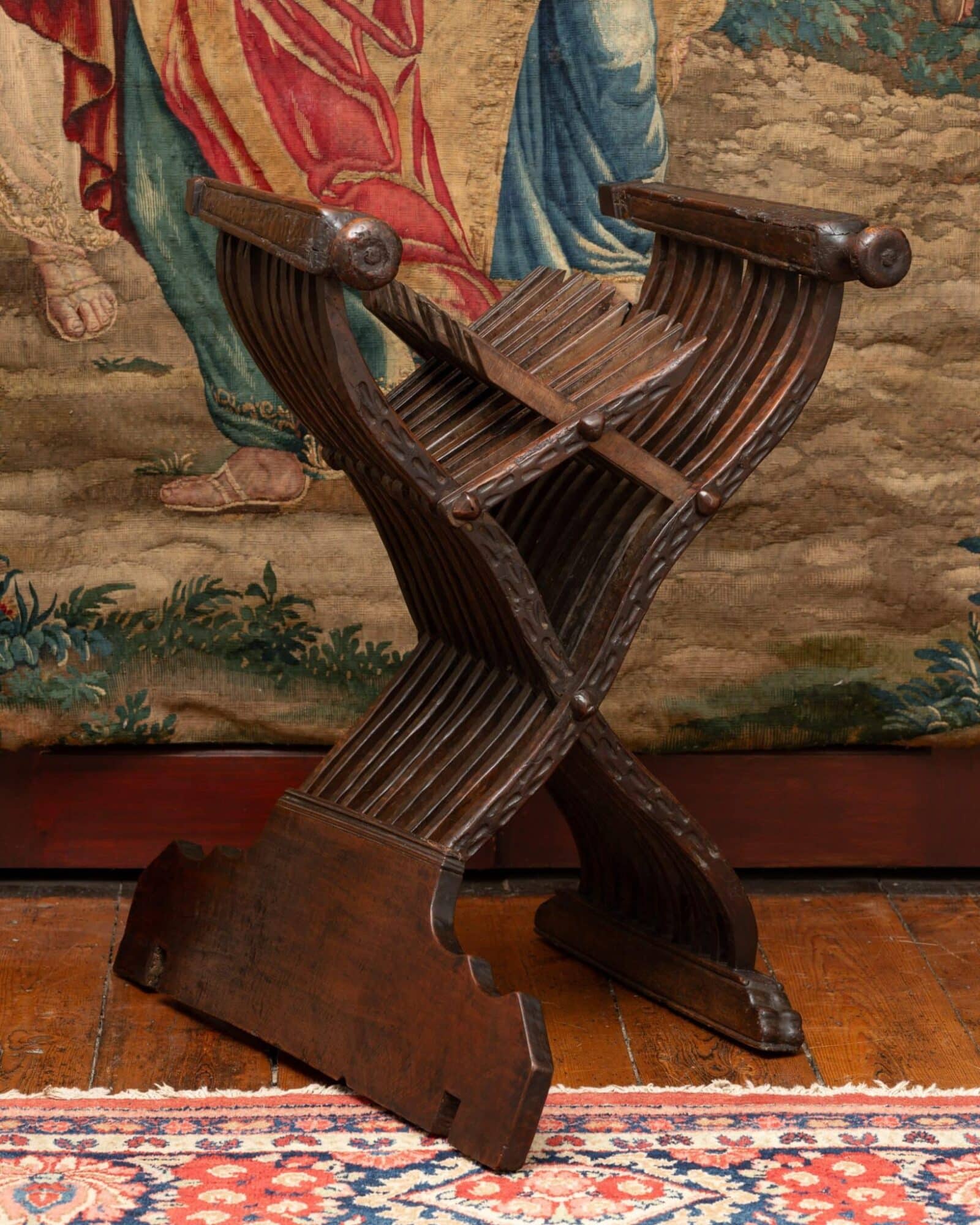
A walnut folding chair of X-frame form, the curving staves intersecting to form scissor-action supports, united by turned pivots, and terminating in broad plank feet. The arms are carved with scroll finials, and the high backrest is formed from a shaped and moulded board, pegged into the uprights. The seat is constructed from narrow, shaped slats, pivoting to allow the chair to fold.
Chairs of this type, variously termed Savonarola or Dante chairs, were widely used in Italy from the late 15th century onwards, drawing inspiration from classical Roman curule seats — symbols of authority and civic status. Their folding design made them practical as well as prestigious, allowing them to be moved easily between chambers or transported on progress.
This example sits firmly within the late Gothic period of Italian furniture, where strong vertical profiles, restrained decoration, and angular silhouettes remained current. At the same time, the revival of the antique curule form reflects the Renaissance turn towards classical models, making the chair a transitional object at the threshold of Gothic tradition and early Renaissance taste.
The present example, with its robust walnut construction, shaped back panel, and paw-like feet, accords closely with surviving late Quattrocento and early Cinquecento chairs in major Italian collections, including the Museo Nazionale del Bargello, Florence, and the Palazzo Davanzati.
Provenance: Private collection.
Condition: Excellent colour and surface; wear and minor restorations consistent with age; ancient construction with later strengthening pins in keeping with long use.
Comparanda: See Daniela Parenti, Il Mobile del Rinascimento in Italia (Milan, 1990), pp. 120–125, for related Savonarola chairs; and the Bargello, Florence (inv. nos. 1930–45).