Paul Fitzsimmons logo
  • Current Stock
  • Archive
  • Notable Works
  • About Us
  • News
  • Contact
Home / Archive / James I joined oak a…
Previous Next
  • James I joined oak armchair
  • James I joined oak armchair
  • James I joined oak armchair
Sold

James I joined oak armchair

Period
1603 - 1625
Origin
Leeds area, Yorkshire
Dimensions
W 26" × H 50 3/4" × D 22 1/2"
Reference
#Marh2517

This piece has been sold. It is shown here for reference in our archive.

Description

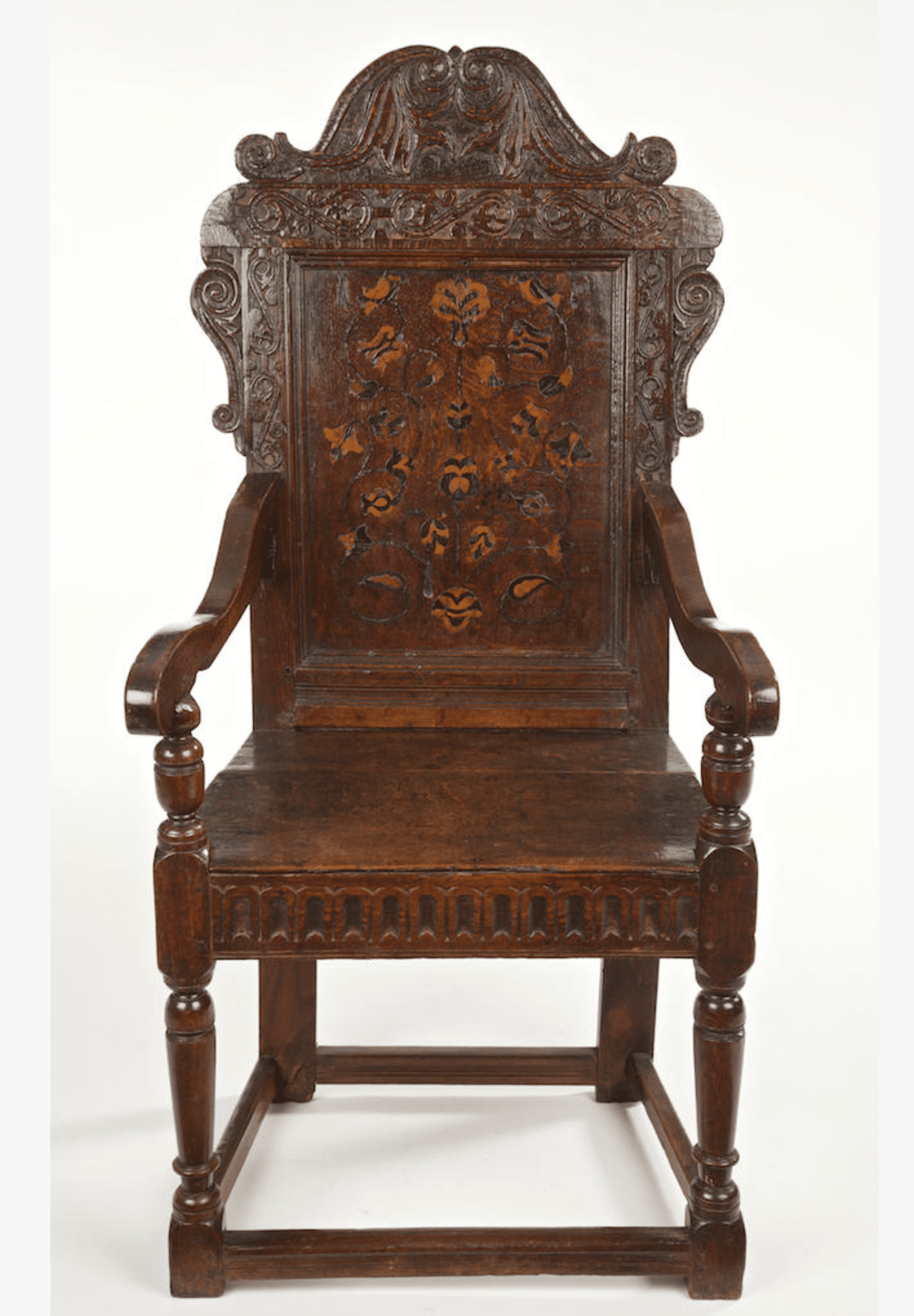
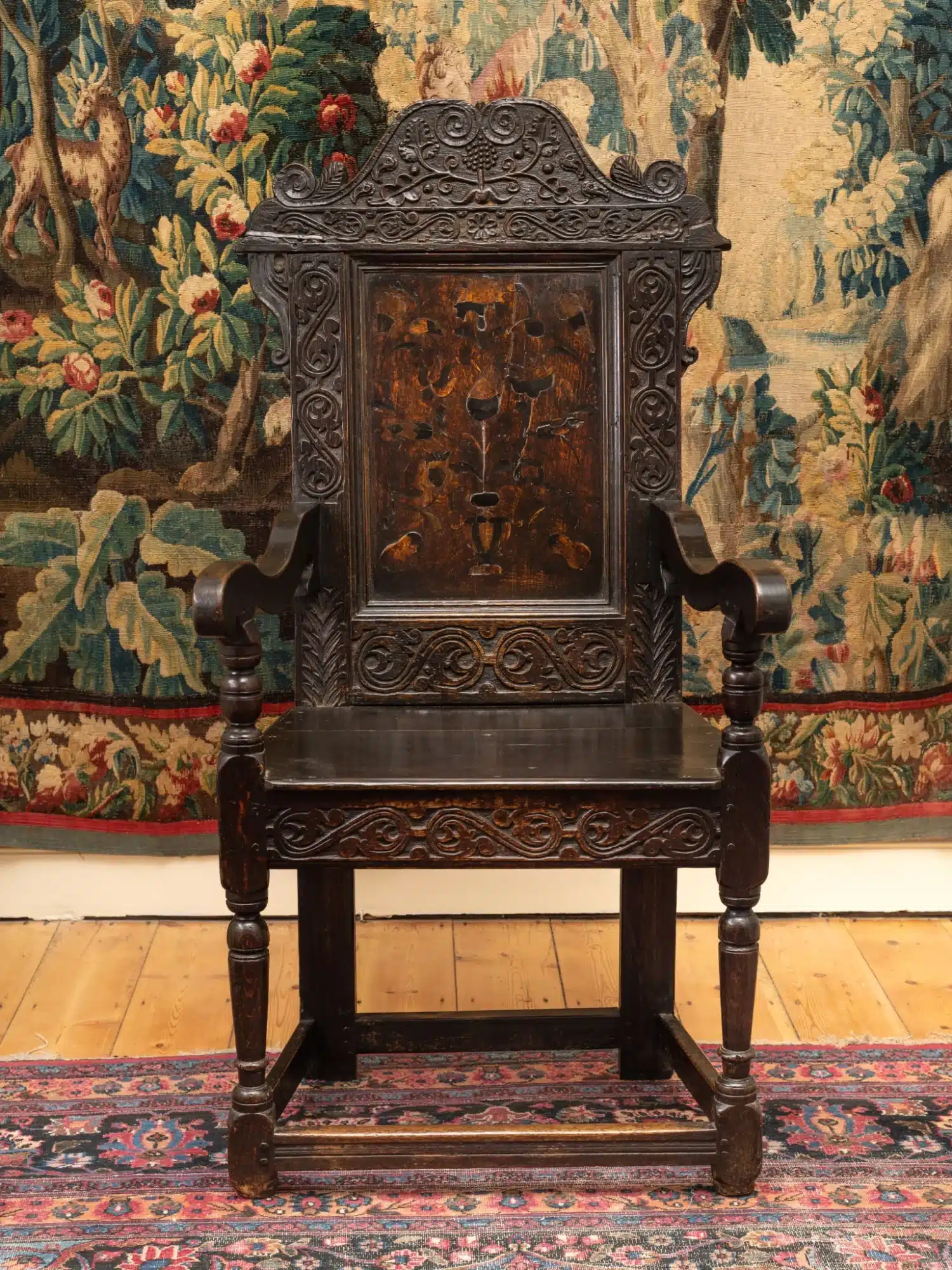
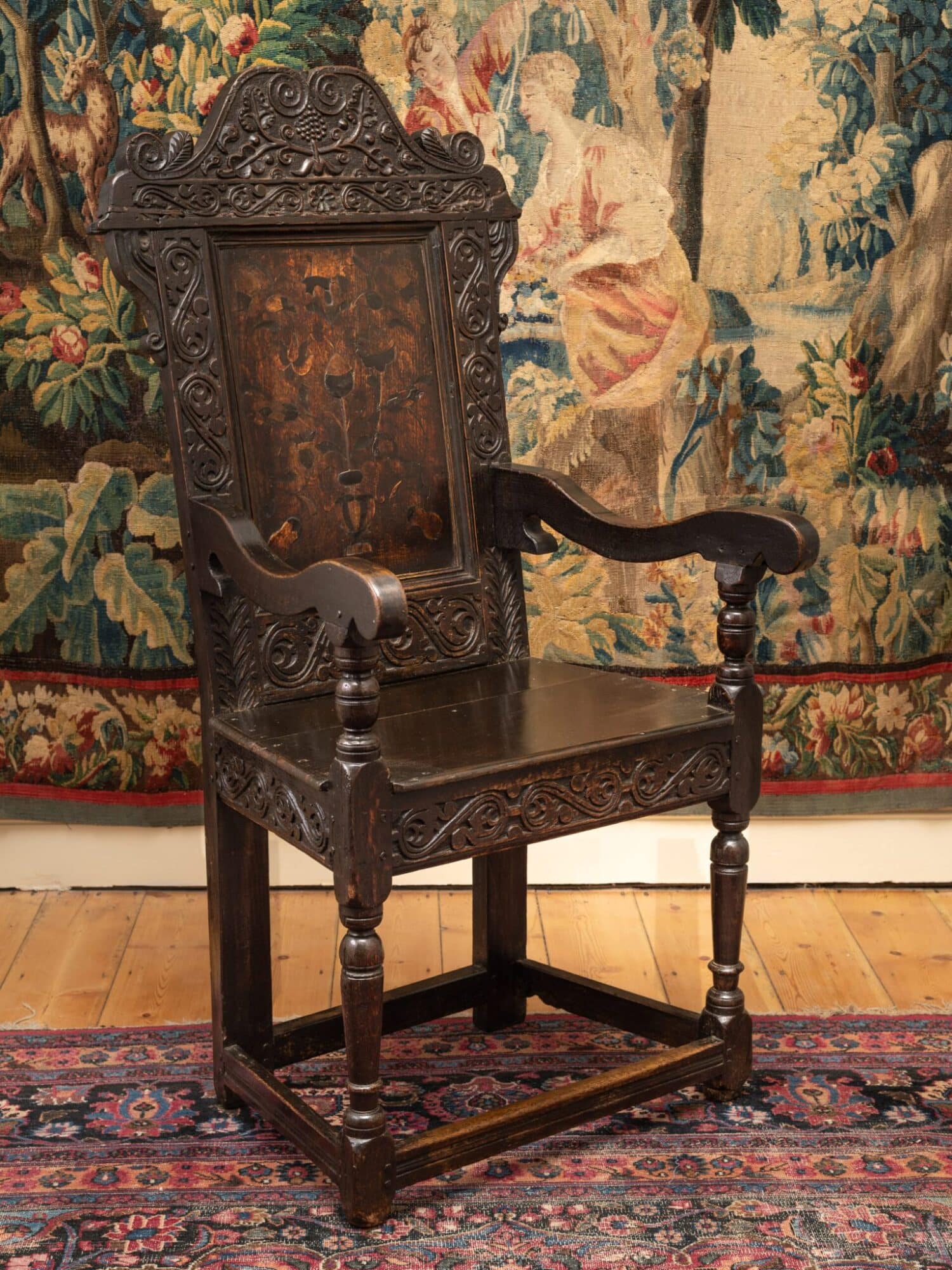
A rare and finely detailed joined oak armchair of the James I period, distinguished by its bold scale and elaborate carved and inlaid decoration.
The rectangular back panel, within a moulded frame, is decorated with contra-partie marquetry of stylised flowers and pomegranates issuing from a vase, with traces of birds amongst the foliage. Above, the arched cresting rail is carved with scrolling foliage and a central daisyhead, flanked by voluted ears; later strengthening braces have been sympathetically added behind the cresting. The uprights and seat rails are carved with S-scroll ornament, uniting with the downswept open arms on baluster-turned supports. The boarded seat, possibly refinished, rests upon a base of baluster-turned front legs joined by moulded stretchers.
Chairs of this type were costly items, reflecting both wealth and status within the household, and would have served as principal seating within the hall or parlour. Few examples survive from this Leeds workshop tradition, and the present chair remains an impressive survival. A comparable armchair, from the same group, was sold at Bonhams, 24 May 2012, lot 231, realising £18,750.
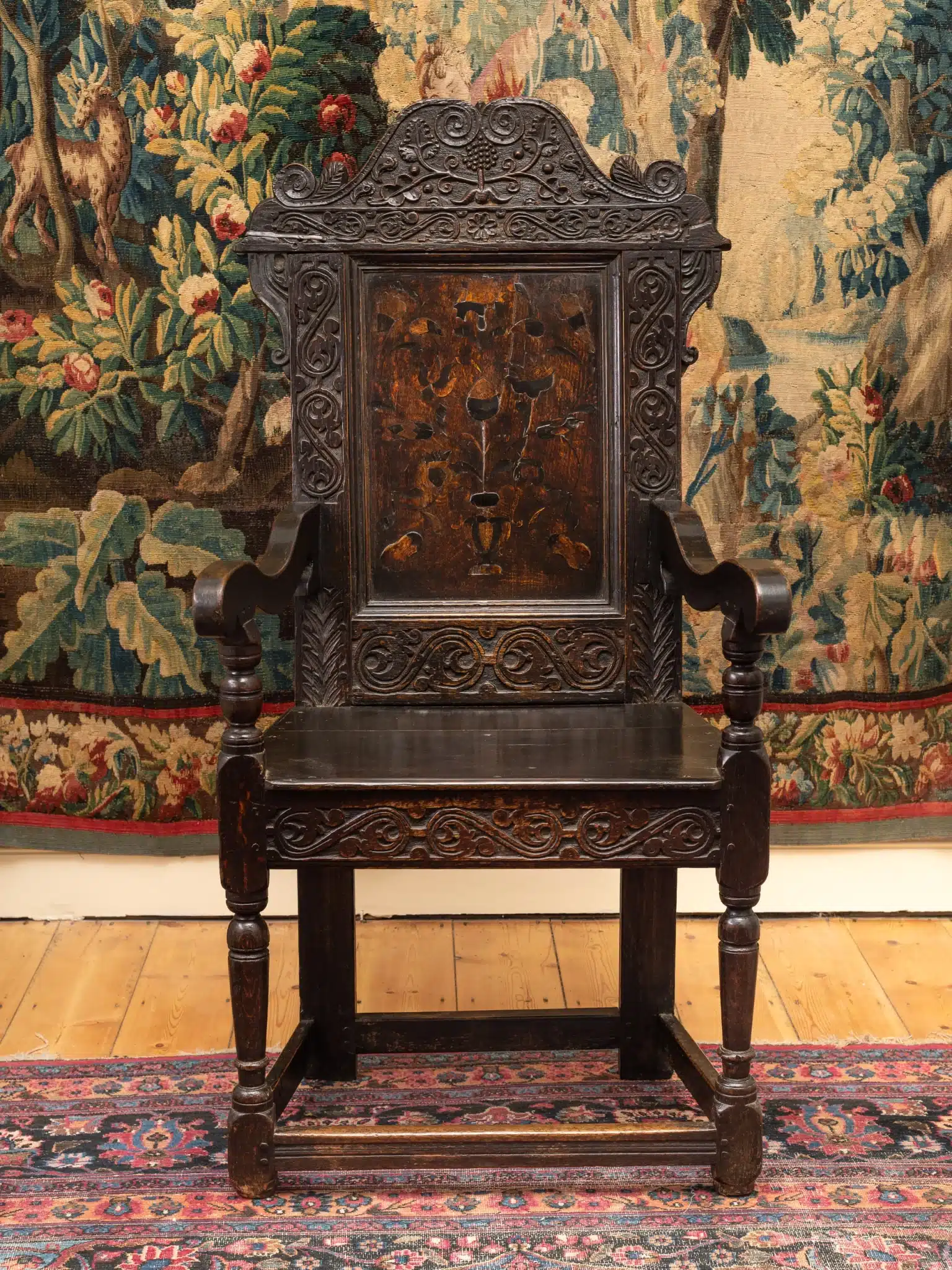
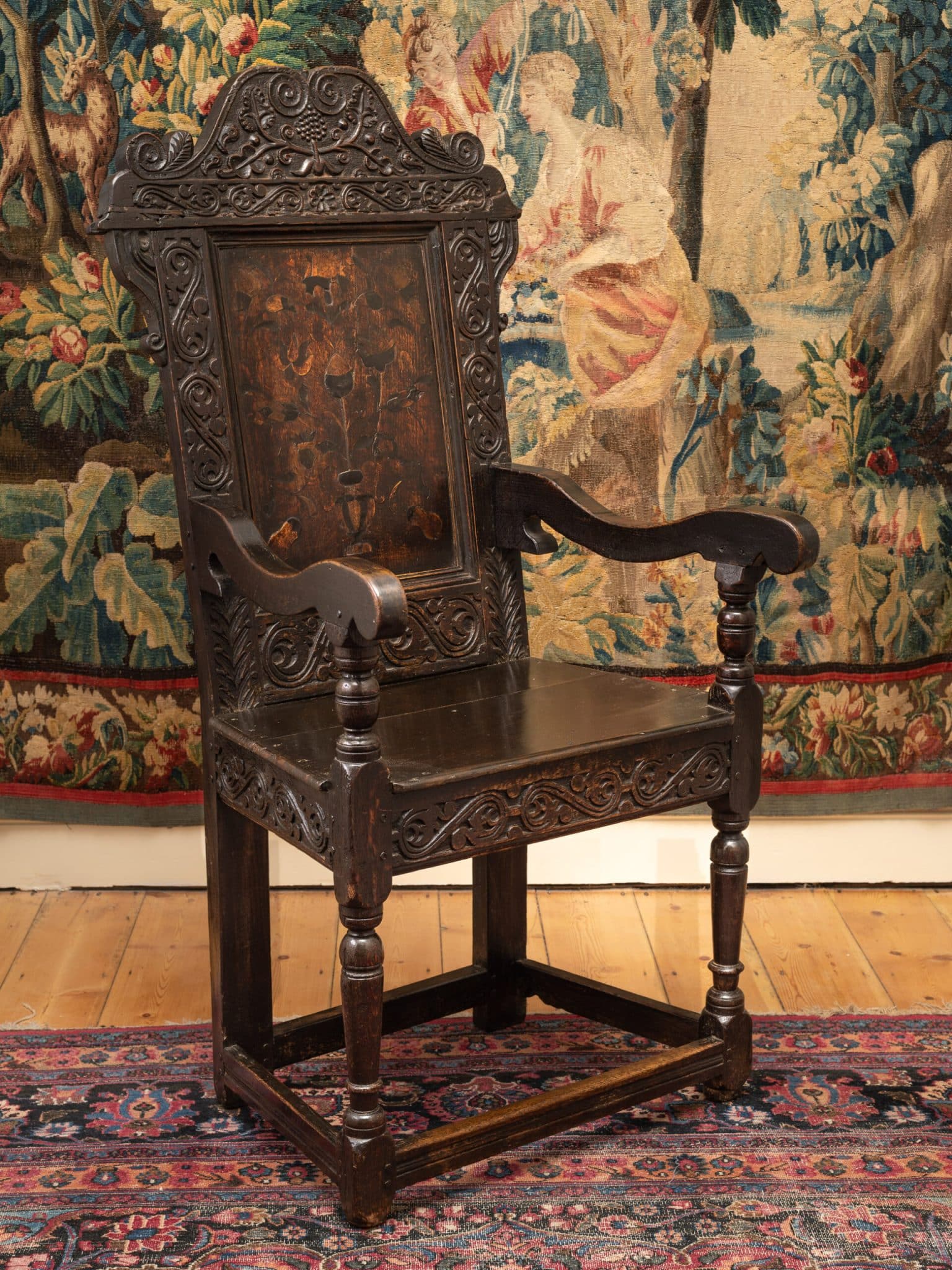
This armchair would most likely have stood in the principal room of the house — either the hall (still an important social space in the early 17th century) or, increasingly by this date, the more private parlour. Its scale and ornament would have made it immediately recognisable as the seat of the household head, marking authority and status within the domestic setting.
Ownership would have belonged to a prosperous gentry family or wealthy yeoman, very possibly in Yorkshire given its workshop attribution. Such families invested in durable and richly decorated oak furniture as both a practical necessity and a symbol of continuity and prosperity. The inlaid decoration of pomegranates, flowers, and birds — motifs associated with fertility, abundance, and worldly success — underscores this intention.

Curator's Note

Previous Charles II Parliamen… Next Charles II joined oa…
  • James I joined oak armchair
  • James I joined oak armchair
  • James I joined oak armchair

Newsletter

New Stock, Direct to Your Inbox.

Be among the first to hear about new acquisitions and notable works.

Please enable JavaScript in your browser to complete this form.
Loading
Paul Fitzsimmons logo
  • Current Stock
  • Archive
  • Notable Works
  • About Us
  • News
  • Contact

Contact Us

+44 (0)777 903 8891

  • Pinterest
  • Instagram

By Appointment

Devon, England.

Paul Fitzsimmons

Specialist in early oak furniture and works of art.

© 2026 Paul Fitzsimmons | Website by Dancing Badger Ltd

  • Privacy Policy
  • Terms & Conditions

Search the collection

Search in
    1 / 1