 Sold
Sold
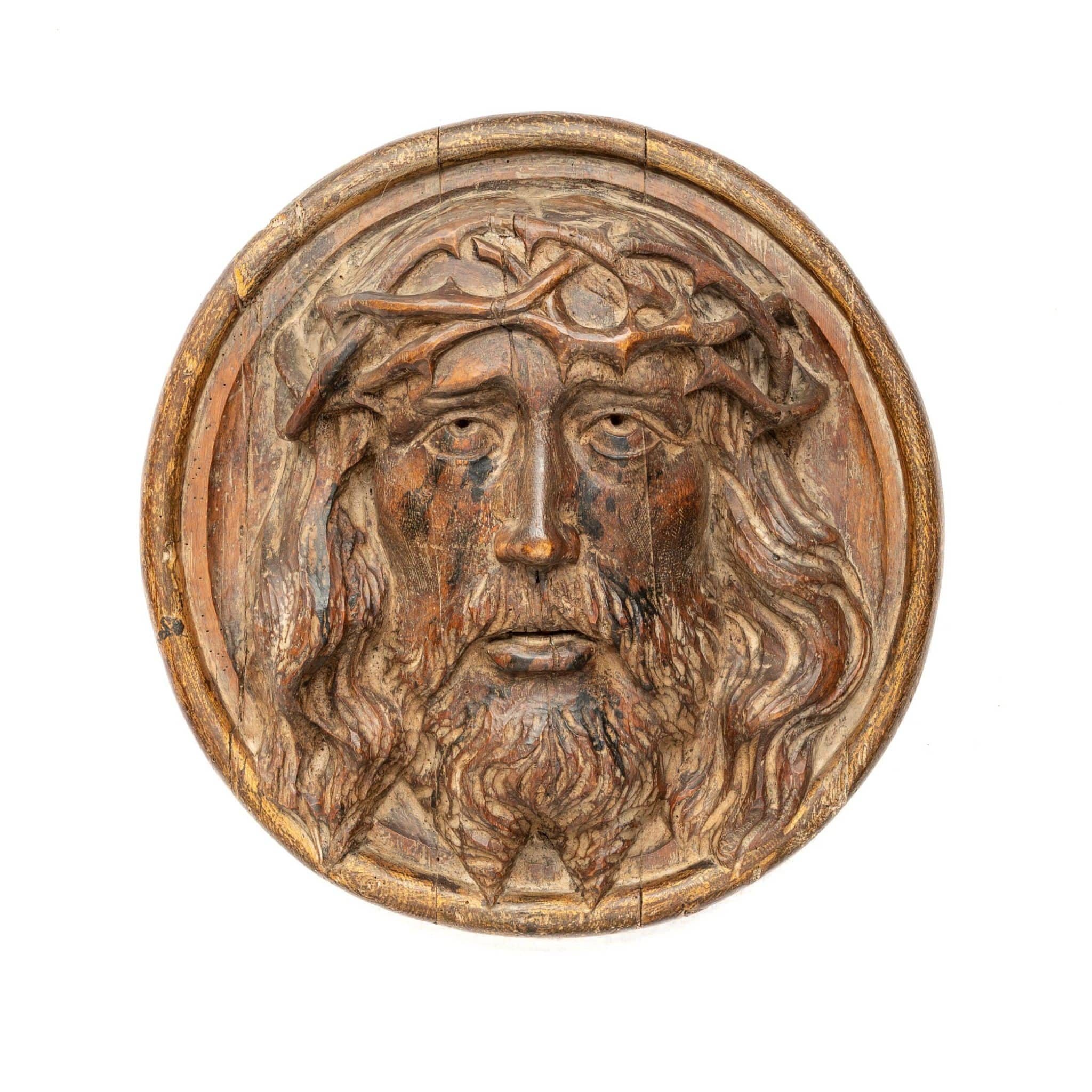
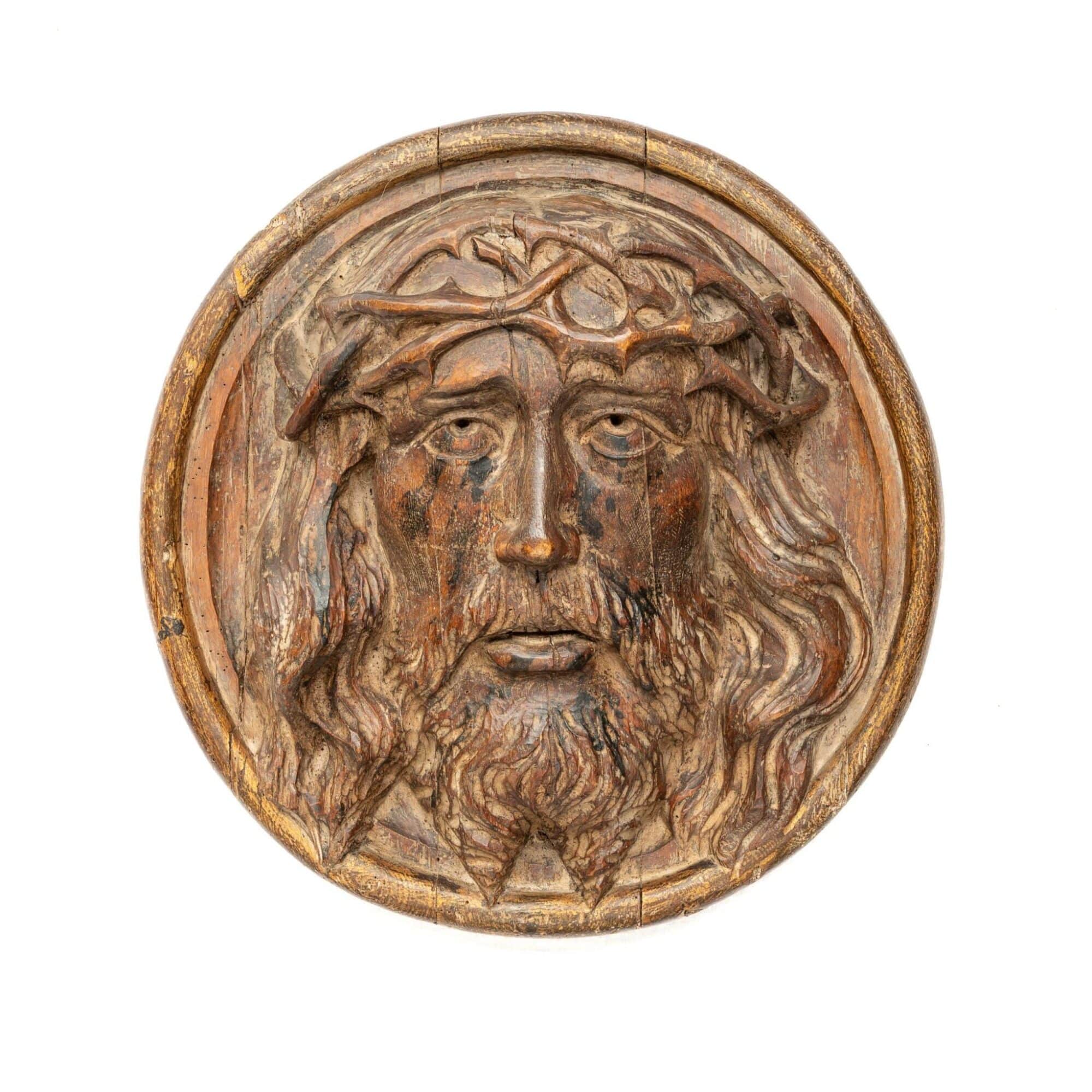
Late Gothic Pine Christ Tondo
- Period
- Late 15th century
- Origin
- Southern Netherlands (Flemish), Brabant or Leuven
- Dimensions
- W 15 1/2" diameter" × D 4 1/4"
- Reference
- #Marh3574
This piece has been sold. It is shown here for reference in our archive.
Description
A late Gothic carved pine tondo depicting the frontal head of Christ crowned with thorns, his features marked by deep pathos: downcast eyes, parted lips, and a long flowing beard framed by wavy hair. Traces of original polychromy remain, particularly around the face, enhancing the lifelike immediacy of the image.
This representation belongs to the devotional type associated with the Vera Icon (True Image) and Ecce Homo traditions, which presented the sufferings of Christ with an intensity designed to elicit compassion and meditation from the faithful. The frontal gaze and circular format reinforce its role as a private devotional object, creating a direct spiritual encounter between viewer and image.
The composition reflects the influence of Albrecht Bouts (1451–1549) and his workshop at Leuven, where painted Head of Christ roundels enjoyed wide circulation from the late fifteenth century onward. Bouts, son of the painter Dirk Bouts, specialised in intimate devotional imagery of Christ and the Virgin, which were avidly collected by clerics and lay patrons across the Southern Netherlands. Sculptural versions, such as this example, testify to the translation of Boutsian prototypes into different media for use in chapels and domestic interiors.
Comparable tondi survive in Flemish church furnishings and collections, often paired with roundels of the Virgin or saints. The survival of this example in carved pine is particularly significant, as softwoods were commonly used in Netherlandish workshops for polychromed relief sculpture.