Paul Fitzsimmons logo
  • Current Stock
  • Archive
  • Notable Works
  • About Us
  • News
  • Contact
Home / Current Stock / Mid-Tudor Joined Cen…
Previous Next
  • Mid-Tudor Joined Centre Table
  • Mid-Tudor Joined Centre Table
  • Mid-Tudor Joined Centre Table

Mid-Tudor Joined Centre Table

Period
1540 - 1560
Origin
England
Dimensions
W 35 3/4" × H 30 1/4" × D 23 3/4"
Reference
#Marh3734

Price on application

Description

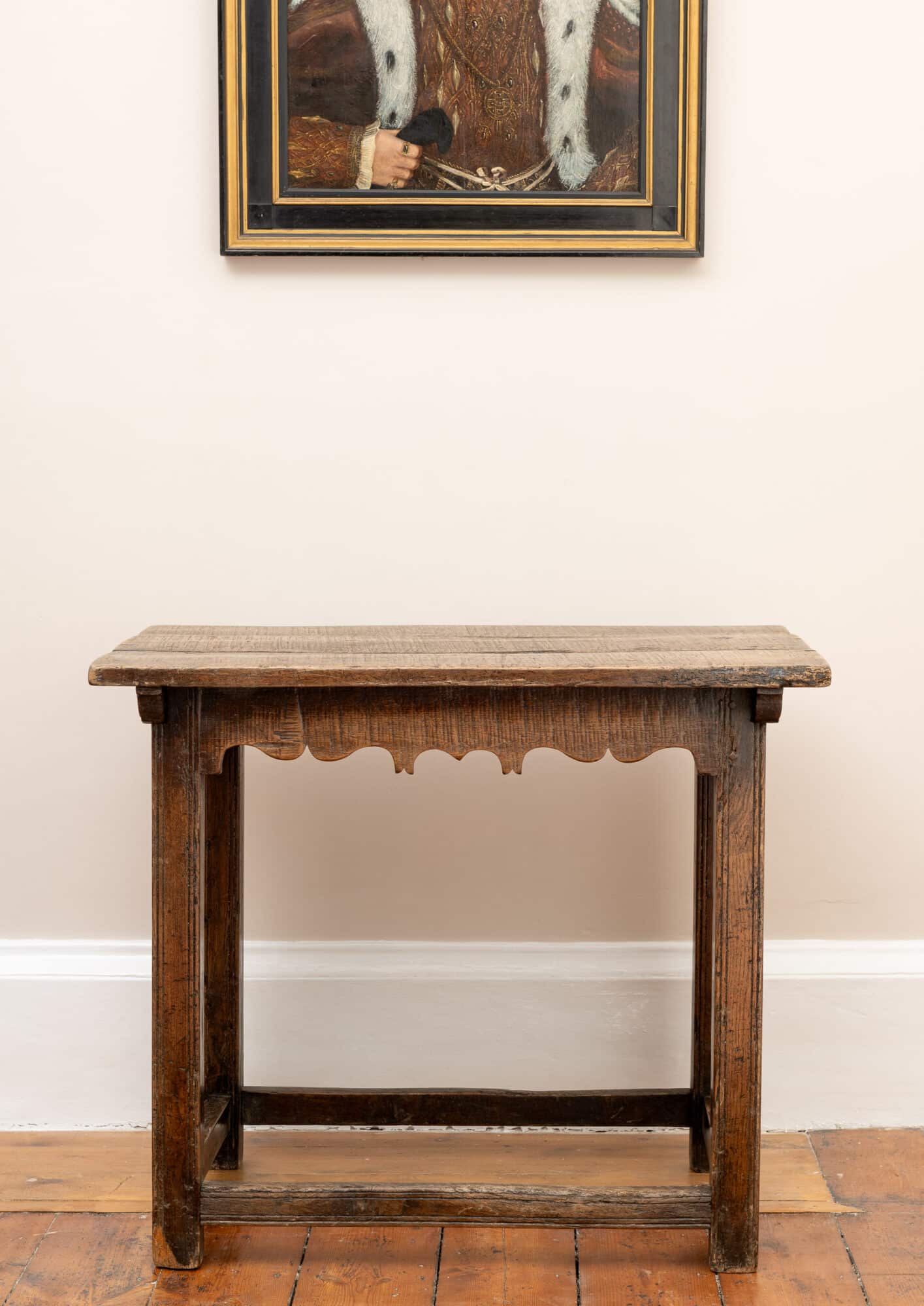
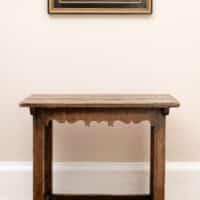
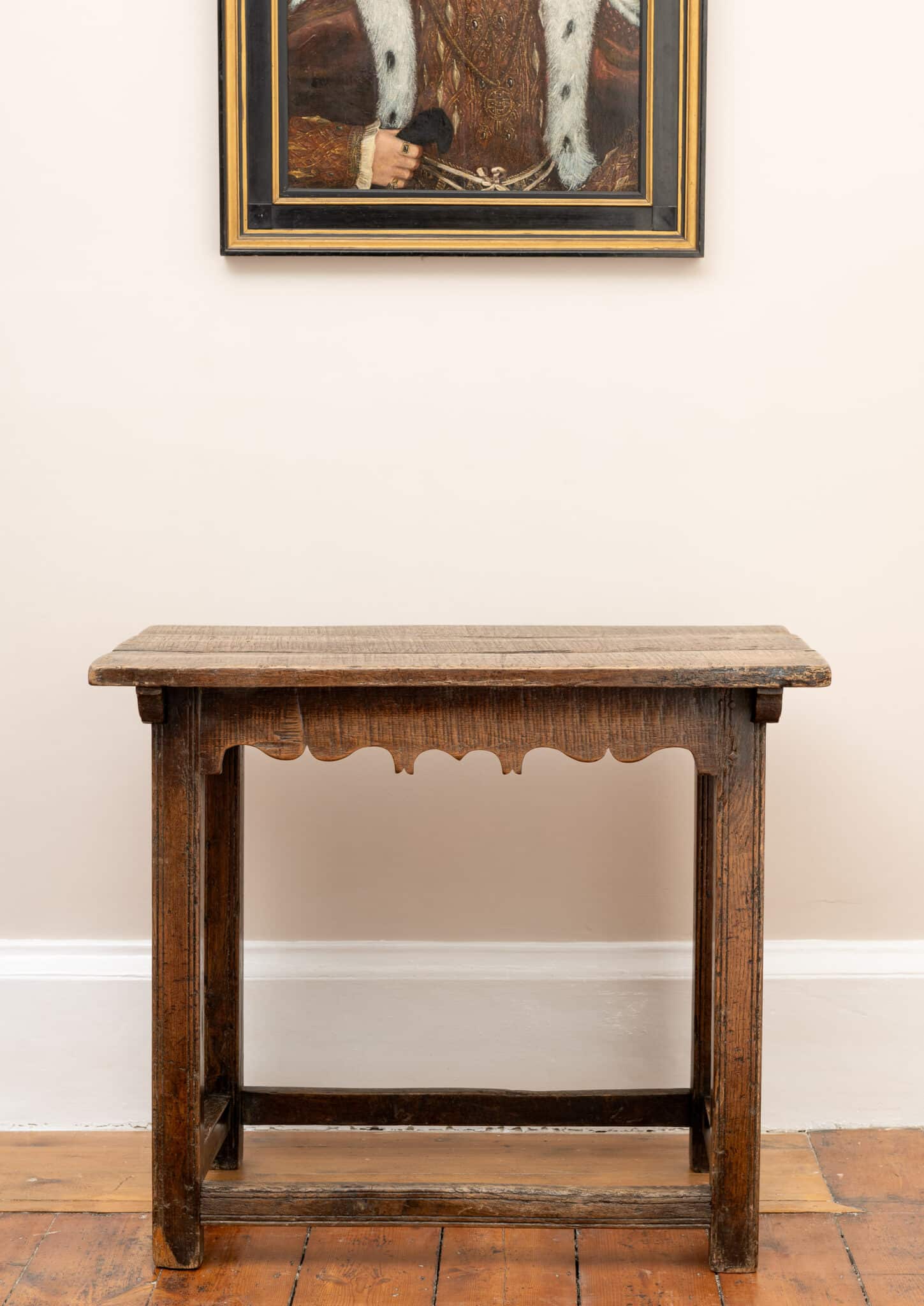
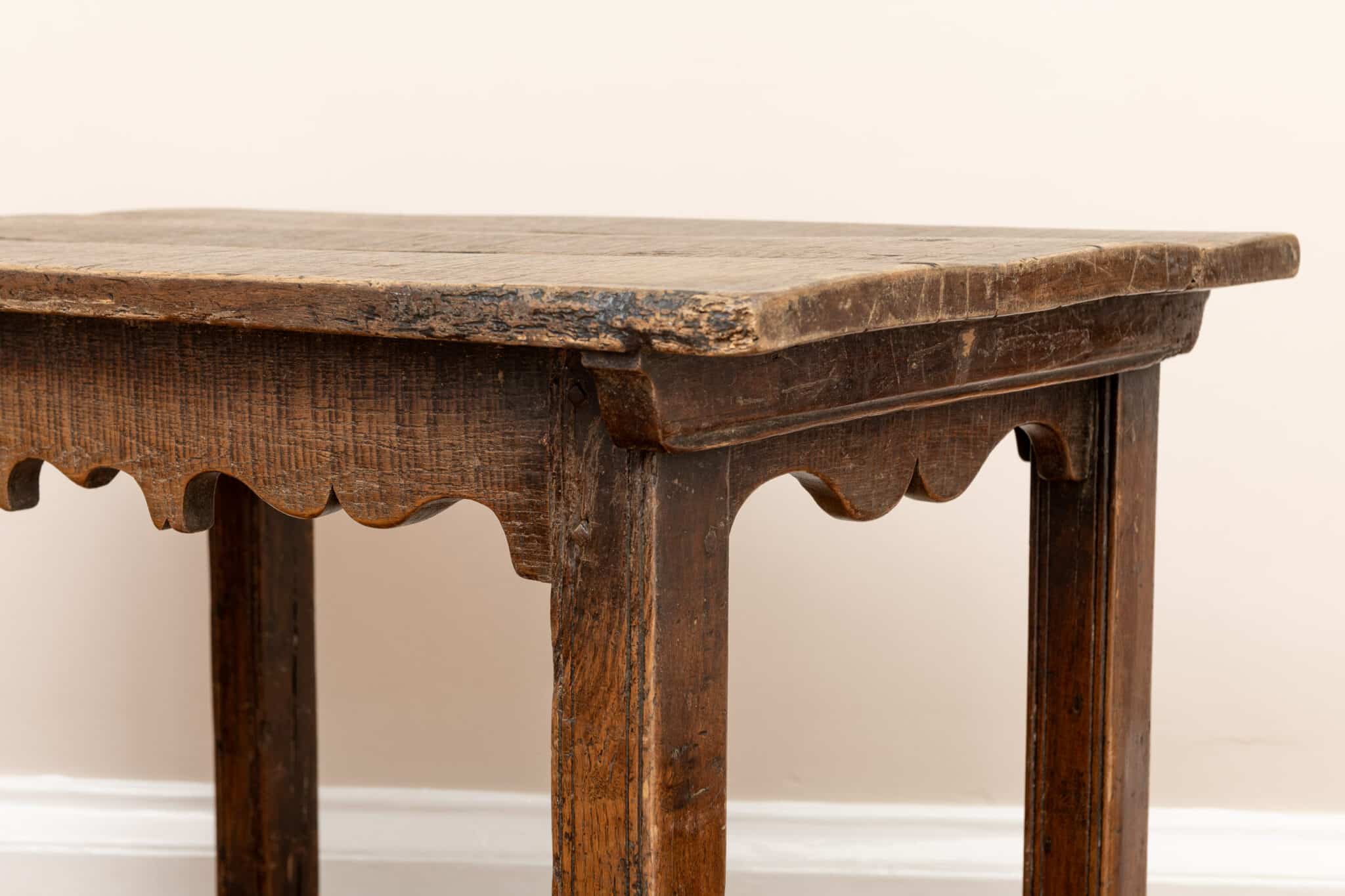
An early joined oak or chestnut table of open box-frame construction, retaining its original character and displaying features associated with some of the earliest surviving fixed-frame tables of the Tudor period.

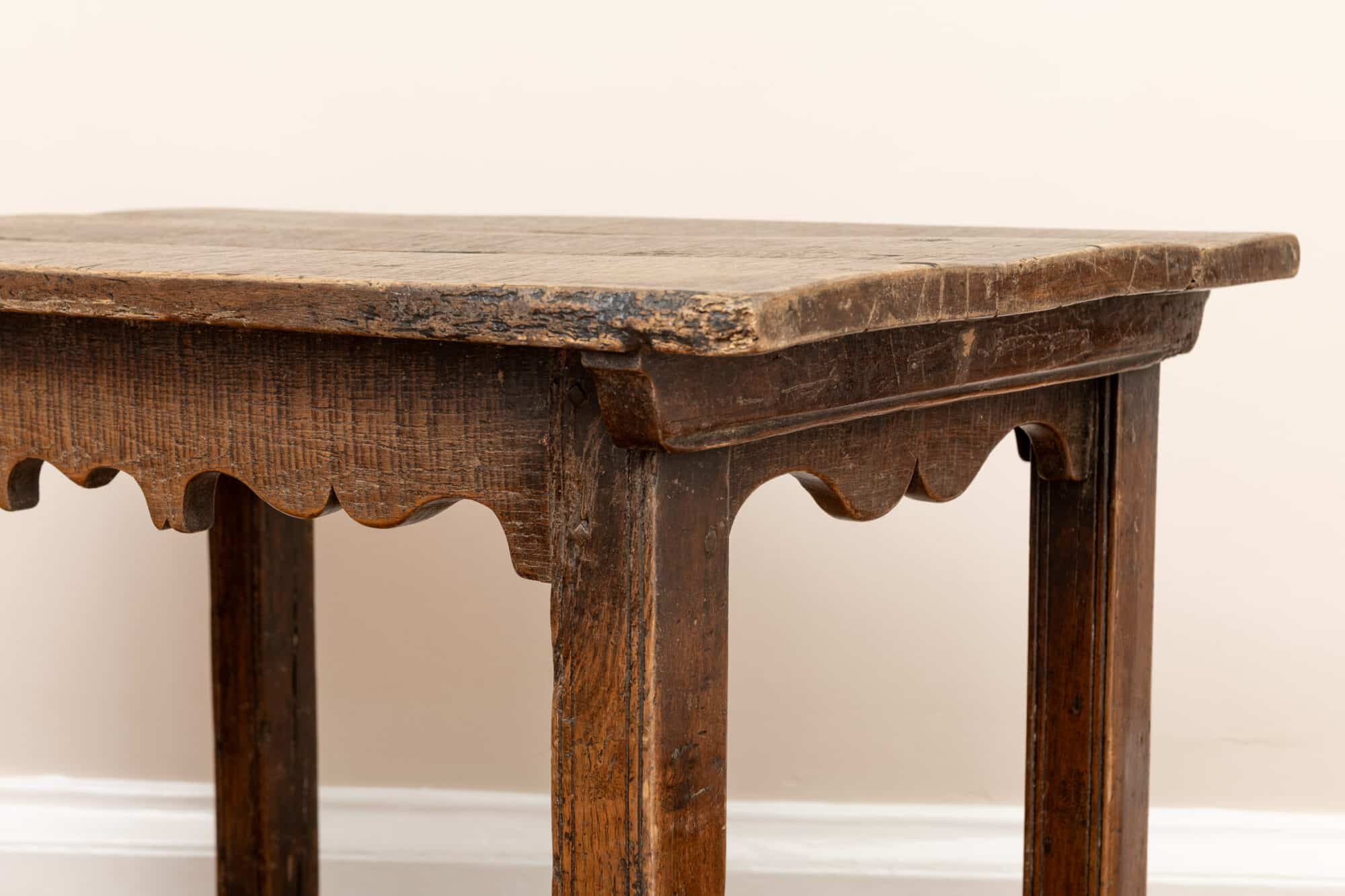
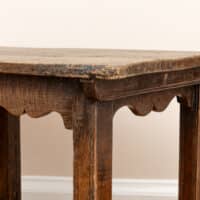
The rectangular plank top, formed from broad oak boards, stands above a simple joined framework with square-section stiles, shaped ogee-cut apron rails and low perimeter stretchers. The design exhibits a notable relationship to late medieval trestle-derived furniture, reflecting a period when traditional trestle forms were gradually giving way to permanently joined table construction.

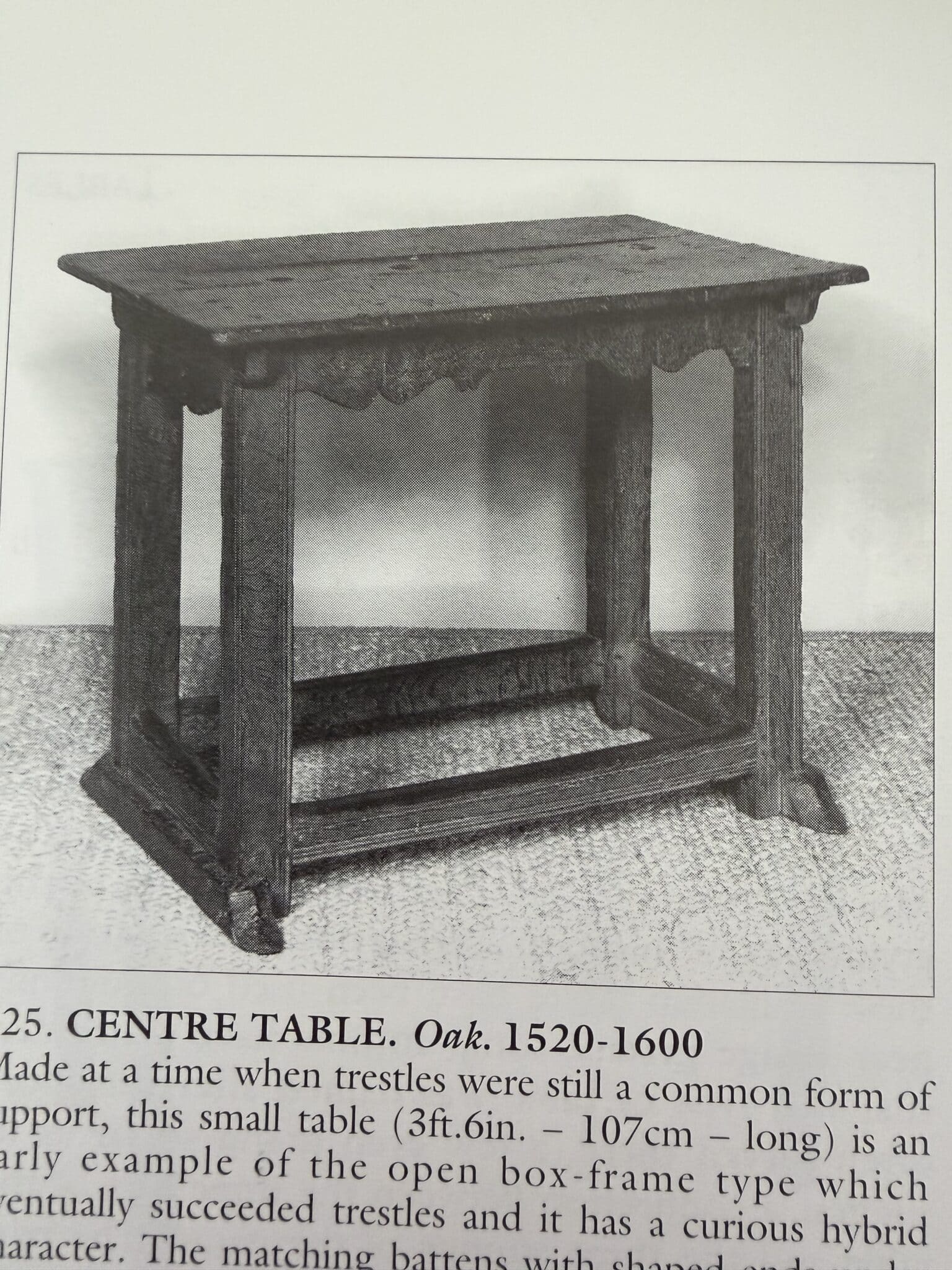
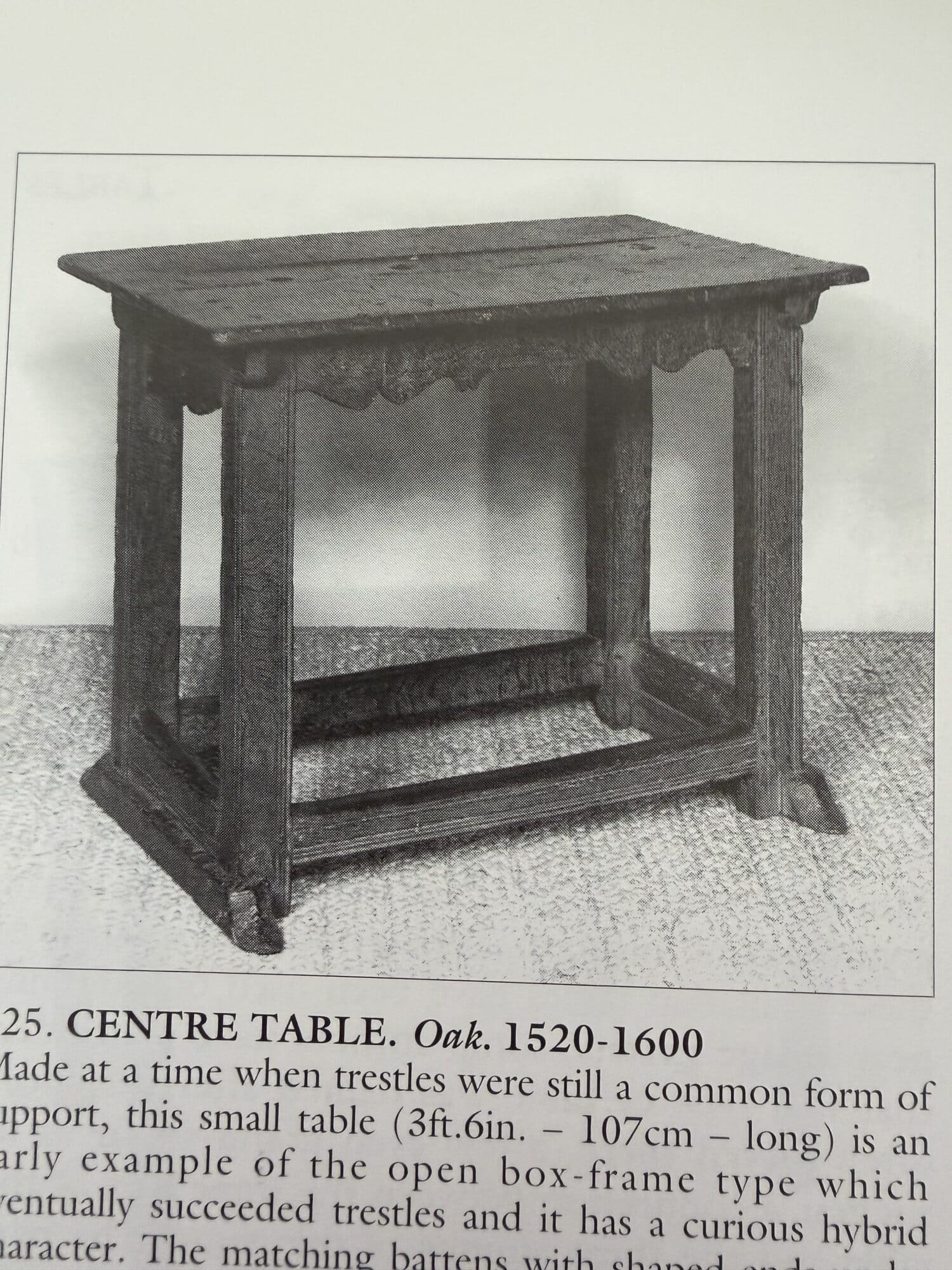
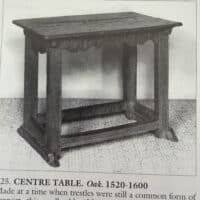
Tables of this type are uncommon survivals. The present example closely relates to a well-known table illustrated by David Knell in English Country Furniture 1500–1900, where a comparable example, currently at Agecroft Hall, Virginia, is discussed as an early manifestation of the open box-frame table form. Knell dates the Agecroft Hall table to the period 1520–1600 and notes its hybrid character, combining features inherited from medieval trestle construction with the emerging joined-frame tradition.

The restrained design, substantial timber sections and absence of later Elizabethan ornament suggest a date in the mid-sixteenth century. The table retains a remarkable sense of architectural simplicity, with the shaped apron rails providing one of the few decorative elements in an otherwise functional and robust construction.

Surviving with excellent colour and patina developed over centuries of use, this table represents a rare opportunity to acquire an authentic example of early English vernacular furniture from the Tudor period.
Tables of this straightforward form appear regularly in Tudor inventories, where “joined tables” are recorded as essential furnishings in households of every level. This example belongs to the important period when traditional trestle-supported boards were giving way to permanently framed constructions.

Its square-section supports, open box-frame design and restrained ogee-cut rails reflect a practical vernacular tradition little altered by fashion. Although such tables were once commonplace, relatively few survive, having been subjected to centuries of daily use, repair and replacement.

As a result, this table offers a rare glimpse of the type of furniture that formed part of everyday life in Tudor England during the mid-sixteenth century.

Curator's Note

Previous North-West European… Next Pair of Monumental N…
  • Mid-Tudor Joined Centre Table
  • Mid-Tudor Joined Centre Table
  • Mid-Tudor Joined Centre Table

Newsletter

New Stock, Direct to Your Inbox.

Be among the first to hear about new acquisitions and notable works.

Please enable JavaScript in your browser to complete this form.
Loading
Paul Fitzsimmons logo
  • Current Stock
  • Archive
  • Notable Works
  • About Us
  • News
  • Contact

Contact Us

+44 (0)777 903 8891

  • Pinterest
  • Instagram

By Appointment

Devon, England.

Paul Fitzsimmons

Specialist in early oak furniture and works of art.

© 2026 Paul Fitzsimmons | Website by Dancing Badger Ltd

  • Privacy Policy
  • Terms & Conditions

Search the collection

Search in

    Enquire About This Piece

    Mid-Tudor Joined Centre Table · Ref. Marh3734

    Please enable JavaScript in your browser to complete this form.
    Newsletter signup
    Loading
    1 / 1