Monumental Late Gothic Architectural Panel
- Period
- 1470 - 1500
- Origin
- Possibly Austrian or Upper Rhine
- Dimensions
- W 16" × H 36 1/2" × D 1 1/4"
- Reference
- #Marh3760
£6,250
Description
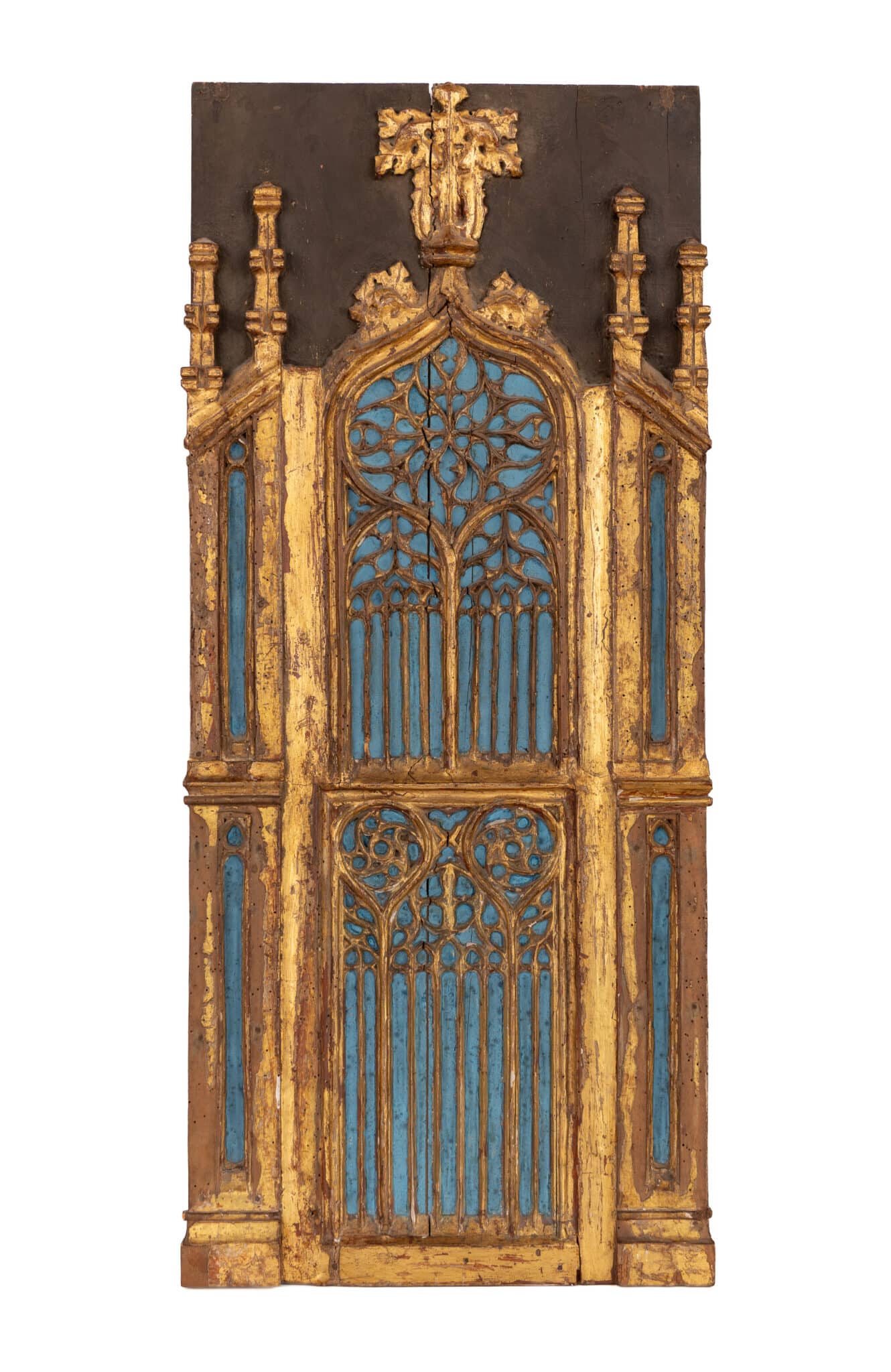
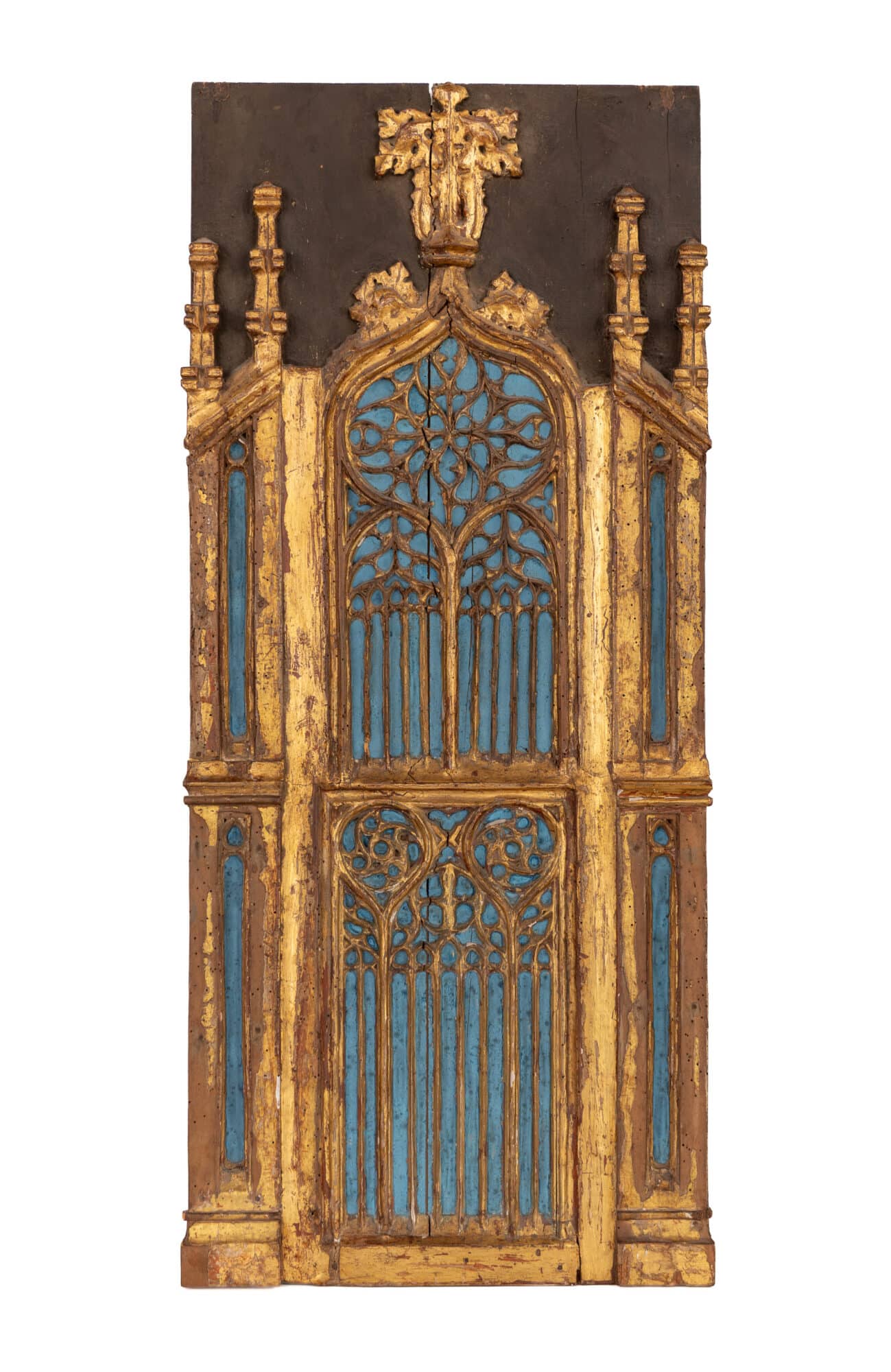
An exceptional late fifteenth-century Gothic architectural panel of monumental proportions, carved in walnut and constructed upon its original pine backing, retaining extensive original blue polychromy and richly preserved medieval gilding.
The panel is conceived as a miniature Gothic façade, centred upon a finely proportioned pointed-arched traceried opening beneath crocketed pinnacles and an elaborate foliate finial. The lower register echoes the upper composition with flowing flamboyant tracery, while the flanking buttresses retain their original blue-painted grounds, creating a striking contrast against the surviving gold leaf. The remarkable preservation of both the medieval gilding and painted surface offers an unusually vivid impression of the rich visual splendour that characterised late Gothic church furnishings.
The architectural language is closely associated with the flourishing woodcarving traditions of the Upper Rhine and Austria during the final decades of the fifteenth century. The elegant tracery, elongated proportions and restrained yet highly refined ornament closely parallel architectural elements found on monumental winged altarpieces and sacrament houses produced by leading workshops active in southern Germany, Austria and neighbouring regions between approximately 1470 and 1500.
The panel is carved in walnut and mounted upon its original pine backing, a construction entirely consistent with Central European workshop practice, where dense hardwoods were reserved for the visible carved surfaces while coniferous woods provided structural stability.
At 36½ inches in height, this is a substantial architectural component rather than a minor decorative fragment. It would originally have formed part of an ambitious ecclesiastical ensemble, perhaps a major altarpiece, choir furnishing or tabernacle, intended to be viewed within the richly coloured interior of a late medieval church.