
Paul Fitzsimmons logo
  • Current Stock
  • Archive
  • Notable Works
  • About Us
  • News
  • Contact
Home / Archive / New England Polychro…
Previous Next
  • New England Polychromed Desk Box
  • New England Polychromed Desk Box
  • New England Polychromed Desk Box
  • New England Polychromed Desk Box
  • New England Polychromed Desk Box
Sold

New England Polychromed Desk Box

Period
1640 - 1650
Origin
New England
Dimensions
W 10 1/2" × H 6 1/2" × D 8"
Reference
#Marh2669

This piece has been sold. It is shown here for reference in our archive.

Description

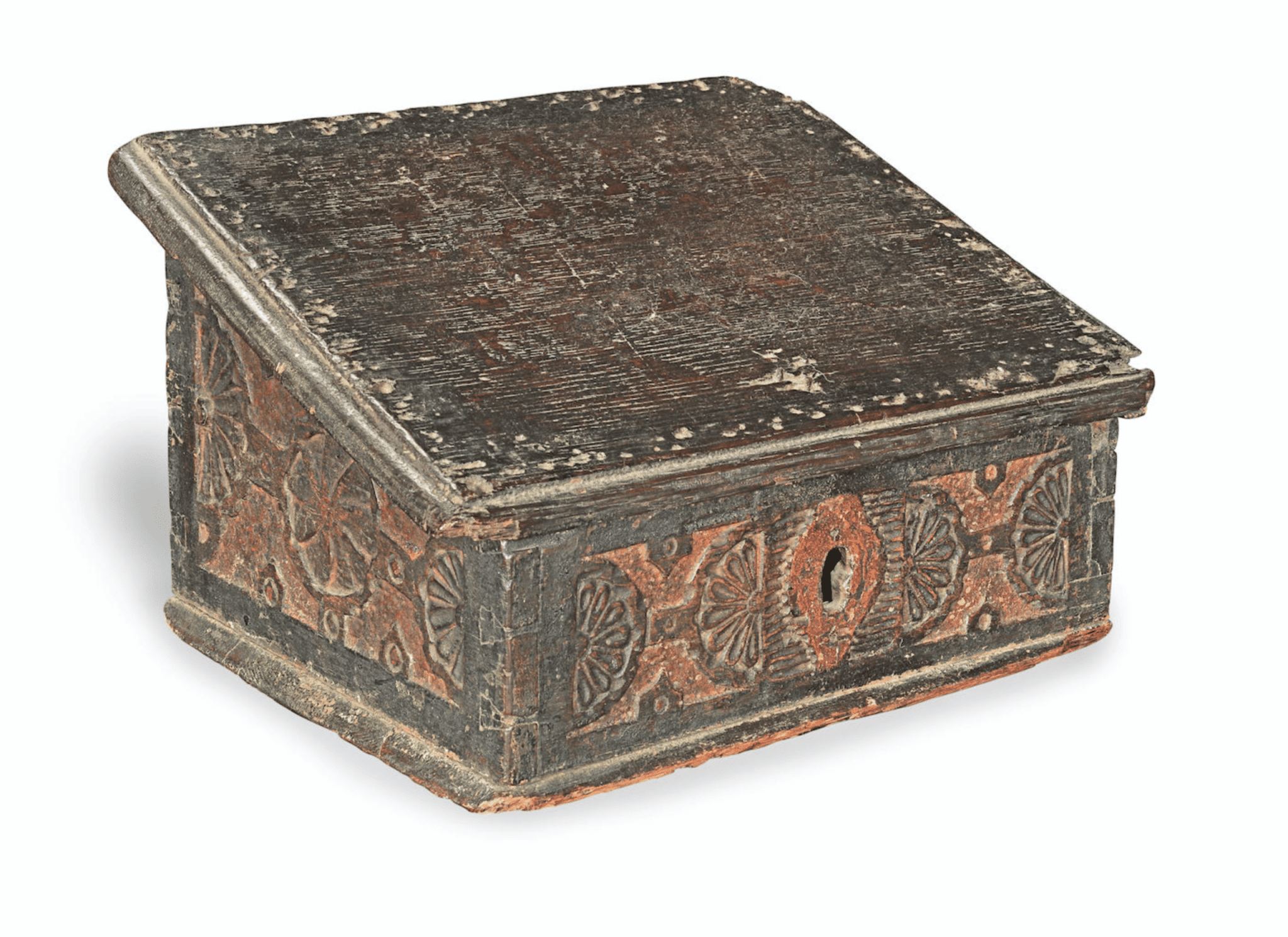
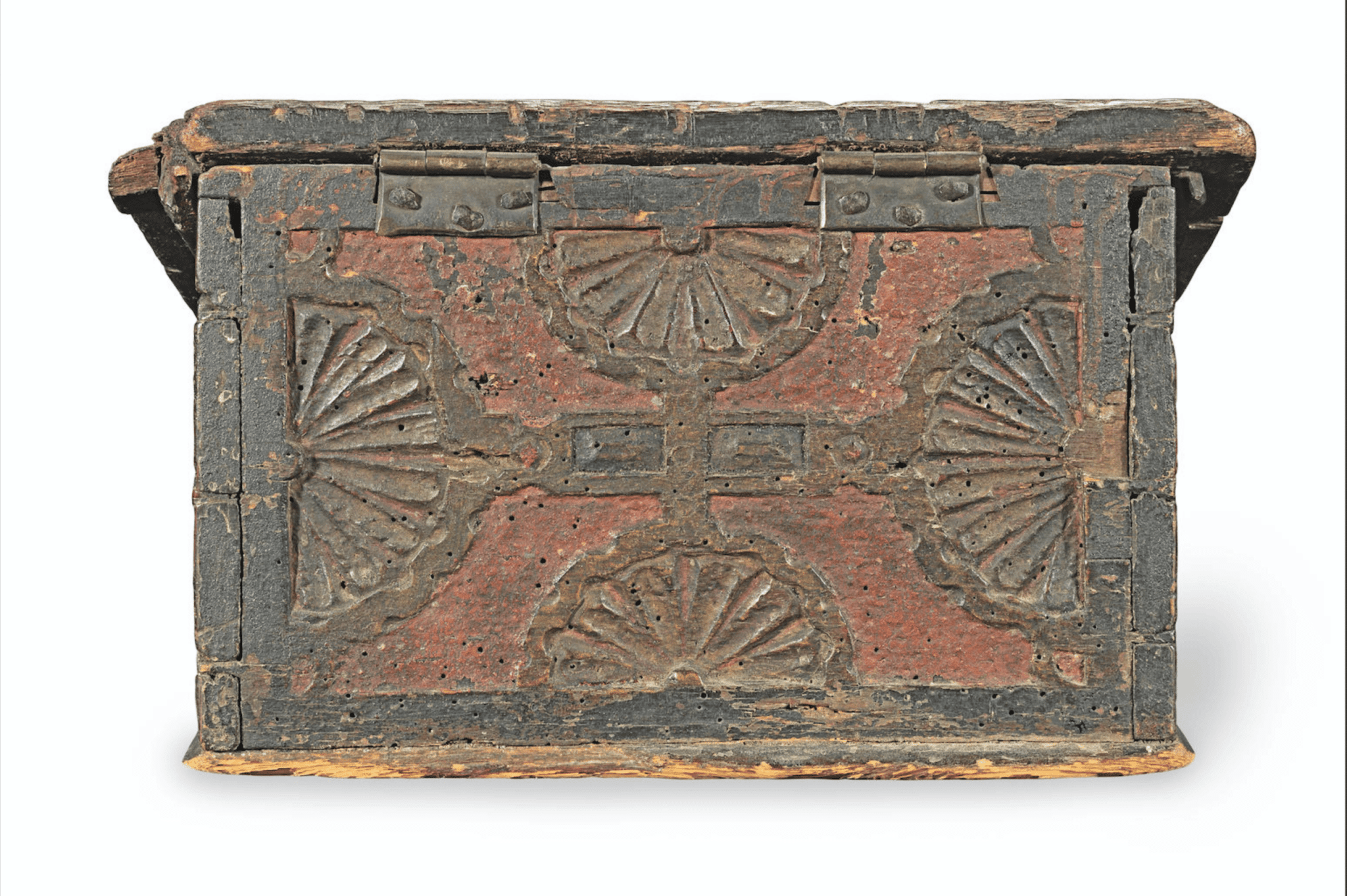
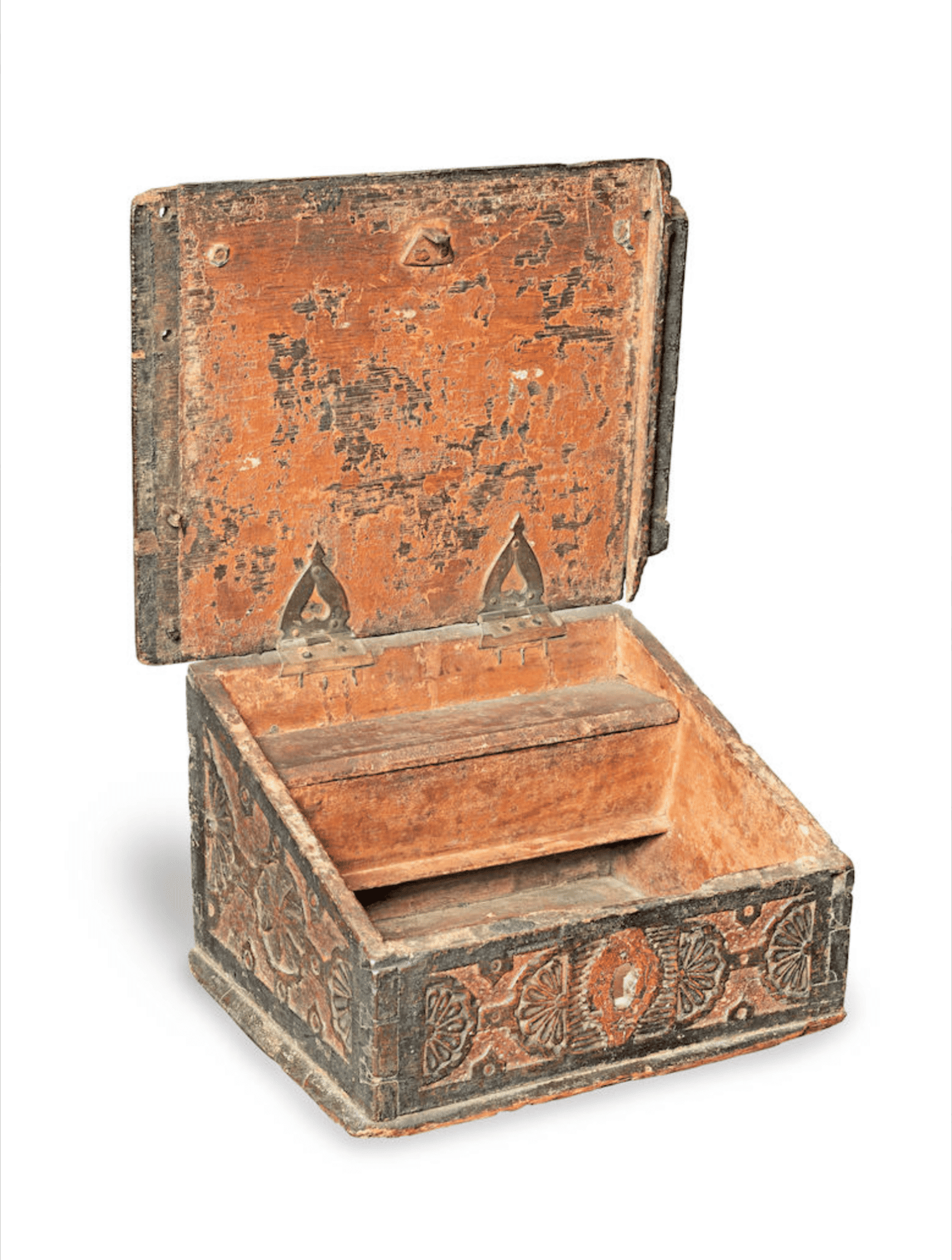
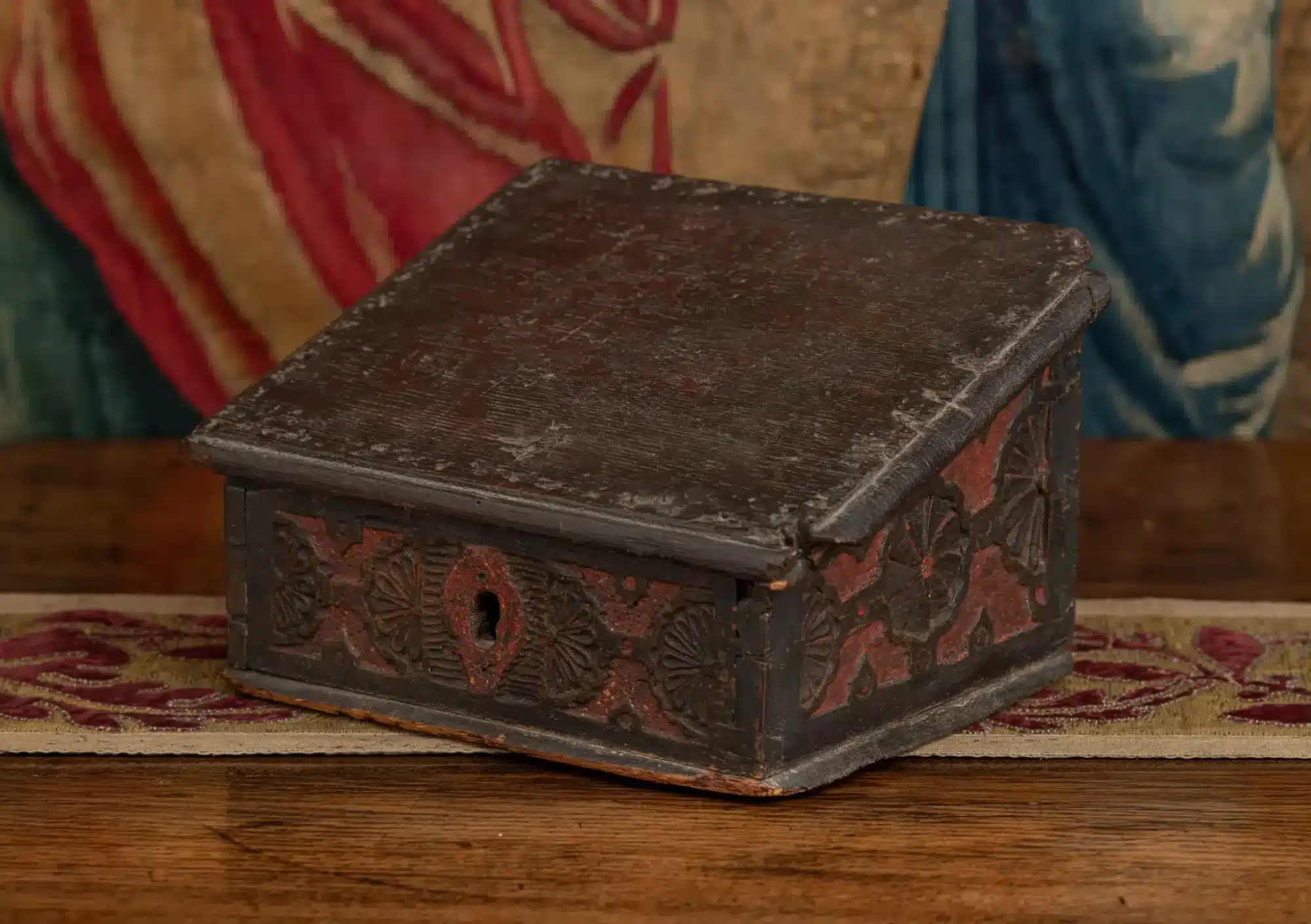
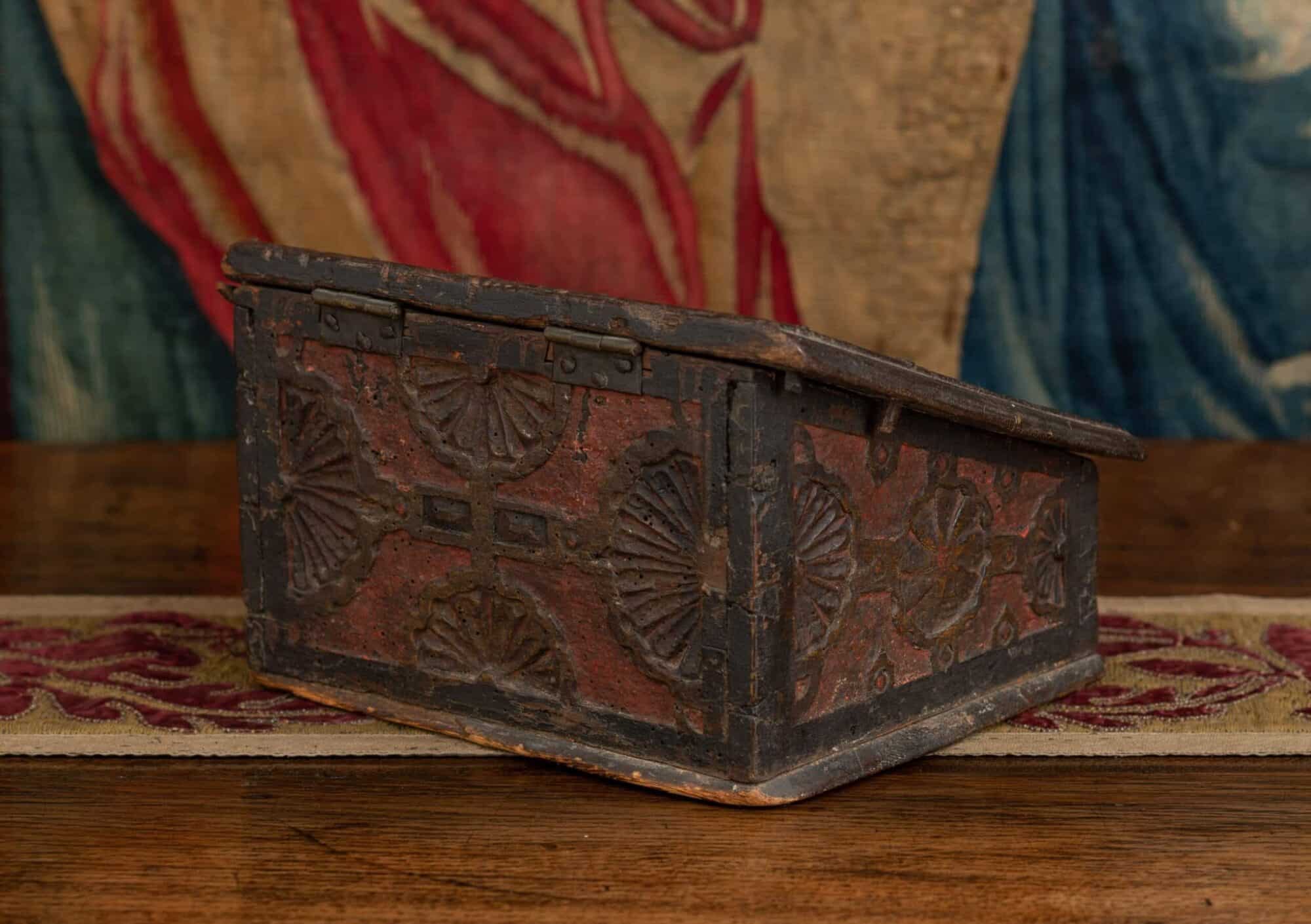
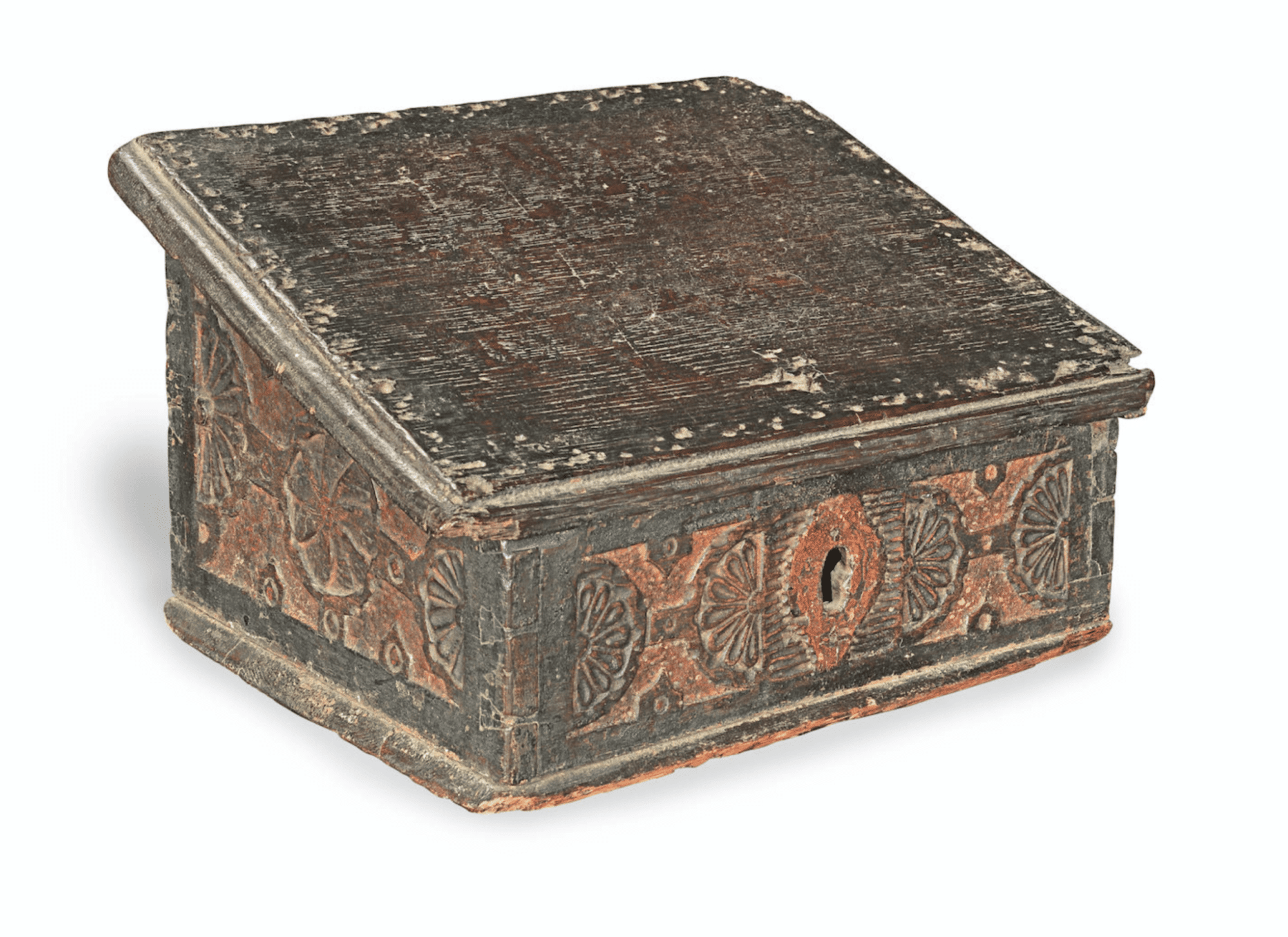
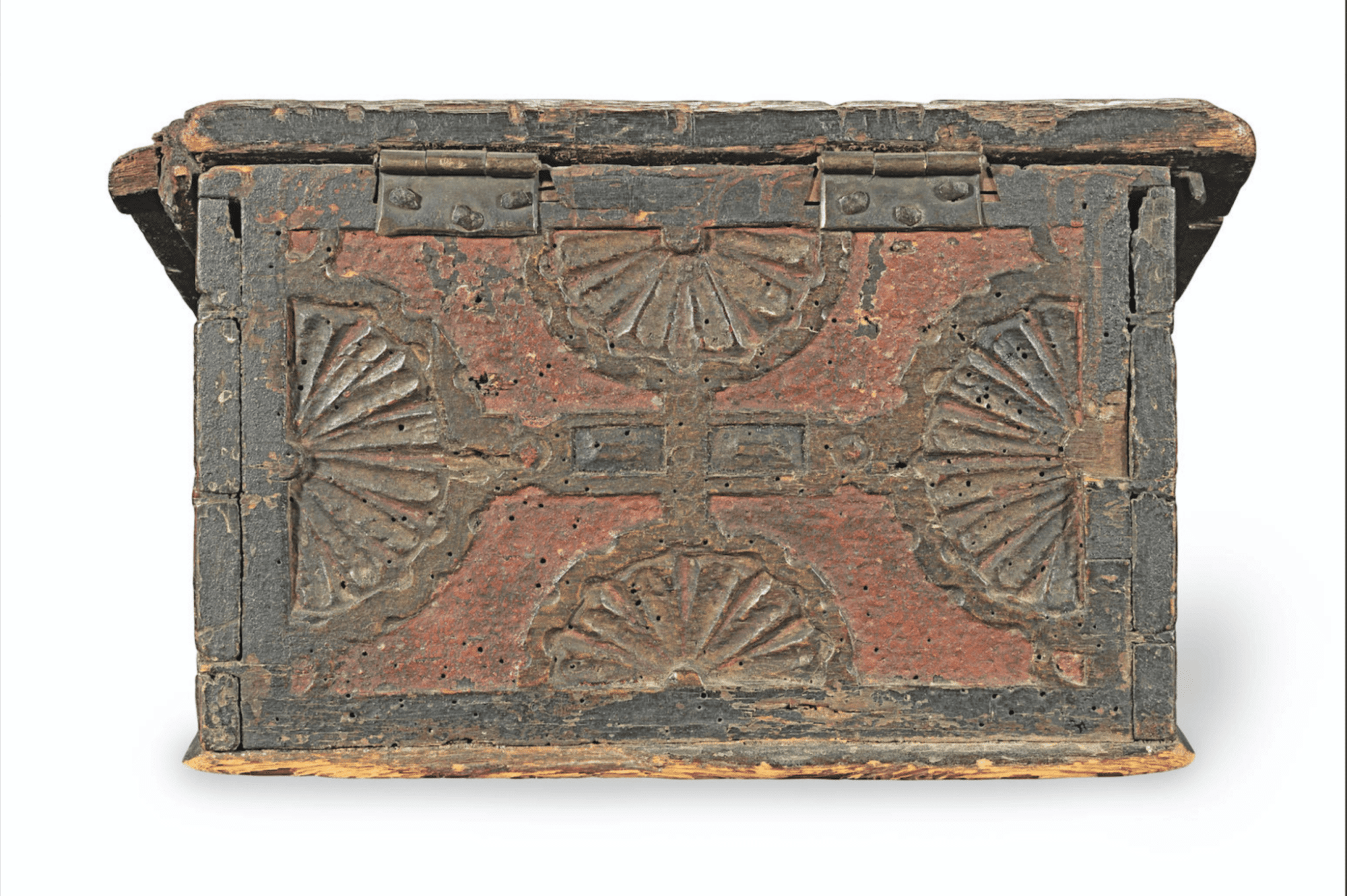
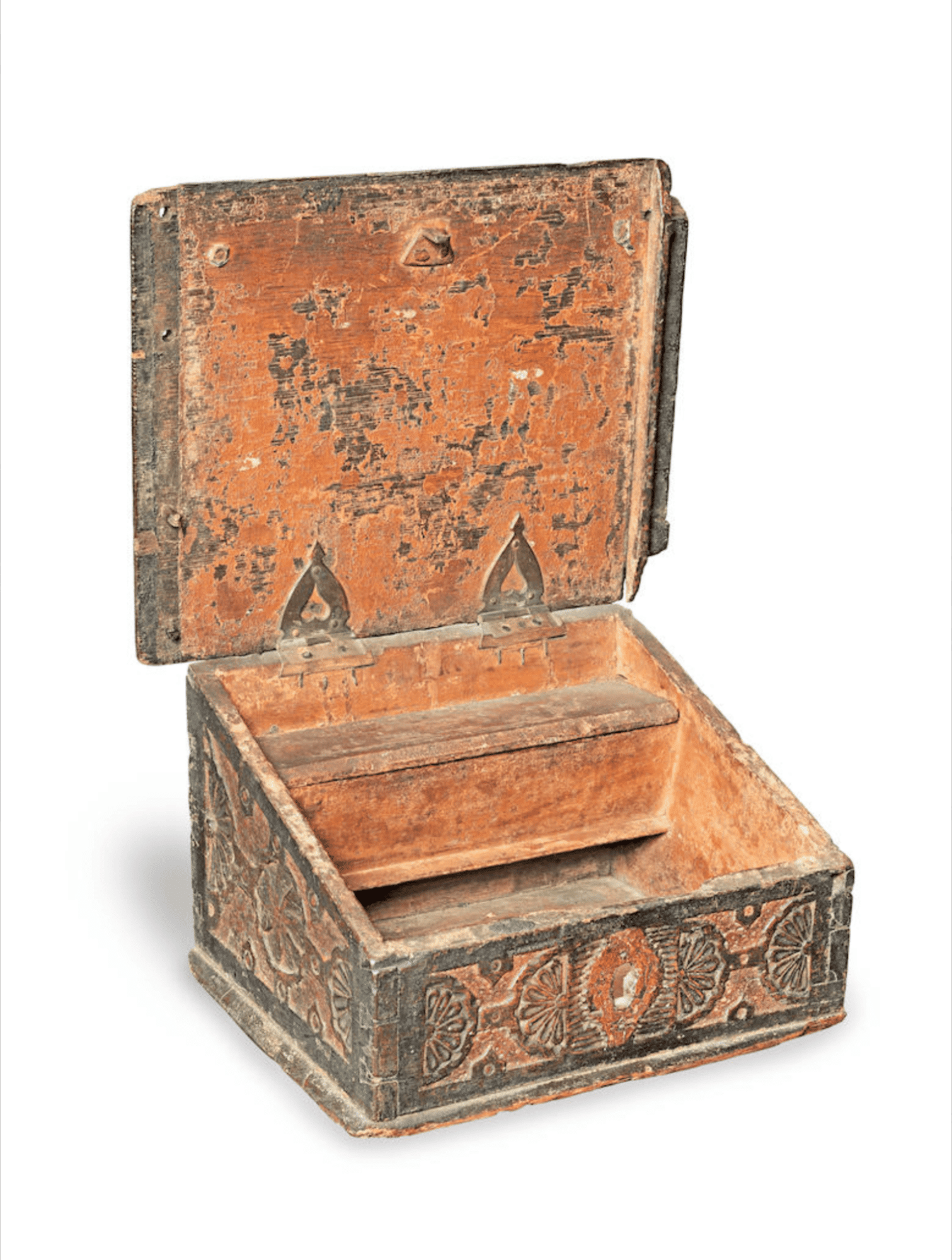
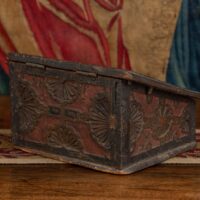
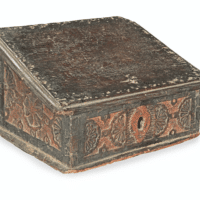
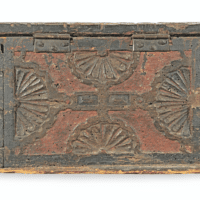
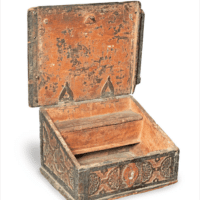
A rare and important carved and polychromed oak desk box of small proportions, its sloping lid and sides enriched with strapwork panels enclosing rosettes, the whole surface retaining traces of the original red and black polychrome. The front centred by a shaped escutcheon, flanked by radiating rosettes, the decoration extending to all sides. The hinged lid opens to reveal a fitted interior with a lidded till.
Boxes of this type are closely related to Continental (particularly Dutch) strapwork carving traditions of the early 17th century, carried to New England by immigrant craftsmen. The use of polychromy—here in bold red and black—was not merely decorative but symbolic, red often connoting life, protection, and divine authority, while black lent solemnity and gravity. Such pieces reflect the persistence of European Renaissance ornament in the Puritan colonies, adapted to local materials and domestic needs.
Comparable polychromed desk boxes survive in major collections, including the Winterthur Museum and Colonial Williamsburg, where they are regarded as among the earliest surviving examples of painted furniture in New England. Their small size and fitted interiors suggest use for personal correspondence, valuables, or devotional objects, marking them as possessions of status in the new colonies.
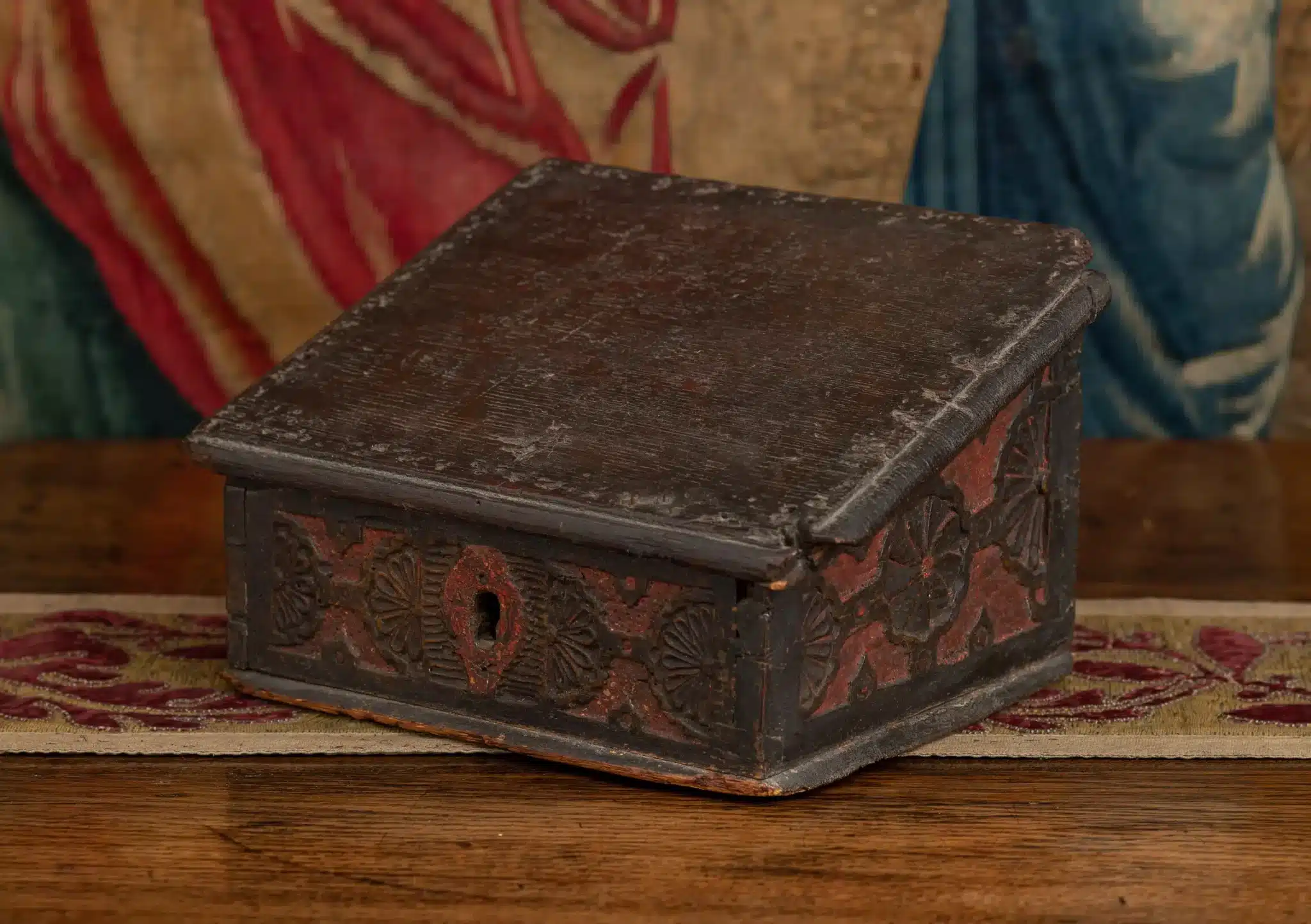
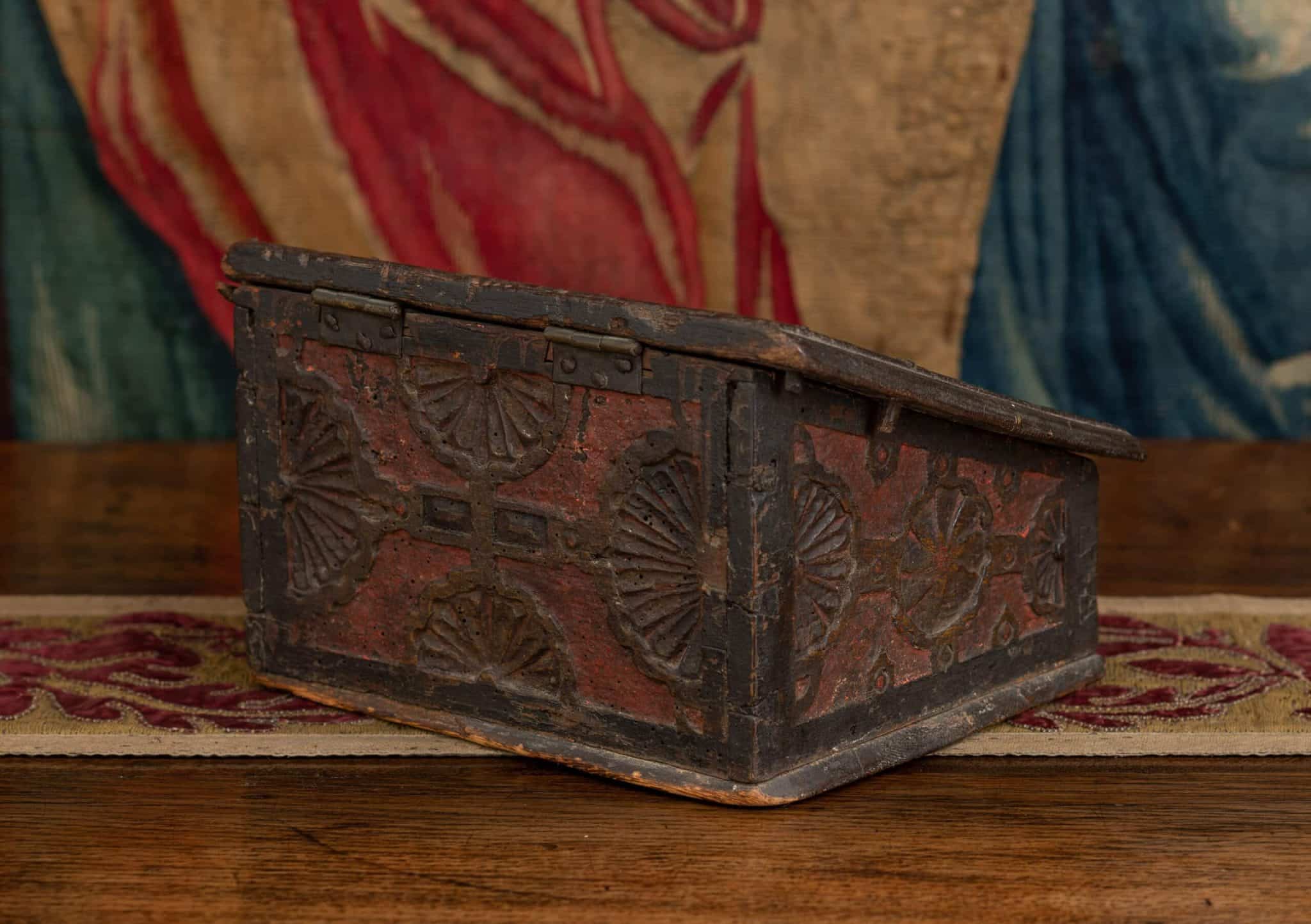
Polychromy was a defining feature of much early American furniture and joinery, though far less survives today than once existed. In the first half of the 17th century, settlers brought European traditions of painted and stained decoration to New England, particularly from the Low Countries and East Anglia. Bold colours—red, black, yellow, and occasionally green—were used to enliven carved surfaces, often highlighting strapwork, floral motifs, or geometric panels.
In Puritan New England, where ornament was otherwise restrained, polychrome decoration offered both symbolic and practical value. Red pigments, derived from iron oxides or organic dyes, conveyed life, protection, and divine strength, while black outlines lent structure and visual gravity. Painted decoration also sealed and preserved the timber in a harsher climate.
Surviving examples—such as painted chests, boxes, and cupboards—are exceedingly rare due to wear and later stripping. Today, fragments of original colour, like those preserved on this box, are of great scholarly importance, revealing how vibrant and richly decorated the domestic world of early New England truly was.

Curator's Note

Previous Salt glazed stonewar… Next Charles I Joined Oak…
  • New England Polychromed Desk Box
  • New England Polychromed Desk Box
  • New England Polychromed Desk Box
  • New England Polychromed Desk Box
  • New England Polychromed Desk Box

Newsletter

New Stock, Direct to Your Inbox.

Be among the first to hear about new acquisitions and notable works.

Please enable JavaScript in your browser to complete this form.
Loading
Paul Fitzsimmons logo
  • Current Stock
  • Archive
  • Notable Works
  • About Us
  • News
  • Contact

Contact Us

+44 (0)777 903 8891

  • Pinterest
  • Instagram

By Appointment

Devon, England.

Paul Fitzsimmons

Specialist in early oak furniture and works of art.

© 2026 Paul Fitzsimmons | Website by Dancing Badger Ltd

  • Privacy Policy
  • Terms & Conditions

Search the collection

Search in
    1 / 1