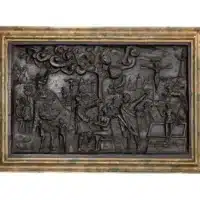
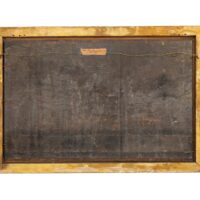
Renaissance carved oak panel
- Period
- 1591
- Origin
- Flemish
- Dimensions
- W 18 3/4" × H 12" × D 1"
- Reference
- #Marh3213
This piece has been sold. It is shown here for reference in our archive.
Description
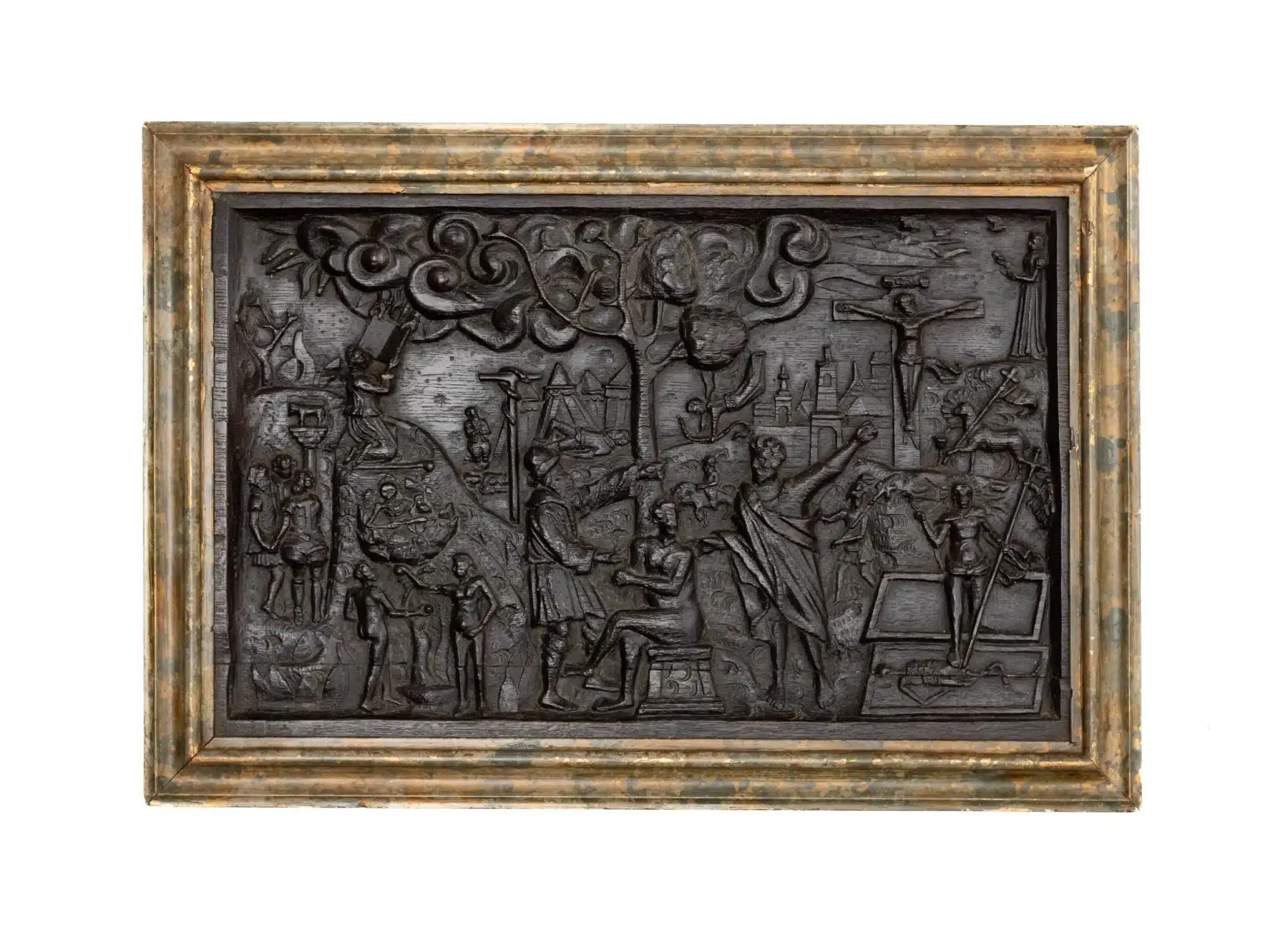
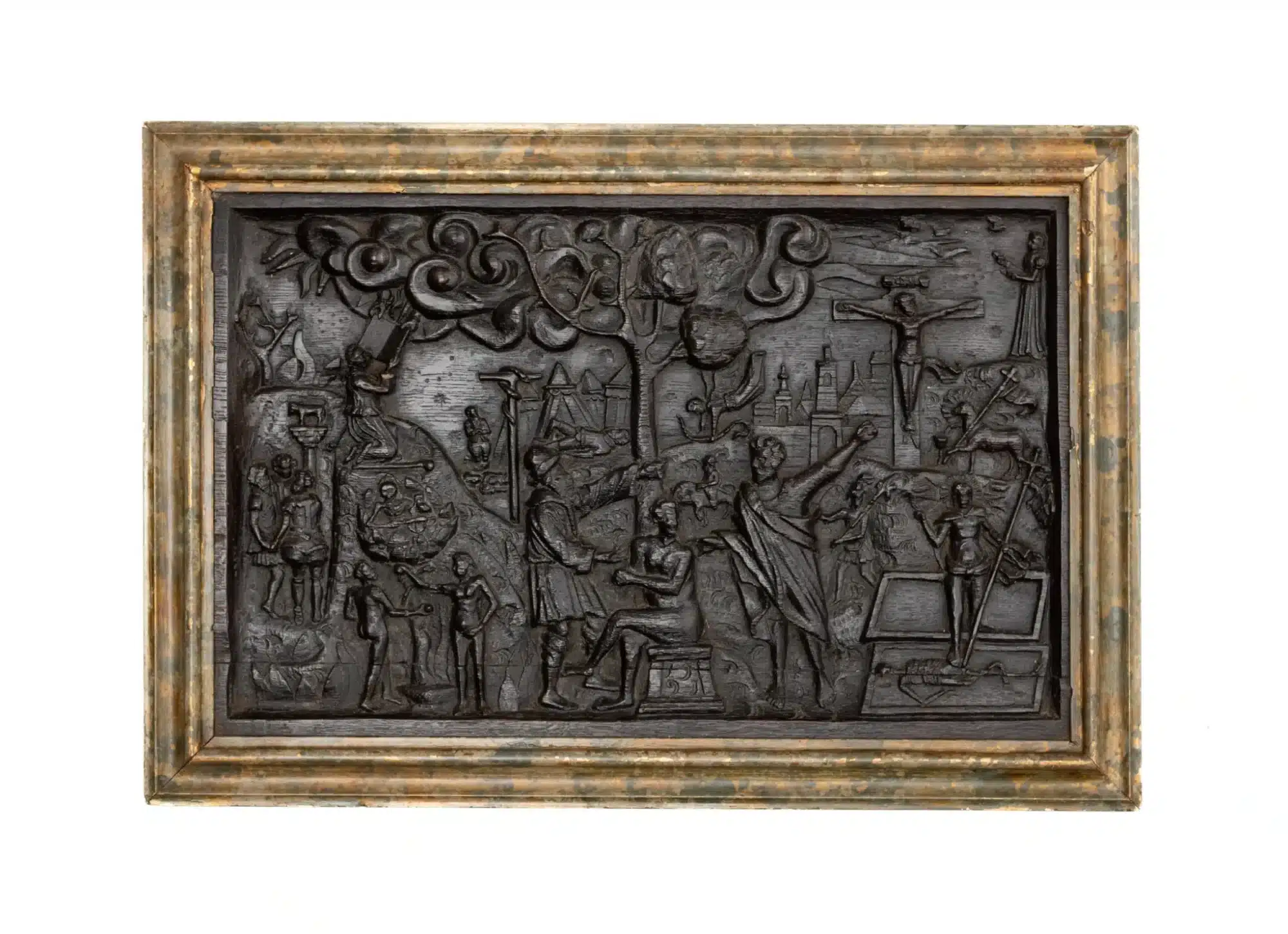
This exceptionally rare carved oak panel presents a highly ambitious and sophisticated theological programme, executed in the Southern Netherlands at the close of the 16th century. The work is not only of remarkable technical refinement, but also of profound intellectual ambition, embodying the Renaissance impulse to visualise the totality of sacred history within a single image.
The relief is divided visually by a central seated figure beneath a stylised tree, flanked to the left by Moses, the bearded lawgiver of the Old Dispensation, and to the right by John the Baptist, herald of the New. Both issue inscribed scrolls (banderoles), marking the panel’s intention to convey written as well as visual testimony. This central triad acts as the axis around which the history of salvation is organised.
To the left of the composition:
Adam and Eve beneath the Tree of Knowledge, the moment of humanity’s Fall.
Moses on Mount Sinai, receiving the Tablets of the Law, the defining covenant of the Old Testament.
The Brazen Serpent, raised among the tents of the Israelites — a prefiguration of the Crucifixion.
To the right:
The Crucifixion, Christ central upon the cross, surrounded by mourners and onlookers.
Angels with banderoles appearing to shepherds watching over their flocks, recalling the Nativity.
At the far right, Christ’s Resurrection, stepping from the tomb before astonished soldiers, completing the arc of Redemption.
Above, swirling clouds suggest the divine presence, binding together the temporal and eternal. Architectural elements in the background hint at the Heavenly Jerusalem, situating earthly events within a universal, eschatological frame.
The panel unites in a single didactic scheme the foundational moments of both Testaments, framed by the figures of Moses and John the Baptist. This juxtaposition reflects the post-Reformation emphasis on the continuity of Law and Grace, anticipating Christ’s fulfilment of Old Testament prophecy. Such multi-layered narrative carvings were particularly esteemed in the learned and confessional climate of the Low Countries, where religious art remained a medium of education, devotion, and debate.
The year 1591, carved into the relief, firmly situates the work in a period of intense theological contestation following the Council of Trent (1545–63). Flemish workshops continued to produce elaborate narrative reliefs for both private devotion and ecclesiastical commissions, though few survive that are so explicitly dated and theologically ambitious.
Provenance
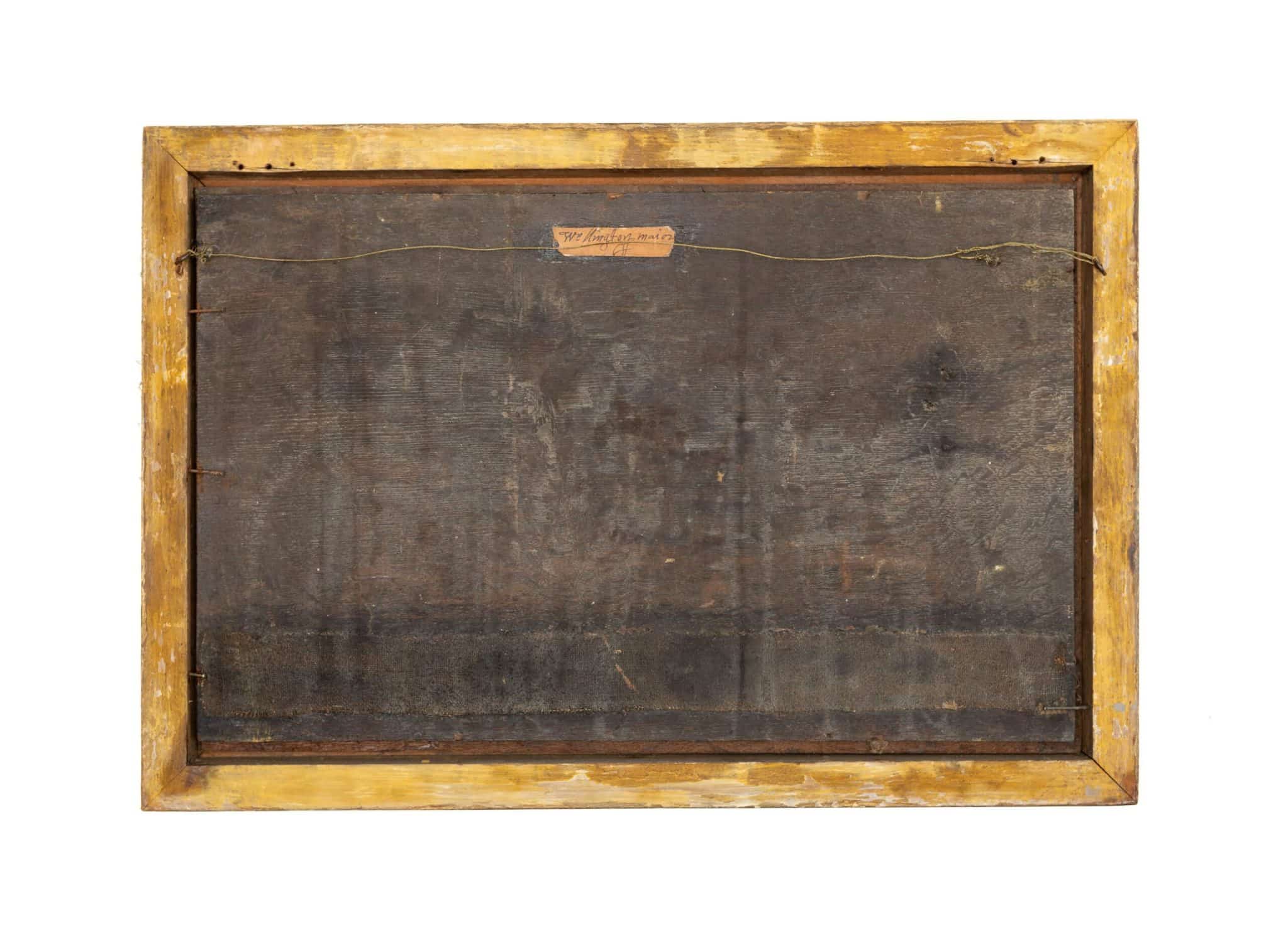
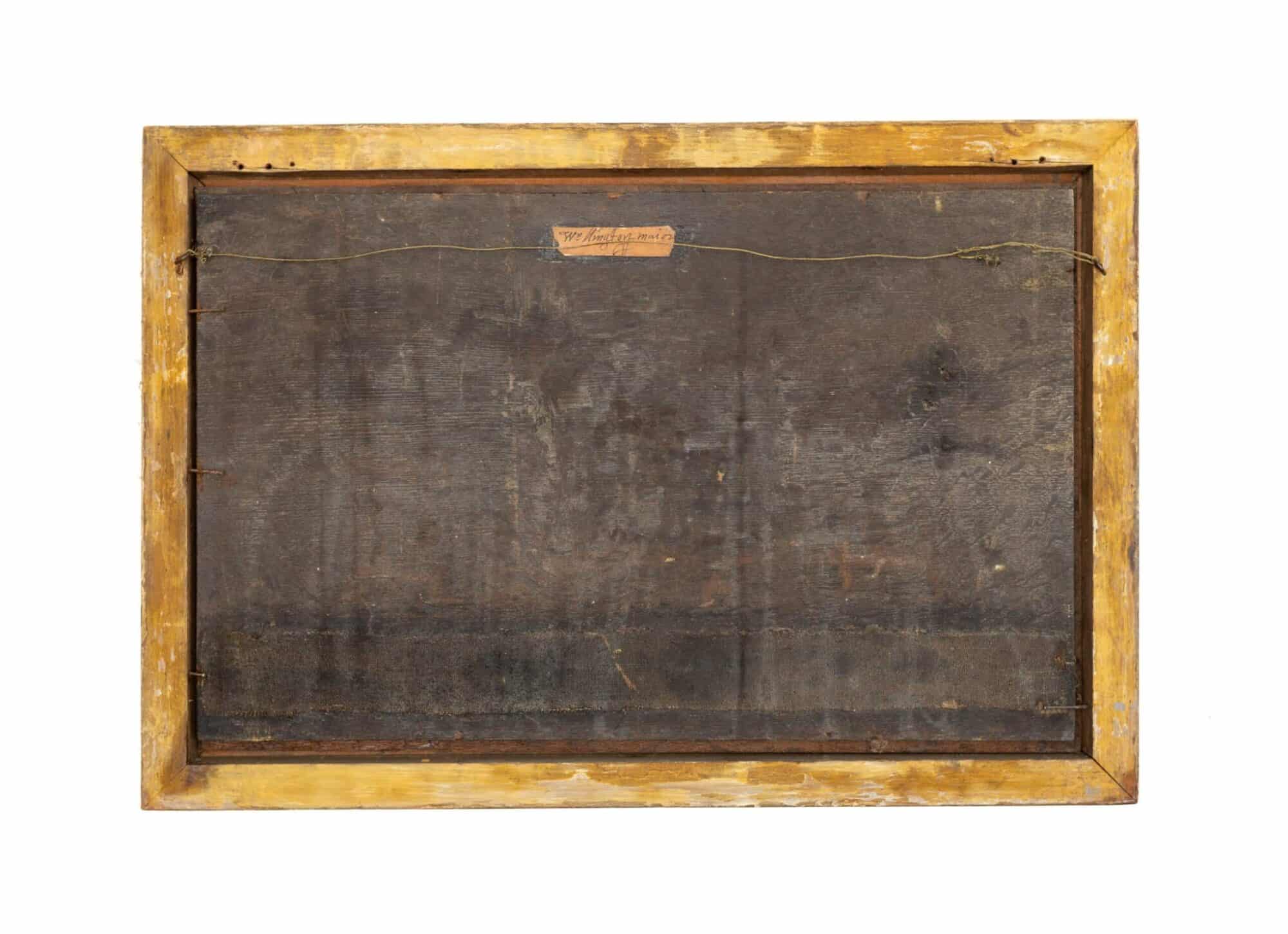
Formerly in the collection of Major William Kington.
By repute, held in the Cadbury Museum, Birmingham.