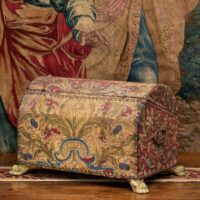
Renaissance Embroidered Domed Casket with Lion-Pad Feet
- Period
- 1530 - 1560
- Origin
- England, (with Italianate carcass influence)
- Dimensions
- W 19 1/2" × H 12" × D 13"
- Reference
- #Marh2715
This piece has been sold. It is shown here for reference in our archive.
Description
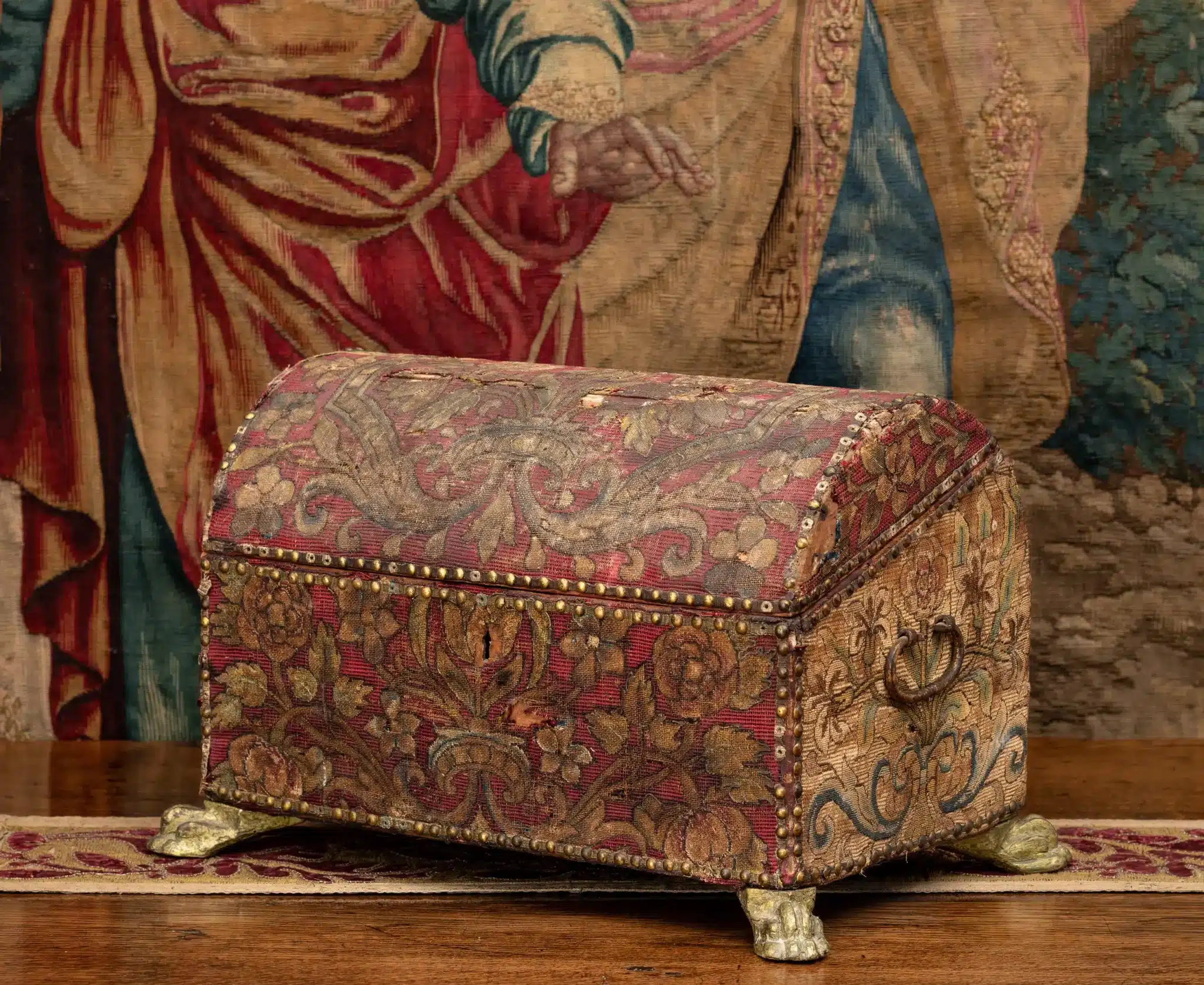
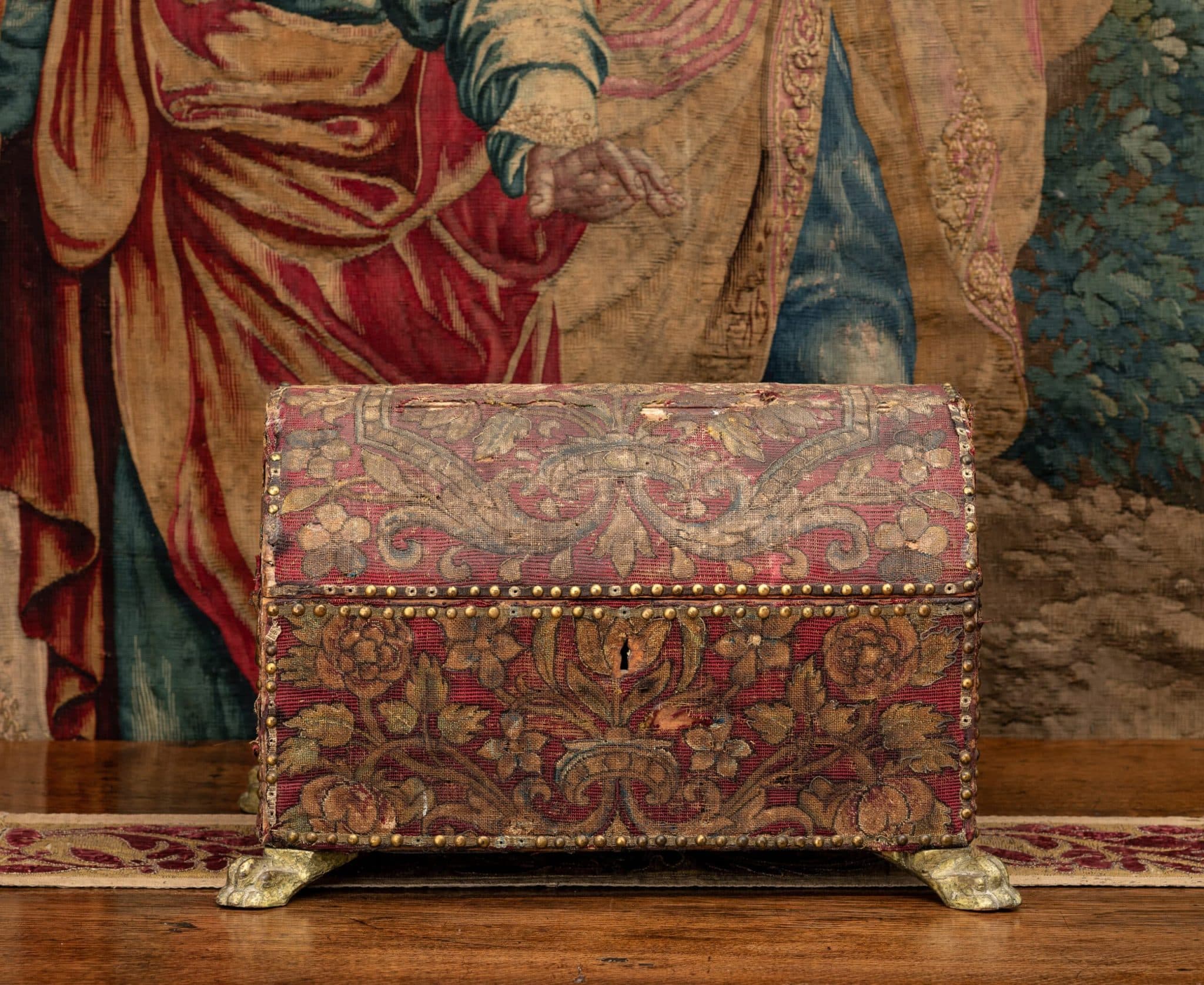
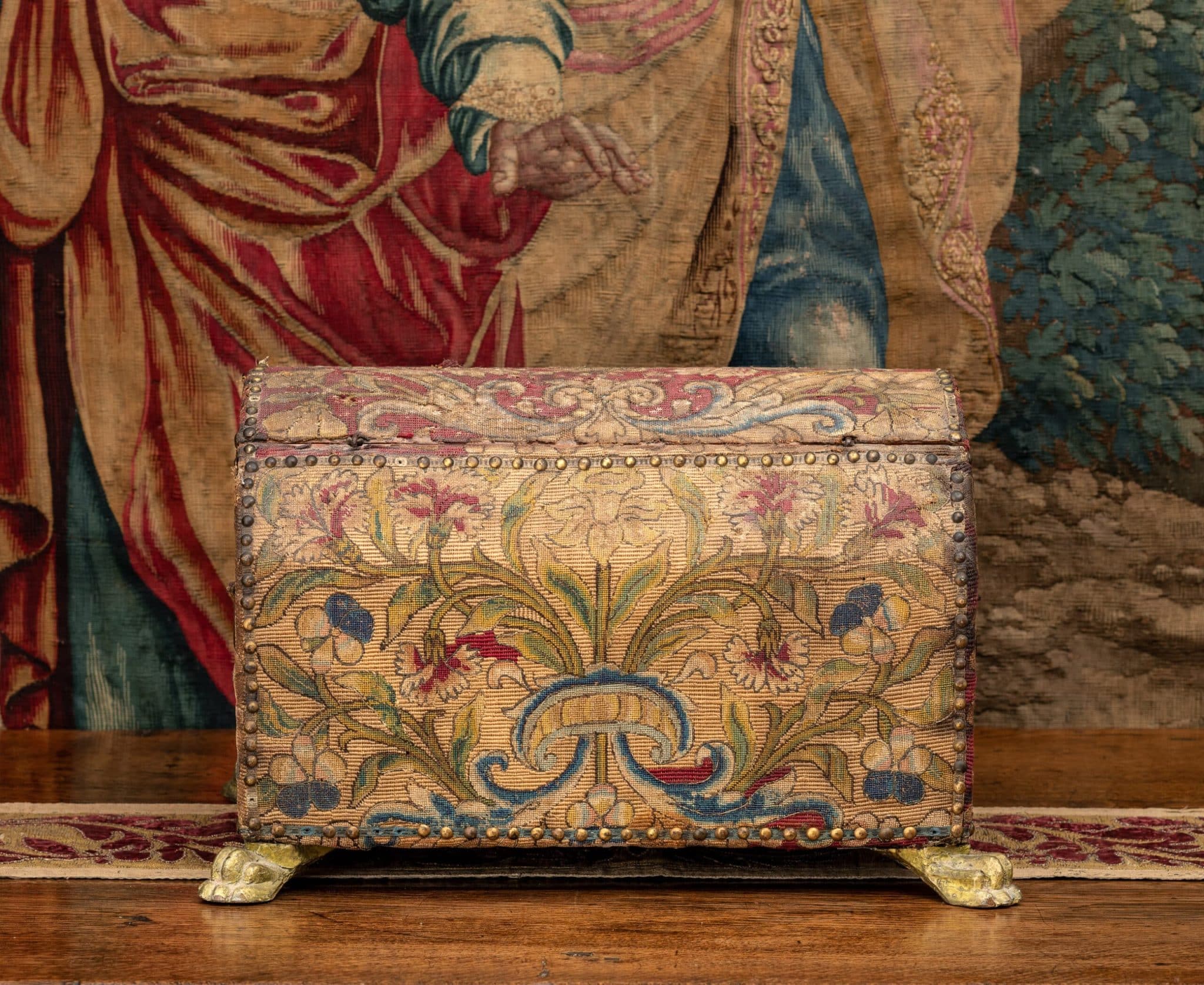
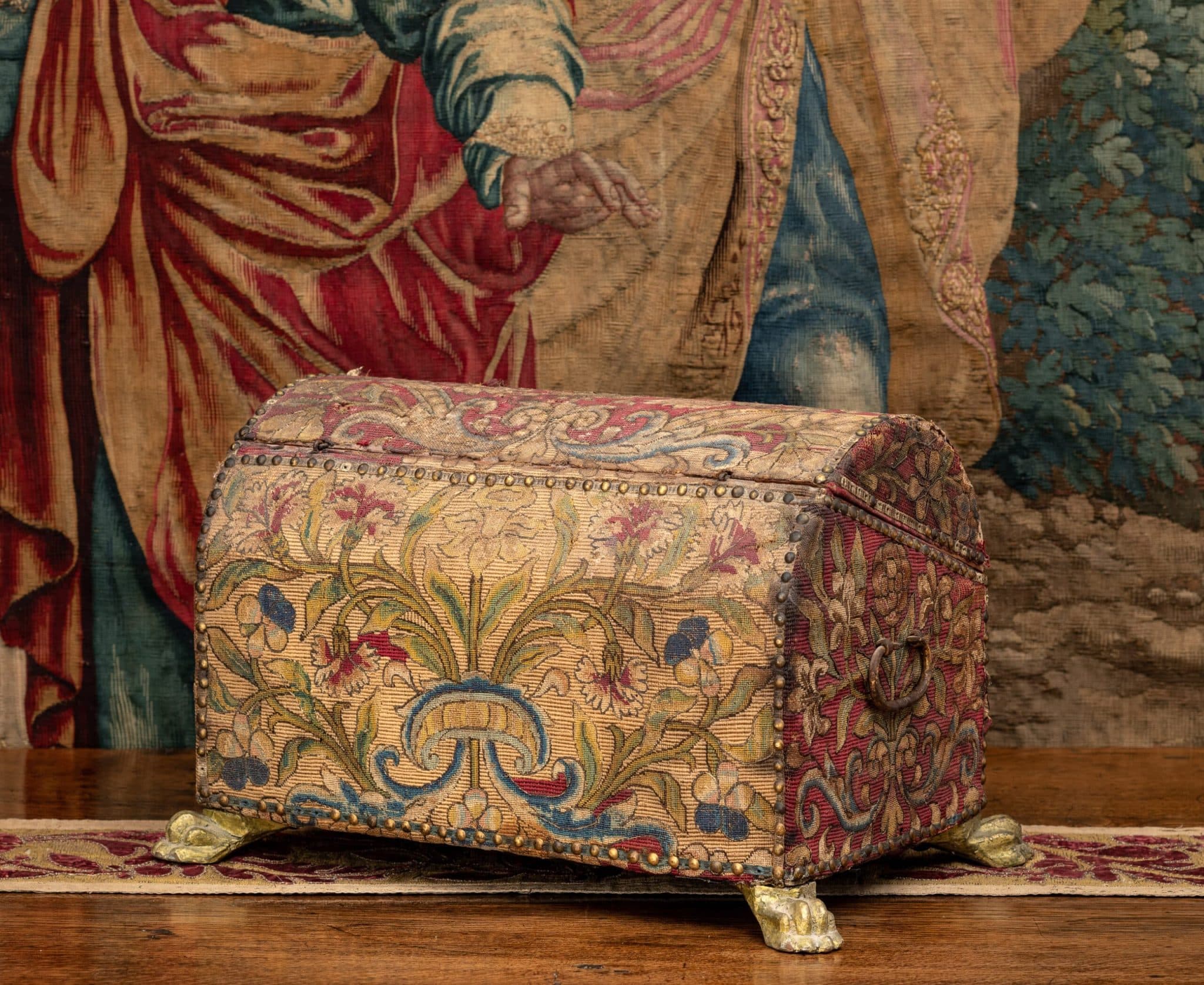
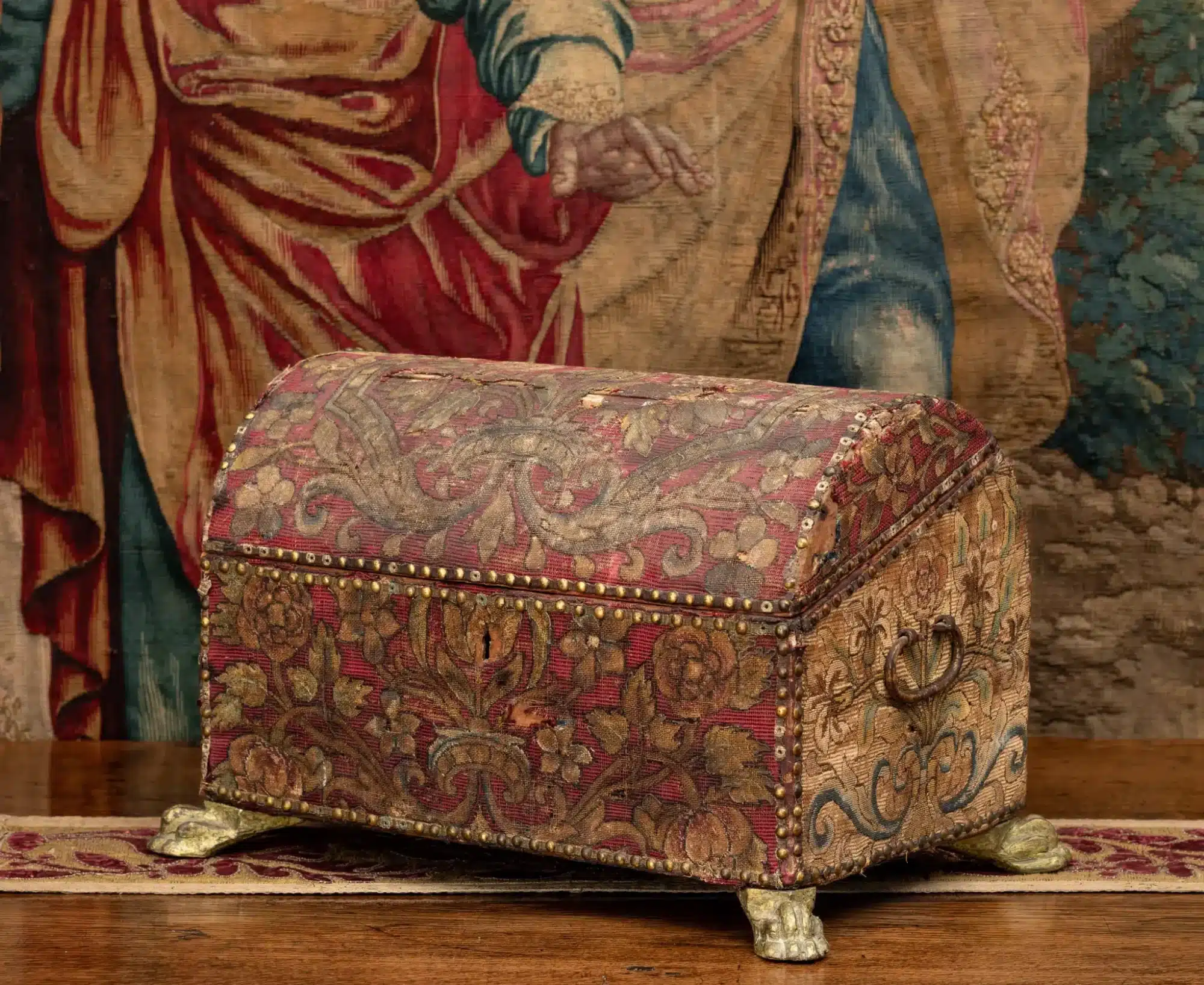
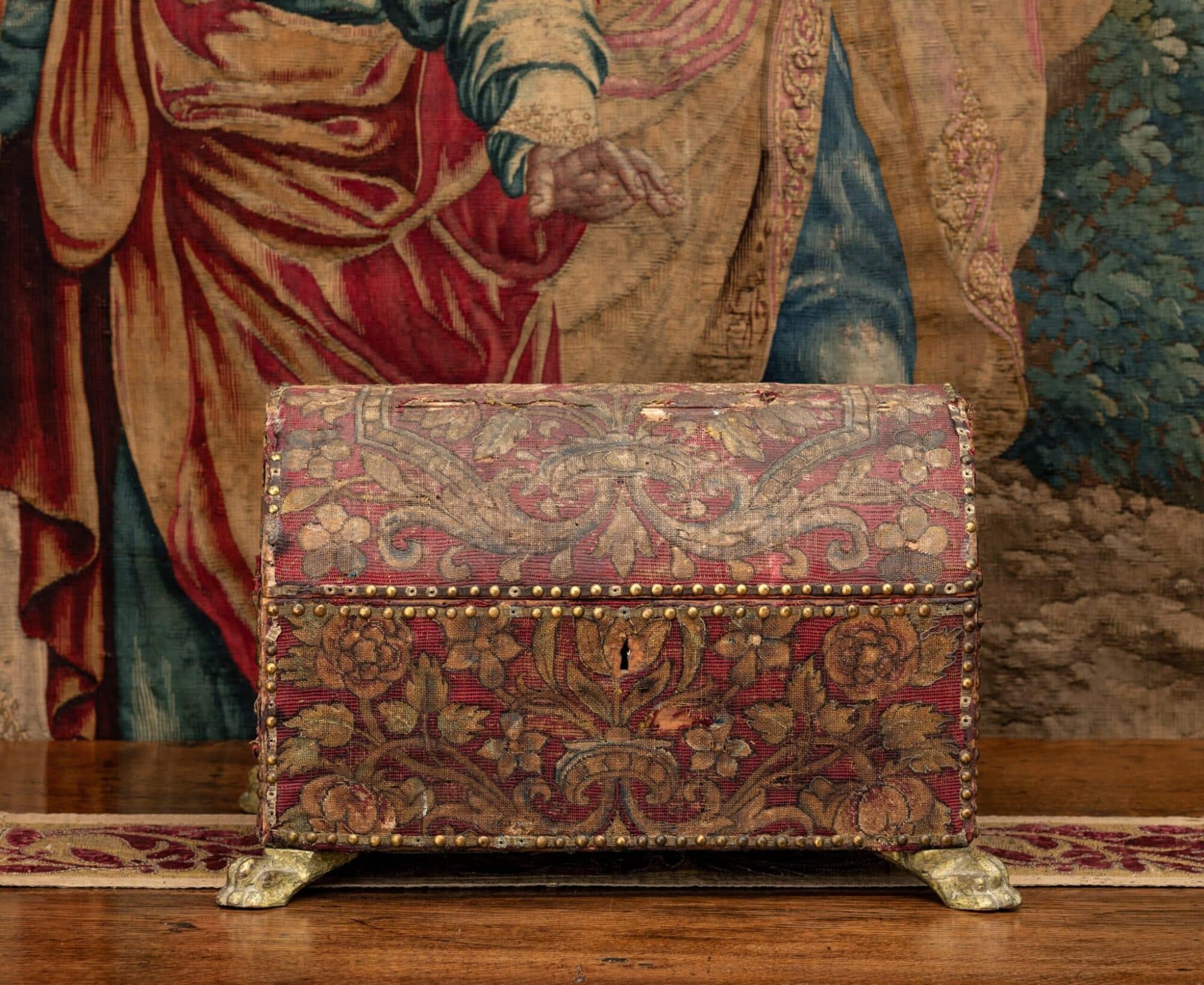
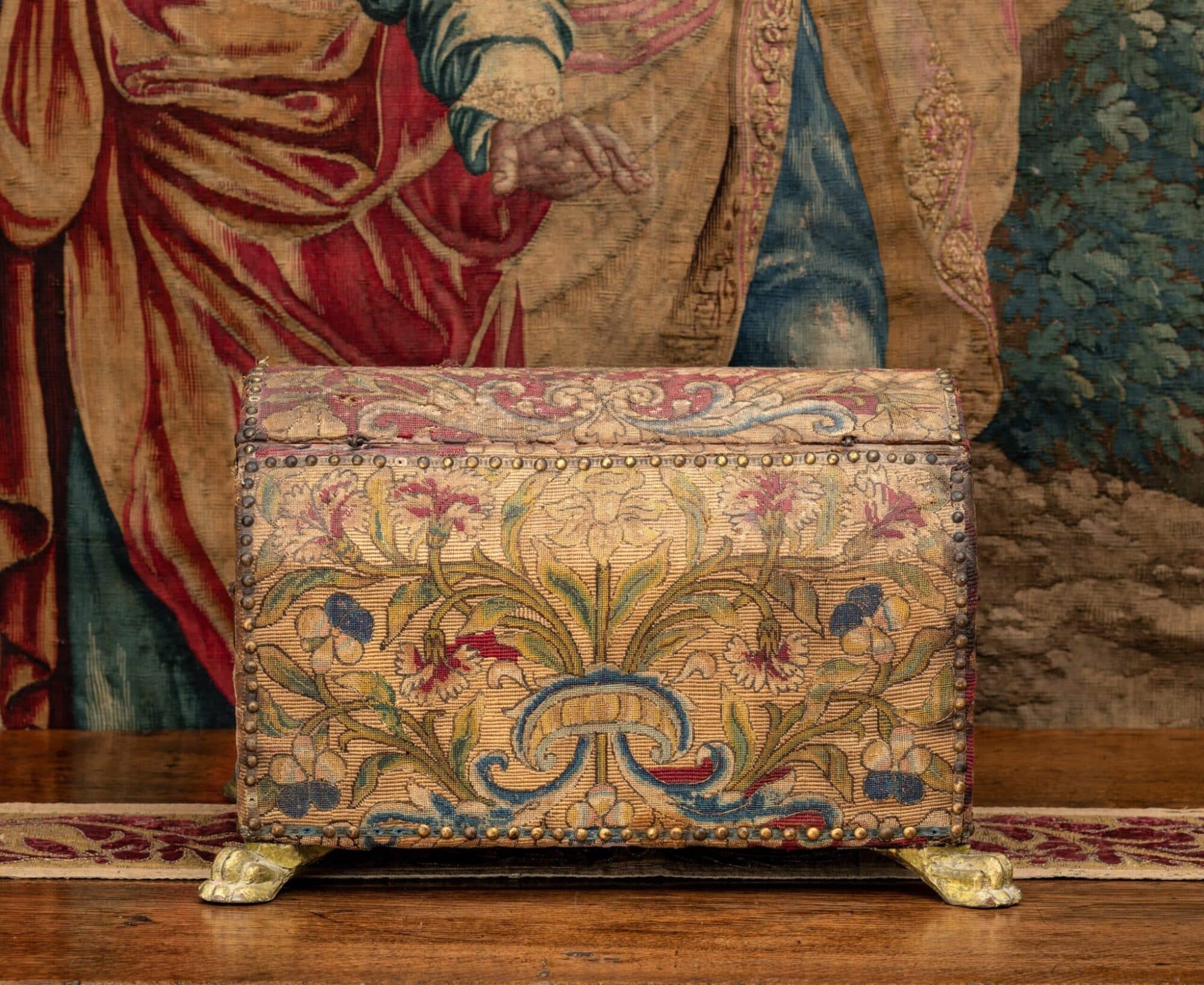
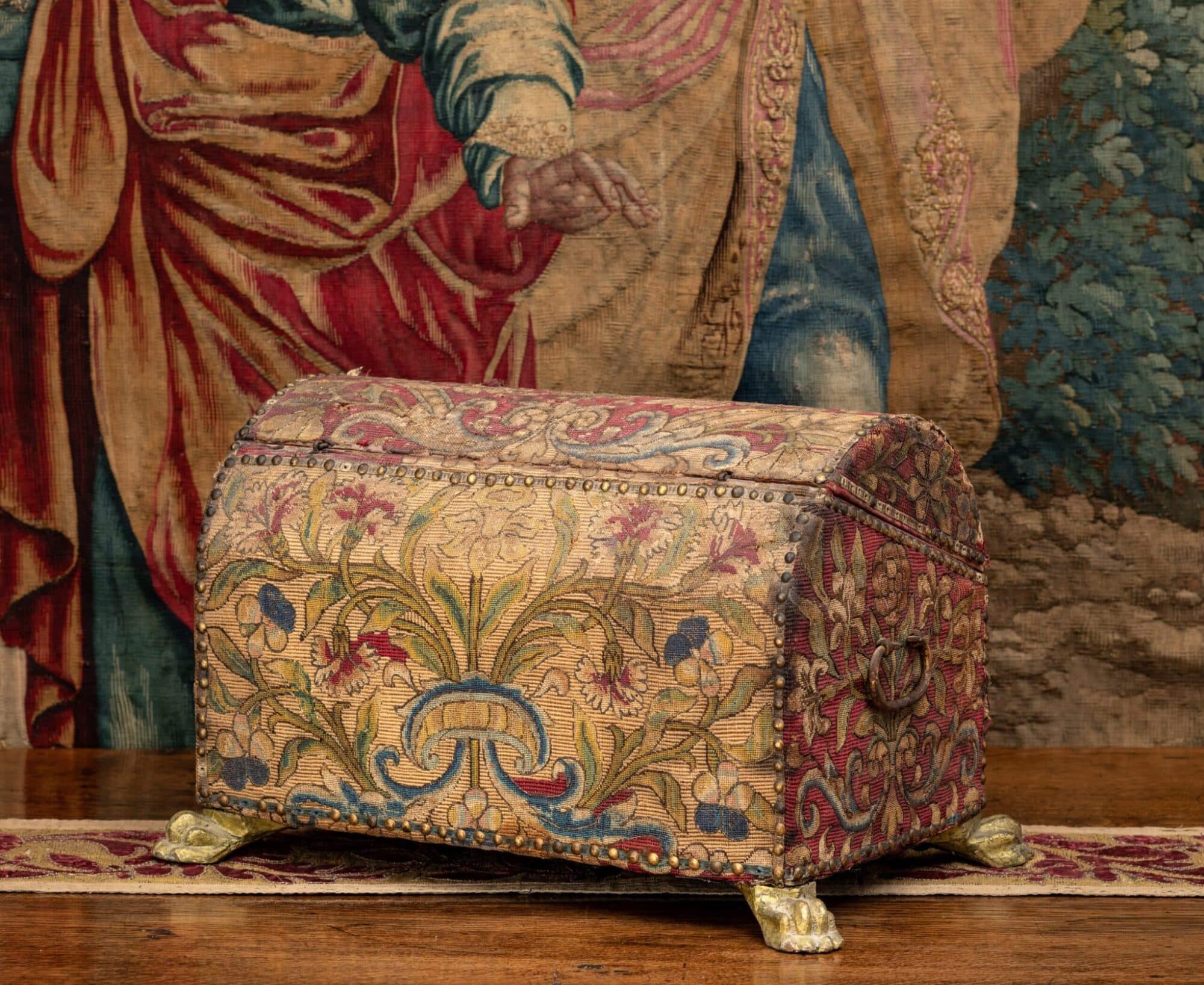
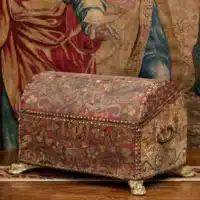
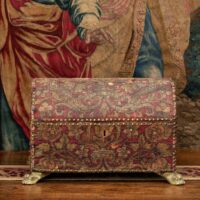
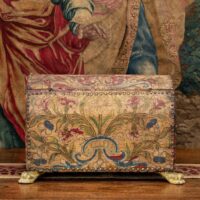
A rare and refined Renaissance domed casket, the wooden carcass mounted on gilt lion-pad feet and covered in sumptuous embroidered velvet. The surface is densely worked with scrolling foliage and Tudor roses in shades of crimson, green, and gold thread, with later wear revealing the vibrancy of its original palette. The embroidery continues across the lid, sides, and back, forming a continuous decorative field. Nailed gilt-head studs secure the velvet to the carcass, a technique found on luxury continental work of the mid-16th century.
The form of the casket — domed lid, gilt feet, and compact rectangular body — belongs to an Italian Renaissance tradition of small coffers and strongboxes, exported widely across Europe. Yet the textile covering is unmistakably English: the scrolling arabesques and naturalistic roses are closely related to surviving Tudor embroideries used on copes, altar frontals, and court hangings of the reigns of Henry VIII and Edward VI. The use of the Tudor rose also speaks directly to the dynastic identity of the English crown.
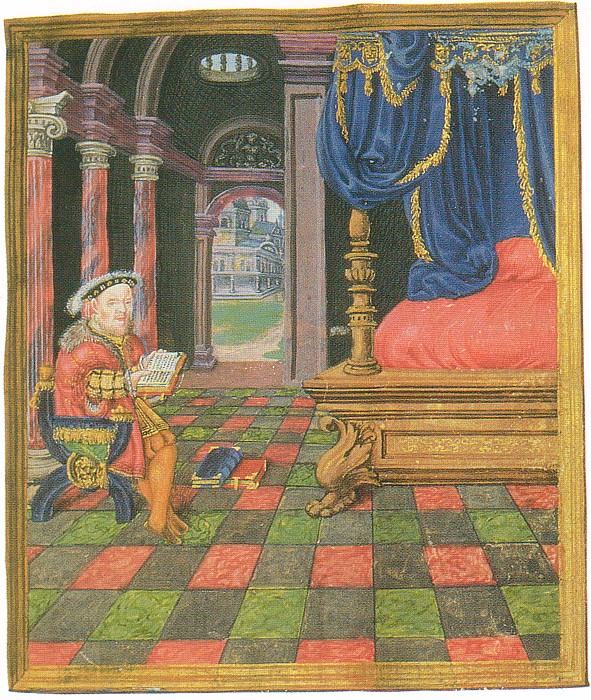
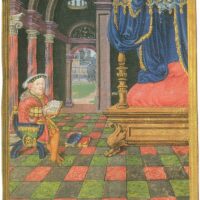
Boxes of this type, covered in embroidery or printed leather, are recorded in Henry VIII’s inventories (“lytell chestes of printed leather of redde grene & blake”), while embroidered survivals are far rarer. A miniature from Henry VIII’s Psalter (British Library, Royal MS 2 A XVI, c.1540) shows the King in a palace interior furnished with Italianate forms, reflecting the exact cultural interplay embodied in this piece: Italian-derived structures housing English textile magnificence.
This casket would have served as a container for jewels, devotional objects, or personal treasures, and is a rare surviving testament to the fusion of Italian Renaissance form with Tudor English textile luxury.