 Sold
Sold
Renaissance velvet wall or bed hanging
- Period
- circa 1570 - 1600
- Origin
- French or Flanders
- Dimensions
- W 66" × H 89 1/2"
- Reference
- #Marh2349
This piece has been sold. It is shown here for reference in our archive.
Description
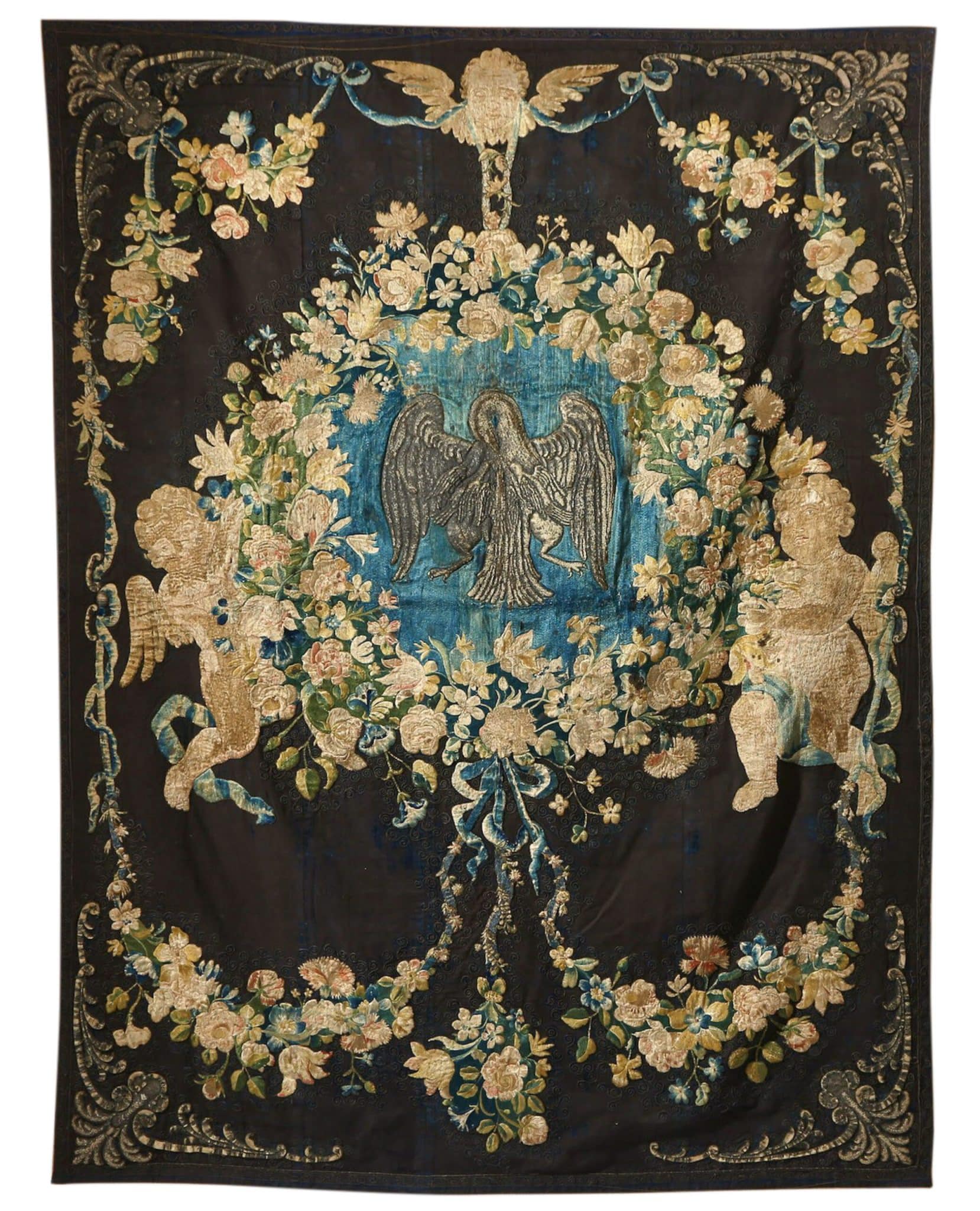
A large embroidered hanging on a deep blue crimson velvet ground with a central light-blue velvet reserve enclosed by a luxuriant floral wreath. Within the roundel appears the Pelican in her Piety, worked in silver and silver-gilt thread, wings outstretched and breast pierced to feed her young—a Eucharistic emblem of Christ’s sacrifice. The wreath is composed of naturalistic roses, lilies, carnations and other blossoms in shaded silks. To either side, finely rendered winged putti sit among the sprays, while above, a larger angel caps the composition. The crimson field is enriched with scrolling foliate ornament in silver thread and further floral sprays tied with bows.
Executed in silver and silver-gilt passing threads (lamella wound on silk cores) with fine couching and areas of padded work and silk shading, the panel displays the sculptural modelling and painterly transitions associated with the highest levels of court embroidery of the late sixteenth century.
The proportions—taller than wide—and finished edges are consistent with use as a bed curtain or tester hanging for a state bed; alternatively it could have served as a wall hanging or cloth of estate behind a bed or chair in a chapel or privy chamber.
The pelican in her piety was a widespread Counter-Reformation device signifying the Real Presence in the Eucharist. In combination with putti and flower garlands (roses for the Virgin, lilies for purity, carnations for love/sacrifice), the imagery aligns with Catholic court taste in France and the Low Countries in the later Valois period—precisely the milieu of Mary Stuart’s patronage and collecting.
The three-dimensional handling of the putti, the naturalistic florals, and the virtuoso metal-thread work point to French royal-court practice (often Paris or Lyon) or closely related Franco-Flemish ateliers:
Royal embroideries for the Order of the Holy Spirit, Paris, 1580s (Louvre): large devotional textiles with central reserves, angels/putti, and sumptuous metal-thread grounds, executed with or-nué-like shading and heavy couching—closely parallel in technique and effect.
Musée des Tissus, Lyon, 16th-century figure embroideries: velvet-ground panels with silver-gilt passing thread and shaded silks, combining floral festoons with sacred emblems.
V&A, London, French/Flemish embroideries, late 16th c.: figure panels and hangings on dark velvets with sculptural putti and mixed silk/metal thread work, used as bed and altar furnishings.
Taken together, these comparators support a French (or Franco-Flemish) workmanship dating circa 1570–1600, plausibly made for export to a Scottish or English Catholic household. The subject and palette harmonise with entries in Mary, Queen of Scots’ inventories that record blue velvet beds and hangings enriched with gold and silver embroidery.