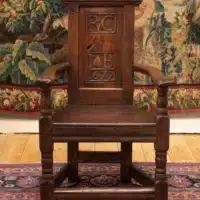
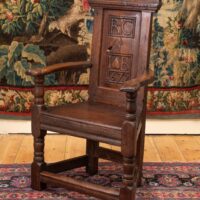
Scottish Caquetoire Armchair
- Period
- 1672
- Origin
- Aberdeenshire, Scotland
- Dimensions
- W 26 3/4" × H 44 1/2" × D 19"
- Reference
- #Marh2514
This piece has been sold. It is shown here for reference in our archive.
Description
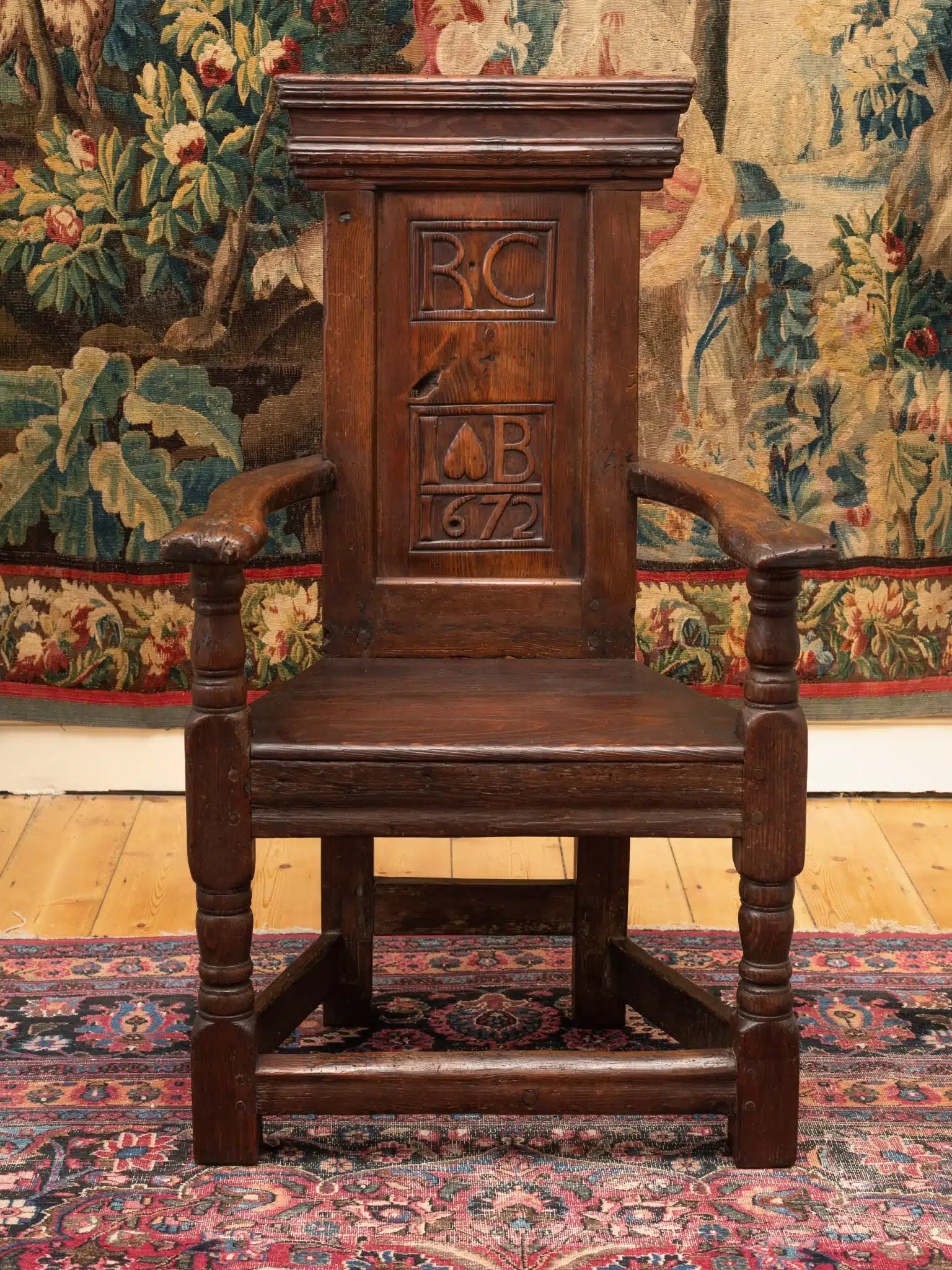
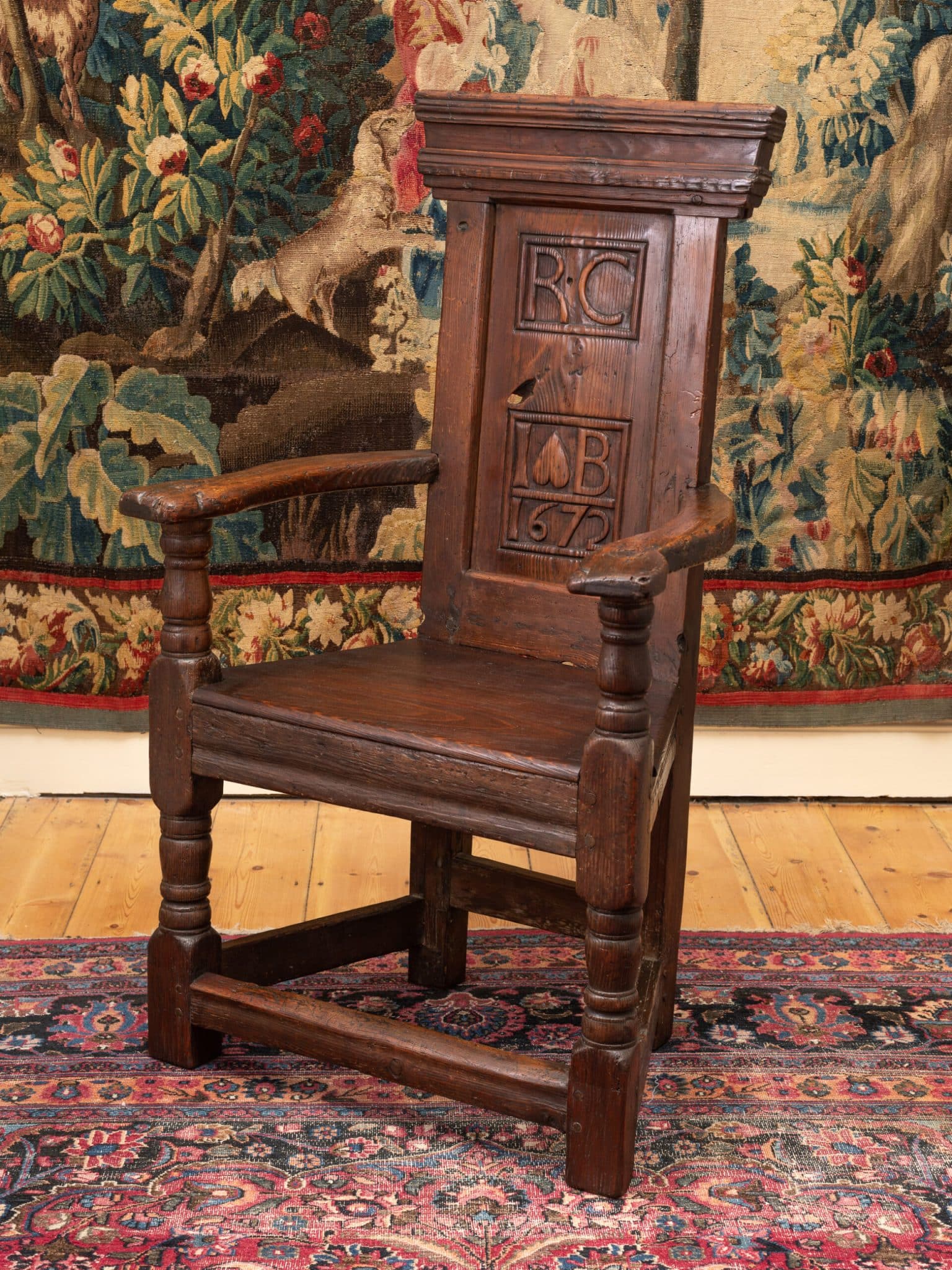
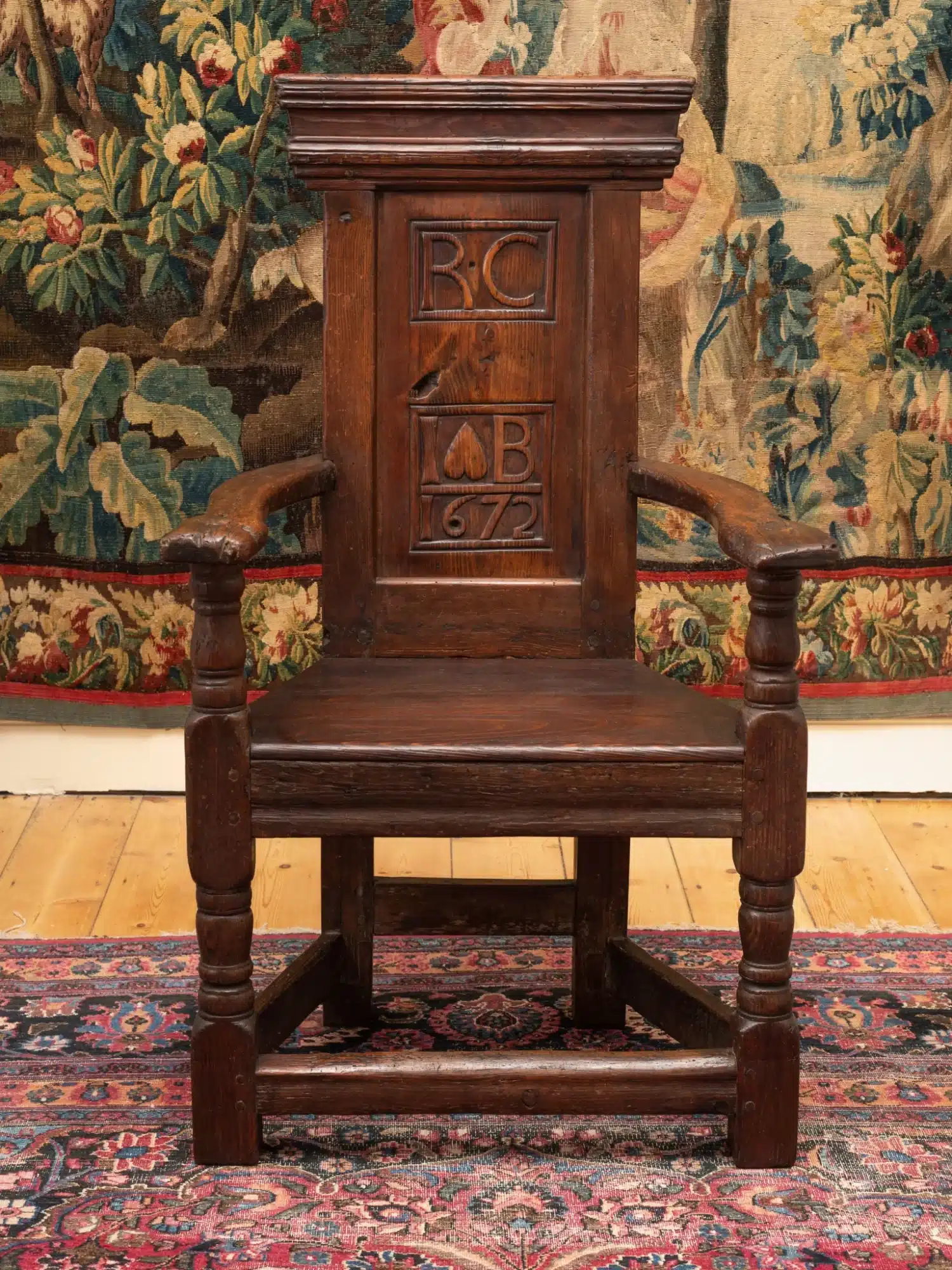
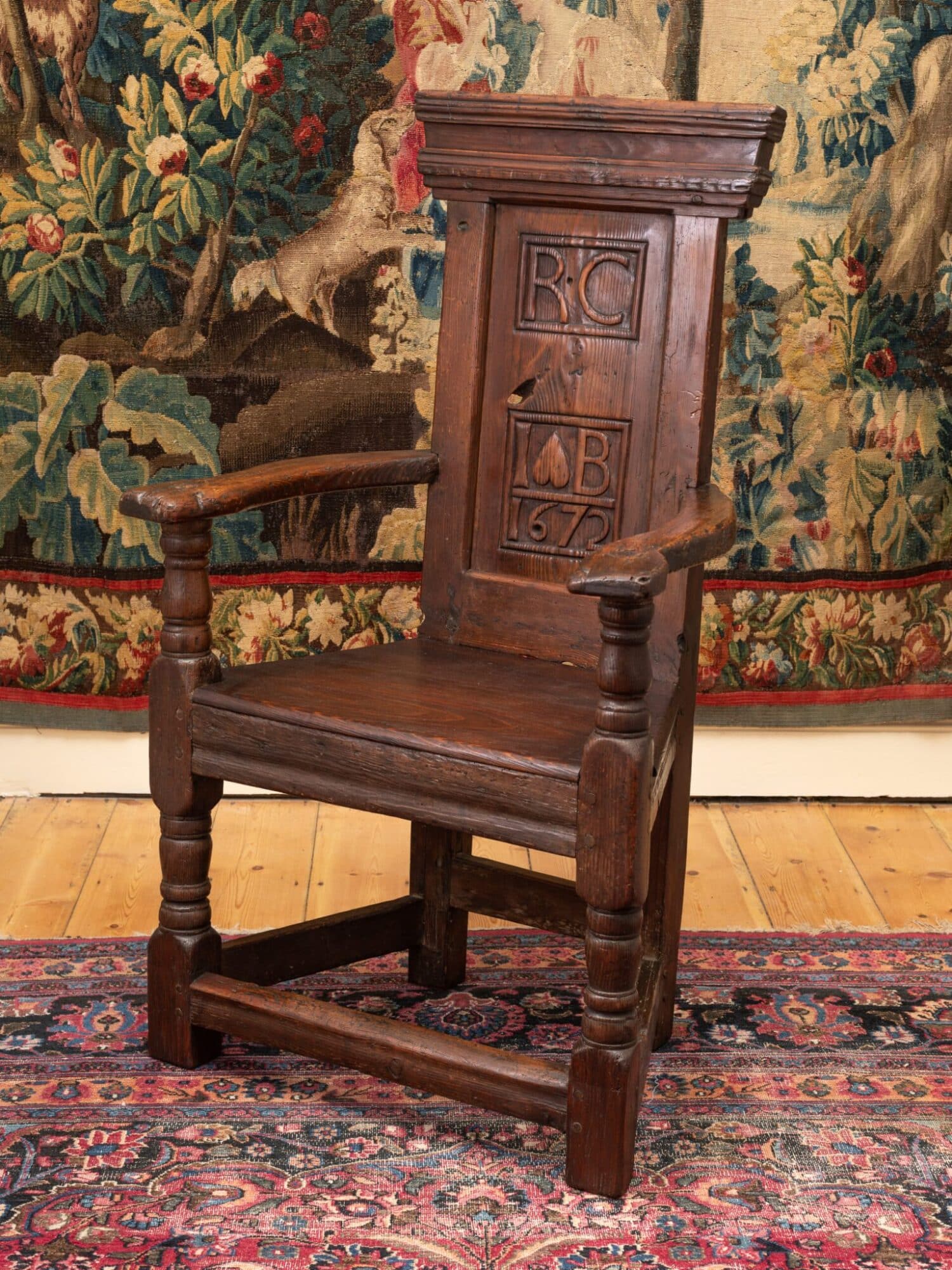
A Scottish carved pine caquetoire armchair, dated 1672 and boldly incised with the initials R C and I B, divided by a central heart motif. The design, with its narrow back rest, trapezoidal seat, and strongly horizontal shaped arms, corresponds closely to the distinctive Scottish caquetoire tradition of the 17th century.
The heart flanked by initials leaves little doubt as to its function: this is a marriage chair, commissioned to commemorate a union of two families. The heart, a pervasive Scottish emblem, symbolises both conjugal love and Christian fidelity. By placing it between the paired initials, the carver created a permanent and visible statement of union and belonging.
Constructed in robust local pine and retaining fine period colour, the chair typifies the caquetoire form associated particularly with Aberdeenshire and the North-East. The trapezoidal seat allowed it to stand snugly against the wall of a hall or chamber, while the strong, upright back with its inscribed panel acted as a heraldic proclamation of the owners’ identity.
Chairs of this type were rare and costly commissions in 17th-century Scotland, typically reserved for prominent display in the household. This example not only embodies the regional style but also carries the personalised social history of a marriage in 1672, making it both a cultural artefact and a tangible record of family life in post-Restoration Scotland.
Comparative Literature:
Stephen Jackson, Scottish Caquetoire Armchairs, Regional Furniture (2021), for discussion of form, dating, and symbolic inscriptions.