 Sold
Sold
The Road to Emmaus
- Period
- Circa 1650
- Origin
- Flemish, Brussels
- Dimensions
- W 132" × H 108"
- Reference
- #Marh2680
This piece has been sold. It is shown here for reference in our archive.
Description
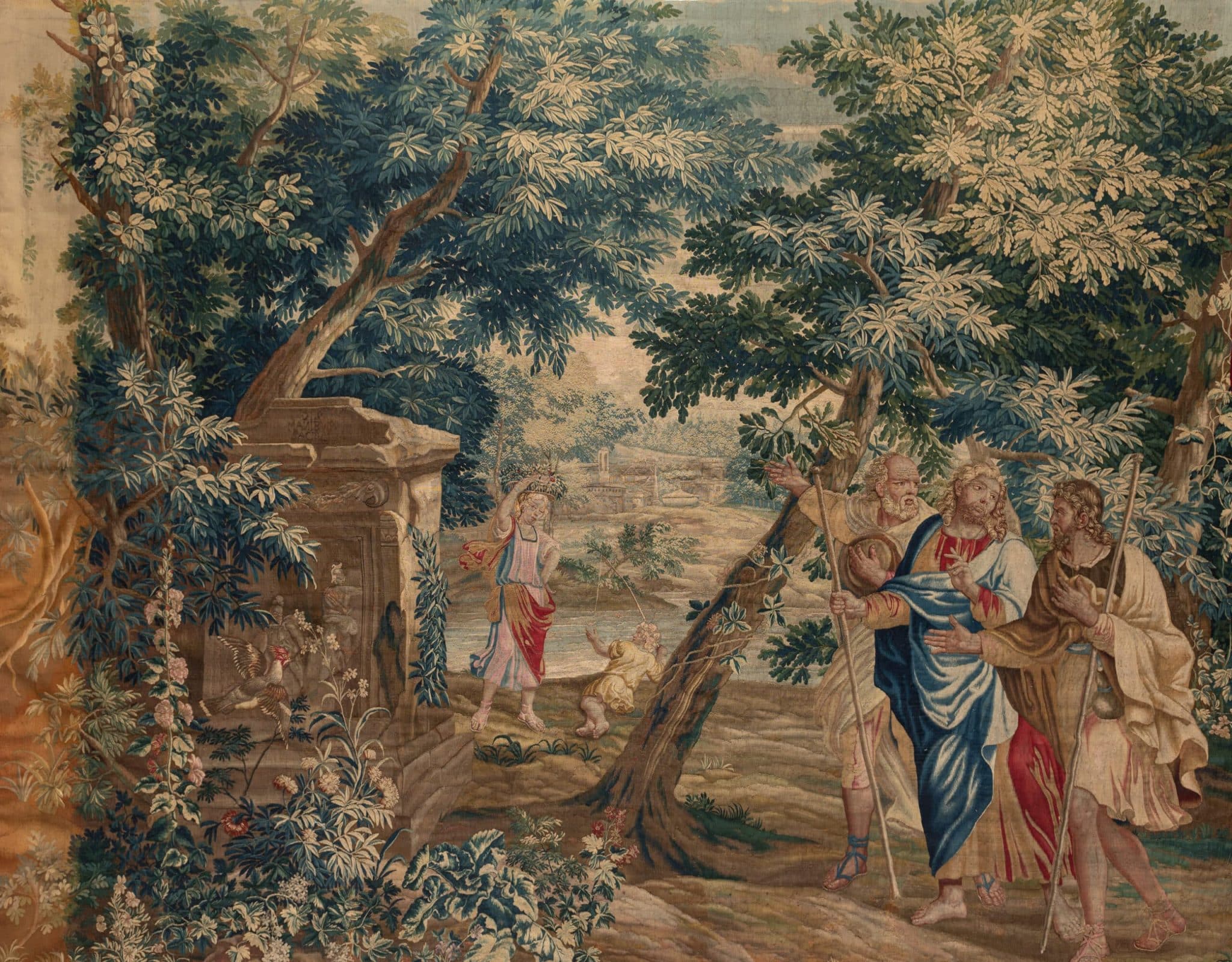
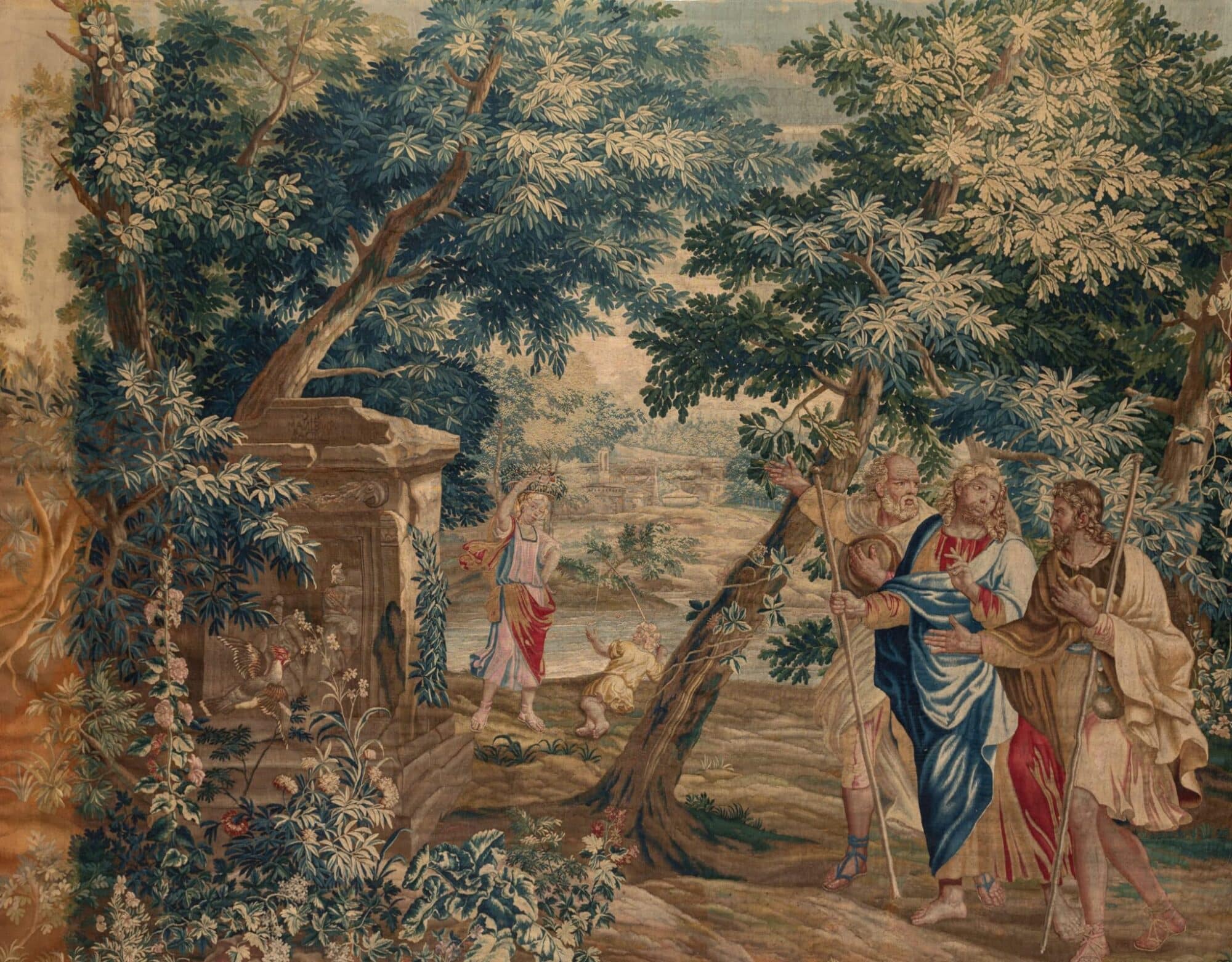
A monumental mid-17th century Flemish tapestry, woven in wool and silk, depicting the biblical episode of the Road to Emmaus, from the Gospel of Luke 24:13–35. The scene takes place on the day of the Resurrection, when two disciples, troubled and disheartened, walk to the village of Emmaus. They are joined by the risen Christ, whom they do not at first recognise. Christ, richly robed in blue and red, gestures as he explains the meaning of the scriptures to them, while the disciples listen intently.
The composition is set within a richly wooded landscape, with abundant foliage, flowering plants, and architectural ruins. To the left, a rooster is shown — a subtle allusion to Peter’s denial and the fulfilment of Christ’s prophecy — while in the distance further figures animate the background, adding narrative depth. The careful modelling of the figures, the expressive drapery, and the harmonious balance of colours are characteristic of Brussels weaving of this period, with silk highlights enhancing the luminosity of the scene.
The Road to Emmaus formed a crucial episode within Resurrection cycles, embodying the moment when Christ’s presence is made manifest, yet not immediately recognised, underscoring the mystery of faith. Tapestries of this type would have been commissioned for ecclesiastical or noble patrons, to adorn churches, chapels, or palaces during major liturgical celebrations.