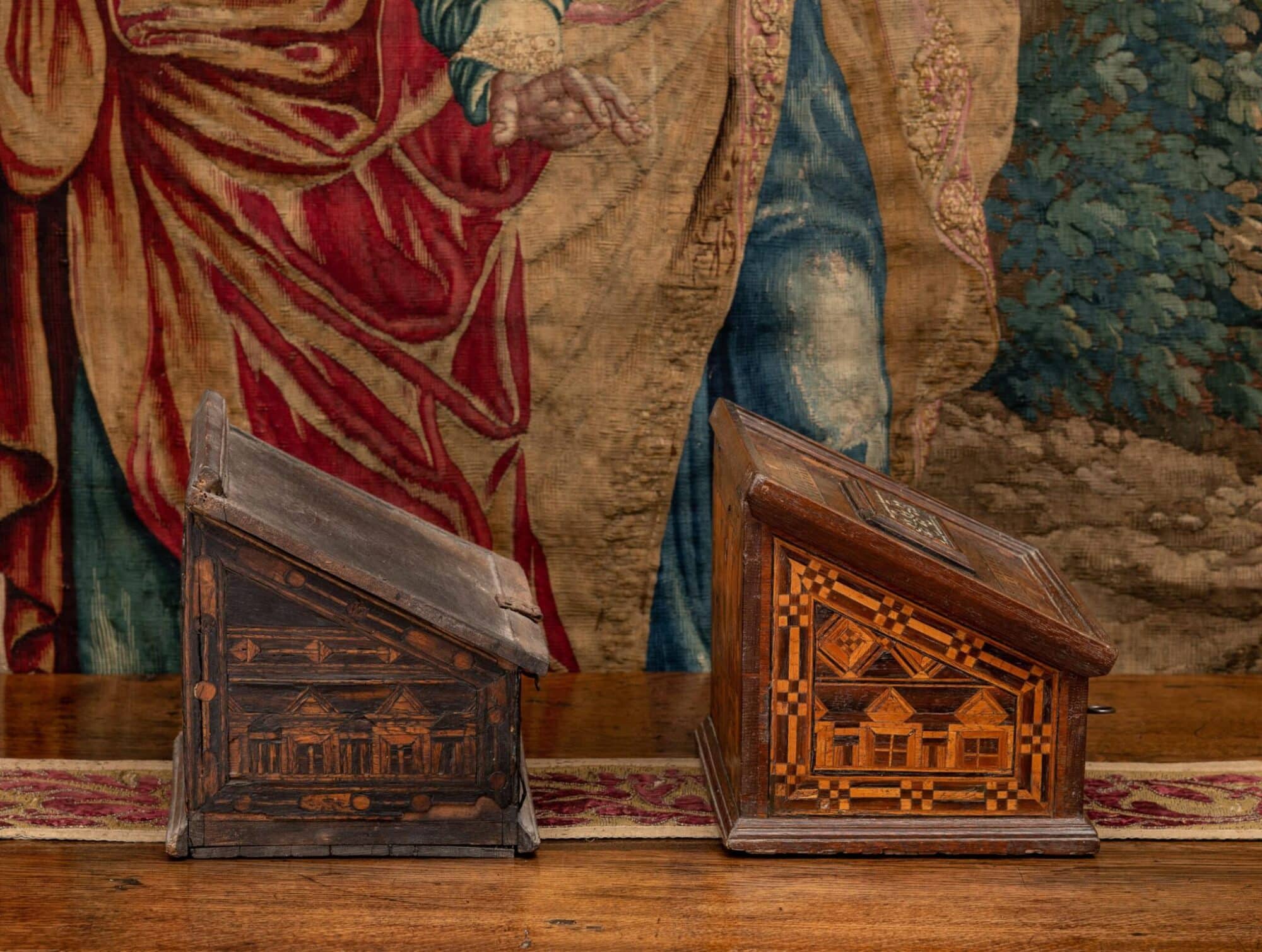
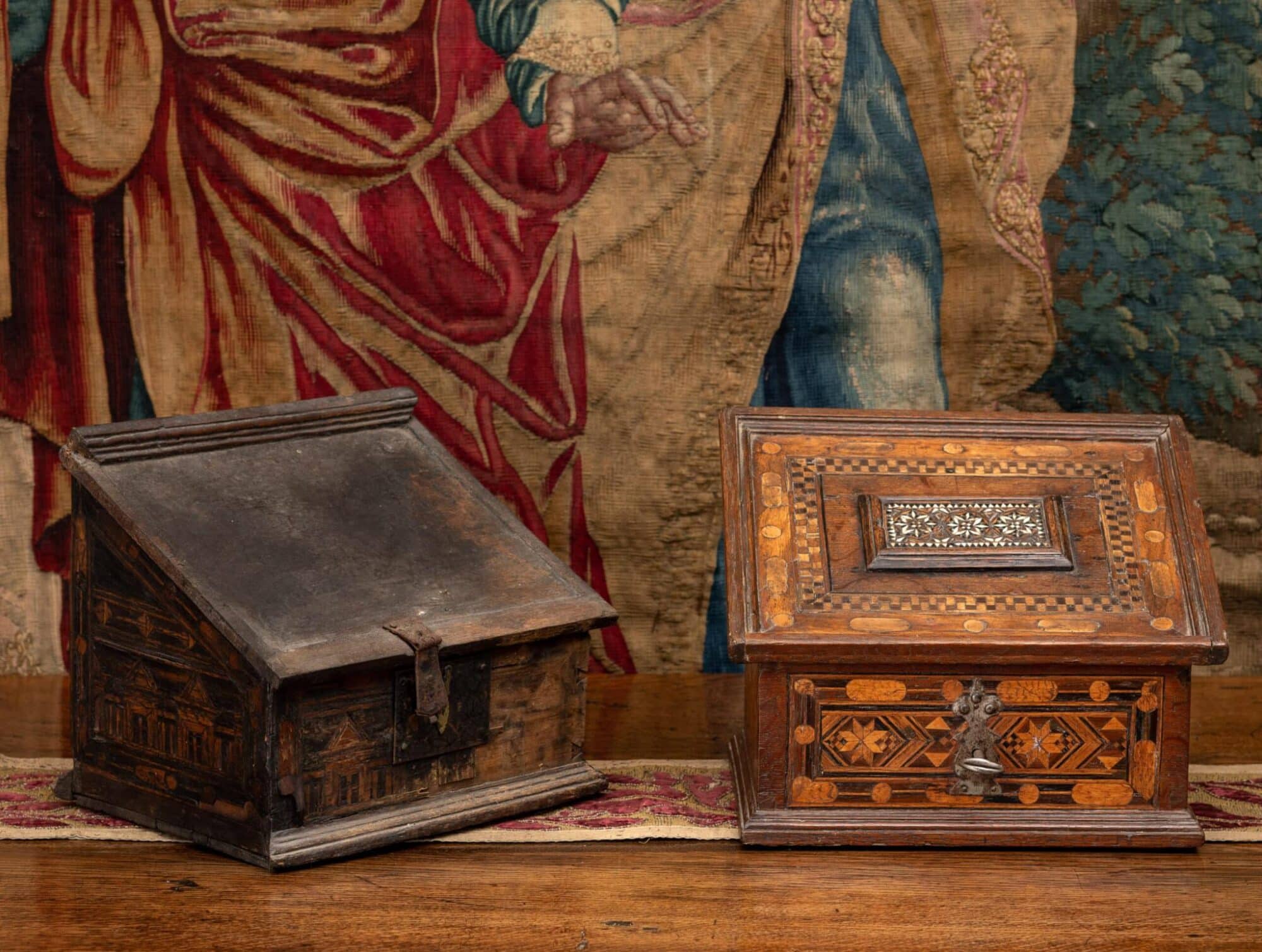
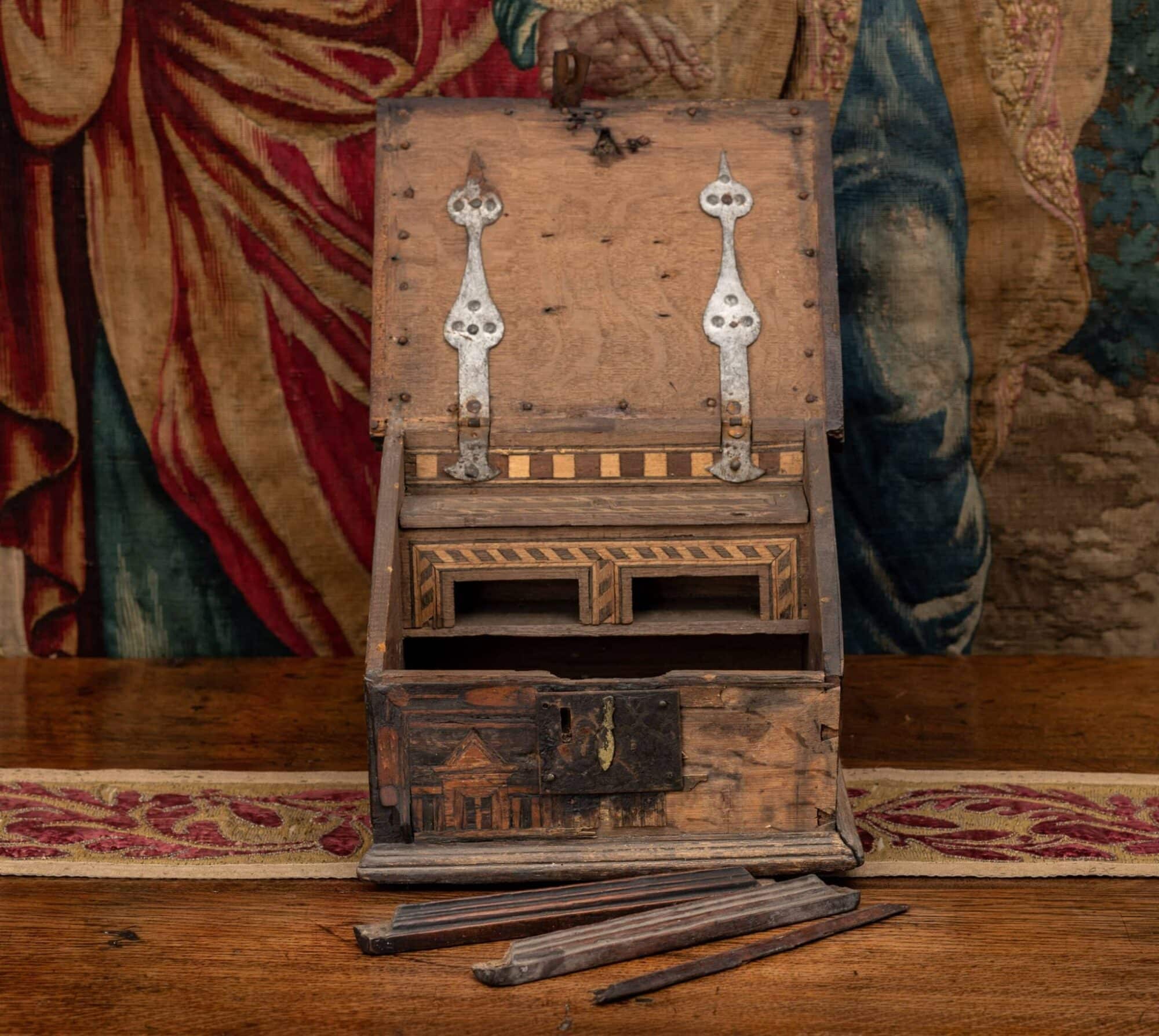
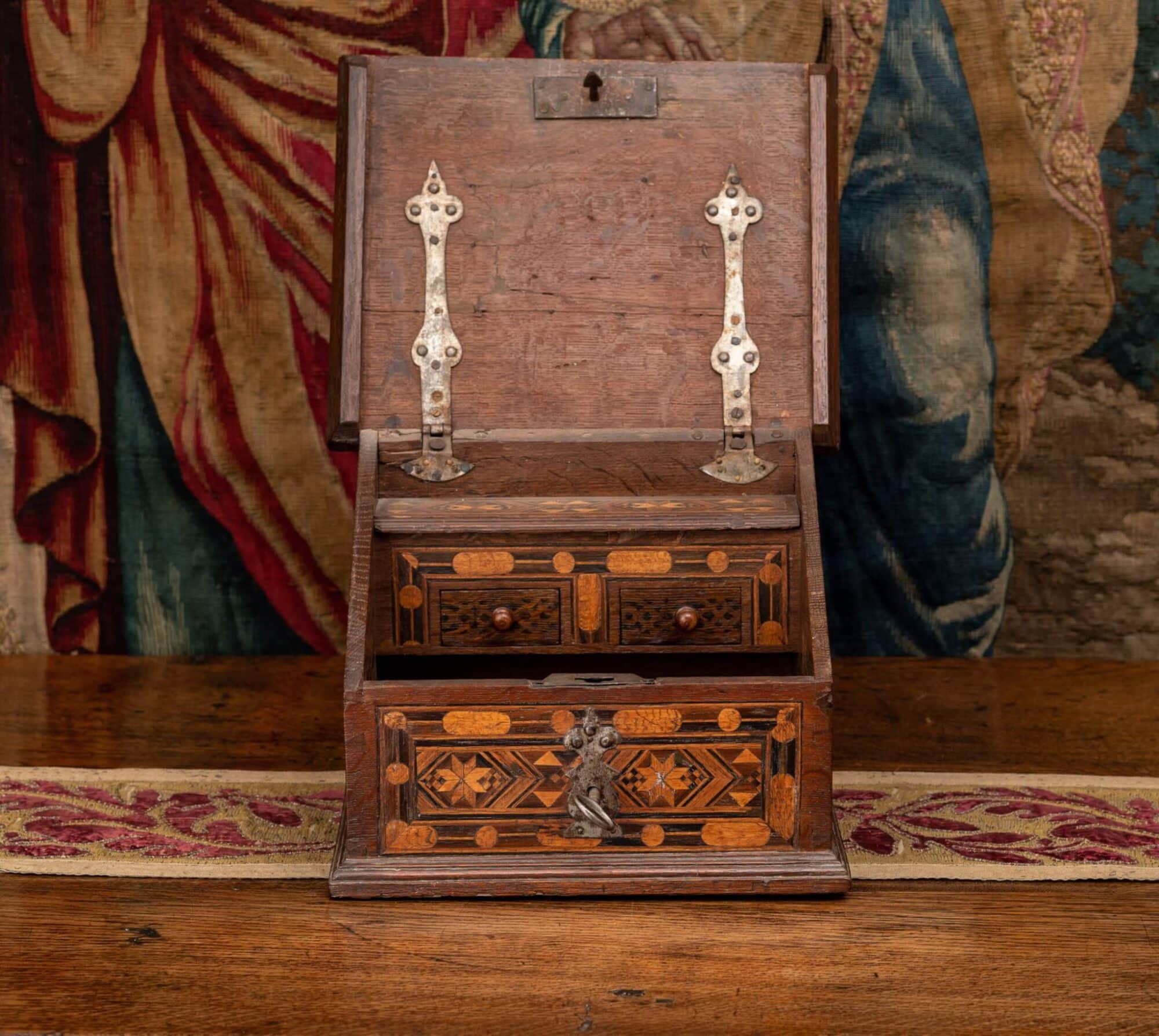
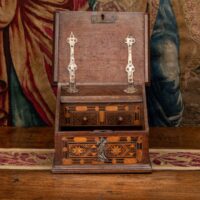
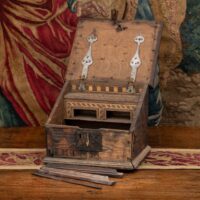
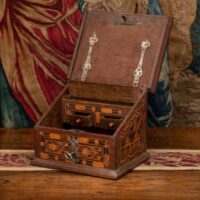
Two Nonsuch Inlaid Desk Boxes
- Period
- 1550 - 1580
- Origin
- England (Southwark, London)
- Dimensions
- W 10 3/4" × H 9 3/4" × D 9"
- Reference
- #Marh2698
This piece has been sold. It is shown here for reference in our archive.
Description
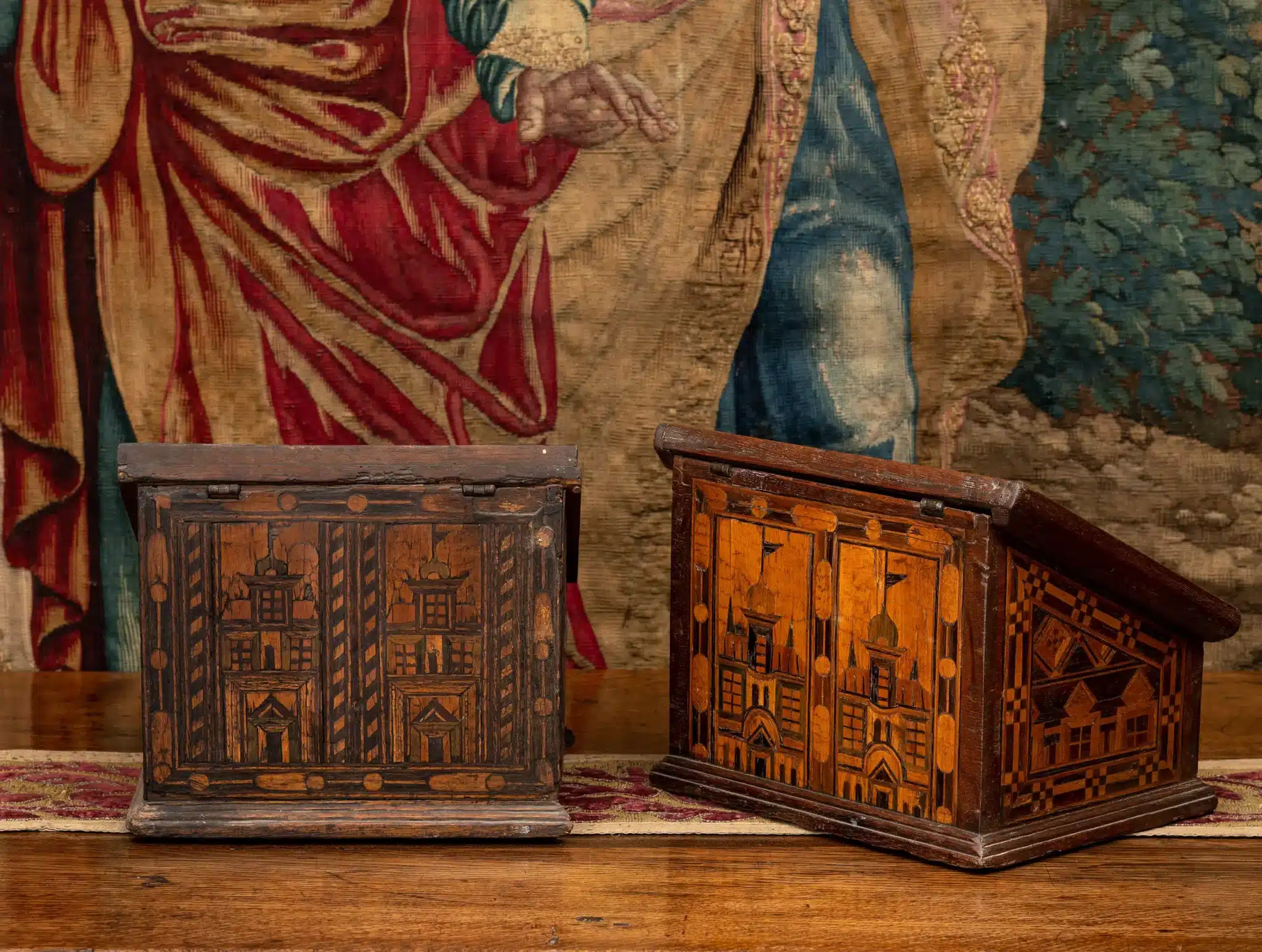
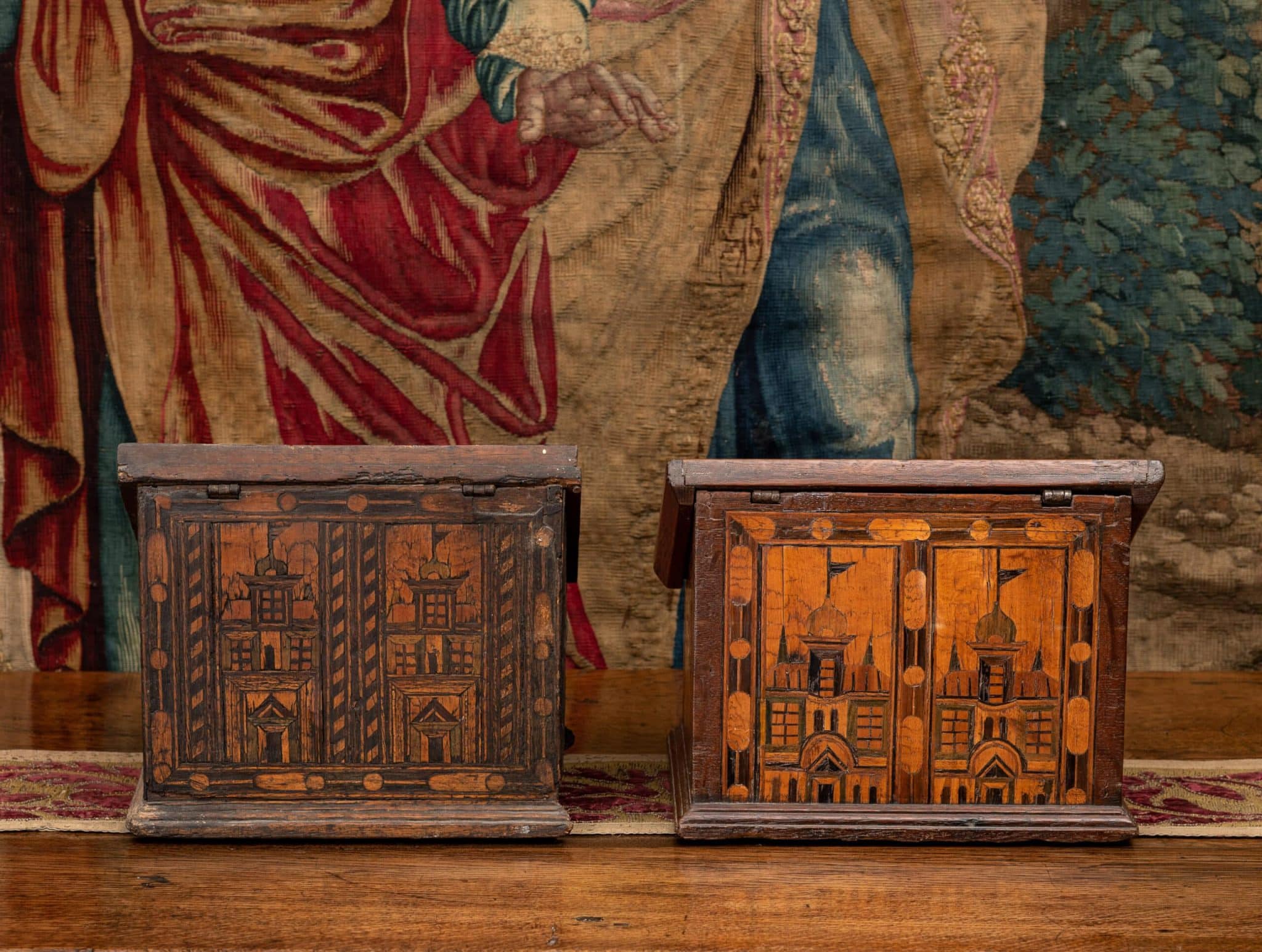
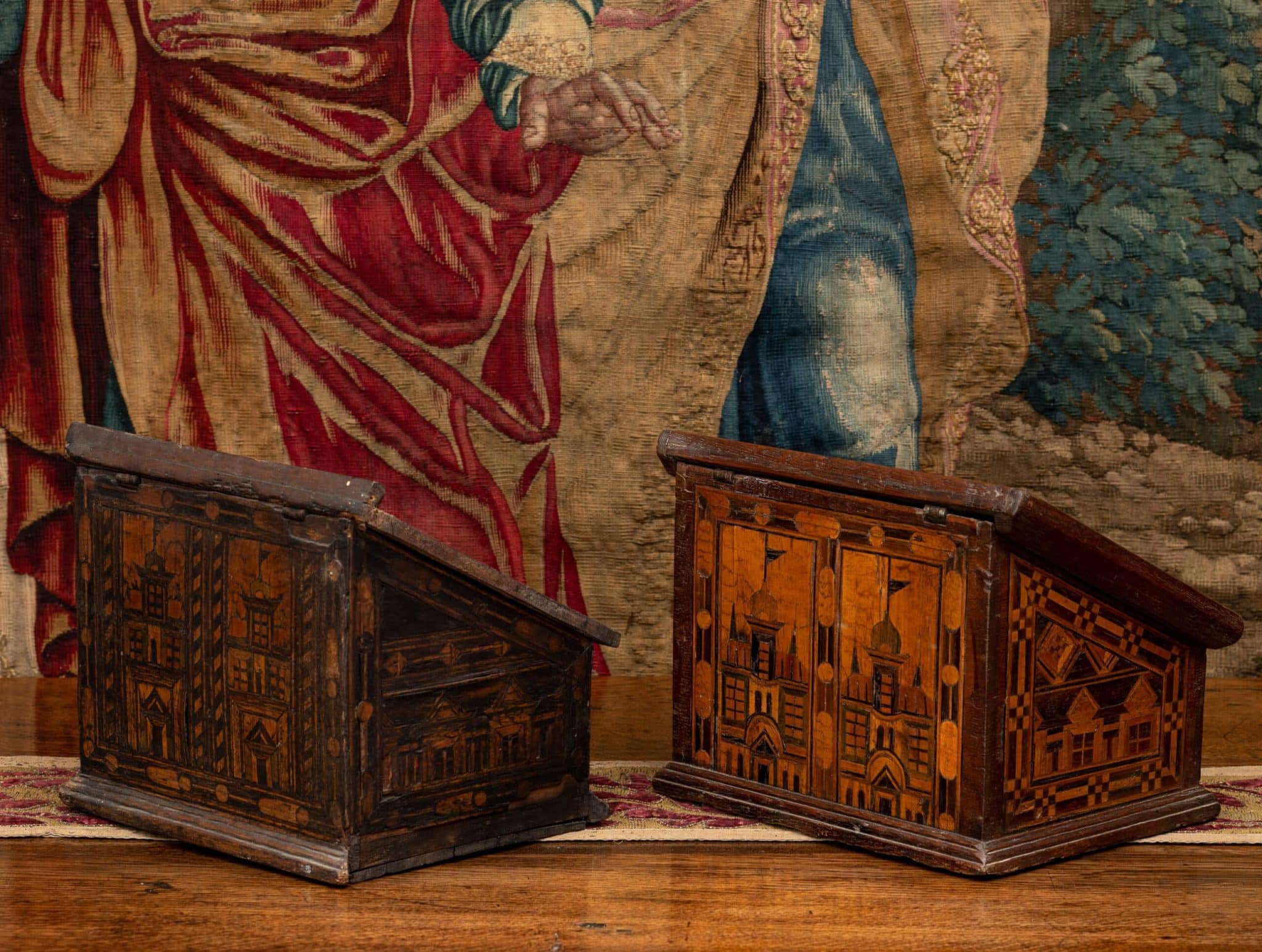
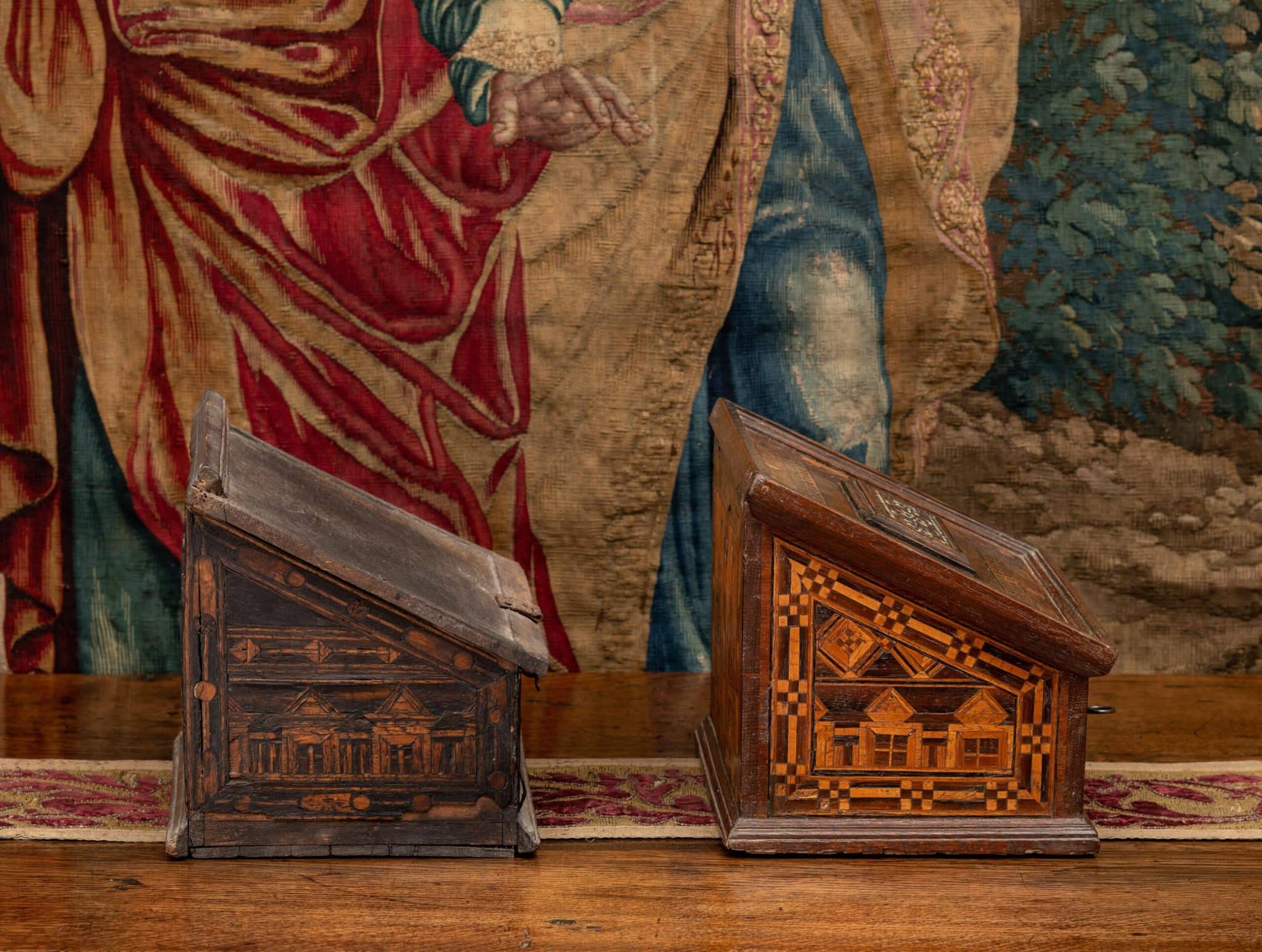
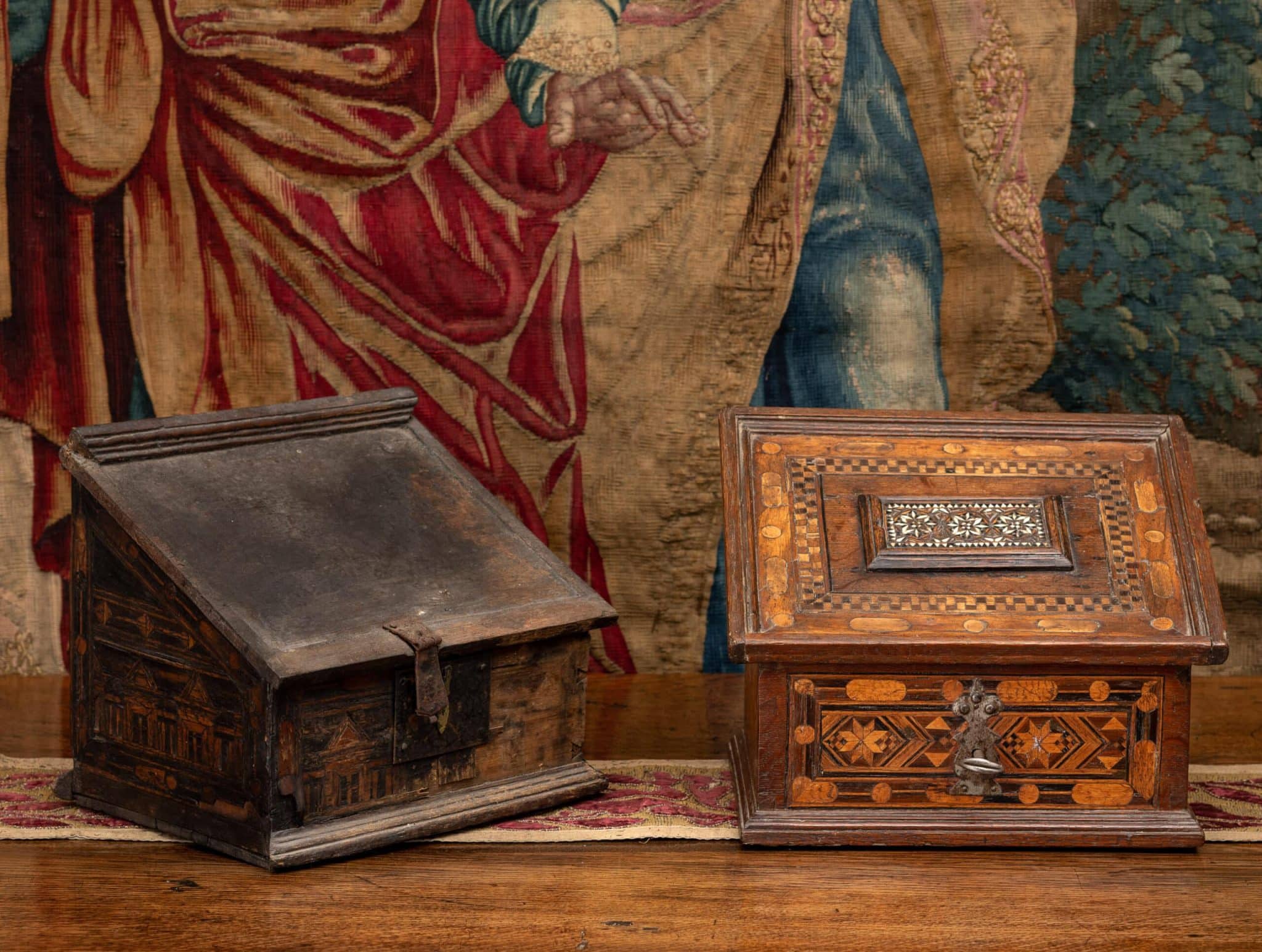
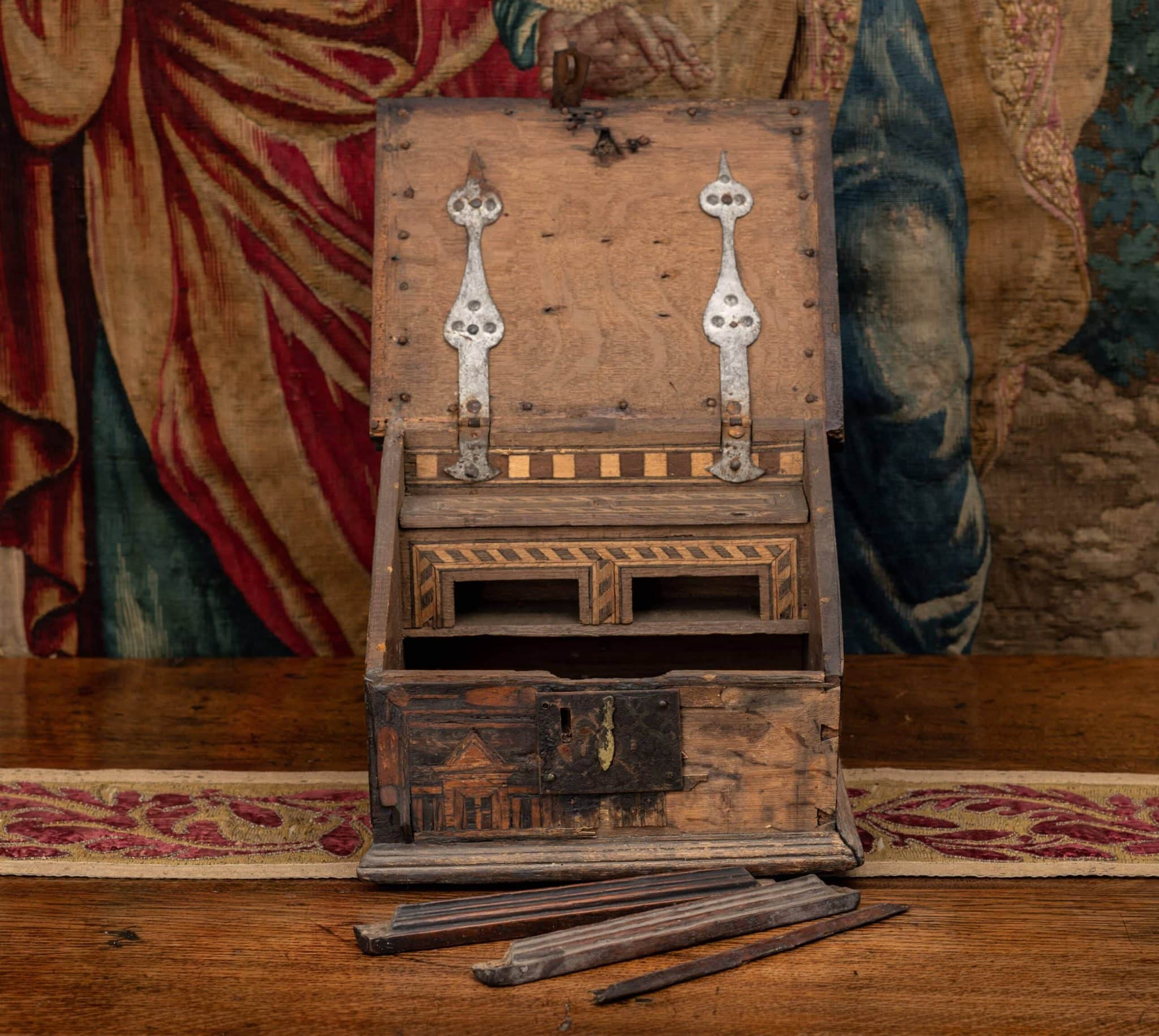
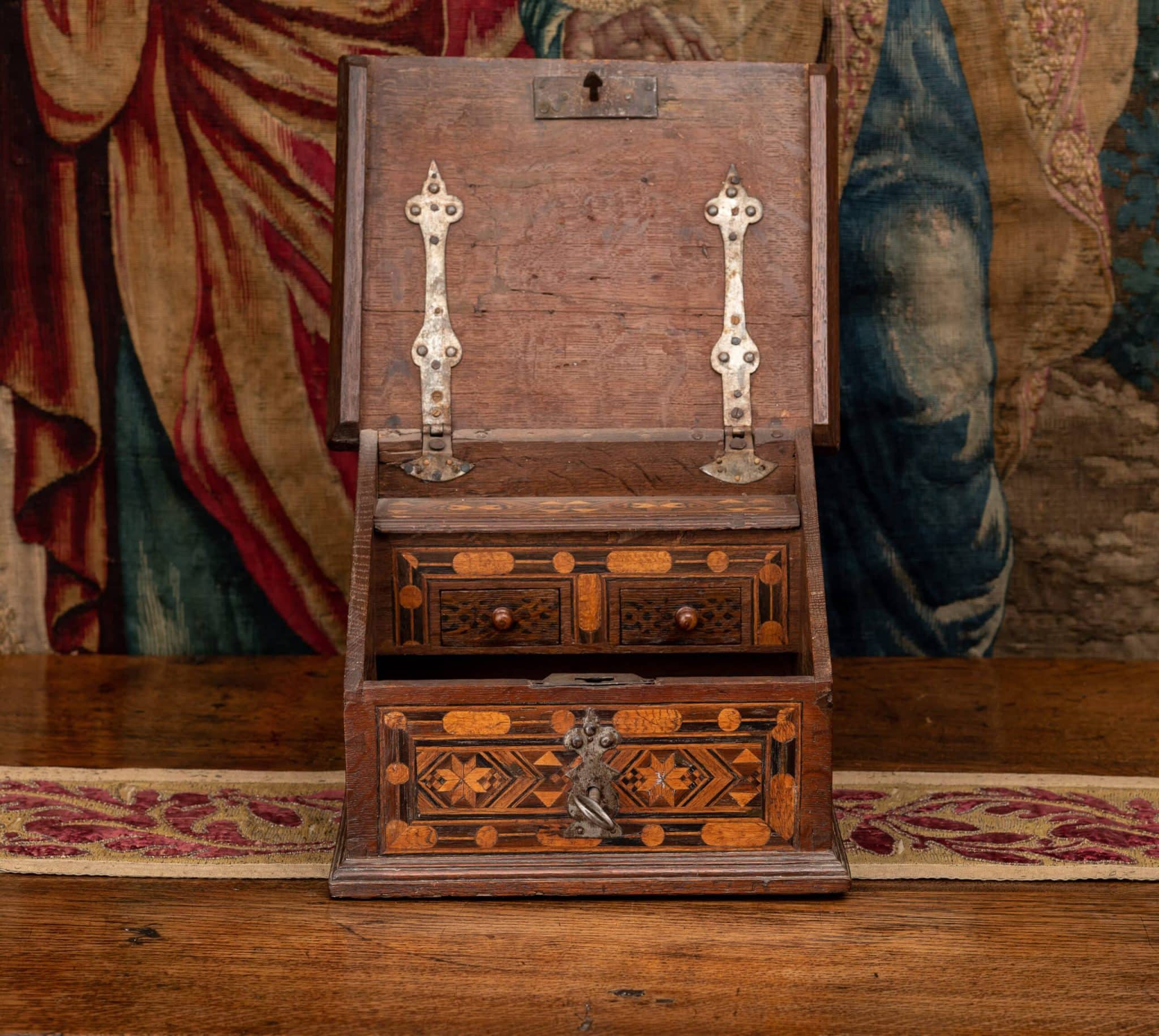
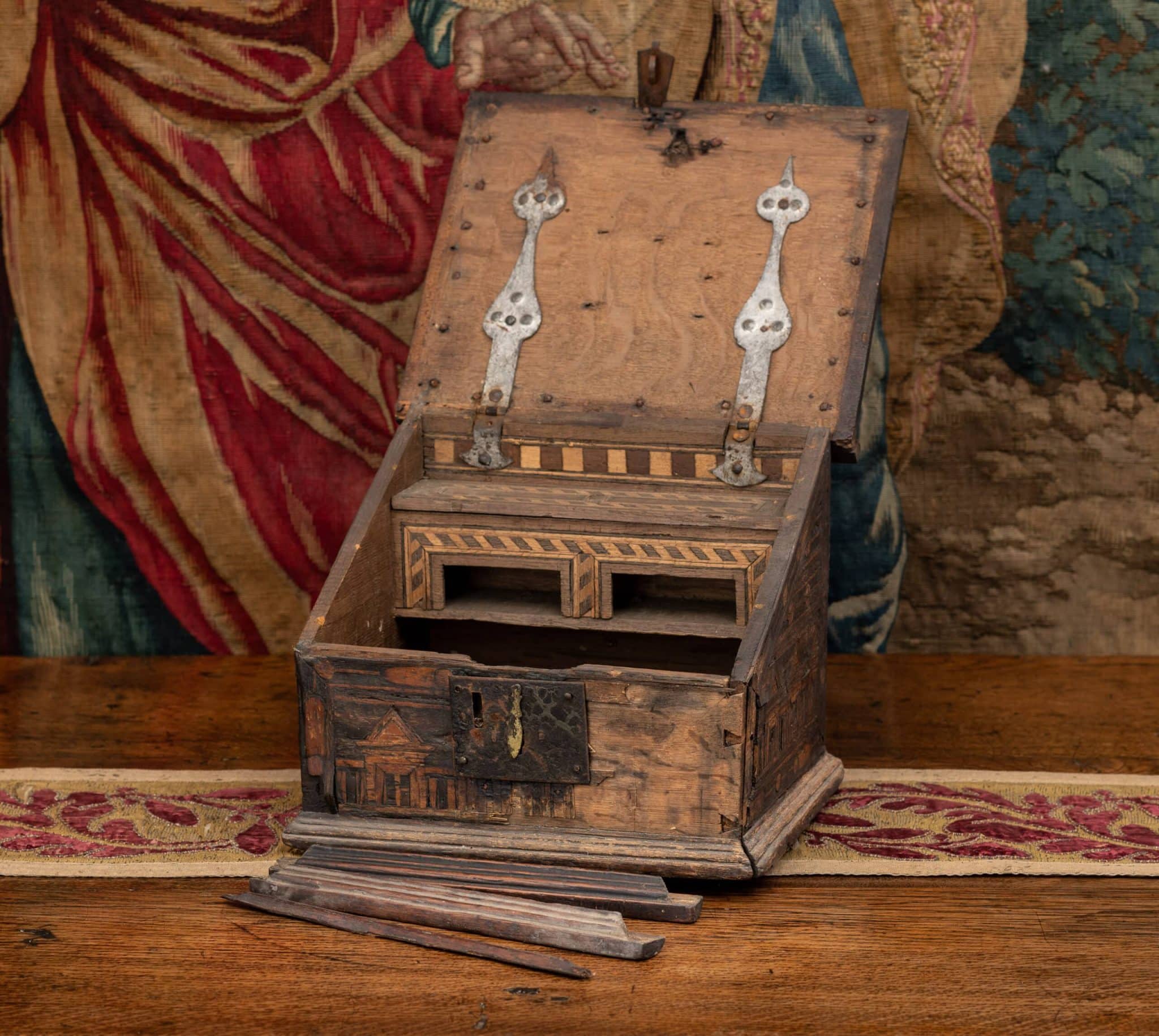
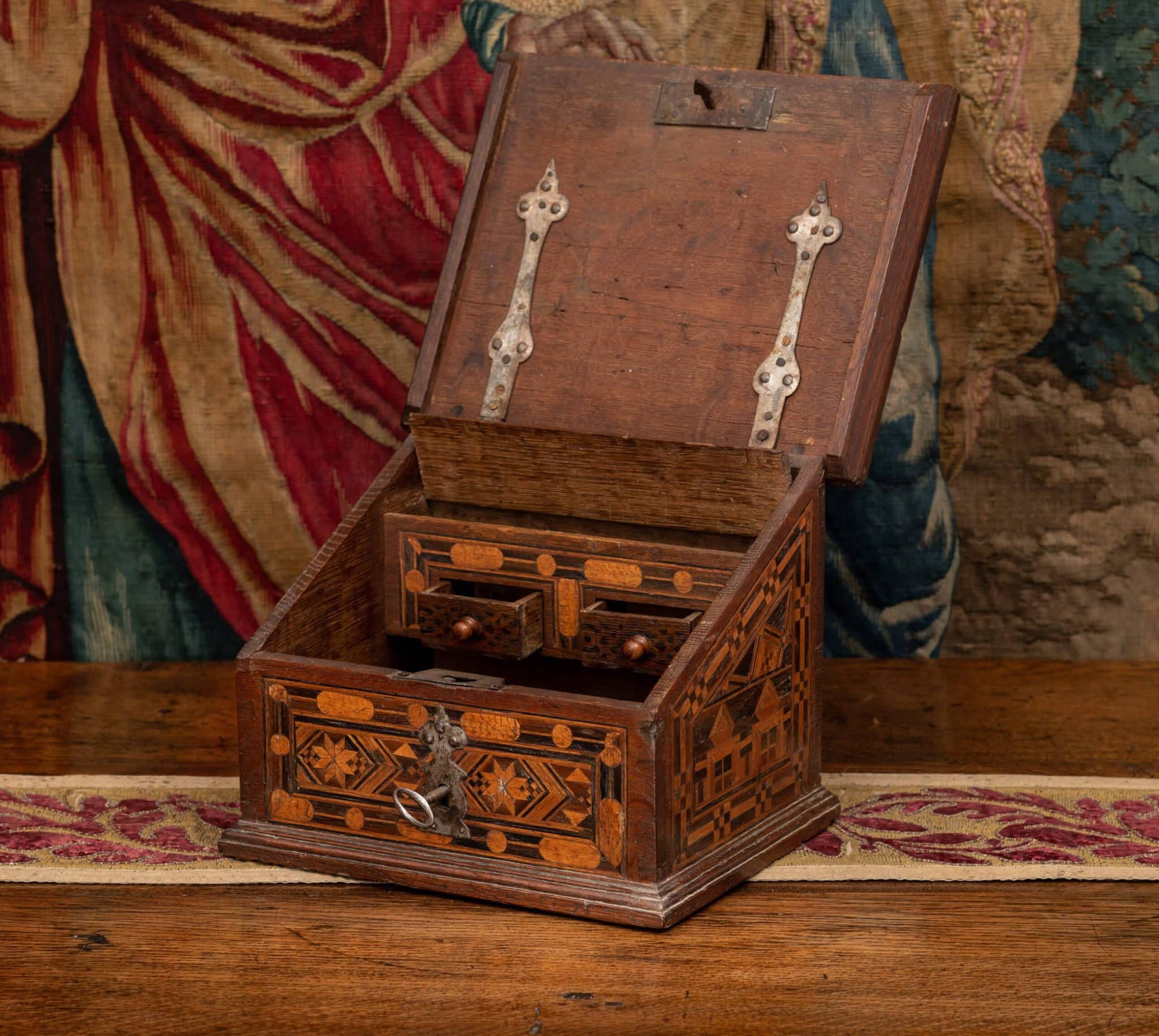
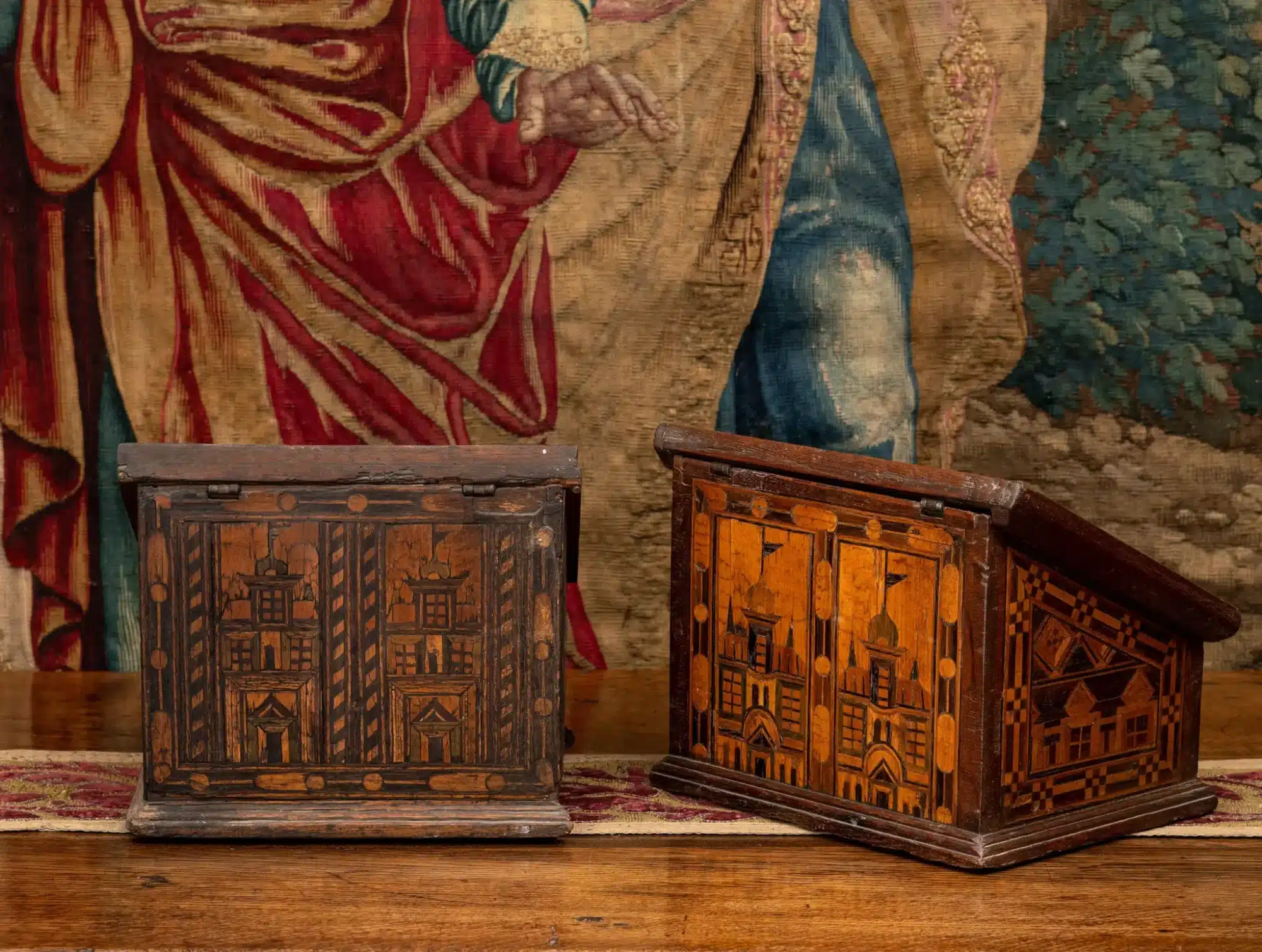
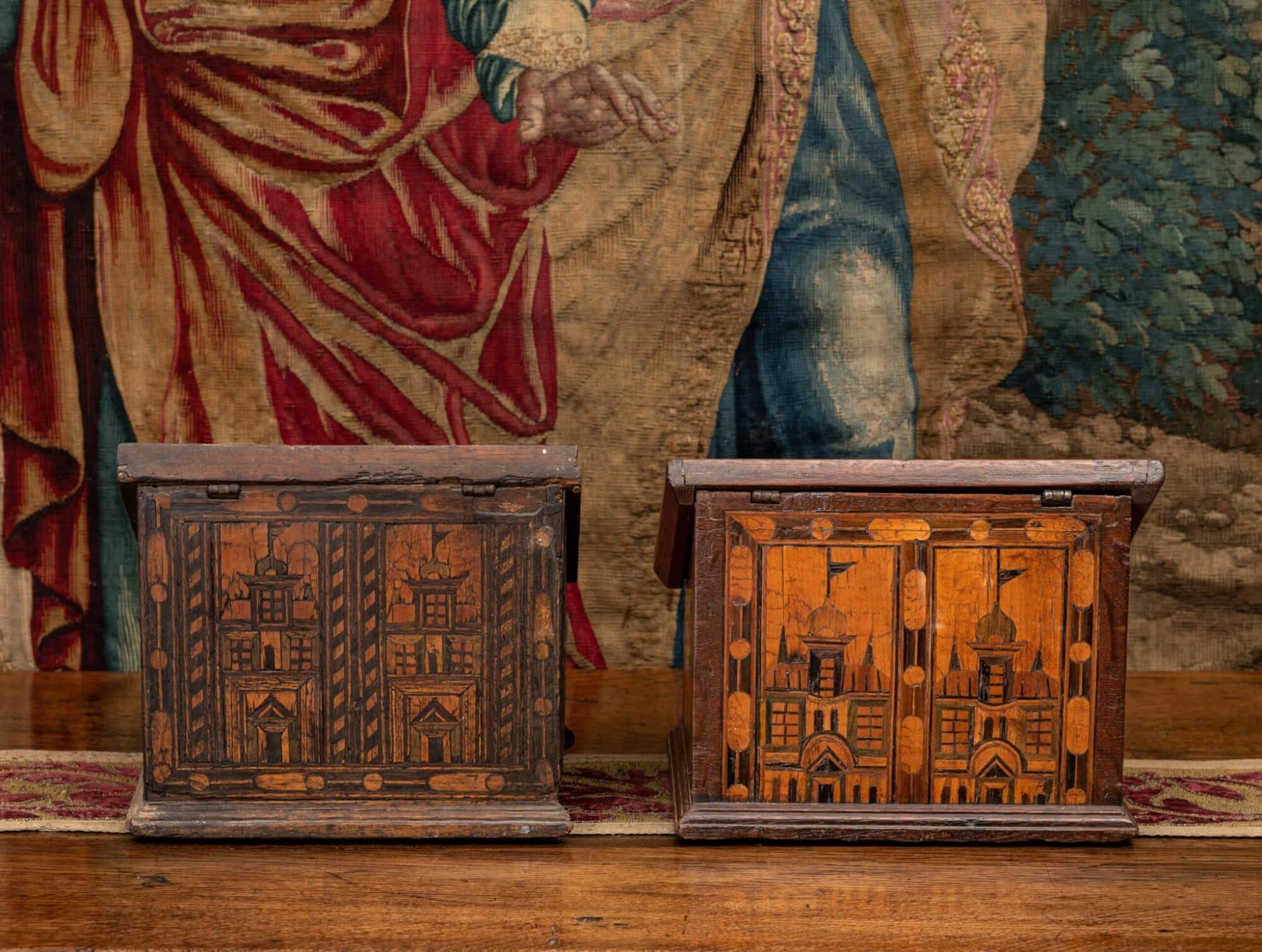
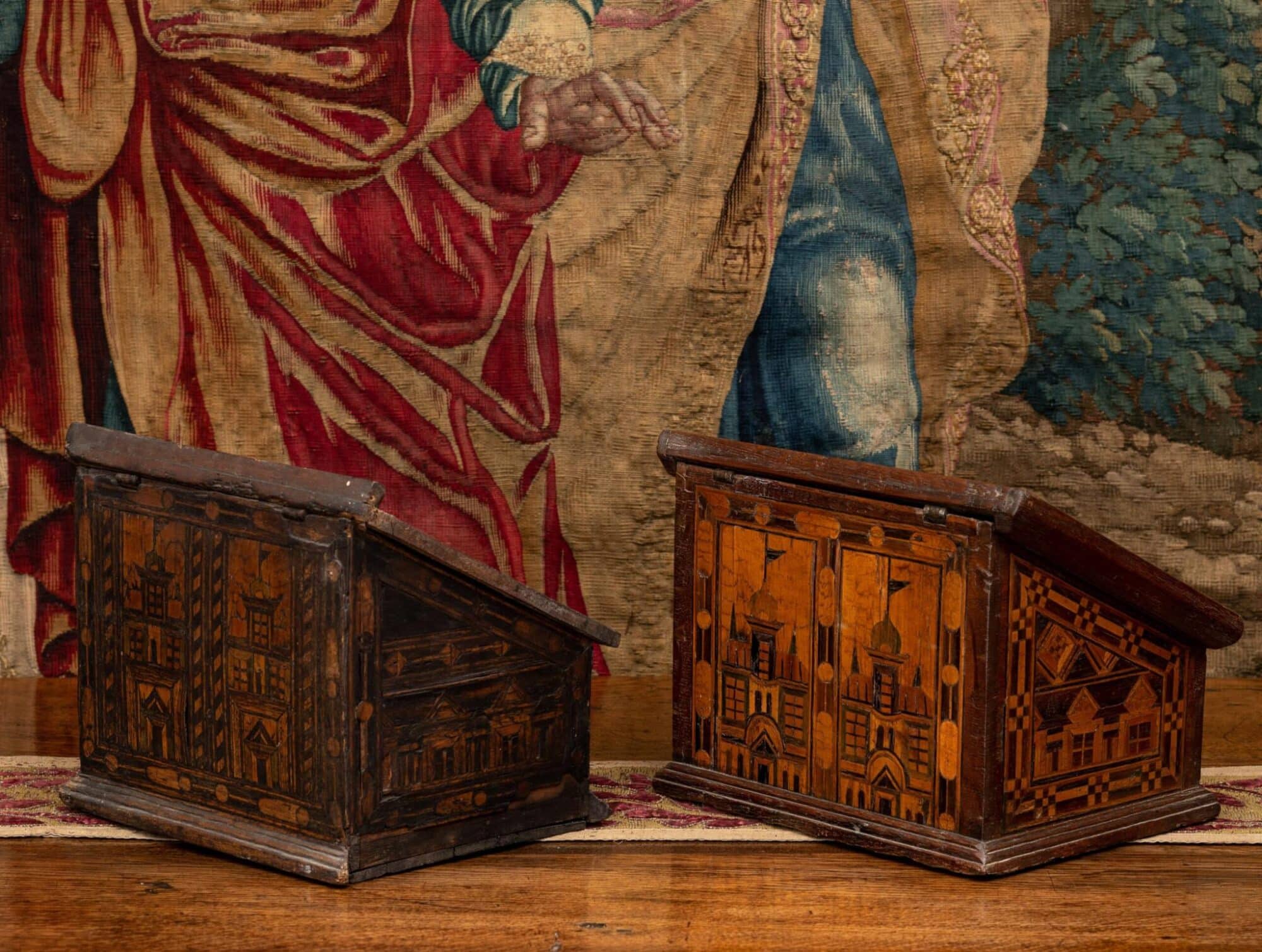
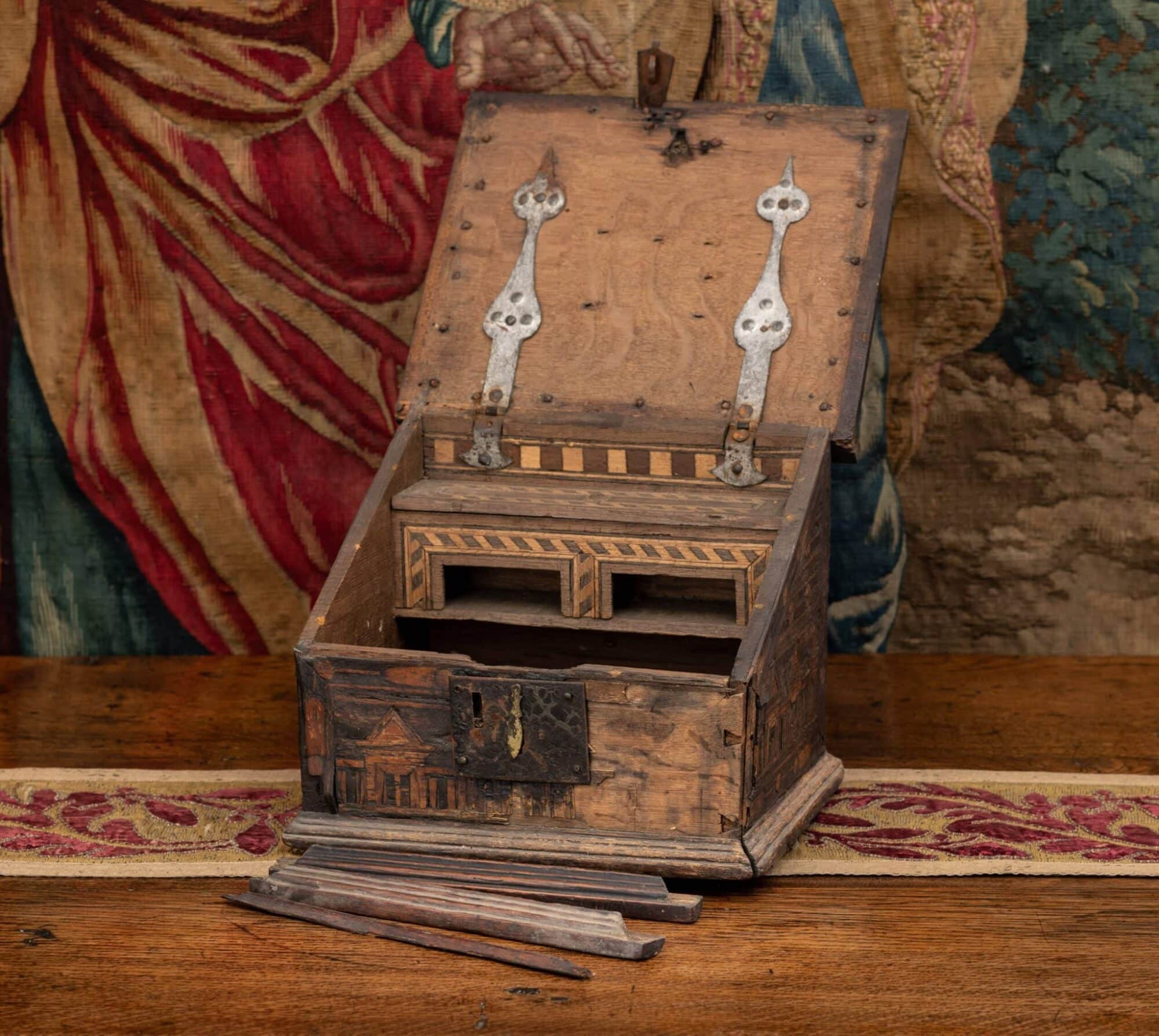
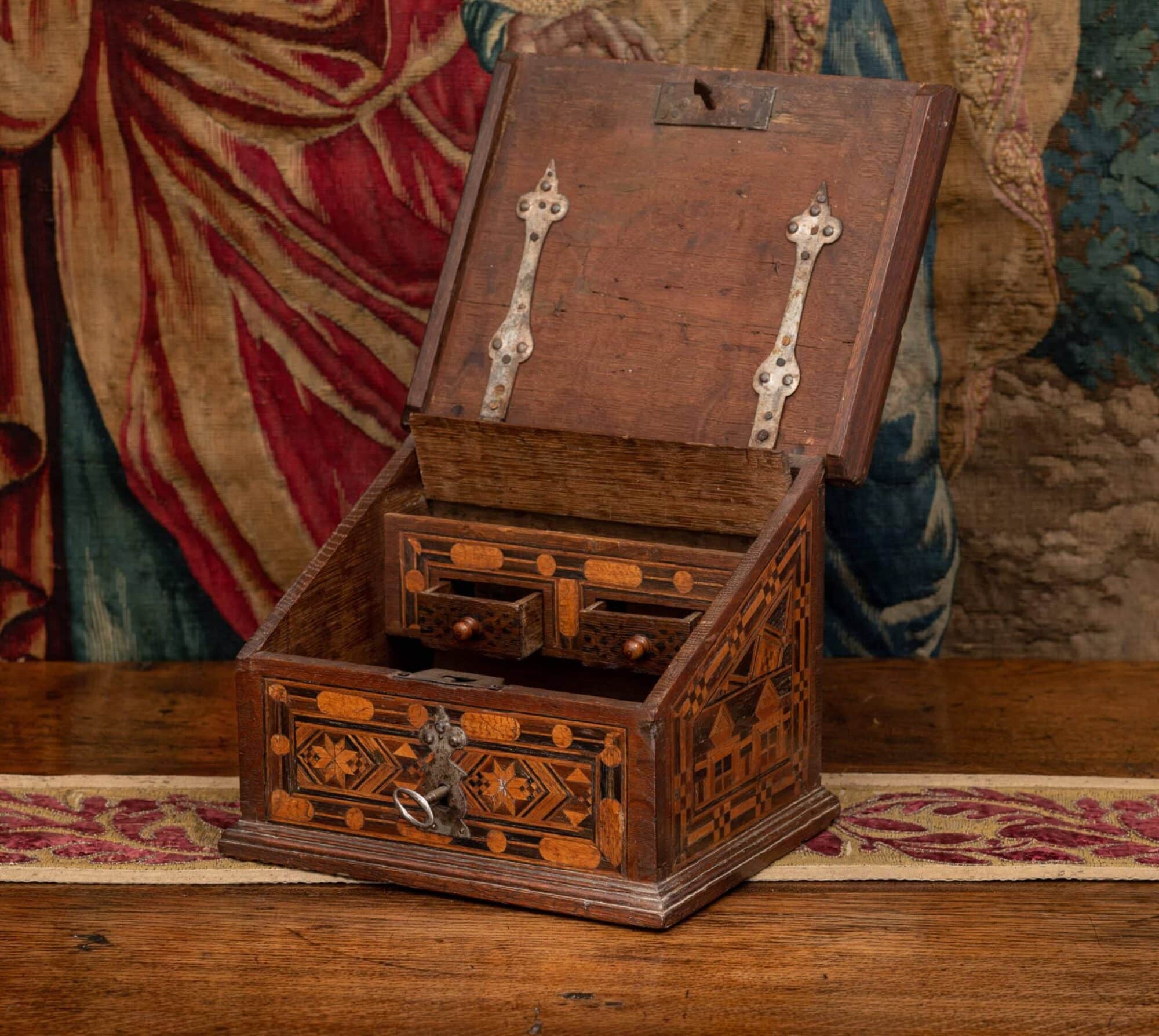
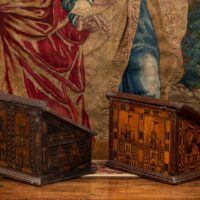
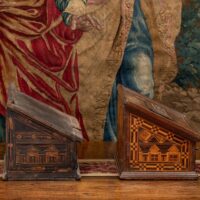
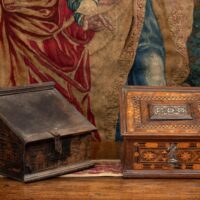
A rare pair of small oak desk boxes, each with sloping lids and applied mouldings, finely inlaid to the front, sides, and top with chequer, dot, and geometric banding enclosing fantastical turreted buildings. These architectural motifs are characteristic of the celebrated “Nonsuch” chests, so-called because their imagery is associated with Henry VIII’s great palace of Nonsuch (begun 1538, now demolished).
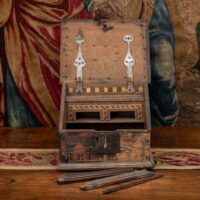
The present examples, unusually preserved as a pair, display extensive inlay of fruitwoods and bog oak, with traces of original green staining enhancing the façades of the buildings. Both retain their original tin strap hinges and iron locks. The interiors are fitted with small drawers and compartments — one retaining its sliding lidded till, the other with drawers veneered with contrasting geometric panels.
Symbolism:
The architectural designs were not merely decorative but symbolic of royal magnificence and the Renaissance ideals of order and grandeur. The turrets, towers, and façades echo contemporary engravings of palaces and civic pride, making these objects status symbols for the prosperous London merchant classes.
Context:
Boxes of this type are now firmly attributed to workshops of German émigré craftsmen working in Southwark, London, whose skills in intarsia and marquetry were highly prized. Though larger Nonsuch chests survive in greater numbers, smaller desk boxes are far rarer and would have been prized personal items for storing documents, writing implements, or valuables.
Rarity:
To have two examples almost certainly from the same workshop and hand is exceptional. Pairs are virtually unknown, making this a highly important survival of Tudor marquetry work.