 Sold
Sold
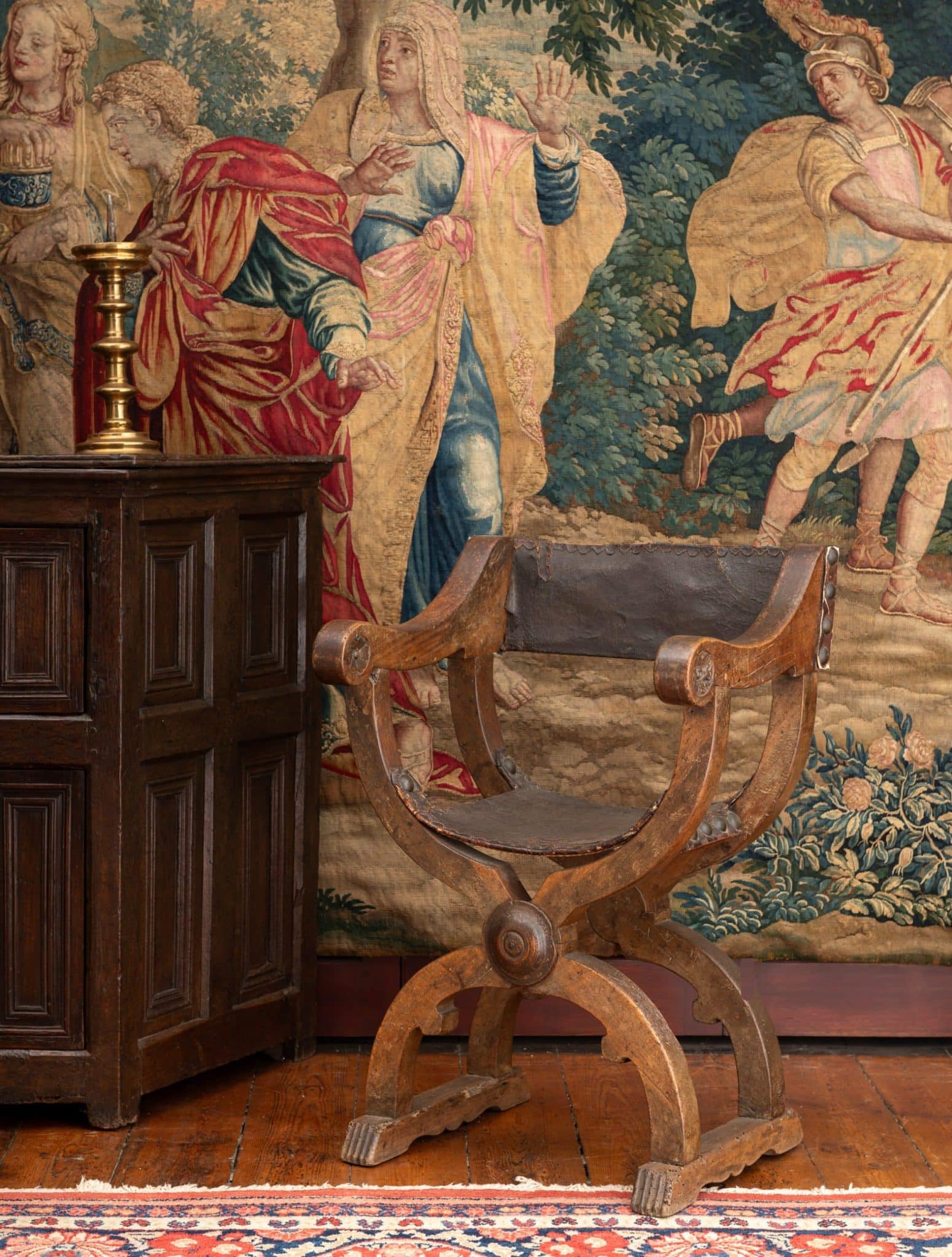
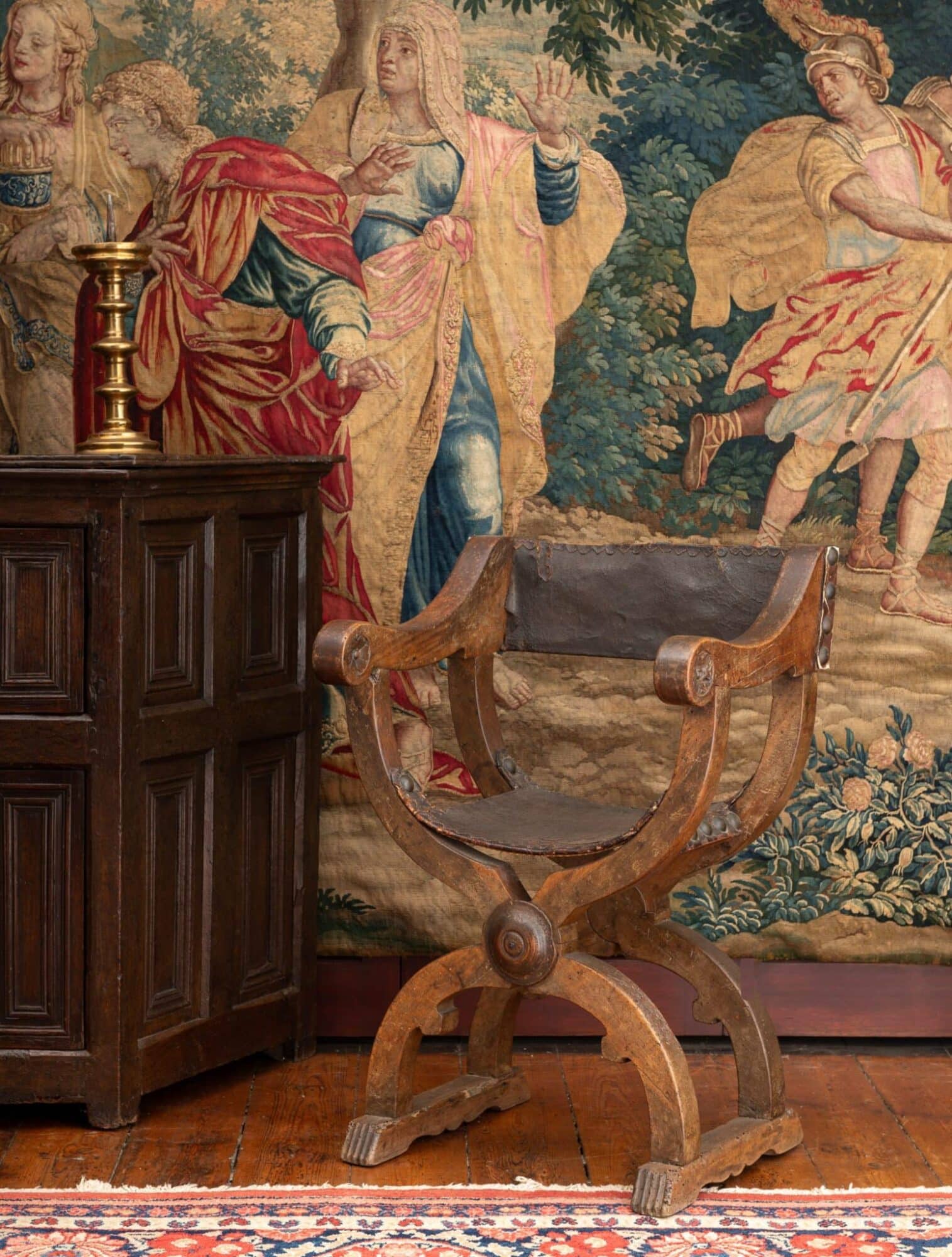
A Renaissance Walnut Curule Chair (Dante or Savonarola type)
- Period
- 1540 - 1570
- Origin
- Italy
- Dimensions
- W 24 1/2" × H 36 1/2" × D 19 1/2"
- Reference
- #Marh3543
This piece has been sold. It is shown here for reference in our archive.
Description
This finely constructed Renaissance walnut curule chair is of traditional X-form, the legs sweeping in intersecting arcs, meeting at a central roundel carved with a moulded boss. The arms terminate in rolled finials, while the splayed feet resolve into carved paw terminals — a deliberate evocation of antiquity. The seat and backrest are fitted with later but early red velvet panels trimmed with fringe, secured over leather straps, recalling original 16th-century practice.
The design is derived from the sella curulis of ancient Rome — the folding seat of magistrates and consuls, emblematic of civic authority. Its reintroduction during the Renaissance expressed humanist ideals and the rediscovery of classical antiquity. By the mid-16th century, such chairs had become symbolic furnishings of erudition and high status, associated with scholars, nobles, and ecclesiastical dignitaries.
The choice of walnut, a favoured hardwood of the Italian Renaissance, reflects both durability and prestige. The paw feet further underline classical inspiration, while the circular boss not only strengthens the structure but creates a visual focal point characteristic of Renaissance design.Curule chairs of this type appear frequently in Renaissance portraiture, where sitters are represented seated upon them as a mark of dignity and authority. For example, they feature in Bronzino’s portraits of Florentine nobility, in Venetian canvases by Tintoretto, and in Flemish representations of scholars and jurists. Their presence in state rooms, libraries, and halls aligned them with both governance and learning.
Chairs of this form were not ordinary domestic furniture but symbolic seats of rank, often placed prominently in a chamber for ceremonial or representational use. Their semi-portable construction allowed them to be moved and displayed as circumstances required.