A Carved, Gilt and Polychrome Figure of Saint George and the Dragon
- Period
- 1500–1520
- Origin
- Northern Italy or Southern Alpine Region
- Dimensions
- W 17"" × H 38 1/2"" × D 10 1/2""
- Reference
- #Marh3883
Price on application
Description
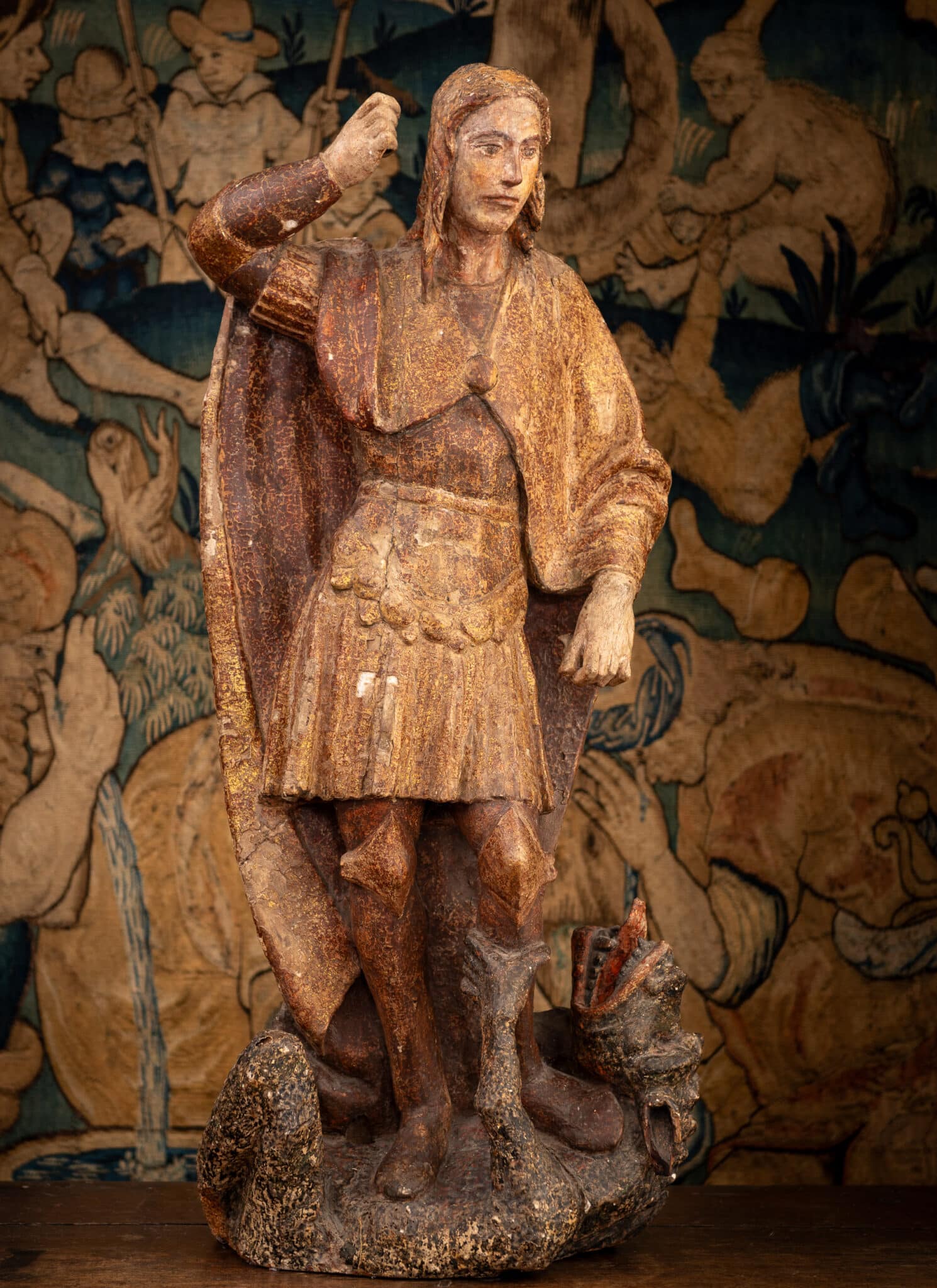
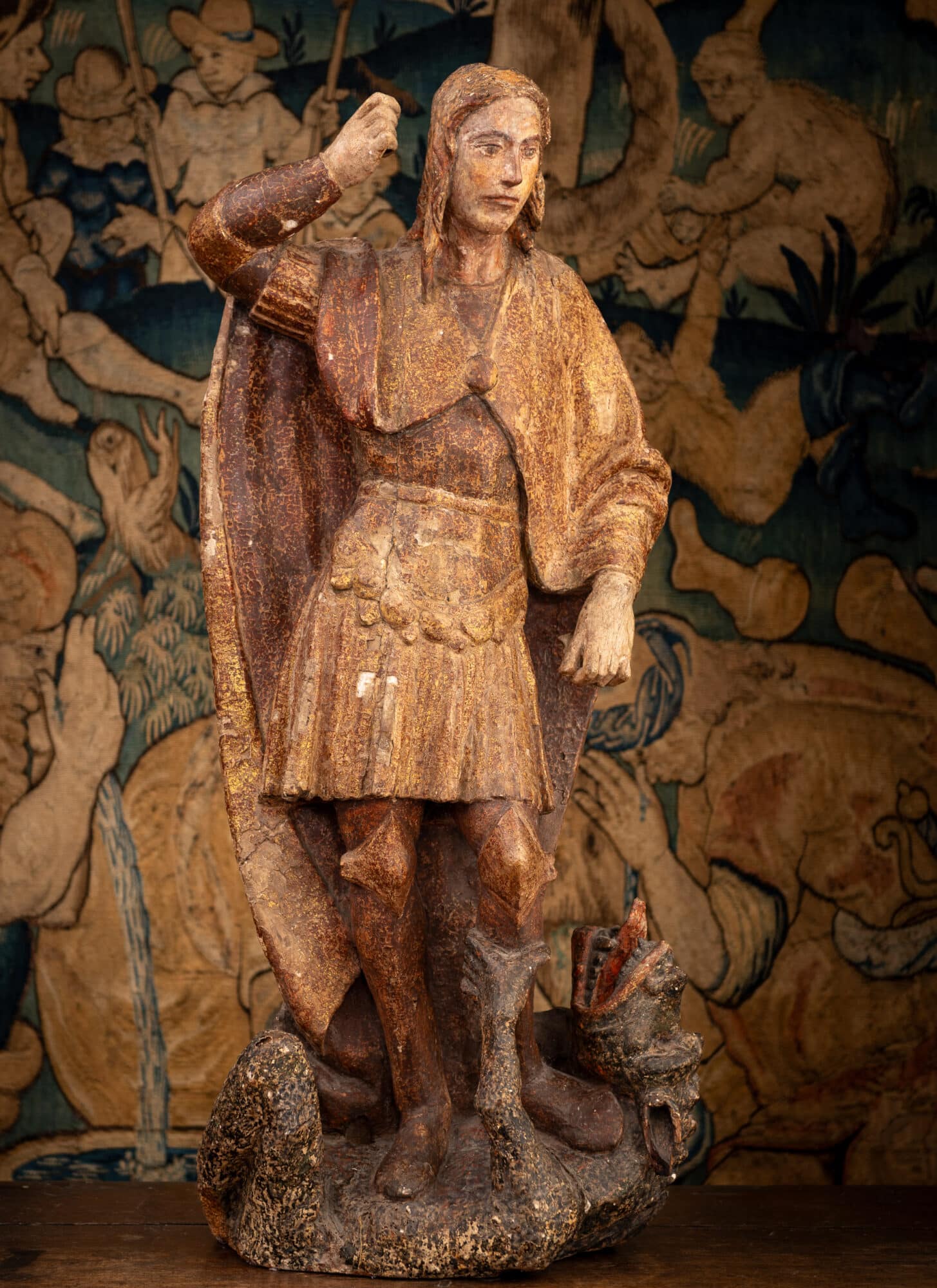
A substantial carved wooden figure depicting Saint George standing in triumph over the dragon, retaining extensive gilding and polychrome decoration.
The youthful saint is represented with long, centrally parted hair falling to his shoulders, his finely modelled face characterised by an elongated oval form, straight nose and composed expression. He wears a fitted military costume with a short, vertically pleated skirt, articulated leg armour and a voluminous cloak falling from his shoulders to the ground. His right arm is raised, the hand originally holding a lance, now absent, while his left arm rests naturally at his side.
Beneath his feet, the dragon is depicted with an elongated neck and open jaws, its head rising beside the saint’s left leg. The arrangement of the figure and dragon, together with the restrained treatment of the facial features and the relatively naturalistic modelling of the costume, reflects the transition between late Gothic sculptural traditions and those of the early Renaissance.
The sculpture retains extensive historic gilding and polychromy, with areas of red, ochre and darker pigments surviving across the costume and cloak. Particularly noteworthy is the presence of a woven textile preparation beneath the decorated surface, visible in areas where the overlying ground and gilding have been lost. The application of textile to carved wooden surfaces formed part of established medieval and Renaissance workshop practices, providing a foundation for the preparatory ground and subsequent painted and gilded decoration.
The reverse is flattened and largely undecorated, retaining visible carving-tool marks and the natural grain of the timber. This treatment suggests that the sculpture was originally intended for placement against an architectural background, possibly within a church furnishing or carved altarpiece.
The elongated proportions, treatment of the hair, relatively restrained facial modelling and arrangement of the drapery are consistent with northern Italian and southern Alpine sculpture of the early sixteenth century. The artistic traditions of Piedmont, Lombardy and the Tyrolean regions shared considerable stylistic and technical characteristics during this period, making a more precise regional attribution difficult without further comparative research.
The sculpture preserves substantial evidence of its historic decorative scheme, including gilding, painted surfaces and the underlying textile preparation, offering insight into the materials and working methods employed in the production of religious sculpture around 1500.
Provenance
The Vittorio and Caterina Di Capua Collection, Turin.