A Pair of Elizabeth I Carved Oak Foliate Masks (Green Men)
- Period
- 1580 - 1600
- Origin
- West Country, England
- Dimensions
- W 4 1/8" " × H 7 3/4"" × D 2 1/4""
- Reference
- #Marh3882
£2,250
Description
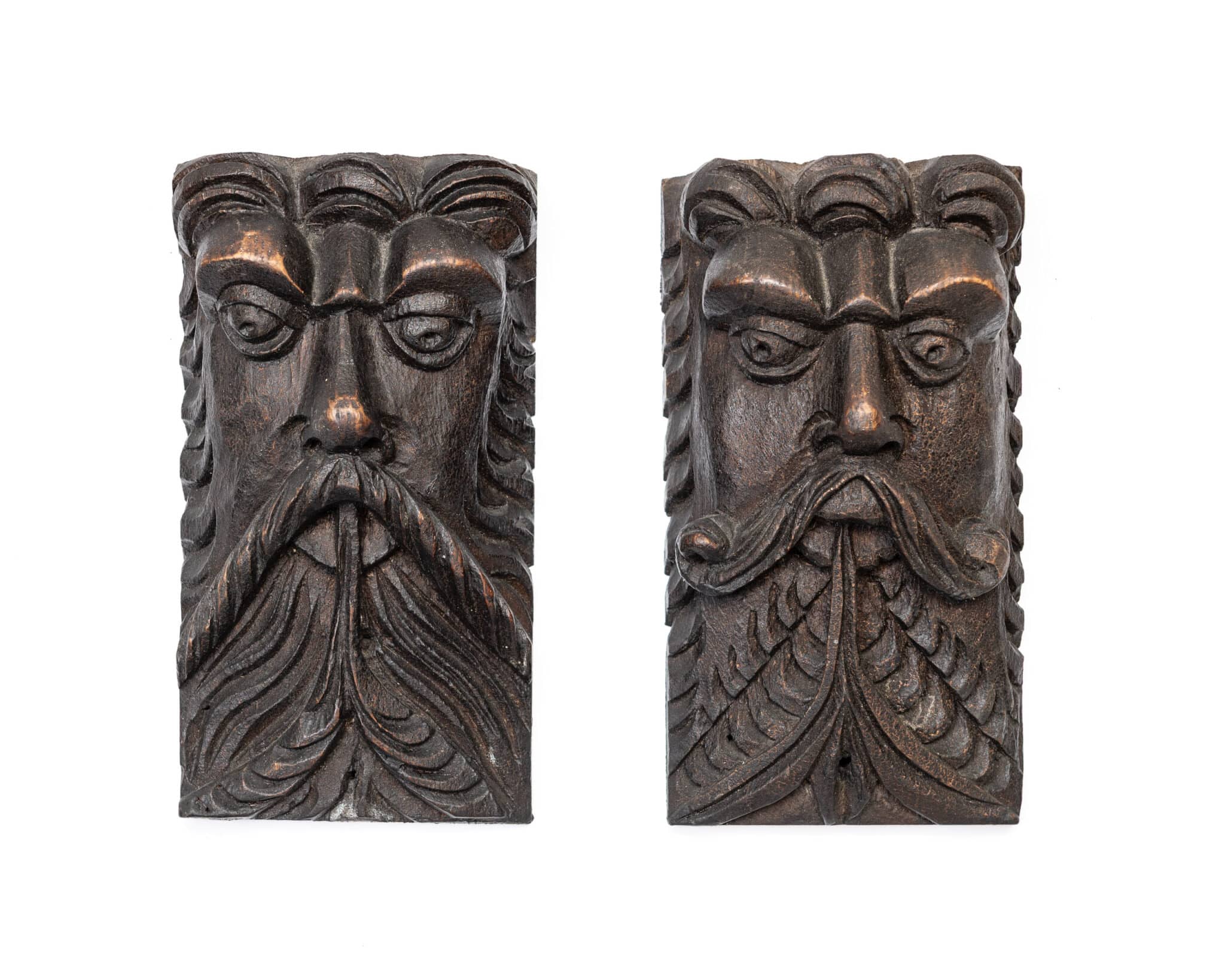
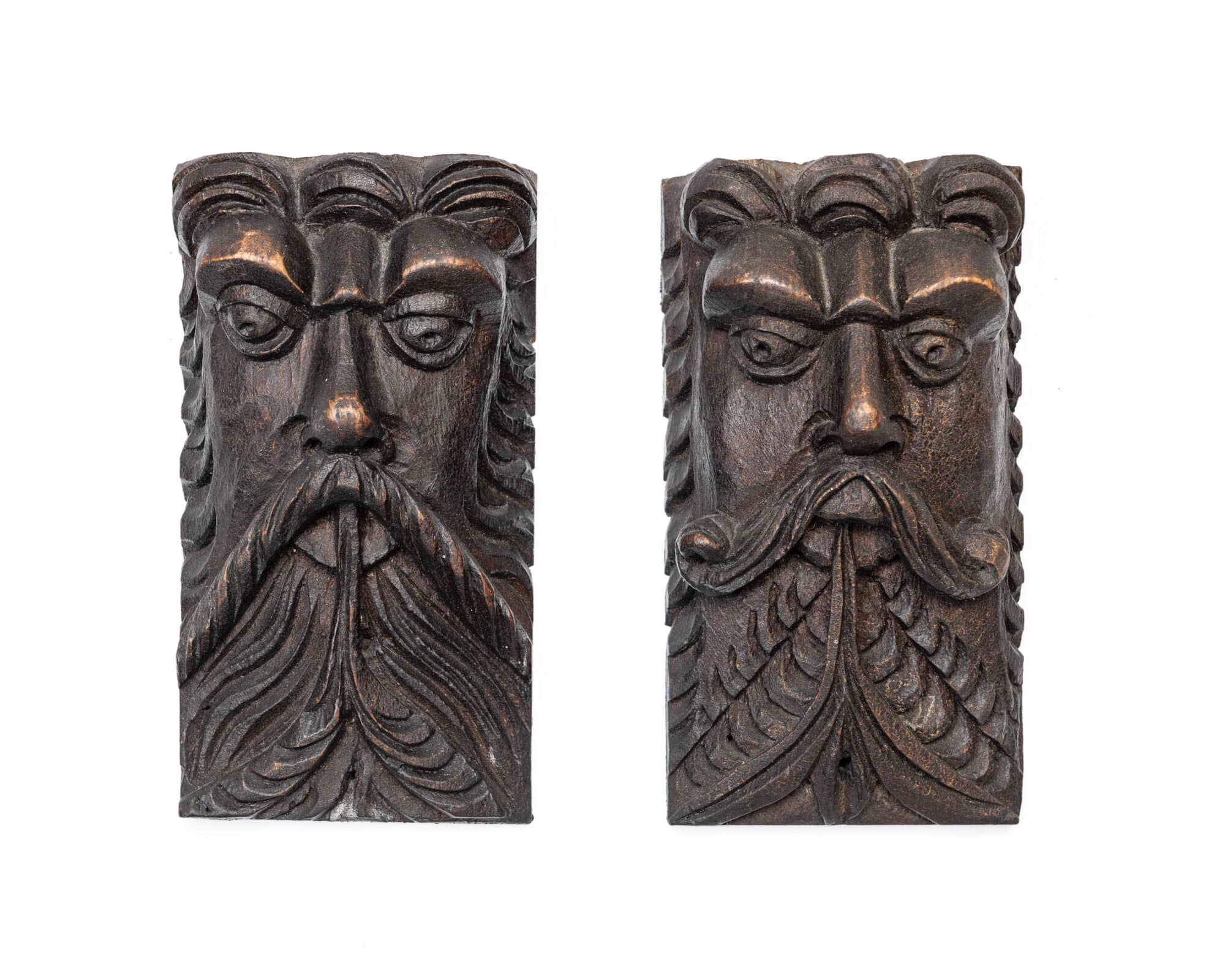
A pair of carved oak male foliate masks, traditionally known as Green Men, originating from an Elizabethan overmantel of the late sixteenth century.
Each mask is conceived as a frontal male head, with strongly modelled facial features, prominent arched eyebrows, deeply delineated eyes and a broad, pronounced nose. From the mouths emerge elaborate, symmetrically arranged foliate forms, extending downwards across the lower sections of the carvings.
Although closely corresponding in their general composition, the two masks exhibit distinct variations in the treatment of the issuing vegetation. The left-hand example displays elongated, flowing forms arranged in sweeping, overlapping curves, while the right-hand mask incorporates more tightly articulated, leaf-like elements beneath a prominently curled moustache. These differences suggest individual interpretation within a shared ornamental scheme.
The foliate head has its origins in medieval European architectural sculpture, where human faces were frequently represented with vegetation emerging from the mouth or surrounding the head. The motif continued into the sixteenth century, becoming incorporated into the decorative vocabulary of English Renaissance woodcarving, particularly in the ornamentation of domestic interiors.
In Elizabethan England, such masks formed part of the architectural enrichment of substantial oak overmantels, alongside carved figures, heraldic devices, strapwork and other ornamental elements. Their continued employment demonstrates the persistence of medieval imagery within the developing Renaissance decorative tradition.
The vigorous modelling of the facial features, deeply cut eyes and strongly stylised treatment of the issuing foliage are consistent with English provincial woodcarving of the closing decades of the sixteenth century. The masks may be placed within the West Country tradition of Elizabethan architectural carving, where established Gothic ornamental conventions continued alongside Renaissance influences.