A late Gothic Oak Sculpture of the Annunciation
- Period
- 1470–1500
- Origin
- Brabant, possibly Antwerp or Brussels
- Dimensions
- W 12 1/4"" × H 11 3/4" (stand measurements not included)" × D 3""
- Reference
- #Marh3881
Price on application
Description
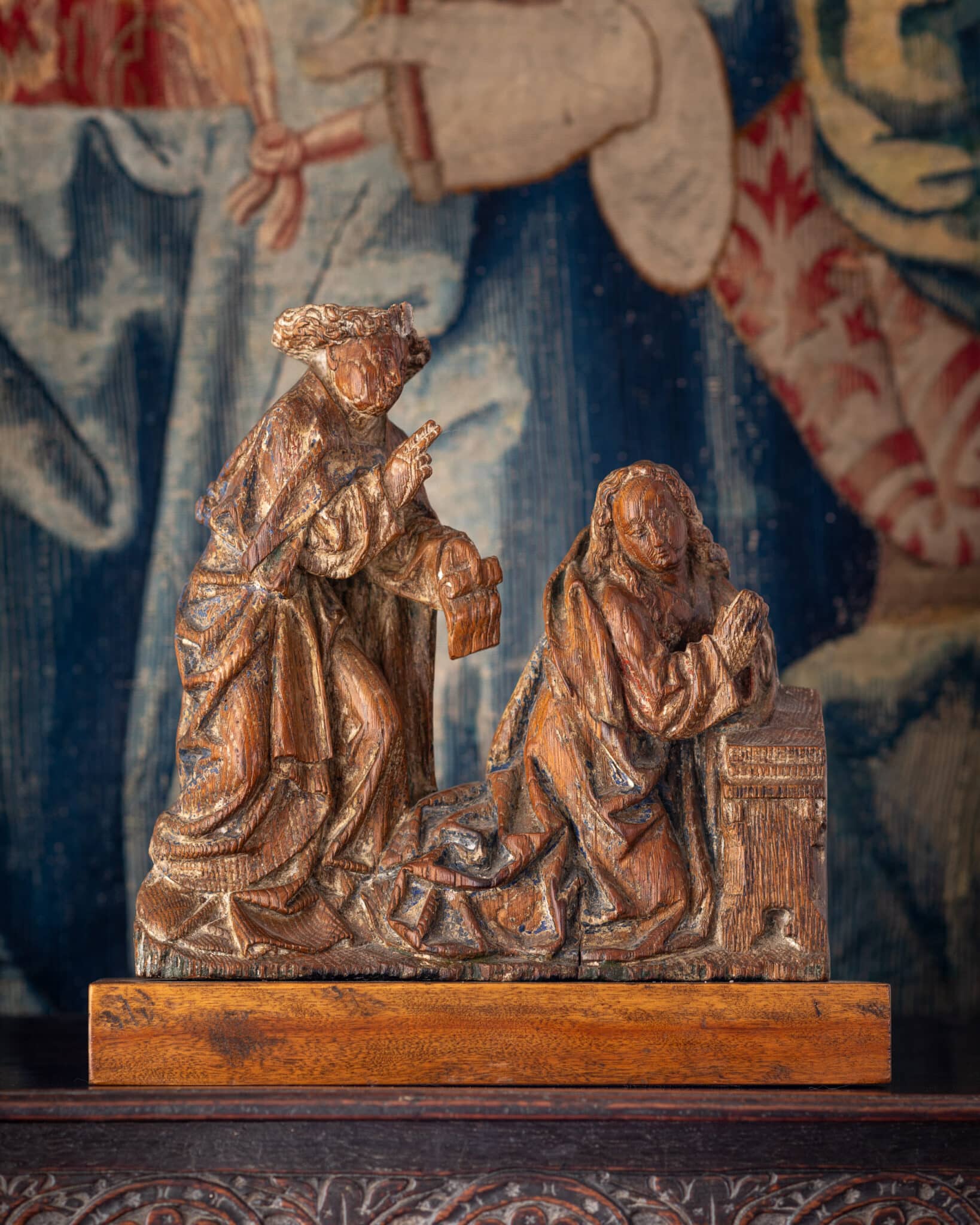
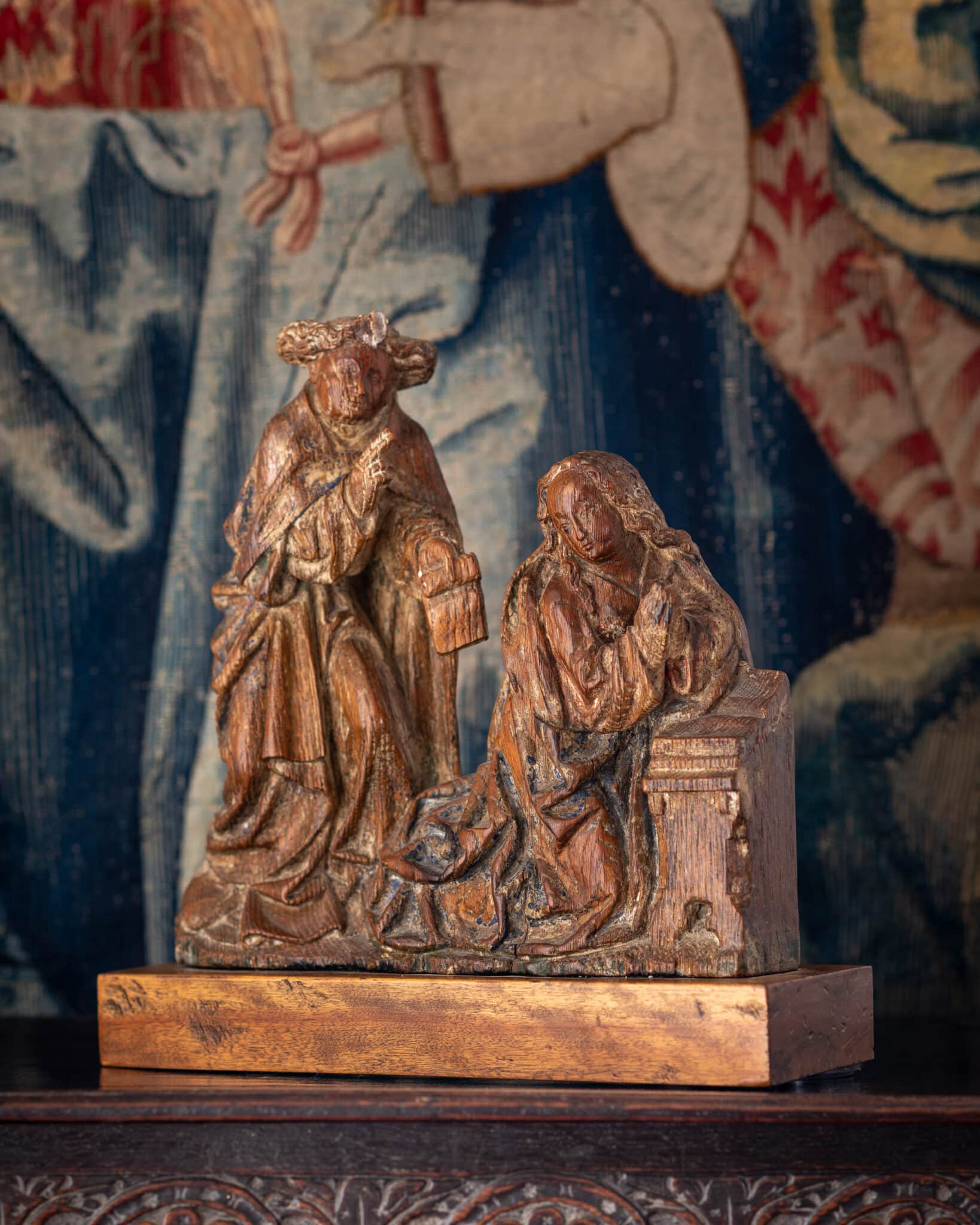
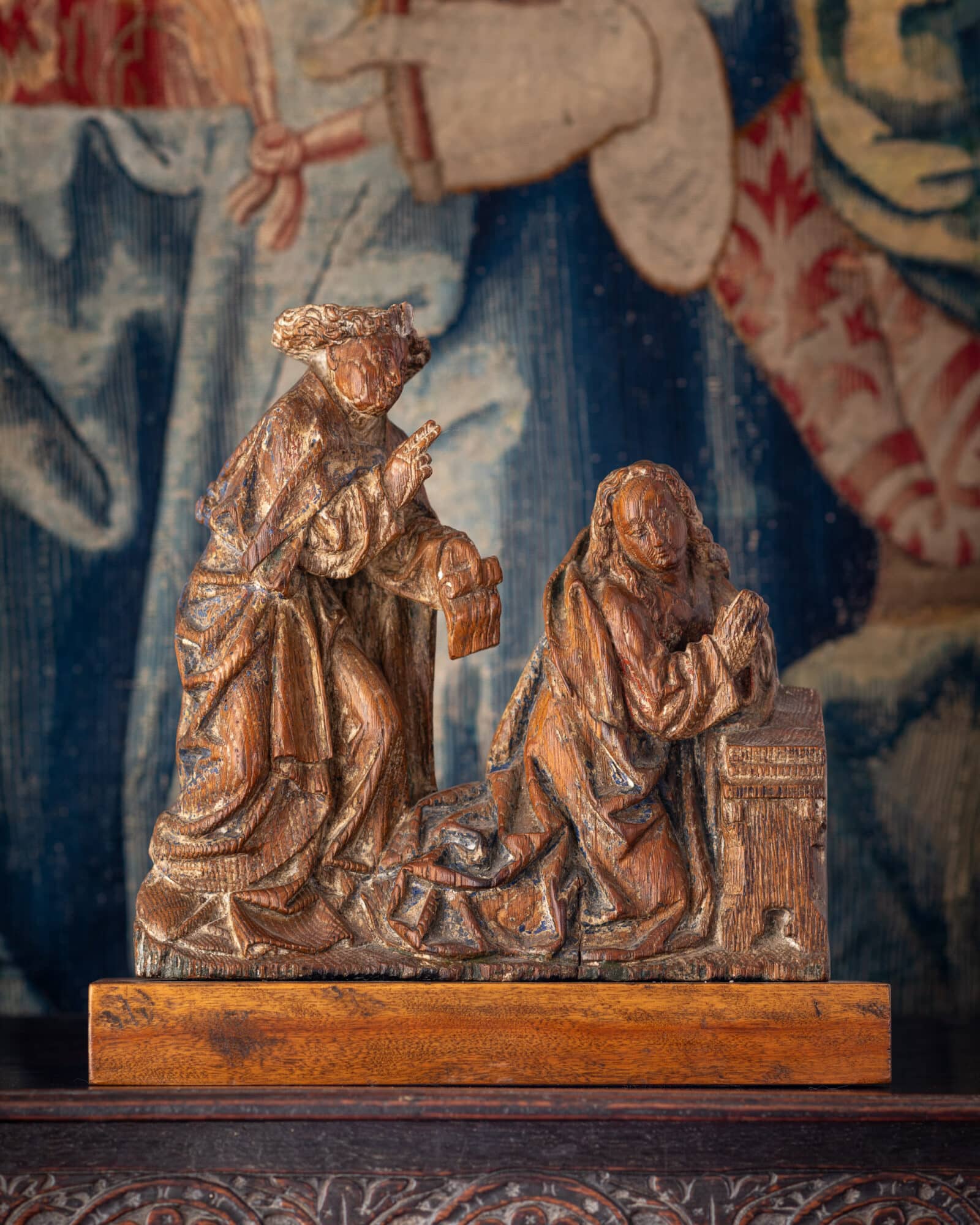
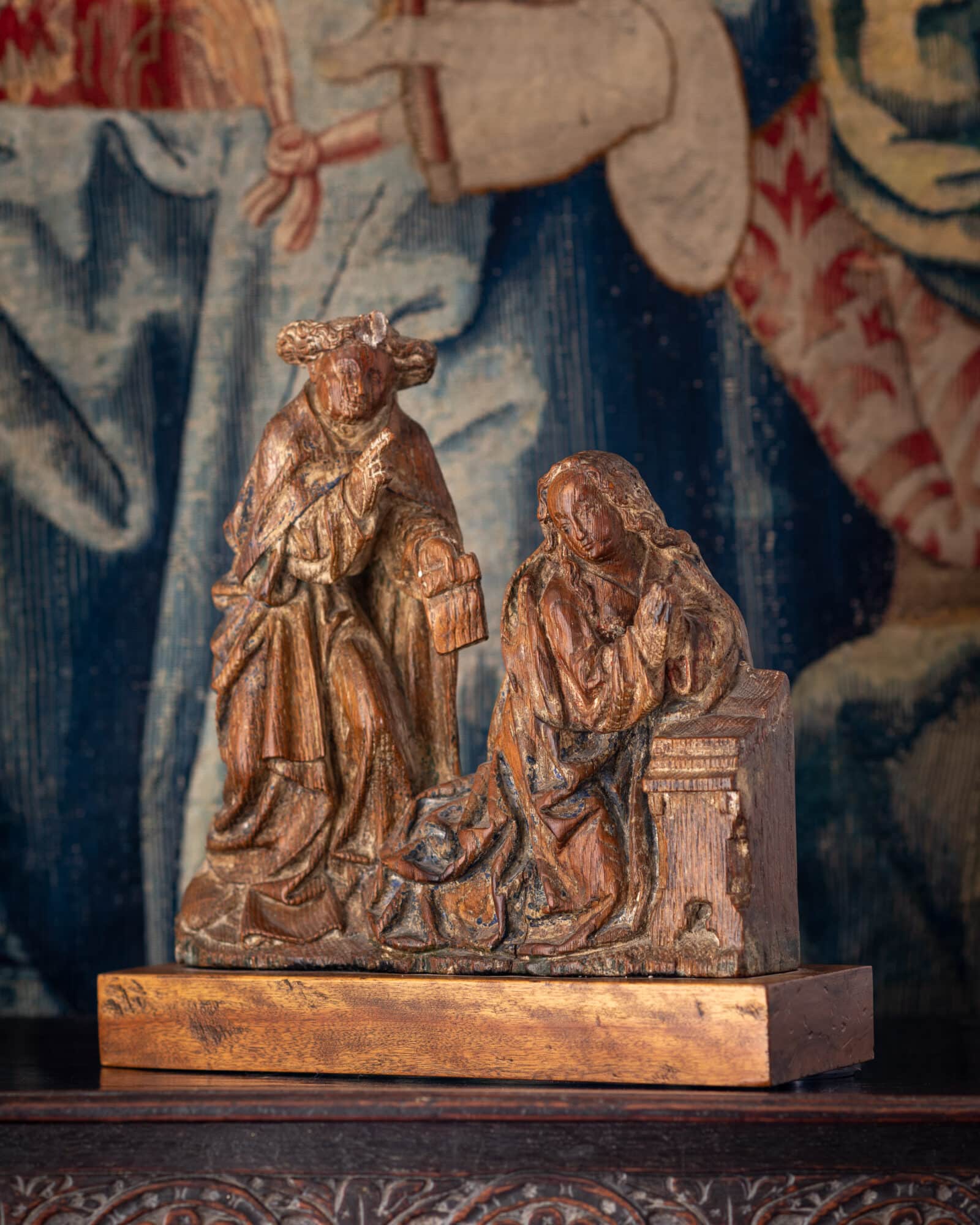
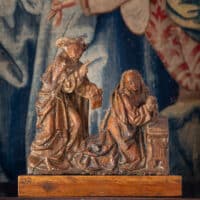
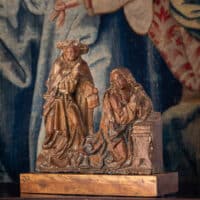
Carved from a single block of oak and retaining traces of polychrome decoration, this finely executed Gothic sculpture depicts the Annunciation, with the Archangel Gabriel appearing before the kneeling Virgin Mary.
Gabriel stands to the left, his right hand raised in a gesture of annunciation and his left holding a scroll. His carefully carved curling hair, expressive facial features and flowing robes, arranged in deeply cut angular folds, reflect the sculptural traditions of the Southern Netherlands during the latter part of the 15th century.
The Virgin Mary kneels to the right, her head gently inclined and her hands joined in prayer. Her long hair falls over her shoulders, while the voluminous folds of her garments gather around her knees. Beside her stands a characteristic Netherlandish Gothic boarded stool, supporting an open book, traditionally associated with the Virgin’s devotional reading at the moment of the Annunciation.
Of particular interest is the representation of the Gothic boarded stool, with its rectangular form, vertically worked sides and pronounced upper moulding. Its construction reflects the boarded furniture forms employed in the Netherlands during the late medieval period. The inclusion of this domestic furnishing within the sacred narrative provides an interesting contemporary record of 15th-century furniture and illustrates the integration of familiar household objects into Netherlandish religious imagery.
The sculpture retains traces of red and blue polychromy, particularly within the folds of the garments, offering evidence of its former decorative treatment. The compact composition, carefully articulated drapery and individual characterisation of the figures suggest an origin within the sculptural traditions of Brabant, an important centre of Gothic woodcarving during the 15th century, particularly in the workshops associated with Brussels and Antwerp.
The entire composition, including the figures, boarded stool and original base, has been carved integrally from a single piece of oak. Its relatively shallow depth suggests that it was intended primarily for frontal viewing, possibly forming part of a larger carved altarpiece or devotional ensemble.