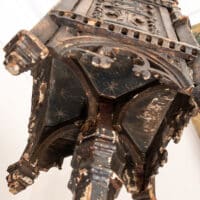
A Late Gothic Polychrome Pine Ecclesiastical Candlestand
- Period
- 1500–1520
- Origin
- Southern Germany, possibly Tyrol
- Dimensions
- W 17 1/2"" × H 82 1/2"" × D 17 1/2""
- Reference
- #Marh3880
Price on application
Description
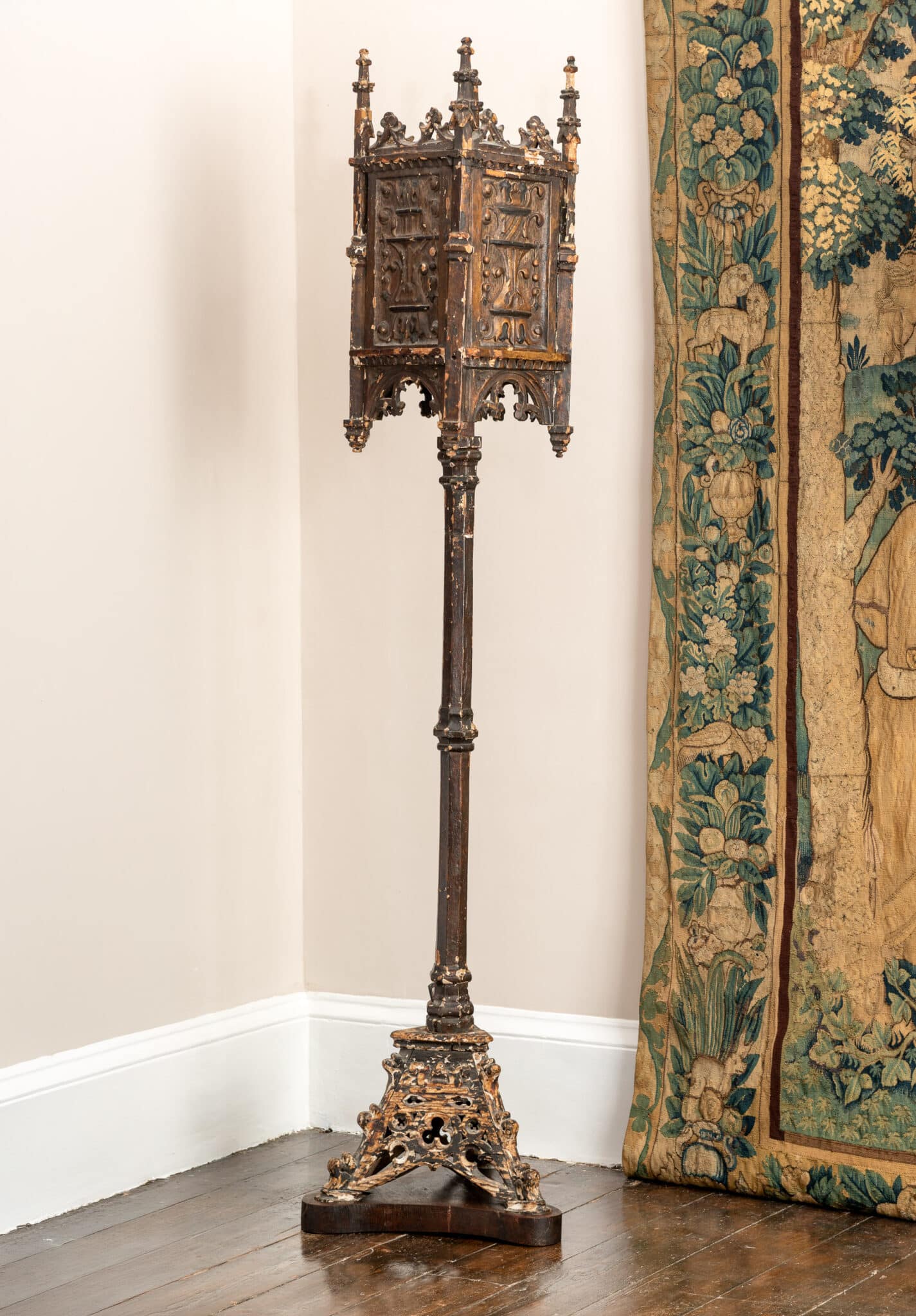
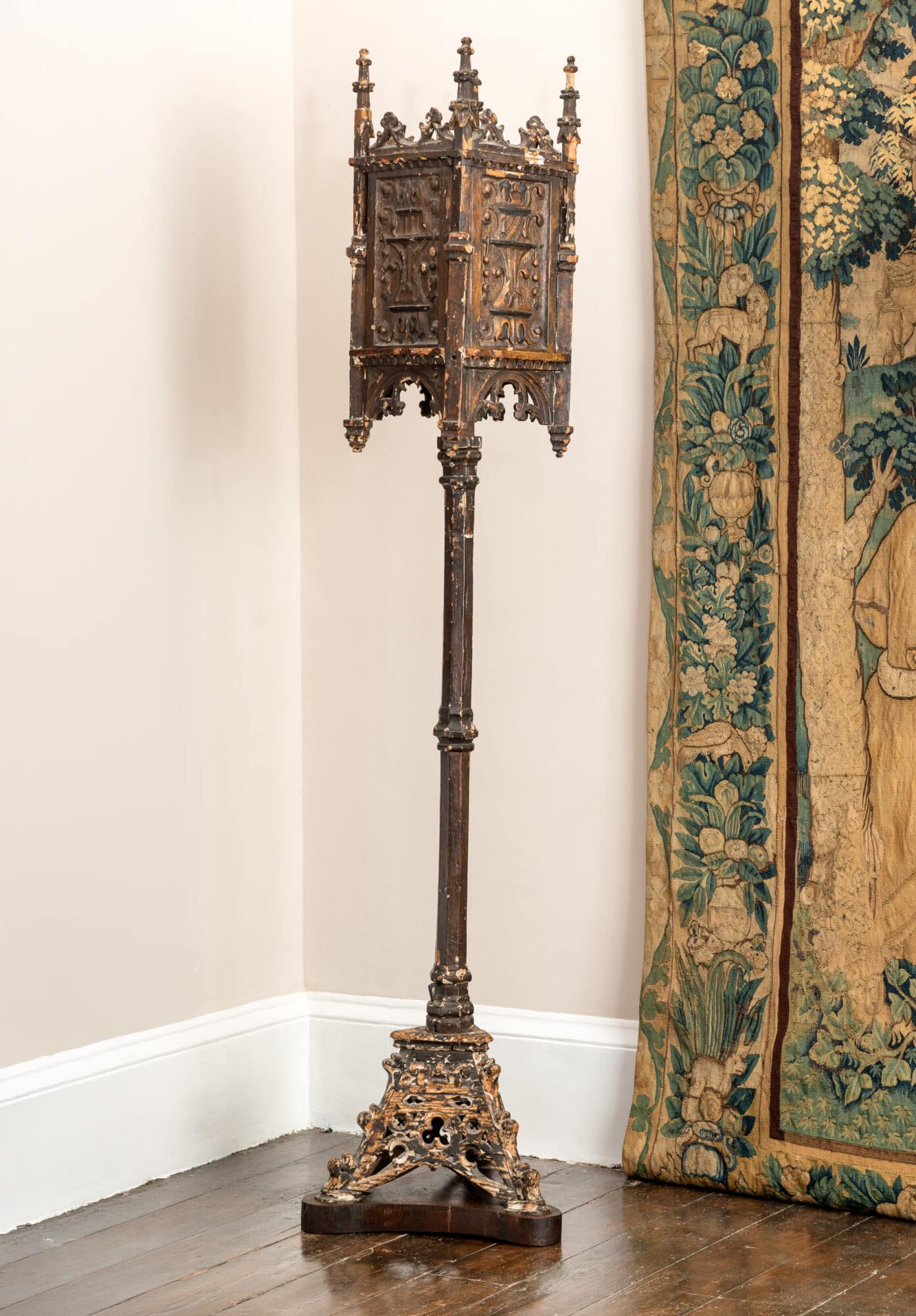
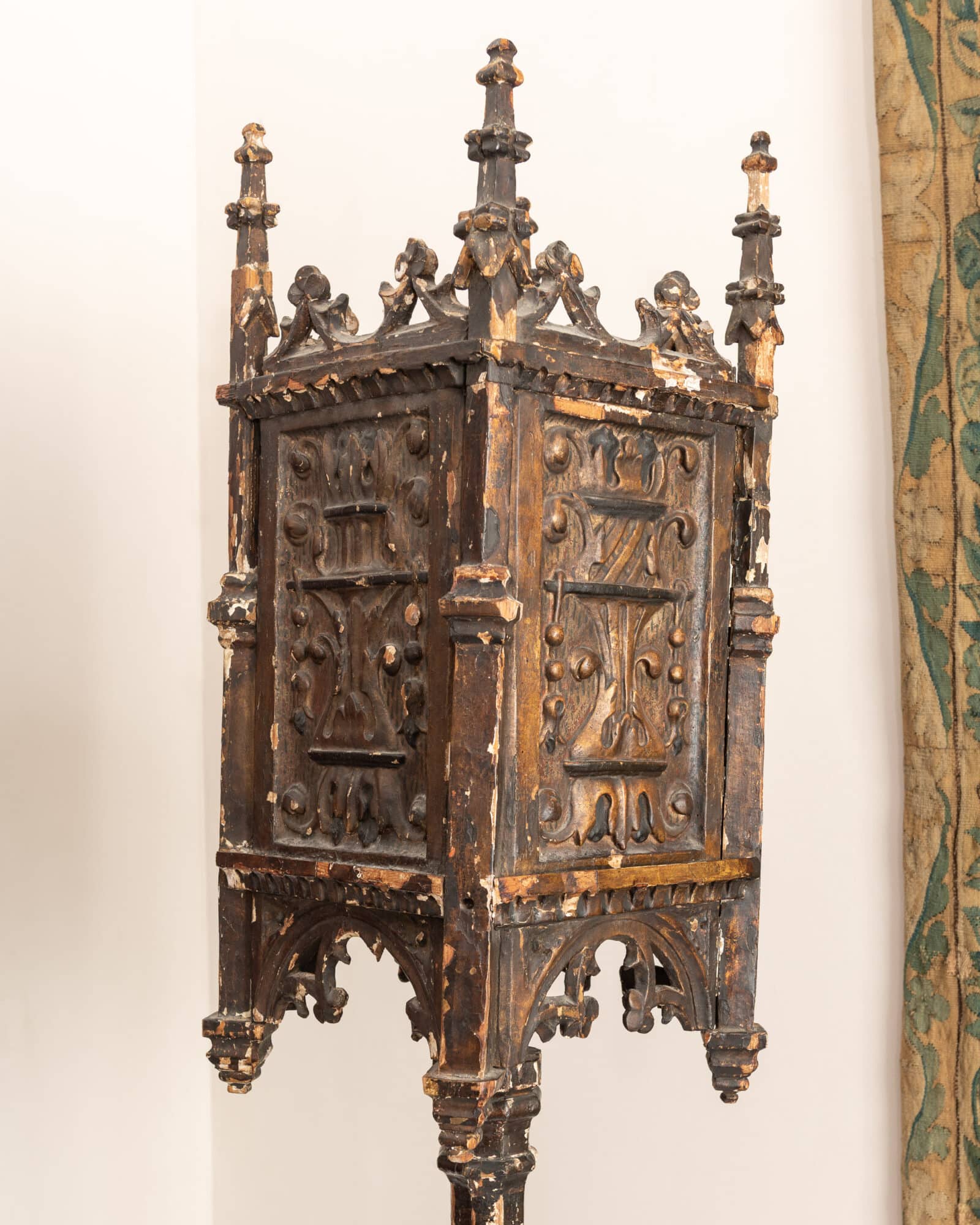
A monumental late Gothic ecclesiastical candlestand, constructed principally in pine and retaining substantial areas of historic polychrome decoration. The architectural composition combines established Gothic forms with ornamental details reflecting the introduction of Renaissance design into southern European ecclesiastical furnishings during the opening decades of the sixteenth century.
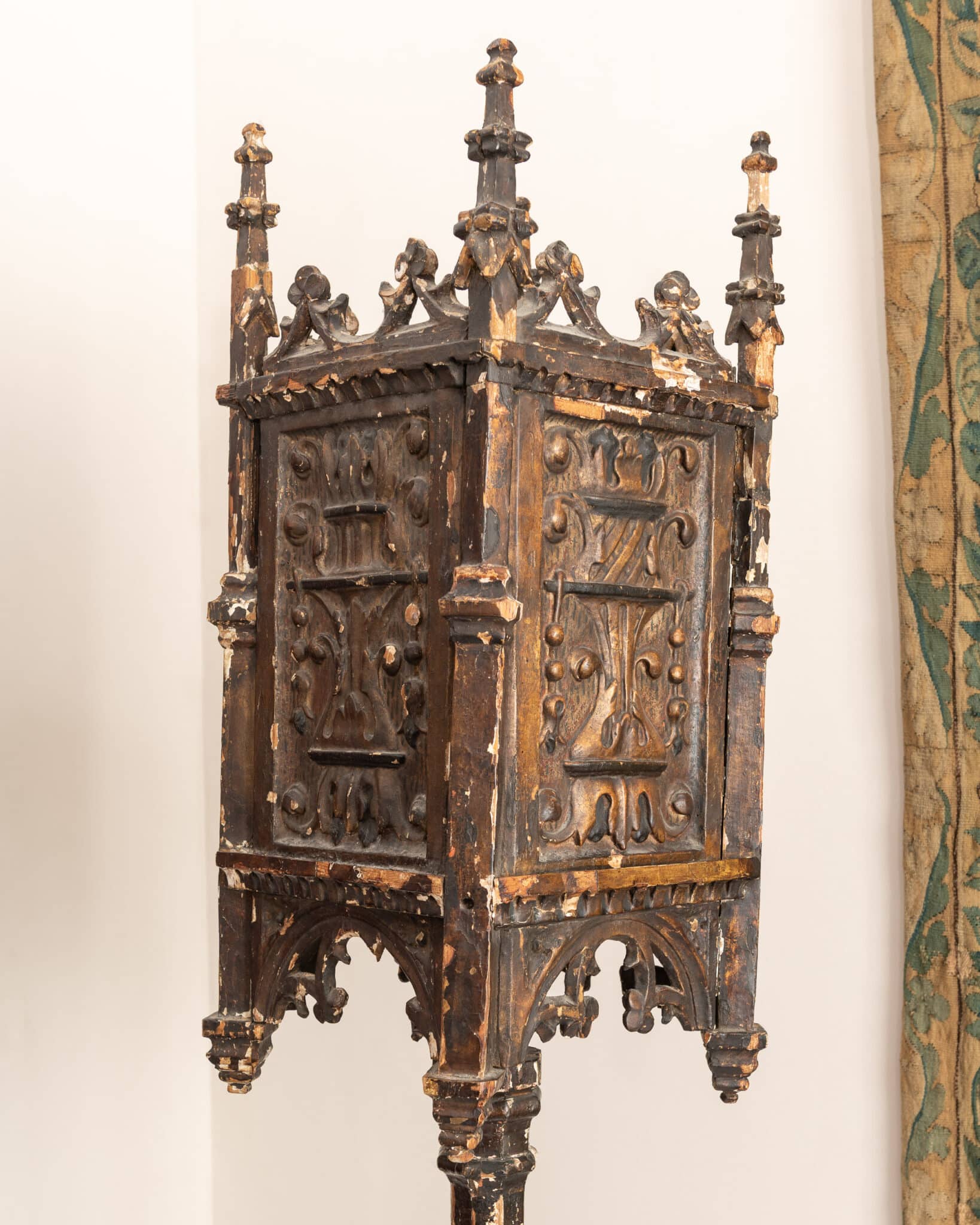
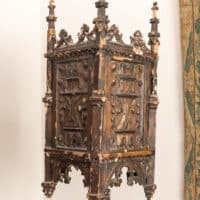
The upper section takes the form of a rectangular, boarded architectural enclosure, its four sides framed by applied Gothic buttresses rising to slender pinnacles with moulded finials. The upper perimeter is enriched with pierced and carved Gothic cresting, incorporating scrolling foliage and crocketed ornament. Each face contains a recessed panel decorated with applied and carved ornament arranged in a symmetrical vertical composition. These designs, incorporating scrolling terminals, rounded bosses and stylised foliate elements, demonstrate the influence of early Renaissance ornamental vocabulary within an otherwise Gothic architectural framework.
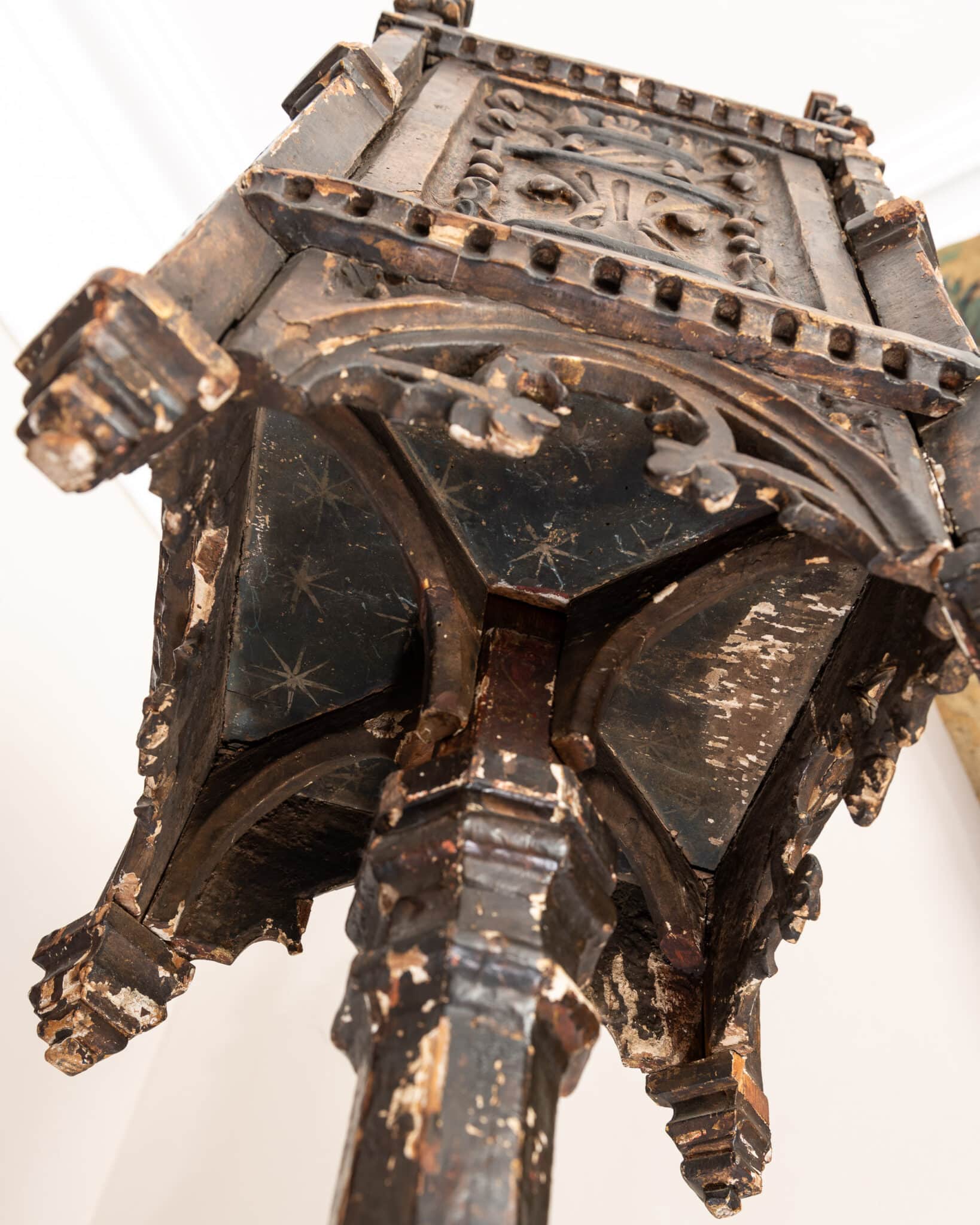
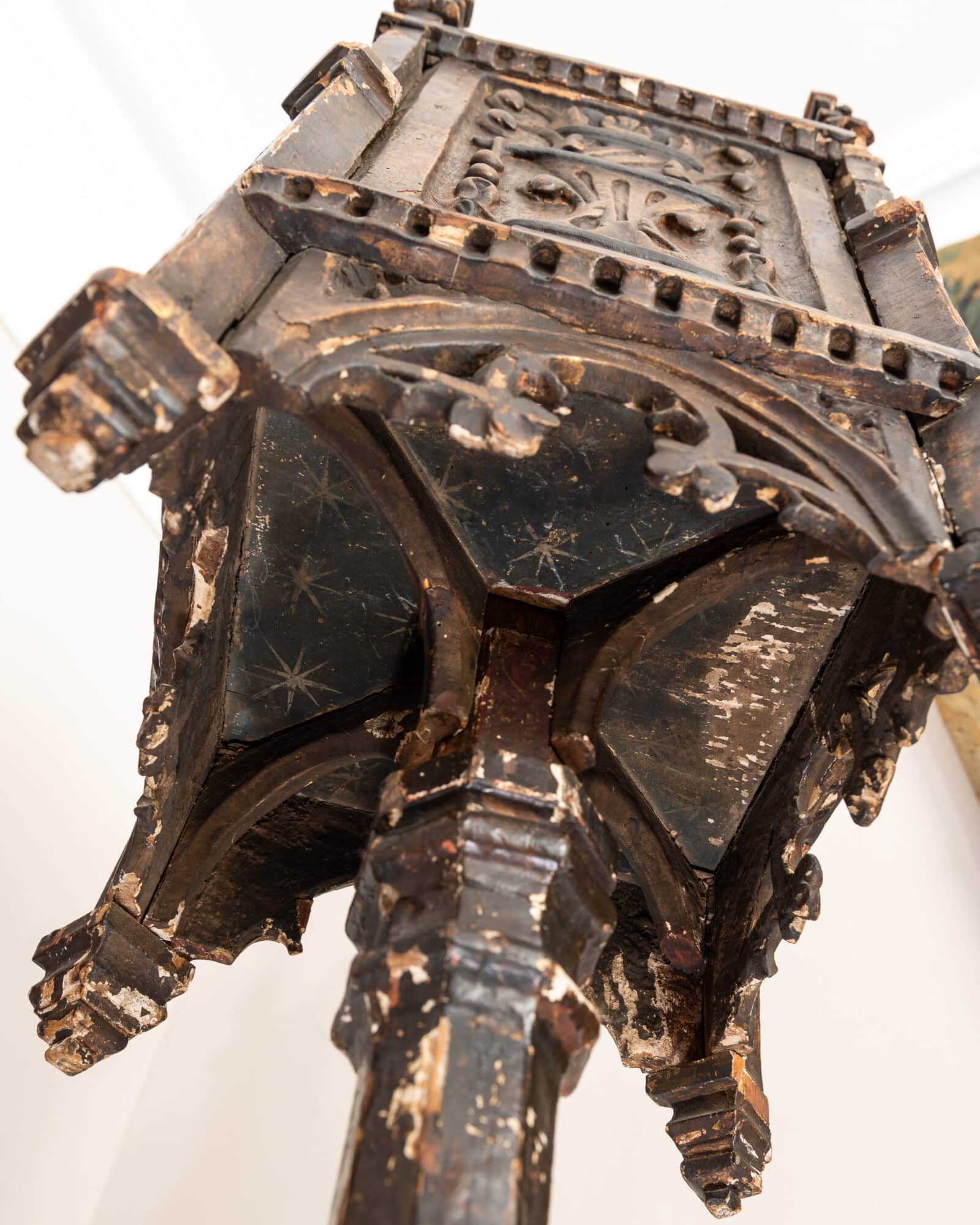
Beneath the enclosure, a series of open Gothic arches, enriched with cusped tracery and pendant ornament, forms an architectural canopy. The underside retains painted decoration consisting of radiating stars against a dark blue ground, representing a celestial vault. This treatment reflects the medieval convention of depicting the heavens within sacred architectural settings and indicates that the underside was intended to be visible from below.
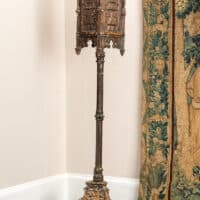
The enclosure is supported upon a tall, slender polygonal column, articulated by moulded collars and capitals, which rises from an elaborate triangular base. The latter incorporates pierced Gothic tracery, crocketed foliage and architectural mouldings, its three projecting feet providing a stable foundation for the vertical structure.
The architectural enclosure is constructed independently of the supporting column and is designed to slide over the central upright, indicating a deliberate method of assembly. The central support continues through the enclosure and terminates above in an iron candle spike. A section of the internal support may have undergone historic restoration, although the architectural components appear to represent a unified original conception.
The survival of the painted surfaces is particularly noteworthy, with areas of dark ground colour, traces of earlier decorative finishes and the celestial decoration beneath the canopy remaining visible. The object retains an extensively aged surface, with losses to sections of the applied Gothic ornament and areas of abrasion consistent with its history.
The combination of Gothic architectural tracery, pinnacles and buttresses with the more fluid, symmetrical ornament of the upper panels is characteristic of the transitional decorative language found in southern Germany and the Alpine regions around 1500. The use of pine, together with the painted architectural treatment, supports a possible origin in Tyrol or the neighbouring southern German territories, where softwood was extensively employed in the production of ecclesiastical furnishings.
The considerable height, architectural elaboration and provision for a candle suggest a ceremonial or liturgical function within a church or chapel. Although its precise original use remains undetermined, the form invites comparison with late medieval ecclesiastical candlestands, including those associated with particular liturgical observances.
The candlestand survives as a substantial example of late Gothic ecclesiastical woodwork, illustrating the continued use of medieval architectural forms alongside the developing ornamental vocabulary of the early Renaissance.
Provenance: Formerly in an important private collection, the Netherlands.