A Late Gothic Nuremberg Brass Basin
- Period
- 1480–1520
- Origin
- Southern Germany, Nuremberg
- Dimensions
- W 13 1/2" diameter" × H 2 3/4""
- Reference
- #Marh3879
£2,250
Description
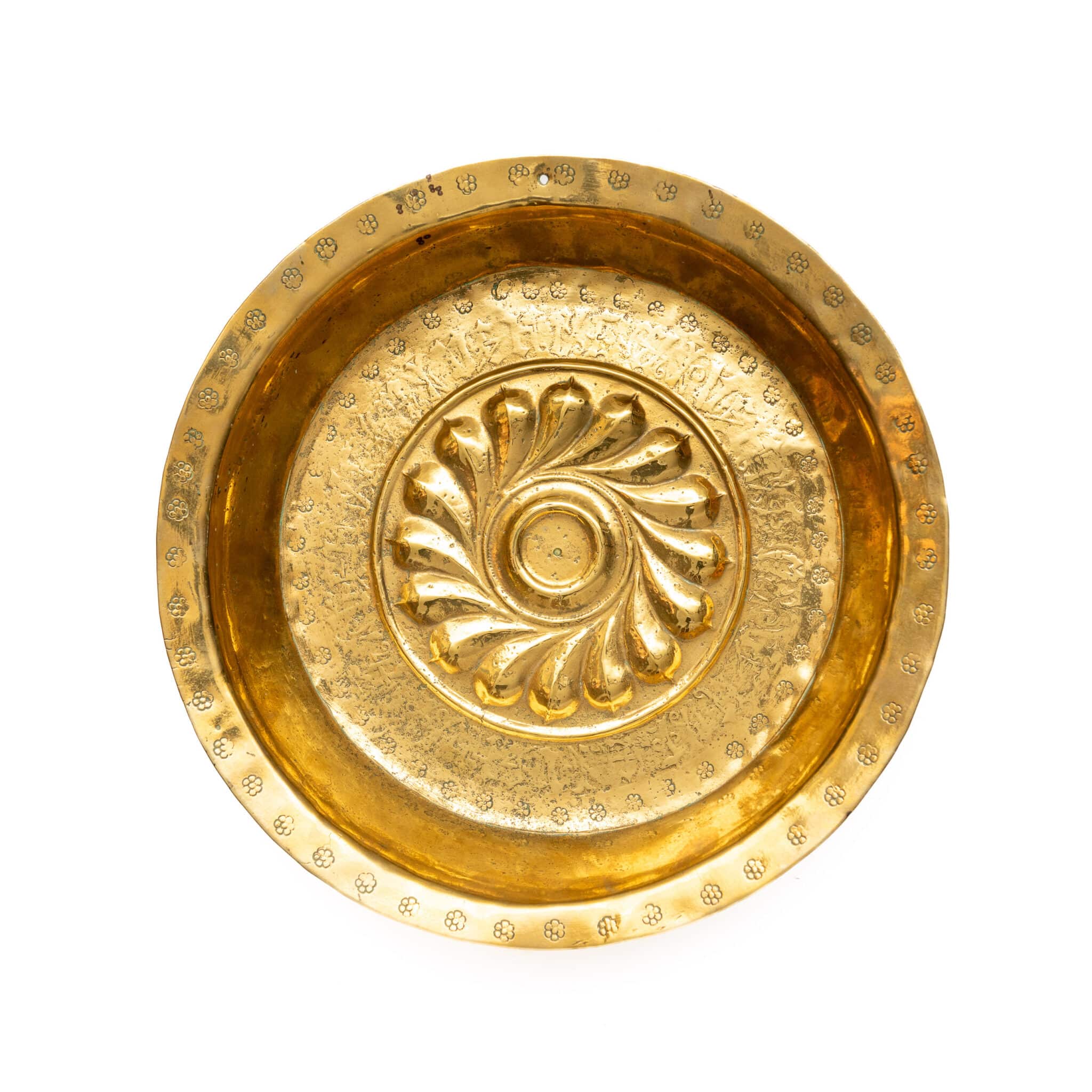
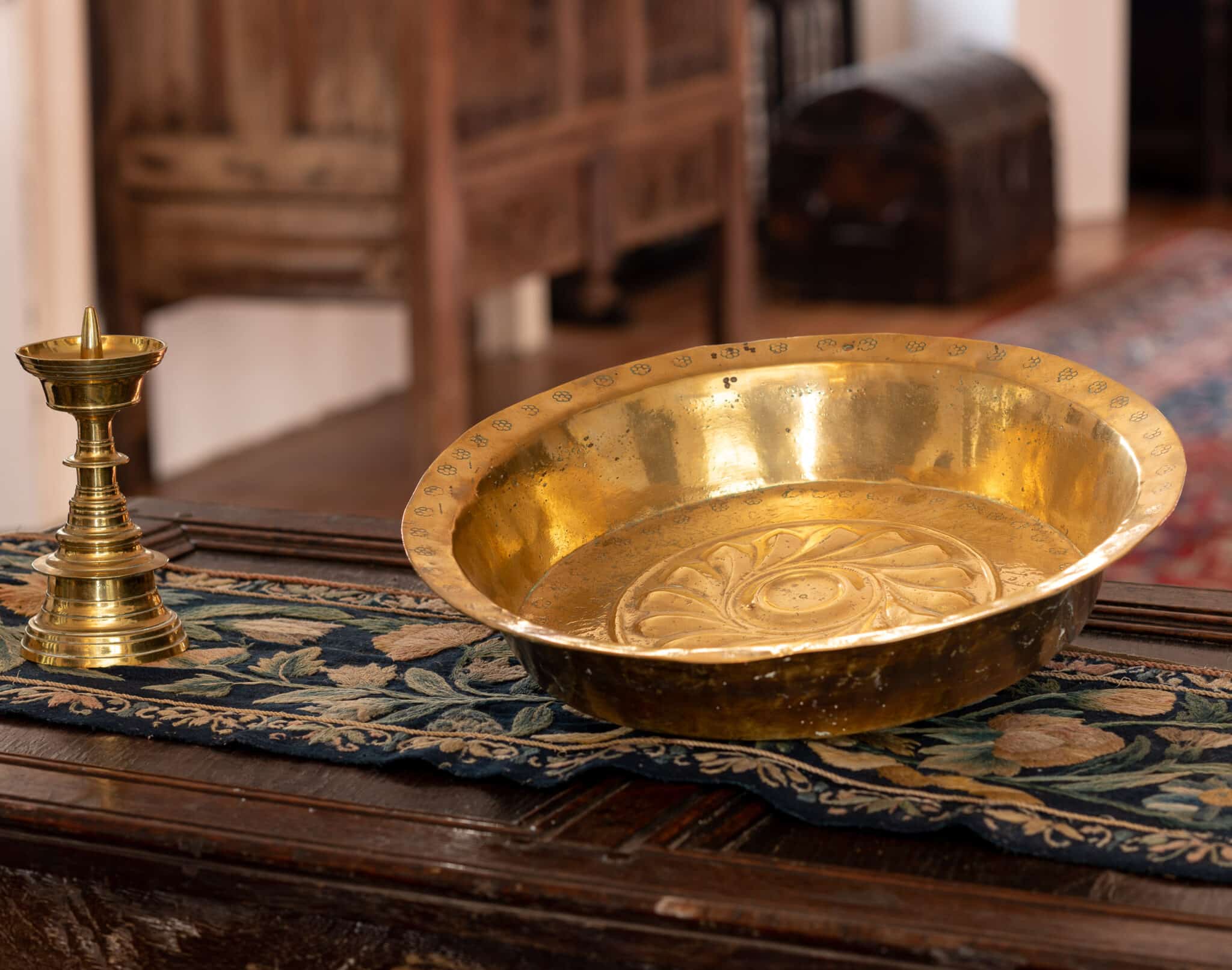
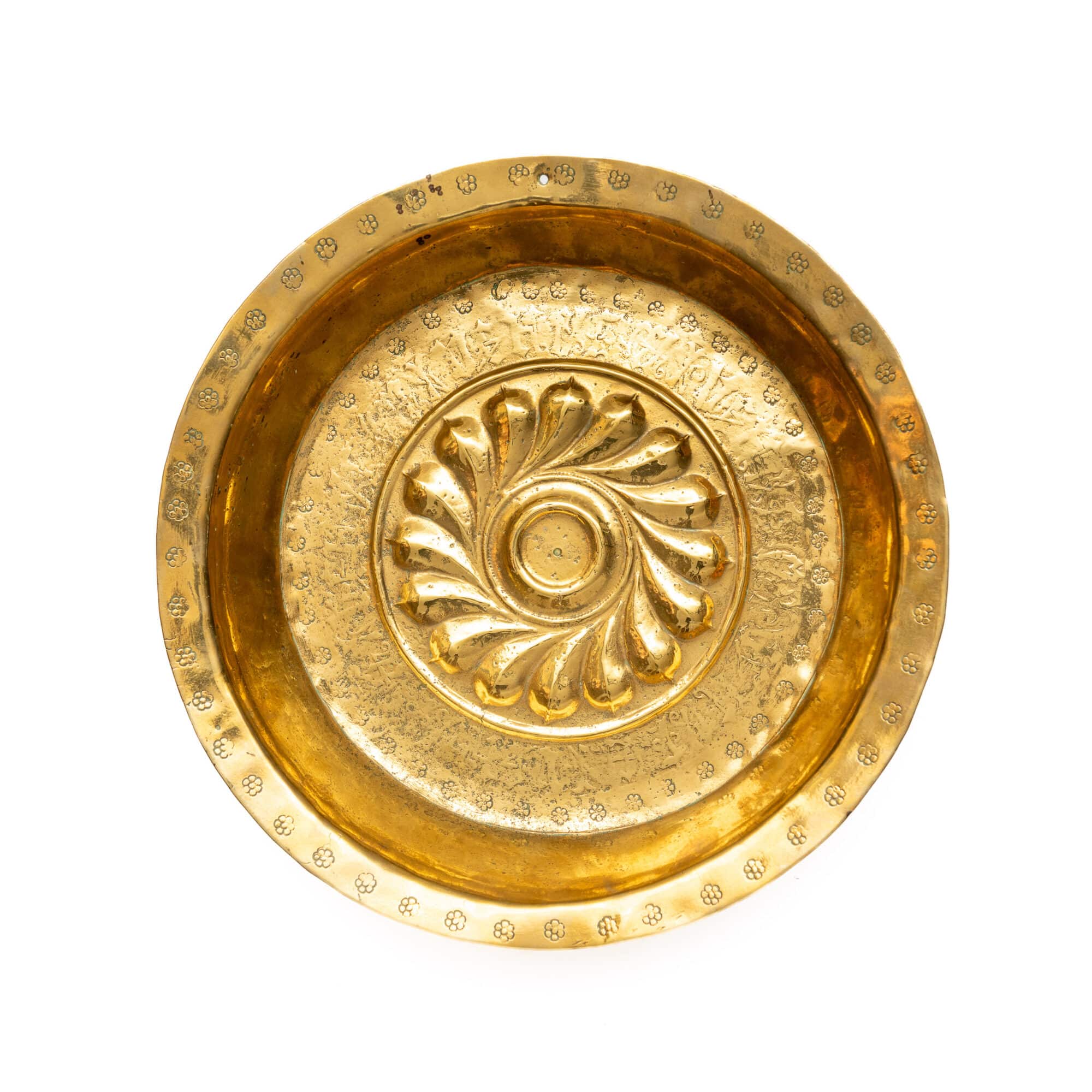
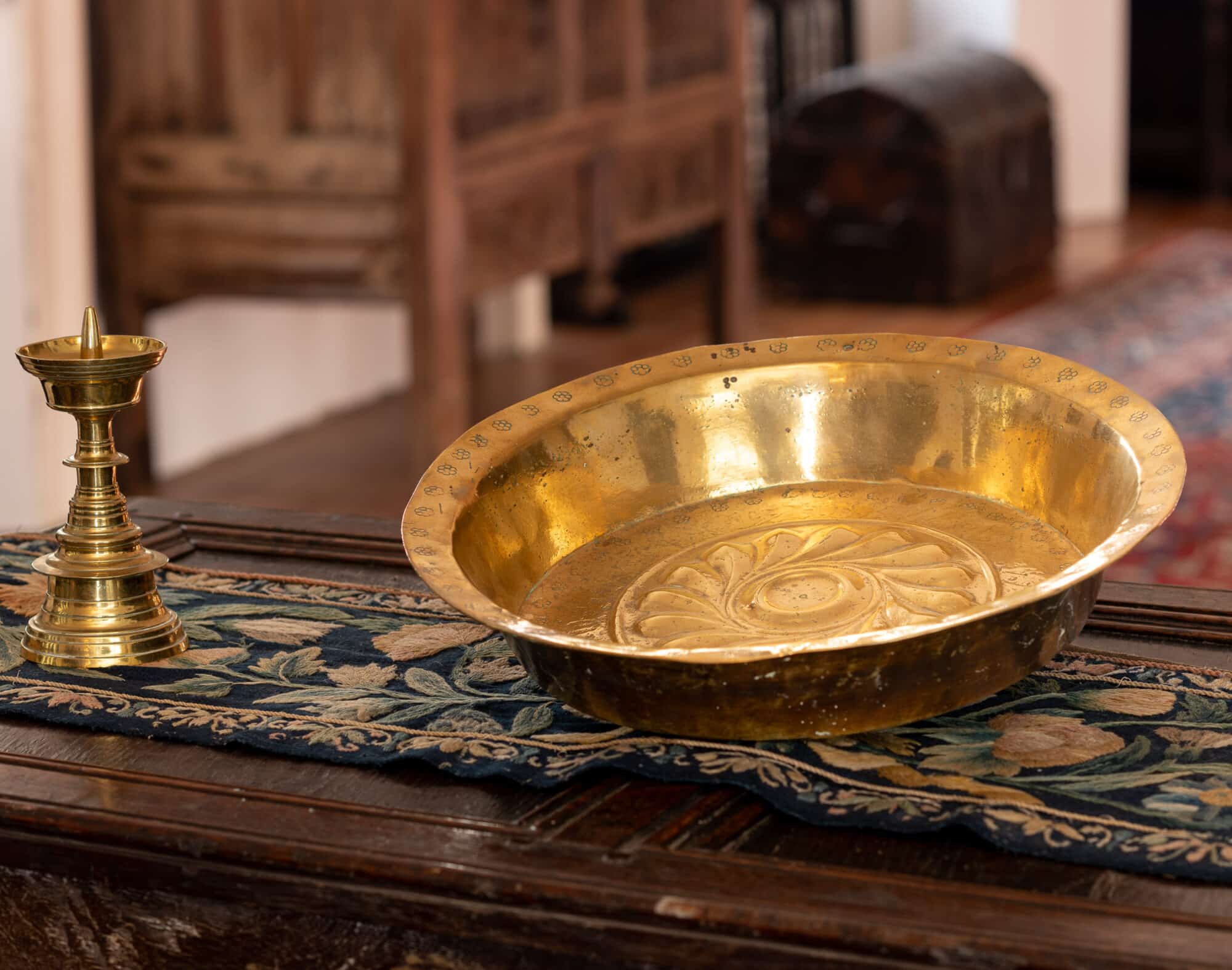
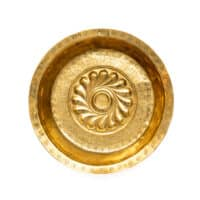
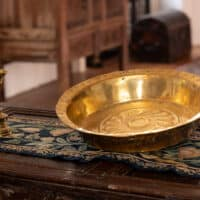
A late Gothic brass basin of circular form, the broad, flattened rim decorated with a continuous series of individually punched floral rosettes. The deep, sloping sides descend to a central repoussé medallion comprising a spiralling arrangement of curved, lobed ornament, traditionally described as Fischblasen (fish-bladder) decoration, surrounding a plain concentric boss. The central medallion is enclosed by a band of Gothic lettering or pseudo-inscription, interspersed with further punched floral motifs.
The basin belongs to the established tradition of Nuremberg Beckenschlägerschüsseln, produced by specialist brass-working workshops during the late fifteenth and early sixteenth centuries. These vessels were formed from sheet brass, with their central decoration worked in repoussé using shaped dies, while the surrounding ornamental details were applied with individual punches.
The distinctive spiralling ornament reflects the late Gothic decorative vocabulary employed by Nuremberg metalworkers around 1500. Such basins were produced for both secular and ecclesiastical settings, serving a variety of domestic, ceremonial and devotional purposes.
A closely related example, incorporating the same spiralling central ornament and punched floral border, is illustrated in Klaus Tiedemann’s Nürnberger Beckenschlägerschüsseln (Nuremberg Alms Dishes), p. 58, catalogue no. 40a. The published basin incorporates a small representation of St Matthew within its central boss, whereas the present example retains its original plain centre.
Literature: Compare Klaus Tiedemann, Nürnberger Beckenschlägerschüsseln (Nuremberg Alms Dishes), p. 58, catalogue no. 40a.