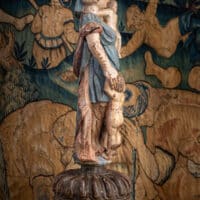
An Elizabeth I Polychrome Carved Oak Figure Representing Charity (Caritas)
- Period
- 1560 - 1580
- Origin
- English, Possibly West Country
- Dimensions
- W 11 1/2" diameter" × H 35 1/2""
- Reference
- #Marh3878
£7,250
Description
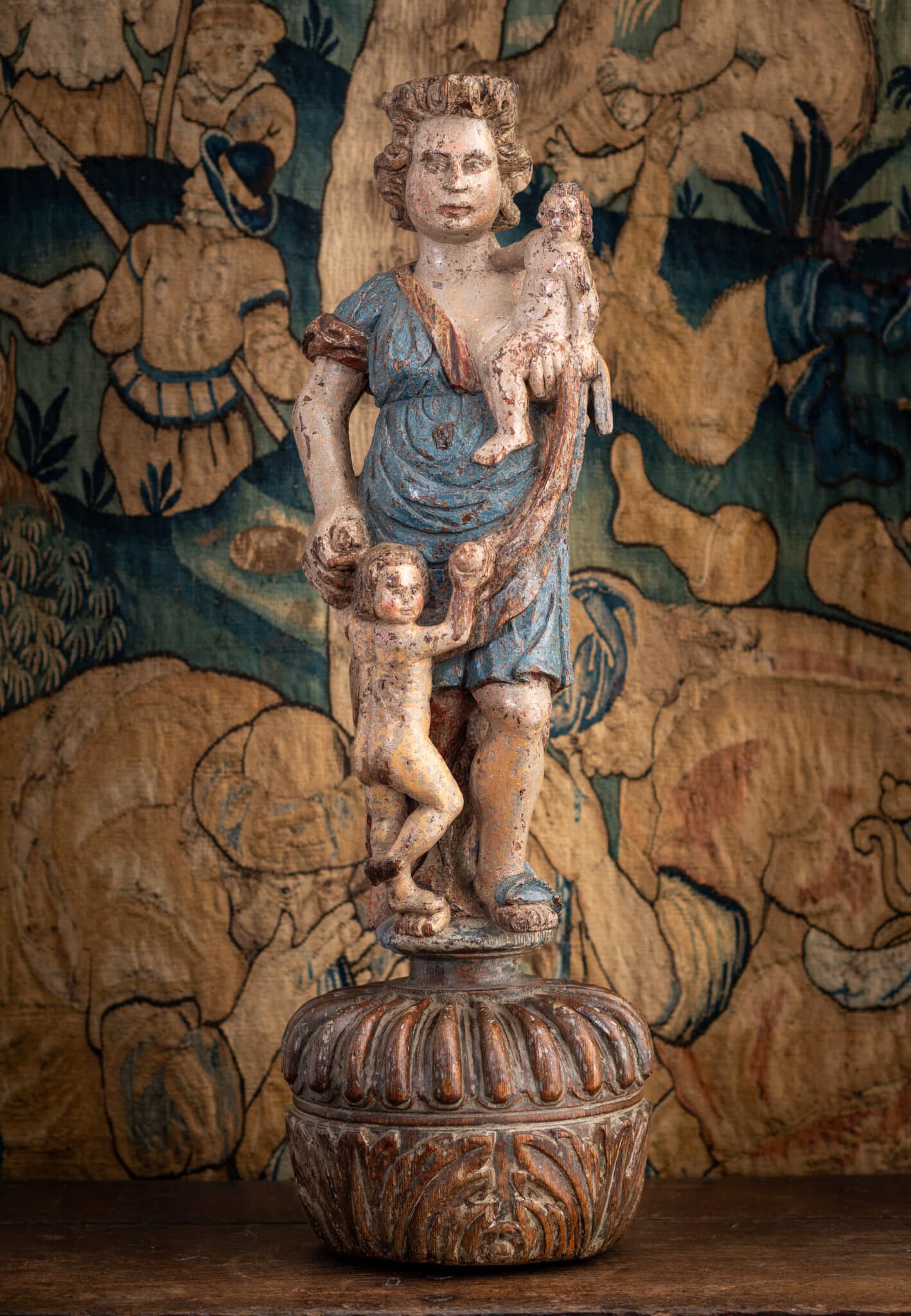
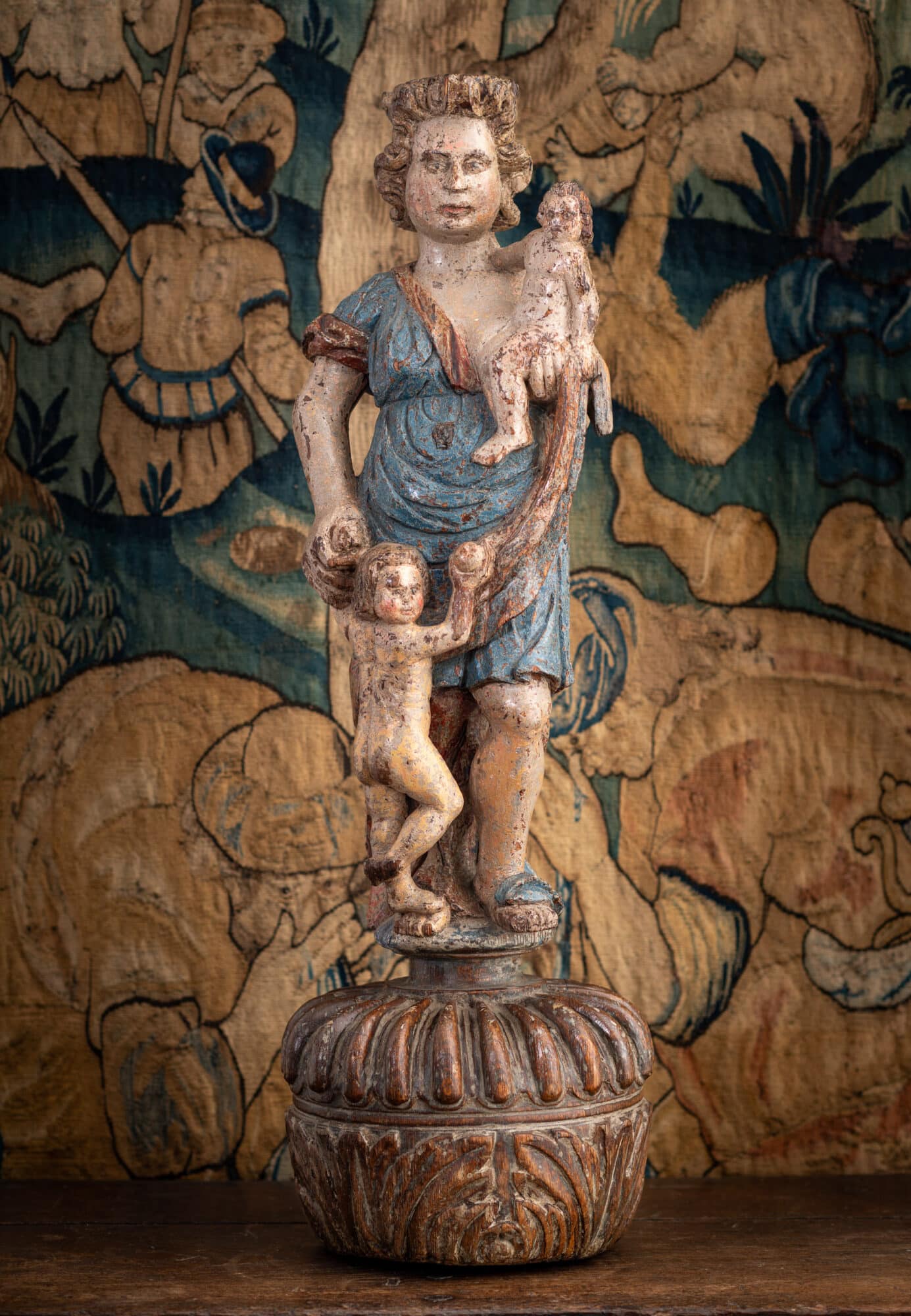
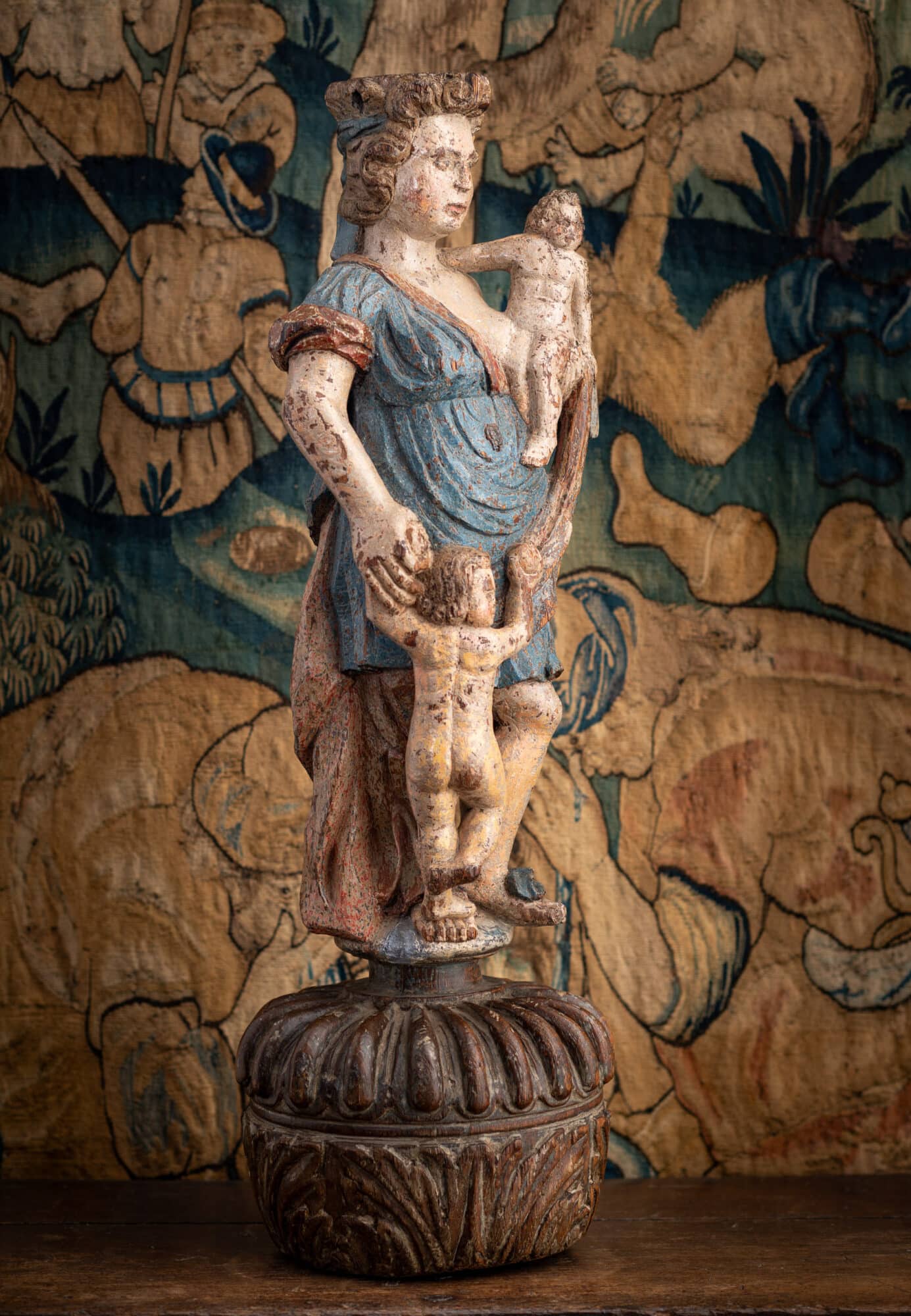
An Elizabethan carved oak sculpture depicting the allegorical figure of Charity (Caritas), carved fully in the round and retaining extensive original polychrome decoration.
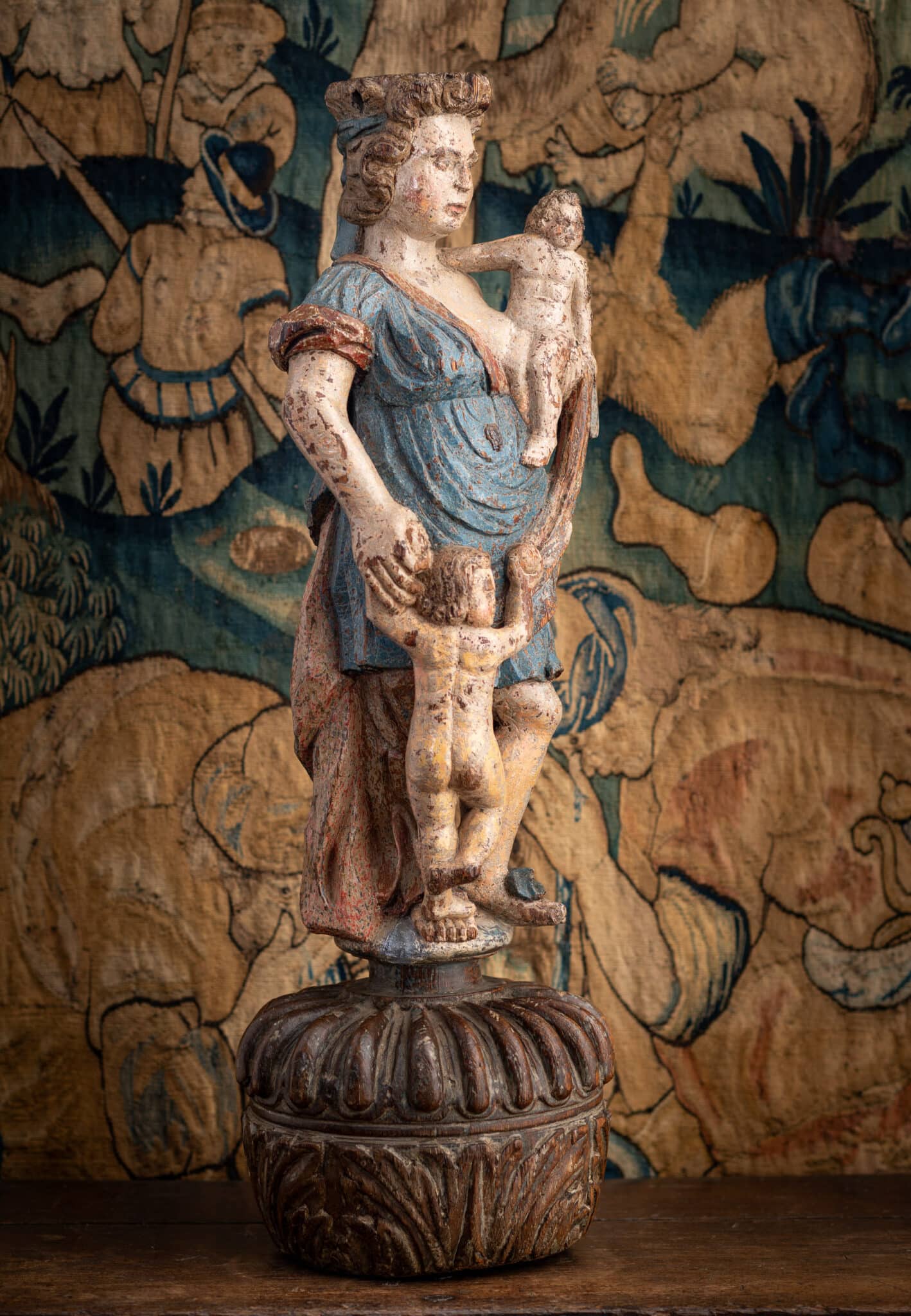
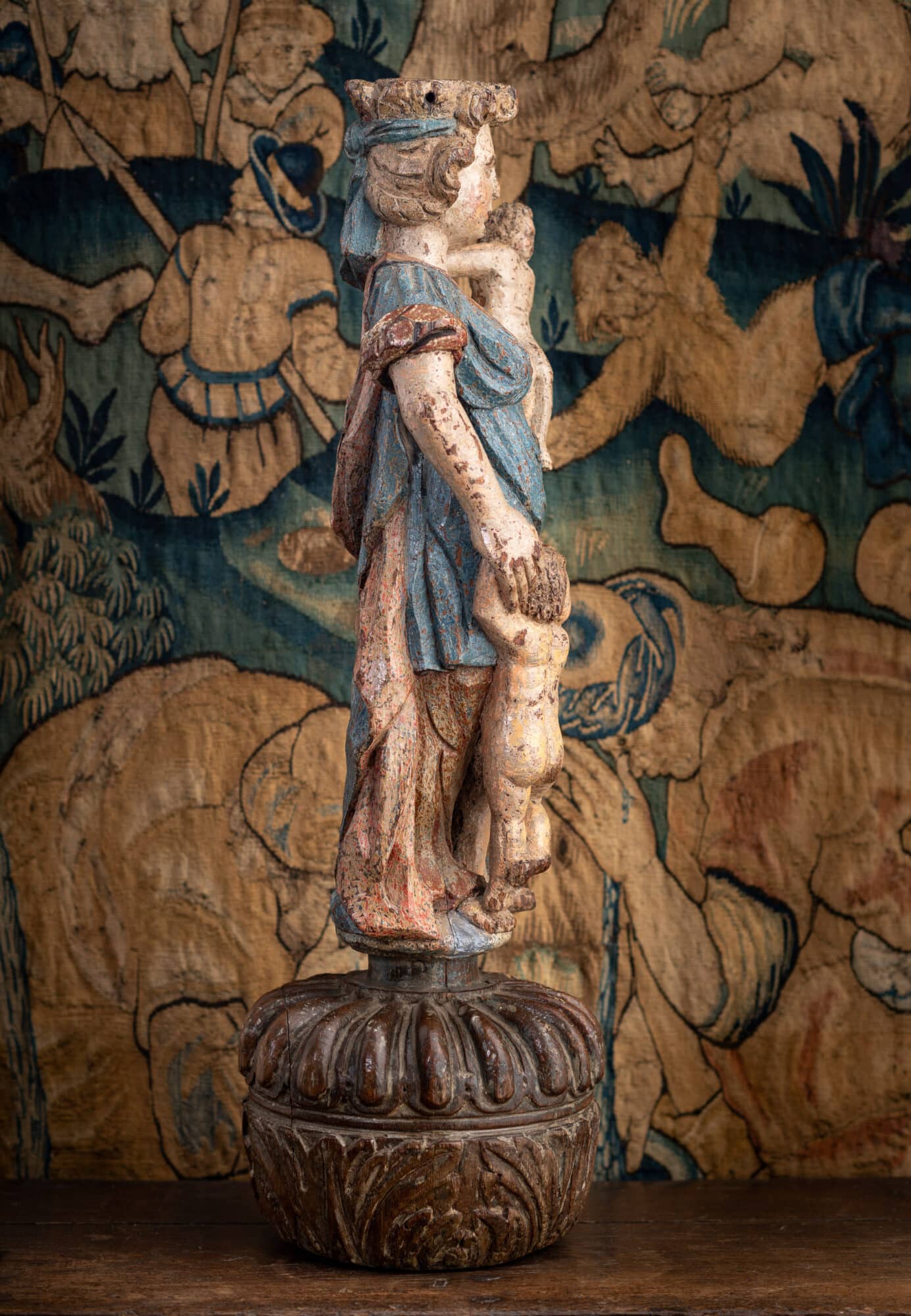
The composition represents a standing female figure accompanied by two naked children, one supported upon her left arm and the other standing beside her right leg, reaching upwards to clasp her hand. The woman wears a classical blue garment with contrasting red borders, its deeply carved folds gathered across the body and falling into an elaborate mantle behind. Her carefully modelled face, with softly rounded features and a composed expression, is framed by tightly curled hair arranged beneath a raised, rolled headdress, with a ribbon tied at the back.
The subject is consistent with the Renaissance representation of Charity, one of the three theological virtues, traditionally personified as a woman accompanied by children. The imagery embodies Christian love, benevolence and maternal protection, themes frequently employed within the religious and secular decorative programmes of the sixteenth century.
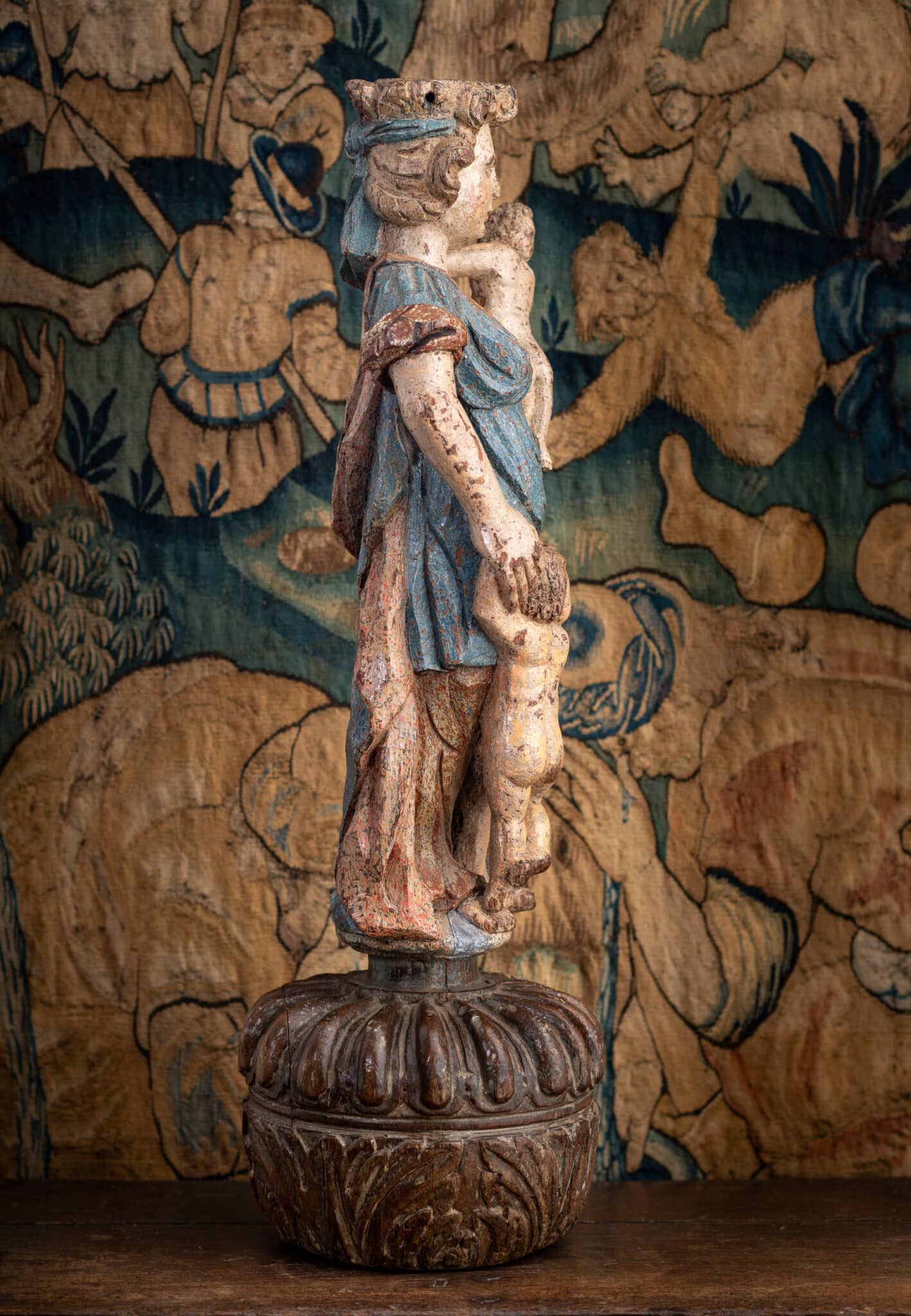
The figure stands upon an integral circular pedestal, the upper section ornamented with deeply carved gadrooning above a lower register of scrolling Renaissance foliage. The entire composition, including the female figure, children and ornamental pedestal, is carved from a single continuous section of oak. The sculpture is fully worked on all sides, with the elaborate folds of the mantle extending across the reverse, demonstrating that the carving was conceived as a three-dimensional composition rather than a figure intended solely for frontal viewing.
Of particular interest is the extensive survival of the original polychrome decoration. The blue and red garments, naturalistic flesh tones and painted details of the children’s bodies remain visible throughout the composition, including the reverse. These surviving surfaces provide valuable evidence of the decorative treatment of English Renaissance woodcarving during the Elizabethan period.
A substantial vertical socket is present in the uppermost section of the woman’s head, suggesting that the sculpture may originally have supported an additional carved element or formed part of a larger architectural or decorative arrangement. The underside of the pedestal has no corresponding fixing hole, and the precise original function remains undetermined. It is possible that the figure once belonged to a series of allegorical personifications incorporated into the decorative scheme of an important Elizabethan interior.
The classical treatment of the female figure, the arrangement of the drapery and the boldly carved gadrooned and foliate ornament are consistent with English Renaissance sculpture of the third quarter of the sixteenth century. A West Country origin is suggested, although no specific workshop has been identified.
The sculpture illustrates the assimilation of continental Renaissance allegorical imagery into English woodcarving during the reign of Elizabeth I, combining classical figural representation with the ornamental traditions of the period. Its fully carved composition and extensive surviving polychromy provide an informative example of the sculptural and decorative practices of Elizabethan England.