A Flemish Polychromed Oak Relief Depicting the Virgin and Child with a Kneeling Ecclesiastical Figure
- Period
- 1550 - 1580
- Origin
- Southern Netherlands, possibly Mechelen (Malines)
- Dimensions
- W 13 1/4"" × H 11 3/4"" × D 1""
- Reference
- #Marh3865
£3,850
Description
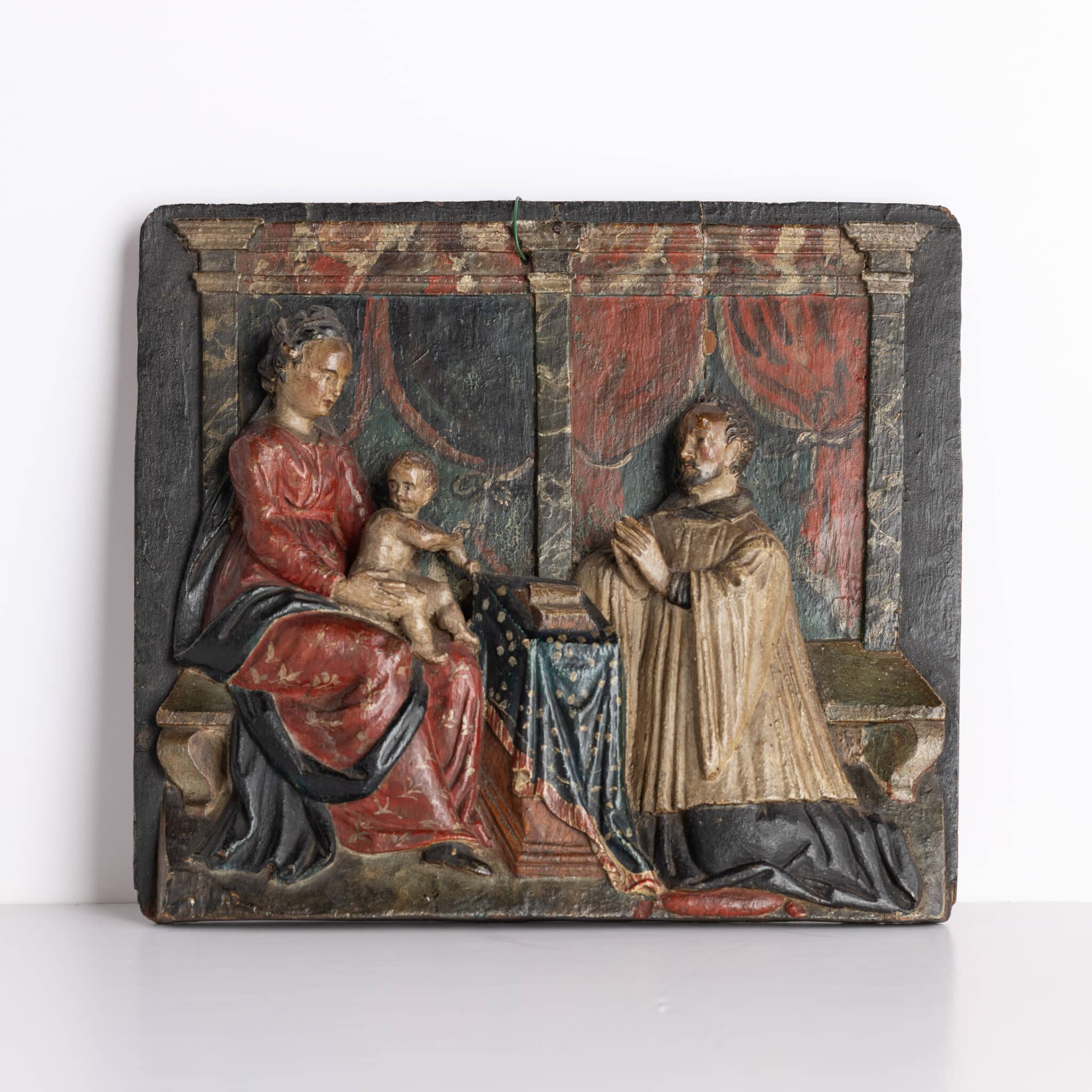
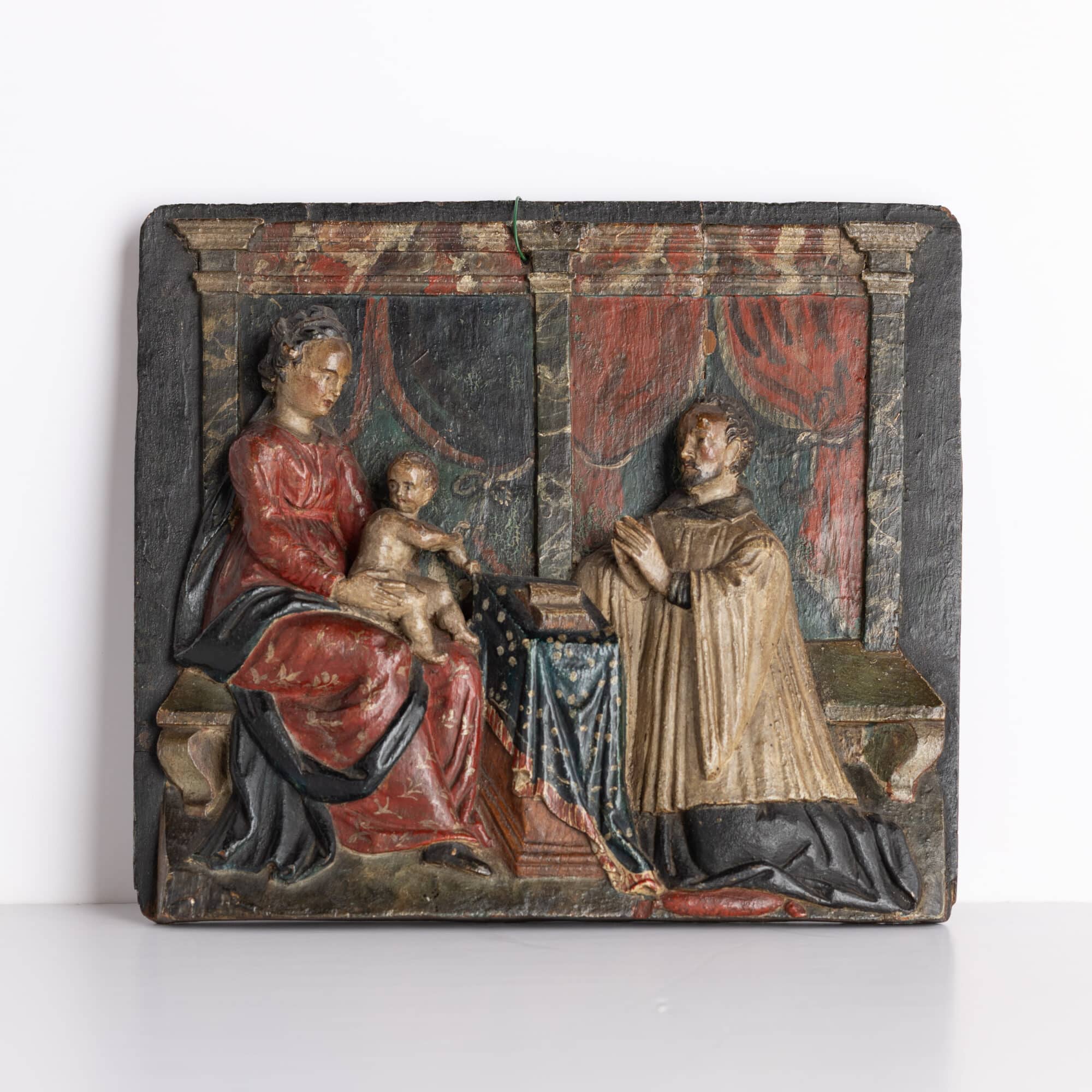
A sixteenth-century carved oak relief retaining extensive polychrome decoration, depicting the Virgin and Child receiving the devotions of a kneeling ecclesiastical figure within a Renaissance architectural interior.
The Virgin is seated to the left, wearing a long red gown beneath a dark mantle, her head inclined towards the Christ Child, who rests upon her lap. The infant turns towards the kneeling figure, extending his arm in his direction. Opposite, a bearded and tonsured man kneels with his hands joined in prayer, wearing a pale, generously folded outer garment over darker robes.
Between the figures stands a small architectural furnishing, possibly a prayer desk or altar, covered with a richly decorated textile of dark blue with gilded motifs and a patterned border. The background is articulated by classical columns and pilasters supporting a moulded entablature, with suspended red curtains framing the devotional encounter.
The composition reflects the transition from late Gothic devotional imagery towards the architectural and pictorial conventions of the Renaissance. The figures are arranged within a carefully defined interior, their relationship established through gesture, posture and the direction of their gaze.
The facial characteristics of the Virgin, particularly the high forehead, elongated nose, small mouth and lowered eyes, invite comparison with sculpture produced in the Southern Netherlands, especially the workshops of Mechelen in Brabant. The modelling of the Christ Child and the treatment of the drapery likewise retain elements of the Netherlandish sculptural tradition, while the classical architectural framework suggests a date within the middle or later decades of the sixteenth century.
The identity of the kneeling figure remains uncertain. His tonsure and ecclesiastical dress suggest either a religious donor or a saint represented in an attitude of devotion to the Virgin and Child. The absence of an identifying inscription or clearly recognisable attribute prevents a more specific identification.
The relief may originally have formed part of a small devotional altarpiece or have been conceived as an independent work for a private chapel or domestic religious setting.
The surviving polychromy contributes considerably to the reading of the composition, distinguishing the individual figures, architectural elements and textile furnishings through contrasting areas of colour and decorative detail.