Late Gothic Nuremberg Brass Alms Dish with a Five-Petalled Rose
- Period
- 1480 - 1520
- Origin
- South Germany, Nuremberg
- Dimensions
- W 15 3/4" diameter " × H 2""
- Reference
- #Marh3864
£3,250
Description
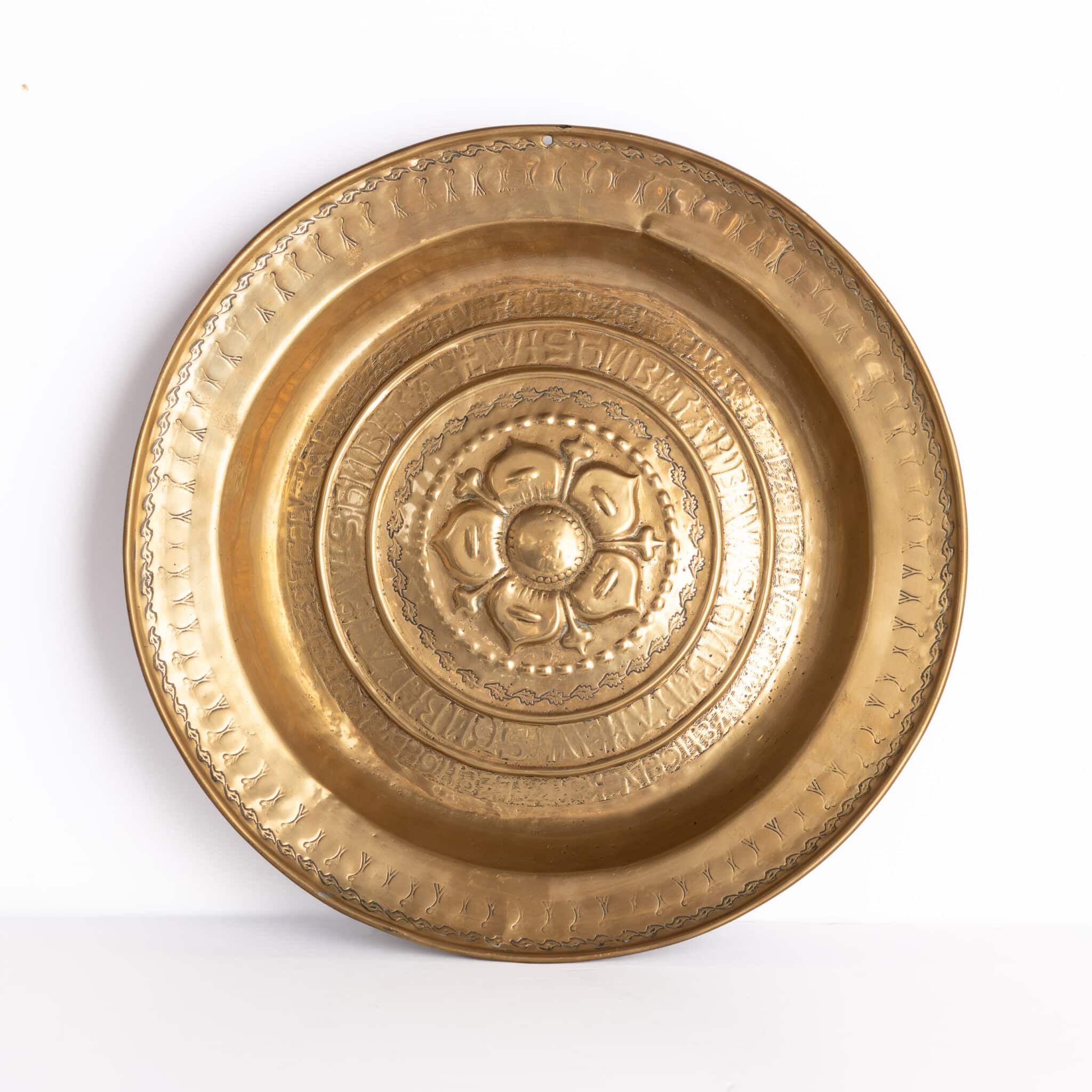
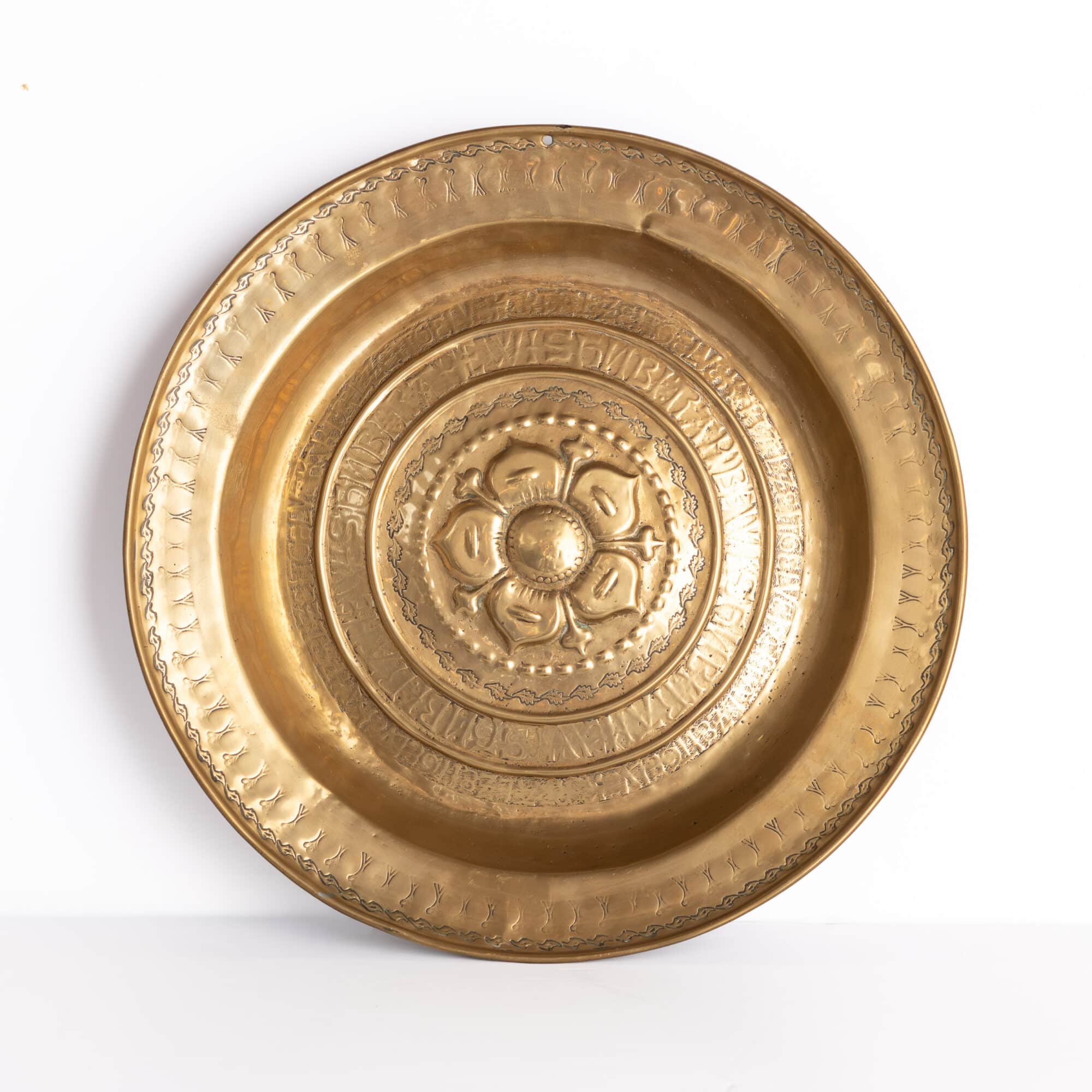
A fine and unusually elaborate Nuremberg brass alms dish, the centre embossed with a prominent five-petalled Gothic rose, its rounded, deeply modelled petals interspersed with pointed Gothic ornaments and arranged around a raised circular boss.
The central rose is enclosed by a succession of concentric decorative bands, including two registers of Gothic lettering, their inscriptions forming an integral part of the ornament. The broad, deeply recessed well rises to a substantial flattened rim, embellished with repeated punched motifs and bordered by a continuous chain-like ornament.
The dish is an accomplished example of the work of the Nuremberg Beckenschläger, the specialist brass workers whose production of embossed dishes flourished during the fifteenth and sixteenth centuries. Such vessels were manufactured using shaped dies to produce their central relief decoration, supplemented by individually applied punched ornament and inscriptions.
Particularly noteworthy is the central Gothic rose, a comparatively uncommon decorative type within the surviving corpus of Nuremberg brass dishes. Its distinctive arrangement of rounded petals and pointed intervening elements belongs to a group of late Gothic designs discussed and illustrated by Klaus Tiedemann in his authoritative study of Nuremberg brass dishes.
The combination of the strongly modelled central rose, concentric Gothic inscriptions and carefully executed rim ornament distinguishes this example from the more frequently encountered dishes decorated with conventional fish-bladder rosettes.
Literature:
Klaus Tiedemann, Nürnberger Beckenschlägerschüsseln / Nuremberg Alms Dishes, pp. 30–32, particularly the comparative Gothic rose motifs illustrated on p. 30 and the discussion of raised and flattened Gothic roses on pp. 31–32.