A German Renaissance Carved Oak Stollenschrank or Cupboard
- Period
- 1560
- Origin
- Cologne, Lower Rhineland, Germany
- Dimensions
- W 50 1/2"" × H 59 1/2"" × D 18 3/4""
- Reference
- #Marh3854
£6,850
Description
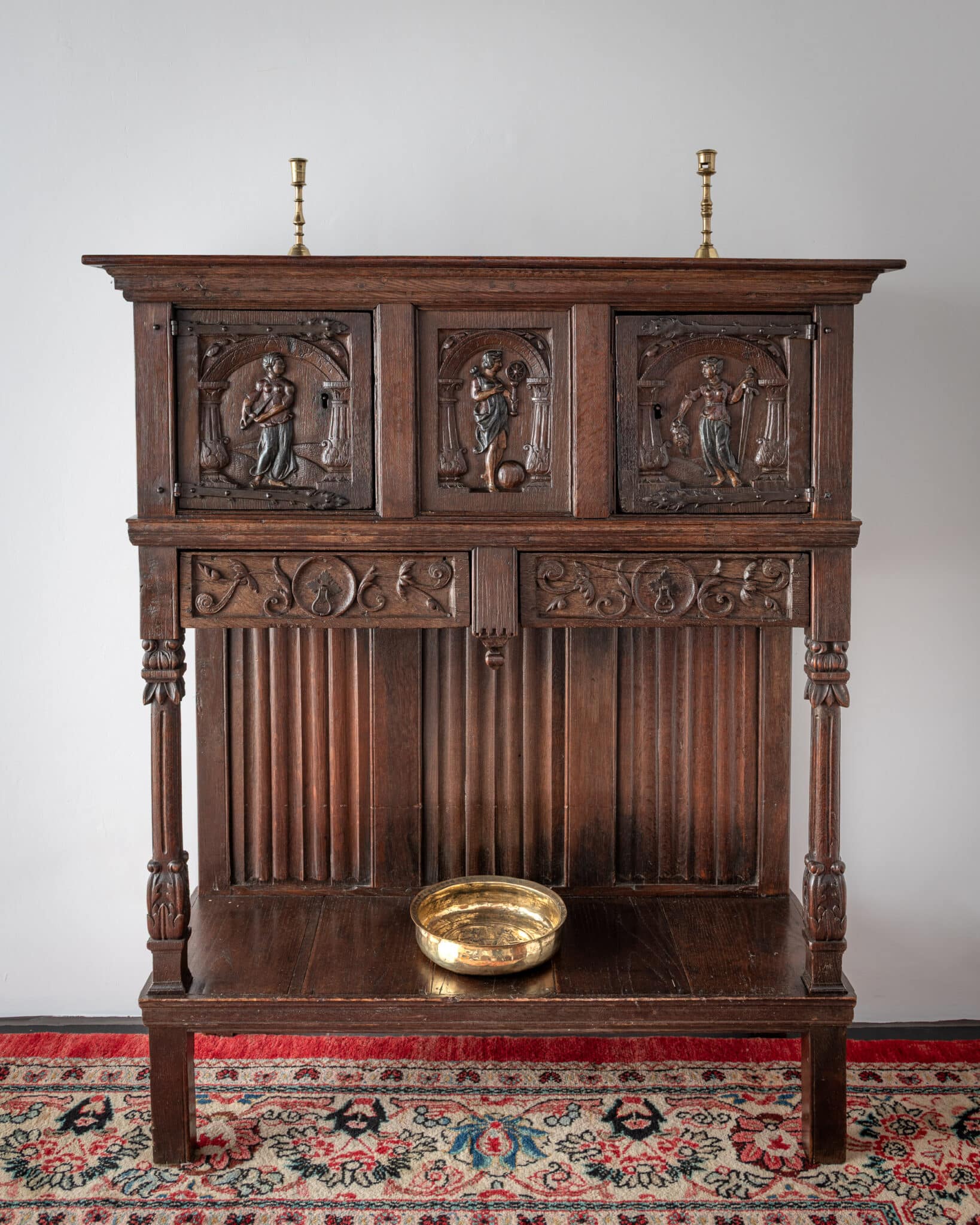
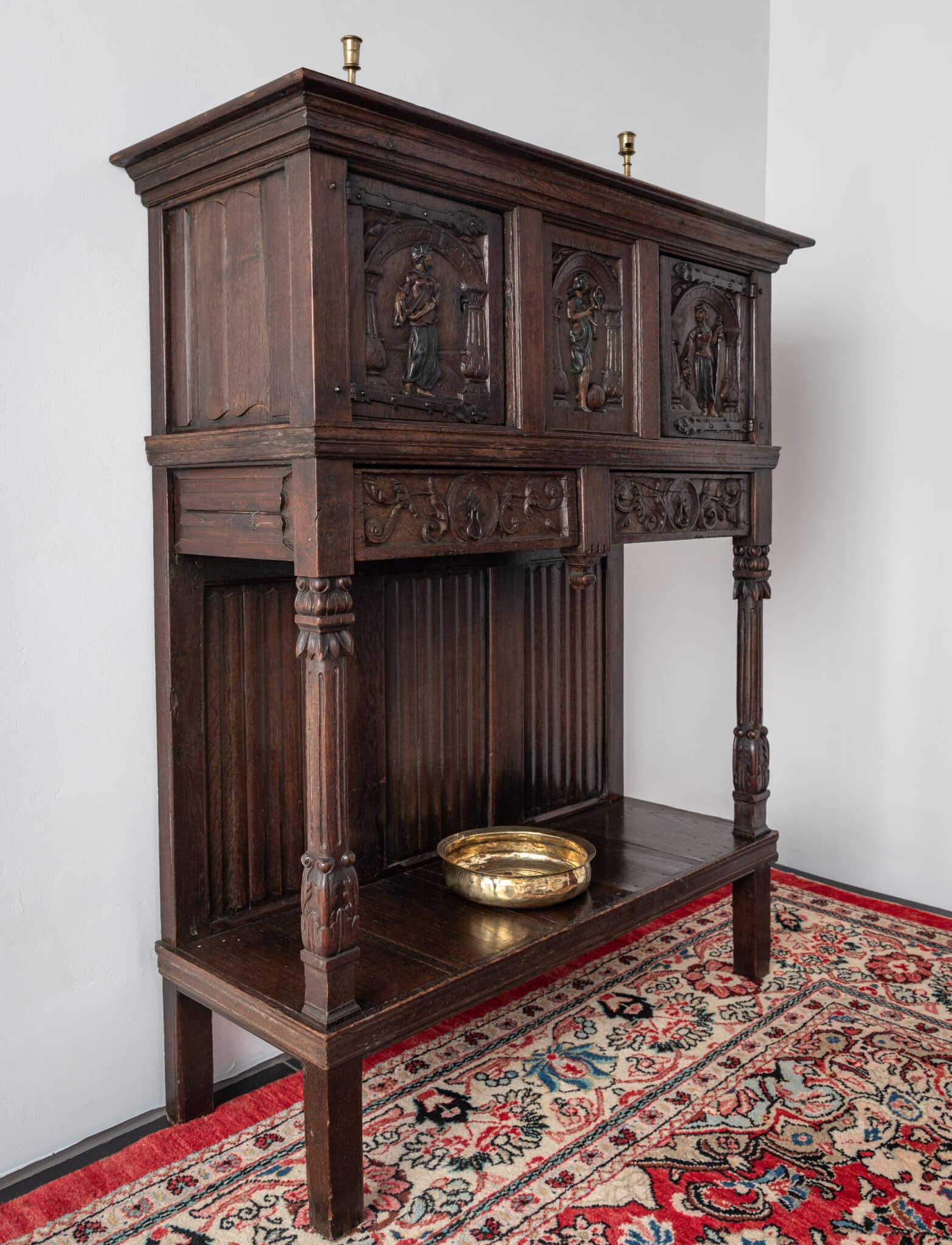
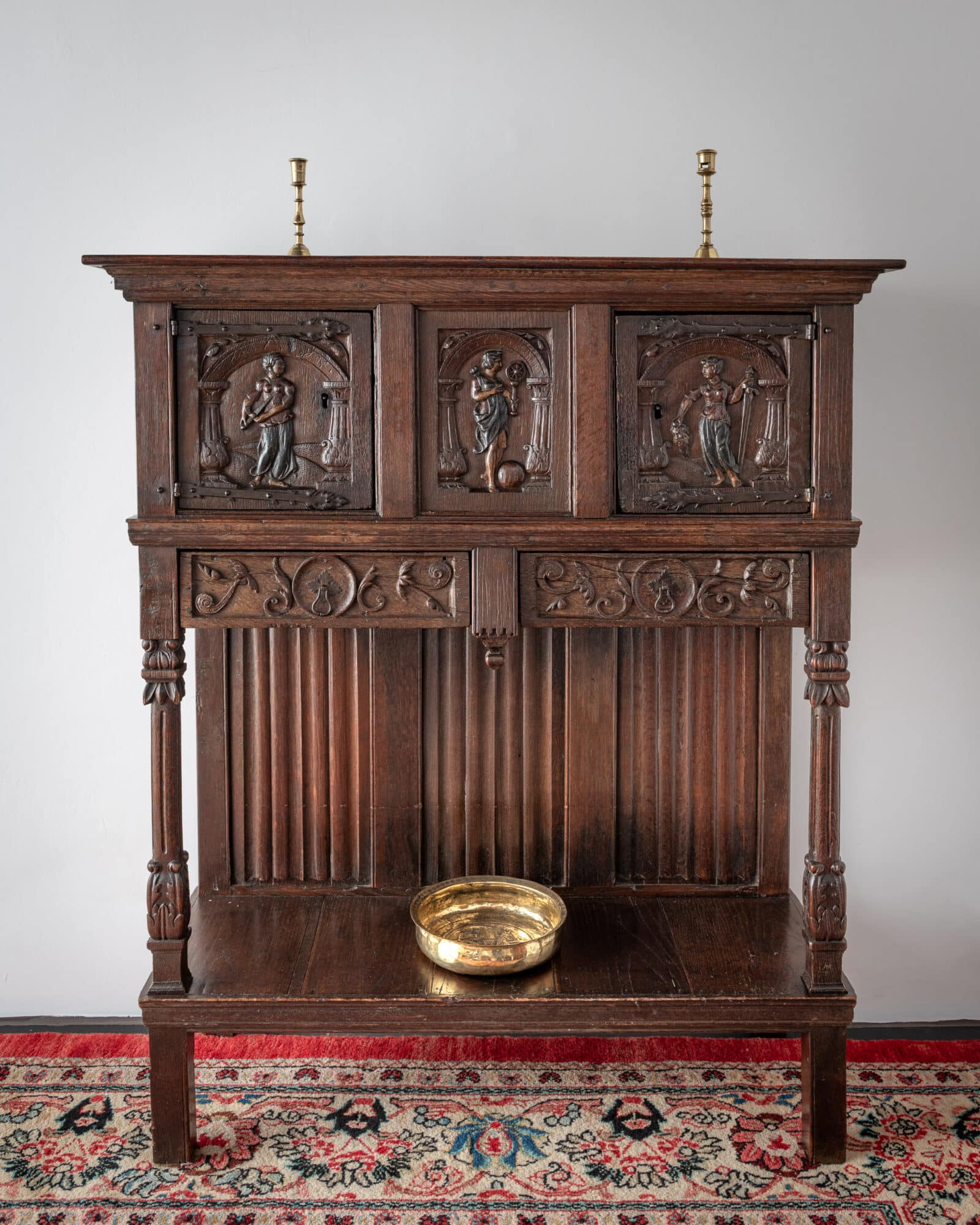
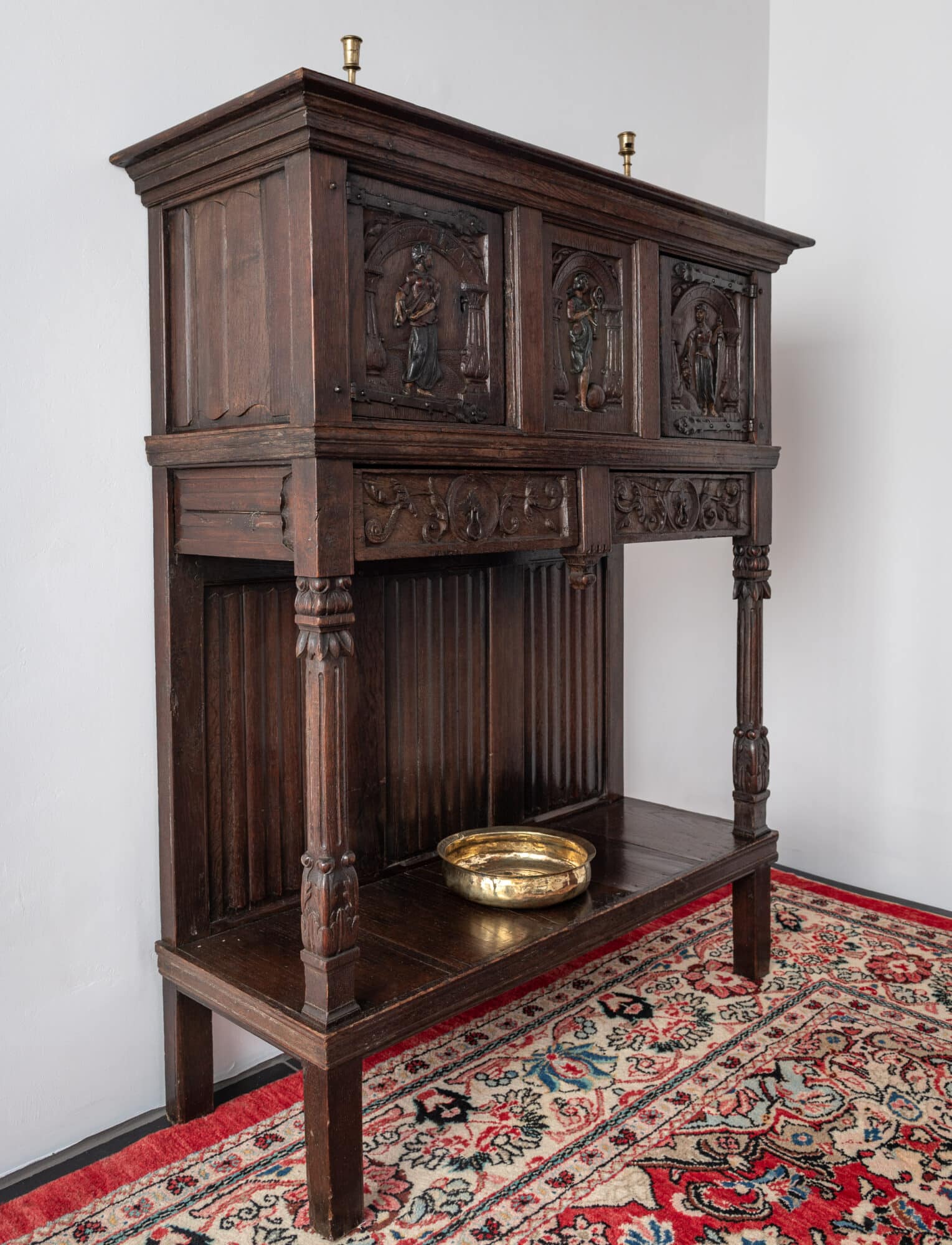
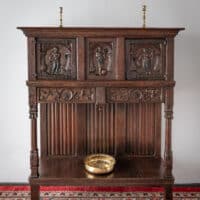
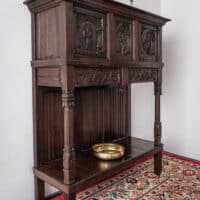
A German Renaissance oak Stollenschrank or cupboard, attributed to Cologne and dating to circa 1560, the upper section incorporating three carved figural panels representing Lucretia, Fortuna and Judith, each standing beneath a classical Renaissance arcade with rounded arches and architectural columns.
The left-hand panel depicts Lucretia, holding a dagger to her breast, the Roman heroine traditionally associated with chastity and honour. The central panel represents Fortuna, holding a staff surmounted by a spoked wheel, with a sphere at her feet, symbolising the changing nature of human fortune. The right-hand panel depicts Judith, holding a sword and the severed head of Holofernes, representing courage and the triumph over tyranny.
The three figures reflect the influence of contemporary German Renaissance engravings, particularly those of Hans Sebald Beham (1500–1550), whose works included representations of all three subjects. His engraving of Fortuna, dated 1541, provides an interesting iconographic comparison with the central figure.
Beneath the upper cupboard are two drawers carved with flowing Renaissance foliate scrollwork. The open lower section is supported by two square-section carved oak uprights, above a broad potboard with a linenfold-panelled back. The sides of the cupboard are similarly decorated with simple linenfold panels, reflecting the continuation of Gothic decorative traditions alongside the developing Renaissance style.
The cupboard retains ancient repairs to the lower back rail
Otto von Falke, Deutsche Möbel des Mittelalters und der Renaissance, pp. 224–225, illustrating Cologne oak Stollenschränke dated circa 1540 and circa 1560.
These examples provide comparisons for the architectural arrangement, carved decoration and general construction of the present cupboard.