A Henry VIII Oak Linenfold Chest
- Period
- Circa 1530–1540
- Origin
- England
- Dimensions
- W 43"" × H 19"" × D 18 1/4""
- Reference
- #Marh3819
£2,450
Description
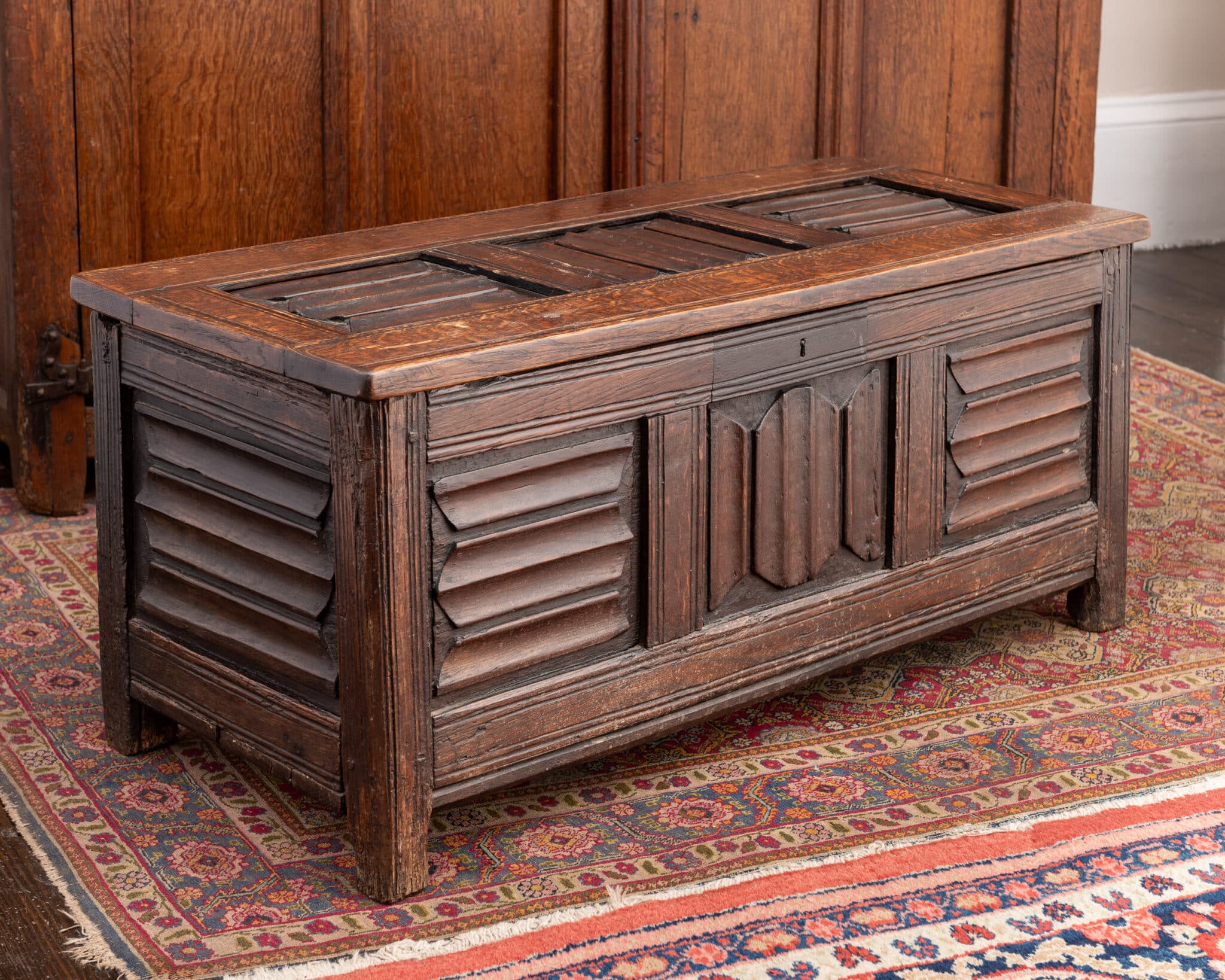
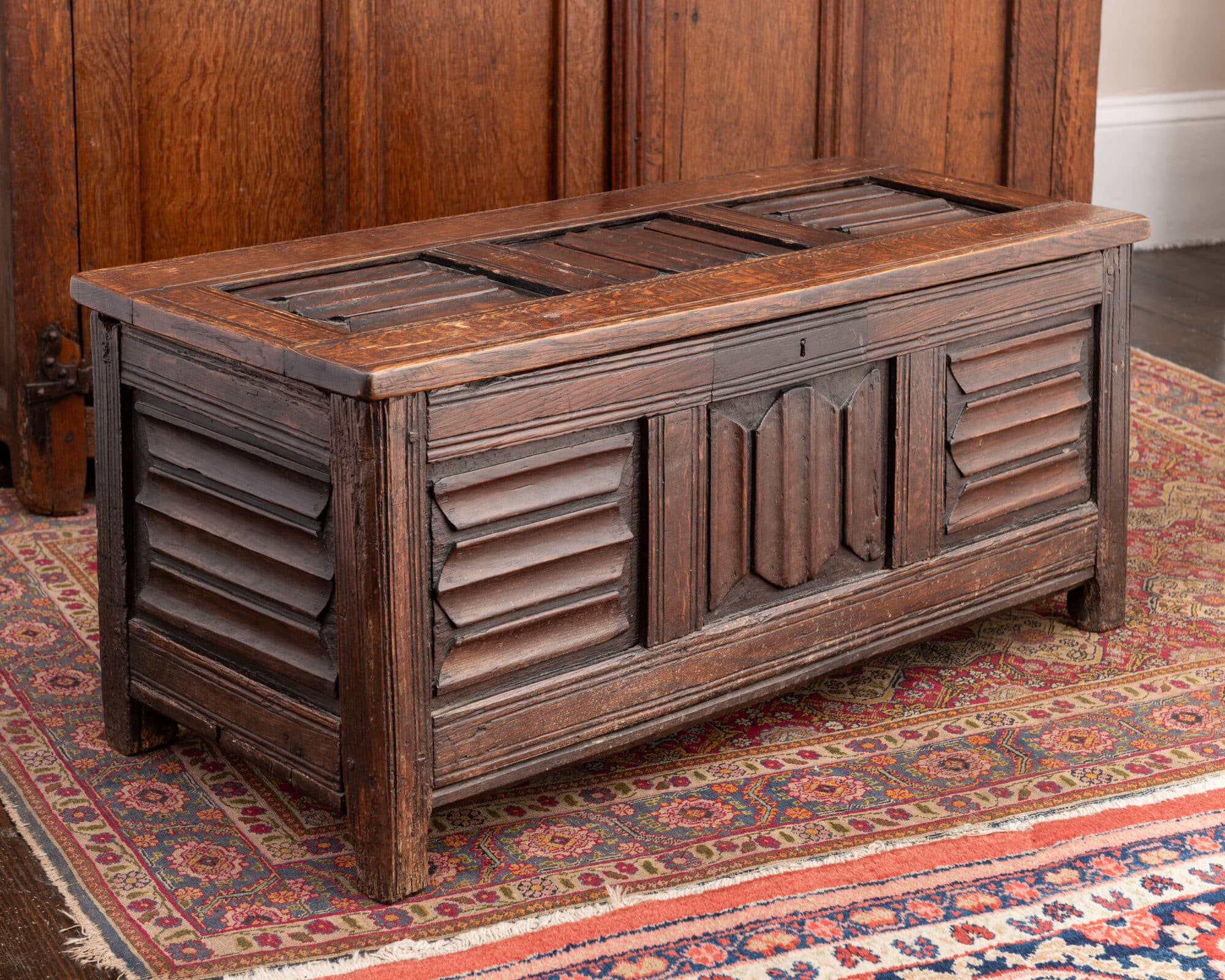
An English oak chest dating from the reign of Henry VIII, circa 1530–1540, distinguished by an accomplished and particularly unusual arrangement of linenfold decoration.
The chest is constructed in the traditional framed-and-panelled manner, the principal elevation divided into four linenfold panels. Most distinctive is the deliberate juxtaposition of horizontal and vertical linenfold: broad horizontal folds occupy the outer panels, while the two central panels are carved with upright linenfold. The ends are similarly panelled with horizontal linenfold, creating a coherent decorative scheme around the body of the chest.
Of particular note is the framed and panelled lid, which incorporates further linenfold carving. Linenfold is most commonly encountered on the vertical elevations of surviving Tudor chests, cupboards and panelling; its employment within the lid gives this example an unusually complete decorative treatment and considerably adds to its architectural character.
The linenfold ornament belongs to a decorative vocabulary that became established in England during the late fifteenth and early sixteenth centuries. Intended to evoke the repeated folds of hanging or gathered textile, it was particularly suited to the newly fashionable framed-and-panelled construction of the Tudor period. Here the comparatively restrained carving, strong rectilinear framing and alternation in the direction of the folds create an effective play of light and shadow without the need for additional figurative or heraldic ornament.
Condition
The chest bears considerable evidence of a working life extending across almost five centuries. The bottom boards have been replaced, sections of the framing associated with the top have undergone replacement or repair, and the present hinges are not original. The area surrounding the former lock has also been repaired and the lock itself is now absent. These interventions are readily distinguishable from the surviving early fabric and form part of the object’s long history of use and maintenance.
Despite these alterations, the chest retains the essential character of an early Tudor piece, including its framed construction, substantial linenfold carving and notably rich, deeply patinated oak surface. The survival of linenfold to the front, ends and, most unusually, the lid makes it an uncommon example of English domestic furniture from the later years of the reign of Henry VIII.