A Gothic Polychrome Walnut Figure of Saint Peter,
- Period
- Circa 1350 - 1400
- Origin
- Central or Southern France
- Dimensions
- W 7 1/4"" × H 24 3/4"" × D 4 3/4""
- Reference
- #Marh3818
£6,850
Description
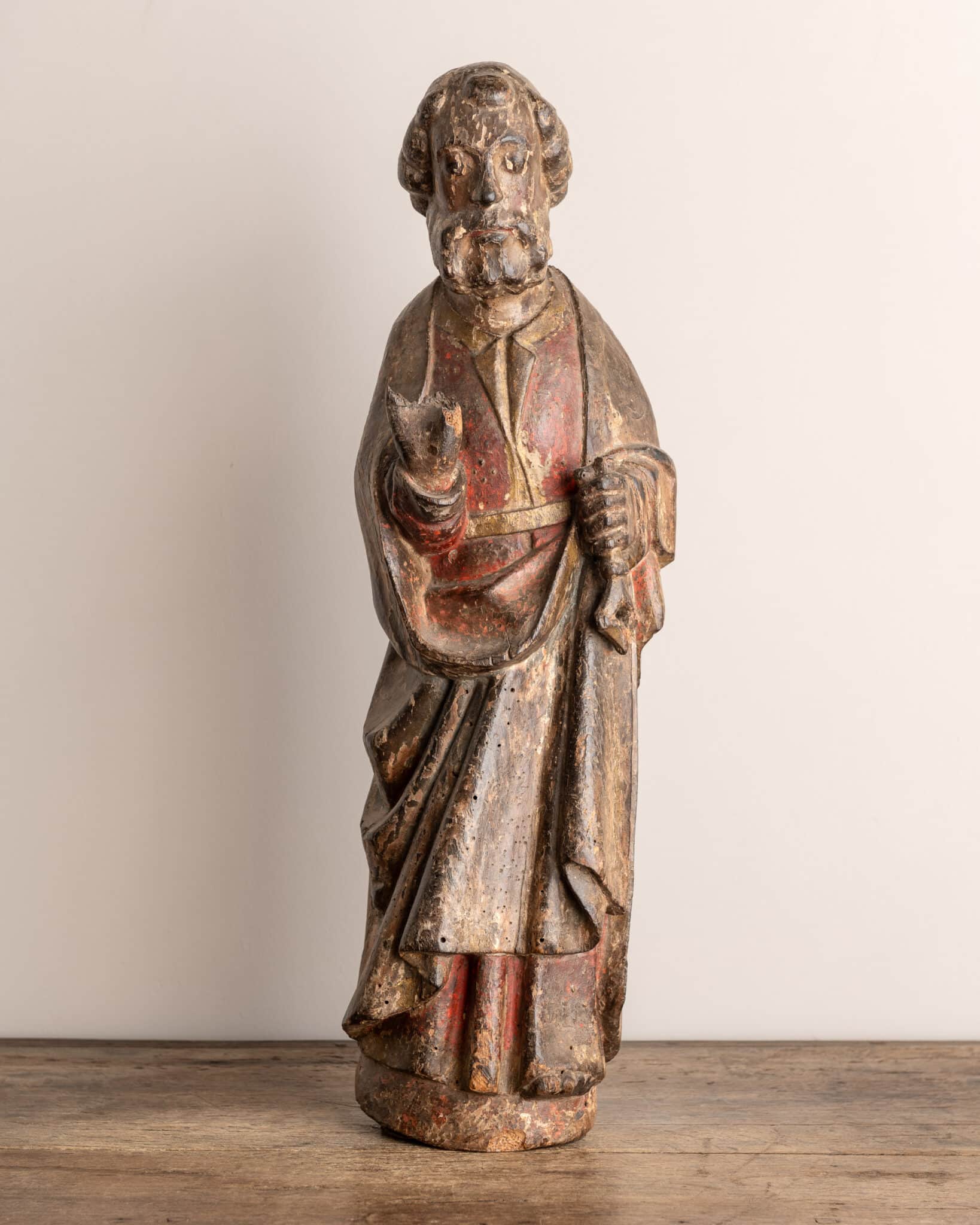
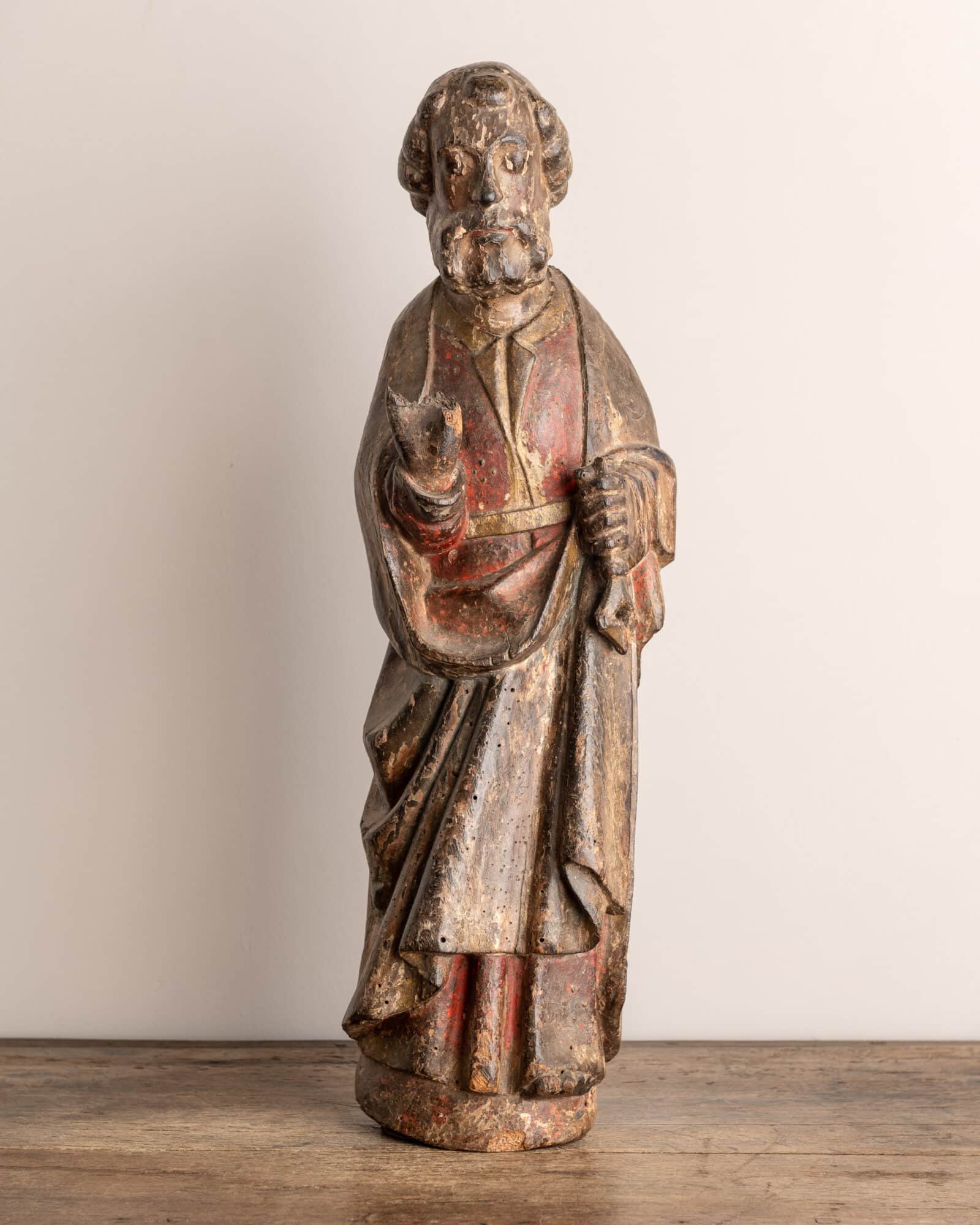
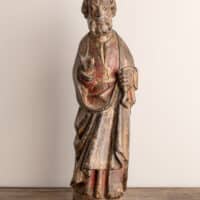
An imposing and characterful fourteenth-century carved walnut figure of Saint Peter, retaining extensive early polychromy. The Apostle is represented standing frontally, bearded and with characteristically pronounced curled locks of hair. He holds his principal attribute, the key to the Kingdom of Heaven, vertically in his left hand; his raised right hand is now lacking.
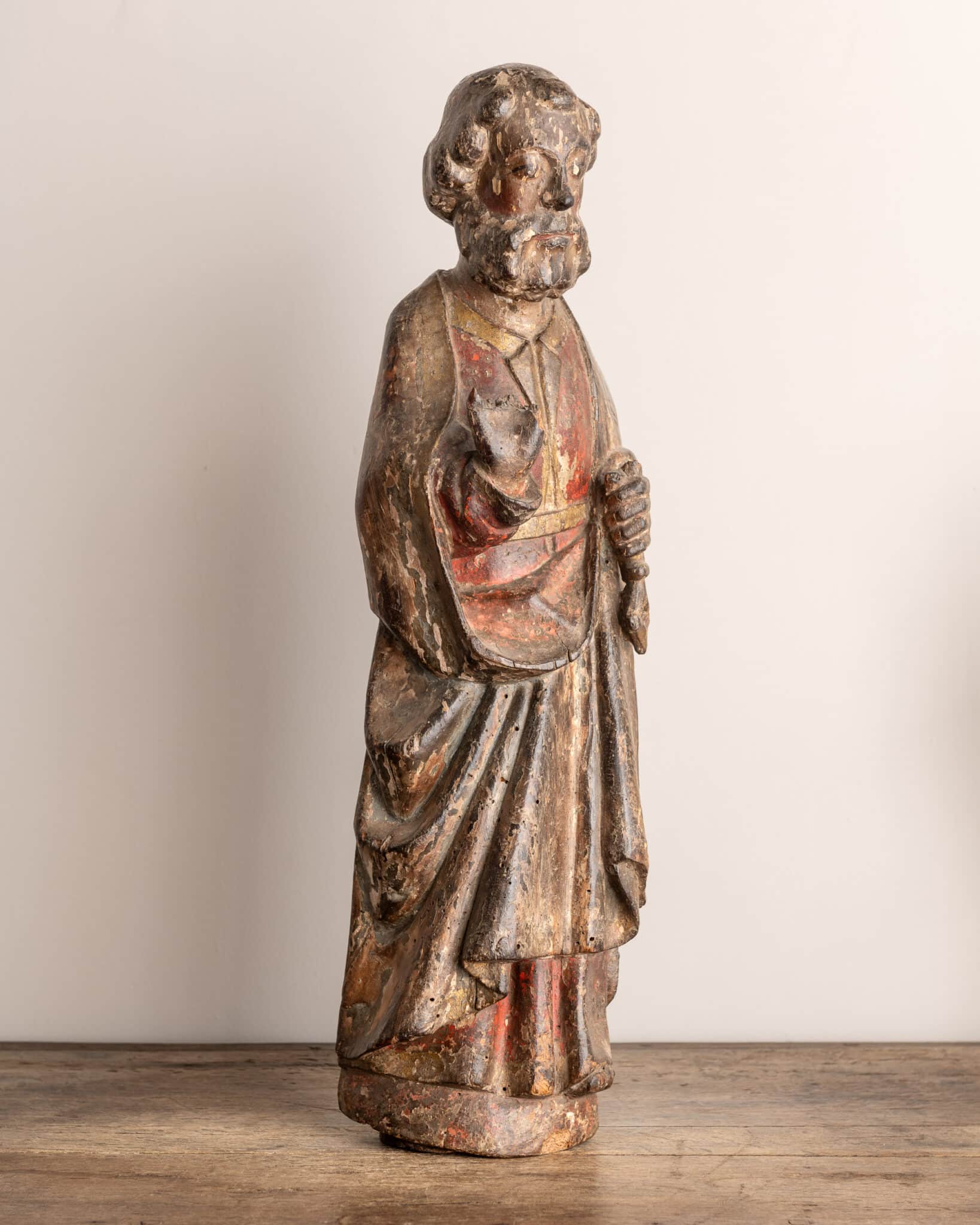
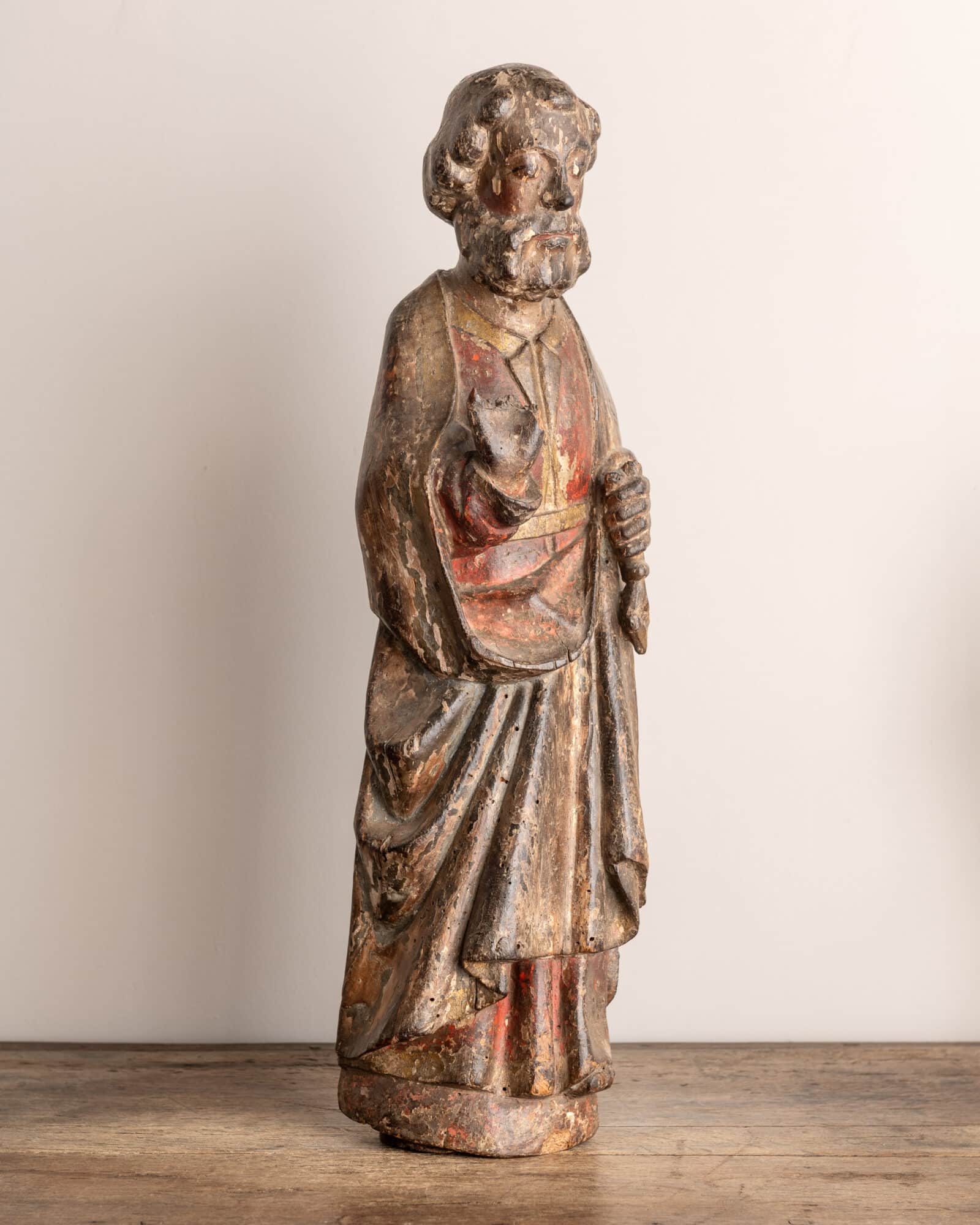
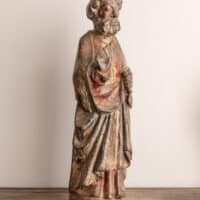
Peter wears a long tunic beneath a mantle drawn across the body. Particularly notable is the restrained treatment of the drapery: broad, deeply cut folds descend towards the integral rounded base, while the mantle falls in a heavier sweep along the side of the figure. This relatively simple, monumental treatment of the garments, together with the strongly frontal pose and compact proportions, preserves something of the sculptural vocabulary of the preceding Romanesque tradition and is characteristic of provincial Gothic sculpture of the fourteenth century.
The head is particularly powerful. The saint’s hair is arranged in a series of large, rounded locks rather than the more naturalistically divided curls encountered in much later Gothic sculpture. His strongly projecting nose, almond-shaped eyes and substantial beard are similarly conceived in broad, almost architectural masses. The resulting expression possesses the solemnity and hieratic presence appropriate to an image intended for ecclesiastical devotion.
The figure retains extensive historic polychromy, most conspicuously the rich red of the inner garment, together with darker and lighter passages defining the mantle, borders, flesh and hair. The worn and fragmentary painted surface is especially evocative, recording the long devotional and physical history of the sculpture. Until technical analysis establishes the precise stratigraphy of the surviving decoration, it is prudent to describe the surface as extensive early polychromy rather than to assume that every visible layer belongs to the original fourteenth-century scheme.
The reverse is comparatively flat and simply worked, suggesting that the sculpture was conceived to be viewed principally from the front, probably when placed within an architectural setting such as a retable, tabernacle or church furnishing. The use of walnut is entirely consistent with medieval French sculptural practice.