A Large Late Gothic Polychrome Walnut Sculpture of the Virgin and Child
- Period
- Circa 1500
- Origin
- Probably Southern Netherlands
- Dimensions
- W 11 1/2"" × H 40 3/4"" × D 9 3/4""
- Reference
- #Marh3890
£5,850
Description
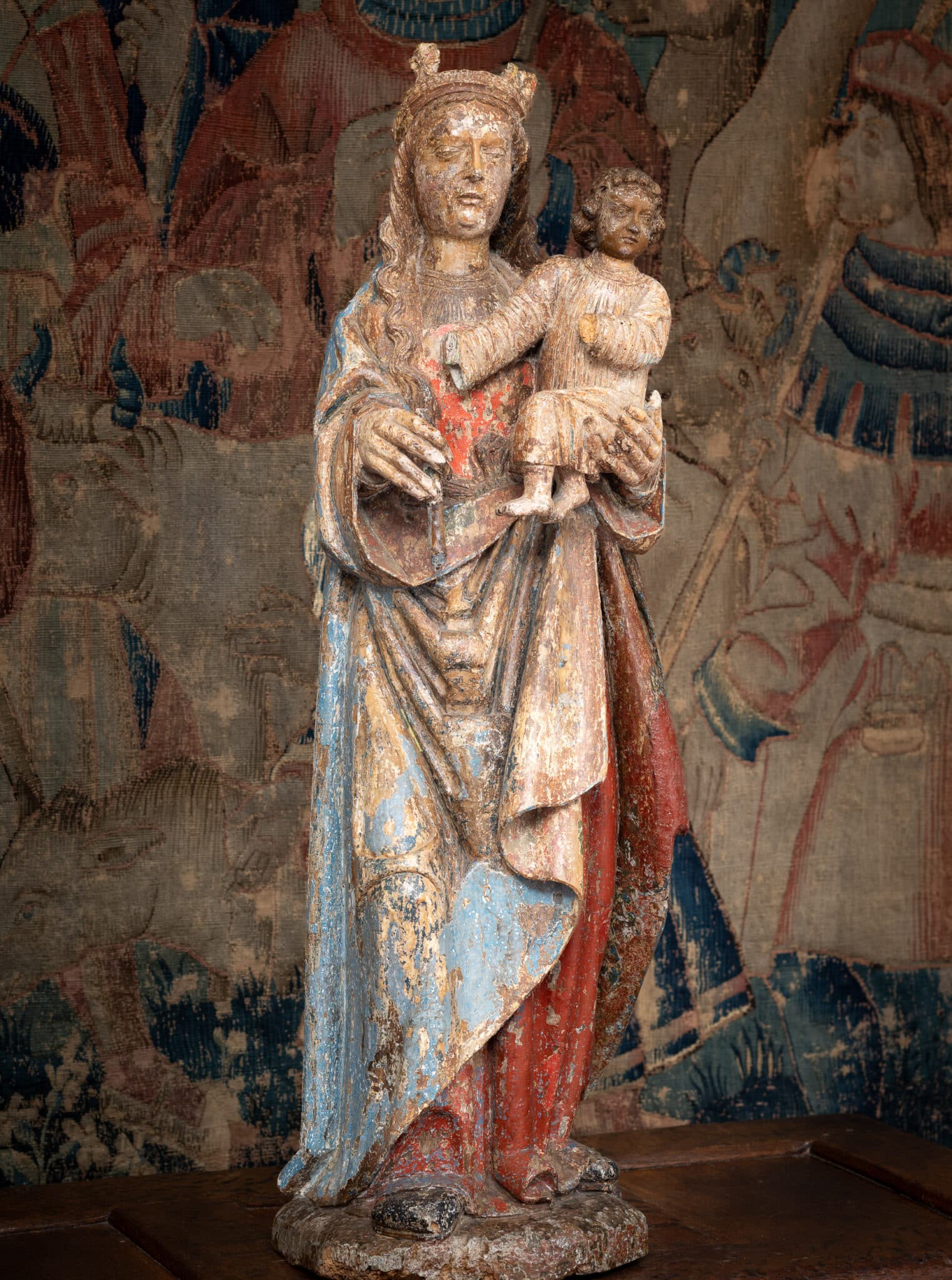
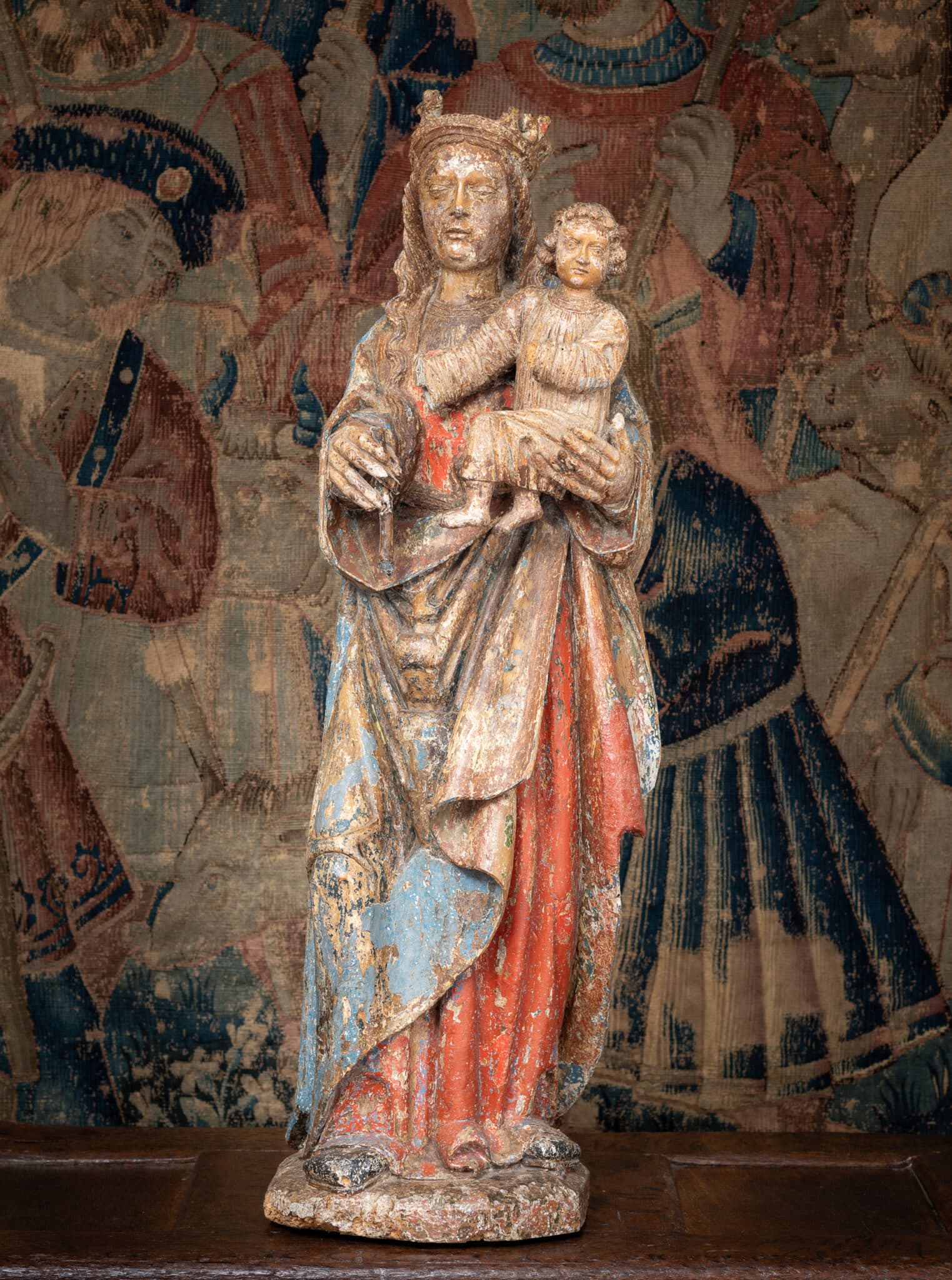
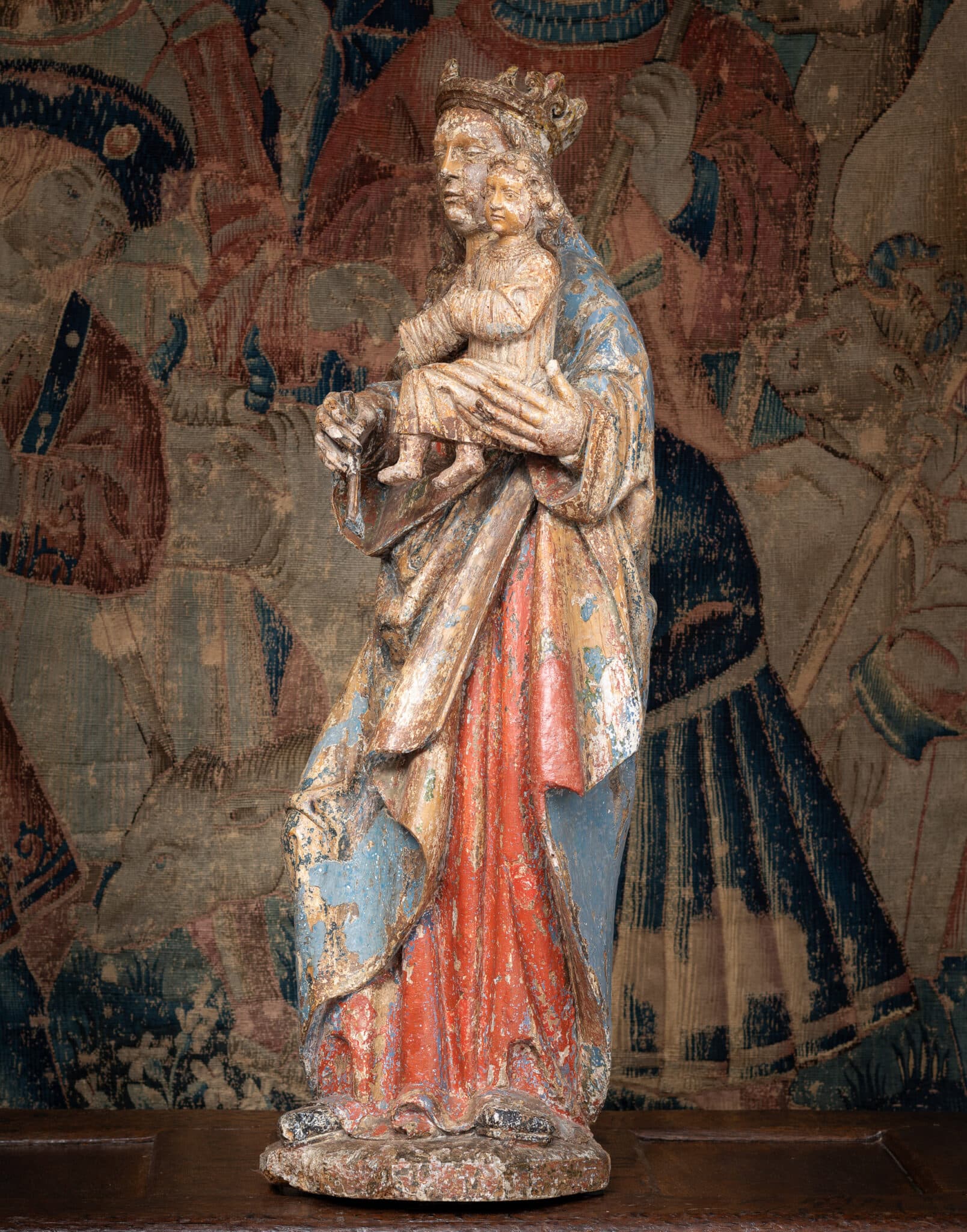
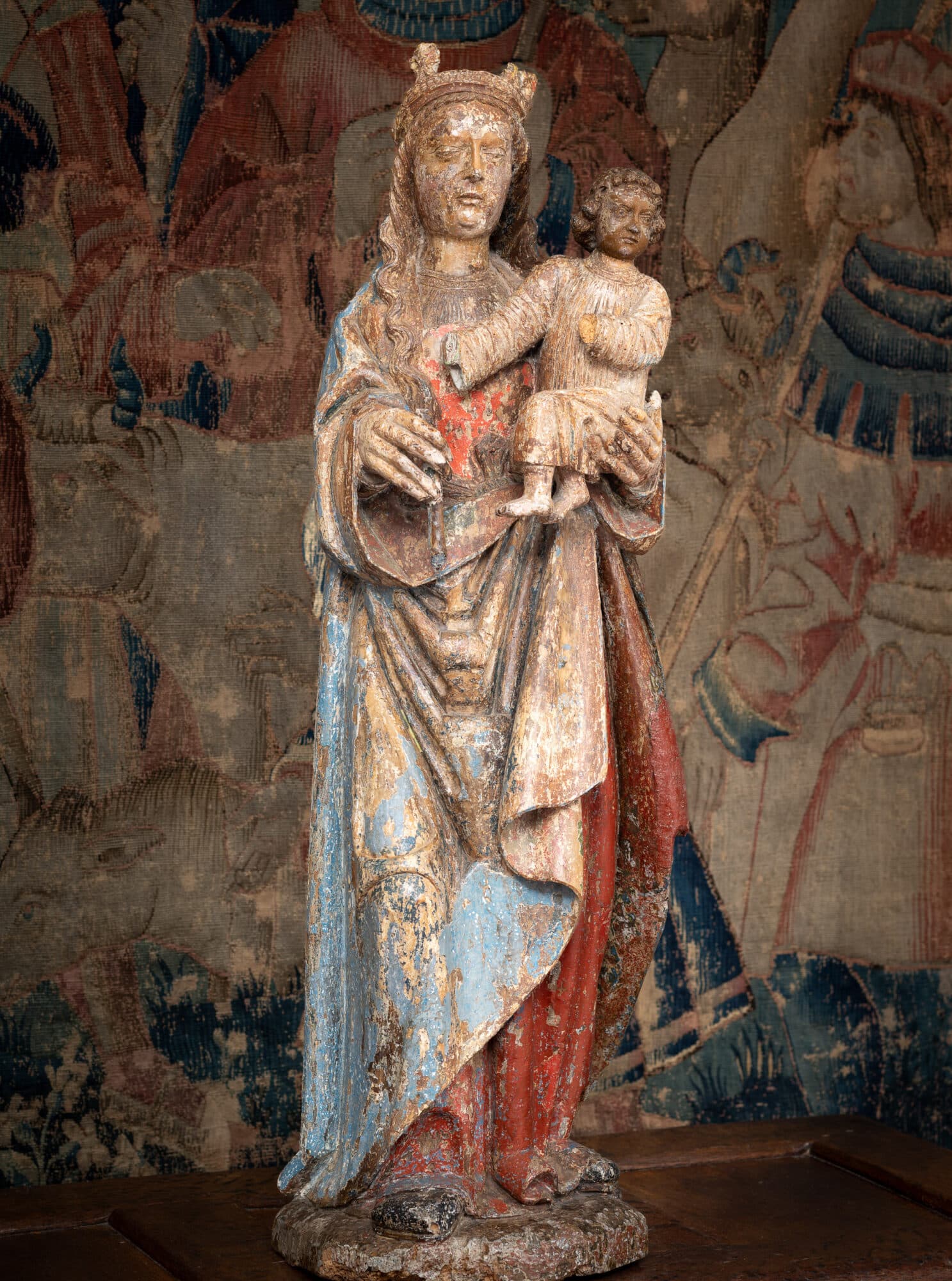
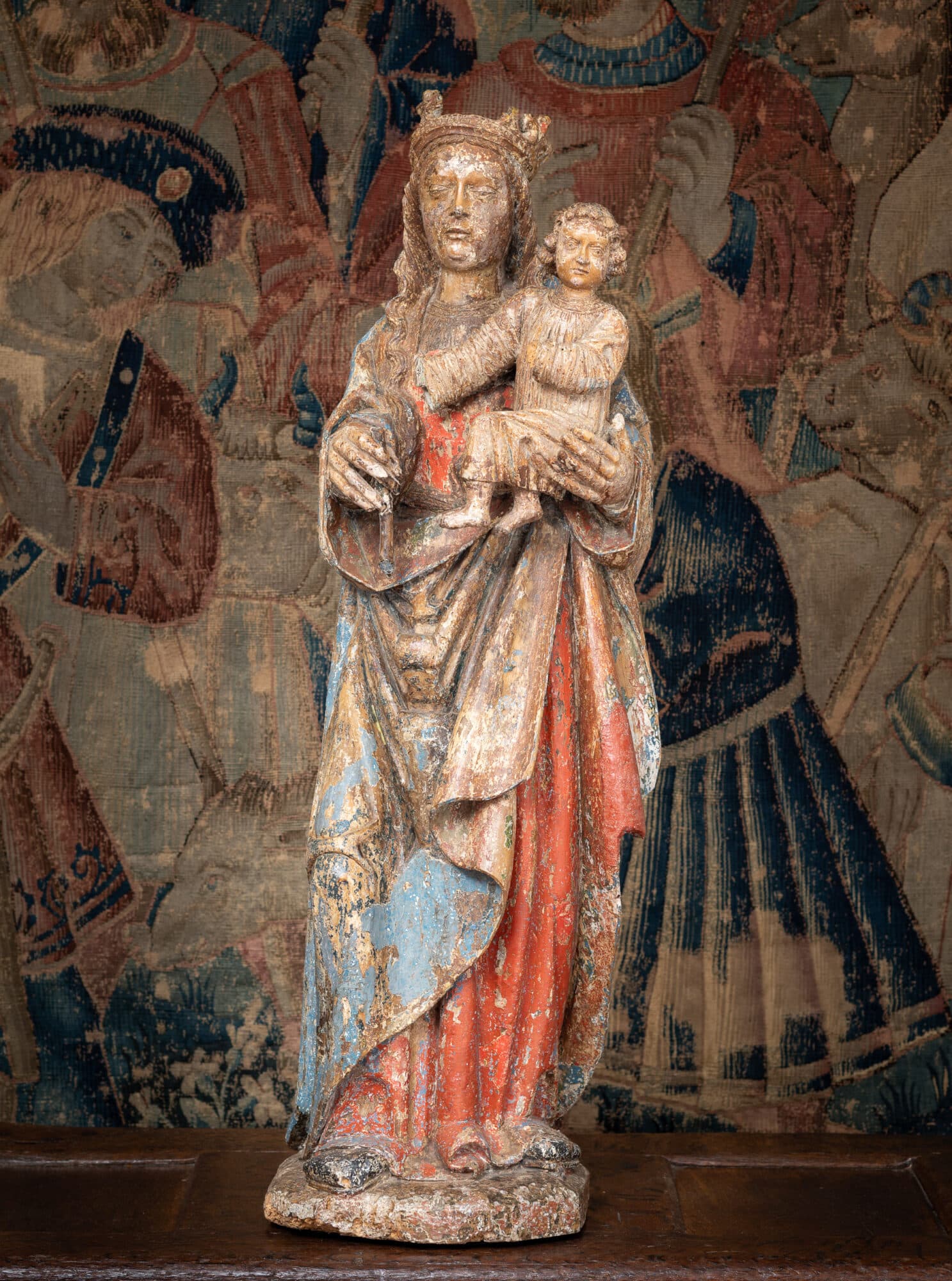
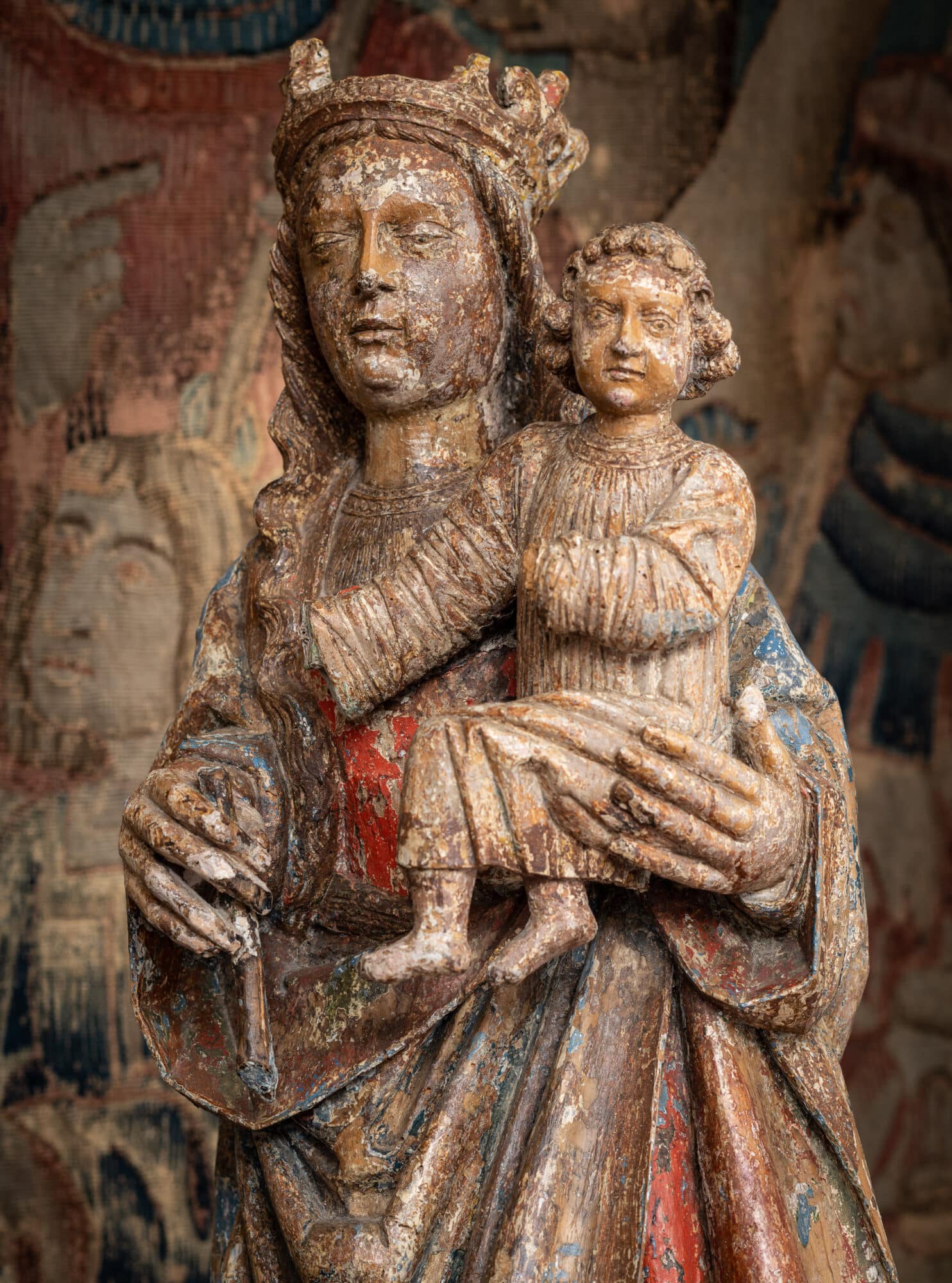
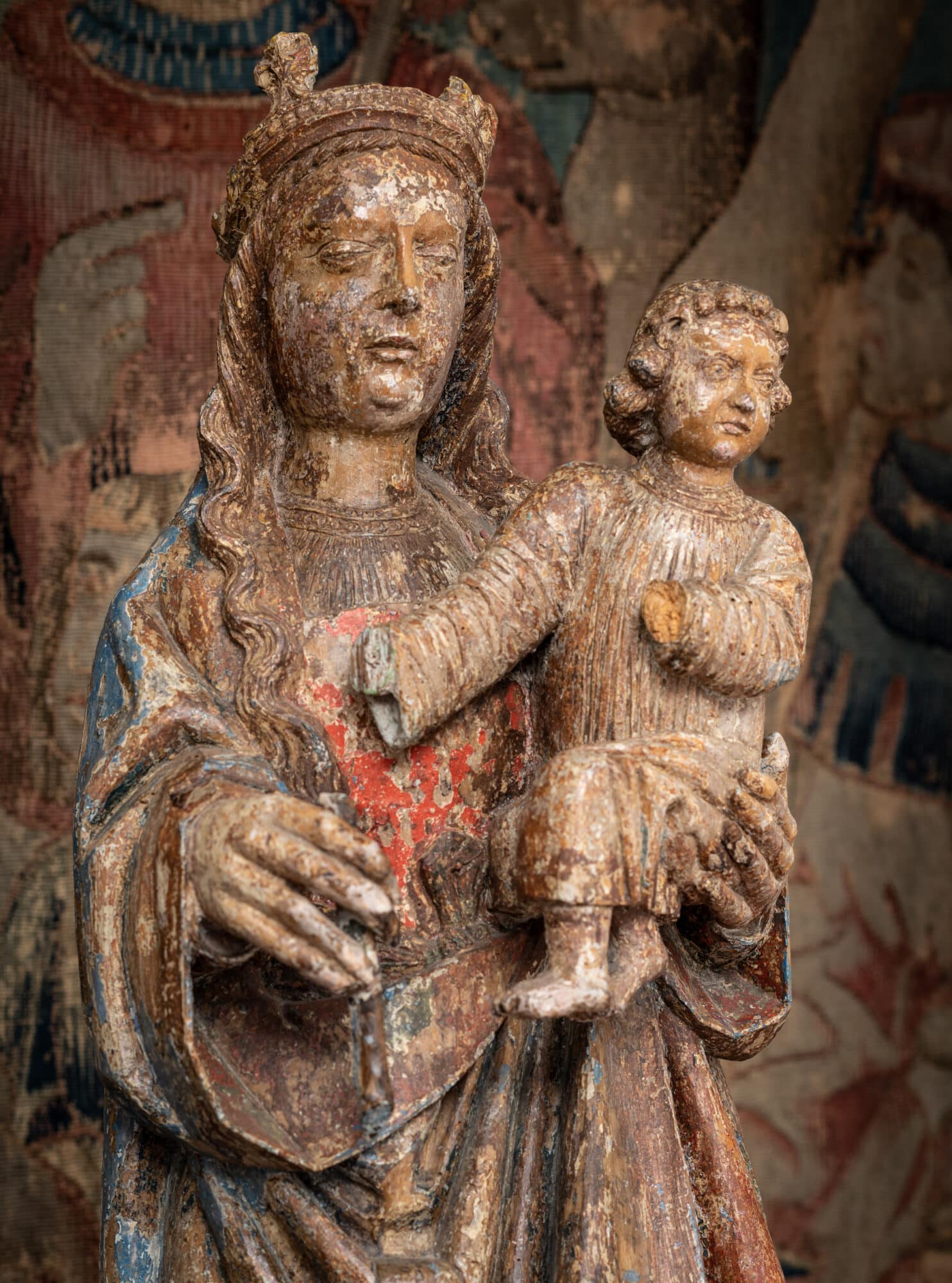
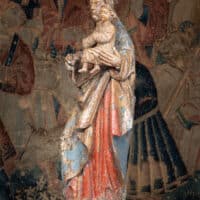
A late Gothic walnut sculpture of the Virgin and Child, retaining extensive early polychrome decoration.
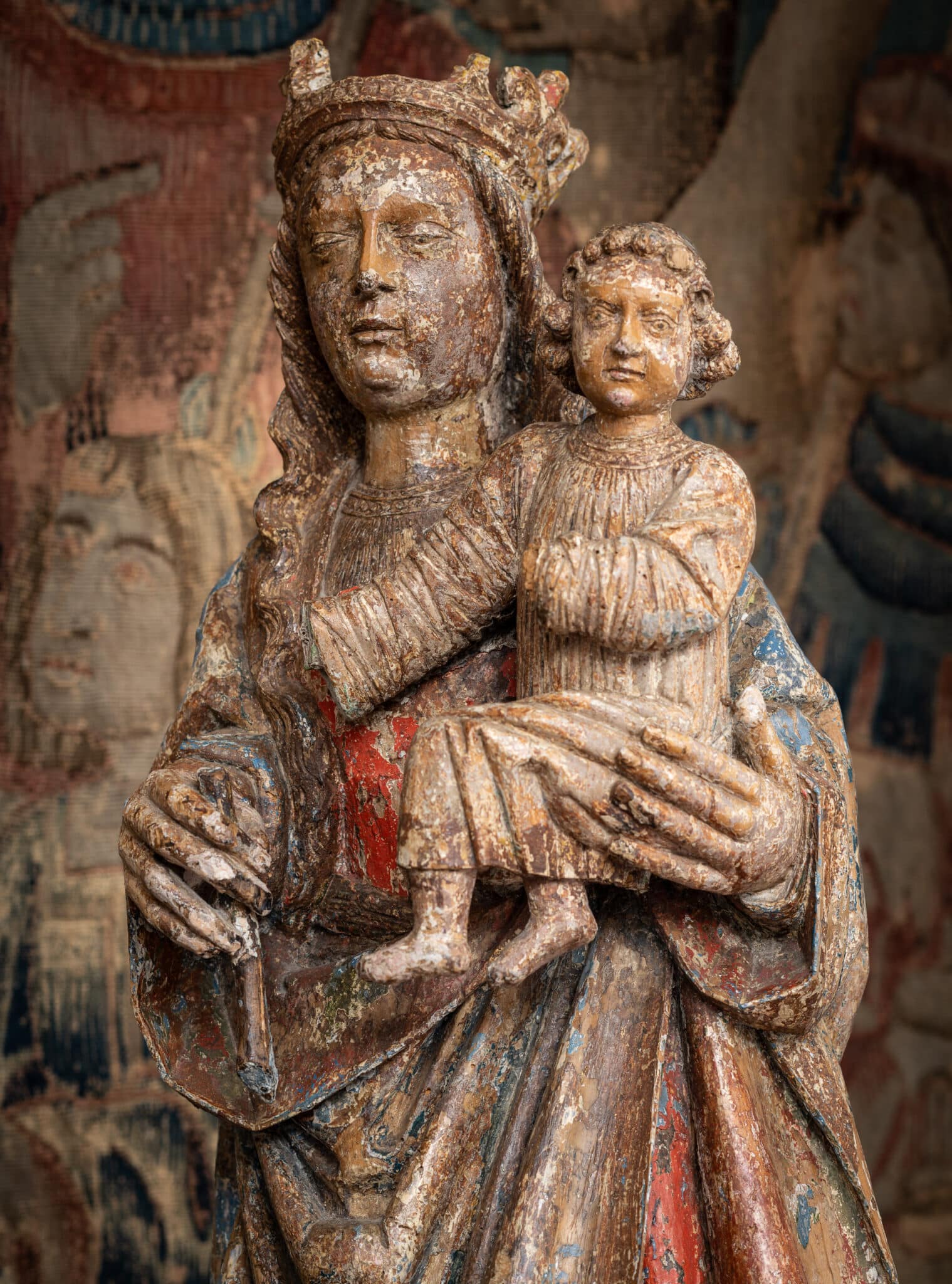
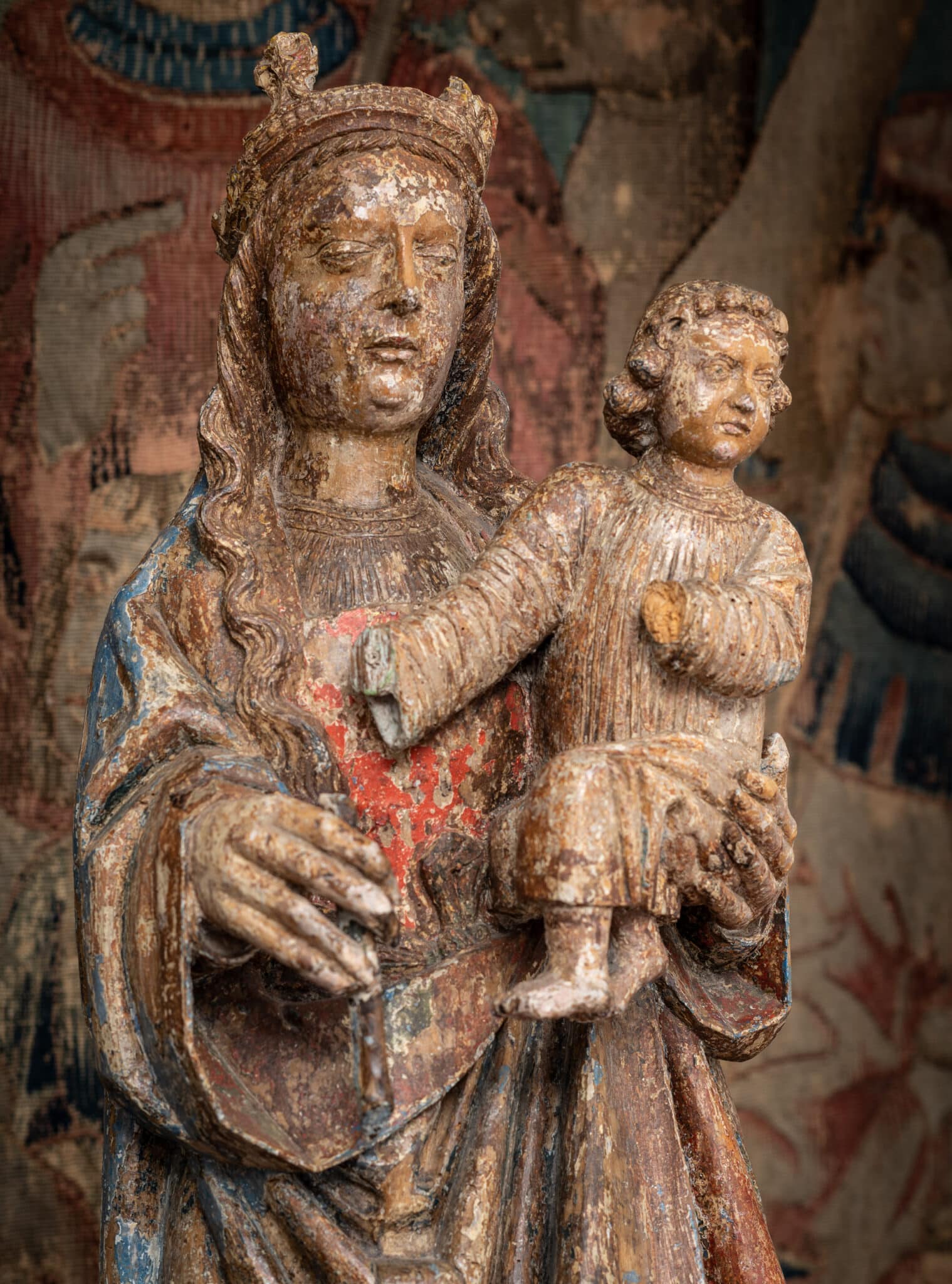
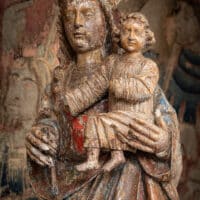
The Virgin is represented standing and crowned as Queen of Heaven, wearing an elaborate open crown with pierced foliate and fleur-de-lys ornaments. Her long, undulating hair falls gracefully over her shoulders, framing a finely modelled face with lowered eyes and a serene, contemplative expression.
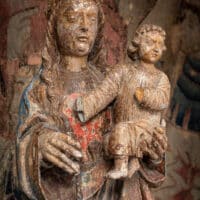
She supports the Christ Child upon her left arm, whilst her right hand retains the remains of what was probably a sceptre. The Child is depicted wearing a finely gathered, long-sleeved tunic with a decorative neckline, his face framed by individually carved curls.
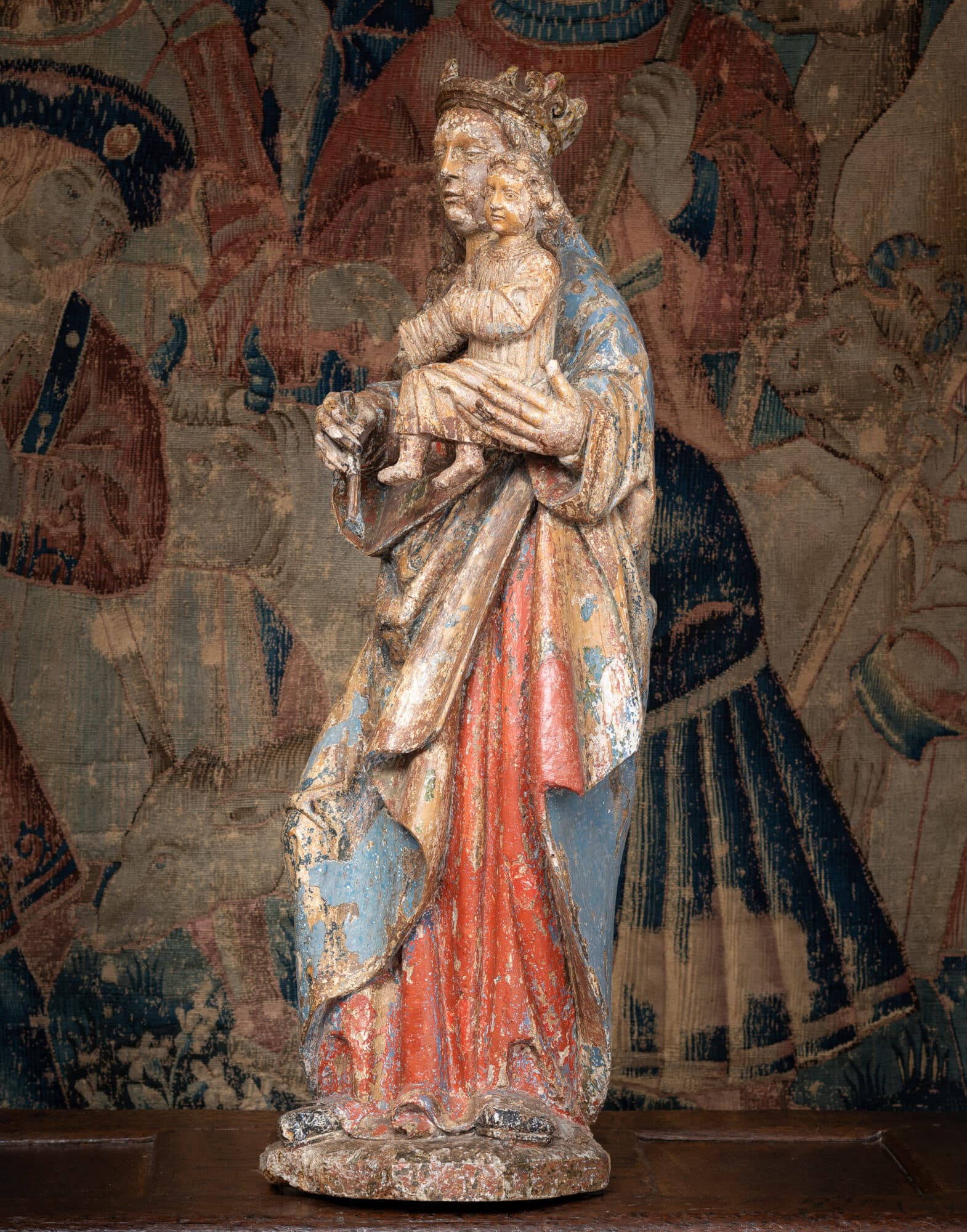
Particularly accomplished is the modelling of the Virgin’s hands, with their elongated fingers, carefully articulated joints and finely defined fingernails. The arrangement of the drapery demonstrates considerable sculptural refinement, with deeply recessed angular folds, broad sweeping surfaces and crisply defined edges contrasting with the vertical folds of the underlying gown. The broad, rounded shoes emerging beneath the hem are consistent with the fashions of the late fifteenth and early sixteenth centuries.
The sculpture retains extensive areas of historic polychromy, notably the blue mantle and vibrant red gown, together with surviving flesh tones, decorative colouring to the crown and black pigment to the footwear.
The facial modelling, treatment of the hands and architectural arrangement of the drapery suggest an affinity with the sculptural traditions of the Southern Netherlands around the turn of the sixteenth century, when the established Gothic tradition continued alongside the emerging influence of the Renaissance.
The considerable scale and quality of the carving suggest that the sculpture was originally intended for an ecclesiastical setting, possibly as the principal devotional image within a Marian chapel or altar.