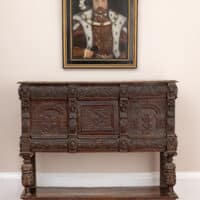
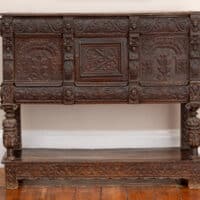
A Late Elizabeth I Carved Oak Cupboard
- Period
- Circa 1600
- Origin
- West Country possibly Exeter
- Dimensions
- W 54 1/2" × H 47 1/2" × D 15 3/4"
- Reference
- #Marh3755
£7,250
Description
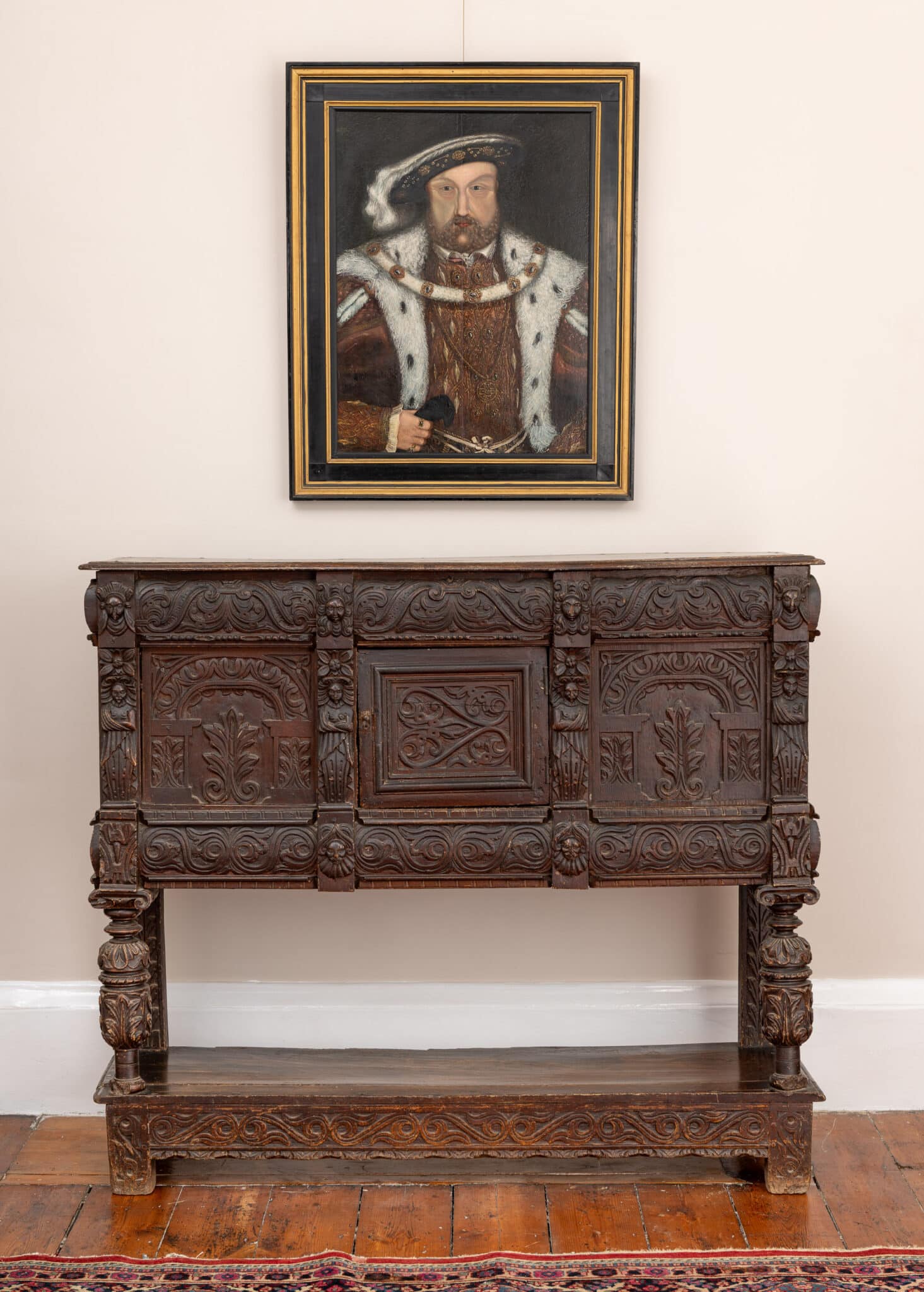
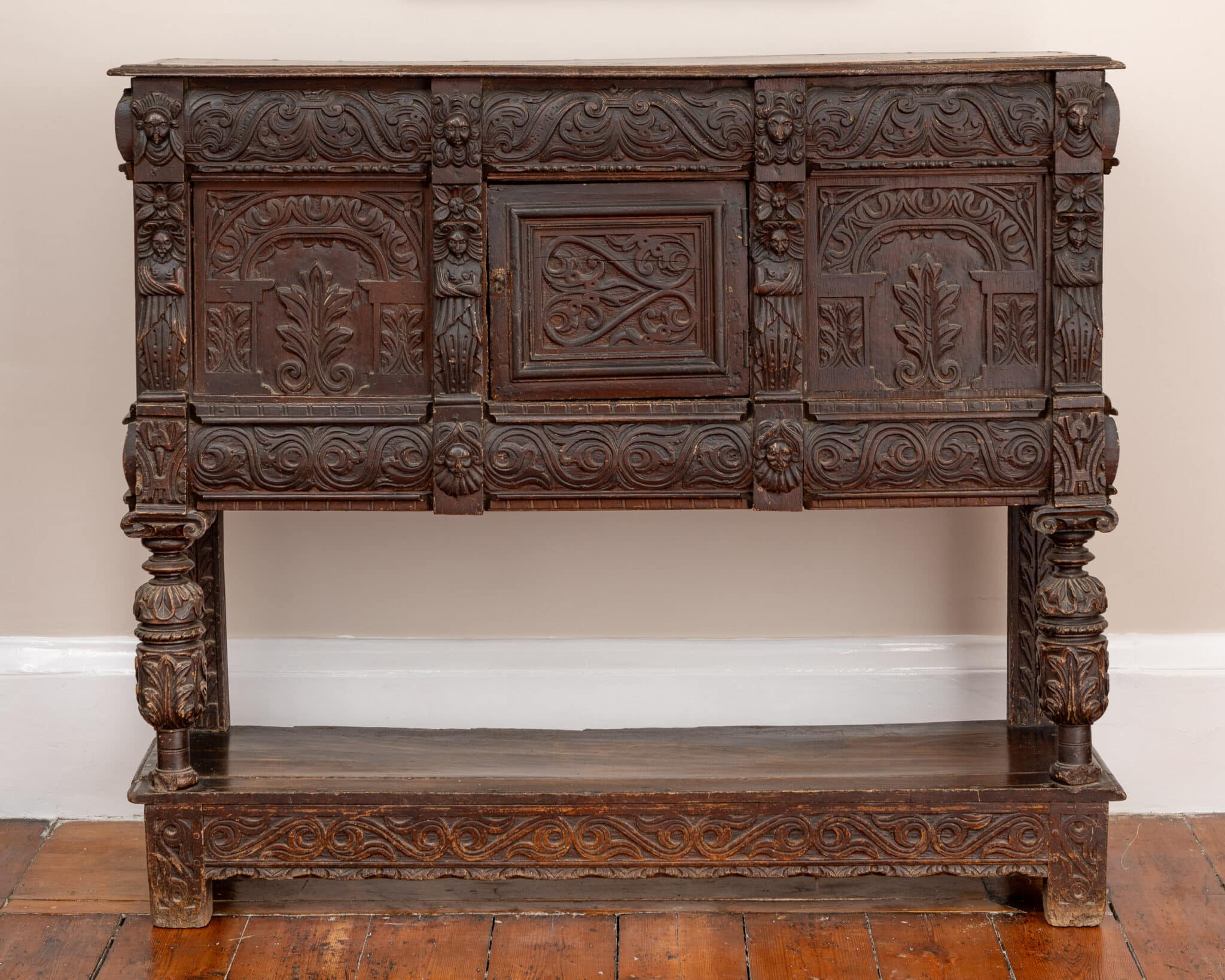
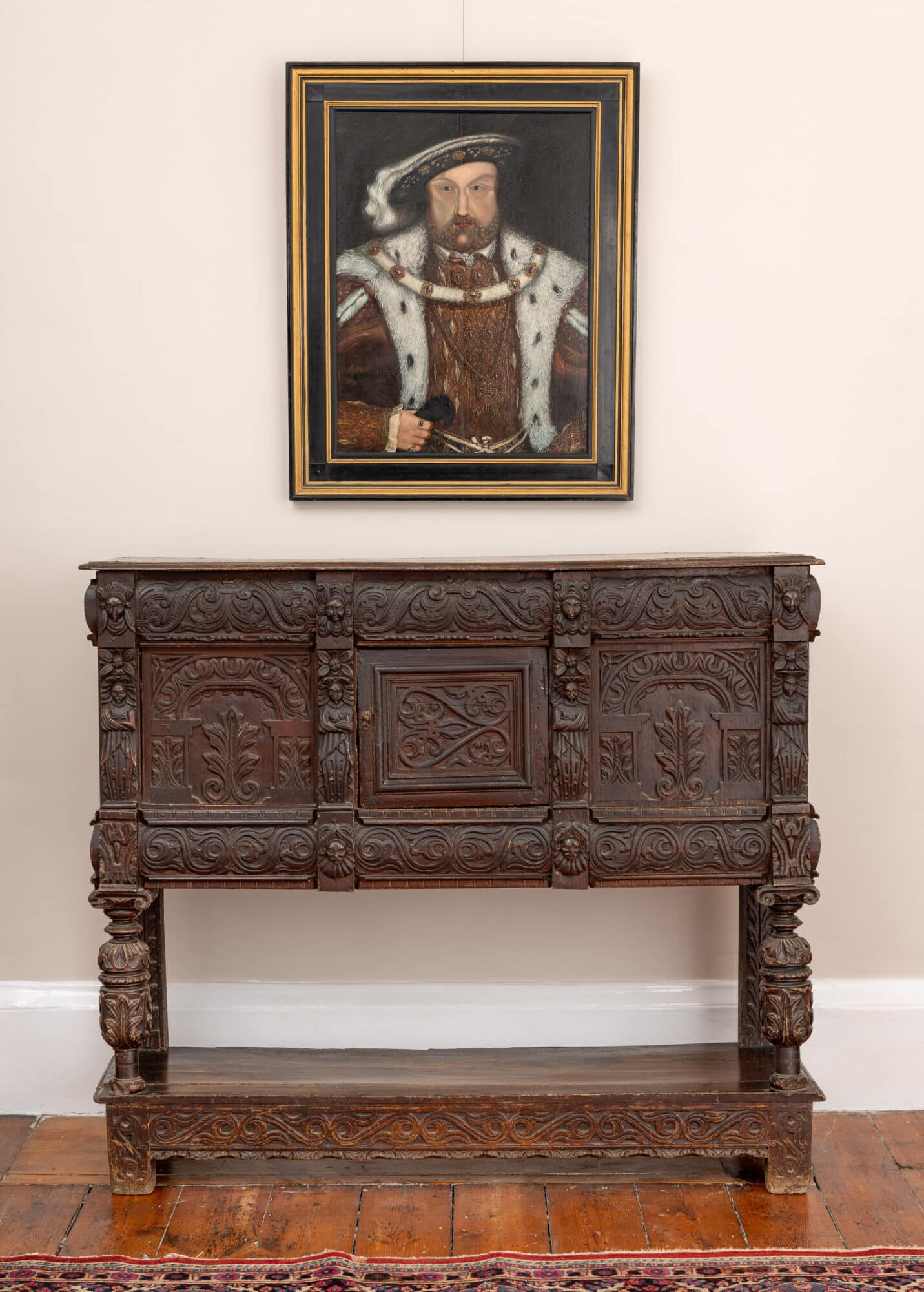
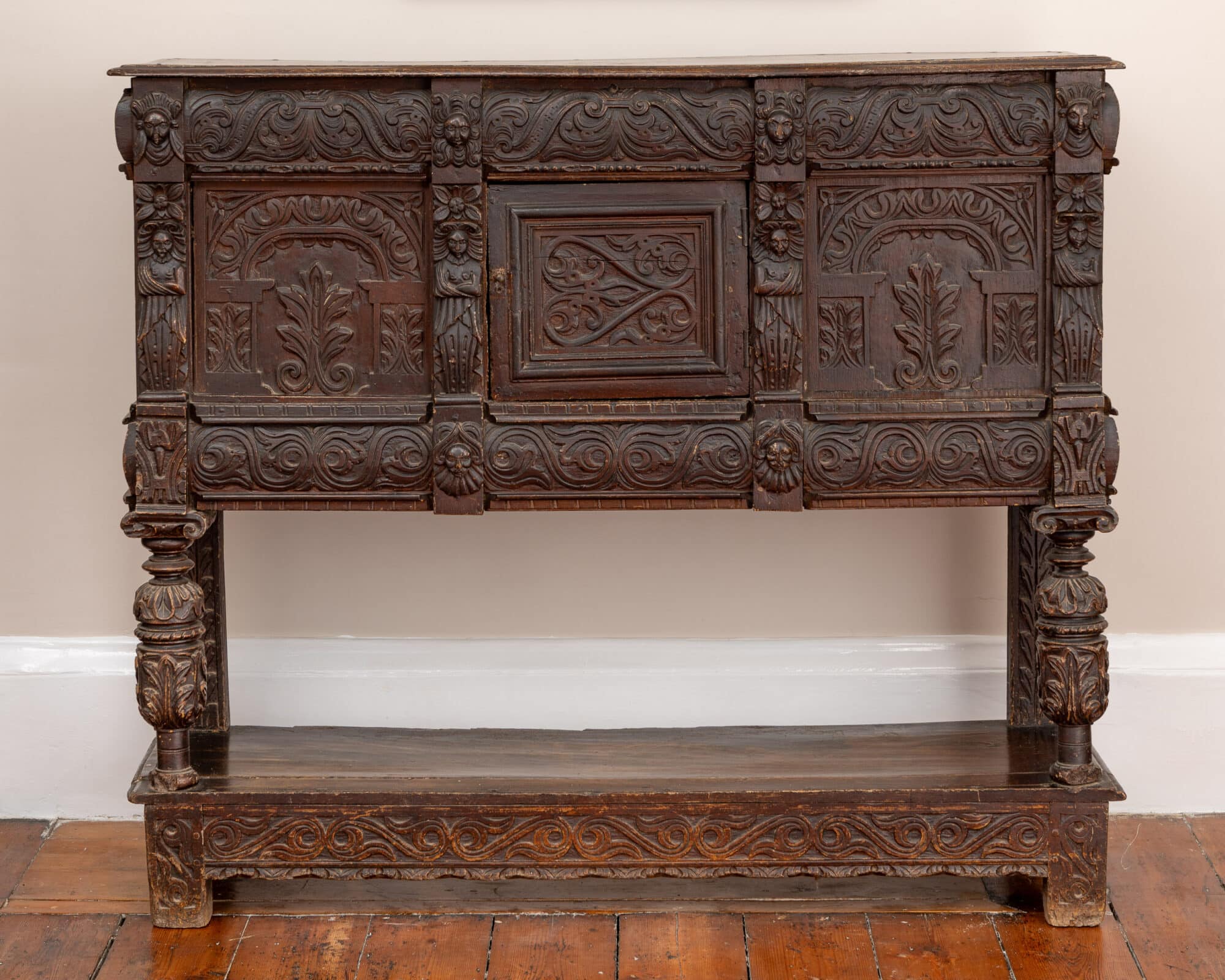
An important and exceptionally rare late Elizabethan carved oak cupboard, attributable to the West Country and probably the Exeter region, dating from circa 1600. The cupboard is distinguished by its extraordinarily rich architectural carving, reflecting the influence of Renaissance ornament as interpreted by provincial craftsmen at the close of the sixteenth century.
The façade is arranged within a framework of boldly carved uprights incorporating a series of finely executed atlantes and caryatids, alternating with expressive human masks and foliate ornament. Above, a continuous frieze of scrolling strapwork and lunettes is enriched with carved heads, while the principal panels are ornamented with stylised foliage and interlaced designs. The side panels are equally ambitious, displaying deeply carved symmetrical foliate patterns that demonstrate the high quality and completeness of the original decorative programme.
Particularly notable is the survival of its historic painted surfaces. The exterior retains an early brown scumbled finish, while the interior preserves an 18th-century green-painted surface. Such evidence of successive decorative schemes is increasingly recognised as an important aspect of a piece’s history, providing valuable insight into changing tastes and patterns of use over several centuries. The cupboard remains substantially untouched by modern restoration, preserving an exceptional degree of historic character.
Raised on boldly carved bulbous legs above a lower open shelf, the cupboard retains its original architectural form and much of its early fabric. Historic alterations and losses include later door hinges, losses to mouldings, and an incomplete lower back rail, all consistent with prolonged domestic use over more than four hundred years.
The use of atlantes and caryatids, the profusion of Renaissance-derived ornament, and the quality of the carving place the cupboard firmly within the tradition of high-status West Country furniture associated with Exeter and its sphere of influence. Few examples survive with such strong sculptural character and with historic painted surfaces substantially intact.
Untouched by modern restoration and retained in a private collection for nearly two decades, this cupboard represents a rare and highly significant survival of regional English furniture from the closing years of the Elizabethan period.