St Anne, the Virgin and Child with the Dove of the Holy Spirit
- Period
- 1480 - 1520
- Origin
- Probably Northern France or the Low Countries
- Dimensions
- W 13 1/4" × H 19 1/4" × D 5 1/2"
- Reference
- #Marh3754
£5,250
Description
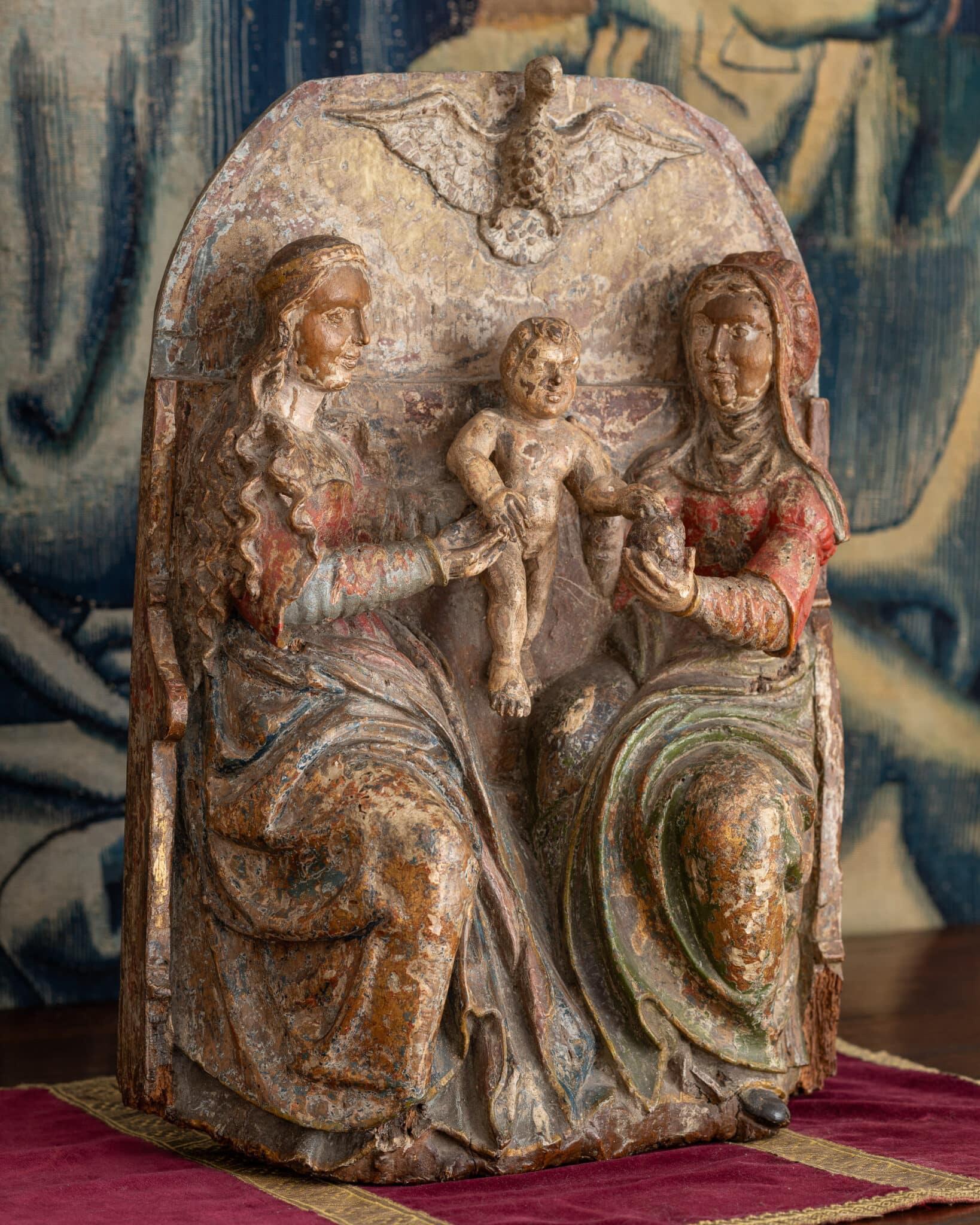
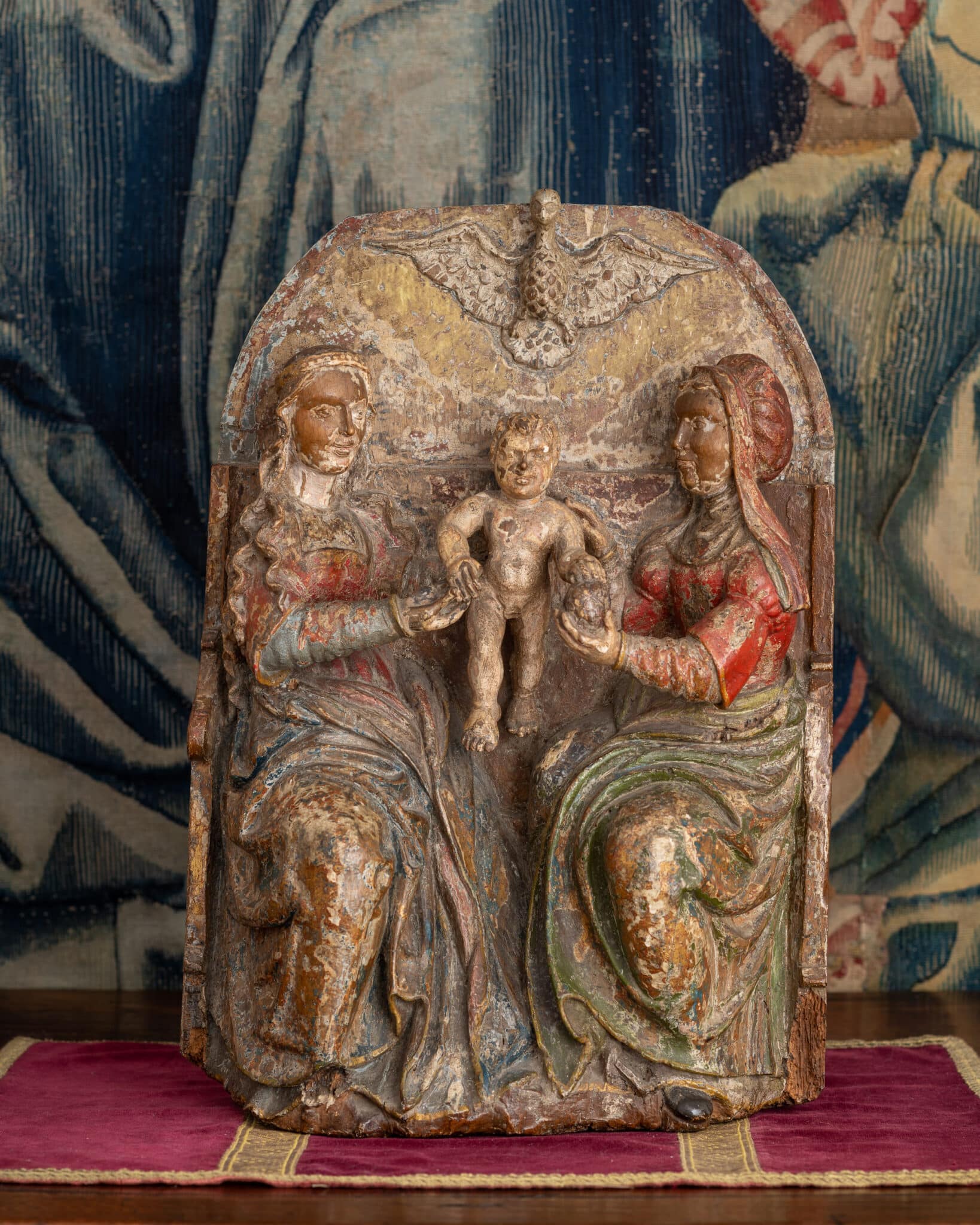
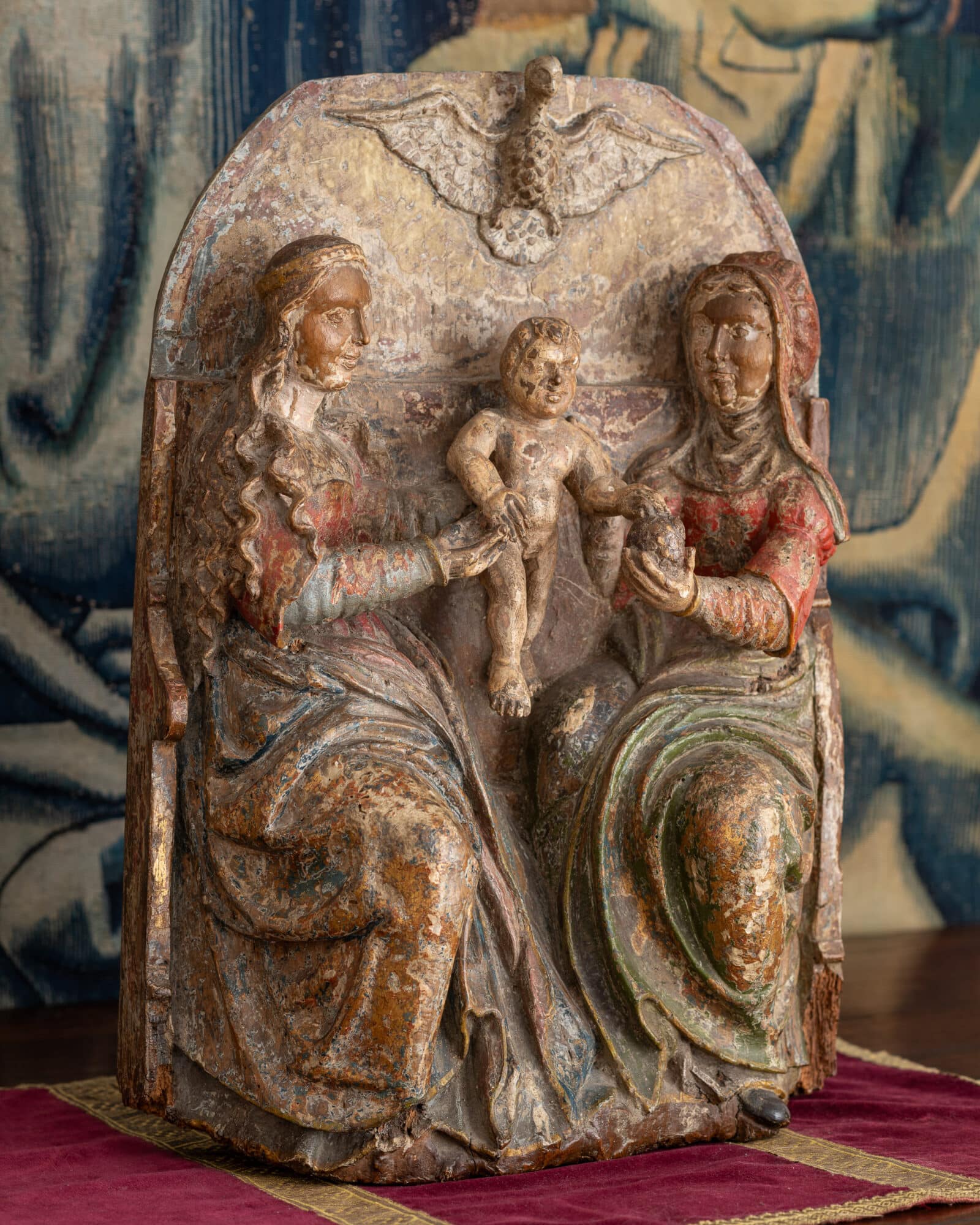
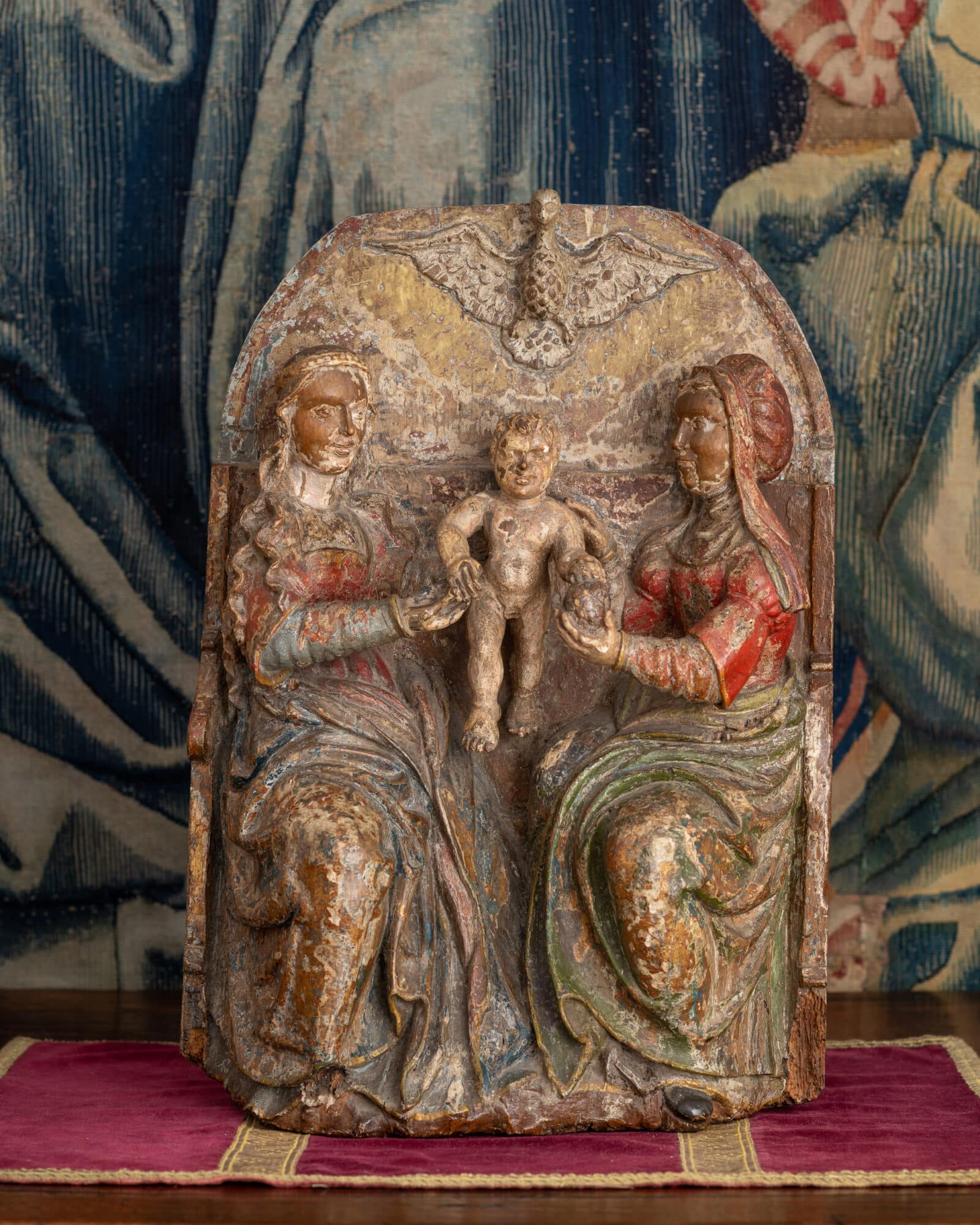
This carved walnut relief depicts Saint Anne, the Virgin Mary, and the Christ Child, a devotional subject commonly known as the Anna Selbdritt (“Saint Anne with Mary and Christ”). The composition presents two seated female figures supporting the standing Christ Child between them. The youthful figure at left is identified as the Virgin Mary, while the veiled woman at right represents her mother, Saint Anne. Above the group, a dove with outstretched wings symbolises the Holy Spirit, reinforcing the work’s theological emphasis on the Incarnation.
The image belongs to a devotional tradition that flourished throughout northern Europe during the later Middle Ages. The cult of Saint Anne expanded significantly during the fifteenth century, and representations of Anne, Mary, and the Christ Child became among the most popular expressions of familial sanctity and intercessory devotion.
Executed in walnut and retaining substantial traces of its original polychrome decoration and gilding, the sculpture exhibits characteristic features of late Gothic carving, including deeply modelled drapery, a high-backed throne, and expressive yet restrained facial types. Surviving pigments in red, green, blue, and gold testify to the rich appearance the work would originally have possessed.
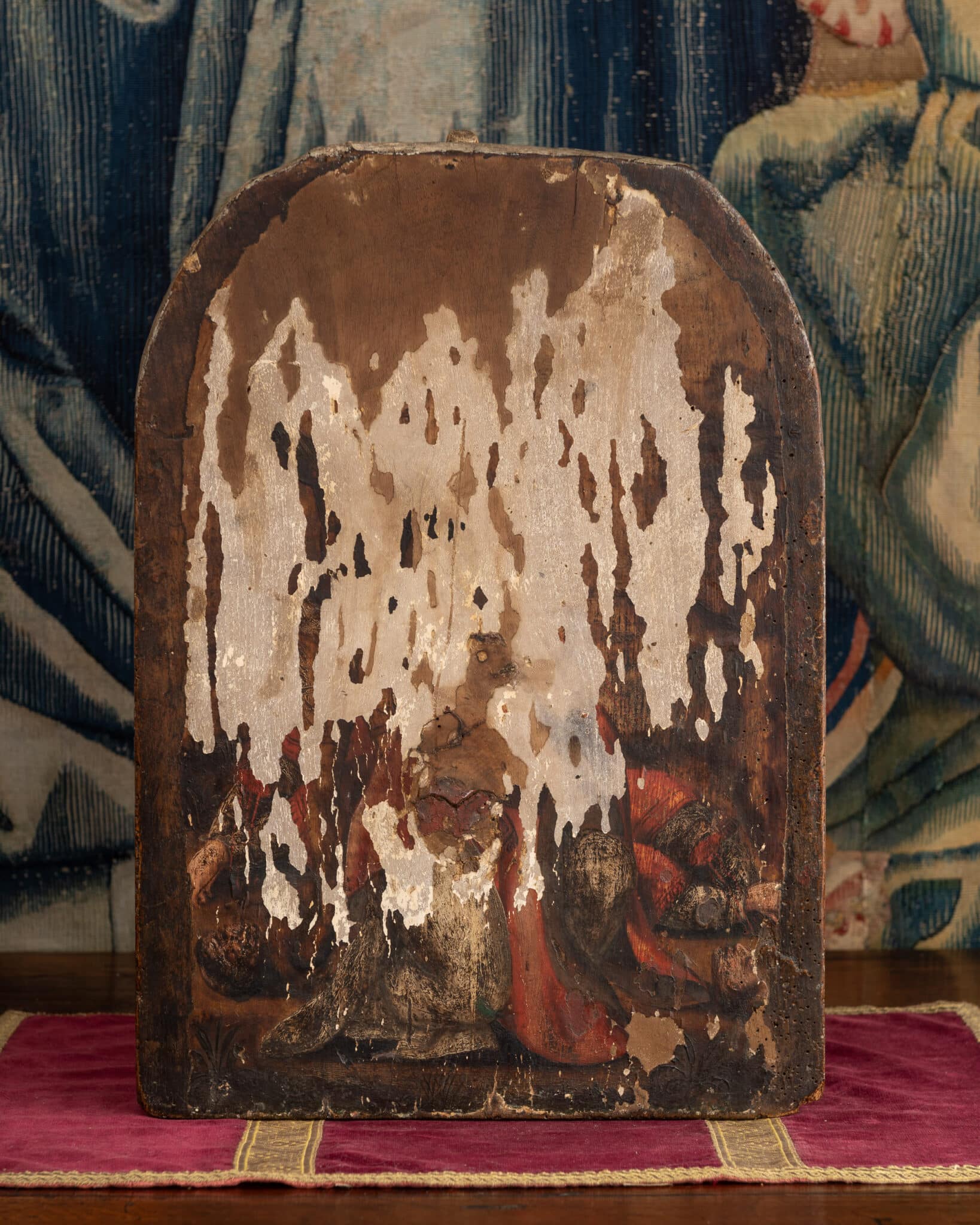
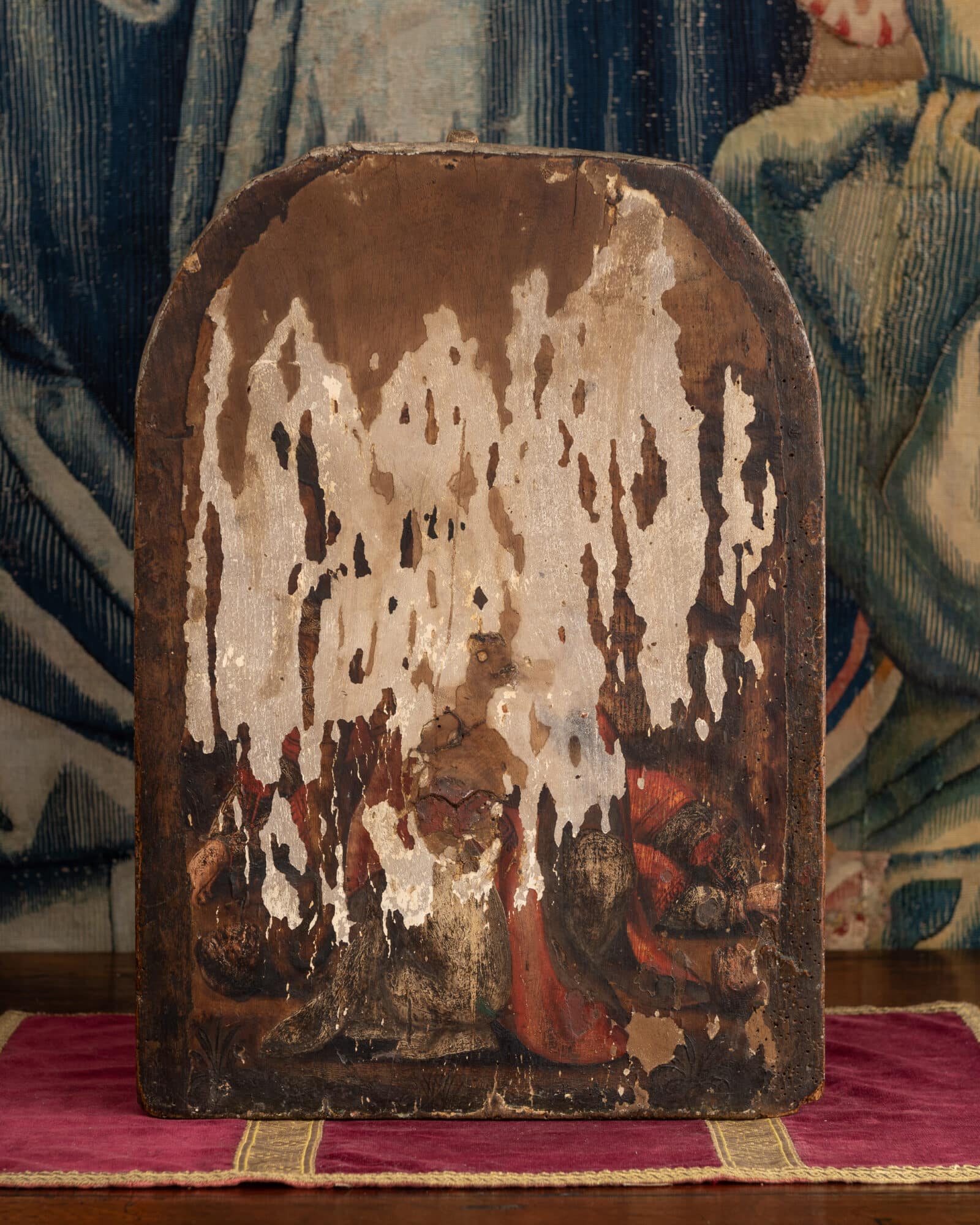
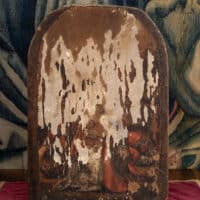
The reverse preserves the fragmentary remains of a painted narrative scene, now heavily worn and difficult to identify with certainty. Surviving figures suggest a multi-figure religious composition, possibly associated with the life of Christ or the Virgin. The presence of painted decoration on both sides indicates that the sculpture may originally have formed part of a more complex devotional ensemble, perhaps a small altar, tabernacle, or shrine.
Despite losses to the polychromy and areas of surface wear, the sculpture remains a significant example of late medieval religious carving. Its iconography, style, and material are consistent with production in a northern European workshop around the turn of the sixteenth century.